
lovethailand home >South Travel Attractions >Phuket Travel Attractions >Thalang >Choeng Thale > Thalang Pa Sak City Pillar Shrine (Chao Mae Soi Ka..
TL;DR: Thalang Pa Sak City Pillar Shrine (Chao Mae Soi Kaeo Shrine) is located at Near Phra Khao Monastic Residence, Ban Pa Sak, Moo 4, Soi Pa Sak 4, Choeng Thale Subdistrict, Thalang District, Phuket Province 83110, open Open for General Worship.
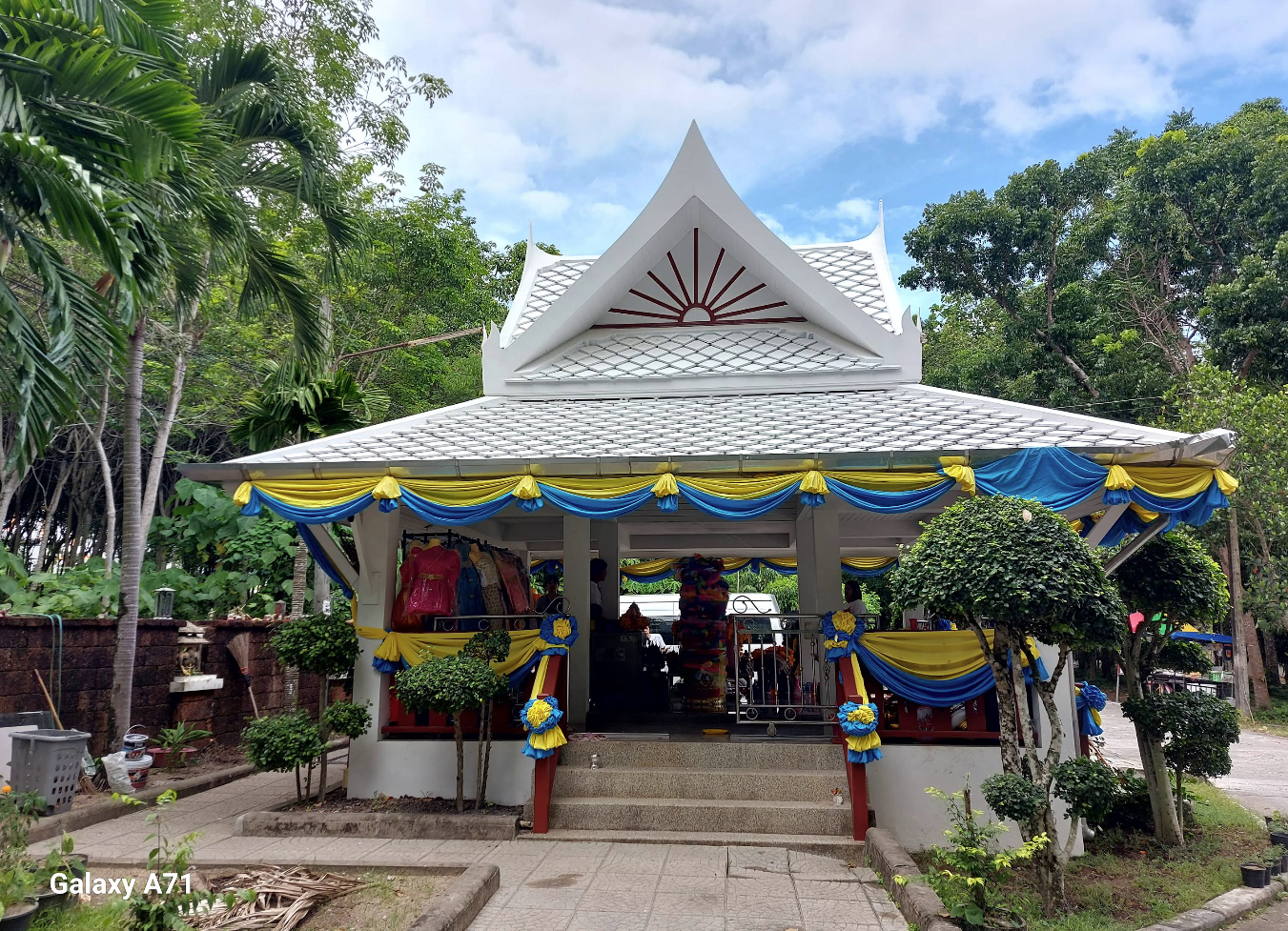
Thalang Pa Sak City Pillar Shrine (Chao Mae Soi Kaeo Shrine)
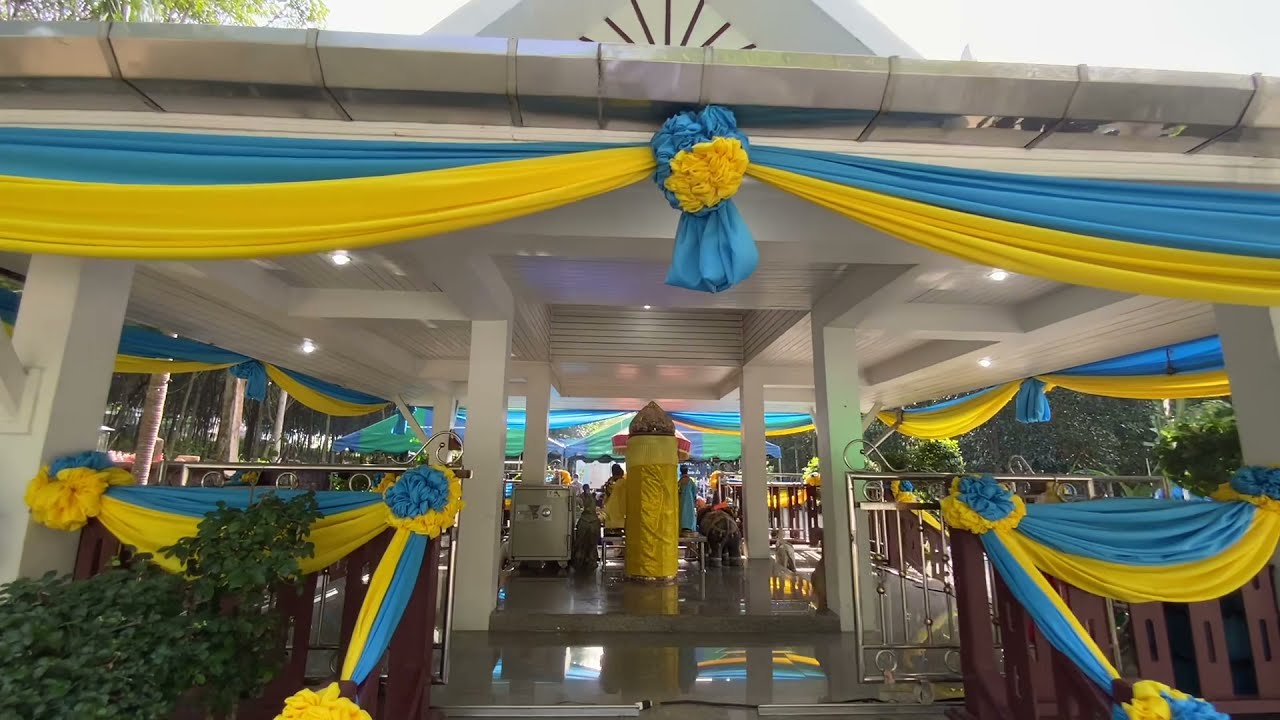
Open Days: Open for General Worship
Thalang Pa Sak City Pillar Shrine, also known as Chao Mae Soi Kaeo Shrine, Phuket, is one of the historic city pillar shrines of Thalang. It is located in Ban Pa Sak, Moo 4, Choeng Thale Subdistrict, Thalang District, Phuket Province 83110, Thailand, near the entrance to Phra Khao Monastic Residence and the site of the former Pa Sak temple. The shrine is important to local beliefs concerning the sacred guardian of the community, known as Mae Soi Kaeo. Its distinguishing features include a historic city pillar associated with an old, weathered wooden post once found beneath a large rubber tree, a protective pavilion constructed around the sacred site, a gable decorated with a thepphanom figure, and a north-facing entrance. It is one of four historic city pillar shrines associated with Phuket, reflecting the development of Thalang and the distinct guardian traditions of different communities. The shrine continues to serve as a place of worship and a setting for annual merit-making ceremonies and southern Thai cultural performances.
Thalang Pa Sak City Pillar Shrine differs from the large city pillar shrines commonly built near modern provincial government offices. Its importance comes from its relationship with an older community and the grounds of a former religious site. Local residents know it as Mae Soi Kaeo Shrine, a name that expresses the community's spiritual connection with its guardian. This name gives the shrine a distinctive identity and separates it from Phuket's other historic city pillar sites.
Ban Pa Sak is a community in Choeng Thale Subdistrict, on the western side of Phuket Island. The area combines older settlements, former agricultural land, religious sites, and neighborhoods shaped by contemporary tourism development. Pa Sak lies along the roads connecting Choeng Thale with Ban Don and the inland communities of Thalang. Its location illustrates a side of Phuket that extends beyond its beaches and coastal resorts: residential communities where older customs, religious traditions, and local beliefs continue to be preserved.
Phuket has a long history of settlement and maritime commerce, particularly in the former town of Thalang, which served as an important center at different periods. The island's geography consists of mountains, valleys, coastal plains, and bays suited to sea transport. Earlier communities developed around land suitable for cultivation, fishing, and navigation. Changes in commerce, government, and transportation gradually influenced where settlements and administrative centers were established.
The history of Thalang is essential to understanding Phuket's four historic city pillar shrines. Each shrine is associated with a particular community and a different historical setting. Tha Ruea City Pillar Shrine is linked with Mae Duang and the old maritime community of Ban Tha Ruea. Mueang Mai City Pillar Shrine is associated with the reestablishment of Thalang and the guardian Mae Chuang. Thalang Pa Sak City Pillar Shrine is associated with Mae Soi Kaeo, while Le Phang City Pillar Shrine represents another part of Choeng Thale's local heritage. Their distribution reflects the historical diversity of Phuket's older communities.
A city pillar shrine belongs to Thai traditions concerning the symbolic establishment of a town and respect for its protective spiritual powers. The sacred pillar represents stability, auspiciousness, and the shared identity of the community. These beliefs occur in different parts of Thailand, although architectural forms and ceremonies vary according to local circumstances. The shrine at Pa Sak is a clear example of city pillar traditions combined with devotion to a female guardian associated with a particular settlement.
Mae Soi Kaeo is the name used by residents for the guardian believed to protect the city pillar and the Pa Sak community. Worship at the shrine involves more than paying respect to a wooden pillar, as the site also preserves stories, hopes, and memories handed down through generations. For devotees, the shrine provides a connection between individual faith and the cultural history of their home community.
In earlier times, the area surrounding the shrine was described as relatively densely wooded. Local stories refer to a time when dangerous wild animals were common in the vicinity. Memories of the former natural environment help explain the significance of beliefs in protective spiritual powers. Respect for Mae Soi Kaeo was connected with hopes for safety and the peaceful continuation of community life.
The shrine stands near the former Pa Sak temple grounds, also known as Wat Phra Khao. Local accounts associate this area with the earlier history of Wat Tin Le, or Wat Choeng Thale, before parts of the religious landscape fell into disuse. The site was subsequently revived under the name Wat Phra Khao. The city pillar shrine's location near this area illustrates the relationship between older Buddhist religious places and community guardian traditions.
Understanding the distinction between the different local religious sites is important. Mae Soi Kaeo Shrine is situated near the entrance to Phra Khao Monastic Residence, reached through Soi Pa Sak 4. It is not the same site as the functioning Wat Choeng Thale, another Buddhist temple within the same subdistrict. The names Wat Tin Le, Wat Choeng Thale, the former Pa Sak temple, and Wat Phra Khao all appear in accounts of the area's religious history, but the city pillar shrine has its specific location within Ban Pa Sak.
One of the most significant historical accounts concerns the discovery of an old, weathered hardwood post approximately 1.50 meters high beneath a rubber tree near Wat Phra Khao. Local residents believed that the post was an old city pillar. Its discovery in an area already associated with community memory and religious activity contributed to the desire to preserve and respect the object.
The old wooden post is central to the shrine's historical identity because local people regarded it as sacred and deserving of protection. The desire to preserve the site encouraged the construction of a pavilion and the creation of a designated worship area. Through these actions, a place formerly marked by a wooden post within a natural setting gradually became a recognized community shrine.
Local administrative organizations in Choeng Thale later supported the construction of a protective pavilion around the city pillar. The building helped shelter the sacred place and provided a more organized space for worshippers. Its construction represented a transition from an informal natural setting to a defined ceremonial landmark maintained by the community.
The shrine's development demonstrates cooperation between residents and local authorities. Its sacred importance came from the beliefs of the community, while the building and surrounding grounds required practical support, construction materials, and organized maintenance. This cooperation illustrates how intangible cultural traditions can be sustained through the care of physical places.
The pavilion is relatively modest compared with monumental city pillar shrines constructed on a provincial scale. Its front gable features a thepphanom figure, a traditional Thai decorative motif depicting a celestial being with hands joined in respect. The image is appropriate to a building used for worship and reinforces the sacred character of the space.
The shrine faces north, an architectural detail recorded in local historical accounts. This distinguishes it from Tha Ruea City Pillar Shrine, which faces east, and the earlier pavilion at Mueang Mai, which faced west. These different orientations show that Thalang's historic city pillar shrines did not develop according to a single standardized design.
The grounds are characterized by trees and a shaded natural setting. Visitors approach from the Choeng Thale–Ban Don road through Soi Pa Sak 4, which also leads toward Phra Khao Monastic Residence. The shrine stands near the entrance, maintaining a close connection with the surrounding community rather than occupying an isolated ceremonial complex.
One of the most distinctive expressions of devotion to Mae Soi Kaeo is the offering of traditional Thai women's clothing. Such offerings are associated with the worship of female guardian figures. Devotees may present garments after making a vow or when they believe their wishes have been fulfilled. The clothing reflects the shrine's particular identity as a place associated with a female protective spirit.
Offerings are significant as expressions of respect and remembrance of personal vows. Objects placed within the shrine form part of traditions of making requests and fulfilling promises to sacred guardians. The offering of women's clothing to Mae Soi Kaeo should therefore be understood within the broader context of local devotional practices passed down within the community.
The shrine is especially well known for prayers concerning victory and success in competition. Local accounts describe people visiting before sporting contests, boat races, examinations, and elections. These traditions have contributed to Mae Soi Kaeo's reputation as a guardian associated with overcoming challenges and achieving success.
Competition can mean many things in everyday life, extending beyond sport to entrance examinations, professional qualifications, and selection for public roles. For worshippers, visiting the shrine may provide a meaningful way to express determination and seek auspiciousness before an important event.
Stories about receiving victory through Mae Soi Kaeo belong to local spiritual belief. They are not evidence that ceremonies can determine the outcome of a competition. Their cultural value lies in the hopes, aspirations, and sense of community expressed through worship.
Some devotees also seek blessings for good fortune, work, and family stability. These wishes are consistent with broader Thai city pillar traditions, in which the sacred pillar and its guardian symbolize continuity and the well-being of the community. Worship is therefore not restricted to competitions but also includes personal wishes and important beginnings.
For local residents, visiting Mae Soi Kaeo Shrine is an expression of respect for a place valued by earlier generations. Younger residents learn about its stories through family members and community ceremonies. In this way, the shrine continues to serve as a center of cultural memory even as Choeng Thale undergoes changes associated with tourism and urban development.
Thalang Pa Sak City Pillar Shrine is associated with an annual merit-making celebration organized through cooperation between local administrative organizations and devotees. Local accounts describe a program lasting approximately two days, combining Buddhist observances, Brahmanical rituals, and southern Thai cultural performances.
The Buddhist component includes ceremonies involving monks and the offering of a midday meal. These activities reflect the merit-making traditions of Thai Buddhist communities. Brahmanical ceremonies, meanwhile, express respect for sacred guardians according to inherited ritual practices. Their combination is a familiar feature of several southern Thai community celebrations.
The annual event also includes Manora dance offerings, an important form of traditional southern Thai performing art. Manora is distinguished by intricate dance movements, elaborate beaded costumes, and rhythmic musical accompaniment. Performing it in a shrine ceremony demonstrates how local cultural expression becomes part of acts of spiritual respect.
Manora has a long history in southern Thailand and is recognized as a valuable cultural tradition. Its ceremonial performance is one example of the way artistic heritage and religious observance can intersect. At Mae Soi Kaeo Shrine, the dance contributes to the preservation of a distinctive form of southern Thai community culture.
Shadow-puppet theater is another feature mentioned in accounts of the annual shrine celebration. Performances include the southern Thai tradition of Nang Talung, involving carved leather puppets, dialogue, storytelling, and musical accompaniment. The art form has historically been associated with temple fairs, community gatherings, and regional festivals.
Nang Talung is important because it combines entertainment, storytelling, humor, and moral ideas. Performances may draw on literature, folklore, and events familiar to local audiences. Presenting shadow-puppet theater during the shrine celebration helps connect the community's sacred traditions with its performing arts and provides opportunities for younger generations to encounter traditional culture.
The annual celebration strengthens relationships among residents of Ban Pa Sak. Preparing offerings, ceremonial space, meals, and performances requires cooperation among families and local organizations. The event therefore gives the shrine a social role beyond individual worship and helps maintain the community's inherited practices.
Mae Soi Kaeo Shrine is a site of local guardian worship, not a Buddhist ordination hall or a monastery with resident monks. It consequently has no abbot. Its ceremonies and upkeep involve local authorities in Choeng Thale and participating devotees. The nearby Phra Khao Monastic Residence serves a separate Buddhist religious function.
The distinction between the shrine and the monastic residence matters because the two have different purposes. The city pillar shrine is associated with the sacred civic post and the female guardian of the community, while the monastic residence is connected with the activities of Buddhist clergy. Although the places stand near each other, their forms of administration and religious use are not identical.
The history of Wat Phra Khao also reflects changes in the use of religious land in Pa Sak. A former temple site was revived for religious activities after a period of disuse. The city pillar shrine remained an important sacred feature nearby, demonstrating the continuity of local devotion even as buildings and patterns of religious use changed.
Thalang Pa Sak City Pillar Shrine is not the same place as Wat Choeng Thale, which is a functioning Buddhist temple elsewhere in the subdistrict. Wat Choeng Thale has its own religious buildings and community role, while Mae Soi Kaeo Shrine is located near Phra Khao Monastic Residence on the route through Soi Pa Sak 4. Recognizing this distinction helps visitors understand the local history and locate the correct destination.
Wat Choeng Thale is an important Buddhist temple for residents of the subdistrict. Its religious buildings and grounds support Buddhist ceremonies and community activities. The presence of both a functioning temple and a historic city pillar shrine within the wider area demonstrates how different forms of spiritual heritage have continued side by side.
Choeng Thale also contains Chinese shrines and other religious institutions, illustrating the diversity of Phuket's communities. Thai-Chinese traditions have played an important part in the island's commercial and social development, while Buddhist and Muslim communities maintain their own places of worship. Mae Soi Kaeo Shrine forms one element within this wider cultural landscape.
Te Kun Shrine in Ban Pa Sak is one example of a nearby Chinese religious site. Its beliefs and ceremonial traditions differ from those of the city pillar shrine. Exploring different places of worship within the same community reveals the range of religious practices associated with Phuket's multicultural history.
Sam Ong Hoo Shrine and Lim Tai Soo Shrine are additional examples of Chinese religious heritage in the Choeng Thale area. Although their histories are distinct from the traditions of Mae Soi Kaeo, they contribute to the area's cultural character and demonstrate the continued importance of community worship.
The shrine can also be connected with the Bang Tao and Laguna Phuket areas, which form an important contemporary tourism district along the western coast of the island. Bang Tao contains a long beach and older settlements alongside resorts, shops, and modern developments. Inland communities such as Pa Sak retain residential streets and religious sites, offering a contrast to the coastal resort environment.
Bang Tao Beach is one of the best-known coastal destinations in Choeng Thale, stretching along the Andaman Sea. Its beach landscape and leisure facilities play an important role in the island's present-day tourism economy. Visiting the beach and the inland shrine provides a broader view of Phuket than either destination alone.
Surin Beach is another important coastal attraction within Choeng Thale. It is known for its seascape and coastal setting, offering a different atmosphere from the wooded surroundings of Mae Soi Kaeo Shrine. The contrast illustrates the variety of environments found within Thalang District.
Le Phang Beach is part of the western coastline associated with the Bang Tao and Layan area. The name Le Phang is also important in local heritage because another historic city pillar shrine of Phuket is known by that name. This connection makes the term part of both the geographical and cultural vocabulary of western Thalang.
Layan Beach lies farther north along the coastal area and is associated with natural scenery and the Andaman Sea. Traveling between the inland Pa Sak community and Layan reveals a landscape ranging from settled neighborhoods and roads to beaches and coastal vegetation.
Choeng Thale also has local markets and dining neighborhoods reflecting the growth of both the resident population and tourism. Around Bang Tao and the connecting roads, travelers can find southern Thai food, Muslim cuisine, seafood, and contemporary international dining. This variety reflects the coexistence of older community traditions with the needs of visitors from many countries.
Phuket's regional cuisine combines southern Thai ingredients with influences from Hokkien Chinese communities. Familiar specialties include moo hong braised pork, Hokkien noodles, southern-style khanom chin, and seafood prepared with aromatic curry pastes. Choeng Thale also offers northeastern Thai dishes, halal food, and international cuisine.
Restaurants in and around Pa Sak reflect this culinary variety. E-San Lum Toey serves northeastern and Thai food along the Ban Don–Choeng Thale corridor. EatWise Cafe Pasak emphasizes breakfast and health-oriented meals, while Little Prince Indian Cuisine on Soi Pa Sak 1 offers Indian food. Together, these restaurants illustrate the changes that have transformed Choeng Thale from an older community area into a district serving both residents and visitors.
Suay in Choeng Thale is a contemporary Thai restaurant recognized by the Michelin Guide. Located at Baan Wana Park on Si Sunthon Road, it applies modern techniques to Thai ingredients and flavors. Kanin Cafe on the Pa Sak–Kok Tanod route provides drinks and pastries, reflecting the growth of café culture in the area.
The range of dining options extends from local restaurants to modern establishments and international cuisine. Smaller residential streets in Pa Sak retain neighborhood businesses, while the Boat Avenue and Si Sunthon Road areas have developed a larger concentration of shops and restaurants. These changes illustrate the wider economic transformation of modern Thalang.
Accommodation in the Pa Sak and Choeng Thale areas includes small guesthouses, private villas, serviced apartments, and larger resorts. Some properties stand within inland residential neighborhoods, while others are located closer to Bang Tao and Surin beaches. Staying in Choeng Thale provides road access to the shrine and to the coastal attractions of western Thalang.
In the Pa Sak area, accommodation options include Rock Mini Resort on Soi Pa Sak 4, Blue Dream Villa on Soi Pa Sak 13, and Wings Phuket Villa by Two Villas Holiday on Soi Pa Sak 8. These properties offer different styles of accommodation, including private villas and family-oriented stays in the inland neighborhood.
Sivana Place Phuket is another property in Choeng Thale with serviced-apartment-style facilities. Gold Chariot is situated on Soi Pa Sak 13 and provides an additional option for visitors staying in the inland part of the district. Road connections link these properties with local restaurants and commercial areas.
Surin Beach offers additional hotels and resorts, including The Surin Phuket and Twinpalms Phuket. These properties emphasize proximity to the coast and provide a different experience from the residential accommodation in Pa Sak. Visitors staying near the beach can travel inland to explore Mae Soi Kaeo Shrine and other cultural destinations.
Traveling between Pa Sak and the surrounding Choeng Thale area introduces two contrasting aspects of Thalang. The inland community preserves stories of the old city pillar, Mae Soi Kaeo, and Wat Phra Khao, while Bang Tao, Surin, and Layan reflect the island's coastal landscape and modern tourism industry.
Getting There: Thalang Pa Sak City Pillar Shrine, or Chao Mae Soi Kaeo Shrine, is situated near the entrance to Phra Khao Monastic Residence, Ban Pa Sak, Moo 4, Choeng Thale Subdistrict, Thalang District, Phuket Province 83110, Thailand. Travelers approaching from Thepkasattri Road can use Si Sunthon Road or the connecting roads toward the Choeng Thale–Ban Don route, then turn into Soi Pa Sak 4 to reach the shrine area.
From Bang Tao Beach or Boat Avenue, local roads lead toward the Ban Don–Choeng Thale corridor and Soi Pa Sak 4. Visitors arriving from Surin Beach can travel through Choeng Thale toward Pa Sak. Private vehicles or hired transport are practical ways to reach the shrine, which stands within an inland community rather than along a major tourist road.
From Phuket Town, travelers can follow Thepkasattri Road toward Thalang before turning onto Si Sunthon Road and continuing to Choeng Thale. Those arriving from Phuket International Airport can use the main roads leading toward Ban Don and Choeng Thale. Searching for Thalang Pa Sak City Pillar Shrine or Chao Mae Soi Kaeo Shrine helps distinguish the destination from the city pillar shrines at Mueang Mai and Tha Ruea.
A cultural visit can combine the city pillar shrine with Phra Khao Monastic Residence and the surrounding Ban Pa Sak community. From there, travelers can continue to Wat Choeng Thale, local Chinese shrines, and the coastal attractions of Bang Tao, Surin, and Layan. These places represent different aspects of the area's religious traditions, settlement history, and modern development.
The shrine's history is valuable because it preserves local beliefs amid major changes to the surrounding environment. An area once remembered for trees and a relatively natural setting has become part of a district with expanding communities, businesses, and tourism. The continued presence of the shrine near Wat Phra Khao remains a tangible link with earlier generations.
The importance of Mae Soi Kaeo Shrine does not depend on the size of its building. It comes from the relationship between the sacred place and the people who continue to respect it. The construction of a protective pavilion, the offering of traditional clothing, and the annual merit-making celebration demonstrate the role of local residents in sustaining cultural traditions.
Historically, the shrine is one of the sacred landmarks of old Thalang and helps explain the diversity of Phuket's city pillar traditions. Spiritually, it is distinguished by Mae Soi Kaeo and prayers concerning victory. Culturally, it is associated with Manora, Nang Talung, and annual ceremonies. Geographically, it stands within the inland community of Pa Sak, representing an aspect of Choeng Thale's history beyond the coastal tourism district.
Thalang Pa Sak City Pillar Shrine is consequently an example of a sacred place that preserves community memory while supporting the continuation of southern Thai cultural practices. The story of the old wooden pillar beneath a rubber tree, the devotion to Mae Soi Kaeo, the north-facing pavilion, and the annual ceremonies make it distinct from the city pillar shrines at Tha Ruea, Mueang Mai, and Le Phang.
With its connection to Wat Phra Khao and Ban Pa Sak, its traditions concerning a female guardian, and its community-supported ceremonies, Thalang Pa Sak City Pillar Shrine remains an important part of Phuket's cultural heritage. It expresses the relationship between people and place across generations and helps preserve the history of an older Thalang community within the rapidly changing landscape of modern Phuket.
| Place Name | Thalang Pa Sak City Pillar Shrine (Chao Mae Soi Kaeo Shrine) |
| Address | Near Phra Khao Monastic Residence, Ban Pa Sak, Moo 4, Soi Pa Sak 4, Choeng Thale Subdistrict, Thalang District, Phuket Province 83110, Thailand |
| Coordinates | 7.998182, 98.313803 |
| Attraction Type | Historic Thalang City Pillar Shrine, Community Guardian Worship Site, and Local Cultural Attraction |
| Main Guardian | Mae Soi Kaeo, the Female Guardian of the Pa Sak City Pillar in Local Tradition |
| City Pillar History | An Old, Weathered Hardwood Post Approximately 1.50 m High Was Found Beneath a Rubber Tree Near Wat Phra Khao and Believed to Be a Sacred City Pillar; a Protective Pavilion Was Later Constructed |
| Site History | Associated with the Former Pa Sak Temple Grounds, Wat Phra Khao, and the Historic Ban Pa Sak Community |
| Architecture | Small City Pillar Pavilion with a Thepphanom Figure on the Front Gable and a North-Facing Entrance |
| Main Areas and Features | 1. City Pillar Pavilion 2. Sacred City Pillar 3. Thepphanom Gable Decoration 4. Traditional Offering Area with Thai Women's Clothing 5. Shrine Name Sign 6. Entrance near Phra Khao Monastic Residence 7. Shaded Surrounding Grounds |
| Management and Ceremonial Organizations | Local Administrative Organizations in Choeng Thale and Participating Community Devotees |
| Abbot | Not Applicable; the City Pillar Shrine Is Not a Buddhist Monastery |
| Traditional Blessings | Victory in Competitions, Examinations, Elections, Success, and Good Fortune |
| Annual Festival | Community Merit-Making Celebration, Traditionally Involving Approximately Two Days of Brahmanical Ceremonies, Buddhist Observances, Manora Dance, and Nang Talung Shadow-Puppet Performances |
| Visiting Status | Open for General Worship |
| Admission Fee | No General Admission Ticket Required |
| Facilities | Parking Area near the Shrine and Phra Khao Monastic Residence |
| Getting There | Follow the Choeng Thale–Ban Don Road and Enter Soi Pa Sak 4 toward Phra Khao Monastic Residence |
| Nearby Attractions and Religious Sites | 1. Phra Khao Monastic Residence and Former Pa Sak Temple Grounds – Same Entrance Area 2. Wat Choeng Thale – Choeng Thale Subdistrict 3. Te Kun Shrine, Ban Pa Sak – Ban Pa Sak Community 4. Sam Ong Hoo Shrine – Choeng Thale 5. Lim Tai Soo Shrine – Choeng Thale 6. Bang Tao Beach – Choeng Thale 7. Surin Beach – Choeng Thale 8. Le Phang Beach and Layan Beach – Western Thalang Coast |
| Restaurants and Cafés in Choeng Thale | 1. E-San Lum Toey, Pa Sak – Ban Don–Choeng Thale Road, Tel. +66 76 604 418 2. EatWise Cafe Pasak – Pa Sak, Tel. +66 91 821 9100 3. Little Prince Indian Cuisine – Soi Pa Sak 1, Tel. +66 76 615 557 4. Suay Choeng Thale – Baan Wana Park, Si Sunthon Road, Tel. +66 93 339 1890 5. Kanin Cafe – Pa Sak–Kok Tanod Road, Tel. +66 92 548 0002 6. Butterfly Restaurant – Soi Hat Surin 4, Tel. +66 81 597 3012 |
| Accommodations in Pa Sak and Choeng Thale | 1. Rock Mini Resort – Soi Pa Sak 4, Tel. +66 89 594 4067 2. Blue Dream Villa – Soi Pa Sak 13, Tel. +66 83 047 4727 3. Wings Phuket Villa by Two Villas Holiday – Soi Pa Sak 8, Tel. +66 76 613 080 4. Sivana Place Phuket – Choeng Thale, Tel. +66 95 926 6564 5. Gold Chariot – Soi Pa Sak 13, Tel. +66 63 486 2777 6. The Surin Phuket – Surin Beach, Tel. +66 76 316 400 7. Twinpalms Phuket – Surin Beach, Tel. +66 76 316 500 |
| Current Status | Active Community City Pillar Shrine with Continuing Worship and Traditional Celebrations |
Frequently Asked Questions (FAQ)
Q: Where is Thalang Pa Sak City Pillar Shrine located?
A: It is near the entrance to Phra Khao Monastic Residence, Ban Pa Sak, Moo 4, Soi Pa Sak 4, Choeng Thale Subdistrict, Thalang District, Phuket Province 83110, Thailand.
Q: Is Chao Mae Soi Kaeo Shrine still open to worshippers?
A: The shrine remains listed as a local worship site and continues to be associated with community devotional traditions.
Q: Who is Mae Soi Kaeo?
A: Mae Soi Kaeo is the female spiritual guardian believed by local residents to protect the Pa Sak city pillar and its surrounding community.
Q: What is the history of the Pa Sak City Pillar?
A: Local accounts describe an old wooden post approximately 1.50 meters high discovered beneath a rubber tree near Wat Phra Khao. Villagers regarded it as a sacred city pillar, and a protective pavilion was later constructed.
Q: What do worshippers traditionally pray for?
A: Local traditions particularly associate the shrine with victory in competitions, examinations, elections, and other important activities.
Q: What are the shrine's main architectural features?
A: The shrine has a small pavilion protecting the sacred city pillar, a front gable decorated with a thepphanom figure, and a north-facing entrance.
Q: Does the shrine have an annual celebration?
A: Yes. Community ceremonies traditionally include Buddhist and Brahmanical observances, Manora dance offerings, and Nang Talung shadow-puppet performances.
Q: Does Thalang Pa Sak City Pillar Shrine have an abbot?
A: No. It is a city pillar shrine rather than a Buddhist monastery. Phra Khao Monastic Residence is a separate religious establishment nearby.
 Category: ●Places of Worship
 Group: ●Other Sacred Sites
Last Update : 5 DayAgo
 Last Update : 5 DayAgo
 Click to Access the Navigation Map GPS
Thalang Pa Sak City Pillar Shrine (Chao Mae Soi Kaeo Shrine) Map
Recommend

 Art, Culture and Heritage
 Landmarks and Memorials(7)
 Art, Craft Centres, Tradition(5)
 Museums(4)
 Historic Homes and Cities(1)
 Art Gallery(1)
 Educational Places
 Educational Gardens, Farm(2)
 Temple(14)
 Mosque(47)
Other Sacred Sites(15)
 Suburban Living
 Village, Community(2)
 Floating Market(1)
 Nature and Wildlife
 National Parks and Marine Reserves(2)
 Mountain (Doi)(2)
 Dam, Reservoir, Lake(1)
 Waterfalls(4)
 Bays and Beaches(30)
 Islands(12)
 Other natural attractions(10)
 Entertainment and Agricultural
 Zoos and Aquariums(2)
 Stadium(2)
 Farms, Parks and Ecotourism(4)
 Amusement Park(2)
 Waterpark(6)
 Theater(1)
 Outdoor and Adventure Activities(1)
 Shopping
 Shopping and Night Market(1)
 Travel Articles, Recipes
 Travel Review, Food Review(1)
 Southern Food Menu, Southern Food Recipes(5)


