
lovethailand home >Eastern Travel Attractions >Chon Buri Travel Attractions >Muang Chon Buri >Bang Pla Soi > Chonburi Chao Pho Lak Mueang Shrine
TL;DR: Chonburi Chao Pho Lak Mueang Shrine is located at Near Soi Thikhamat, Bang Pla Soi Subdistrict, Mueang Chonburi District, Chonburi 20000, Thailand, Close to Wat Yai Intharam and Sala Fang, open Daily, hours 05:00 – 17:00.

Chonburi Chao Pho Lak Mueang Shrine
Open Days: Daily
Opening Hours: 05:00 – 17:00
Chonburi Chao Pho Lak Mueang Shrine, also known as Sirimahamongkhon Chonburi Shrine, is a historic sacred landmark closely associated with the cultural identity of Bang Pla Soi, the old urban community of Chonburi. Located near Soi Thikhamat in Bang Pla Soi Subdistrict, Mueang Chonburi District, Chonburi 20000, the shrine stands close to Wat Yai Intharam and Sala Fang Tham. Local residents have revered Chao Pho Lak Mueang for generations, visiting the shrine to express respect and seek traditional blessings. Its history is closely connected with maritime commerce, the former Tha Kwian Market, Saphan Yao pier, and the local Kong Khao ceremony. In 2007, Supreme Patriarch Somdet Phra Nyanasamvara bestowed the name Sirimahamongkhon Chonburi upon the revered shrine.
This historic shrine should be distinguished from an officially established provincial city pillar shrine. Chonburi historically held the status of a fourth-class town, and the Fine Arts Department explains that it did not possess a formally established city pillar or receive the royal sword of governing authority in the manner associated with higher-ranking towns. The name Chao Pho Lak Mueang reflects the longstanding devotion of the Bang Pla Soi community. Its history is separate from the modern provincial project to construct a new official city pillar shrine in Chonburi.
One of the most interesting aspects of Chao Pho Lak Mueang Shrine is its development within an old coastal trading settlement. It did not originate as a purpose-built tourist attraction but grew alongside the everyday lives of residents. Farmers, merchants, traders, and boat operators used the surrounding area to sell produce, travel with ox carts, and transport goods by water. Devotion to the local guardian figure consequently became closely associated with livelihoods, travel, prosperity, and the welfare of the community.
Bang Pla Soi is one of the oldest parts of Chonburi town, located near the Gulf of Thailand. Long before the expansion of the modern city, it was a densely settled community and an important commercial center. Routes from inland agricultural areas met the coastal transportation network here. Farmers brought produce to market, while merchants purchased goods for shipment by boat to other coastal settlements and provinces.
A major trading area known as Tha Kwian Market once occupied the area between Wat Yai Intharam, Wat Ton Son, and Sala Fang Tham. Farmers, fruit growers, and residents from outlying communities brought rice, bananas, sugarcane, vegetables, and other produce to sell from carts. After completing their trading, they purchased household necessities to take home. The market became an important center connecting rural agricultural production with commercial life in Chonburi.
The concentration of carts and water buffalo at Tha Kwian Market contributed to the development of a distinctive local tradition. Buffalo were essential for pulling carts and working agricultural fields. Their presence at the market provided opportunities for farmers and traders to gather, leading to activities associated with the beginnings of Chonburi's buffalo racing tradition. This history demonstrates how a major cultural festival could develop from ordinary agricultural and trading practices.
After merchants purchased agricultural goods at Tha Kwian Market, products were transferred to rowing boats, sailing vessels, and traditional trading ships. These vessels carried merchandise to other provinces and Bangkok. The combination of overland cart routes and maritime transport made Bang Pla Soi an important collection and distribution point for goods, connecting inland farming communities with the coastal economy.
The original setting of Chao Pho Lak Mueang Shrine was near the landward end of Saphan Yao, a long wooden pier projecting toward the sea. The shrine faced the water, while the pier served boats engaged in commercial transport. Residents called it Saphan Yao, meaning Long Bridge, because it extended farther than other piers in the area. Its function as a trading pier explains the shrine's historical relationship with the maritime landscape.
As Chonburi developed new roads and urban infrastructure, the old wooden pier was eventually removed. The former route was reclaimed and converted into a street named Soi Thikhamat. The name means a long way or long route, preserving the meaning of Saphan Yao even after the physical bridge disappeared. This continuity of place names provides an important connection between the coastal settlement of the past and the present-day town.
The transformation from Saphan Yao into Soi Thikhamat illustrates how transport networks reshape urban communities. Buildings, roads, and commercial activities may change over time, yet local names can preserve memories of earlier landscapes. Chao Pho Lak Mueang Shrine remains an important reference point for understanding the period when maritime trade played a central role in the life of Bang Pla Soi.
Historical accounts describe a large bodhi tree standing beside the shrine. The tree has long formed part of the site's traditional setting, offering shade and contributing to its atmosphere. Bodhi trees hold particular cultural significance in Thailand because of their association with Buddhist tradition and sacred places. The presence of a mature tree beside the shrine also emphasizes the continuity of its relationship with the surrounding environment.
Behind the shrine, there was formerly a well known locally as Bo San Chao, or Shrine Well. Wells were essential features of earlier communities before modern piped water became widely available. Together with the bodhi tree and the former long pier, the well helps reconstruct the historical environment in which the shrine served the local population.
The precise year in which Chao Pho Lak Mueang Shrine was established has not been recorded in surviving construction documents. Local traditions suggest that it dates to the late Ayutthaya period, around the era in which Wat Yai Intharam and Sala Fang Tham were established. This historical association places the shrine within the longstanding development of Bang Pla Soi, well before the formation of the modern Chonburi municipality.
Understanding the shrine's history requires attention to the wider community. The sacred building was closely related to homes, markets, places of Buddhist worship, and coastal transport routes. Its importance developed through generations of local devotion. It is therefore a cultural landmark shaped by the people who lived, traded, and maintained their traditions in the surrounding neighborhood.
Wat Yai Intharam is an important royal Buddhist temple situated near the shrine. It has a long history and is one of the principal religious institutions of old Chonburi town. Its religious architecture and monastic activities reflect the Buddhist traditions of the local population. Historically, the temple also formed part of the area associated with Tha Kwian Market and the commercial development of Bang Pla Soi.
The proximity of Chao Pho Lak Mueang Shrine to Wat Yai Intharam reflects the coexistence of different sacred traditions within Thai communities. A Buddhist monastery supports ordination, merit-making, teaching, and other monastic activities, while the local guardian shrine provides a place for paying respect to a sacred figure associated with the community. Both have contributed to the religious and social life of Bang Pla Soi, but their functions are distinct.
Sala Fang Tham is another important historical structure near the shrine. It traditionally served as a community hall for listening to Buddhist sermons. During the three months of Buddhist Lent, monks from different temples in the municipal area were invited in rotation to deliver evening teachings. This practice illustrates the hall's role as a place for religious education and public gathering within the old town.
Considered together, Chao Pho Lak Mueang Shrine, Sala Fang Tham, and Wat Yai Intharam illustrate the varied cultural institutions present in historic Bang Pla Soi. Residents had access to a guardian shrine, a hall dedicated to Buddhist teaching, and an established monastery. These places supported ceremonies, learning, merit-making, and community activities.
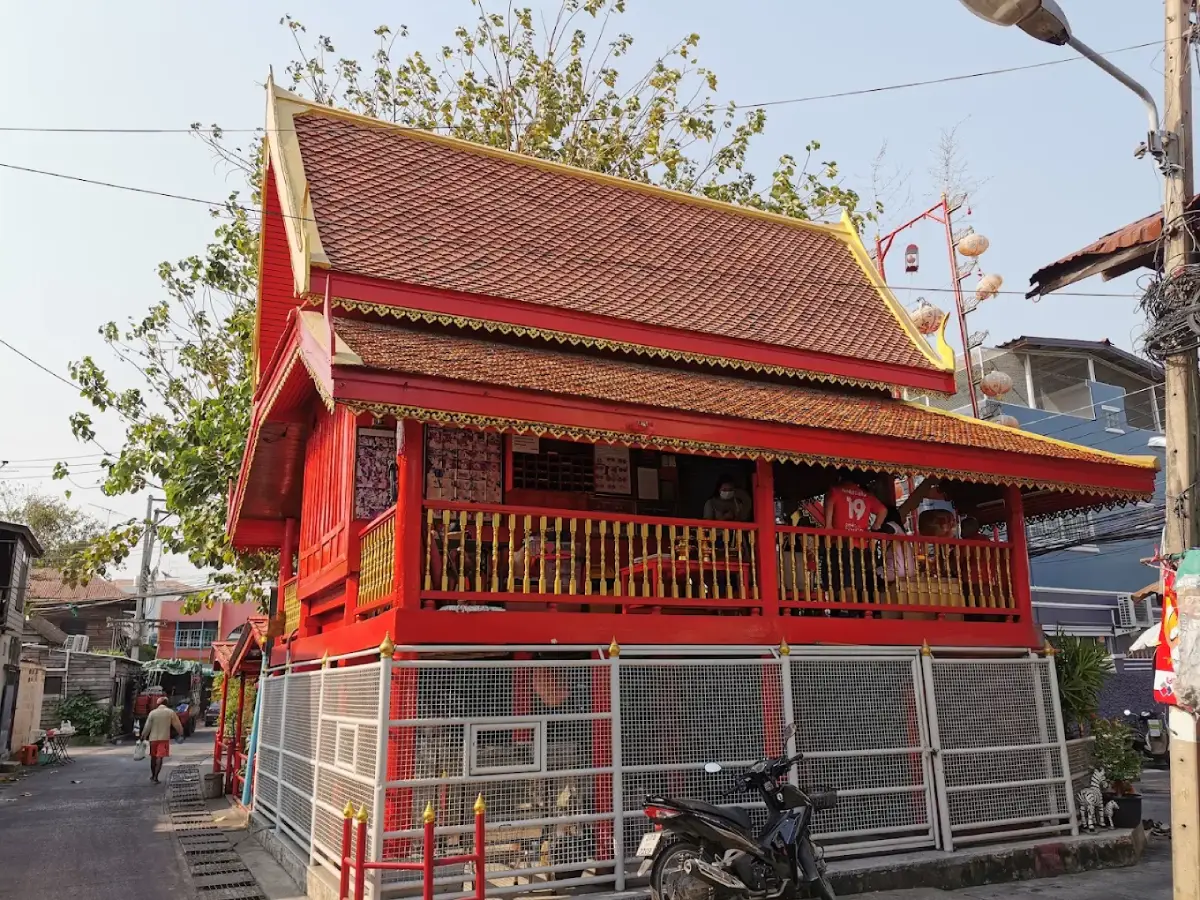
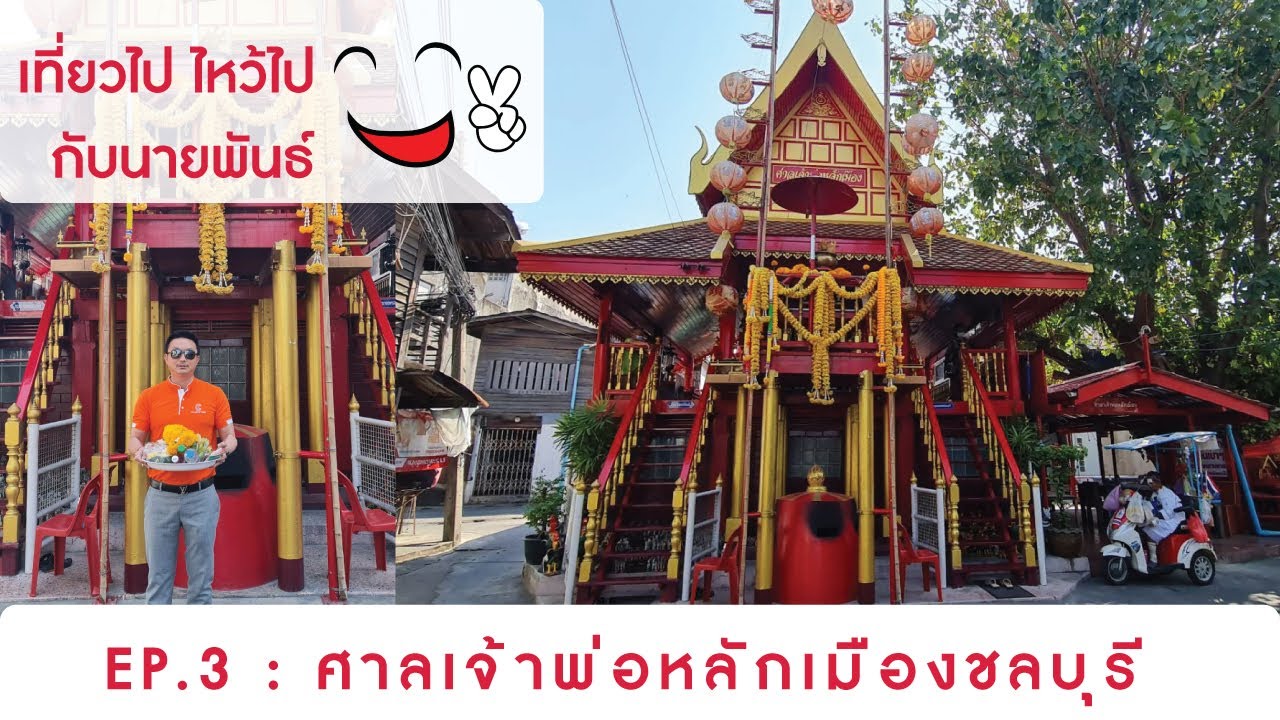
The shrine's present appearance includes decorative features influenced by Chinese religious architecture. Red and gold are prominent colors, and Chinese lanterns contribute to the distinctive character of the building. Its interior contains a principal worship area with altars and offerings arranged according to local customs. The combination of artistic influences reflects the cultural diversity of a coastal trading community whose residents interacted with people from several backgrounds.
Red and gold are important colors in Chinese religious art, often associated with auspiciousness, prosperity, and respect for sacred figures. Their use at the shrine creates a distinctive visual character. The architectural decoration also differentiates the building from Thai Buddhist monasteries, where ordination halls, viharns, and stupas follow different artistic and ceremonial traditions.
The principal worship area houses the objects of devotion associated with Chao Pho Lak Mueang. Visitors present flowers, garlands, fruit, and other offerings according to local custom. The organization of the interior reflects its function as an active place of worship. During important occasions, the space accommodates successive groups of residents coming to pay their respects.
The name Sirimahamongkhon Chonburi was bestowed by Supreme Patriarch Somdet Phra Nyanasamvara of Wat Bowonniwet Vihara in 2007. The name is recorded in a letter from the Supreme Patriarch's Secretariat, reference P 505/2550, dated July 3, 2007. Its auspicious meaning is associated with the welfare and prosperity of Chonburi, and it is now used alongside the shrine's traditional community name.
The naming in 2007 marked another significant stage in the shrine's history. It demonstrated recognition of a place that had already served local worshippers for generations. The date does not represent the construction of the original shrine but the formal bestowal of a new name upon an established sacred landmark.
A major restoration took place in 1949, when Chonburi Municipality allocated 50,000 baht toward the repair of the shrine. The project reflected public concern for the condition of a sacred place important to the community. Municipal support helped maintain the building for continued worship and local ceremonial activities.
Another extensive restoration was carried out between 1996 and 1999, supported by public donations totaling approximately 1.2 million baht. The contributions demonstrated the strong relationship between local residents and the shrine. Restoration was not merely a construction project; it was also an expression of shared responsibility for preserving a cultural landmark.
The shrine's maintenance has involved local supporters, the surrounding community, and Chonburi Municipality at different points in its history. This combination of municipal involvement and public donations has helped preserve its religious and cultural functions. The restoration projects also demonstrate the community's long-term commitment to safeguarding the shrine for future generations.
Chao Pho Lak Mueang Shrine has historical connections with the local Kong Khao tradition. Accounts describe an annual ceremony beginning on the sixth waxing day of the sixth lunar month and continuing for three days. The celebrations included spirit-medium practices and offerings near the Bang Pla Soi waterway. The tradition is an important part of the shrine's historical identity.
The Kong Khao ceremony involved communal offerings and respect for sacred powers according to local traditions. Its associations include ideas of abundance and collective well-being. The ceremonial setting near the water also reflects the relationship between local beliefs and the economic life of an old coastal settlement.
Belief in Chao Pho Lak Mueang represents a community guardian tradition rather than a ceremony identical to Buddhist monastic worship. Residents could participate in Buddhist merit-making at nearby temples while also showing respect at the guardian shrine. These practices have coexisted within the same local society, each retaining its own purpose and customary forms.
Chonburi's buffalo racing tradition is also linked with the historical setting of Tha Kwian Market. Water buffalo were used to transport agricultural goods by cart, making them essential to the rural economy. The gathering of farmers, traders, carts, and buffalo contributed to activities that later developed into one of the province's distinctive cultural celebrations.
Modern Chonburi is a major center of industry, trade, tourism, and maritime activity. Nevertheless, Bang Pla Soi preserves important evidence of its older urban identity through temples, shrines, markets, and historic streets. Chao Pho Lak Mueang Shrine offers insight into a side of Chonburi that is less associated with beaches and modern tourist resorts and more closely connected with the everyday history of a coastal community.
Visitors can explore the character of old Bang Pla Soi through its interconnected streets and neighborhoods. Commercial buildings, local shops, Buddhist temples, and sacred sites occupy an area that developed from earlier trading settlements. The shift from waterborne commerce to road transport is reflected in the townscape, while historical names continue to preserve aspects of its former geography.
The shrine is particularly valuable to travelers interested in community history. The stories of Saphan Yao, Tha Kwian Market, Sala Fang Tham, and Wat Yai Intharam form an interconnected historical narrative. These sites belonged to the same urban environment, where trade, transportation, religion, and public gatherings shaped the life of Bang Pla Soi.
Wat Yai Intharam is notable for its standing as an important royal Buddhist temple and for its connections with the history of Chonburi town. Its religious buildings and artistic features offer opportunities to study the area's Buddhist traditions. Combining a visit to the temple with the guardian shrine reveals the diversity of sacred sites respected by the same community.
Wat Ton Son is another temple associated with the historical landscape of Tha Kwian Market. Its appearance in accounts of old Bang Pla Soi demonstrates how temples served as geographical reference points within the town. Place names and temple locations therefore help preserve knowledge about the organization of former trading neighborhoods.
Ho Phra Phuttha Sihing Ming Mongkhon Sirinat is an important Buddhist worship hall within central Chonburi. It houses a revered replica of Phra Phuttha Sihing and forms part of the town's cultural and religious landmarks. Visiting it alongside Chao Pho Lak Mueang Shrine offers an opportunity to distinguish between devotion to a Buddha image and the worship of a community guardian figure.
Wat Noen Sutthawat is another local Buddhist temple associated with the religious life of Chonburi town. It is included among the cultural attractions presented by Chonburi Municipality. The temple contributes to the network of monasteries and sacred landmarks that form part of the historical urban area.
Wat Khrueawan and Wat Kamphaeng are additional temples associated with Chonburi's municipal heritage. Both are part of the town's religious and community history. Their locations illustrate the distribution of Buddhist institutions across neighborhoods that developed around the old commercial streets of the city.
The King Chulalongkorn Monument in central Chonburi is connected with the history of provincial administration during the Rattanakosin period. Royal visits to Chonburi during different reigns demonstrate the relationship between the coastal town and the monarchy, as well as the administrative developments that transformed the region during the modern era.
The historic Chonburi Provincial Court building is another landmark associated with the evolution of public administration. Its architecture reflects the development of government institutions during the Rattanakosin period. Visiting the building and the surrounding historic district adds a civic and architectural dimension to the study of Chonburi's local heritage.
The Chonlamakwithi Coastal Road and Bridge is a modern waterfront landmark offering views across Chonburi's coastal landscape. Its presence illustrates the continuing transformation of transportation and public space along the shore. Viewed in the context of the former Saphan Yao pier, the coastal route demonstrates how the relationship between the city and the sea has changed over time.
Tha Ruea Phli Fishing Market is a local attraction associated with seafood commerce and the fishing traditions of Chonburi. It reflects the continuing importance of coastal resources to the city's economy and cuisine. Combining a market visit with the historical shrine connects the stories of spiritual belief and maritime livelihoods.
Khao Sam Muk and Ang Sila are additional destinations in Mueang Chonburi District, noted for coastal views, shrines, seafood markets, and the traditions of local communities. These areas illustrate the variety of cultural influences along Thailand's eastern coast, including traditions associated with Thai and Thai-Chinese families.
Na Jasa Tai Chue Shrine in Ang Sila is an important Chinese-style religious attraction known for its elaborate architecture and decorations. Its large complex differs considerably from the older community shrine at Bang Pla Soi. Exploring both sites provides insight into the variety of Chinese-influenced sacred architecture found within Chonburi Province.
Bang Saen Beach is another famous destination in Mueang Chonburi District, accessible from the old town by major roads. The beachfront includes restaurants, public recreation spaces, and coastal attractions. Visiting Chao Pho Lak Mueang Shrine before continuing to Bang Saen adds historical and cultural depth to a journey that might otherwise focus primarily on seaside leisure.
Chonburi's food culture reflects its history as both a coastal settlement and a regional trading center. Seafood, Thai-Chinese dishes, noodles, rice dishes, and local specialties are widely available. Exploring the restaurants of Bang Pla Soi provides an opportunity to appreciate everyday culinary traditions alongside the area's temples and historic streets.
Dining options in Bang Pla Soi include Parichat Pad Thai near Wat Yai Intharam, Hia Tu in the Buriban Market neighborhood, Ruean Bang Pla Soi on Wachira Prakan Road, and Ploen Talay in Soi Khu Kamphon. These establishments offer different menus and atmospheres, from local noodle dishes and quick meals to Thai seafood.
Hia Tu is associated with dishes such as yen ta fo noodles and fish maw soup, while Parichat Pad Thai is a familiar establishment in the Wat Yai Intharam neighborhood. Ruean Bang Pla Soi offers local Thai dining, and Ploen Talay is known for seafood in a coastal setting. Together, these restaurants illustrate the diverse food culture of the old town.
Other food options include Kuai Chap Rom Pho Wat Noen Branch 2, Spicy Spanish Mackerel Noodles, and Jae Guan Im Vegetarian Restaurant. Their locations within the wider Bang Pla Soi area reflect the continuing importance of small independent restaurants to local commercial life.
Accommodation in Bang Pla Soi and the surrounding urban area includes hotels, budget properties, and residence-style lodging. Staying within the old town offers convenient access to Chao Pho Lak Mueang Shrine, Wat Yai Intharam, and nearby commercial streets. Sukhumvit Road and the local road network provide connections to other attractions in Chonburi.
Rattanachol Hotel is located on Sukhumvit Road, while Likhit Hotel and Sukjai Hotel are situated within older parts of Bang Pla Soi. MT Park and Chok Sa-at provide other accommodation options in the urban area. The variety of properties makes it possible to combine a visit to the shrine with an overnight exploration of the town or a longer journey through Chonburi Province.
Chao Pho Lak Mueang Shrine is accessible from the main streets of central Chonburi. Travelers can follow Sukhumvit Road into the town and continue toward Wachira Prakan Road, Chetchamnong Road, and Soi Thikhamat. Wat Yai Intharam and Sala Fang Tham provide useful reference points for locating the historic shrine.
The surrounding streets are part of an established residential and commercial neighborhood. Unlike a large purpose-built attraction, the shrine occupies a relatively compact urban setting. Access roads are shared with homes, businesses, and other sacred places, while special events may attract additional worshippers to the area.
Travelers arriving from Bangkok can follow Sukhumvit Road or other major highways toward Mueang Chonburi before entering Bang Pla Soi. Navigation should use the name Sirimahamongkhon Chonburi Chao Pho Lak Mueang Shrine or the location near Soi Thikhamat, to distinguish this historic community site from the separate modern provincial city pillar project.
Visitors using buses or other public transport can reach central Chonburi and continue by local hired vehicle to Bang Pla Soi. Wat Yai Intharam is a useful local landmark. Because several cultural destinations are concentrated within the same urban area, visits to temples, markets, and the shrine can be combined without traveling to another district.
Current business listings describe the shrine as open daily from 05:00 to 17:00, with no general admission fee. Flowers, garlands, and other devotional offerings may be purchased or prepared according to individual preference. The shrine continues to receive worshippers during ordinary days as well as important community occasions.
Visitors should observe respectful conduct, follow any displayed instructions, and avoid disturbing people engaged in worship. Offerings and incense should be used only in appropriate areas. Photography should be considerate of worshippers and ceremonial activities, while avoiding unnecessary contact with sacred figures and decorative elements.
Chao Pho Lak Mueang Shrine is a valuable destination for understanding the history of coastal communities in eastern Thailand. Its connections with Tha Kwian Market, the former long pier, and maritime trading routes demonstrate that Chonburi developed from a long-established commercial settlement whose livelihood depended heavily on the sea.
For students and younger visitors, the history of the shrine shows how a relatively small sacred building can possess considerable cultural significance. It illustrates the connections between trade, religion, local memory, and community cooperation. Studying the shrine's surroundings also demonstrates how historical evidence can survive through buildings, place names, and continuing traditions.
The shrine's restoration history reveals the importance of collective participation in heritage preservation. The municipal support provided in 1949 and the public donations raised between 1996 and 1999 helped maintain the sacred building. These efforts show that its importance has been sustained by successive generations of local people.
Chao Pho Lak Mueang Shrine is not a Buddhist monastery containing an ordination hall, stupa, viharn, or resident monastic community as its primary features. It is a community guardian shrine associated with local devotional customs. Visitors interested in traditional Buddhist architecture can explore Wat Yai Intharam, Wat Ton Son, and other nearby monasteries.
The cultural value of Chao Pho Lak Mueang Shrine is not diminished by the historical distinction between a community guardian shrine and an officially established city pillar shrine. Its importance derives from local devotion, traditional ceremonies, and its long association with the Bang Pla Soi community. The site demonstrates how shared beliefs and collective memory can give a place lasting significance independent of its formal administrative origins.
The separate provincial project to construct a new official city pillar shrine is a contemporary undertaking. Provincial authorities have identified an area behind Chonburi Provincial Hall and continued discussions concerning the construction project in 2026. This development is distinct from the established Sirimahamongkhon Chonburi Shrine in Bang Pla Soi and has a different administrative history.
Distinguishing the two places clarifies the development of city-pillar beliefs in Chonburi. The historic shrine grew from the devotional practices of an old commercial neighborhood, while the newer project is intended to establish an official provincial civic landmark. Both reflect the importance attached to sacred symbols of community and place, but they belong to different historical contexts.
The history of Sirimahamongkhon Chonburi Shrine connects local belief with economic and social development. Tha Kwian Market explains the movement of agricultural products and the origins of buffalo racing. Saphan Yao reveals the importance of maritime transportation, while Sala Fang Tham and Wat Yai Intharam demonstrate the religious and educational institutions that supported the old community.
Exploring the shrine alongside other historic landmarks reveals a side of Chonburi very different from the province's modern resort destinations. Bang Pla Soi was once a major trading center with a strong community identity. Although its transport networks and commercial activities have changed, the shrine continues to connect present-day residents with the cultural memory of their town.
Getting There Sirimahamongkhon Chonburi Chao Pho Lak Mueang Shrine is located near Soi Thikhamat, Bang Pla Soi Subdistrict, Mueang Chonburi District, Chonburi 20000, Thailand. It is close to Wat Yai Intharam and Sala Fang Tham. Drivers can approach central Chonburi via Sukhumvit Road before continuing toward Wachira Prakan Road and Chetchamnong Road. Public transport users can travel to central Chonburi and continue by local transport to the historic Bang Pla Soi neighborhood.
Sirimahamongkhon Chonburi Shrine remains an important cultural landmark preserving the history of old Bang Pla Soi. The stories of Saphan Yao, Tha Kwian Market, the Kong Khao ceremony, and the community-supported restorations demonstrate the close relationship between faith and coastal livelihoods. Even as Chonburi has developed into a major economic center of eastern Thailand, the shrine continues to reflect the heritage of its historic urban community.
| Place Name | Chonburi Chao Pho Lak Mueang Shrine (Sirimahamongkhon Chonburi Shrine) |
| Address | Near Soi Thikhamat, Bang Pla Soi Subdistrict, Mueang Chonburi District, Chonburi 20000, Thailand, Close to Wat Yai Intharam and Sala Fang Tham |
| Map Reference | Plus Code 9X7P+X7V, Bang Pla Soi, Mueang Chonburi |
| Type | Historic Community Guardian Shrine and Cultural Heritage Landmark |
| Status | Open to Worshippers; Distinct from the New Official Provincial City Pillar Shrine Construction Project |
| Historical Origins | Exact Foundation Date Unknown; Local Traditions Associate the Shrine with the Late Ayutthaya Period |
| Cultural Significance | A Center of Community Devotion Associated with Historic Bang Pla Soi, Tha Kwian Market, the Former Saphan Yao Pier and the Kong Khao Tradition |
| Origin of the Shrine's Name | The Name Sirimahamongkhon Chonburi Was Bestowed by Supreme Patriarch Somdet Phra Nyanasamvara in 2007, with Official Correspondence Dated July 3, 2007 |
| Major Restorations | 1949, Supported by Chonburi Municipality with 50,000 Baht; 1996–1999, Supported by Public Donations of Approximately 1.2 Million Baht |
| Architectural Character | Community Shrine with Red-and-Gold Decoration, Chinese Lanterns and a Principal Worship Area in Historic Bang Pla Soi |
| Main Areas and Features | 1. Main Chao Pho Lak Mueang Shrine Building 2. Principal Interior Altar 3. Front Offering Area 4. Bodhi Tree and Shrine Surroundings 5. Soi Thikhamat, Associated with the Former Saphan Yao Pier 6. Nearby Sala Fang Tham and Historic Community Area |
| Historic Annual Tradition | Kong Khao Ceremony, Traditionally Held from the Sixth Waxing Day of the Sixth Lunar Month for Three Days, with Local Spirit-Medium Practices |
| Relevant Local Authority | Chonburi Municipality and Community Supporters Involved in Historic Preservation and Restoration |
| Open Days | Daily |
| Opening Hours | 05:00 – 17:00 |
| Admission Fee | Free Admission |
| Local Authority Contact | Chonburi Municipality, Tel. +66 38 283 449 |
| Getting There | Travel via Sukhumvit Road into Central Chonburi, Continue toward Wachira Prakan Road and Wat Yai Intharam, Then Enter the Soi Thikhamat Area in Bang Pla Soi |
| Nearby Attractions in Mueang Chonburi | 1. Wat Yai Intharam, Bang Pla Soi 2. Sala Fang Tham, Beside the Historic Shrine Area 3. Wat Ton Son, Bang Pla Soi 4. Ho Phra Phuttha Sihing Ming Mongkhon Sirinat, Central Chonburi 5. Wat Noen Sutthawat, Central Chonburi 6. Wat Khrueawan, Central Chonburi 7. Tha Ruea Phli Fishing Market, Chonburi Town 8. Chonlamakwithi Coastal Road and Bridge, Chonburi Town |
| Restaurants in Bang Pla Soi | 1. Parichat Pad Thai, Bang Pla Soi, Tel. +66 83 000 3613 2. Hia Tu Restaurant, Bang Pla Soi, Tel. +66 87 511 6452 3. Ruean Bang Pla Soi, Wachira Prakan Road, Tel. +66 88 206 9946 4. Ploen Talay Restaurant, Soi Khu Kamphon, Tel. +66 64 246 6642 5. Kuai Chap Rom Pho Wat Noen Branch 2, Tel. +66 80 835 0730 6. Spicy Spanish Mackerel Noodles, Tel. +66 86 837 6738 7. Jae Guan Im Vegetarian Restaurant, Phet Ban Suan Soi 11, Tel. +66 85 092 7759 |
| Accommodations in Central Chonburi | 1. Chok Sa-at Hotel, Bang Pla Soi, Tel. +66 95 832 8030 2. Likhit Hotel, Chetchamnong Road, Tel. +66 38 273 810 3. Sukjai Hotel, Phraya Satcha Road, Tel. +66 38 286 224 4. Rattanachol Hotel, Sukhumvit Road, Tel. +66 38 275 602 5. MT Park, Bang Pla Soi, Tel. +66 86 301 4042 6. Nam Chai Hotel, Posayanon Road, Tel. +66 38 276 713 7. Sukchai Bungalow, Bang Pla Soi, Tel. +66 64 769 6234 |
Frequently Asked Questions (FAQ)
Q: Where is Chonburi Chao Pho Lak Mueang Shrine located?
A: Sirimahamongkhon Chonburi Shrine is located near Soi Thikhamat, Bang Pla Soi Subdistrict, Mueang Chonburi District, Chonburi 20000, Thailand, close to Wat Yai Intharam and Sala Fang Tham.
Q: What are the opening days and hours?
A: Current business listings show the shrine as open daily from 05:00 to 17:00.
Q: Is there an admission fee?
A: No. General admission is free, while flowers, garlands, and other offerings may be purchased voluntarily.
Q: Is this Chonburi's officially established provincial city pillar shrine?
A: No. It is a historic community guardian shrine. A separate modern project has been undertaken to construct an official provincial city pillar shrine elsewhere in Chonburi.
Q: When was Sirimahamongkhon Chonburi Shrine established?
A: Its exact foundation date is unknown. Local historical traditions associate it with the late Ayutthaya period. Major restorations took place in 1949 and between 1996 and 1999.
Q: How did the shrine receive the name Sirimahamongkhon Chonburi?
A: Supreme Patriarch Somdet Phra Nyanasamvara bestowed the name in 2007, as documented in official correspondence dated July 3, 2007.
Q: Which local traditions are associated with the shrine?
A: The shrine is historically associated with the Kong Khao ceremony, traditionally held for three days from the sixth waxing day of the sixth lunar month. The nearby Tha Kwian Market is also connected with the origins of Chonburi's buffalo racing tradition.
Q: What attractions can visitors explore nearby?
A: Nearby cultural attractions include Wat Yai Intharam, Sala Fang Tham, Wat Ton Son, Ho Phra Phuttha Sihing Ming Mongkhon Sirinat, Wat Noen Sutthawat, Tha Ruea Phli Fishing Market, and the Chonlamakwithi coastal route.
 Category: ●Places of Worship
 Group: ●Other Sacred Sites
Last Update : 5 DayAgo
 Last Update : 5 DayAgo
 Click to Access the Navigation Map GPS
Chonburi Chao Pho Lak Mueang Shrine Map
Recommend

 Art, Culture and Heritage
 Historical Sites and Monuments(4)
 Landmarks and Memorials(4)
 Royal Palace(1)
 Art, Craft Centres, Tradition(5)
 Museums(11)
 Art Gallery(1)
 Educational Places
 Educational Gardens, Farm(2)
 Training Center(2)
 Temple(42)
 Church(1)
 Mosque(2)
Other Sacred Sites(15)
 Suburban Living
 Village, Community(5)
 Local Market(4)
 Floating Market(1)
 Nature and Wildlife
 National Parks and Marine Reserves(2)
 Mountain (Doi)(2)
 Dam, Reservoir, Lake(4)
 Waterfalls(3)
 Caves(3)
 Bays and Beaches(20)
 Islands(7)
 Other natural attractions(1)
 Entertainment and Agricultural
 Zoos and Aquariums(7)
 Animal camps and shows(2)
 Stadium(9)
 Farms, Parks and Ecotourism(9)
 Amusement Park(3)
 Waterpark(5)
 Theater(5)
 Cinema(1)
 Outdoor and Adventure Activities(4)
 Shopping
 Shopping and Night Market(1)
 Travel Articles, Recipes
 Travel Review, Food Review(1)


