
lovethailand home >Northeastern Travel Attractions >Chaiyaphum Travel Attractions >Muang Chaiyaphum >Nai Muang > Chaiyaphum City Pillar Shrine
TL;DR: Chaiyaphum City Pillar Shrine is located at Nong Pla Thao, Nai Mueang Subdistrict, Mueang Chaiyaphum District, Chaiyaphum Province 36000, Thailand, open Daily, hours 07:00 – 17:00.
Chaiyaphum City Pillar Shrine
Open Days: Daily
Opening Hours: 07:00 – 17:00
Chaiyaphum City Pillar Shrine is an important sacred landmark in Chaiyaphum Province, northeastern Thailand. Located within the religious and ceremonial complex surrounding Chao Pho Phraya Lae Shrine beside Nong Pla Thao Lake in Nai Mueang Subdistrict, Mueang Chaiyaphum District, the site holds a significant place in the historical memory and spiritual life of the local community. It is closely associated with Phraya Phakdi Chumphon (Lae), the first governor and founding figure of Chaiyaphum, who is respectfully known as Chao Pho Phraya Lae. The complex includes the city pillar, the main shrine, ceremonial pavilions, worship areas, and lakeside grounds. It also serves as a principal venue for the annual Bun Duean Hok festival, during which residents honor the city's founder through traditional ceremonies, Bai Sri offerings, commemorative dances, and cultural processions.
The importance of Chaiyaphum City Pillar Shrine extends beyond its function as a place of worship. It is a living expression of the province's historical identity, collective memory, and enduring respect for the people who established the town. Generations of residents have visited the shrine to pay homage to Phraya Phakdi Chumphon (Lae), remembering his contributions to the development of Chaiyaphum and his sacrifice during a turbulent period in northeastern Thai history. The site remains closely connected with community life, traditional beliefs, and public ceremonies.
The shrine complex stands beside Nong Pla Thao, a body of water that has long been associated with the surrounding community. Its lakeside setting gives the sacred grounds a distinctive atmosphere, with open spaces, trees, walking areas, and nearby public parks providing a peaceful contrast to the commercial streets of central Chaiyaphum. The relationship between the shrine and the lake is especially important because local historical traditions associate this location with the final moments of Phraya Phakdi Chumphon (Lae).
For local residents, the city pillar symbolizes the stability, prosperity, and spiritual protection of their community. The veneration of Phraya Lae, meanwhile, is rooted in respect for a historical individual regarded as the founder and first governor of the town. These traditions exist alongside one another in the Nong Pla Thao sacred complex, creating a setting where the history of civic administration, local ancestor veneration, and ceremonial practices are closely intertwined.
Chaiyaphum Province has a long history of settlement shaped by its geographical position between the plains, waterways, and mountain ranges of northeastern Thailand. The region connected agricultural communities with neighboring territories and played a role in the movement of people during the early Rattanakosin period. The development of Chaiyaphum as a town formed part of broader political and social transformations taking place across the northeastern territories of Siam.
One of the central figures in this history is Phraya Phakdi Chumphon (Lae), commonly called Chao Pho Phraya Lae. Local people honor him as the founder and first governor of Chaiyaphum. His life is associated with the establishment of communities, the organization of local administration, and the political relationships between Siam and neighboring territories during the early nineteenth century. His memory survives through local historical accounts, monuments, shrines, ceremonies, and annual commemorations.
Phraya Phakdi Chumphon is especially remembered for his loyalty to Siam during the conflict involving Vientiane in the reign of King Rama III. The political upheaval affected many towns and settlements across the northeastern region. Within the historical traditions of Chaiyaphum, Phraya Lae is remembered as a courageous leader whose actions during this period became inseparable from the identity of the town.
According to local historical accounts, Phraya Phakdi Chumphon (Lae) was captured and executed in 1826 beneath a large tamarind tree beside Nong Pla Thao. This event became a defining moment in Chaiyaphum's collective memory. Residents have continued to honor him as a local hero whose sacrifice represented loyalty, courage, and dedication to the community. The lakeside location subsequently became a sacred place where people gathered to remember him and offer their respects.
The large tamarind tree associated with the event occupies an important place in the historical traditions surrounding the shrine. In the early period, residents established a small wooden spirit shrine beneath the tree. Although modest in construction, this original shrine represented the community's desire to preserve the memory of Phraya Lae and maintain a place for ceremonial offerings. As devotion spread and the number of worshippers grew, the sacred site developed into a larger complex.
The earliest shrine illustrates how communities preserve their history through physical landmarks and religious customs. The small structure beneath the tamarind tree served as more than a place for offerings. It connected the landscape with the memory of a historical figure, enabling successive generations to associate a particular location with an important event in the town's past.
In 1951, residents of Chaiyaphum joined together to construct a shrine and a likeness of Phraya Lae for public worship. This development reflected the growing importance of his memory and the community's commitment to preserving its historical and spiritual heritage. The image of Phraya Lae became a central focus of devotion, while the permanent shrine provided a more established setting for traditional ceremonies.
Another important stage in the site's development occurred in 1968, when a new shrine was constructed under the name Phraya Phakdi Chumphon (Lae) Shrine. The improvement of the buildings and grounds reflected the expanding role of the site in provincial life. What had originally been a relatively small community shrine gradually became a destination for worshippers from across Chaiyaphum and neighboring areas.
The history of the shrine therefore includes several stages: the original wooden structure near the tamarind tree, the shrine and statue erected through community cooperation in 1951, and the larger shrine developed in 1968. These developments show how a sacred landmark can evolve as a community grows while maintaining its connection to the historical individual at the center of its traditions.
Chaiyaphum also has a separate monument dedicated to Phraya Phakdi Chumphon (Lae), situated at a major roundabout near the entrance to the town center. Constructed in 1975 through cooperation among public authorities, merchants, and residents, the monument serves as a prominent civic memorial. Although it honors the same historical figure, it is distinct from the lakeside shrine at Nong Pla Thao. The monument is frequently used for public commemorations and ceremonial dance performances, while the Nong Pla Thao shrine is closely associated with worship and traditional offerings at the historic lakeside location.
Understanding the distinction between these two landmarks is important when exploring Chaiyaphum's heritage. The city-center monument presents Phraya Lae as a publicly commemorated historical figure and symbol of the province. The lakeside shrine preserves the ceremonial traditions and local accounts associated with his death. Together, the two landmarks help communicate the importance of the town's founding figure to residents and visitors.
The Chaiyaphum City Pillar and Chao Pho Phraya Lae shrine complex contains several important features, including the main shrine building, the city pillar area, ceremonial pavilions, offering spaces, and open grounds. These areas serve different purposes, from individual worship to large public ceremonies. Their arrangement allows visitors to experience the sacred setting while also appreciating its relationship with the surrounding lakeside landscape.
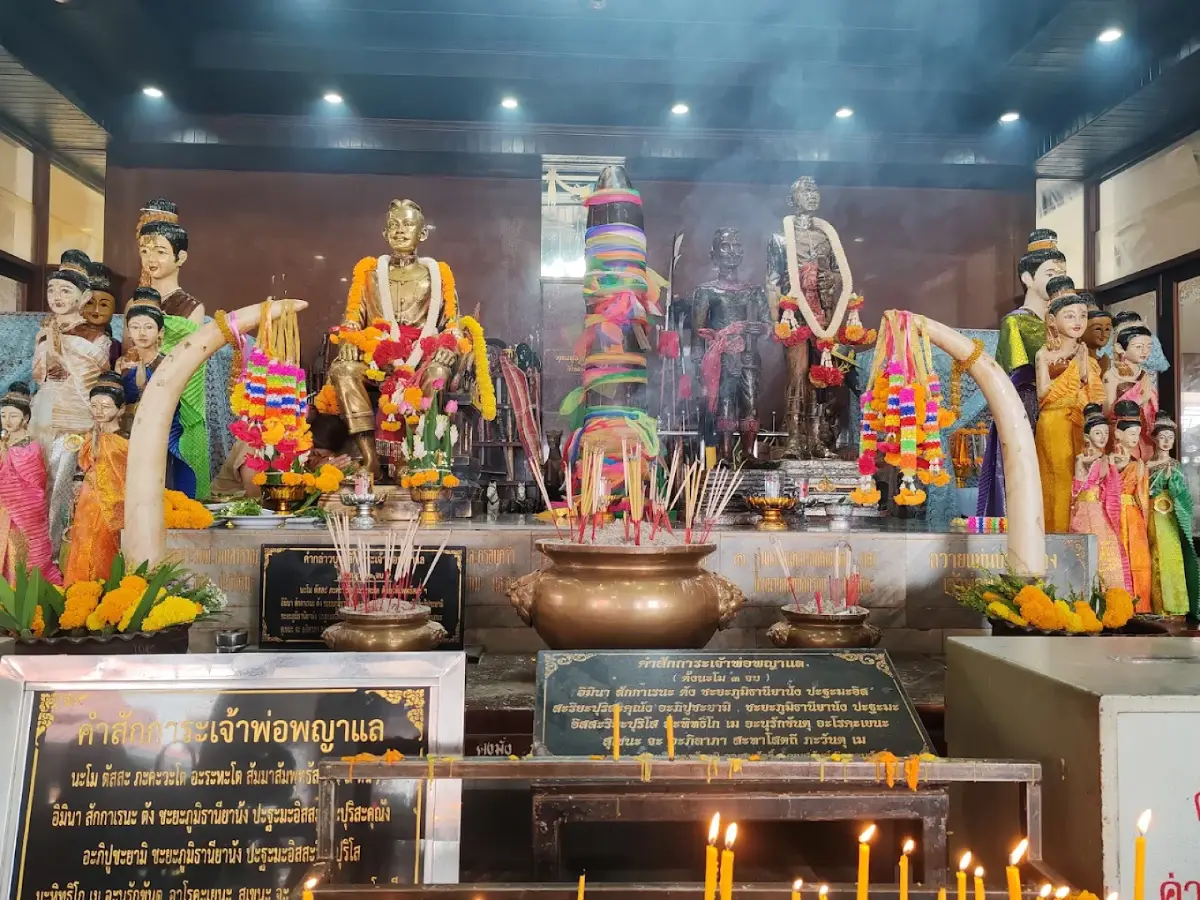
The main shrine is the principal place where devotees pay their respects to Phraya Lae. The building contains sacred representations associated with local worship traditions. Floral garlands, offerings, and decorative fabrics are commonly used to express devotion. The interior arrangement emphasizes the focal point of worship while providing space for visitors to conduct their personal ceremonies.
Architectural features within the complex combine Thai religious design with colorful decorative details, some of which show Chinese artistic influences. Ornamental dragon motifs, green-tiled roofs, brightly colored columns, and decorative structures contribute to the visual character of the site. Such artistic combinations are found at sacred places throughout Thailand and reflect the interaction of different cultural traditions within local religious life.
The city pillar itself represents a longstanding Thai concept of civic stability and auspicious protection. In traditional belief, a city pillar symbolizes the establishment of a settlement and its enduring prosperity. Respect for the pillar therefore forms part of a wider cultural tradition that connects the physical founding of a town with its spiritual well-being.
The ceremonial pavilion is another important part of the complex. It is used for the presentation of offerings, Bai Sri arrangements, and traditional rituals, particularly during the annual Bun Duean Hok festival. The pavilion and adjoining open areas accommodate gatherings that involve community representatives, government officials, and worshippers from different parts of the province.
The nearby San Phiang Ta and ceremonial shrine structures illustrate the diversity of sacred functions within the complex. Rather than being limited to a single building, the site contains several interconnected places for worship and ritual activity. Each contributes to the broader religious landscape associated with the founder of Chaiyaphum.
Open courtyards surrounding the buildings provide space for ceremonial gatherings and movement between worship areas. Their importance becomes especially apparent during public festivals, when large offerings and processions require more space than is available inside the shrine. The architectural and spatial arrangement of the complex therefore reflects its dual role as a place of personal devotion and a center for community ceremonies.
Nong Pla Thao is an essential part of the shrine's identity. The lake is connected with historical narratives about Phraya Lae and also provides a peaceful natural setting. Trees, waterside paths, and open spaces create an environment where visitors can combine a cultural visit with time spent enjoying the local landscape.
Nong Pla Thao Public Park, situated beside the shrine, functions as a recreational area for local residents. Walking routes and public spaces around the water attract people seeking exercise, fresh air, and relaxation. The proximity of the park to the shrine creates a distinctive relationship between a sacred landmark and the everyday activities of the surrounding community.
A giant turtle sculpture and other lakeside features provide additional points of interest near the shrine. These attractions contribute to the area's recreational character and offer opportunities for photography and family visits. Together with the lake and public park, they make the Nong Pla Thao district more than a destination for religious ceremonies alone.
Residents visit the shrine to express gratitude, seek blessings, and mark important occasions in their lives. Requests for good fortune, safety, success, and personal well-being form part of the living traditions surrounding Phraya Lae. Many families pass on these customs to younger generations, maintaining a direct relationship between the shrine and their understanding of local identity.
Traditional offerings include flowers, incense, candles, garlands, and other items used according to local ceremonial customs. Some worshippers present Bai Sri arrangements or make offerings associated with personal vows. These practices reflect individual faith and respect for the historical figure revered by the community.
Bai Sri occupies a particularly important place in the traditions of Chaiyaphum. In northeastern Thai culture, Bai Sri arrangements are associated with blessing ceremonies, welcoming rituals, and the symbolic restoration of spiritual well-being. Presenting Bai Sri to Phraya Lae is therefore a meaningful expression of remembrance and reverence rather than simply a decorative offering.
One local narrative concerns Mae Bunmi, the wife of Phraya Phakdi Chumphon (Lae). According to the tradition, she and other residents organized welcoming ceremonies and Bai Sri processions when he returned from duties involving the boundaries of the town. This narrative became associated with the ceremonial practices later developed in his honor.
Following the death of Phraya Lae, the symbolic meanings of welcoming and honoring him were continued through worship and commemorative ceremonies. The community preserved the practice of presenting Bai Sri offerings at the Nong Pla Thao shrine, and the tradition gradually developed into one of the defining cultural expressions of Chaiyaphum Province.
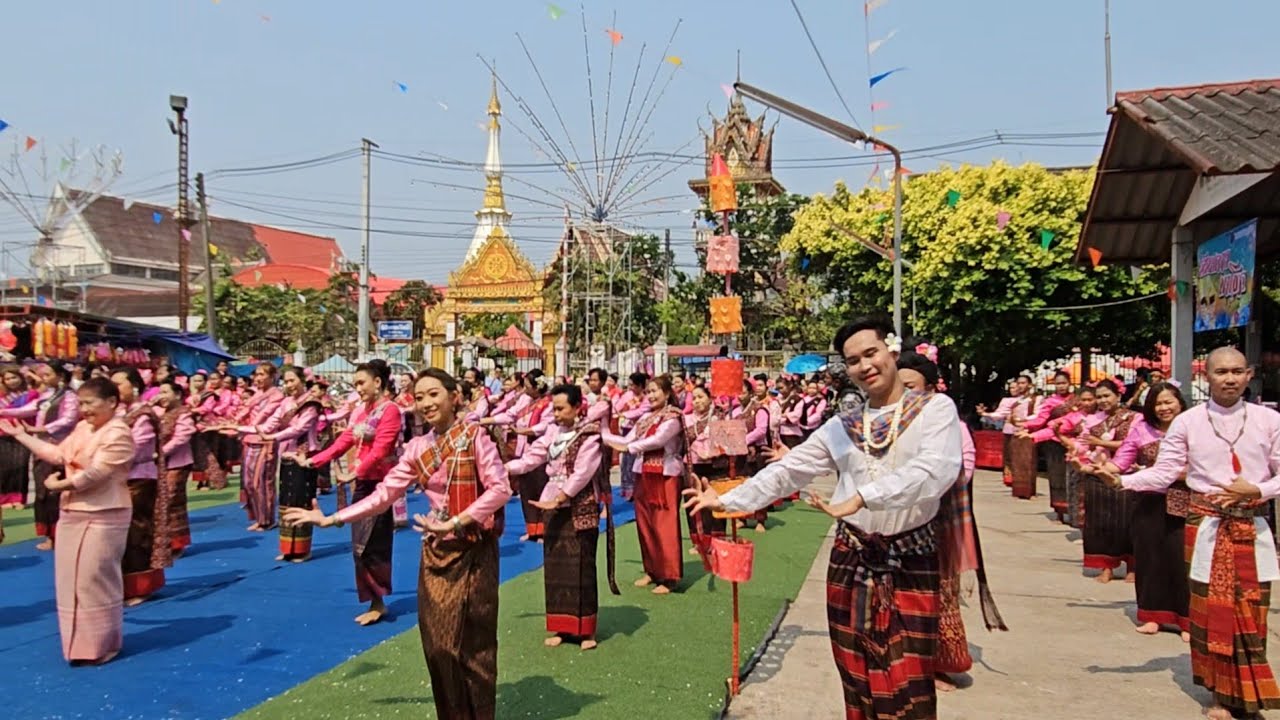
The most important annual event associated with the shrine is Bun Duean Hok, literally the sixth lunar month merit-making festival. The celebration honors the courage, sacrifice, and achievements of Phraya Phakdi Chumphon (Lae). Its activities include sacred offerings, ceremonial dances, processions carrying elaborately decorated Bai Sri arrangements, and performances representing the cultural traditions of northeastern Thailand.
Bun Duean Hok serves as both a religious and community occasion. Participants come not only from neighborhoods around Nong Pla Thao but also from other districts of Chaiyaphum. Public institutions, local organizations, craftspeople, performers, and residents work together to prepare the event. This broad participation has made the festival an important part of provincial cultural life.
In its earlier form, the festival was primarily a community ceremony centered on the shrine and the historic tamarind tree. Residents of nearby communities, including Ban Khi Lek Yai, Nong Pla Thao, and Nong Lot, took part in offerings and ceremonial dances. These traditions reflected the local belief that Phraya Lae remained a spiritual guardian of the community.
As the town developed, the festival expanded with greater support from municipal authorities, government agencies, community committees, and the private sector. Larger processions, traditional performances, and public cultural activities were introduced while the ceremonial offerings remained central to the event.
In 1993, the shrine committee developed the idea of organizing a Bai Sri procession connected with the traditional welcoming of Phraya Lae into the town. Communities were encouraged to create and decorate ceremonial arrangements, forming processions that expressed both devotion and local craftsmanship. This initiative contributed significantly to the development of the modern festival.
From 1996 onward, the celebration developed into a longer event, often extending over nine days and nights. Alongside the religious ceremonies, programs included traditional performances, local product exhibitions, community entertainment, and commercial activities. The festival became an occasion when spiritual devotion, cultural preservation, and the local economy could be experienced together.
Traditional dance performances honoring Phraya Lae are among the most recognizable features of the celebration. Participants often wear coordinated costumes and perform in large groups, creating an impressive display of unity and devotion. The choreography and music connect the festival with the artistic traditions of northeastern Thailand and reflect the community's continuing commitment to honoring its founding figure.
The Bai Sri procession also highlights the skills of local craftspeople. Ceremonial arrangements are decorated with considerable care, drawing on traditional forms and materials. Different community groups contribute their own designs and artistic expressions, making the procession an opportunity to preserve craftsmanship and pass knowledge to younger generations.
The festival belongs to the broader cultural setting of Isan's lunar calendar traditions. Although the ceremonies honoring Phraya Lae are distinctive to Chaiyaphum, their timing during the sixth lunar month connects them with seasonal religious and community practices throughout northeastern Thailand.
In 2026, Chaiyaphum Province held its Bun Duean Hok celebration from April 20 to April 28, covering nine days. Chao Pho Phraya Lae Shrine at Nong Pla Thao was a principal ceremonial location. The program included worship ceremonies, dances honoring Phraya Lae, Bai Sri processions, cultural performances, and displays of local products.
On April 20, 2026, commemorative dance performances and opening activities took place in Chaiyaphum town. On April 22, a major Bai Sri procession and offering ceremony were organized at Chao Pho Phraya Lae Shrine, with the provincial governor presiding. These events demonstrated that the shrine continued to function as an active ceremonial landmark and a central location for the province's cultural traditions.
The significance of Bun Duean Hok extends beyond the preservation of historic rituals. Preparations involve collaboration between generations, from the construction of ceremonial arrangements and the rehearsal of dances to the organization of community activities. These shared responsibilities help maintain cultural knowledge and strengthen relationships among residents.
The shrine is associated with a local management committee and relevant public organizations involved in preserving the site and organizing ceremonies. It is not a Buddhist monastery and therefore does not have an abbot. Religious and cultural events are coordinated through the shrine committee, local authorities, community representatives, and participating institutions.
Chao Pho Phraya Lae Shrine provides an important example of historical figure veneration within Thai local culture. Its traditions combine respect for a person remembered for contributions to the community with beliefs concerning spiritual protection and prosperity. Similar customs are found elsewhere in Thailand, where communities honor historically significant figures through shrines, annual rituals, and commemorative events.
The history of Phraya Lae is preserved not only through written records but also through the physical and cultural environment of Chaiyaphum. Place names, statues, sacred buildings, public ceremonies, and community stories all contribute to the continuing recognition of his role in the town's establishment. The shrine therefore represents an important form of living historical memory.
One of the most distinctive aspects of the shrine is its association with an actual location described in local historical tradition. Nong Pla Thao is not merely an attractive natural backdrop. It is part of the narrative of Phraya Lae's life and death, and its physical presence reinforces the relationship between history and landscape.
For those interested in sacred architecture, the site offers several noteworthy elements, including the principal shrine, the ceremonial pavilion, and colorful decorative structures. Traditional Thai roof forms exist alongside features influenced by Chinese shrine design, demonstrating how different artistic languages have been adapted to local ceremonial purposes.
The distribution of spaces throughout the complex also illustrates the relationship between ritual activities and architectural design. Indoor worship areas serve individuals and small groups, while ceremonial pavilions and open courtyards accommodate larger gatherings. The adjoining public park provides recreational space, creating a multifunctional landscape used throughout the year.
In the morning, the Nong Pla Thao district offers a quieter atmosphere for worship and lakeside walks. Later in the day, the public areas become more active as residents visit the park for leisure and exercise. During the annual festival, the setting changes dramatically, with ceremonies, processions, performers, and crowds filling the sacred grounds and surrounding streets.
The shrine is also valuable for understanding the relationship between local spiritual beliefs and political history. Phraya Lae is remembered as a historical administrator and community leader whose image became an object of reverence. This transformation from historical figure to spiritual guardian illustrates how communities interpret and preserve events from their past through cultural practices.
When viewed together, the Nong Pla Thao shrine and the city-center Phraya Lae Monument reveal two complementary ways of preserving history. The monument emphasizes public commemoration and recognition, while the shrine maintains living traditions of worship and offerings. Both help younger generations understand the importance of Chaiyaphum's founding figure.
Other cultural attractions in Chaiyaphum town can be explored alongside the shrine. The Chaiyaphum Ancient Textile Museum, also known as Huen Kham Mu, introduces visitors to local textile heritage, traditional craftsmanship, and aspects of the province's cultural identity. Its collections and displays provide a different perspective on the skills and traditions maintained by local communities.
The town's walking street and Night Bazaar district offer opportunities to experience everyday commerce, local food, and the atmosphere of central Chaiyaphum. Together with the shrine, these areas illustrate the relationship between religious landmarks and the surrounding urban community.
Chaiyaphum Kanchanaphisek Park is another public green space in the town. It provides an additional setting for recreation, while Nong Pla Thao Public Park is distinguished by its direct connection with the shrine and its historic lakeside landscape. These public spaces play an important role in the daily life of Chaiyaphum residents.
Wat Pairi Phinat, also known as Wat Klang Mueang Kao, is a Buddhist temple associated with one of Chaiyaphum's established urban communities. Visiting the temple provides a contrast between the religious practices of a Buddhist monastery and the historical figure veneration observed at the Nong Pla Thao shrine.
Wat Chaiyaphum Wanaram is another Buddhist temple in Mueang Chaiyaphum District. It serves local Buddhist communities through religious observances and merit-making activities. The presence of temples alongside guardian shrines illustrates the diversity of sacred places and spiritual traditions within the province.
Prang Ku Chaiyaphum is an ancient historical site associated with Khmer architectural heritage. Its archaeological significance provides evidence of cultural activity in the region long before the establishment of modern Chaiyaphum during the Rattanakosin period. Including Prang Ku in a cultural journey offers a broader understanding of the province's historical development.
Tat Ton National Park is one of the province's major natural attractions, featuring waterfalls, streams, forested landscapes, and the distinctive environment of northeastern Thailand. The park offers a contrasting experience to the historical and religious attractions of central Chaiyaphum, demonstrating the province's combination of cultural and natural heritage.
Food is an important part of a visit to Chaiyaphum. The town offers a wide range of northeastern Thai dishes, including som tam, larb, spicy soups, grilled meats, and sticky rice. Traditional food culture emphasizes the use of local ingredients and the sharing of dishes, reflecting the social traditions of families and communities throughout Isan.
Restaurants near Nong Pla Thao serve both local residents and visitors to the shrine. Dining options include Baan Baitoey Garden Restaurant, Som Tam Zaep 125, and smaller neighborhood eateries. In central Chaiyaphum, restaurants such as Larb To Daeng, Kha Raeng Rice Porridge with Glass Noodles, and Nue Homm offer additional choices, ranging from northeastern specialties to everyday Thai meals.
Accommodation in Mueang Chaiyaphum District includes city hotels, smaller guest-oriented properties, and apartment-style lodging. Establishments such as Naphaville Residence, Ton Koon Hotel, Dee Prom Hotel, Pocket Park Chaiyaphum, and Siam River Resort provide options for travelers exploring the city and surrounding districts.
Other accommodation choices include HOP INN Chaiyaphum, Lertnimit Hotel, and NaCare Hotel. Staying in the town center allows visitors to access restaurants, markets, transport services, and several historical attractions while using Chaiyaphum as a base for longer journeys through the province.
Getting There: Chaiyaphum City Pillar Shrine and Chao Pho Phraya Lae Shrine are situated beside Nong Pla Thao in Nai Mueang Subdistrict, Mueang Chaiyaphum District, Chaiyaphum Province 36000, Thailand. From central Chaiyaphum, travelers can follow Highway 225, the Chaiyaphum–Ban Khwao route, and turn toward Nong Pla Thao. The shrine is approximately 2–4 kilometers from different points in the town center and stands next to the Nong Pla Thao public park area.
Visitors arriving in Chaiyaphum by intercity bus can use locally available transport from the bus terminal or town center. The shrine's relatively central location makes it convenient to combine with restaurants, accommodation, and other urban attractions. Digital maps commonly identify the site as Chao Pho Phraya Lae Shrine, Nong Pla Thao.
A cultural journey through Chaiyaphum town can connect the Nong Pla Thao shrine with the Phraya Lae Monument, the Ancient Textile Museum, local markets, and Buddhist temples. Together, these attractions provide insights into the founding of the town, the cultural traditions of residents, textile craftsmanship, and the different types of sacred places that form part of local community life.
Those interested in exploring the province's longer historical timeline can continue to Prang Ku Chaiyaphum, where Khmer architectural remains represent an earlier period of regional civilization. A further journey to Tat Ton National Park introduces visitors to the area's forests, waterfalls, and natural environment.
Chaiyaphum City Pillar Shrine and Chao Pho Phraya Lae Shrine are particularly meaningful destinations for visitors interested in local history, traditional beliefs, and the cultural heritage of northeastern Thailand. The complex is not simply a monument to be observed from a distance. It is an active sacred place where ceremonies continue to be performed and where local residents maintain traditions inherited from earlier generations.
The relationship between the shrine and the community is evident in the organization of the annual festival. Government agencies, municipal authorities, the shrine committee, local businesses, and residents all contribute to the preparations and activities. Their cooperation illustrates the collective responsibility involved in maintaining a living cultural tradition.
What makes the shrine distinctive is the close connection between historical narrative, physical location, and continuing ritual practice. The story of Phraya Lae's death beside Nong Pla Thao provides the historical foundation of the sacred site. The establishment of the shrine and the annual Bun Duean Hok celebrations represent the ways in which residents continue to preserve that memory.
The Chaiyaphum City Pillar and Chao Pho Phraya Lae shrine complex brings together the history of the town, beliefs concerning spiritual guardianship, religious architecture, and community ceremonies. A visit offers an understanding of how Chaiyaphum residents honor their founding figure and preserve historical traditions through worship, festivals, and collective cultural activities.
Through its association with Phraya Phakdi Chumphon (Lae), the gradual development of the original shrine into an important provincial landmark, and the continued celebration of Bun Duean Hok, the site remains a symbol of gratitude, unity, and cultural identity. Its relationship with Nong Pla Thao Lake and the surrounding community makes it one of Chaiyaphum's most meaningful destinations for exploring the history and living heritage of northeastern Thailand.
| Place Name | Chaiyaphum City Pillar Shrine and Chao Pho Phraya Lae Sacred Complex |
| Location | Nong Pla Thao, Nai Mueang Subdistrict, Mueang Chaiyaphum District, Chaiyaphum Province 36000, Thailand |
| Shrine Address | 51/1 Chao Pho Phraya Lae Shrine Road, Nai Mueang, Mueang Chaiyaphum, Chaiyaphum 36000 |
| Coordinates | 15.7973712, 102.0114024 (Chao Pho Phraya Lae Shrine Area) |
| Type of Attraction | City Pillar Shrine, Guardian Shrine, Historical Landmark, Cultural and Religious Attraction |
| Important Historical Figure | Phraya Phakdi Chumphon (Lae), also known as Chao Pho Phraya Lae, the founding figure and first governor of Chaiyaphum |
| Historical Timeline | 1826: Death of Phraya Phakdi Chumphon (Lae) in local historical accounts 1951: Community Construction of a Shrine and Statue 1968: Construction of a New Shrine 1975: Construction of the City-Center Monument 1993: Development of the Bai Sri Procession 1996 Onward: Expansion of the Annual Festival |
| Main Highlights | Chao Pho Phraya Lae Shrine, City Pillar, Ceremonial Pavilion, Historic Tamarind Tree Tradition, Nong Pla Thao Lakeside Setting, and Bun Duean Hok Festival |
| Main Areas and Features | 1. Chao Pho Phraya Lae Main Shrine 2. City Pillar Area 3. Ceremonial Pavilion and San Phiang Ta 4. Bai Sri Offering and Ceremonial Courtyard 5. Worship and Offering Area 6. Nong Pla Thao Public Park Connection 7. Giant Turtle Sculpture and Lakeside Recreation Area |
| Management and Cultural Activities | Chao Pho Phraya Lae Shrine Committee, Chaiyaphum Municipality, Provincial Government Agencies, and Participating Community Organizations. The shrine is not a Buddhist monastery and does not have an abbot. |
| Annual Festival | Bun Duean Hok, featuring sacred offerings, traditional dances, and Bai Sri processions |
| 2026 Festival Dates | April 20 – 28, 2026 |
| Open Days | Daily |
| Opening Hours | 07:00 – 17:00 |
| Admission Fee | No General Admission Fee |
| Facilities | Parking Area, Restrooms, Ceremonial Grounds, Nearby Public Park, Recreation Areas, and Wheelchair-Accessible Entrance |
| Getting There | Follow Highway 225 from Chaiyaphum Town toward Ban Khwao, then turn toward Nong Pla Thao. Approximately 2–4 km from the town center, depending on the starting point. |
| Tourism Contact | Tourism Authority of Thailand: +66 44 835 030 |
| Nearby Attractions | 1. Giant Turtle Sculpture at Nong Pla Thao – Approx. 0.1 km 2. Nong Pla Thao Public Park – Approx. 0.4 km 3. Chaiyaphum Walking Street and Night Bazaar – Approx. 1.9 km 4. Chaiyaphum Ancient Textile Museum (Huen Kham Mu) – Approx. 2.4 km 5. Chao Pho Phraya Lae Monument – Approx. 2.5 km 6. Chaiyaphum Kanchanaphisek Park – Approx. 2.8 km 7. Chaiyaphum Street Art Area – Approx. 2.8 km |
| Nearby Restaurants | 1. Mai Coffee – Approx. 0.04 km 2. Som Tam Kai Tod, Chao Pho Phraya Lae – Approx. 0.1 km 3. Som Tam Zaep 125 – Approx. 0.2 km 4. Baan Baitoey Garden Restaurant – Approx. 0.3 km 5. Song Lok Suai Cafe and Restaurant – Approx. 0.4 km 6. Coffee Tree and Bar Chaiyaphum – Approx. 1.5 km 7. Larb To Daeng, Chaiyaphum Town – Tel. +66 95 228 1573 8. Kha Raeng Rice Porridge with Glass Noodles, Chaiyaphum Town – Tel. +66 81 390 3516 |
| Nearby Accommodations | 1. Naphaville Residence – Approx. 0.6 km 2. Ton Koon Hotel – Approx. 2.0 km 3. Dee Prom Hotel Chaiyaphum – Approx. 2.0 km 4. Phuang Kasem Country Resort – Approx. 2.1 km 5. Pocket Park Chaiyaphum – Approx. 2.4 km 6. Sirichai Hotel – Approx. 2.4 km 7. Siam River Resort – Approx. 2.9 km 8. HOP INN Chaiyaphum, Town Area – Tel. +66 2 080 2222 9. Lertnimit Hotel Chaiyaphum, Town Area – Tel. +66 44 811 522 |
| Current Status | An active sacred landmark and ceremonial center of Chaiyaphum Province, including the 2026 Bun Duean Hok celebrations |
Frequently Asked Questions (FAQ)
Q: Where is Chaiyaphum City Pillar Shrine located?
A: The city pillar is located within the sacred complex surrounding Chao Pho Phraya Lae Shrine beside Nong Pla Thao Lake, Nai Mueang Subdistrict, Mueang Chaiyaphum District, Chaiyaphum Province, Thailand.
Q: Are Chaiyaphum City Pillar Shrine and Chao Pho Phraya Lae Shrine the same place?
A: The city pillar, ceremonial pavilion, and Chao Pho Phraya Lae Shrine are part of the same general sacred area beside Nong Pla Thao, but they serve different ceremonial functions. The separate Phraya Lae Monument stands at a roundabout in central Chaiyaphum.
Q: What are the opening hours, and is there an entrance fee?
A: Current business listing information gives daily opening hours of 07:00 to 17:00. There is no general admission fee, and visitors may make voluntary offerings according to local customs.
Q: Who was Chao Pho Phraya Lae?
A: Chao Pho Phraya Lae was Phraya Phakdi Chumphon (Lae), the founding figure and first governor of Chaiyaphum. He is remembered for his leadership, courage, and sacrifice during the early nineteenth century.
Q: Why is the shrine located beside Nong Pla Thao?
A: According to local historical traditions, Phraya Phakdi Chumphon (Lae) was executed beneath a large tamarind tree beside Nong Pla Thao in 1826. The community subsequently established a shrine at the location to honor his memory.
Q: What is the Bun Duean Hok festival?
A: Bun Duean Hok is Chaiyaphum's annual sixth lunar month festival honoring Phraya Lae. Activities include sacred offerings, traditional dances, Bai Sri processions, and cultural performances. The 2026 festival took place from April 20 to April 28.
Q: Does Chao Pho Phraya Lae Shrine have an abbot?
A: No. The shrine is not a Buddhist monastery. Its ceremonies and related activities involve the shrine committee, local government organizations, and members of the community.
Q: What attractions are near Chao Pho Phraya Lae Shrine?
A: Nearby attractions include Nong Pla Thao Public Park, the Giant Turtle Sculpture, the Phraya Lae Monument in the town center, Chaiyaphum Ancient Textile Museum, the Night Bazaar district, and Chaiyaphum Kanchanaphisek Park.
 Category: ●Places of Worship
 Group: ●Other Sacred Sites
Last Update : 5 DayAgo
 Last Update : 5 DayAgo
 Click to Access the Navigation Map GPS
Chaiyaphum City Pillar Shrine Map
Recommend

 Art, Culture and Heritage
 Historical Sites and Monuments(1)
 Landmarks and Memorials(3)
 Royal Palace(1)
 Art, Craft Centres, Tradition(3)
 Educational Places
 Educational Gardens, Farm(1)
 Temple(141)
Other Sacred Sites(8)
 Suburban Living
 Village, Community(4)
 Nature and Wildlife
 National Parks and Marine Reserves(7)
 Mountain (Doi)(5)
 Dam, Reservoir, Lake(10)
 Waterfalls(15)
 Caves(5)
 River, Canal(4)
 Other natural attractions(1)
 Entertainment and Agricultural
 Farms, Parks and Ecotourism(2)
 Waterpark(2)
 Travel Articles, Recipes
 Travel Review, Food Review(1)


