
lovethailand home >North Travel Attractions >Phayao Travel Attractions >Mae Chai >Mae Chai > Mae Puem National Park
TL;DR: Mae Puem National Park, open Daily in designated visitor areas., hours Park entrance gate 06:00–18:00; general visitor services 08:00–16:30. Overnight.
Mae Puem National Park
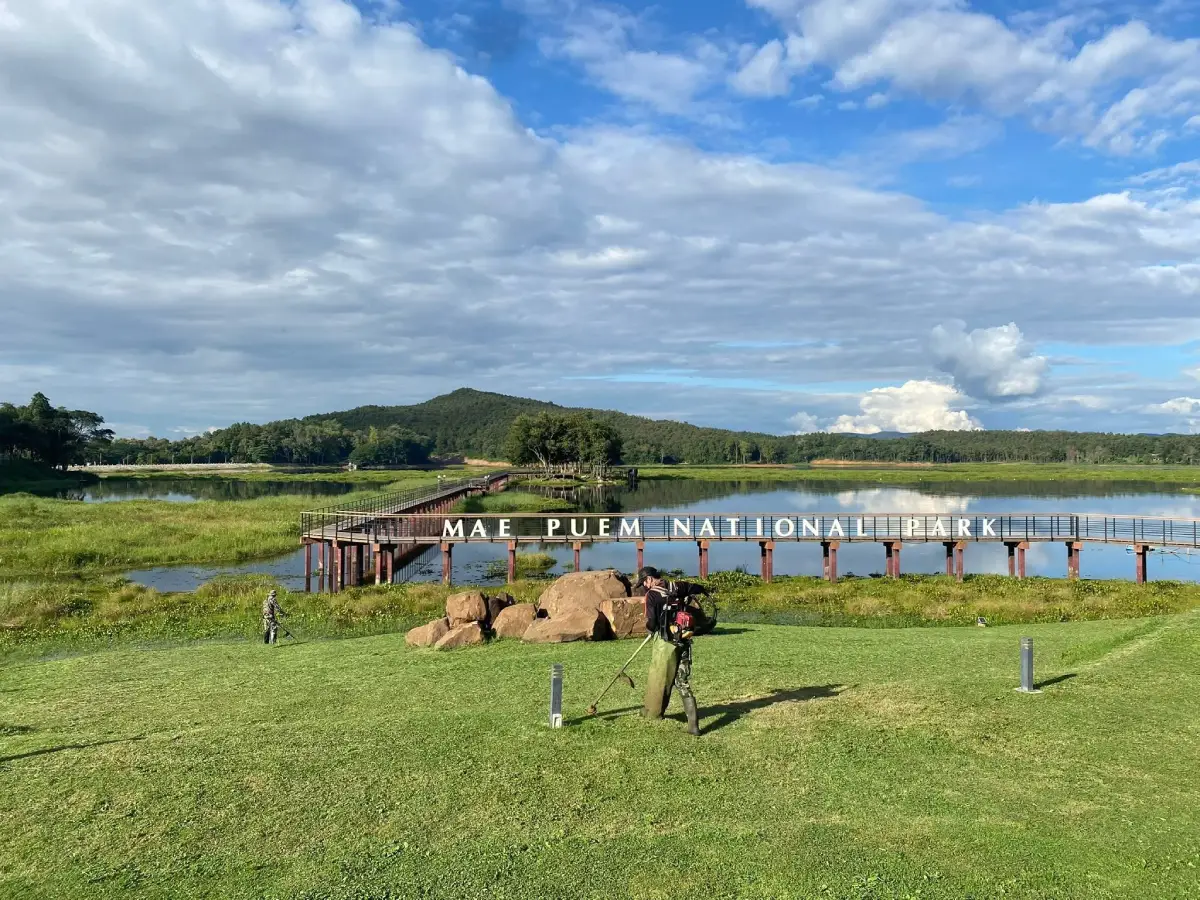
Open Days: Daily in designated visitor areas.
Opening Hours: Park entrance gate 06:00–18:00; general visitor services 08:00–16:30. Overnight stays are subject to park camping and accommodation regulations.
Mae Puem National Park, Phayao Province, Thailand, is a protected natural landscape distinguished by its forests, mountains, and extensive reservoir. The park extends across Phayao and Chiang Rai provinces, while its principal visitor center and tourism facilities are located at Ban Pa Tueng, Moo 8, Mae Chai Subdistrict, Mae Chai District, Phayao Province. Its best-known attraction is Mae Puem Reservoir, where visitors can enjoy panoramic lake scenery surrounded by mountains and forests. Popular experiences include watching sunset, relaxing beside the water, birdwatching, nature walks, kayaking, and camping in peaceful natural surroundings.
Mae Puem was officially established as Thailand's 120th national park on December 25, 2009, under a declaration published in the Royal Thai Government Gazette, Volume 126, Part 97 Kor. Its legally designated area covers approximately 219,266 rai, or 350.82 square kilometers. Although the national park extends across two provinces, the reservoir and park headquarters in Mae Chai District, Phayao, are the principal destinations for visitors seeking accessible natural scenery and recreational facilities.
The park's significance extends beyond the beauty of the reservoir. Its protected landscape includes four major forest types: dry evergreen forest, mixed deciduous forest, dry dipterocarp forest, and pine forest. The mountains also form important watersheds associated with the Mae Puem and Mae Kaew streams, which contribute to local water systems. Mae Puem therefore serves both as a nature tourism destination and an important conservation area for forests, wildlife, and freshwater resources.
The scenery around Mae Puem Reservoir changes throughout the day. In the morning, soft sunlight reaches the surrounding hills and water surface, and on suitable days a thin layer of mist may drift above the reservoir. During the late afternoon, the sunlight becomes warmer, gradually changing the colors of the sky and reflecting across the water. These conditions make the reservoir a particularly attractive destination for landscape photography and peaceful outdoor recreation.
The park offers a variety of land-based and water-based activities. Visitors can explore the Pho Jai Skywalk View, enjoy the romantic-themed viewpoint known as Leave Your Heart at Mae Puem, walk the Suea Non nature trail, cycle, observe birds, and camp overnight. Kayaking and other water activities are also part of the park's recreational program when authorized by park personnel. This range of experiences makes Mae Puem suitable for both day trips and overnight visits.
History of Mae Puem National Park began with efforts to protect valuable forests and watersheds in Chiang Rai and Phayao provinces. As the degradation of forest resources became an increasing concern, the Royal Forest Department considered establishing additional protected areas to conserve remaining forests with important ecological and hydrological functions.
On March 8 and April 7, 1994, the Chiang Rai provincial subcommittee responsible for preventing illegal forest destruction considered proposals for creating a national park and approved the concept in principle. On June 20, 1994, Chiang Rai Province submitted a preliminary survey report to the Royal Forest Department proposing that forests associated with Mae Puem, Mae Phung, Huai Ton Yang, and Huai Mae Kaew be considered for national park designation.
The initial surveyed area was approximately 219,087 rai, covering mountain forests in Phan and Pa Daet districts of Chiang Rai Province and adjoining forest areas associated with Mae Puem in Phayao Province. The principal objectives were to protect watersheds, wildlife habitats, and significant natural attractions while defining boundaries suitable for long-term conservation management.
The Royal Forest Department assigned Chawalit Lokhunasombat, a forestry officer then working at Srinagarindra National Park in Kanchanaburi Province, to carry out further surveys and undertake responsibilities associated with the park's establishment. The investigations examined terrain, forest conditions, water resources, and the area's broader environmental significance before the proposal advanced through the national park committee process.
At the National Park Committee meeting on May 18, 1995, the proposed protected area was reviewed in relation to several national reserved forests, including Mae Puem and Mae Phung, Doi Pui, Huai Ton Yang, and Huai Mae Kaew. The area under consideration at that stage covered approximately 227,312 rai, or 363.70 square kilometers. The forests were recognized as important watersheds for the Mae Puem and Mae Kaew streams and as habitats containing significant natural resources.
Following further surveys and boundary assessments, Mae Puem National Park was officially established on December 25, 2009. The final area designated by Royal Decree was 219,266 rai, equivalent to 350.82 square kilometers. The designation made Mae Puem Thailand's 120th national park and placed the forest landscape under the legal framework governing national park conservation.
This protected area is important to both Phayao and Chiang Rai provinces because it includes mountain forests that contribute to watersheds and ecological connectivity. Park management is therefore concerned not only with recreation but also with preventing encroachment, protecting wildlife, conserving water resources, and concentrating tourism activities in appropriate visitor zones.
Origin of the Name Mae Puem is connected with the Mae Puem stream, an important watercourse within the conservation landscape. Water originating in the forested mountains flows into the Mae Puem water system and its reservoir before becoming part of the local water resources. Naming the park after the stream reflects the importance of freshwater to the region's geography and surrounding communities.
Geography of Mae Puem National Park is characterized by steep mountains extending primarily along a north–south axis. The natural landscape comprises two main forest sectors, the Doi Pui forest and the Mae Puem forest. Both contribute to watershed conservation, although their mountain formations, stream networks, and topographical features differ.
The Doi Pui forest sector extends approximately 27 kilometers from north to south. Its terrain ranges from about 403 to 936 meters above sea level and contains the headwaters of the Mae Kaew stream. Along the stream, natural rocky formations create distinctive scenery and contribute to a varied freshwater environment within the forest ecosystem.
The Mae Puem forest sector extends approximately 32 kilometers along the mountain range. The slopes generally descend toward the east and west, with an average ridge width of approximately 4 kilometers. This area contains the headwaters of the Mae Puem stream and elevations ranging from approximately 403 to 978 meters above sea level. Differences in elevation create valleys, stream systems, and a variety of forest habitats.
The mountains and forests collect monsoon rainfall and gradually release water through natural drainage systems. Forest soil, vegetation, and tree roots help retain moisture and reduce rapid surface runoff. Protecting these mountain ecosystems therefore contributes to water security and the ecological health of surrounding lowland areas.
Climate of Mae Puem National Park is influenced by the tropical monsoon climate of northern Thailand. The southwest monsoon brings rainfall during the wet season, while the northeast monsoon contributes to cooler conditions during winter. The park's reported average temperature is approximately 25 degrees Celsius, with December minimum temperatures sometimes ranging from about 9 to 12 degrees Celsius.
Rainfall is concentrated mainly between May and October, with a reported annual average of approximately 1,550 millimeters. During wetter months, vegetation becomes increasingly green and natural streams receive additional water. During the dry season, the deciduous forests change color as trees shed their leaves, creating a different appearance across the mountain landscape.
Mae Puem Reservoir is the park's principal visitor attraction. According to the Department of National Parks, its water surface covers approximately 5,100 rai, while local government information gives a storage capacity of about 43 million cubic meters. The reservoir is important for regional water management and provides an extensive scenic landscape bordered by mountains and forests.
The reservoir's broad water surface creates open views across the surrounding terrain. Changes in sunlight and weather constantly alter the scenery. Morning conditions may bring calm water and thin mist, while evening sunlight creates reflections extending toward the mountain ridges. The landscape is especially appealing for travelers interested in quiet recreation and nature photography.
Areas around the reservoir provide opportunities for resting, observing the scenery, and enjoying outdoor activities. The broad views across the water contrast with the more enclosed environment of forest trails. Visitors can therefore choose between leisurely time by the lakeshore and organized activities within the designated park visitor zone.
The reservoir also provides seasonal habitat for waterbirds, particularly ducks and other birds that arrive during the cooler months and early part of the year. Its extensive water surface and surrounding vegetation provide feeding and resting environments for different species, making the area attractive for birdwatching and environmental observation.
Sunset at Mae Puem Reservoir is one of the most appealing experiences within the national park. As afternoon sunlight softens, the water and surrounding mountains take on warmer colors. When the sun approaches the horizon, orange and golden light can reflect across the reservoir, creating a scenic atmosphere different from that of the morning or midday.
Enjoying the reservoir does not require adventurous activities. Visitors can follow designated walking areas, sit beside the water, and watch the changing sky. The relaxed environment makes Mae Puem especially suitable for families, couples, and travelers seeking peaceful surroundings.
Pho Jai Skywalk View, Leave Your Heart at Mae Puem, is a purpose-built visitor attraction offering views across the reservoir from an elevated walkway. The structure is a popular place for sightseeing and photography because it provides an open perspective over the surrounding water and natural environment.
The skywalk adds another dimension to the park's visitor facilities. While the reservoir has long attracted people wishing to relax by the water or camp overnight, the walkway provides an accessible sightseeing experience for those with limited time. It is particularly attractive for leisurely walks and scenic photography.
The romantic-themed identity of the viewpoint contributes to the experience of visiting Mae Puem. Travelers can enjoy the surrounding scenery while appreciating the atmosphere created by the reservoir and mountain landscape. All visitors should respect the structure, remain within designated areas, and avoid leaving litter or damaging the environment.
The Suea Non Nature Trail is an important walking attraction within Mae Puem National Park. According to Tourism Authority of Thailand information, the trail is approximately 875 meters long. Its relatively short distance allows visitors to experience the forest environment and learn about local ecosystems without undertaking a lengthy expedition.
Along the trail, visitors can observe tree species, forest structure, soil conditions, and differences in vegetation. A nature trail provides opportunities to understand that forest ecosystems include far more than trees. Smaller plants, insects, animals, and microorganisms all interact with the soil, moisture, and other environmental conditions.
The Suea Non trail is particularly suitable for learning through direct observation. Visitors can study deciduous woodland and the role of forests in maintaining ecological balance. They should remain on designated paths, avoid collecting plants or animals, and minimize noise that might disturb wildlife.
Birdwatching at Mae Puem National Park is especially rewarding because the area contains both freshwater and forest habitats. These environments attract birds with different ecological requirements, including species living among trees and shrubs, ground-feeding forest birds, and waterbirds using the reservoir.
The Department of National Parks reports more than 40 bird species in the area, including green pigeons, thick-billed green pigeons, great slaty woodpeckers, black-crested bulbuls, and other forest birds. Sightings depend on habitat, season, weather, and bird behavior. Early morning is often an attractive time for observation because many birds are active before temperatures increase.
Seasonal waterbirds are another feature of the reservoir. The extensive water surface provides resting and feeding opportunities during migration and seasonal movements. Birdwatchers should observe from a suitable distance to avoid disturbing the birds or disrupting their feeding and resting behavior.
Kayaking at Mae Puem Reservoir offers a different way to experience the scenery. Traveling across an authorized section of the reservoir allows visitors to view the surrounding mountains and forests from water level rather than from the shore.
Water activities offered by the park include kayaking and other ranger-managed recreational experiences. Participants must follow safety regulations, wear appropriate life jackets, and remain within authorized operating areas. Wind, rainfall, and changing water conditions can directly affect safety on the reservoir.
Exploring the reservoir by water also reveals the relationship between freshwater and the surrounding forest. Large water bodies support numerous organisms, while seasonal fluctuations in water levels influence shoreline vegetation and wildlife habitats. Responsible recreation helps preserve these environmental features.
Cycling and Walking for Exercise are additional land-based activities available within designated visitor areas. Those seeking gentle recreation can enjoy suitable walking routes, while cyclists should follow authorized paths and respect other visitors sharing the space.
The combination of open lakeshore scenery and nearby forests makes outdoor exercise at Mae Puem different from recreation in an urban park. Walking and cycling provide opportunities to observe plants, birds, and the surrounding landscape while enjoying relatively accessible forms of physical activity.
Dry Dipterocarp Forest and Seasonal Color Changes are important characteristics of Mae Puem National Park. Many trees in these forests shed their leaves during the dry season, changing the landscape to shades of yellow, brown, orange, and sometimes red before fresh leaves appear with improved moisture conditions.
Seasonal leaf loss is a natural adaptation that helps trees reduce water loss when moisture is limited. When rainfall returns, new foliage grows and the forest becomes green again. This annual cycle is part of the ecological character of dry dipterocarp and mixed deciduous forests.
Dry Evergreen and Pine Forests add to the ecological variety of the national park. Dry evergreen forests retain relatively dense green vegetation where environmental conditions are suitable, while pine forests occur in particular higher-elevation environments. Two-needle pine is among the important plant species recorded in the park.
Notable trees in Mae Puem include teak, Burmese ironwood, pradu, makha mong, Siamese rosewood, teng, rang, hiang, phluang, two-needle pine, and oak-family trees. Their distribution reflects variations in soil, moisture, elevation, and forest type across the two main conservation sectors.
Wildlife of Mae Puem National Park includes mammals and birds associated with its forests and freshwater environments. Species mentioned by the Department of National Parks include barking deer, wild boar, fishing cats, mouse deer, squirrels, and other small mammals. These animals occupy different ecological roles, including herbivory, predation, and the use of seeds and fruits as food sources.
Wildlife sightings are influenced by habitat conditions and animal behavior. Many forest animals avoid human activity and noise. The main value of conservation is therefore protecting their habitats rather than guaranteeing encounters during sightseeing. Visitors should never feed, chase, or approach wild animals.
The Park's Watersheds are particularly important to surrounding communities. Forested mountains collect rainfall that feeds the Mae Puem and Mae Kaew streams. Continuous forest cover helps reduce erosion and supports natural infiltration, contributing to freshwater quality and the health of downstream environments.
Mae Puem Reservoir also plays an important role in storing water. The combination of protected upland forests and a substantial reservoir creates a connected landscape of water collection, drainage, and storage. This relationship demonstrates that the park's conservation value extends beyond its appearance as a scenic tourism destination.
Visitor Zones and Facilities are concentrated around the national park headquarters beside Mae Puem Reservoir. This is the main location for contacting park personnel, arranging accommodation, camping, and enjoying visitor activities. The headquarters area is connected with the scenic walkway, camping grounds, and nature trail.
The Department of National Parks' reservation system identifies the headquarters zone as an area offering park houses, meeting facilities, tents, and camping grounds. Mae Puem 101 is one of the houses listed for official reservation. It accommodates six guests and includes three bedrooms and two bathrooms, along with facilities specified in the national park accommodation listing.
Park Accommodation provides an option for visitors who prefer an overnight stay in a building rather than a tent. Park houses are suitable for families or groups wishing to stay close to the reservoir while having separate indoor spaces. Guests can still enjoy the park's scenery and activities without traveling from accommodation outside the protected area.
Camping at Mae Puem National Park is popular among outdoor travelers seeking peaceful surroundings beside the reservoir. Campers can experience sunset over the water and wake up to the morning atmosphere without having to travel from another location.
The park has announced a camping-ground fee of THB 30 per person per night for visitors bringing their own tents. Overnight stays are subject to park regulations, and basic facilities are provided within the visitor area. Campers must manage waste carefully, keep food secure, and avoid disturbing other visitors or wildlife.
Camping beside the reservoir differs from camping on an exposed mountain summit. The surroundings feature broad water views and an atmosphere influenced by lakeside winds. Tents should be pitched only in authorized areas, with attention to ground conditions and drainage during rainy weather.
Visitor Facilities at Mae Puem National Park include an administration office, visitor center, welfare shop, Pho Jai Kitchen, accommodation, toilets, washing facilities, designated rubbish disposal points, and camping areas. Tourism management guidance emphasizes facilities designed to blend with the environment and support appropriate waste management.
Providing designated facilities is important for reducing the environmental impact of visitors. Clearly defined paths, waste collection points, and accommodation zones help concentrate recreational activities in areas that can be managed safely, rather than allowing unrestricted access to sensitive forest habitats.
Visiting Mae Puem During Winter is particularly attractive for reservoir sightseeing, camping, and birdwatching. Cooler conditions toward the end of the year and early part of the following year create a pleasant atmosphere beside the water, while seasonal waterbirds provide additional opportunities for nature observation.
Winter camping has its own appeal because of the cooler nighttime temperatures and peaceful surroundings. Warm clothing and suitable bedding are important, especially during December when temperatures in the region can fall significantly.
Dry-Season Forest Colors provide another reason to visit Mae Puem. As dry dipterocarp and mixed deciduous trees shed their leaves, parts of the landscape take on golden and brown tones that contrast with the reservoir and surrounding mountains. These changes reflect the natural adaptations of trees to seasonal water availability.
During the hot season, visitors should be mindful of high temperatures and the dryness of forest vegetation. Afternoon sunlight can be intense, while accumulated dry leaves increase wildfire risks. Strict care with open flames and any materials capable of causing sparks is especially important.
The Rainy Season at Mae Puem brings green forests and a more humid atmosphere. Natural streams receive additional rainfall, while the appearance of the reservoir changes according to water levels and cloud conditions. Nature walks can be refreshing, but wet roads and muddy trails require extra care.
Water activities and forest walking may be affected by heavy rain or unsettled weather. Kayaking should take place only with authorization and suitable wind conditions. Trekking must remain within approved routes, particularly when surfaces are slippery.
Getting to Mae Puem National Park is straightforward by private vehicle from Phayao city. Follow Highway 1 toward Chiang Rai for approximately 17 kilometers. Around kilometer marker 754, turn onto the access road and continue approximately 6 kilometers to the national park headquarters. The total distance from central Phayao is approximately 23 kilometers.
The main entrance leads toward the headquarters and the recreational area beside Mae Puem Reservoir. Private vehicles make it convenient to explore the visitor facilities and arrange a trip connecting Phayao city, Mae Chai District, and onward routes toward Chiang Rai Province.
Travelers approaching from Chiang Rai can follow Highway 1 southward through Phan District toward Mae Chai in Phayao Province. From there, the signed access road leads to Mae Puem Reservoir. Having a private vehicle allows greater flexibility when arranging sightseeing stops and recreational activities.
Nearby Attractions combine natural scenery with cultural sites in Phayao Province. In Mae Chai District, Wat Phra That Mung Mueang is one option for cultural sightseeing. Phayao city offers Wat Si Khom Kham, Phayao Lake, the Hall of Cultural Exhibition, and a village producing handicrafts from water hyacinth. These locations can be included in an itinerary connecting the national park with the city.
Wat Phra That Mung Mueang provides a cultural stop within the wider Mae Chai area, while Wat Si Khom Kham is an important Buddhist temple closely associated with the history and religious heritage of Phayao. Combining nature and temple visits allows travelers to explore more than one aspect of the province's identity.
Phayao Lake is another large freshwater attraction closely connected with the province's urban landscape. Its surroundings include the city, restaurants, and local communities, creating a different atmosphere from the forested Mae Puem Reservoir. Visiting both places illustrates the varied roles of water bodies in natural and urban settings.
The Hall of Cultural Exhibition presents aspects of Phayao's history and cultural heritage and can be combined with Wat Si Khom Kham and the lake. A local water-hyacinth handicraft village offers another perspective on community livelihoods and the use of natural materials in traditional and contemporary craft production.
Mae Puem National Park's Importance to Local Communities includes environmental protection, education, and recreation. Its forests preserve natural watersheds and wildlife habitats, while the reservoir and managed visitor areas give residents and travelers opportunities to learn about nature and spend time outdoors.
Tourism also supports economic activities in surrounding communities through restaurants, accommodation, and related services. Visitors can use facilities in Mae Chai District and Phayao city while exploring the national park, linking conservation-based tourism with the wider local economy.
Responsible Tourism at Mae Puem National Park begins with respecting park regulations, leaving plants and wildlife undisturbed, and disposing of rubbish appropriately. Protecting water quality is particularly important beside the reservoir, where waste can affect both freshwater ecosystems and the visitor environment.
Campers should keep food and rubbish properly stored, respect quiet periods, and avoid lighting fires outside authorized locations. These practices reduce the risk of wildfires and help preserve the peaceful atmosphere for other visitors.
Kayaking and other water activities require appropriate safety precautions, including life jackets and compliance with ranger instructions. Swimming should not take place in unauthorized areas, and activities should be avoided during thunderstorms or strong winds. Forest walkers should remain on designated trails and use suitable footwear.
Mae Puem National Park in Phayao Province combines forests, mountains, and a beautiful reservoir into one accessible natural destination. Its visitor attractions include a scenic skywalk, a nature trail, birdwatching opportunities, kayaking, park accommodation, and camping facilities. This variety makes Mae Puem suitable for travelers seeking a peaceful nature experience within easy driving distance of Phayao city.
The park's enduring importance lies not only in its attractive sunsets and lakeside camping but also in the protection of the Mae Puem and Mae Kaew watersheds, the conservation of forest wildlife, and opportunities for environmental education. Responsible visitors play an important role in preserving these resources and ensuring that Mae Puem National Park remains a valuable natural heritage destination for future generations.
| Place Name | Mae Puem National Park, Phayao Province, Thailand |
| Park Headquarters Address | Moo 8, Ban Pa Tueng, Mae Chai Subdistrict, Mae Chai District, Phayao Province 56130, Thailand |
| Approximate Headquarters Coordinates | 19.353554, 99.867305 |
| Provinces Covered | Phayao and Chiang Rai |
| Category | National Park, Protected Watershed Forest and Nature Tourism Destination |
| Establishment Date | December 25, 2009; Thailand's 120th National Park |
| Legally Designated Area | 219,266 rai, or 350.82 square kilometers |
| Managing Authority | Department of National Parks, Wildlife and Plant Conservation, Thailand |
| Park Superintendent | Mr. Wutthiphong Dongkhamfu, as identified in an official government report dated February 26, 2026 |
| Open Days | Daily in Designated Visitor Areas |
| Park Gate Hours | 06:00–18:00 |
| General Service Hours | 08:00–16:30 |
| Thai Visitor Entrance Fees | Adults: THB 20; Children: THB 10 |
| Foreign Visitor Entrance Fees | Adults: THB 100; Children: THB 50 |
| Vehicle Entry Fees | Car: THB 30; Motorcycle: THB 20 |
| Camping Ground Fee | THB 30 per Person per Night for Visitors Bringing Their Own Tents |
| Contact Numbers | +66 93 265 3035, +66 88 290 9433 |
| Official Reservation Website | https://booking.dnp.go.th/parksdetail.php?id=107 |
| Main Natural Sectors | 1. Doi Pui Forest 2. Mae Puem Forest |
| Visitor Areas and Attractions | 1. Park Headquarters Zone – Visitor Center, Park Houses and Camping Areas 2. Mae Puem Reservoir – Scenic Views and Water Recreation 3. Pho Jai Skywalk View – Elevated Viewing Walkway 4. Suea Non Nature Trail – Forest Learning Route 5. Birdwatching Areas – Reservoir and Surrounding Forest |
| Major Water Resources | Mae Puem Reservoir, Mae Puem Stream and Mae Kaew Stream |
| Mae Puem Reservoir | Approximately 5,100 rai of Water Surface, with a Storage Capacity of Approximately 43 Million Cubic Meters |
| Nature Trail | Suea Non Nature Trail, Approximately 875 Meters |
| Forest Types | Dry Evergreen Forest, Mixed Deciduous Forest, Dry Dipterocarp Forest and Pine Forest |
| Notable Trees | Teak, Burmese Ironwood, Pradu, Makha Mong, Siamese Rosewood, Teng, Rang, Hiang, Phluang, Two-Needle Pine and Oak-Family Trees |
| Wildlife | Barking Deer, Wild Boar, Fishing Cat, Mouse Deer, Squirrels and Various Bird Species |
| Visitor Activities | Sunset Viewing, Nature Walking, Birdwatching, Kayaking, Cycling, Outdoor Exercise and Camping |
| Facilities | Visitor Center, Welfare Shop, Pho Jai Kitchen, Park Accommodation, Camping Grounds, Toilets, Washing Facilities and Parking |
| Park Accommodation | Mae Puem 101 accommodates 6 guests with 3 bedrooms and 2 bathrooms. Additional park houses are available through the Department of National Parks reservation system. |
| Getting There from Phayao City | Follow Highway 1 for Approximately 17 km to Kilometer Marker 754, then Continue on the Park Access Road for Approximately 6 km. Total Distance: Approximately 23 km. |
| Nearby and In-Park Attractions | 1. Mae Puem Reservoir – Inside the National Park 2. Pho Jai Skywalk View – Inside the Visitor Area 3. Suea Non Nature Trail – Approximately 875-Meter Walking Route 4. Wat Phra That Mung Mueang, Mae Chai District – Approximately 11 km from the Park in Tourism Listings 5. Hall of Cultural Exhibition – Approximately 19 km from the Park in Tourism Listings 6. Water Hyacinth Handicraft Village – Approximately 19 km from the Park in Tourism Listings 7. Wat Si Khom Kham – Approximately 20 km from the Park in Tourism Listings 8. Phayao Lake – Phayao City Area |
| Restaurants in the Surrounding Travel Area | 1. Pho Jai Kitchen – Inside the Park Visitor Area, Tel. +66 93 265 3035 2. Khrua Duean Phen – Mae Puem Subdistrict, Mueang Phayao 3. Lab Lung Jai – Mae Puem Subdistrict, Mueang Phayao, Tel. +66 91 139 0278 4. Mum Muan – Mae Puem Subdistrict, Mueang Phayao 5. Bee's Kitchen Phayao – Mae Suk Subdistrict, Mae Chai, Tel. +66 81 797 1912 |
| Accommodation in the Park and Surrounding Areas | 1. Mae Puem 101 Park House – Inside the National Park, Tel. +66 93 265 3035 2. Pho Jai Park Houses – Inside the Park Visitor Area, Tel. +66 93 265 3035 3. Mae Puem National Park Camping Ground – Inside the National Park, Tel. +66 93 265 3035 4. I Ya Guesthouse Phayao – Mae Puem Subdistrict, Mueang Phayao, Tel. +66 95 315 0757 5. Oui Kaew Homestay – Mae Puem Subdistrict, Mueang Phayao 6. Naka Thara Resort – Ban Tom Subdistrict, Mueang Phayao |
Frequently Asked Questions (FAQ)
Q: Where is Mae Puem National Park located?
A: The park headquarters are located at Moo 8, Ban Pa Tueng, Mae Chai Subdistrict, Mae Chai District, Phayao Province, Thailand. The protected area extends across Phayao and Chiang Rai provinces.
Q: What time does Mae Puem National Park open?
A: The park entrance gate operates from 06:00 to 18:00 daily according to the park announcement. General visitor services operate from 08:00 to 16:30, while overnight stays follow separate accommodation and camping regulations.
Q: How much is the entrance fee to Mae Puem National Park?
A: Thai visitors pay THB 20 for adults and THB 10 for children. Foreign visitors pay THB 100 for adults and THB 50 for children. Car entry costs THB 30, motorcycle entry costs THB 20, and the designated camping-ground fee is THB 30 per person per night.
Q: Can visitors camp at Mae Puem National Park?
A: Yes. The national park has designated camping grounds near Mae Puem Reservoir, together with basic visitor facilities. Park houses are also available for travelers who prefer indoor accommodation.
Q: What activities are available at Mae Puem National Park?
A: Popular activities include reservoir sightseeing, walking along the Pho Jai Skywalk View, birdwatching, exploring the Suea Non nature trail, kayaking, cycling, and overnight camping.
Q: How far is Mae Puem National Park from Phayao city?
A: The park headquarters are approximately 23 kilometers from central Phayao. Follow Highway 1 for approximately 17 kilometers, then take the park access road for another 6 kilometers.
Q: When is the best time to visit Mae Puem National Park?
A: The cooler season is particularly attractive for camping, waterbird observation, and enjoying the reservoir. The dry season offers the distinctive colors of deciduous forests, while the rainy season brings lush green scenery. Outdoor activities depend on weather and safety conditions.
Q: When was Mae Puem National Park established?
A: Mae Puem National Park was officially established on December 25, 2009, as Thailand's 120th national park. Its legally designated area covers 219,266 rai, or 350.82 square kilometers.
 Category: ●Nature and Wildlife
 Group: ●National Parks and Marine Reserves
Last Update : 2 WeekAgo
 Last Update : 2 WeekAgo
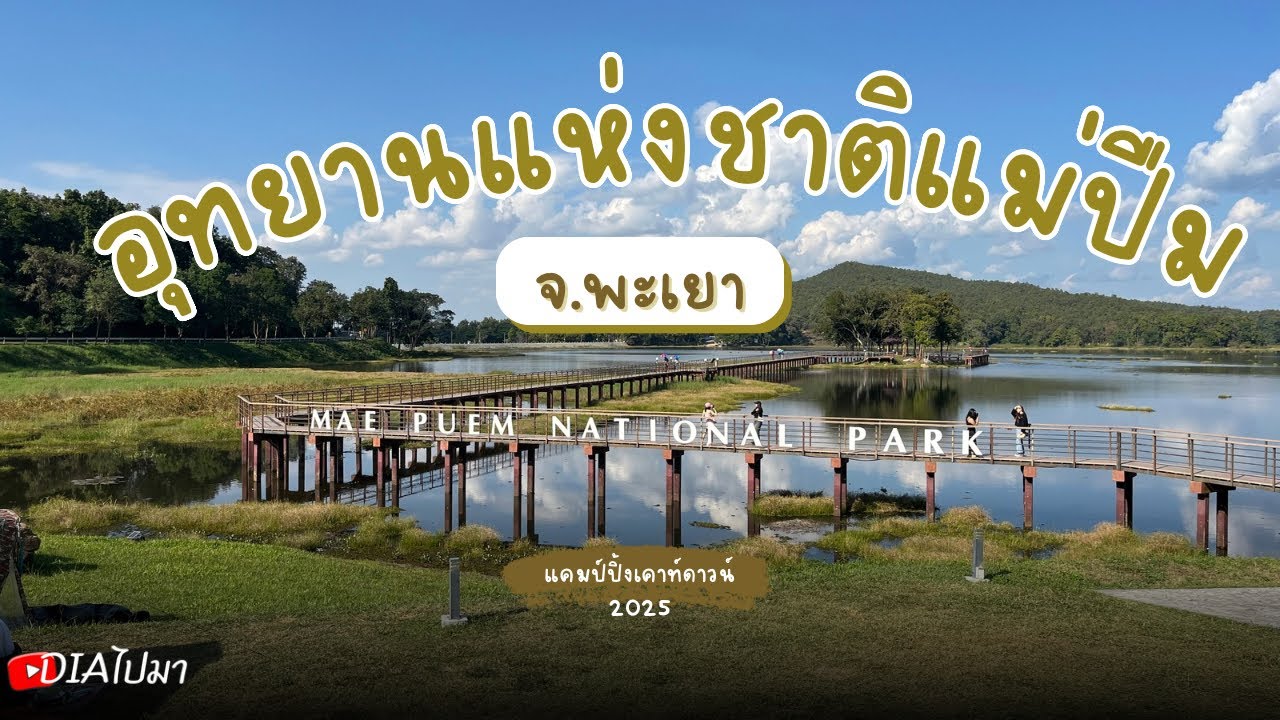
 Click to Access the Navigation Map GPS
Mae Puem National Park Map
Recommend

 Art, Culture and Heritage
 Historical Sites and Monuments(4)
 Landmarks and Memorials(4)
 Art, Craft Centres, Tradition(1)
 Museums(2)
 Places of Worship
 Temple(39)
 Other Sacred Sites(5)
 Research and Development
 Royal Project(1)
 Suburban Living
 Village, Community(2)
 Local Market(4)
National Parks and Marine Reserves(7)
 Mountain (Doi)(2)
 Dam, Reservoir, Lake(11)
 Waterfalls(8)
 Caves(5)
 River, Canal(3)
 Other natural attractions(5)
 Travel Articles, Recipes
 Travel Review, Food Review(1)


