
lovethailand home >Northeastern Travel Attractions >Roi Et Travel Attractions >Muang Roi Et >Nai Muang > Roi Et City Pillar Shrine (Mahesak)
TL;DR: Roi Et City Pillar Shrine (Mahesak) is located at Wat Burapha Phiram, 559 Phadung Phanit Road, Nai Mueang Subdistrict, Mueang Roi Et District, Roi Et Province 45000, Thailand, open Daily, Including Public Holidays, hours 08.30 – 16.30.
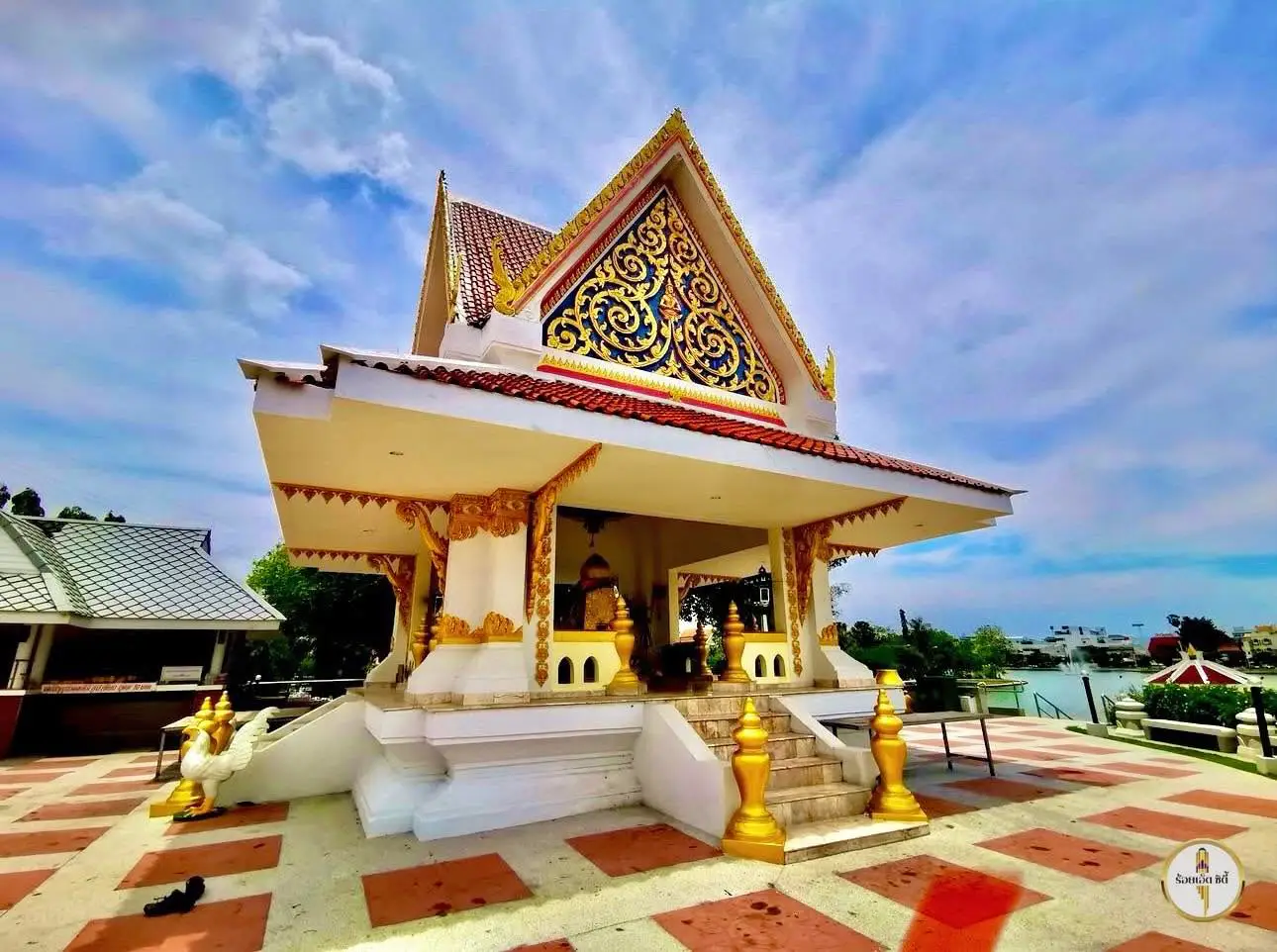
Roi Et City Pillar Shrine (Mahesak)
Open Days: Daily, Including Public Holidays
Opening Hours: 08.30 – 16.30
Roi Et City Pillar Shrine, also known as Chao Pho Mahesak Shrine, is one of the most important sacred places in Roi Et Province. Locally, the shrine is also known as Chao Pho Mahesakdanuphap Shrine, a name that reflects its respected status as a protective spiritual center of the city. The shrine now stands in its new pavilion within the grounds of Wat Burapha Phiram, Nai Mueang Subdistrict, Mueang Roi Et District. This location is closely connected with the old eastern city moat, one of the historical areas of Roi Et, and with Wat Burapha Phiram, one of the most important temples in the city. For local people, this shrine is a place to ask for blessings, protection, stability, safe travel, success in work, and auspicious beginnings.
The name Chao Pho Mahesak, or Mahesak Lak Mueang, carries deep meaning for the people of Roi Et. It refers not only to a sacred guardian spirit but also to the symbolic strength of the city itself. In Thai and Isan cultural contexts, a city pillar shrine represents protection, stability, and the spiritual foundation of a town. Roi Et residents have long regarded Chao Pho Mahesak as a guardian presence that watches over the city and its people. This belief has been passed down across generations, from families and local communities to public ceremonies led by provincial and municipal authorities.
According to local history, Chao Pho Mahesak has been revered in Roi Et since ancient times. The sacred presence was believed to reside near the eastern city moat, east of Wat Burapha Phiram. In earlier times, the shrine consisted of three wooden halls standing near the moat. This form reflects an older local tradition in which sacred guardians were placed at important points of the city, especially around moats, entrances, and boundary areas. In the worldview of the old city, protection was not only physical through walls and moats, but also spiritual through guardian shrines and sacred presences that protected the people.
Over time, the old wooden shrine deteriorated after more than a century of use. Because it no longer properly served as a dignified place of worship for the people of Roi Et, the province and the municipality began to plan the construction of a new shrine. In 1966, Roi Et Province, led by Governor Winyo Angkhanarak, together with Roi Et Municipality under Mayor Sutthi Ob-om, established a fundraising committee. Phra Khru Siriwutthi Methee, also known as Phuttha Siriwuttho, abbot of Wat Burapha Phiram, was invited to support the project. The construction of the shrine therefore became a cooperative effort involving the provincial administration, the municipality, the temple, and local devotees.
On 21 December 1967, the foundation-stone ceremony for the new Chao Pho Mahesak Shrine was held. The shrine was built as a reinforced-concrete Thai-style structure at a total construction cost of 45,000 baht and was completed in 1968. This new structure gave the long-standing faith of the city a more permanent architectural form. Since then, local people have continued to visit the shrine for worship, blessings, community rituals, important personal occasions, and annual ceremonies. The history of the shrine shows how a sacred local belief became part of the civic identity of Roi Et.
A major moment in the shrine’s history occurred on 7 June 1968, when Plaek Sonthirak read the ancient inscription on the stone base. The inscription was interpreted as Phra Mahesakdanuphap, and the reading was recorded with the date and signature. From that time onward, the people of Roi Et have also called the guardian Chao Pho Mahesakdanuphap. The name suggests sacred authority, power, and protective merit. It remains the name used in official ceremonies and by many residents when referring to the city’s guardian shrine.
The shrine is also connected with Chao Pho Ho Dan, another guardian figure revered as the protector of the eastern outpost of the old city. In the past, the shrine of Chao Pho Ho Dan stood at Thung Saen Bun, the location of an outer gate area southeast of the Chao Pho Mahesak Shrine. Traditionally, people who paid respect to Chao Pho Mahesak would also visit Chao Pho Ho Dan. Later, the people of Roi Et performed a ceremony to invite Chao Pho Ho Dan to be enshrined together with Chao Pho Mahesak. This reflects an older urban belief system in which city pillars, moats, gates, and outpost guardians formed a sacred protective network around the city.
In 2026, Roi Et Municipality, Wat Burapha Phiram, and devotees carried out an important relocation ceremony. Chao Pho Mahesakdanuphap was invited to reside in the new shrine pavilion at Wat Burapha Phiram because the former shrine was located along the construction alignment of the eastern city-moat road between Phadung Phanit Road and Phloen Chit Road. This relocation preserved the continuity of the shrine’s sacred role while placing it in a suitable and accessible location within one of Roi Et’s most important religious areas.
The present location at Wat Burapha Phiram allows visitors to pay respect to Chao Pho Mahesakdanuphap and also visit the temple in the same trip. Wat Burapha Phiram is a third-class royal monastery and one of the major Buddhist landmarks of Roi Et. It is home to Phra Phuttha Rattana Mongkhon Maha Muni, widely known as Luangpho Yai, a large standing Buddha image that has become a symbol of the province. The connection between the shrine and the temple creates an important spiritual zone where Buddhist devotion, local guardian belief, and the historical identity of Roi Et meet in one place.
Visitors should approach the shrine respectfully. Offerings may include flowers, incense, candles, and other traditional items prepared according to local practice. People usually come to ask for blessings, protection, success, safe journeys, stability in life, and support for important beginnings. Many residents visit the shrine before starting a business, taking an examination, accepting a new role, traveling far from home, or returning to pay respect to their hometown’s guardian. The shrine therefore remains an active place of faith, not merely a historical monument.
The annual worship and offering ceremony for Chao Pho Mahesakdanuphap is an important public ritual of Roi Et. It is attended by provincial leaders, municipal officials, Buddhist devotees, community members, and local residents. The ceremony includes worship, offerings, Buddhist chanting, alms-giving, candle lighting, and traditional dances performed in respect to the city guardian. These ceremonies confirm that the shrine continues to function as a central place of civic faith. It remains part of the living identity of Roi Et rather than an isolated relic of the past.
The significance of the shrine lies in its role as a spiritual foundation of the city. Roi Et is an old city with a long history of settlement, urban development, religious life, and community memory. A shrine connected to the old moat and a major temple gives the city a point of spiritual orientation. When visitors pay respect here, they are not only asking for personal blessings; they are also encountering the deeper memory of the city and the values that local people continue to preserve.
The atmosphere around the shrine is calm and respectful. Visitors should dress modestly, speak quietly, place offerings only in the proper areas, and avoid touching sacred objects without permission. Since the shrine is still used for ceremonies, worship, and local rituals, visitors should leave space for people who are praying or making offerings. This is especially important during annual ceremonies or community events, when the shrine becomes a gathering point for many residents.
For travelers interested in Roi Et’s history, the shrine can be connected with the old city moat, Wat Burapha Phiram, Phadung Phanit Road, Phloen Chit Road, and the wider historic center around Bueng Phalan Chai. After paying respect at the shrine, visitors can continue to Luangpho Yai at Wat Burapha Phiram, walk or drive to Bueng Phalan Chai, visit Roi Et Tower 101, and explore Roi Et National Museum. This route is ideal for a half-day or full-day city itinerary because it combines spirituality, history, culture, urban scenery, and local life.
Bueng Phalan Chai is closely associated with the city-center experience of Roi Et. It is a large public lake and park of about 50 rai and one of the province’s most recognizable landmarks. The area includes public gardens, a health park, playgrounds, sports areas, a large standing Buddha image, and sacred sites connected with city worship. A visit to Chao Pho Mahesakdanuphap Shrine can therefore be combined naturally with a walk around the lake, especially in the morning or late afternoon when the weather is more comfortable.
The shrine is also a good place to understand how local guardian belief exists alongside Buddhism in Thailand. A city pillar shrine is associated with the protection of the city, while a Buddhist temple is associated with worship, merit-making, moral teaching, and religious ceremonies. In Roi Et, the presence of the shrine within the Wat Burapha Phiram area shows how these traditions support one another in everyday life. Local people may pay respect to the city guardian and then make merit at the temple in the same visit.
For foreign travelers, Chao Pho Mahesakdanuphap Shrine offers a clear example of Thai civic spirituality. It shows that Thai cities are not defined only by administrative offices, roads, and public buildings. They are also held together by shared beliefs, rituals, and places of memory. Visiting the shrine helps travelers understand Roi Et from the perspective of local people. It reveals why sacred places remain important in public life and why annual ceremonies continue to be maintained with respect.
The architecture of the shrine follows the Thai-style pavilion character appropriate for a sacred guardian place. Its main features include the worship area, altar, enshrined guardian presence, and space for annual ceremonies. The shrine is not meant to impress through size alone. Its value lies in dignity, accessibility, cleanliness, and its role as a living place of faith. Visitors should take time to observe the form of the building, the offerings, and the behavior of worshippers in order to understand the atmosphere of the shrine properly.
Photography is possible, but it should be done with discretion. Suitable angles include the front of the shrine, the Thai-style roof, the connection with Wat Burapha Phiram, and the wider urban setting. Visitors should not block the entrance, photograph worshippers at close range without permission, or pose in a way that disrespects the sacred space. For travelers unfamiliar with Thai shrine etiquette, the safest approach is to observe how local people behave and follow the same respectful manner.
Morning and late afternoon are the best times to visit because the weather is more comfortable and the atmosphere is calmer. A good city route can begin with Chao Pho Mahesakdanuphap Shrine, continue to Wat Burapha Phiram and Luangpho Yai, then move on to Bueng Phalan Chai, Roi Et Tower 101, and Roi Et National Museum. In the evening, visitors can return to the Bueng Phalan Chai area for walking, local food, and a relaxed view of the city center.
Getting There is easy because the shrine is located in the central area of Mueang Roi Et. Visitors should head to Wat Burapha Phiram on Phadung Phanit Road, Nai Mueang Subdistrict, Mueang Roi Et District. The shrine is accessible by private car, local taxi, and city transport. From Roi Et Bus Terminal or central hotels, the trip is short because the shrine stands within the city’s main cultural and religious zone. When using a navigation app, search for Wat Burapha Phiram or Chao Pho Mahesakdanuphap Shrine, Roi Et.
Travelers staying in Roi Et city can visit the shrine in the morning before beginning a wider itinerary, or in the afternoon before the visiting hours end. A short visit may take only 15 – 30 minutes, but visitors who also want to see Wat Burapha Phiram, Luangpho Yai, and the surrounding historic area should allow at least 1 – 2 hours. A slower visit allows travelers to understand the relationship between the shrine, the temple, the old city moat, and the city’s living culture.
In summary, Roi Et City Pillar Shrine, Chao Pho Mahesak Shrine, or Chao Pho Mahesakdanuphap Shrine, is one of the most important sacred places in Roi Et. From the old three wooden halls near the eastern city moat to the Thai-style concrete shrine completed in 1968, and now to the new shrine pavilion within Wat Burapha Phiram, the shrine represents the continuity of Roi Et’s civic faith. It is an essential place for visitors who want to understand the city beyond its modern landmarks. A visit here offers blessings, cultural insight, and a direct connection with the spiritual identity of Roi Et.
| Name | Roi Et City Pillar Shrine / Chao Pho Mahesak Shrine / Chao Pho Mahesakdanuphap Shrine |
| Current Location | New Chao Pho Mahesakdanuphap Shrine Pavilion, Wat Burapha Phiram, Nai Mueang Subdistrict, Mueang Roi Et District, Roi Et Province |
| Address | Wat Burapha Phiram, 559 Phadung Phanit Road, Nai Mueang Subdistrict, Mueang Roi Et District, Roi Et Province 45000, Thailand |
| Highlights | A sacred city guardian shrine of Roi Et, locally revered as Mahesak Lak Mueang, connected with the old eastern city moat, Wat Burapha Phiram, and Chao Pho Ho Dan |
| History | The shrine was originally three wooden halls near the eastern moat of Wat Burapha Phiram. A new Thai-style reinforced-concrete shrine was founded on 21 December 1967 and completed in 1968. |
| Name Origin | The guardian was long known as Chao Pho Mahesak or Mahesak Lak Mueang. After the inscription was read on 7 June 1968 as Phra Mahesakdanuphap, the name Chao Pho Mahesakdanuphap became widely used. |
| Distinctive Features | A city guardian shrine combining old city-moat history, local protective belief, Wat Burapha Phiram, Chao Pho Ho Dan, and Roi Et’s annual worship ceremony |
| Important Sacred Meaning | A place for worshipping Chao Pho Mahesakdanuphap, asking for protection, auspicious beginnings, safe travel, success, and stability in life |
| Travel Information | Travel to Wat Burapha Phiram on Phadung Phanit Road in central Roi Et. The shrine is close to Bueng Phalan Chai, Roi Et Tower 101, and Roi Et National Museum. |
| Current Status | Open for worship and visits at the new shrine pavilion within Wat Burapha Phiram |
| Open Days | Daily, Including Public Holidays |
| Opening Hours | 08.30 – 16.30 |
| Fees | No Admission Fee |
| Facilities | Worship Area, Temple Area, Walking Area, Photo Spots, And Parking Areas Within Or Near Wat Burapha Phiram |
| Main Areas / Zones | 1. New Chao Pho Mahesakdanuphap Shrine Zone 2. Mahesak Lak Mueang Worship Zone 3. Annual Ceremony Area 4. Wat Burapha Phiram And Luangpho Yai Zone 5. Old Eastern City Moat And Historic City Area 6. Bueng Phalan Chai And Central City Connection Zone |
| Responsible / Related Organizations | Roi Et Municipality, Wat Burapha Phiram, Community Committees, And Devotees |
| Local Contact Number | Roi Et Municipality, Tel. 043-511222 |
| Annual Ceremony | Annual worship and offering ceremony for Chao Pho Mahesakdanuphap, including Buddhist chanting, alms-giving, candle lighting, and traditional dance offerings |
| Nearby Tourist Attractions | 1. Wat Burapha Phiram, About 0 km 2. Bueng Phalan Chai, About 1 km 3. Roi Et Tower 101, About 1 km 4. Roi Et National Museum, About 1 km 5. Wat Klang Ming Mueang, About 2 km 6. Somdet Phra Srinagarindra Park Roi Et, About 2 km |
| Nearby Restaurants | 1. Ancient Coffee In Front Of Mahesakdanuphap Shrine, About 0 km, Tel. 082-506-3101 2. Emperor Congee Branch 1, Bueng Phalan Chai, About 1 km, Tel. 081-964-5851 3. Fresh Rice Noodles Phalan Chai, About 1 km, Tel. 091-760-2846 4. Lakeview Restaurant, About 1 km, Tel. 093-320-8126 5. Bobby Ancient Coffee, In Front Of Wat Bueng Phra Lan Chai, About 1 km, Tel. 063-994-6536 6. Khao Tom Khon Hen 1 Original, About 1 km |
| Nearby Accommodations | 1. M Grand Hotel Roi Et, About 1 km, Tel. 043-511-038 2. The Bed Hotel 101, About 1 km, Tel. 043-032-142 3. The Hi Place Hotel, About 1 km, Tel. 093-556-5445 4. Rueanrimnam Hotel, About 1 km, Tel. 043-518-967 5. HOP INN Roi Et, About 2 km, Tel. 02-080-2222 6. Lita Place, About 3 km, Tel. 043-524-606 |
Frequently Asked Questions (FAQ)
Q: Where is Roi Et City Pillar Shrine located?
A: Chao Pho Mahesakdanuphap Shrine is located in its new pavilion within Wat Burapha Phiram, Nai Mueang Subdistrict, Mueang Roi Et District, Roi Et Province.
Q: What are the opening days and opening hours of the shrine?
A: The shrine is open daily, including public holidays, from 08.30 to 16.30.
Q: Is there an admission fee to visit the shrine?
A: No. Visitors can enter and pay respect without an admission fee.
Q: Why is the shrine called Chao Pho Mahesakdanuphap?
A: The name became widely used after an inscription on the stone base was read on 7 June 1968 as Phra Mahesakdanuphap.
Q: How is Chao Pho Ho Dan connected with the shrine?
A: Chao Pho Ho Dan was traditionally revered as the guardian of the eastern outpost of the old city and was later ceremonially enshrined together with Chao Pho Mahesak.
Q: How is the shrine connected with Wat Burapha Phiram?
A: The shrine now stands within the Wat Burapha Phiram area, which is also home to Luangpho Yai, one of Roi Et’s most important Buddhist landmarks.
Q: When is the best time to visit Roi Et City Pillar Shrine?
A: Morning or late afternoon is recommended because the weather is more comfortable and visitors can continue to nearby attractions in the city center.
Q: What nearby attractions can be visited with the shrine?
A: Nearby places include Wat Burapha Phiram, Bueng Phalan Chai, Roi Et Tower 101, Roi Et National Museum, Wat Klang Ming Mueang, and Somdet Phra Srinagarindra Park Roi Et.
 Category: ●Places of Worship
 Group: ●Other Sacred Sites
Last Update : 3 MonthAgo
 Last Update : 3 MonthAgo

 Click to Access the Navigation Map GPS
Roi Et City Pillar Shrine (Mahesak) Map
Recommend

 Art, Culture and Heritage
 Historical Sites and Monuments(3)
 Landmarks and Memorials(5)
 Art, Craft Centres, Tradition(2)
 Museums(1)
 Educational Places
 Educational Gardens, Farm(3)
 Temple(35)
Other Sacred Sites(6)
 Suburban Living
 Village, Community(1)
 Local Market(1)
 Nature and Wildlife
 National Parks and Marine Reserves(1)
 Mountain (Doi)(2)
 Dam, Reservoir, Lake(8)
 Waterfalls(1)
 Flower Field(1)
 River, Canal(4)
 Entertainment and Agricultural
 Zoos and Aquariums(1)
 Stadium(1)
 Farms, Parks and Ecotourism(5)
 Shopping
 Shopping and Night Market(1)
 Travel Articles, Recipes
 Travel Review, Food Review(1)


