
lovethailand home >South Travel Attractions >Trang Travel Attractions >Na Yong >Na Muen Si > Tham Khao Chang Hai
TL;DR: Tham Khao Chang Hai, Trang attractions : Nature and Wildlife, Caves.
Tham Khao Chang Hai
Open Days: Daily, With Entry By Scheduled Guided Rounds Set By The Visitor Service Center
Opening Hours: Monday–Friday Rounds At 09.00, 11.00, 13.30, And 15.00 / Saturday–Sunday And Public Holiday Rounds At 09.30, 10.30, 11.30, 13.30, 14.30, And 15.30
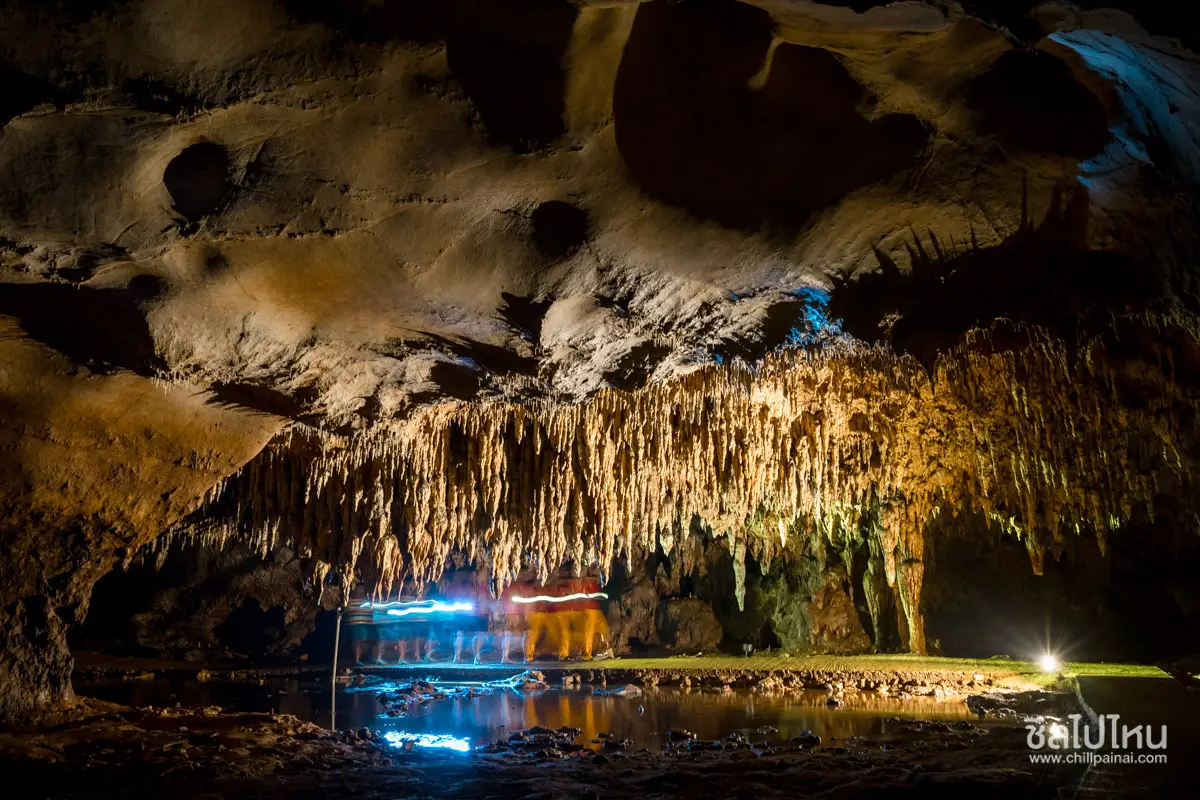
Tham Khao Chang Hai in Trang Province is a limestone cave located around Moo 5–6, Na Muen Si Subdistrict, Na Yong District. Set amid rice fields and rural community scenery, the cave is known for well-preserved stalactites and stalagmites, concrete walkways, electric lighting, and scheduled guided entry. The cave walk is about 850 meters, while the main cave depth is commonly described as around 500 meters. A typical visit takes about 30–60 minutes. Key sections include Tham Chang Hai, Tham Pheka, Tham Sai Thong, Tham Ong, Tham Lom, and Tham Mae Thao Klai. The cave’s name comes from a local legend about a young elephant that disappeared into the cave during a pilgrimage procession to Phra Borommathat Chedi in Nakhon Si Thammarat. The site is suitable for travelers interested in limestone caves, cave formations, local legends, Na Muen Si rice-field scenery, the Luk Lom windmill festival, and Na Muen Si woven textile culture.
Tham Khao Chang Hai is one of Trang Province’s most distinctive inland nature attractions. It is not simply a cave with beautiful rock formations. The site combines a limestone hill, rice-field scenery, community culture, elephant legend, scheduled guided cave walks, and the wider identity of Na Muen Si Subdistrict. Visitors experience both the underground world of limestone chambers and the open rural landscape of one of Trang’s most culturally recognizable communities.
The original travel information describes Tham Khao Chang Hai as being located in Moo 5–6, Na Muen Si Subdistrict, Na Yong District, Trang Province. The cave contains many complex and beautiful stalactites and stalagmites. It is about 500 meters deep and can be walked through in about 20 minutes in the shortest description. The cave has concrete walkways and lighting along the route, allowing visitors to reach named cave sections such as Tham Chang Hai, Tham Pheka, Tham Sai Thong, Tham Ong, and Tham Mae Thao Klai. From Na Yong Market, travelers turn from the main road into Na Muen Si Road for about 8 km, and the road ends at the cave area.
Khao Chang Hai is a small isolated limestone hill rising from the flat agricultural landscape of Na Muen Si. This kind of landform is known as karst. Over a long period, slightly acidic rainwater and groundwater dissolve limestone and create cavities, cracks, chambers, stalactites, stalagmites, and mineral curtains inside the rock. From outside, the hill may look modest, but inside it contains a cool and complex cave environment shaped by water and mineral deposition over time.
Na Muen Si Subdistrict is a gently sloping rural area with streams, canals, irrigation routes, rubber plantations, and rice fields. This setting makes Tham Khao Chang Hai different from caves located deep in mountain forests. Here, visitors can combine a cave walk with rice-field scenery, village food, local textile culture, and seasonal cultural events. The cave is therefore both a natural site and part of a living community landscape.
The name “Khao Chang Hai” means “Lost Elephant Hill” or “the hill where the elephant disappeared.” Local legend connects the cave with a pilgrimage procession traveling toward Phra Borommathat Chedi in Nakhon Si Thammarat. One version tells of a procession from Nakhon Si Thammarat that stopped near the hill with elephants. A mother elephant gave birth to a calf, and the young elephant later ran playfully into the cave. Because the cave was complex and full of formations, the calf disappeared and could not be found again.
Several versions of the story survive in local memory. Some include red and white threads used by a mahout to lead the young elephant out of the cave by magical means. When villagers shouted that the thread might break, the spell failed, and the calf ran back into the cave. Whether understood as folklore, symbolic memory, or community storytelling, the legend gives the cave a strong identity. Visitors do not see only limestone formations; they walk through a place shaped by imagination and oral history.
The entrance area is easy to recognize because of elephant-themed structures and signage. A visitor service area stands near the front of the cave, and travelers usually register or wait for their guided round before entering. The cave entrance itself is not extremely large, which makes the interior more surprising. After a short stairway, visitors enter a cool underground space with walkways, railings in some areas, and electric lighting that highlights selected cave formations.
Entry is organized by scheduled rounds rather than unrestricted independent walking. This system helps control visitor numbers, protect the cave environment, and improve safety. Guides or staff lead visitors through the route and explain the named chambers, rock shapes, legend, and conservation rules. Travelers should contact the visitor service center on arrival, confirm the next round, and wait for staff before entering.
The walking route inside the cave is around 850 meters, while many travel descriptions refer to the cave as about 500 meters deep. The duration depends on the guided round and the pace of the group. A typical visit takes about 30–60 minutes. The cave is more accessible than many adventure caves because it has concrete walkways and lighting, but visitors should still watch for damp surfaces, steps, low areas, and darker sections.
The cave contains around 6 main chambers or sections, each with a different visual character. Stalactites, stalagmites, curtains, soda-straw formations, mineral deposits, and irregular limestone walls create a varied cave experience. Some formations are still active and developing. For this reason, visitors should never touch cave formations, climb on them, or lean against walls. Natural cave growth is slow and fragile.
Tham Chang Hai is the core chamber associated with the cave name and elephant legend. Some rock shapes are interpreted as elephant forms, including areas that visitors may imagine as a young elephant hiding in the rock. These interpretations make the cave easier to remember and show how local guides turn natural forms into stories that connect the landscape with community memory.
Tham Pheka is known for visually distinctive limestone patterns. Some surfaces resemble coral-like or crystalline forms, even though the cave is inland and not a sea cave. Mineral-rich water and limestone deposition have created textures that differ from other parts of the cave. This chamber is best appreciated by observing detail rather than only looking for large formations.
Tham Sai Thong has formations that can appear yellowish or golden under the cave lights, matching the meaning of its name. Some stalactites and curtains look delicate, while other sections show layered surfaces. The beauty here lies in color, texture, and the way light reveals mineral details on the cave walls and ceiling.
Tham Ong is associated with deeper, more enclosed spaces. Its name suggests a vessel-like or jar-like form according to local interpretation. Some areas may feel narrower or darker, so visitors should follow the marked route and guide instructions carefully. The different names of the chambers give the cave a sequence of character-rich spaces rather than one continuous anonymous tunnel.
Tham Mae Thao Klai is another named section of the cave system. Its name carries a local storytelling quality and reflects how communities often name cave spaces by associating rock forms with people, objects, or legends. This naming system shows that the cave is not only a geological structure but also a cultural landscape interpreted through local language.
Tham Lom reflects the presence of air movement within the cave. In some parts of the route, visitors can feel cool airflow and natural humidity. Because the cave contains several chambers and openings, certain sections may feel more ventilated than expected. This cool air, dim light, and mineral smell help create the cave atmosphere that makes the visit memorable.
Soda-straw stalactites are one of the important details to observe. These thin tubular formations grow when mineral-rich drops leave calcium carbonate along a tiny ring at the tip. They are fragile and can be damaged easily. A single touch can introduce oil from the skin or break the growth path. Visitors should look closely but never touch.
The installed walkways and lighting make Tham Khao Chang Hai suitable for many visitors, including families and travelers who are new to cave tourism. It does not require swimming, crawling, or boat travel. Still, the cave is a natural environment, not a fully controlled indoor attraction. Proper shoes, careful walking, and respect for the guide are necessary.
Visitors should wear shoes with good grip, avoid slippery footwear, carry only necessary items, and keep children close. Older visitors should consider whether they are comfortable with stairs, damp surfaces, and dim lighting. Photography is possible, but visitors should avoid blocking the group, touching formations for posing, or using bright light in a way that disturbs other people or cave wildlife.
Good cave etiquette is essential. Do not touch stalactites or stalagmites, do not write on cave walls, do not collect stones, do not leave trash, do not shout, and do not leave the marked route. Limestone caves are fragile systems. Human contact, smoke, litter, and careless movement can damage formations that have taken centuries or longer to develop.
The area around Tham Khao Chang Hai is closely connected with Na Muen Si’s rice-field culture. After the harvest season, especially from around January to March, the road and cave-front area are often associated with Luk Lom, a traditional bamboo windmill used in rice fields. These windmills make a distinctive sound when the wind turns them and were traditionally used to deter birds from eating rice. Today, they have become a cultural symbol of Na Muen Si.
The Luk Lom festival, formally known through local events such as “Luk Lom Festival, Cave Visit, And Na Muen Si Culture Learning,” uses the cave-front cultural area as a key venue. Activities include giant windmill contests, local food, cultural performances, textile demonstrations, and community products. This makes Tham Khao Chang Hai more than a cave attraction. It is also a gathering place where nature and local culture meet.
Na Muen Si is also widely known for woven textiles. Na Muen Si woven cloth has a long community history, distinctive patterns, and uses linked with daily life and ceremonies. The weaving group and textile museum provide a useful cultural stop after visiting the cave. Combining the cave with the textile route gives travelers a fuller view of inland Trang: limestone, rice fields, craft knowledge, and village identity.
Getting There from Na Yong Market is direct. Turn from the main road into Na Muen Si Road and continue for about 8 km until the road reaches the cave area. From Trang city, travel toward Na Yong District first, then continue into Na Muen Si Subdistrict following local signs. Private car, rental car, motorcycle, or hired local transport are the most convenient options.
Travelers without private transport can take local transport from Trang city to Na Yong Market, then continue by motorcycle taxi or hired vehicle into Na Muen Si. Return transport should be arranged in advance because the cave is at the end of a community route and public transport may not be frequent. Groups should contact the visitor service center or Na Muen Si Subdistrict Administrative Organization ahead of time to confirm round times.
The best visiting period depends on what travelers want to see. For the cave itself, morning and early afternoon rounds are practical. For Na Muen Si scenery, the rice-field season and post-harvest period offer a stronger rural atmosphere. During the Luk Lom festival period, the area becomes more lively with cultural activity, food, and local products.
Wat Hua Khao is a nearby cultural stop that pairs well with the cave. It is an important temple in Na Muen Si and is associated with a hilltop viewpoint. Combining Wat Hua Khao with Tham Khao Chang Hai creates a simple cave-temple-rice-field itinerary within the same local landscape.
The Na Muen Si Textile Museum and weaving group are also valuable additions. They explain the textile identity of the subdistrict and show how craft knowledge has been preserved through community practice. Visitors who only see the cave may miss an important part of Na Muen Si’s cultural identity, so a combined cave-and-textile trip is highly recommended for cultural travelers.
Restaurants and cafés near the Na Muen Si route help make the cave suitable for a relaxed half-day trip. Rice-field cafés, local breakfast shops, Isan food, southern food, and family restaurants are available in the surrounding area. Travelers can plan the cave round first, then stop for food and continue to weaving, temple, or rice-field scenery afterward.
Tham Khao Chang Hai also helps broaden the image of Trang Province beyond beaches, islands, roast pork, and cakes. Inland Trang contains limestone caves, agricultural communities, woven textiles, local festivals, and village food. Travelers who have already visited Trang’s sea attractions can use this cave route to understand the province from a different angle.
For students and field-study groups, the cave is useful for several learning themes: karst geology, cave formation, stalactite and stalagmite growth, cave conservation, guided tourism management, local legend, agricultural culture, Luk Lom windmills, and Na Muen Si textile heritage. One destination can introduce both natural science and community culture.
In conclusion, Tham Khao Chang Hai is one of the most meaningful inland attractions in Trang. It combines an isolated limestone hill, well-preserved cave formations, guided cave rounds, easy walkways, the lost-elephant legend, Na Muen Si rice fields, Luk Lom windmill culture, and woven textile heritage. With good planning, respect for the cave, and awareness of local culture, the visit offers both natural beauty and a deeper understanding of Trang’s community landscape.
| Name | Tham Khao Chang Hai |
| Related Names | Khao Chang Hai / Lost Elephant Cave / Tham Chang Hai / Tham Pheka / Tham Sai Thong / Tham Ong / Tham Lom / Tham Mae Thao Klai |
| Location | Moo 5–6, Na Muen Si Subdistrict, Na Yong District, Trang Province |
| Address | Na Muen Si Subdistrict, Na Yong District, Trang 92170, Thailand |
| Coordinates | 7.589960, 99.669116 |
| Highlights | Limestone cave amid rice fields, about 6 cave chambers, well-preserved stalactites and stalagmites, concrete walkways, electric lighting, guided entry rounds, lost-elephant legend, and Na Muen Si cultural route |
| Background | A natural attraction of Na Muen Si Subdistrict and a key venue connected with the Luk Lom Festival, cave visits, and Na Muen Si cultural learning |
| Name Origin | The name comes from a local legend about a young elephant disappearing into the cave during a pilgrimage procession to Phra Borommathat Chedi in Nakhon Si Thammarat |
| Landscape | An isolated limestone hill in the flat rice-field landscape of Na Muen Si, with several cave chambers inside |
| Cave Walking Distance | About 850 meters |
| Cave Depth | About 500 meters |
| Trip Duration | About 30–60 minutes per guided round |
| Main Cave Sections | Tham Chang Hai, Tham Pheka, Tham Sai Thong, Tham Ong, Tham Lom, And Tham Mae Thao Klai |
| Main Activities | Guided cave walk, stalactite and stalagmite viewing, local legend interpretation, photography, Na Muen Si rice-field scenery, Luk Lom cultural route, and woven textile learning route |
| Travel Information | From Na Yong Market, turn from the main road into Na Muen Si Road and continue for about 8 km. The cave is at the end of the road |
| Current Status | Open As A Natural Attraction And Community Learning Site, With Entry By Scheduled Guided Rounds |
| Open Days | Daily, With Entry By Scheduled Rounds Set By The Visitor Service Center |
| Guided Entry Rounds | Monday–Friday: 09.00, 11.00, 13.30, And 15.00 Saturday–Sunday And Public Holidays: 09.30, 10.30, 11.30, 13.30, 14.30, And 15.30 |
| Facilities | Visitor service center, concrete walkways inside the cave, electric lighting, guided interpretation, waiting area, cave-front cultural ground, and parking area |
| Main Areas / Zones | Visitor service center, elephant-themed entrance, cave stairway, cave walkways, main chambers, secondary chambers, limestone formation areas, cave-front cultural ground, and Na Muen Si rice-field route |
| Caretaker / Related Authorities | Na Muen Si Subdistrict Administrative Organization, Tham Khao Chang Hai Visitor Service Center, Na Muen Si Community, and geological-resource authorities related to sustainable cave management |
| Contact Numbers | Tham Khao Chang Hai Visitor Service Center, Tel. 080-5844059, 095-4122995 / Na Muen Si Subdistrict Administrative Organization, Tel. 075-299556 |
| Visitor Rules | Contact the visitor service center before entry, join the guided round, do not touch stalactites or stalagmites, do not write on cave walls, do not leave the marked route, do not litter, keep noise low, and walk carefully on damp surfaces |
| Nearby Tourist Attractions | 1. Tham Khao Chang Hai Cultural Ground, In The Same Area 2. Na Muen Si Rice Fields, About 1 km 3. Wat Hua Khao, About 4 km 4. Na Muen Si Textile Museum / Na Muen Si Weaving Group, About 5 km 5. Na Yong Market, About 8 km |
| Nearby Restaurants | 1. Rai Mee Talatawan Na Muen Si, About 2 km, Tel. 094-6524289 2. Rim Than Chom Thung, About 2 km, Tel. 061-2230179 3. 199 Moo 3 Na Muen Si Na Yong Trang, About 4 km, Tel. 094-9597482 4. Cher Na Café @ Na Muen Si, About 5 km, Tel. 094-9405996 5. Ruen Mai Hom Na Yong Resort & Restaurant, About 9 km, Tel. 083-5900944 |
| Nearby Accommodations | 1. Ban Na Muen Si Homestay, About 5 km 2. Ruen Mai Hom Na Yong Resort, About 9 km, Tel. 083-5900944 3. Nayo Nora, About 14 km, Tel. 075-573111 4. Tonkao Resort, About 15 km, Tel. 075-299361 5. Khaopubpa Resort, About 18 km, Tel. 086-4704566 |
Frequently Asked Questions (FAQ)
Q: Where Is Tham Khao Chang Hai Located?
A: Tham Khao Chang Hai is located around Moo 5–6, Na Muen Si Subdistrict, Na Yong District, Trang Province. It is a limestone cave set within the Na Muen Si rice-field and community route.
Q: What Are The Opening Times?
A: The cave is visited by scheduled rounds. Monday to Friday rounds are at 09.00, 11.00, 13.30, and 15.00. Saturday, Sunday, and public holiday rounds are at 09.30, 10.30, 11.30, 13.30, 14.30, and 15.30.
Q: What Can Visitors See Inside The Cave?
A: Visitors can see many stalactites and stalagmites, concrete walkways, lighting, and several named sections such as Tham Chang Hai, Tham Pheka, Tham Sai Thong, Tham Ong, Tham Lom, and Tham Mae Thao Klai.
Q: Why Is It Called Khao Chang Hai?
A: The name comes from a local legend about a young elephant in a pilgrimage procession that ran into the cave and disappeared. The story remains central to the identity of the cave.
Q: How Long Does A Cave Visit Take?
A: A guided visit usually takes about 30–60 minutes, depending on the round, the pace of the group, and the time spent listening to explanations and viewing cave formations.
Q: Is Tham Khao Chang Hai Suitable For Children And Older Visitors?
A: It is suitable for many visitors because it has concrete walkways and lighting, but children should stay close to adults. Older visitors should consider stairs, damp surfaces, and dim lighting before entering.
Q: How Do Travelers Get To Tham Khao Chang Hai?
A: From Na Yong Market, turn from the main road into Na Muen Si Road and continue for about 8 km until the road reaches the cave. From Trang city, travel toward Na Yong District first, then continue into Na Muen Si Subdistrict.
Q: What Nearby Places Can Be Combined With The Cave?
A: Nearby places include Na Muen Si rice fields, Wat Hua Khao, Na Muen Si Textile Museum, Na Muen Si Weaving Group, Na Yong Market, and rice-field restaurants along the local route.
Tel : 075299551
 Tel : 075299551
 Category: ●Nature and Wildlife
 Group: ●Caves
Last Update : 1 MonthAgo
 Last Update : 1 MonthAgo

 Click to Access the Navigation Map GPS
Tham Khao Chang Hai Map
Recommend

 Art, Culture and Heritage
 Historical Sites and Monuments(1)
 Landmarks and Memorials(2)
 Art, Craft Centres, Tradition(3)
 Museums(2)
 Places of Worship
 Temple(15)
 Mosque(1)
 Other Sacred Sites(7)
 Research and Development
 Royal Project(1)
 Suburban Living
 Village, Community(5)
 National Parks and Marine Reserves(6)
 Mountain (Doi)(8)
 Dam, Reservoir, Lake(1)
 Waterfalls(20)
 Hot Springs(1)
Caves(11)
 Bays and Beaches(11)
 Islands(12)
 Other natural attractions(3)
 Entertainment and Agricultural
 Farms, Parks and Ecotourism(8)
 Outdoor and Adventure Activities(1)
 Travel Articles, Recipes
 Travel Review, Food Review(1)
 Southern Food Menu, Southern Food Recipes(1)


