
lovethailand home >South Travel Attractions >Songkhla Travel Attractions >Muang Songkhla >Bo Yang > Songkhla National Museum
TL;DR: Songkhla National Museum is located at Wichianchom Road, Bo Yang Subdistrict, Mueang Songkhla District, Songkhla Province, open Wednesday – Sunday, hours 09.00 – 16.00 / Closed on Monday, Tuesday, and public holidays.
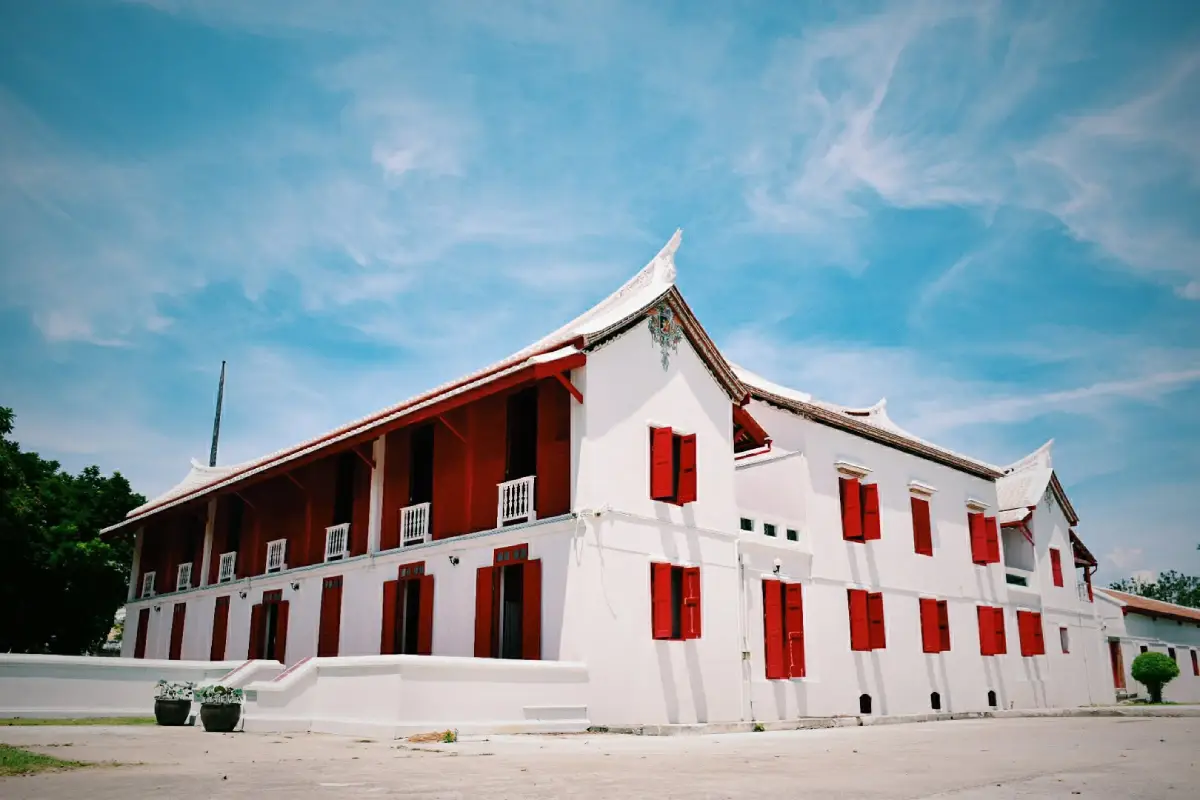
Songkhla National Museum
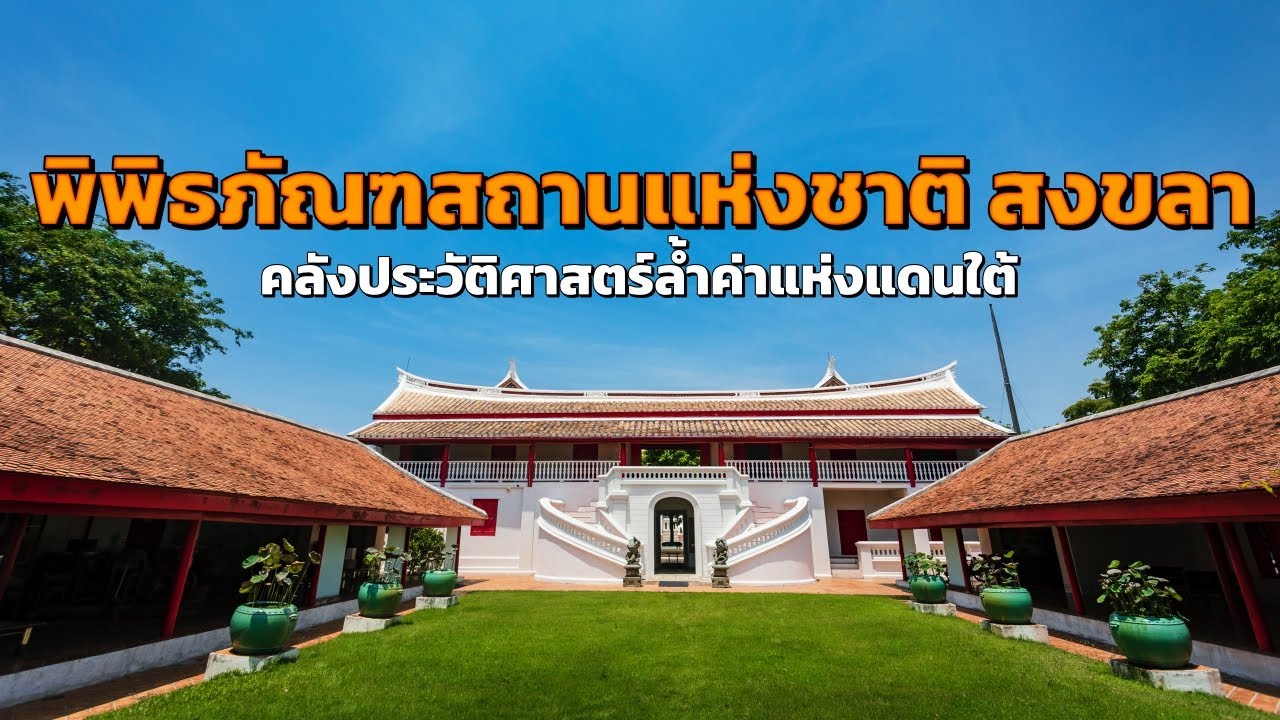
Open Days: Wednesday – Sunday
Opening Hours: 09.00 – 16.00 / Closed on Monday, Tuesday, and public holidays
Songkhla National Museum is one of the most important museums in Thailand’s lower southern region. It is located at 13 Wichianchom Road, Bo Yang Subdistrict, Mueang Songkhla District, Songkhla 90000, within the old town area and close to Songkhla Lake. The museum is valuable not only because of the ancient objects and cultural materials displayed inside, but also because the museum building itself is a registered national historic monument. Built in 1878, during the reign of King Chulalongkorn, Rama V, the building was originally the private residence of Phraya Suntharanurak, also known as Net Na Songkhla, an assistant governor of Songkhla.
The first feature that makes Songkhla National Museum stand out is the beauty of its Chinese-European architecture. The two-storey brick-and-mortar building faces west toward Songkhla Lake. It is raised about one meter above the ground and arranged as a group of four connected buildings linked by covered corridors. The complex includes an open central courtyard, lawns, garden areas, and curved Chinese-style boundary walls. As visitors enter through the gate, the white walls, red shutters, Chinese-style roofline, curved staircases, and quiet courtyard create a strong sense of place that differs from the busy streets of Songkhla Old Town nearby.
The building began as a mansion of the Na Songkhla family, one of the most influential families in Songkhla’s history. In 1894, it was used as the residence and office of Phra Wichit Worasan, a special commissioner assigned to inspect government affairs in Songkhla, who later became Chao Phraya Yommarat, or Pan Sukhum. The building was subsequently used as the administrative hall of Monthon Nakhon Si Thammarat and, from 1917, as Songkhla Provincial Hall until 1953, when the provincial office moved to its present location on Ratchadamnoen Road. The building therefore records a major transition from a private elite residence to a regional and provincial administrative center before becoming a national museum.
After being left unused for a period, the Fine Arts Department registered the building as a historic monument in 1973 and began restoring it for museum use. Once the permanent exhibitions were completed, the museum was officially opened on 25 September 1982, with His Royal Highness the Crown Prince presiding over the opening ceremony. The transformation of the old residence into a museum preserved an important historic structure and gave it a new public role as a center of learning for Songkhla and the lower South.
The museum displays art objects, archaeological materials, ethnographic objects, and cultural heritage connected with Songkhla Province and the lower southern region. Its themes cover archaeology, art history, ethnography, Chinese art, local folk art, port-city culture, everyday life, and the history of the Na Songkhla family. For visitors, this makes the museum an excellent starting point for understanding Songkhla as an ancient settlement, a trading port, an administrative center, a lake city, a seaside destination, and a culturally layered city shaped by Chinese, Malay, Indian, and southern Thai influences.
One of the important exhibition themes is the Songkhla way of life, presented through the concept of “Nod-Na-Le.” Nod refers to the use of toddy palm, Na refers to rice cultivation, and Le refers to fishing in both Songkhla Lake and the Gulf of Thailand. This concept explains that Songkhla’s traditional life was not shaped by a single landscape. It emerged from the interaction of land resources, agricultural fields, lake ecology, and the sea. Understanding Nod-Na-Le helps visitors understand the cultural roots of Songkhla more clearly.
Another notable section presents the aesthetics of life in the lower South. The lower southern region has long been connected with port cities, trade routes, religions, and beliefs from many sources, including India, the Malay Peninsula, Chinese culture, and Islam. These influences helped form the distinctive identity of the lower South, expressed through language, dress, ritual objects, daily tools, arts, and cultural practices. The exhibition helps visitors see southern Thailand beyond familiar images of beaches and food, presenting it instead as a complex cultural region.
One of the museum’s most important highlights is the original wooden door panels of the former mansion. Dating to around the 24th Buddhist century, these panels are carved, painted, and decorated with mother-of-pearl by highly skilled Chinese craftsmen. They are not merely architectural fragments. They are refined works of art that preserve Chinese ideas of custom, literature, religion, and decorative symbolism. Openwork carving, deity figures, plant motifs, dragon patterns, and mother-of-pearl details all reflect craftsmanship, the wealth of the original residence, and Songkhla’s long relationship with overseas Chinese culture.
The architectural details of the museum reward slow observation. The roof is covered with layered Chinese-style tiles and has curved ridges with upturned ends. Doors, windows, folding panels, corridors, and the central courtyard are designed to allow air circulation in a coastal climate. Painted details on capitals and gable areas show Chinese deities and floral motifs. Inside the roof structure, Chinese symbolic elements such as yin-yang and bagua motifs reflect protective beliefs. Together, these details make the building an important example of Chinese-influenced architecture adapted to southern Thailand.
Songkhla National Museum is also important as a repository of lower southern heritage. Some objects relate to prehistoric settlement, while others reflect religious development, local craftsmanship, port trade, and cultural exchange across the Malay Peninsula. The exhibitions show that Songkhla did not develop in isolation. It was part of a larger cultural and economic network connecting inland communities, the lake, the sea, and foreign trade routes.
Visitors interested in archaeology can find objects that help explain human development in the lower South, including materials from ancient communities, pottery, religious images, metalwork, and ritual or daily-life objects. Visitors interested in urban history can follow the story of Songkhla from the old settlement areas around Singhanakhon to the present Bo Yang side of the city, and understand the province’s role as a center of administration, trade, and cultural contact.
For those interested in ethnography and local culture, the museum presents the diversity of communities in the lower South. The region includes Thai Buddhist, Thai Muslim, Chinese, and Malay-related communities, each with distinct languages, beliefs, occupations, clothing, and ritual practices. The museum helps visitors avoid seeing the South as a single cultural image. Instead, it shows the layered coexistence of multiple communities within the same region.
Chinese art is another strong reason to visit. The building and interior decoration reveal deep Chinese influence through carved folding doors, window details, painted motifs, symbolic forms, deity imagery, and roof design. The museum is therefore a useful place to study how Chinese art and architecture were adapted in southern Thailand, especially in a port city where Chinese communities played important roles in commerce, society, and local politics.
Beyond the indoor galleries, the open-air pavilion and surrounding grounds are also part of the museum experience. Outdoor displays include architectural fragments such as carved gable pieces and decorative elements donated from temples or historic structures. These objects help visitors understand that art objects were once part of real buildings, religious places, and community spaces. Walking through the outdoor areas adds another layer to the understanding of local architecture and material culture.
The special value of Songkhla National Museum lies in the fact that both the building and the collections are important. Visitors who focus only on the objects may miss the story of the house. Visitors who focus only on the architecture may miss the historical evidence inside. The best way to visit is to begin by observing the exterior, gate, staircases, corridors, courtyard, roof, and carved woodwork, then move through the galleries to follow the historical and cultural development of Songkhla and the lower South.
The museum is suitable for many kinds of visitors. General travelers can use it as an introduction before exploring Songkhla Old Town. Students can use it to study history, archaeology, art, and social culture. Researchers can use it as a reference point for ethnographic and urban-historical study. Architecture lovers and photographers can enjoy the white building, red shutters, curved staircases, open courtyard, and elegant garden setting.
Its location in Songkhla Old Town makes it easy to connect with nearby attractions. The museum is close to the old city wall, Phathammarong Museum, Songkhla City Pillar Shrine, Nakhon Nai Road, Nakhon Nok Road, Nang Ngam Road, Hub Ho Hin Red Rice Mill, Tang Kuan Hill, and Samila Beach. Visitors who want to understand Songkhla deeply should begin at the museum, then continue through the old town to see how the history presented in the galleries continues in the living city outside.
Visitors should allow at least 1 to 2 hours for the museum. Those who want to read labels carefully and observe the building details should plan for a longer visit. Morning is suitable for viewing the exterior because the light is more comfortable, while afternoon visits can pair well with a walk through the old town or a stop by Songkhla Lake. The museum opens Wednesday to Sunday from 09.00 to 16.00 and closes on Monday, Tuesday, and public holidays, so visitors should plan their trip accordingly.
For families, the museum is a useful learning space. Children and young people can encounter real historical objects, old architecture, carved wooden doors, Chinese decorative art, and evidence of past ways of life. This makes history more concrete than classroom learning alone. Parents can use the museum as a place to discuss Songkhla, southern life, cultural diversity, and the relationship between old buildings and local memory.
As cultural travel, Songkhla National Museum greatly deepens a visit to the city. Once visitors understand the Na Songkhla family, the Monthon administrative period, Chinese-European architecture, the Nod-Na-Le way of life, and the development of the lower South, walking through Songkhla Old Town becomes much more meaningful. Old shophouses, temples, shrines, food streets, and lakeside views are no longer just photographic scenes. They become part of a connected urban story.
Getting There is straightforward from central Songkhla. From Songkhla Old Town, visitors can reach Wichianchom Road via Nakhon Nai Road, Nakhon Nok Road, Nang Ngam Road, or nearby local streets. From Samila Beach or Tang Kuan Hill, city roads connect easily back to the museum area. Visitors coming from Hat Yai can take Kanchanawanit Road toward Mueang Songkhla, then continue to Bo Yang Subdistrict and Wichianchom Road. Private cars, taxis, ride-hailing services, and local transport are convenient options. Visitors staying in the old town may also walk or cycle for part of the route.
Museum etiquette is important. Visitors should keep quiet, avoid touching objects, avoid leaning on display cases, refrain from eating in exhibition areas, and follow staff instructions. Photography rules should be checked on site, especially around important objects or restricted areas. Careful behavior helps protect the museum collections and allows other visitors to enjoy the space properly.
Highlights not to miss include the front view of the Chinese-European building, the curved staircases, the carved wooden doors, the Songkhla way-of-life section, the story of the Na Songkhla family, Chinese decorative details, and the outdoor display of architectural fragments. Seeing these elements together transforms the museum from a place that stores old objects into a living narrative of Songkhla’s history.
Songkhla National Museum should be part of any cultural itinerary in Songkhla. Its elegant architecture, history as a mansion, government residence, Monthon administrative hall, and provincial hall, its current role as a national museum, and its wide-ranging exhibitions on the lower South make it an essential place for understanding the province. The museum offers architecture, history, art, archaeology, ethnography, and old-town context in one compact and rewarding visit.
| Name | Songkhla National Museum |
| Thai Name | พิพิธภัณฑสถานแห่งชาติ สงขลา |
| Location | Wichianchom Road, Bo Yang Subdistrict, Mueang Songkhla District, Songkhla Province |
| Address | 13 Wichianchom Road, Bo Yang Subdistrict, Mueang Songkhla District, Songkhla 90000, Thailand |
| Coordinates | 7.2023780144, 100.588644958 |
| Distinctive Features | A 2-storey Chinese-European brick-and-mortar building facing Songkhla Lake, arranged as four connected structures with corridors, a central courtyard, red shutters, white walls, Chinese-style roof details, and carved wooden elements |
| History / Period | Built in 1878 during the reign of King Rama V as the residence of Phraya Suntharanurak, or Net Na Songkhla; later used as a government residence, Monthon Nakhon Si Thammarat administrative hall, and Songkhla Provincial Hall |
| Heritage Registration / Opening | Registered as a historic monument by the Fine Arts Department in 1973 and officially opened as a national museum on 25 September 1982 |
| Caretaker / Responsible Agency | The Fine Arts Department, Ministry of Culture |
| Contact Number | 074-311728 |
| nm_songkla@finearts.go.th | |
| Open Days | Wednesday – Sunday |
| Opening Hours | 09.00 – 16.00 |
| Closed | Monday, Tuesday, and public holidays |
| Admission Fee | Thai visitors 30 baht / foreign visitors 150 baht / monks, novices, students in uniform, and visitors aged 60 or above are exempt from the admission fee |
| Key Displays | Lower southern art objects, archaeological objects, art history, ethnography, Chinese art, local folk art, Na Songkhla family-related objects, and the original carved, painted, mother-of-pearl wooden door panels of the former residence |
| Main Areas / Exhibition Themes | Songkhla way-of-life room with the Nod-Na-Le concept, the aesthetics of lower southern life, Chinese art and carved woodwork display, open-air pavilion with architectural fragments, and permanent exhibitions on Songkhla and the lower South |
| Getting There | From central Songkhla, head to Wichianchom Road in Bo Yang near Songkhla Old Town and Songkhla Lake. From Hat Yai, take Kanchanawanit Road toward Mueang Songkhla, then continue to Bo Yang and Wichianchom Road |
| Visitor Etiquette | Keep quiet, do not touch objects, do not lean on display cases, avoid eating in exhibition areas, and follow staff instructions |
| Nearby Tourist Attractions | 1. Old Songkhla City Wall, 0 km 2. Phathammarong Museum, 0 km 3. Songkhla City Pillar Shrine, 1 km 4. Nang Ngam Road and Songkhla Old Town, 1 km 5. Hub Ho Hin Red Rice Mill, 1 km 6. Tang Kuan Hill, 1 km 7. Laem Son On, 2 km 8. Samila Beach, 2 km |
| Nearby Restaurants | 1. Sabai Dee Restaurant, 0 km, Tel. 087-479-3690 2. Khao Noi Phochana, 1 km, Tel. 081-738-8194 3. Lyn’s The Shanghai Cafe, 1 km, Tel. 083-243-9977 4. Khao Stu Kiat Fang, 1 km, Tel. 074-311-998 5. Je Noi Kuay Jab, 1 km, Tel. 074-313912 6. Hajji Na Restaurant, 3 km, Tel. 081-690-9434 |
| Nearby Accommodations | 1. Yu Cafe’ and Hostel Songkhla, 1 km, Tel. 083-002-9554 2. Songkhla TaeRaek Antique Hotel, 1 km, Tel. 074-322227, 094-3173338 3. A List Hotel Songkhla, 1 km, Tel. 092-740-6600 4. The Singora Hotel, 2 km, Tel. 074-314-555 5. Montana Hotel Songkhla, 2 km, Tel. 074-300-614 6. The Luxury Residence Songkhla, 2 km, Tel. 074-321-977 7. BP Samila Beach Hotel & Resort, 3 km, Tel. 074-440-222 |
Frequently Asked Questions (FAQ)
Q: Where is Songkhla National Museum located?
A: Songkhla National Museum is located at 13 Wichianchom Road, Bo Yang Subdistrict, Mueang Songkhla District, Songkhla 90000, near Songkhla Old Town and Songkhla Lake.
Q: What days and hours is Songkhla National Museum open?
A: It is open Wednesday to Sunday from 09.00 to 16.00 and closed on Monday, Tuesday, and public holidays.
Q: Is there an admission fee?
A: Yes. The admission fee is 30 baht for Thai visitors and 150 baht for foreign visitors. Monks, novices, students in uniform, and visitors aged 60 or above are exempt from the admission fee.
Q: What was the museum building originally used for?
A: It was originally the residence of Phraya Suntharanurak, or Net Na Songkhla. It was later used as a government residence, the administrative hall of Monthon Nakhon Si Thammarat, and Songkhla Provincial Hall before being restored as a national museum.
Q: What are the highlights of Songkhla National Museum?
A: Highlights include the century-old Chinese-European building, exhibitions on lower southern history and culture, Chinese art, local folk art, ethnographic objects, and the original carved, painted, mother-of-pearl wooden door panels of the former residence.
Q: How long should visitors spend at the museum?
A: Visitors should allow at least 1 to 2 hours. Those who want to read exhibition labels carefully and observe the architectural details should allow more time.
Q: Which nearby places pair well with Songkhla National Museum?
A: Nearby places include the Old Songkhla City Wall, Phathammarong Museum, Songkhla City Pillar Shrine, Nang Ngam Road, Hub Ho Hin Red Rice Mill, Tang Kuan Hill, Laem Son On, and Samila Beach.
Q: How do travelers get to Songkhla National Museum?
A: From central Songkhla, travel to Wichianchom Road in Bo Yang. From Hat Yai, take Kanchanawanit Road toward Mueang Songkhla, then continue to Bo Yang and Songkhla Old Town.
Tel : 074311728
 Tel : 074311728
 Category: ●Art, Culture and Heritage
 Group: ●Museums
Last Update : 2 MonthAgo
 Last Update : 2 MonthAgo
 Click to Access the Navigation Map GPS
Songkhla National Museum Map
Recommend

 Historical Sites and Monuments(2)
 Landmarks and Memorials(7)
 Royal Palace(1)
 Art, Craft Centres, Tradition(4)
Museums(4)
 Art Gallery(1)
 Educational Places
 Library(1)
 Educational Gardens, Farm(3)
 Places of Worship
 Temple(52)
 Mosque(2)
 Other Sacred Sites(11)
 Suburban Living
 Village, Community(3)
 Local Market(3)
 Floating Market(2)
 Nature and Wildlife
 National Parks and Marine Reserves(5)
 Mountain (Doi)(6)
 Dam, Reservoir, Lake(5)
 Waterfalls(12)
 Caves(4)
 River, Canal(2)
 Bays and Beaches(13)
 Islands(3)
 Other natural attractions(2)
 Entertainment and Agricultural
 Zoos and Aquariums(2)
 Animal camps and shows(1)
 Farms, Parks and Ecotourism(6)
 Waterpark(1)
 Travel Articles, Recipes
 Travel Review, Food Review(1)
 Southern Food Menu, Southern Food Recipes(2)


