
lovethailand home >South Travel Attractions >Songkhla Travel Attractions >Muang Songkhla >Khao Rup Chang > Songkhla Zoo Water Park
TL;DR: Songkhla Zoo Water Park, Songkhla attractions : Entertainment and Agricultural, Waterpark.
Songkhla Zoo Water Park
Open Days: Songkhla Zoo is open daily. Current operation of the water park's pools and attractions has not been confirmed.
Opening Hours: Songkhla Zoo, 8:30 AM – 4:30 PM daily.
Songkhla Zoo Water Park is a former recreational water attraction located within Songkhla Zoo in Khao Rup Chang Subdistrict, Mueang Songkhla District, Songkhla Province, southern Thailand. Known for its unusual hillside setting, the water park combined swimming pools, water slides, family recreation, and panoramic views of Songkhla Lake and the surrounding landscape. Officially inaugurated on October 23, 2011, it became a memorable destination for generations of local residents and visitors from neighboring provinces. Today, Songkhla Zoo continues to welcome visitors for wildlife viewing and environmental education, while current public access to the water park's swimming pools and water attractions has not been confirmed through a recent operational announcement.
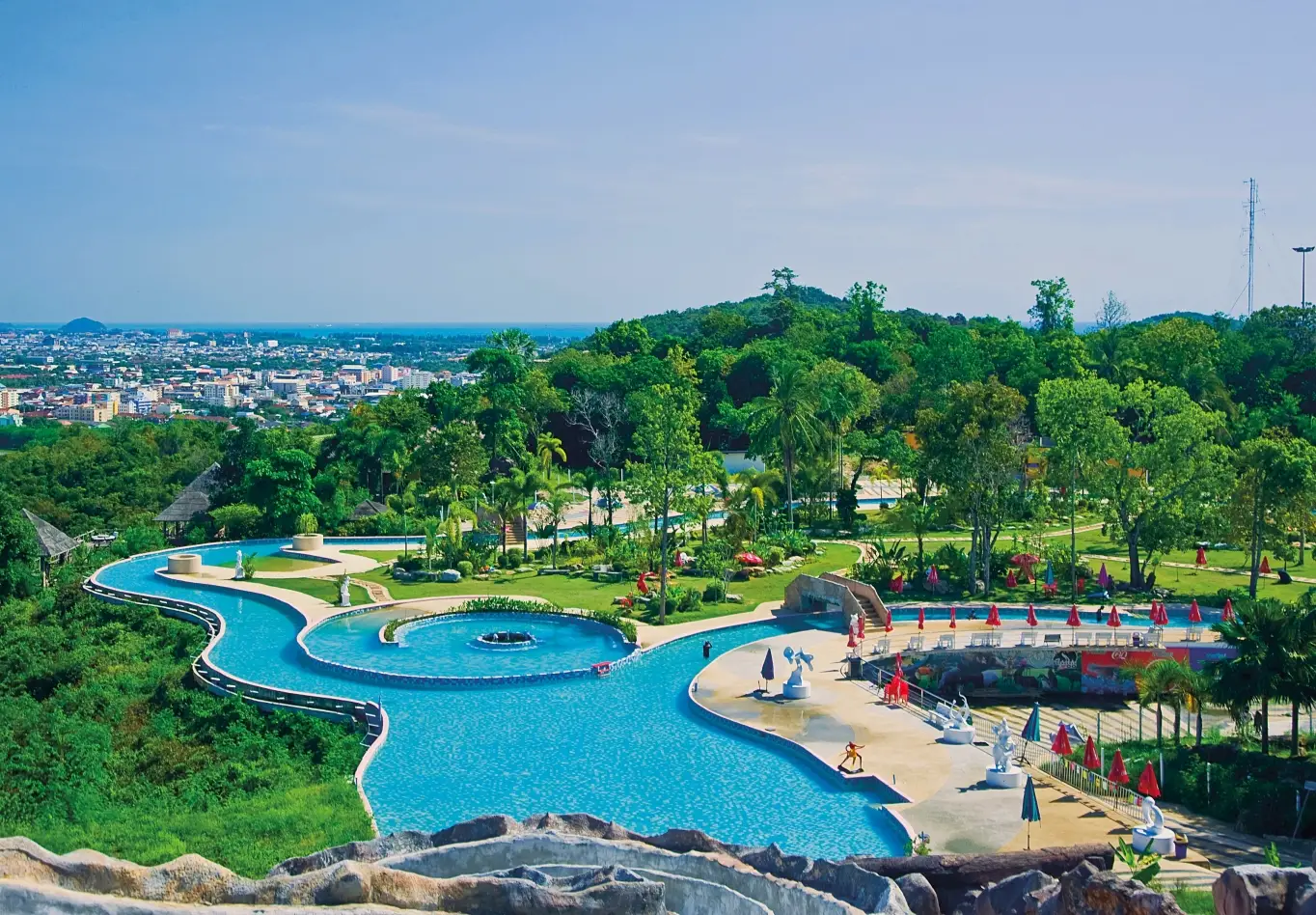
The most distinctive feature of Songkhla Zoo Water Park was its elevated location. Unlike conventional water parks built on relatively flat land, the attraction occupied a hillside overlooking the city of Songkhla and its surrounding natural landmarks. Visitors once enjoyed recreational water activities against a backdrop of Songkhla Lake, Tinsulanonda Bridge, Ko Yo Island, and the hills of Singhanakhon District. This combination of recreational facilities and scenic surroundings gave the water park a distinctive identity within southern Thailand's tourism landscape.
The water park was developed as part of a broader effort to expand the recreational appeal of Songkhla Zoo. Originally established primarily for wildlife conservation, breeding, education, and public recreation, the zoo sought to offer a greater variety of activities for visitors of different ages. Adding a water park was intended to create a destination where families could enjoy wildlife exhibits, environmental learning, sightseeing, and water-based entertainment during a single visit.
The History of Songkhla Zoo Water Park is closely connected to a period of government-supported tourism development in Thailand during the early 2010s. The water park was financed through the Thai Khem Khaeng economic development initiative, which supported infrastructure and public investment projects. The project transformed an existing scenic viewpoint inside Songkhla Zoo into a recreational attraction featuring swimming facilities, landscaped leisure areas, and visitor services.
The project took shape following a Cabinet decision in June 2010. A hillside area covering more than 9 rai was selected for the development. The location was especially suitable for a tourism project emphasizing views of Songkhla and the surrounding lake basin. By adapting an existing viewpoint into a water park, the project sought to make fuller recreational use of the site's geographical advantages while expanding the zoo's range of attractions.
October 23, 2011, marked an important milestone when the water park was officially inaugurated. The opening ceremony was presided over by Pisan Thongloet, then Deputy Governor of Songkhla Province, with representatives from the Zoological Park Organization and Songkhla Zoo participating in the event. The inauguration reflected the government's ambition to strengthen tourism infrastructure and introduce an additional leisure destination for families living in Songkhla and other southern provinces.
From the beginning, the project was designed as more than a conventional swimming facility. Its recreational spaces were intended to accommodate young children, older children, and adults through separate swimming areas and different water-based attractions. The surrounding natural landscape was an integral part of the design, enabling visitors to combine outdoor recreation with scenic views.
In 2015, Songkhla Zoo promoted a renewed version of the water park alongside its National Children's Day activities. The featured attractions included a large lazy river, swimming areas for children and adults, twin water slides, fountains, waterfalls, and shaded resting spaces. This development demonstrated the continuing effort to update the recreational facilities and maintain their appeal to families.
In 2018, a water park within Songkhla Zoo was promoted under the name Splash Mountain Sea View Water Park. Its appeal centered on hillside swimming facilities, scenic surroundings, and an expanded lazy-river experience. This stage represents another chapter in the development of water-based recreation inside Songkhla Zoo, showing how the attraction's facilities and public identity evolved over time.
The Water Park's Hillside Design and Landscape were among its most recognizable characteristics. Songkhla Zoo occupies naturally elevated terrain, and the water park was developed in a setting where the surrounding topography influenced the visitor experience. Rather than relying exclusively on artificial attractions, the site incorporated the area's natural elevation and panoramic scenery as essential parts of its appeal.
Conventional water parks often use extensive flat surfaces to accommodate large pools, slides, and recreational structures. Songkhla Zoo Water Park was different because its hillside position created a scenic environment where the city, lake, coastline, and surrounding mountains formed a natural backdrop. The pools and recreational areas were arranged to take advantage of the site's geographical setting, creating a distinctive outdoor experience.
The Young Children's Swimming Area was one of the facilities included in the original project. It was designed to provide a dedicated space for younger visitors, separate from swimming areas intended for older children and adults. Organizing the facilities by age group was an important part of the family-oriented concept, allowing visitors to select activities appropriate to children's swimming abilities and developmental stages.
The Pools for Older Children and Adults were another central feature of the water park. The larger swimming areas supported recreational swimming and shared family activities. During the operating years, these facilities served as focal points around which visitors could gather, play, and relax together.
The Lazy River became one of the water park's best-known attractions. Designed with a winding route and a circulating flow of water, it allowed visitors to enjoy a leisurely water-based experience rather than swimming continuously in a conventional pool. Its layout reflected the park's emphasis on relaxation and recreation within a landscaped environment.
The lazy river also complemented the attraction's family-friendly character. The experience focused on gentle movement, outdoor enjoyment, and the surrounding atmosphere rather than competitive swimming or strenuous exercise. During its operating years, this section was especially appealing to visitors who wished to relax while enjoying the scenery.
The Twin Water Slides were among the park's most exciting original attractions. Official descriptions of the 2011 opening referred to a pair of slides rising more than 7 meters above the surrounding facilities. The twin-slide configuration provided a more dynamic experience for visitors looking for additional excitement beyond ordinary swimming.
The Fountain and Waterfall Areas contributed to the recreational setting. These features added movement and visual interest to the landscaped surroundings, complementing the pools and slides. Waterfalls and fountains were not simply decorative elements; they helped establish the park's identity as a leisure destination centered on water, nature, and relaxation.
The Relaxation Areas and Scenic Viewpoints were particularly important because of the park's hillside location. The elevated site provided extensive views of Songkhla and Songkhla Lake, making sightseeing an integral part of the visitor experience. Even for people who were not participating in swimming activities, the panoramic surroundings formed a major attraction.
From the elevated grounds of Songkhla Zoo, the landscape includes urban areas, the broad waters of Songkhla Lake, coastal features, and distant hills. The sight of Tinsulanonda Bridge and Ko Yo Island reveals the relationship between the region's transport infrastructure and its geographical setting.
Ko Yo Island is one of the most recognizable features of Songkhla Lake. Connected to surrounding areas by Tinsulanonda Bridge, the island has a distinctive identity shaped by lakeside communities, cultural traditions, and local livelihoods. Viewing it from the zoo's hillside provides a geographical perspective that differs significantly from exploring the island at ground level.
On the opposite side of the lake, the hills around Khao Daeng and Khao Khiao in Singhanakhon District contribute to the landscape. Seen from the elevated zoo grounds, these hills create a visual contrast with Songkhla's urban environment and the waters of the lake, illustrating the region's combination of natural and developed areas.
Visitor Facilities at the Former Water Park were designed to support families spending extended periods at the attraction. Historical descriptions mentioned swimwear and footwear services, souvenir shops, photography areas, food and beverage outlets, and spaces for resting between activities. Together, these facilities formed part of the park's broader recreational concept.
Such amenities were important because a family visit to a water park generally involved several hours of outdoor activity. Rest areas, refreshments, and visitor services allowed family members who were not swimming to remain comfortably within the attraction and participate in the shared experience.
The Importance of Songkhla Zoo Water Park to Southern Thailand's Tourism lies in its distinctive combination of recreational water facilities and a natural hillside setting. At the time of its opening, the project expanded the range of leisure experiences available in Songkhla Province and introduced another option for family-oriented day trips.
Songkhla is a diverse tourism destination known for its lake, beaches, historic neighborhoods, religious sites, cultural heritage, and natural scenery. Developing a water park inside the zoo represented an effort to broaden this existing tourism portfolio and create an attraction suitable for different age groups.
Families traveling with children often consider several factors when selecting a destination, including accessibility, the variety of activities, opportunities to rest, and the suitability of the environment for younger visitors. During its active years, Songkhla Zoo Water Park addressed these interests by combining different recreational facilities within the larger zoo complex.
The project also demonstrated an approach to tourism development that made the surrounding landscape part of the attraction itself. Instead of focusing solely on mechanical rides and artificial structures, it used the hillside environment and panoramic views to create a more distinctive recreational setting.
Songkhla Zoo and Its Wildlife Conservation Role form an essential part of the story of the water park. Songkhla Zoo was developed to contribute to wildlife conservation, breeding, public education, and recreation. Its extensive natural grounds accommodate various wildlife exhibits and spaces for learning about animals and their environments.
The zoo covers approximately 878 rai of land and occupies an environment characterized by hills and green spaces. This geographical setting distinguishes it from many urban zoos built on flat terrain. Visitors can experience both wildlife exhibits and natural scenery within the same destination.
Songkhla Zoo has played an important role in wildlife education in southern Thailand. Its collections and exhibits have included animals native to Thailand as well as species from other parts of the world. These displays provide opportunities to learn about biological diversity, animal behavior, ecosystems, and conservation.
The Hoofed Animal Exhibits are among the zoo's important educational areas. Historical descriptions have included deer, eld's deer, muntjacs, serows, banteng, gaur, and other mammals. Such exhibits allow visitors to observe differences in body structure, diet, behavior, and ecological adaptation among large herbivorous animals.
Many hoofed mammals contribute to forest ecosystems through grazing, browsing, seed dispersal, and their position within natural food chains. Learning about these species offers a broader understanding of their relationships with plants, predators, and the landscapes they inhabit.
The Bird Exhibits have showcased a variety of birds native to Thailand and species originating elsewhere. Historical zoo information has highlighted hornbills, parrots, macaws, waterbirds, and other birds. These displays allow visitors to compare different beak shapes, wing structures, body sizes, colors, and feeding adaptations.
Hornbills are especially significant in tropical forest ecosystems because many species help disperse seeds. Their ecological role makes them important subjects for conservation education, helping visitors understand how the survival of wildlife can be connected directly to the health of forest habitats.
The Carnivore Exhibits have been another important feature of Songkhla Zoo, particularly displays involving members of the cat family and other predatory mammals. Learning about these animals can help visitors understand hunting adaptations, territorial behavior, feeding ecology, and the position of predators in natural ecosystems.
Large carnivores play important ecological roles by influencing prey populations and interactions within food webs. Educational exhibits involving these animals can introduce wider conservation concerns, including habitat loss, human-wildlife conflict, and the protection of remaining natural habitats.
The Primate Exhibits have introduced visitors to the diversity of monkeys, langurs, gibbons, and related mammals. Primates are particularly interesting because many species display complex social interactions, communication methods, and relationships within family groups.
Observing primates provides opportunities to discuss social behavior, feeding, movement through forest environments, and the adaptations that enable different species to occupy distinct ecological niches. Their exhibits can help visitors appreciate the complexity of mammalian behavior.
Malayan Tapir Conservation and Exhibits have particular relevance to southern Thailand. The Malayan tapir is a large, distinctive mammal associated with forest habitats of the Malay Peninsula, including parts of southern Thailand. Its unusual appearance and ecological importance make it a valuable subject for wildlife conservation education.
Tapirs contribute to forest ecosystems through their feeding behavior and role in seed dispersal. Understanding their ecological importance helps explain why maintaining connected forest habitats is essential for the long-term survival of large forest mammals.
Wildlife Education at Songkhla Zoo extends beyond the visual experience of observing animals. Educational activities can introduce visitors to feeding behavior, natural habitats, adaptations, conservation challenges, and the relationship between animals and ecosystems.
The zoo publishes information about scheduled wildlife presentations and related visitor activities. These programs are intended to combine learning with entertainment, giving families and school groups opportunities to develop a better understanding of animals through observation and explanations by zoo personnel.
Learning in a zoological setting differs from studying photographs or written descriptions because visitors can observe living animals, their physical characteristics, and some of their natural behaviors. These experiences can make discussions about biodiversity and conservation more tangible and memorable.
The Relationship Between the Water Park and Songkhla Zoo illustrates the attempt to combine environmental education with family recreation. The original concept expanded the zoo's role beyond wildlife exhibition by providing additional spaces for shared leisure experiences.
During the water park's operating years, families could organize visits that included observing animals, participating in educational activities, and spending time at the swimming facilities. Bringing different experiences together within one complex increased the variety of activities available during a visit.
The zoo's location in Khao Rup Chang also connects it with other destinations across Songkhla Province. Visitors exploring the area can combine wildlife tourism with cultural landmarks, historical neighborhoods, lakeside scenery, and coastal attractions.
The Water Park's Place in Local Memory is another important part of its history. Its opening in 2011 introduced a distinctive leisure destination to the community, and family outings to the water park became memorable experiences for visitors from Songkhla and surrounding areas.
Recreational destinations frequently become meaningful to local communities because of the personal experiences associated with them. Family trips, childhood holidays, outings with friends, and special events can transform an attraction into part of a community's shared memories. Songkhla Zoo Water Park has acquired this additional significance alongside its original tourism function.
The fact that the attraction continues to be discussed as a place of nostalgia shows how tourism sites can remain culturally meaningful even as their activities and circumstances change. The story of the water park therefore forms part of Songkhla's wider history of recreational development.
Visiting Songkhla Zoo Today remains an option for travelers interested in wildlife and natural surroundings. The zoo is open daily and continues to provide opportunities to view animals, explore designated grounds, and enjoy the landscaped hillside environment.
Travelers researching the former water park can still learn about its history as part of the zoo's development. However, a visit intended specifically for swimming must be distinguished from ordinary zoo admission, because the continued availability of the pools and water attractions has not been confirmed by a current operating announcement.
Getting There is straightforward by private car or hired transport from central Songkhla. Songkhla Zoo is located at 189 Moo 5, Songkhla–Na Thawi Road, Khao Rup Chang Subdistrict, Mueang Songkhla District, Songkhla 90000, Thailand. Travelers departing from Songkhla city can follow the main roads toward Khao Rup Chang and continue along Songkhla–Na Thawi Road to reach the zoo.
Visitors traveling from Hat Yai can use Kanchanawanit Road or Lop Buri Ramet Road toward Mueang Songkhla before connecting with the route to Songkhla Zoo. Traveling by car is convenient because the zoo covers a large area and includes hillside roads connecting its different visitor zones.
Weather conditions are an important consideration when visiting Songkhla Zoo. Southern Thailand experiences periods of heavy rainfall, which can affect the comfort and accessibility of outdoor attractions. Choosing suitable weather conditions allows visitors to enjoy the animal exhibits and natural viewpoints more comfortably.
Families traveling with young children should allow time for rest stops and select exhibit areas according to individual mobility and interests. The zoo's extensive grounds and some sloping sections make planning especially helpful for visitors who wish to avoid unnecessary walking between distant areas.
Visitor safety and animal welfare are also important. Guests should follow zoo regulations, avoid entering restricted enclosures, refrain from feeding animals without authorization, and avoid behaviors that could disturb the animals. Responsible tourism supports the zoo's educational and conservation mission.
Nearby Attractions and Suggested Travel Connections include several destinations representing different aspects of Songkhla's natural and cultural heritage. The Songkhla Regional Observatory offers an opportunity to learn about astronomy, while the wider city contains historical neighborhoods, beaches, and lakeside communities.
Songkhla Old Town is an important cultural district reflecting the city's history as a southern trading port. Its historic streets feature traditional buildings, local shops, street art, restaurants, and architectural influences associated with different communities. Combining a zoo visit with time in the old town adds a historical and cultural dimension to the day.
Samila Beach is another well-known Songkhla landmark. Its coastal scenery and famous Golden Mermaid sculpture make it one of the province's most recognizable attractions. A visit to the zoo in the morning followed by time at the beach later in the day creates an itinerary combining wildlife, outdoor recreation, and seaside scenery.
Ko Yo Island is a particularly appealing destination for visitors interested in local culture and the landscape of Songkhla Lake. The island is associated with lakeside communities, traditional handicrafts, regional food, and scenic surroundings. Exploring Ko Yo on the ground offers a different perspective from viewing the island from the elevated grounds of Songkhla Zoo.
Songkhla is also well known for its diverse food culture, particularly southern Thai dishes, seafood, and culinary traditions influenced by the region's multicultural history. Travelers can combine a visit to the zoo with dining in Khao Rup Chang or central Songkhla, depending on their preferred route.
Mountain View Cafe & Restaurant is one dining establishment associated with the Songkhla Zoo area. Its hillside location and scenic surroundings illustrate how the area's landscape has also been used to create recreational dining experiences.
Travelers planning to stay overnight can find accommodation in Khao Rup Chang and nearby parts of Songkhla. Options listed by accommodation platforms include Songkhla Keeree Resort, WSotel Hotel Songkhla, The Peak Songkhla, Benjaphorn Grand View Hotel, and HOP INN Songkhla. These establishments provide different accommodation styles and are located within the broader area surrounding the zoo.
Songkhla Zoo Water Park as Part of Thailand's Modern Tourism History represents an attempt to broaden the function of a zoological park through the development of additional recreational facilities. Building a water park on a hillside was an unusual approach that brought together swimming, scenic views, family recreation, and a natural landscape.
Although the facilities and activities have changed over time, the water park's development history provides insight into tourism policy, public recreation, and changing visitor interests in southern Thailand. Its opening in 2011 and later redevelopment efforts remain significant chapters in the recreational history of Songkhla Province.
For travelers interested in modern local history, the former water park illustrates how tourism infrastructure can reflect public investment priorities, recreational trends, and community experiences. Songkhla Zoo itself continues to fulfill its broader role as a destination for wildlife education and leisure.
Conclusion: Songkhla Zoo Water Park was a distinctive hillside water attraction officially inaugurated on October 23, 2011. Its historical features included a lazy river, twin water slides, separate pools for children and adults, fountains, waterfalls, relaxation areas, and panoramic views of Songkhla Lake. Songkhla Zoo remains open to visitors every day, while the availability of the former water park's swimming facilities and attractions must be treated separately from the zoo's confirmed operating status.
| Name | Songkhla Zoo Water Park |
| Location | Inside Songkhla Zoo, Khao Rup Chang Subdistrict, Mueang Songkhla District, Songkhla Province, Thailand |
| Address | 189 Moo 5, Songkhla–Na Thawi Road, Khao Rup Chang, Mueang Songkhla, Songkhla 90000, Thailand |
| Attraction Type | Former recreational water park within a zoological complex; a site of local tourism history |
| History | Development followed a Cabinet decision in June 2010. Official inauguration took place on October 23, 2011, followed by later recreational developments in 2015 and 2018. |
| Original Project Area | More than 9 rai |
| Historical Highlights | Hillside water park, panoramic views of Songkhla Lake, lazy river, twin slides over 7 meters high, and family recreational facilities |
| Former Water Park Zones | Young children's pool, pools for older children and adults, lazy river, twin slides, fountains, waterfalls, resting areas, and viewpoints |
| Songkhla Zoo Status | Open to visitors |
| Water Park Status | No recent official announcement confirms that the swimming pools and water attractions are operating normally. |
| Responsible Organization | Songkhla Zoo, under the Zoological Park Organization of Thailand under the Royal Patronage |
| Zoo Open Days | Daily |
| Zoo Opening Hours | 8:30 AM – 4:30 PM |
| Admission Fees for Thai Visitors | Adults: 130 THB; children aged 3–12: 40 THB |
| Admission Fees for International Visitors | Adults: 350 THB; children: 120 THB |
| Free Admission Categories | Children under 3, Buddhist monks, novices, war veterans, persons with disabilities, and visitors over 60, subject to the zoo's applicable identification requirements |
| Vehicle Entry Fees | Motorcycles: 10 THB; cars: 50 THB; buses: 60 THB |
| Published Animal Presentation Fees | Wildlife presentations and sea lion performances: 20 THB per adult and 10 THB per child for each activity |
| Main Zoo Areas | Hoofed animal exhibits, bird exhibits, carnivore exhibits, primate exhibits, tapir exhibits, viewpoints, and recreational areas |
| Zoo Facilities | Parking, restrooms, restaurants, rest areas, internal zoo roads, and visitor service facilities |
| Getting There | From Songkhla city, travel toward Khao Rup Chang and Songkhla–Na Thawi Road. From Hat Yai, take Kanchanawanit Road or Lop Buri Ramet Road toward Songkhla and continue to the zoo. |
| Contact Numbers | +66 74 598 555; +66 86 498 1447 |
| Official Website | https://songkhla.zoothailand.org/ |
| Nearby Attractions and Travel Connections | 1. Songkhla Regional Observatory 2. Songkhla Old Town 3. Samila Beach 4. Ko Yo Island 5. Tinsulanonda Bridge |
| Restaurants in the Surrounding Area | 1. Mountain View Cafe & Restaurant, within the zoo area, Tel. +66 74 260 198 2. Jood 3 Jood Songkhla, Khao Rup Chang, Tel. +66 90 267 9352 |
| Nearby Accommodations | 1. Songkhla Keeree Resort, approximately 1.59 km, Tel. +66 99 163 3310 2. The Peak Songkhla, approximately 1.64 km 3. WSotel Hotel Songkhla, approximately 1.81 km 4. Benjaphorn Grand View Hotel Songkhla, approximately 2.45 km 5. HOP INN Songkhla, approximately 3.06 km |
Frequently Asked Questions (FAQ)
Q: Where is Songkhla Zoo Water Park located?
A: The former water park is located inside Songkhla Zoo at 189 Moo 5, Songkhla–Na Thawi Road, Khao Rup Chang Subdistrict, Mueang Songkhla District, Songkhla Province, southern Thailand.
Q: Is Songkhla Zoo Water Park currently open for swimming?
A: Songkhla Zoo remains open to visitors, but there is no recent official confirmation that the water park's swimming pools and slides are operating normally.
Q: When did Songkhla Zoo Water Park officially open?
A: The water park officially opened on October 23, 2011, following the development of an existing hillside viewpoint within Songkhla Zoo.
Q: What attractions did Songkhla Zoo Water Park originally feature?
A: The water park featured pools for young children, older children, and adults, a lazy river, twin water slides over 7 meters high, fountains, waterfalls, resting areas, and scenic viewpoints.
Q: What are Songkhla Zoo's opening hours and admission fees?
A: Songkhla Zoo is open daily from 8:30 AM to 4:30 PM. Admission is 130 THB for Thai adults and 40 THB for Thai children aged 3–12. International visitors pay 350 THB for adults and 120 THB for children. Vehicle entry and certain activities incur additional fees.
Q: What makes the former water park's location distinctive?
A: Its hillside setting provides panoramic views of Songkhla city, Songkhla Lake, Tinsulanonda Bridge, Ko Yo Island, and the hills around Singhanakhon District.
Q: How can visitors reach Songkhla Zoo from Hat Yai?
A: Visitors can travel by car via Kanchanawanit Road or Lop Buri Ramet Road toward Mueang Songkhla, then continue along Songkhla–Na Thawi Road to the zoo.
Q: Which attractions can be combined with a visit to Songkhla Zoo?
A: Travelers can explore Songkhla Regional Observatory, Songkhla Old Town, Samila Beach, Ko Yo Island, and Tinsulanonda Bridge. These destinations offer a combination of astronomy, cultural heritage, coastal scenery, and lakeside experiences.
 Category: ●Entertainment and Agricultural
 Group: ●Waterpark
Last Update : 1 WeekAgo
 Last Update : 1 WeekAgo
 Click to Access the Navigation Map GPS
Songkhla Zoo Water Park Map
Recommend

 Art, Culture and Heritage
 Historical Sites and Monuments(2)
 Landmarks and Memorials(7)
 Royal Palace(1)
 Art, Craft Centres, Tradition(4)
 Museums(4)
 Art Gallery(1)
 Educational Places
 Library(1)
 Educational Gardens, Farm(3)
 Places of Worship
 Temple(52)
 Mosque(2)
 Other Sacred Sites(11)
 Suburban Living
 Village, Community(3)
 Local Market(3)
 Floating Market(2)
 Nature and Wildlife
 National Parks and Marine Reserves(5)
 Mountain (Doi)(6)
 Dam, Reservoir, Lake(5)
 Waterfalls(12)
 Caves(4)
 River, Canal(2)
 Bays and Beaches(13)
 Islands(3)
 Other natural attractions(2)
 Zoos and Aquariums(2)
 Animal camps and shows(1)
 Farms, Parks and Ecotourism(6)
Waterpark(1)
 Travel Articles, Recipes
 Travel Review, Food Review(1)
 Southern Food Menu, Southern Food Recipes(2)


