
lovethailand home >South Travel Attractions >Satun Travel Attractions >Manang >Pam Phatthana > Chet Khot Cave
TL;DR: Chet Khot Cave is located at Moo 5, Palm Phatthana Subdistrict, Manang District, Satun Province, Thailand, open Daily, hours 08.30 – 16.30.
Chet Khot Cave
Open Days: Daily
Opening Hours: 08.30 – 16.30
Chet Khot Cave in Satun Province is a stream cave located in Moo 5, Palm Phatthana Subdistrict, Manang District. It is part of the inland limestone landscape associated with the Satun UNESCO Global Geopark and sits within a nature route connected to Wang Sai Thong Waterfall, Phu Pha Phet Cave, and other karst attractions. The cave is known for its winding passage through a limestone mountain, an active stream flowing through the cave, kayak or rafting-based access when water levels are suitable, stalactites, stalagmites, cool cave air, and a glittering white sandbank that appears inside the cave like tiny diamond flakes scattered across the sand.
The name Chet Khot means “seven bends,” referring to the cave’s winding water passage and its sequence of seven notable cave sections. The cave is also known as Tham Satta Khuha, meaning the cave of seven chambers. Each chamber has its own character, shaped by limestone walls, flowing water, mineral deposits, natural light, and the imagination of local people who named the formations from what they saw inside the cave. This makes the visit more than a simple cave trip; it is a journey through a natural tunnel with a clear local narrative.
Geologically, Chet Khot Cave is a stream cave that cuts through Ordovician limestone. The cave is about 600 m long, around 70–80 m wide, and approximately 40–50 m high in key sections. Some parts of the cave ceiling contain natural openings or sinkhole-like vents that help release air and allow light to enter the cave. These openings create a less enclosed atmosphere than fully sealed caves and produce striking moments where sunlight meets cave walls, water, and sand.
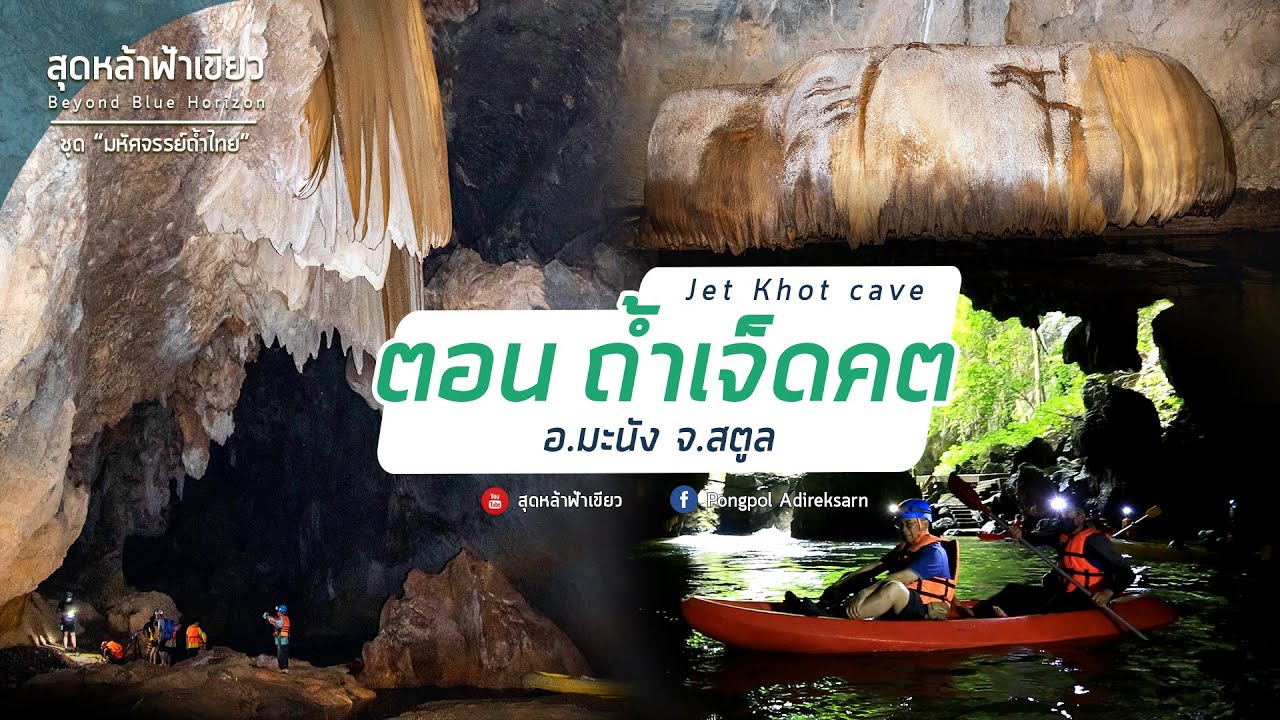
The stream inside the cave defines the visitor experience. Water levels change according to rainfall and season. In shallower periods, visitors may walk through certain sections along the cave wall. When water levels are suitable, kayaks or inflatable rafts can be used to travel through the cave and observe the formations from the water. The sound of flowing water, paddles, voices, and cave echoes creates a calm but adventurous atmosphere. Visitors should enter with local guides or licensed operators who understand the water level, route, and safe stopping points.
One of the most memorable features of Chet Khot Cave is the bright sandbank inside the cave. At a winding part of the passage, white sand reflects light in tiny shimmering points, giving the impression of diamonds scattered across the cave floor. This feature makes the cave different from many other limestone caves, because the scenery combines moving water, sand, rock walls, and mineral textures in one view. The sandbank also gives the cave a cooler and more open feeling, especially during guided rest stops along the route.
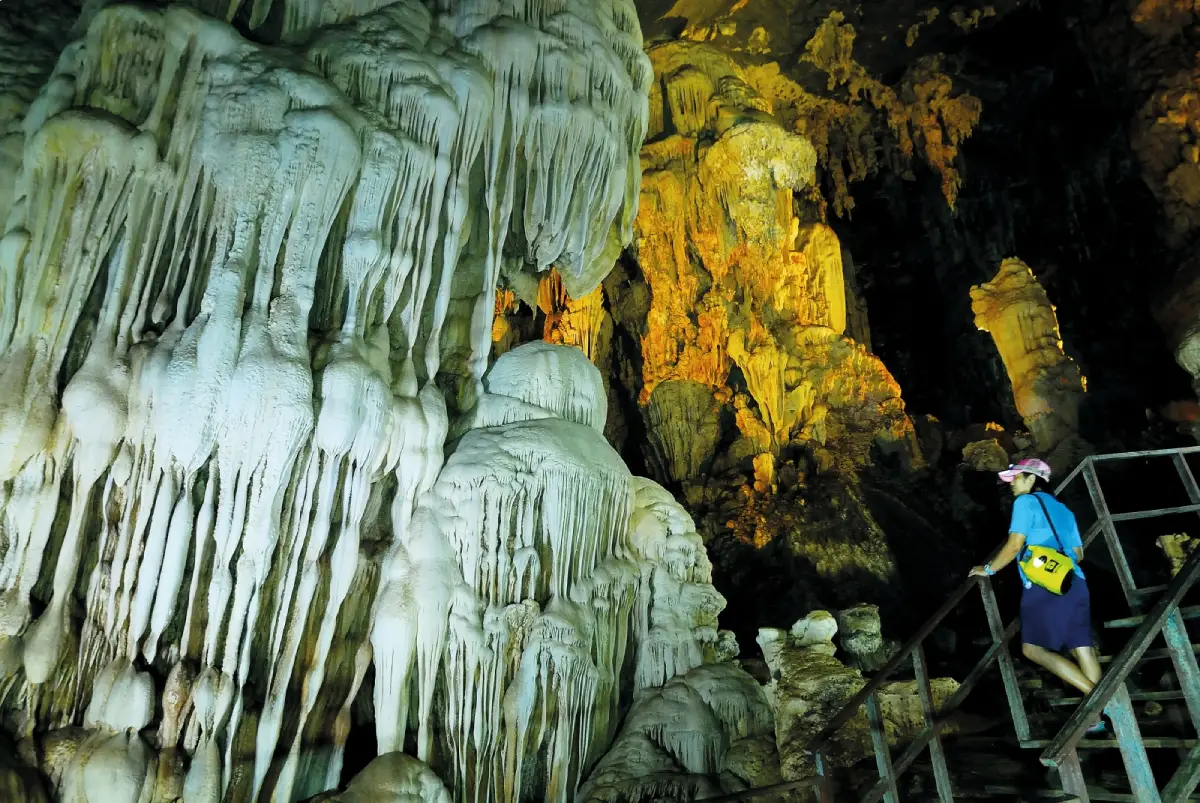
Stalagmites and stalactites can be seen throughout the cave. Some stalactites hang in thin lines from the ceiling, while others form layered shapes resembling curtains. Stalagmites rise from the cave floor in shapes that local guides often compare to flowers, chedis, umbrellas, or upside-down lotus forms. These features were formed slowly by mineral-rich water depositing calcium carbonate over long periods. Visitors should only observe them and never touch, scratch, climb, break, or remove anything from the cave.
The seven chambers give Chet Khot Cave its strongest storytelling structure. The first chamber is called Sao Yim and is noted for emerald-toned rock walls and formations near the entrance. The second chamber, Nang Khoi, contains beautiful formations and bat colonies. The third chamber, Phet Ruang, has an upper opening where sunlight can reach the cave wall and create a diamond-like sparkle. The fourth chamber, Chedi Sam Yot, includes stone features resembling rose-like forms. The fifth chamber, Nam Thip, has white and brown stalactites layered like curtains. The sixth chamber, Chat Thong, contains tiered formations resembling ceremonial umbrellas. The seventh chamber, Song Napha, contains formations shaped like upside-down lotus flowers.
These chamber names help visitors observe the cave more attentively. Instead of passing through darkness without context, travelers can connect each section with shape, color, light, sound, and local interpretation. Chet Khot Cave is therefore valuable not only as a physical landform, but also as a local storytelling site. The names make the cave easier for children, students, and travelers to remember, while giving the underground route a clear rhythm from the first chamber to the final bend.
The main travel season for Chet Khot Cave is around May to October. During this period, rainfall usually increases the water volume in the stream, making cave boating and rafting activities more practical. At the same time, visitors need to pay close attention to safety because cave water levels can change with heavy rain. Before traveling, visitors should contact a local guide or tour operator, check the water situation, and avoid entering the cave during heavy rain or flash-flood risk. The cave is best experienced as a guided natural route, not as an unguided walk-in attraction.
There are several ways to experience Chet Khot Cave depending on water conditions and the program arranged by local operators. Some routes use kayaks to enter the cave. Some connect with inflatable rafting activities in the wider Wang Sai Thong nature area. In lower-water conditions, certain sections may be explored on foot along the cave wall. The appropriate method should always follow local guidance because guides know which sections are deep, slippery, narrow, or unsafe on a given day.
Chet Khot Cave is suitable for travelers who enjoy nature and light adventure. The route involves darkness, moisture, sand, gravel, occasional mud, flowing water, and changing water depth. Travelers who enjoy photography, river sounds, limestone walls, and a moderate sense of exploration will find the cave rewarding. Those who are uncomfortable with darkness, enclosed spaces, water-based activities, or uneven walking should assess their readiness before joining a trip, especially during the rainy season.
Preparation should focus on comfort and safety. Wear quick-drying clothes and secure footwear with good grip. Bring a flashlight or headlamp, a waterproof bag for phones and valuables, drinking water, a towel, and a change of clothes. Heavy bags should be avoided because visitors may need to board a boat, balance on natural surfaces, or move through damp cave sections. Good preparation makes the experience safer and more enjoyable, especially for families and small groups.
Cave etiquette is essential. Chet Khot Cave is a fragile natural system. Stalagmites, stalactites, cave walls, sandbanks, and animal habitats can be affected by careless behavior. Visitors should not touch formations, leave trash, remove stones or shells, shine lights at animals for a long time, or enter side passages without guide permission. Bats and other cave animals should not be disturbed. Staying with the group and following guide instructions helps protect both visitors and the cave environment.
Safety rules should be followed from the start of the trip. If kayaks or inflatable rafts are used, visitors should wear life jackets throughout the water route. Do not stand in the boat, rock the boat, lean too far out for photographs, or remove safety gear before the route ends. When walking through water, step slowly, watch the surface, and keep enough space between travelers. Cave floors may be slippery, rocks may be sharp, and water depth can vary quickly.
Photography is best done from safe positions. Strong photo points include the cave entrance, the stream passage, the glittering white sandbank, the chamber with natural light, curtain-like stalactites, and sections where boats move between dark limestone walls. Visitors should avoid strong flash near bats or sensitive wildlife and should never risk falling or disturbing the group for a photograph. The cave offers strong visual moments without leaving the guided route.
Chet Khot Cave is closely connected with the wider identity of Satun UNESCO Global Geopark. Satun is often known for islands, beaches, and the Andaman Sea, but its inland landscapes are equally important. Limestone mountains, stream caves, waterfalls, fossils, tropical forest, and local communities all shape the province’s deeper natural story. Visiting Chet Khot Cave allows travelers to see the inside of this limestone landscape and understand how water, rock, and time create caves.
A Chet Khot Cave trip can be combined with several nearby attractions. Wang Sai Thong Waterfall is a popular pairing because it is close to the cave and offers waterfall and rafting-related activities. Phu Pha Phet Cave is another major cave attraction in Manang District, suitable for travelers who want a large dry-cave experience with walkways and illuminated chambers. Rakhang Thong Cave is close to Chet Khot Cave and is known for sparkling formations. Than Plio Waterfall, Tham Le Stegodon, and Satun Geopark Museum can extend the journey into a fuller Satun geotourism route.
For a half-day itinerary, Chet Khot Cave can be the main activity, allowing time for travel, preparation, guided cave entry, boating or walking, and rest afterward. For a full-day route, visitors can combine the cave with Wang Sai Thong Waterfall and Phu Pha Phet Cave, but the schedule should remain realistic. Cave and water-based travel require more energy and attention than ordinary sightseeing, so choosing fewer stops often produces a better experience.
Getting There from Satun town starts by taking Highway 4137 toward Manang District. At the junction leading toward Manang, turn toward Chet Khot Cave. The cave is about 3 km from Wang Sai Thong Forest Protection Unit. A private car or rental car is the most convenient option because travelers can control timing and continue to nearby attractions such as Wang Sai Thong Waterfall or Phu Pha Phet Cave. Visitors using public transport should travel toward Manang or La-ngu, then arrange local transport or a guided operator in advance.
Travelers staying around La-ngu or Pak Bara can plan Chet Khot Cave as a one-day inland nature trip. This route is suitable for those who want to shift from beaches and piers to caves, waterfalls, and forest scenery. Travelers coming from Trang or Phatthalung should check mountain-road and weather conditions during the rainy season because water levels and natural routes can be affected directly by heavy rain.
Chet Khot Cave should be visited with preparation and respect. Its value lies in the flowing stream, seven chambers, glittering sandbank, stalactites, stalagmites, limestone walls, and local knowledge that keeps the route meaningful and safe. When visitors travel carefully, follow local guidance, and avoid damaging the cave, Chet Khot Cave offers one of Satun’s most rewarding inland nature experiences.
| Name | Chet Khot Cave |
| Alternative Name | Tham Satta Khuha |
| Category | Stream Cave, Limestone Cave, Natural Attraction, And Geotourism Learning Site In The Satun UNESCO Global Geopark Area |
| Location | Moo 5, Palm Phatthana Subdistrict, Manang District, Satun Province, Thailand |
| Coordinates | 7.107758, 99.940028 |
| Highlights | A winding stream cave through a limestone mountain, with an underground stream, stalagmites, stalactites, glittering white sandbank, and guided boating or rafting activities when water levels are suitable |
| History / Importance | A limestone stream cave in the Satun UNESCO Global Geopark area, about 600 m long and cutting through Ordovician limestone |
| Name Origin | The name refers to the cave’s winding stream passage and seven main chambers |
| Distinctive Features | About 70–80 m wide and 40–50 m high in key sections, with flowing water, sandbanks, limestone formations, and natural ceiling openings that help ventilation and light entry |
| Travel Information | From Satun town, take Highway 4137 toward Manang District, turn toward Chet Khot Cave, and continue to the cave area about 3 km from Wang Sai Thong Forest Protection Unit |
| Current Status | A local natural attraction of Palm Phatthana Subdistrict and included in the local tourism development plan of Palm Phatthana Subdistrict Administrative Organization |
| Open Days | Daily |
| Opening Hours | 08.30 – 16.30 |
| Best Travel Season | Around May–October, when water levels are usually more suitable for cave boating; weather and water conditions should be checked before travel |
| Facilities / Equipment | Parking area, kayak and equipment storage, stream access point, information signs, and local tour operators |
| Main Areas / Zones | Cave entrance, underground stream, white sandbank, Sao Yim Chamber, Nang Khoi Chamber, Phet Ruang Chamber, Chedi Sam Yot Chamber, Nam Thip Chamber, Chat Thong Chamber, and Song Napha Chamber |
| Caretaker / Local Authority | Palm Phatthana Subdistrict Administrative Organization |
| Main Contact Number | 074-774505 |
| Official Website / Official Page | Palm Phatthana Subdistrict Administrative Organization Website |
| Nearby Tourist Attractions | 1. Rakhang Thong Cave, about 2 km 2. Wang Sai Thong Waterfall, about 4 km, Tel. 061-226-4337 3. Phu Pha Phet Cave, about 10 km, Tel. 074-774505, Local Cave Guide 092-889-5563 4. Than Plio Waterfall, about 11 km 5. Tham Le Stegodon, about 18 km, Tel. 080-110-7060 6. Satun Geopark Museum, about 27 km, Tel. 074-789501 |
| Nearby Restaurants | 1. Phubanthad Valley, about 5 km, Tel. 085-7962548 2. Tharn Thong Resort, about 6 km, Tel. 092-3577988, 085-8985393 3. Krua Tua Tor Khao Tom 5 Baht, about 18 km, Tel. 064-8452190 4. Jaibaan Manang, about 19 km, Tel. 087-8918802 5. NOBICHA Manang, about 19 km, Tel. 088-3975344 6. Flying Fish Pla Bin, about 22 km, Tel. 093-5550946 |
| Nearby Accommodations | 1. Wang Sai Thong Resort Manang, about 4 km, Tel. 084-1955208 2. Phubanthad Valley, about 5 km, Tel. 085-7962548 3. In Si Thong Homestay Wang Sai Thong Waterfall, about 5 km, Tel. 098-7297422 4. Phukao Homestay Phu Pha Phet Cave, about 10 km, Tel. 081-2754833 5. Thanthida Resort Manang, about 18 km, Tel. 080-3613764, 084-3130794 6. Engthan at Satun, about 20 km, Tel. 085-4778688 |
Frequently Asked Questions (FAQ)
Q: Where is Chet Khot Cave located?
A: Chet Khot Cave is located in Moo 5, Palm Phatthana Subdistrict, Manang District, Satun Province, within the inland nature route of the Satun UNESCO Global Geopark area.
Q: What makes Chet Khot Cave special?
A: The cave is a winding stream cave through a limestone mountain, with flowing water, stalagmites, stalactites, a glittering white sandbank, and guided boating or rafting when water levels are suitable.
Q: Why is it called Chet Khot Cave?
A: The name refers to the winding stream passage and the cave’s seven main chambers, which also give it the alternative name Tham Satta Khuha.
Q: What are the opening hours of Chet Khot Cave?
A: Chet Khot Cave is open daily from 08.30 to 16.30. Visitors should still check water levels and arrange a local guide or tour operator before entering the cave.
Q: When is the best season to visit Chet Khot Cave?
A: The best travel season is generally around May to October because the stream has more water for cave boating. Visitors should avoid heavy rain and flash-flood risk.
Q: What should visitors bring to Chet Khot Cave?
A: Visitors should bring quick-drying clothes, secure footwear with good grip, a flashlight or headlamp, a waterproof bag, drinking water, a towel, and a change of clothes.
Q: Is Chet Khot Cave suitable for children and older travelers?
A: Children can visit with close adult supervision. Older travelers or visitors with mobility limits, fear of darkness, or discomfort with water-based travel should assess their readiness and choose a suitable guided program.
Q: What nearby attractions can be combined with Chet Khot Cave?
A: Nearby attractions include Wang Sai Thong Waterfall, Phu Pha Phet Cave, Rakhang Thong Cave, Than Plio Waterfall, Tham Le Stegodon, and Satun Geopark Museum.
 Category: ●Nature and Wildlife
 Group: ●Caves
Last Update : 2 MonthAgo
 Last Update : 2 MonthAgo
 Click to Access the Navigation Map GPS
Chet Khot Cave Map
Recommend

 Art, Culture and Heritage
 Historical Sites and Monuments(1)
 Landmarks and Memorials(1)
 Art, Craft Centres, Tradition(5)
 Museums(3)
 Places of Worship
 Temple(3)
 Mosque(27)
 Other Sacred Sites(1)
 Suburban Living
 Village, Community(1)
 Local Market(2)
 National Parks and Marine Reserves(7)
 Mountain (Doi)(1)
 Dam, Reservoir, Lake(2)
 Waterfalls(9)
 Hot Springs(1)
Caves(9)
 Bays and Beaches(10)
 Islands(16)
 Other natural attractions(5)
 Entertainment and Agricultural
 Zoos and Aquariums(1)
 Farms, Parks and Ecotourism(4)
 Outdoor and Adventure Activities(1)
 Travel Articles, Recipes
 Travel Review, Food Review(1)


