
lovethailand home >South Travel Attractions >Phang Nga Travel Attractions >Takua Pa >Khuek Khak > Khao Lak-Lam Ru National Park
TL;DR: Khao Lak-Lam Ru National Park is located at Khuk Khak Subdistrict, Takua Pa District, Phang Nga Province, open Normally Open Daily; Annual Tourism And Overnight Closure From 1 June – 31, hours Normally 08.30 – 16.30.

Khao Lak-Lam Ru National Park
Open Days: Normally Open Daily; Annual Tourism And Overnight Closure From 1 June – 31 August 2026
Opening Hours: Normally 08.30 – 16.30
Khao Lak-Lam Ru National Park in Phang Nga Province is one of the most accessible national parks in the Khao Lak area, yet it offers an unusually rich mix of rainforest, mountains, waterfalls, coastal viewpoints, sandy coves, rocky shorelines, and short nature trails. The park headquarters sits close to Phet Kasem Road in Khuk Khak Subdistrict, Takua Pa District, making it easy to visit from Khao Lak, Takua Pa, Thai Mueang, or Phuket. For travelers who want to understand Khao Lak beyond its beach resorts, this national park is one of the most meaningful places to start.
Khao Lak-Lam Ru National Park was officially declared on 30 August 1991 and became Thailand’s 66th national park. It covers about 78,125 rai, or roughly 125 square kilometers, across Takua Pa, Thai Mueang, Kapong, and Mueang Phang Nga districts. The landscape is formed by complex mountain ranges, including Khao Lak, Khao Lam Ru, Khao Saeng Thong, Khao Mai Kaeo, and Khao Plai Bang To. The highest point rises to about 1,077 meters above sea level. These mountains are important watersheds for Phang Nga Province, feeding major rivers such as the Takua Pa River and the Phang Nga River.
The park’s main appeal is the way it brings several ecosystems close together. Near the headquarters, visitors find sea views, coastal forest, rocky viewpoints, a welfare restaurant, and the nature trail to Small Sandy Beach. Farther inland, the park includes Ton Chong Fa Waterfall, Lam Ru Waterfall, Lam Phrao Waterfall, Hin Lat Waterfall, and forest study routes. This makes the park suitable for both light visitors who want a scenic walk and more active travelers who want waterfall trekking and rainforest interpretation.
Most of the park is covered by tropical evergreen forest. Important tree species include yang, phayom, lumpho, bunnak, takhian thong, krabak, and many other large rainforest trees of southern Thailand. These trees form a dense canopy that keeps the forest humid and protects the watershed. Beneath them grow ferns, mosses, vines, climbers, and shade-loving plants. Near the coast, the park also contains beach forest, rocky shore habitats, sandy coves, and nearshore coral environments, giving it more ecological variety than a purely inland forest park.
The park is associated with a wide range of wildlife, including tapirs, tigers, serows, monkeys, langurs, deer, barking deer, great argus pheasants, hornbills, woodpeckers, bulbuls, and hill mynas. Casual visitors may not see large mammals, but bird calls, forest sounds, animal traces, and the condition of the forest show why the area is valuable as protected habitat. Birdwatchers should visit early in the morning, walk quietly, and bring binoculars to increase the chance of seeing forest and coastal birds.
The headquarters area is the easiest place for first-time visitors. It is close to the main road and has sea views, shaded walking areas, a restaurant or welfare food service, toilets, parking, and access to the coastal nature trail. From this area, travelers can enjoy the scenery without needing to enter deep forest. The combination of rainforest and Andaman Sea views makes this section especially attractive for visitors staying in Khao Lak who have limited time.
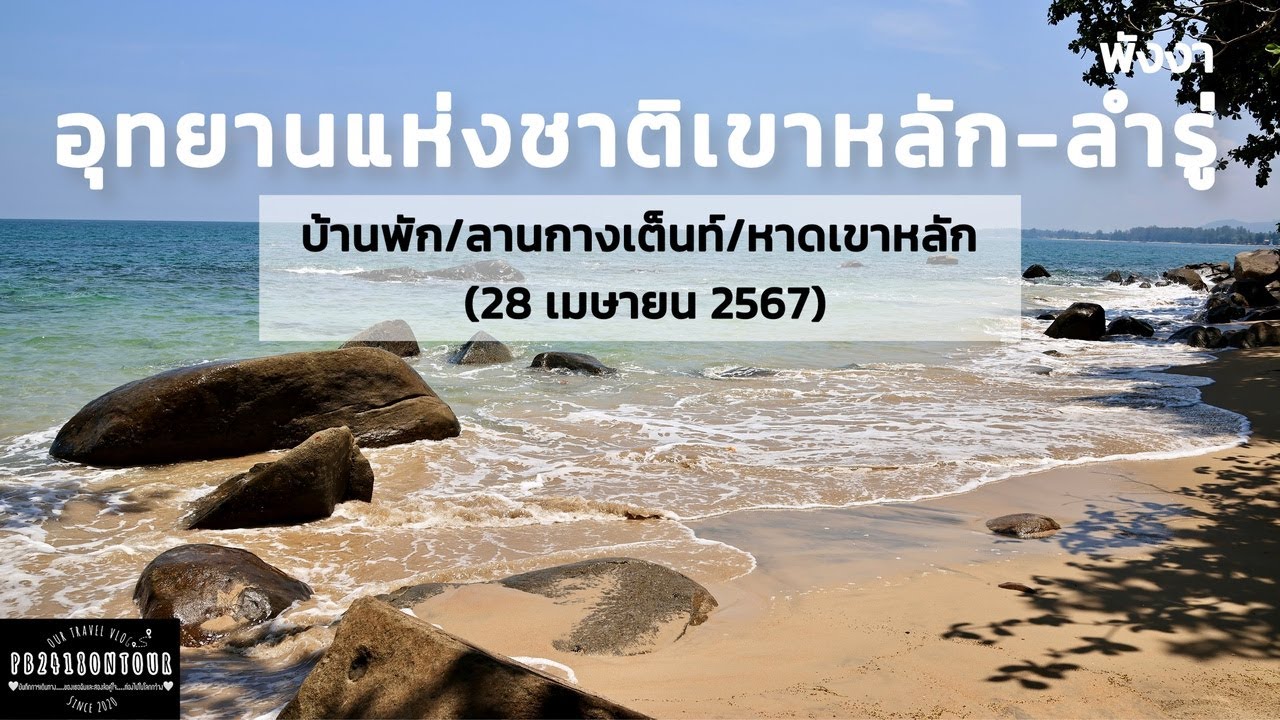
Small Sandy Beach is one of the park’s most memorable places. It lies about 1.4 km from the headquarters and is reached by a coastal nature trail through forest, roots, rocks, slopes, and sea-view sections. The beach itself is small and quiet, framed by forest and rocks. It is suitable for resting, photography, listening to the waves, and enjoying a more secluded coastal atmosphere than the larger tourist beaches of Khao Lak.
The walk to Small Sandy Beach is short on a map but not entirely easy. The trail is uneven, with roots, stones, and uphill-downhill sections. Visitors should wear shoes with good grip, bring drinking water, and avoid walking during heavy rain. Families with small children and older travelers should assess the route before starting. Those who do not want to walk the full trail can still enjoy sea views from the headquarters area.
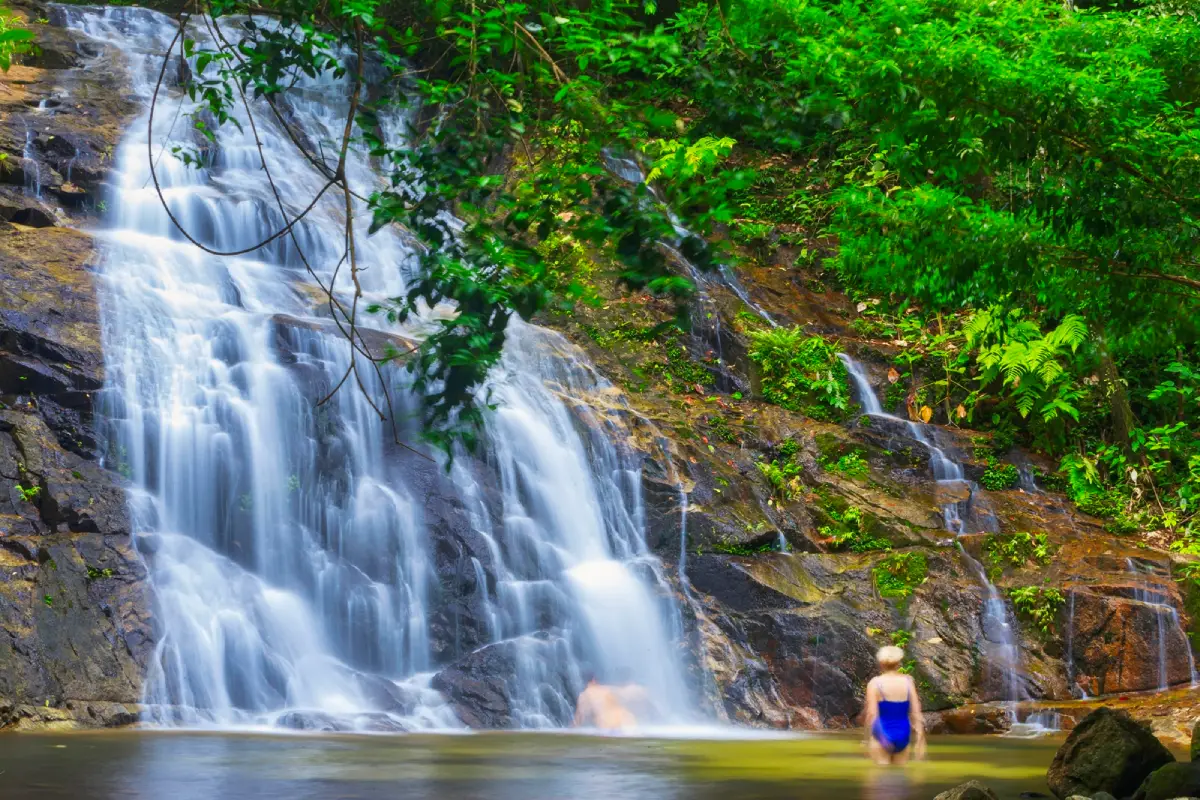
Ton Chong Fa Waterfall is another major highlight of Khao Lak-Lam Ru National Park. It is located about 5 km from the park headquarters by road and is one of the best-known waterfalls in the Khao Lak area. The lower waterfall area is more accessible, with natural pools and rainforest surroundings. Higher levels require more serious walking. The waterfall offers a refreshing contrast to Khao Lak’s beaches and is popular with visitors who want to experience jungle streams and freshwater pools in the same day as a coastal trip.
The Ton Chong Fa nature trails include routes of about 5 km and 7 km, taking around 2 hours and 5 hours respectively. Some sections have interpretive signs, but the terrain can be steep, humid, and slippery. Longer routes should be walked with park staff or an authorized guide. Visitors should bring proper footwear, drinking water, mosquito repellent, and a waterproof pouch for valuables. During the rainy season, trail and waterfall access should be checked with park staff before entering.
Lam Ru Waterfall is a medium-sized five-tier waterfall in the inland section of the park. It provides a quieter forest experience than the coastal headquarters or the lower parts of Ton Chong Fa Waterfall. Travelers who want a deeper understanding of the park’s watershed landscape may include Lam Ru Waterfall in a longer nature-focused itinerary. Lam Phrao Waterfall and Hin Lat Waterfall are also connected with the inland stream systems of the park and are better suited to travelers who have more time and are comfortable with less developed nature routes.
The Shrine of Pho Ta Khao Lak is an important local landmark near the park entrance and Phet Kasem Road. Local residents and travelers pay respect here, and it also works as a useful navigation point for visitors approaching the national park. The shrine shows that Khao Lak-Lam Ru is not only a natural area, but also a landscape connected to local belief, travel routes, and community identity.
The best period for visiting the coastal section of the park is generally from November to April, when the weather is usually drier and sea conditions are calmer. From May to October, the forest is especially green and waterfalls carry more water, but trails and waterfall areas require more caution. The park has an annual tourism and overnight closure from 1 June to 31 August 2026, so visitors should check the park’s latest announcements before traveling, especially during the rainy season.
Khao Lak-Lam Ru National Park can fit many travel styles. With limited time, visitors can stop at the headquarters for sea views and food. With half a day, they can walk to Small Sandy Beach. With more time, they can add Ton Chong Fa Waterfall or a short nature trail. Experienced hikers can plan longer waterfall routes with staff guidance. The key is to choose a route that matches the weather, time available, and physical ability of the group.
The entrance fee belongs to Group 1 of Thailand’s national park fee structure. Thai adults pay 20 baht and Thai children pay 10 baht. Foreign adults pay 100 baht and foreign children pay 50 baht. Vehicle fees are charged separately, including 30 baht for a four-wheeled car and 20 baht for a motorcycle. Accommodation, camping, and other services should be confirmed directly with the park because availability is limited and overnight stays may be closed during the annual closure period.
The park provides basic visitor facilities such as a visitor center, viewpoint, toilets, parking, a welfare restaurant or food service, accommodation, a camping area, and nature trails. These facilities make the park practical for families, solo travelers, and short visits from Khao Lak hotels. Still, this is a natural protected area, so visitors should prepare as they would for a national park rather than a developed beach resort.
Recommended items include shoes with good grip, drinking water, a hat, sun protection, insect repellent, a towel, spare clothes, and a waterproof pouch. For longer trails, carry extra water and avoid starting late in the afternoon. Distances in tropical forest can feel harder than they look because of humidity, roots, rocks, and elevation changes.
Responsible travel is essential. Visitors should not litter, feed wildlife, collect plants, disturb animals, write on rocks or trees, leave marked trails, or make loud noise. At the coast, be careful around waves, rocks, and slippery surfaces. At waterfalls, avoid climbing wet rocks and stay away from strong currents. Traveling carefully keeps the park safe and helps protect the ecosystems that make Khao Lak-Lam Ru special.
Getting There from Bangkok is by Highway 4, also known as Phet Kasem Road, heading south toward Phang Nga and Khao Lak. The park headquarters is located close to the road at Moo 7, Khuk Khak Subdistrict, Takua Pa District, with the Pho Ta Khao Lak Shrine as a useful landmark. From Takua Pa town, the park is about 33 km away. From Phuket, drive across Sarasin Bridge into Phang Nga, continue through Thai Mueang, and follow Phet Kasem Road toward Khao Lak. The journey from Phuket usually takes about 1 to 1.5 hours depending on traffic.
Travelers using public transport can take buses running between Bangkok and Phuket or Bangkok and Takua Pa, then get off in the Khao Lak area and continue by local taxi or transfer. The nearest major airport is Phuket International Airport. From the airport, travelers can continue by van, rental car, or private transfer along Phet Kasem Road to Khao Lak and the national park.
Khao Lak-Lam Ru National Park gives visitors a fuller picture of Khao Lak. It shows that the area is not only about long beaches and resort stays, but also about rainforest, watersheds, waterfalls, coastal cliffs, local shrines, and quiet coves. A well-planned visit can combine sea views, a forest walk to Small Sandy Beach, Ton Chong Fa Waterfall, and an understanding of how the mountains behind Khao Lak support the rivers and ecosystems of Phang Nga Province.
| Name | Khao Lak-Lam Ru National Park |
| Location | Khuk Khak Subdistrict, Takua Pa District, Phang Nga Province |
| Address | Moo 7, Phet Kasem Road, Khuk Khak Subdistrict, Takua Pa District, Phang Nga 82190, Thailand |
| Highlights | Coastal viewpoint, Small Sandy Beach, coastal forest trail, Ton Chong Fa Waterfall, Lam Ru Waterfall, Lam Phrao Waterfall, Hin Lat Waterfall, tropical evergreen forest, and Pho Ta Khao Lak Shrine |
| History | Declared a national park on 30 August 1991 as Thailand’s 66th national park, covering about 78,125 rai or about 125 square kilometers |
| Name Origin | The park is named after two important mountains in the area: Khao Lak and Khao Lam Ru |
| Distinctive Features | A national park combining evergreen rainforest, complex mountain terrain, waterfalls, streams, sea viewpoints, sandy coves, rocky shorelines, and coastal forest |
| Travel Information | Use Highway 4, Phet Kasem Road. The park headquarters is near the road at Moo 7, Khuk Khak Subdistrict, Takua Pa District. Pho Ta Khao Lak Shrine is a useful landmark. The park is about 33 km from Takua Pa town. |
| Current Status | A nature, coastal, waterfall, trekking, and camping destination; annual tourism and overnight closure from 1 June to 31 August 2026 |
| Open Days | Normally Open Daily; Annual Tourism And Overnight Closure From 1 June – 31 August 2026 |
| Opening Hours | Normally 08.30 – 16.30 |
| Fees | Thai adults 20 baht, Thai children 10 baht / foreign adults 100 baht, foreign children 50 baht / car 30 baht / motorcycle 20 baht |
| Facilities | Visitor center, welfare restaurant, viewpoint, toilets, parking, accommodation, camping area, and nature trails |
| Main Areas / Zones | Park headquarters, sea viewpoint, Small Sandy Beach, coastal nature trail, Ton Chong Fa Waterfall, Lam Ru Waterfall, Lam Phrao Waterfall, Hin Lat Waterfall, Pho Ta Khao Lak Shrine, and camping area |
| Caretaker | Department of National Parks, Wildlife and Plant Conservation, Protected Area Regional Office 5 (Nakhon Si Thammarat) |
| Main Contact Number | 076-485-414 |
| Nearby Tourist Attractions | 1. Small Sandy Beach, about 1.4 km 2. Nang Thong Beach, about 3 km 3. Ton Chong Fa Waterfall, about 5 km 4. Police Boat T813 Tsunami Memorial, about 6 km 5. Bang Niang Beach, about 7 km |
| Nearby Restaurants | 1. Khao Lak-Lam Ru National Park Welfare Restaurant, about 0 km 2. My Thai Restaurant Khao Lak, about 2 km 3. Takrai Thai Restaurant Khao Lak, about 2 km 4. SMILE Khaolak Restaurant, about 4 km, Tel. 083-391-2600 5. Green Pepper Khao Lak Restaurant, about 8 km, Tel. 085-655-7626 |
| Nearby Accommodations | 1. Khao Lak-Lam Ru National Park Accommodation And Camping Area, about 0 km, Tel. 076-485-414 2. Baan Krating Khaolak Resort, about 0.3 km, Tel. 076-485-188 3. Khaolak Laguna Resort, about 2 km 4. The Sands Khao Lak By Katathani, about 5 km 5. Khaolak Merlin Resort, about 7 km, Tel. 076-428-300, 076-595-300 |
Frequently Asked Questions (FAQ)
Q: Where is Khao Lak-Lam Ru National Park located?
A: The park is located at Moo 7, Phet Kasem Road, Khuk Khak Subdistrict, Takua Pa District, Phang Nga Province, and covers parts of Takua Pa, Thai Mueang, Kapong, and Mueang Phang Nga districts.
Q: When is Khao Lak-Lam Ru National Park open?
A: During its normal open period, the park is open daily from 08.30 to 16.30. It has an annual tourism and overnight closure from 1 June to 31 August 2026.
Q: How much is the entrance fee?
A: Thai adults pay 20 baht and Thai children pay 10 baht. Foreign adults pay 100 baht and foreign children pay 50 baht. Vehicle fees are charged separately.
Q: What makes Khao Lak-Lam Ru National Park special?
A: It combines rainforest, waterfalls, coastal viewpoints, Small Sandy Beach, rocky shorelines, and nature trails in one easily accessible national park.
Q: Is the walk to Small Sandy Beach difficult?
A: The trail is about 1.4 km from the headquarters and includes roots, rocks, uneven steps, and slopes. Good footwear is recommended.
Q: Who should visit Ton Chong Fa Waterfall?
A: It is suitable for travelers who want a rainforest waterfall experience near Khao Lak. The lower section is easier, while longer routes should be done with staff guidance.
Q: Is there accommodation or camping inside the park?
A: Yes. The park has accommodation and a camping area during normal open periods. Visitors should contact the park before planning an overnight stay.
Q: How do travelers get there from Phuket?
A: Drive across Sarasin Bridge into Phang Nga, continue through Thai Mueang, and follow Phet Kasem Road toward Khao Lak and Takua Pa. The journey usually takes about 1 to 1.5 hours depending on traffic.
 Category: ●Nature and Wildlife
 Group: ●National Parks and Marine Reserves
Last Update : 2 MonthAgo
 Last Update : 2 MonthAgo
 Click to Access the Navigation Map GPS
Khao Lak-Lam Ru National Park Map
Recommend

 Art, Culture and Heritage
 Historical Sites and Monuments(2)
 Landmarks and Memorials(6)
 Art, Craft Centres, Tradition(3)
 Places of Worship
 Temple(18)
 Other Sacred Sites(8)
 Suburban Living
 Village, Community(3)
National Parks and Marine Reserves(12)
 Mountain (Doi)(8)
 Waterfalls(21)
 Hot Springs(2)
 Caves(12)
 River, Canal(4)
 Bays and Beaches(28)
 Islands(11)
 Other natural attractions(7)
 Entertainment and Agricultural
 Animal camps and shows(2)
 Farms, Parks and Ecotourism(2)
 Waterpark(3)
 Outdoor and Adventure Activities(3)
 Travel Articles, Recipes
 Travel Review, Food Review(1)
 Southern Food Menu, Southern Food Recipes(1)


