
lovethailand home >South Travel Attractions >Phang Nga Travel Attractions >Muang Phang Nga >Tham Nam Phut > Tham Phung Chang
TL;DR: Tham Phung Chang is located at Inside Wat Praphat Prachim Khet, behind Phang Nga Provincial Hall, Mueang Phang Nga District, Phang Nga Province, open Daily, hours 08.30 - 16.00.
Tham Phung Chang
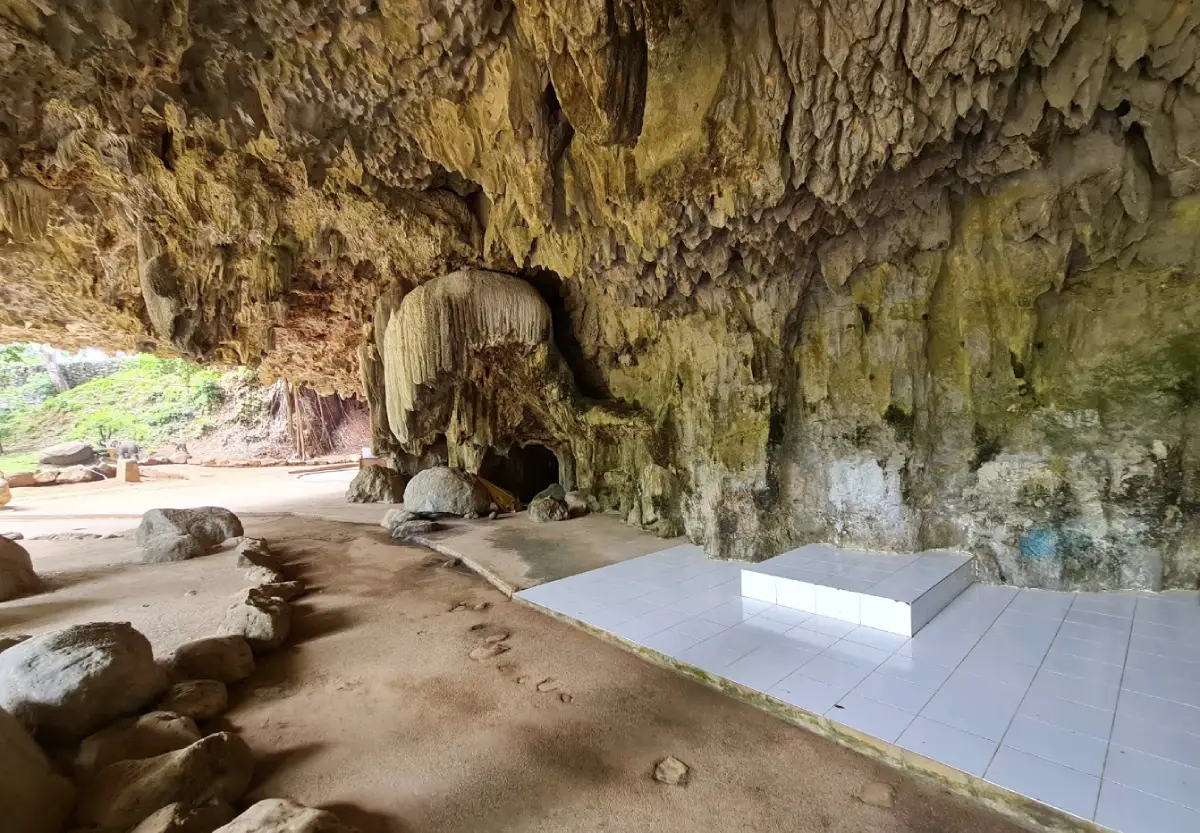
Open Days: Daily
Opening Hours: 08.30 - 16.00
Tham Phung Chang in Phang Nga Province is one of the most distinctive cave attractions in southern Thailand. It is not only a limestone cave with impressive stalactites and stalagmites, but also an adventure-style cave route hidden inside Khao Chang, the elephant-shaped limestone mountain that has become a symbol of Phang Nga town. Inside the cave, a natural stream flows throughout the year, and visitors explore the route by alternating between canoe, bamboo raft, and walking through shallow water. The experience normally takes about 1 hour to 1 hour 30 minutes, depending on water level, group size, and walking pace.
Tham Phung Chang is located within Wat Praphat Prachim Khet, behind Phang Nga Provincial Hall in Mueang Phang Nga District. Its location near the town center makes it one of the easiest major natural attractions to include in a Phang Nga itinerary. Travelers do not need to take a sea trip or drive far to Khao Lak, Phang Nga Bay, or the islands to experience a memorable natural site. The cave offers geology, local history, underground water, living cave formations, ecology, and light adventure in one compact route.
The name Tham Phung Chang is closely linked with the shape of Khao Chang. The mountain looks like a large elephant lying down, and the cave is imagined as being inside the elephant’s belly. This gives the site both geographical and cultural meaning. When visitors arrive near the cave, they can immediately understand why Khao Chang is so closely connected with the identity of Phang Nga town. The mountain, temple, provincial hall, and cave are all part of the same urban landscape.
The cave system contains several small and large chambers inside the limestone mountain. The interior includes cave passages, water channels, natural rock walls, and underground stream sections formed by water erosion over a very long period. Because water continues to move through the cave, the interior remains cool and humid. This is not a dry cave where visitors simply walk on a flat floor. It is a living cave environment where water, air, mineral deposits, and rock formations continue to interact.
Tham Phung Chang is also significant in Thai royal history. King Prajadhipok and Queen Rambai Barni once visited the cave and left their royal signatures near the front of the cave. This historical connection gives the attraction an added layer of meaning beyond its natural beauty. It links the cave with the memory of royal visits and the history of Phang Nga during the late Rattanakosin period.
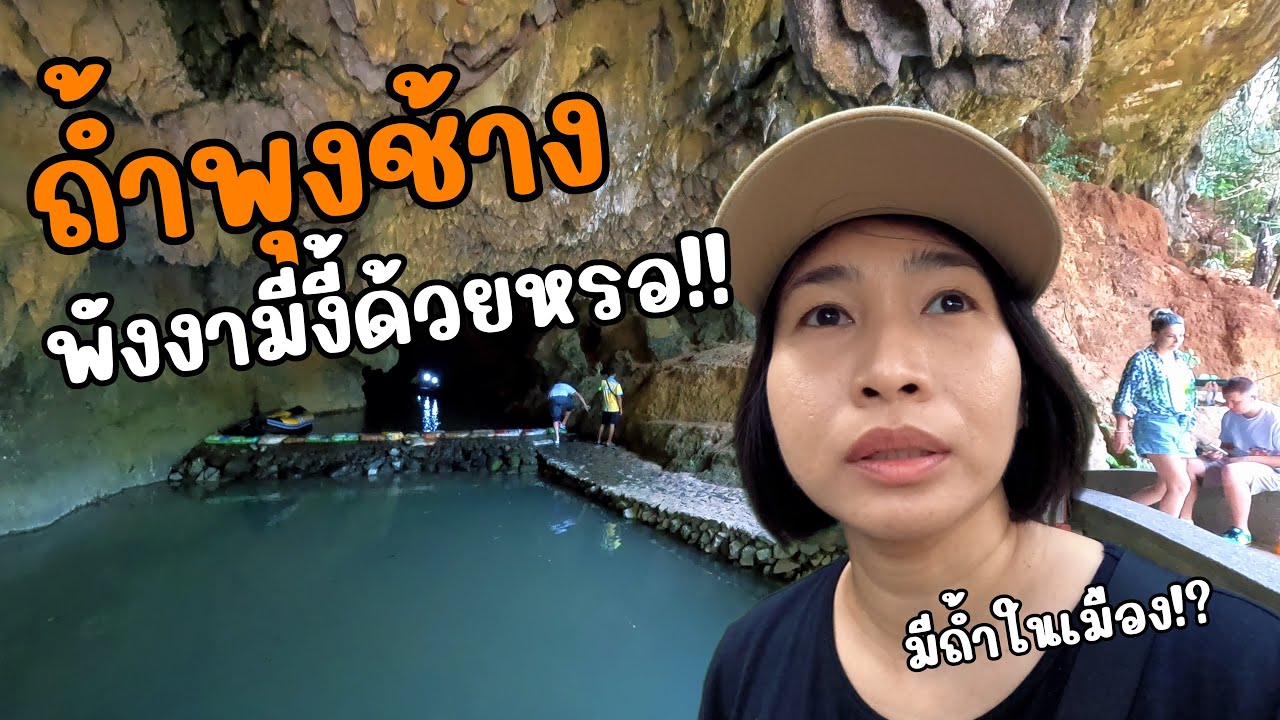
The cave visit begins at the entrance area, where local staff explain the basic rules before taking visitors inside. The first section is usually explored by rubber boat or canoe when the water is deep enough. As the light from outside gradually fades, visitors enter the darker interior of the mountain with headlamps or lights provided by the staff. The sound of water, the movement of the boat, and the shadows of limestone walls create a strong sense of entering an underground world.
When the passage becomes narrower or the water level changes, visitors switch from canoe to bamboo raft and walking sections. Some parts are deep enough for rafting, while other parts are shallow enough to walk through water around ankle to shin level. This combination makes the cave experience varied and memorable. Visitors see the cave from the water, from a raft, and on foot, allowing them to observe the rock formations from different angles.
The stalactites and stalagmites are the main highlight of Tham Phung Chang. Their beauty lies not only in size, but also in imaginative shapes. Visitors can see elephant-like formations in many forms, including single elephants, groups of small elephants, seated elephants under a canopy, and the famous white elephant-shaped formation. Other shapes are often compared to a fisherman, a smiling Chinese figure, fish, crocodiles, giant turtles, dinosaurs, inverted lotus forms, jellyfish-like hanging rock, and sparkling mineral surfaces that shine under torchlight.
The sparkle of mineral deposits and water droplets is one of the cave’s most memorable details. Drops of water fall from the tips of limestone formations and create a quiet rhythm inside the cave. When light hits mineral-coated surfaces, small bright reflections appear like tiny crystals. This delicate beauty makes Tham Phung Chang more than a large cave; it is a place where visitors can see the slow work of water and minerals over time.
One of the most famous highlights is the white elephant formation on the cave ceiling. Its shape resembles an elephant’s head, trunk, ears, and front legs. This formation reinforces the connection between the cave and the elephant identity of Khao Chang. Inside the belly of the elephant-shaped mountain, visitors encounter natural elephant-shaped sculptures formed by limestone and water.
A natural stream runs through the cave all year. This water system keeps the cave cool and supports a specific underground environment. Visitors may notice the fresh, moist air, the sound of flowing water, and the changing depth of the stream along the route. The cave also supports cave-dwelling animals, including bats living in ceiling areas and deeper parts of the cave.
Another important ecological feature is the presence of Kitti’s hog-nosed bat, widely known as the world’s smallest bat. Tham Phung Chang is recognized as one of the Thai cave areas associated with this rare species. This makes the cave important not only as a tourist attraction but also as a site with ecological and conservation value. Visitors should treat the cave as a fragile natural habitat, not only as a sightseeing route.
All visitors must enter the cave with local staff. The route includes water, boats, bamboo rafts, slippery surfaces, and narrow passages, so self-guided entry is not appropriate. The staff help manage safety, explain the highlights, and protect the cave environment from careless behavior. Guided visits are therefore important for both visitor safety and cave conservation.
Visitors should not touch the stalactites and stalagmites. Natural oils and sweat from human hands can disturb the mineral formation process, and many cave formations take a very long time to develop. Even small repeated touches from many visitors can damage the cave over time. Respecting this rule helps preserve Tham Phung Chang for future travelers.
Photography inside the cave should follow the instructions of the cave staff. Flash photography should be avoided because intense artificial light can affect the cave environment and the growth of sensitive formations. If photography is allowed, visitors should use only necessary light, avoid blocking the route, and stay with the guided group.
Proper clothing makes the visit more comfortable. Shorts or quick-dry clothing are recommended because visitors will pass through wet sections. Rubber sandals or water-friendly footwear with good grip are better than leather shoes or shoes that become heavy when wet. A waterproof bag is useful for phones, money, and small valuables. Large bags are not recommended because they can get wet and make movement difficult.
Tham Phung Chang is suitable for travelers with normal mobility who enjoy light adventure. Families can visit if children are old enough to follow staff instructions and walk safely through wet areas. Elderly travelers, people with knee or ankle problems, and travelers who are uncomfortable with darkness, narrow passages, or wet footing should consider their physical readiness before entering.
Getting There is convenient because the cave is located in Phang Nga town near Phang Nga Provincial Hall and Phet Kasem Road. Travelers with a private car can drive into Mueang Phang Nga District and follow signs toward Wat Praphat Prachim Khet or Tham Phung Chang. Visitors staying in town can use a local taxi, rental car, or private vehicle. Travelers coming from Phuket or Khok Kloi can drive along the main road into Phang Nga town and navigate directly to the cave area.
Tham Phung Chang fits easily into a Phang Nga town itinerary. Nearby places include Phang Nga City Museum, Tham Ruesi Sawan and Tham Luk Suea, Somdet Phra Srinagarindra Park, Wat Tham Ta Pan, and Sa Nang Manora Forest Park. For a half-day trip, the cave can be the main activity followed by a meal or café stop in town. With a full day, travelers can continue to Phang Nga Bay, viewpoints, or other natural attractions in the province.
The best time to visit is in the morning or early afternoon. This leaves enough time for the cave trip without getting too close to closing time. During the rainy season, travelers should check conditions in advance because the water level inside the cave may change. Calling before travel is especially useful for groups, families with children, or visitors traveling with older people.
The confirmed admission fees are 200 baht for Thai adults, 100 baht for children, and 500 baht for foreign visitors. The fee covers the guided cave experience, including boat, bamboo raft, and walking sections inside the cave. Visitors should still confirm current conditions before arrival because water level, weather, visitor numbers, and operating arrangements may change.
Overall, Tham Phung Chang is ideal for travelers who want to see a deeper side of Phang Nga beyond beaches and islands. It combines natural beauty, royal history, local belief, cave ecology, and mild adventure in a single route. The stalactites and stalagmites are not only beautiful objects but also evidence of time, water, mineral flow, and the slow work of nature beneath the elephant-shaped mountain.
Visitors should approach Tham Phung Chang with care and respect. This is not only a photo spot or a recreational attraction. It is a living cave with water, air movement, wildlife, mineral formations, and historical traces. Responsible travel helps keep the cave healthy and allows future visitors to experience the same sense of discovery inside Khao Chang.
| Name | Tham Phung Chang |
| Location | Inside Wat Praphat Prachim Khet, behind Phang Nga Provincial Hall, Mueang Phang Nga District, Phang Nga Province |
| Address | Phet Kasem Road, Thai Chang Subdistrict, Mueang Phang Nga District, Phang Nga 82000, Thailand |
| Coordinates | 8.442720, 98.515730 |
| Highlights | Limestone cave inside Khao Chang, year-round underground stream, elephant-shaped rock formations, canoe ride, bamboo raft, and water-walking sections |
| History | King Prajadhipok and Queen Rambai Barni once visited the cave and left their royal signatures near the cave entrance |
| Name Origin | The cave is located inside Khao Chang, an elephant-shaped mountain; the cave area is imagined as the elephant’s belly |
| Distinctive Features | A guided route combining canoe, bamboo raft, and walking through water, with active limestone formations and an underground stream |
| Travel Information | Drive into Mueang Phang Nga District via Phet Kasem Road and continue to Wat Praphat Prachim Khet behind Phang Nga Provincial Hall |
| Current Status | Open daily with local staff guiding visitors through the cave route |
| Open Days | Daily |
| Opening Hours | 08.30 - 16.00 |
| Fees | Thai adult 200 baht, child 100 baht, foreign visitor 500 baht |
| Facilities | Local guides, canoe, bamboo raft, lighting equipment, and a visitor service area near the cave entrance |
| Main Areas / Zones | Cave entrance, canoe section, bamboo raft section, water-walking section, underground stream, white elephant formation, elephant pagoda formation, and major stalactite-stalagmite areas |
| Caretaker / Coordinator | Tham Phung Chang cave staff |
| Main Contact Number | 08-6683-6844, 08-5784-4839 |
| Tourism Information Contact | TAT Phang Nga Office 0-7641-3400-2 |
| Nearby Tourist Attractions | 1. Phang Nga City Museum, about 0.5 km 2. Tham Ruesi Sawan And Tham Luk Suea, about 1 km 3. Somdet Phra Srinagarindra Park Phang Nga, about 1 km 4. Wat Tham Ta Pan, about 2 km 5. Sa Nang Manora Forest Park, about 8 km 6. Samet Nangshe Viewpoint, about 32 km 7. Ao Phang Nga National Park, about 35 km |
| Nearby Restaurants | 1. Hink Cafe, about 1 km, Tel. 095-041-4040 2. CURB CAFE, about 2 km 3. Raruen Phang Nga Cafe & Restaurant, about 2 km, Tel. 089-628-5444 4. Er-Gu Cafe, about 2 km, Tel. 081-084-4141 5. Phung Chang Kung Kratha Phang Nga, about 2 km, Tel. 084-628-0404 6. Five Star Thai Chang, about 2 km, Tel. 096-179-6697 |
| Nearby Accommodations | 1. Le Erawan Phang Nga Hotel, about 2 km 2. Home Phang-Nga Guest House, about 3 km, Tel. 081-958-5538 3. Pranee Home Phang-nga, about 3 km, Tel. 098-616-9090 4. The Sleep Phang-nga, about 4 km, Tel. 076-411-828 5. Phang Nga Origin Hotel, about 4 km 6. Rachawadee House Phang Nga, about 4 km |
Frequently Asked Questions (FAQ)
Q: Where is Tham Phung Chang located?
A: Tham Phung Chang is located inside Wat Praphat Prachim Khet, behind Phang Nga Provincial Hall on Phet Kasem Road in Mueang Phang Nga District.
Q: What are the opening hours of Tham Phung Chang?
A: Tham Phung Chang is open daily from 08.30 to 16.00.
Q: How much is the admission fee for Tham Phung Chang?
A: The admission fee is 200 baht for Thai adults, 100 baht for children, and 500 baht for foreign visitors.
Q: How long does a cave visit take?
A: A normal visit takes about 1 hour to 1 hour 30 minutes, depending on water level, group size, and walking pace.
Q: What should visitors wear to Tham Phung Chang?
A: Wear shorts or quick-dry clothing and rubber sandals or water-friendly footwear with good grip because the route includes canoeing, rafting, and walking through water.
Q: Is Tham Phung Chang suitable for children and elderly visitors?
A: It is suitable for visitors with normal mobility. Children should be able to follow staff instructions, while elderly visitors or people with walking difficulties should consider the wet and uneven route before entering.
Q: Can visitors take photos inside the cave?
A: Photography must follow staff instructions, and flash should not be used because it may affect the cave environment and limestone formations.
Q: What are the main highlights inside Tham Phung Chang?
A: Highlights include elephant-shaped stalactites and stalagmites, the white elephant formation, the underground stream, canoeing, bamboo rafting, water-walking sections, and the ecological importance of Kitti’s hog-nosed bat.
 Category: ●Nature and Wildlife
 Group: ●Caves
Last Update : 2 MonthAgo
 Last Update : 2 MonthAgo
 Click to Access the Navigation Map GPS
Tham Phung Chang Map
Recommend

 Art, Culture and Heritage
 Historical Sites and Monuments(2)
 Landmarks and Memorials(6)
 Art, Craft Centres, Tradition(3)
 Places of Worship
 Temple(18)
 Other Sacred Sites(8)
 Suburban Living
 Village, Community(3)
 National Parks and Marine Reserves(12)
 Mountain (Doi)(8)
 Waterfalls(21)
 Hot Springs(2)
Caves(12)
 River, Canal(4)
 Bays and Beaches(28)
 Islands(11)
 Other natural attractions(7)
 Entertainment and Agricultural
 Animal camps and shows(2)
 Farms, Parks and Ecotourism(2)
 Waterpark(3)
 Outdoor and Adventure Activities(3)
 Travel Articles, Recipes
 Travel Review, Food Review(1)
 Southern Food Menu, Southern Food Recipes(1)


