
lovethailand home >South Travel Attractions >Narathiwat Travel Attractions >Ra Ngae >Chaloem > Namtok Sipo National Park
TL;DR: Namtok Sipo National Park is located at Ban Sipo, Village No. 3, Chaloem Subdistrict, Ra-ngae District, Narathiwat Province, open Daily, except the seasonal closure of Sipo Waterfall from 1 November – 31, hours 09.00 – 16.45.

Namtok Sipo National Park
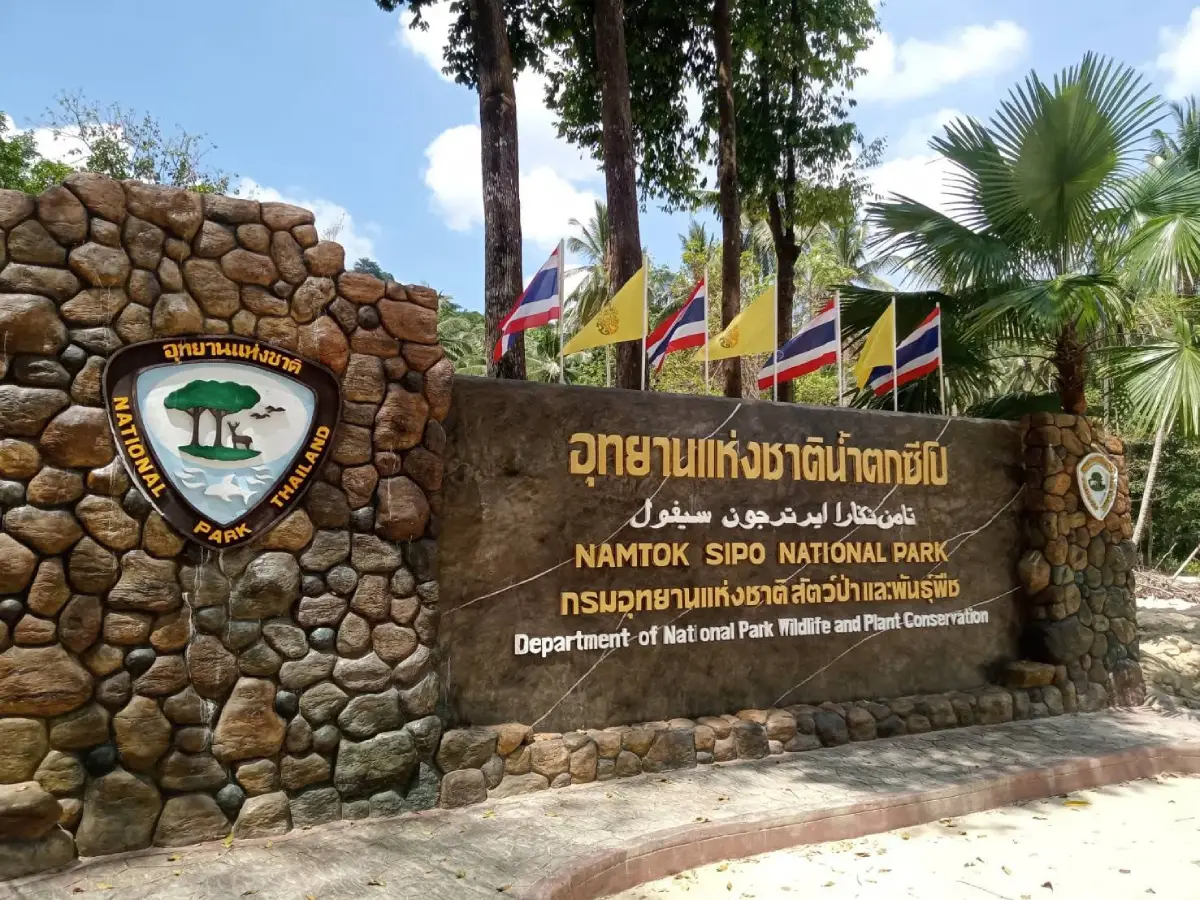
Open Days: Daily, except the seasonal closure of Sipo Waterfall from 1 November – 31 December
Opening Hours: 09.00 – 16.45
Namtok Sipo National Park in Narathiwat Province is one of the key natural attractions of Ra-ngae District. The main waterfall area is located around Ban Sipo, Village No. 3, Chaloem Subdistrict, near the foothills of Khao Li-yae and about 8 km from Tanyong Mat Railway Station. The waterfall is known for its multi-tiered cascades, large rock pools, humid forest scenery, and peaceful atmosphere. It is not only a leisure destination for local visitors, but also a nature-learning area and a symbol of Ra-ngae’s local identity, especially because the name Sipo is also connected with the famous Longkong Sipo fruit of the district.
According to long-standing local tourism information, Sipo Waterfall is located at the foot of Khao Li-yae and can be reached from Tanyong Mat Railway Station via Highway 4055 for about 8 km. The waterfall has several levels, large natural rock basins, and a very shady surrounding landscape. The area was originally declared Sipo Waterfall Forest Park on 1 October 1976, covering 625 rai. Over time, the conservation importance of the forest area on the right bank of the Sai Buri River became more widely recognized, and the area has since been managed and developed under the name Namtok Sipo National Park.
The wider Namtok Sipo National Park area is connected with several districts of Narathiwat Province, including Ra-ngae, Chanae, Rueso, and Si Sakhon. The terrain consists of complex mountain ranges, forested watersheds, and several waterfalls, including Sipo Waterfall, Ai Sue Do Waterfall, Yakabong-o Waterfall, and other forest waterfalls in the Si Sakhon area. This means the site should not be understood only as one waterfall for recreation. It is part of a broader watershed forest system that supports agriculture, communities, and the Sai Buri River basin.
Sipo Waterfall is the most accessible visitor point in the park area because it is close to local communities and has a clear access route from Tanyong Mat Railway Station. Travelers can use the railway station as the main landmark, then continue by private car, rental car, or local transport toward Chaloem Subdistrict and Ban Sipo. The route from central Ra-ngae is not too far, making it suitable for a half-day or full-day nature trip, especially for visitors staying in Narathiwat town or traveling through Tanyong Mat.
The name Sipo, also written as Sipo or Sipo in different transliterations, is linked with a local Yawi word associated with the sant or matad tree, a plant that once grew densely around the waterfall area. The name therefore reflects the natural landscape and local language rather than being a modern tourism label. Understanding the name helps visitors see Sipo Waterfall as a place connected with local ecology, language, and memory.
The waterfall is known as a large multi-tiered cascade with rock pools and boulders at several levels. Current tourism information describes nine named levels: Ang Taphap, Ang Sia, Ang Ton Farang, Ang Nuea Sai, Ang Rang Nam, Ang Nam Sat, Ang Chong Ang, Ang Kwang, and Ang Noppharat. The seventh level is especially well known because the water spreads across a rock face before dropping into a natural pool below, creating one of the most memorable scenes in the waterfall area.
For first-time visitors, the lower level is the best place to begin. It is easier to access, suitable for resting, and allows visitors to enjoy the sound of the water, the large rocks, and the shaded forest without strenuous walking. Those who want to continue to higher levels should evaluate their fitness, weather conditions, and the slipperiness of the trail. A forest waterfall is not the same as a paved park walkway. Wet rocks, moss, and uneven surfaces require careful movement.
The seventh level is the signature image of Sipo Waterfall. Water spreads over a rock face and falls into a pool, creating a cool and refreshing atmosphere surrounded by forest. Visitors who want to reach this level should follow permitted routes and avoid leaving the trail. Climbing wet rocks or taking shortcuts can be dangerous, especially after rain or when the water level is high.
The natural environment around Sipo Waterfall is characterized by humid forest, streamside plants, mosses, ferns, vines, and large trees. The forest canopy keeps the area cooler than open urban spaces, making the waterfall a pleasant place to rest during the day. This green and shaded character is one reason why Sipo has long been valued by local people as a place for relaxation and nature appreciation.
Season strongly affects the visitor experience. When water levels are high, the waterfall appears more powerful and the upper cascades become especially beautiful, but trails and rocks can also become more slippery. During drier periods, the water may be clearer and walking conditions easier. Sipo Waterfall has a seasonal closure from 1 November to 31 December, so travelers planning a year-end visit should choose dates outside that closure period.
The waterfall also plays an active role in conservation education. Recent activities by park staff include forest-survival knowledge, basic first aid, and environmental awareness activities for local students. This shows that Sipo is not only a place for sightseeing; it is also used to teach young people about forest safety, watershed conservation, and responsible use of natural areas.
The broader national park area is also significant in provincial conservation planning. In 2026, the Department of National Parks, Wildlife and Plant Conservation opened a public participation process for determining the Namtok Sipo National Park area in Narathiwat. The area is linked with the former valuable-timber forest project on the right bank of the Sai Buri River. It contains valuable tree species, rare wildlife, and natural attractions that support conservation-based tourism. Sipo Waterfall is therefore an important gateway for the public to understand this larger forest landscape.
The name Sipo is also well known through Longkong Sipo, one of Ra-ngae District’s famous fruits. Longkong Sipo belongs to the same group as langsat but has thicker skin, less latex, and a sweeter flavor. Another well-known variety is Longkong Tanyong Mat, which originated from Sipo-type longkong planted in the Tanyong Mat area. The fruit season usually falls around mid-August to September. Visitors traveling during the fruit season can combine the waterfall with local fruit tasting and a deeper understanding of Ra-ngae’s agricultural identity.
A visit to Sipo Waterfall therefore offers more than a simple swim in a natural pool. Travelers can connect the waterfall with mountain ecology, local fruit culture, the railway town of Tanyong Mat, and the rural communities of Ra-ngae. The name Sipo appears in the waterfall, the village, and the district’s famous fruit, making it a strong local identity marker. The waterfall represents forest and water, while Longkong Sipo represents farms, community, and local taste.
For families, Sipo Waterfall is best enjoyed slowly. Parents should choose safer lower-level areas, avoid deep pools and strong currents, and supervise children closely. Older visitors should stay in easier areas and avoid slippery rocks. Those who want to explore higher levels should wear shoes with good grip and avoid flip-flops or smooth-soled footwear.
Photographers will find several strong subjects at Sipo Waterfall, including flowing water over rock faces, shaded pools, forest textures, boulders, moss, and filtered light under the canopy. Morning or softer afternoon light is usually better than harsh midday light. Because the area is humid and wet, visitors should protect cameras and phones with waterproof bags. No photograph is worth standing on a risky wet rock.
Responsible visitor behavior is essential. Do not litter, bring alcohol into the waterfall area, damage rocks, collect plants, disturb animals, or swim where staff do not allow it. Sipo Waterfall remains beautiful because its water, forest, and local community are still closely connected. Careful tourism helps the site remain a place of recreation, learning, and conservation for future visitors.
Sipo Waterfall can be planned as either a half-day or full-day trip. A half-day visit can focus on the waterfall and Tanyong Mat Railway Station or Tanyong Mat Market. A full-day visit can add Wat Tanyong Mat, old Tanyong Mat community areas, or nearby attractions in Ra-ngae District. With 2 days and 1 night, travelers can stay in Narathiwat town or Tanyong Mat and combine the trip with Wadi Al-Hussein Mosque, Wat Choeng Khao, Narathat Beach, or Budo–Su-ngai Padi National Park.
Tanyong Mat Railway Station is an important landmark for this trip because it has long served as a transport hub for Ra-ngae District. Traveling by train to Tanyong Mat and continuing by local transport to the waterfall gives the journey a local rhythm. However, private cars or rental cars remain the most convenient option, especially for travelers who want to control timing, visit several nearby places, and return comfortably after spending time at the waterfall.
Nearby food options are mostly found in Tanyong Mat. Restaurants and cafés include Tanyong Pochana, Cafe’ Intrend Tanyong Mat Branch, Ayamboy Tanyong Mat, BeFull Tanyong Mat, and Tom Cafe. These places make a half-day or full-day waterfall trip more practical because visitors can arrange meals before or after entering the waterfall area without having to return to Narathiwat town immediately.
Accommodation close to Tanyong Mat is more limited than in Narathiwat town. Travelers who want to stay near Ra-ngae can look for local options around Tanyong Mat, while those who prefer more hotel choices, restaurants, and transport convenience should stay in Narathiwat town. Hotels such as Tanyong Hotel and The Imperial Narathiwat can be used as bases for a morning drive to Sipo Waterfall and other attractions in Ra-ngae.
Many short travel descriptions focus only on the waterfall levels and Longkong Sipo. A fuller understanding should also include the wider forest context, the national park conservation process, the role of Tanyong Mat Railway Station, local agriculture, and the connection between water, forest, and community. With these elements combined, Sipo Waterfall becomes more than a place for swimming. It becomes a gateway to understanding Ra-ngae’s nature, rural economy, and local identity.
In summary, Namtok Sipo National Park is suitable for travelers who want an accessible natural attraction in Narathiwat with waterfalls, forest shade, large rock pools, and a strong local identity. The site deserves at least half a day. Its real value is found by walking slowly, listening to the water, observing the forest, understanding the name Sipo, and seeing how the waterfall connects with mountains, fruit orchards, railway culture, and the communities of Ra-ngae District.
Getting There is straightforward from Tanyong Mat Railway Station. Follow Highway 4055 toward Ban Sipo for about 8 km. Travelers from Narathiwat town should drive toward Ra-ngae District and Tanyong Mat Subdistrict first, then continue to Chaloem Subdistrict and Ban Sipo. Private car or rental car is the most convenient option, while train travelers can get off at Tanyong Mat Railway Station and arrange local transport to the waterfall.
| Name | Namtok Sipo National Park / Sipo Waterfall |
| Location | Ban Sipo, Village No. 3, Chaloem Subdistrict, Ra-ngae District, Narathiwat Province |
| Address | Namtok Sipo National Park, Village No. 3, Chaloem Subdistrict, Ra-ngae District, Narathiwat Province 96130, Thailand |
| Highlights | Multi-tiered waterfall, large rock pools, seventh-tier cascade, shaded forest, access from Tanyong Mat Railway Station, and connection with Longkong Sipo fruit |
| History | Originally declared Sipo Waterfall Forest Park on 1 October 1976 with an area of 625 rai; later managed and developed under the name Namtok Sipo National Park |
| Name Origin | Sipo or Sipo in local Yawi refers to the sant or matad tree, a plant that once grew densely around the waterfall |
| Distinctive Features | A large forest waterfall with several levels, natural pools, boulders, humid forest, and easy access from Tanyong Mat |
| Travel Information | From Tanyong Mat Railway Station, follow Highway 4055 toward Ban Sipo for about 8 km; from Narathiwat town, travel to Ra-ngae District and Tanyong Mat before continuing to Chaloem Subdistrict |
| Current Status | Open as a nature attraction and national park area, with seasonal closure of Sipo Waterfall from 1 November – 31 December |
| Open Days | Daily, except the seasonal waterfall closure period |
| Opening Hours | 09.00 – 16.45 |
| Facilities | Streamside resting areas, walking access to waterfall levels, natural swimming pools, forest viewpoints, and park staff presence |
| Main Areas / Zones | Sipo Waterfall tiers, Ang Taphap, Ang Sia, Ang Ton Farang, Ang Nuea Sai, Ang Rang Nam, Ang Nam Sat, Ang Chong Ang, Ang Kwang, Ang Noppharat, and the surrounding forest area |
| Caretaker / Coordinator | Namtok Sipo National Park, Protected Area Regional Office 6 Pattani Branch, Department of National Parks, Wildlife and Plant Conservation |
| Main Contact Number | 073-530-845 |
| Nearby Tourist Attractions | 1. Tanyong Mat Railway Station, about 8 km 2. Tanyong Mat Market, about 9 km 3. Wat Tanyong Mat, about 9 km, Tel. 073-671-603 4. Ai Sue Do Waterfall, about 28 km 5. Wadi Al-Hussein Mosque Or Talo Mano Mosque, about 30 km 6. Narathat Beach, Mueang Narathiwat District, about 34 km |
| Nearby Restaurants | 1. Tanyong Pochana, Tanyong Mat, about 9 km, Tel. 073-671-284 2. Cafe’ Intrend Tanyong Mat Branch, about 9 km, Tel. 086-965-9159 3. Ayamboy Tanyong Mat, about 9 km, Tel. 093-781-5500 4. BeFull Tanyong Mat, about 9 km, Tel. 098-034-8988 5. Tom Cafe Tanyong Mat, about 10 km, Tel. 081-638-2280 |
| Nearby Accommodations | 1. Luan Heng Hotel, Tanyong Mat, about 9 km, Tel. 073-671-201 2. Tanyong Hotel Narathiwat, about 34 km, Tel. 073-511-477 3. The Imperial Narathiwat Hotel, about 35 km, Tel. 073-515-041 4. Art Nara Resort, about 36 km 5. Paksina Resort, about 37 km 6. Jai Dee Jing Jing Narathiwat, about 38 km, Tel. 062-207-7662, 073-565-805 |
Frequently Asked Questions (FAQ)
Q: Where is Namtok Sipo National Park located?
A: Namtok Sipo National Park is located around Ban Sipo, Village No. 3, Chaloem Subdistrict, Ra-ngae District, Narathiwat Province, about 8 km from Tanyong Mat Railway Station.
Q: What is special about Sipo Waterfall?
A: Sipo Waterfall is a multi-tiered forest waterfall with large rock pools, shaded scenery, and a notable seventh level where water spreads over a rock face into a natural pool.
Q: Is Sipo Waterfall open year-round?
A: It is open daily, except for the seasonal closure of Sipo Waterfall from 1 November to 31 December.
Q: What are the opening hours?
A: The operating hours used for trip planning are 09.00 – 16.45. Daytime travel is recommended for safety.
Q: How do travelers get to Sipo Waterfall?
A: From Tanyong Mat Railway Station, follow Highway 4055 toward Ban Sipo for about 8 km. From Narathiwat town, travel toward Ra-ngae District and Tanyong Mat, then continue to Chaloem Subdistrict.
Q: Is Sipo Waterfall suitable for families?
A: Yes, especially the lower waterfall area. Families should supervise children closely because the waterfall area has slippery rocks and natural pools.
Q: How is Longkong Sipo connected with the waterfall area?
A: Longkong Sipo is a famous fruit of Ra-ngae District and part of the local identity of the Sipo area, linking the waterfall with local agriculture and community life.
Q: What nearby places can be visited with Sipo Waterfall?
A: Nearby places include Tanyong Mat Railway Station, Tanyong Mat Market, Wat Tanyong Mat, Ai Sue Do Waterfall, Wadi Al-Hussein Mosque, and Narathat Beach.
 Category: ●Nature and Wildlife
 Group: ●National Parks and Marine Reserves
Last Update : 2 MonthAgo
 Last Update : 2 MonthAgo

 Click to Access the Navigation Map GPS
Namtok Sipo National Park Map

 Art, Culture and Heritage
 Landmarks and Memorials(8)
 Royal Palace(1)
 Art, Craft Centres, Tradition(7)
 Museums(4)
 Art Gallery(1)
 Places of Worship
 Temple(16)
 Mosque(23)
 Other Sacred Sites(5)
 Research and Development
 Royal Project(1)
 Suburban Living
 Village, Community(9)
 Local Market(1)
National Parks and Marine Reserves(5)
 Mountain (Doi)(2)
 Dam, Reservoir, Lake(2)
 Waterfalls(16)
 River, Canal(3)
 Bays and Beaches(5)
 Islands(1)
 Other natural attractions(4)
 Entertainment and Agricultural
 Stadium(1)
 Farms, Parks and Ecotourism(7)
 Shopping
 Shopping and Night Market(1)
 Travel Articles, Recipes
 Travel Review, Food Review(1)


