
lovethailand home >South Travel Attractions >Narathiwat Travel Attractions >Yi Ngo >Cho Bo > Budo–Su-ngai Padi National Park
TL;DR: Budo–Su-ngai Padi National Park is located at Ba Cho District, Narathiwat Province, with protected areas extending across parts of Narathiwat, Yala, and Pattani Provinces, open Daily, hours 08.00 – 16.30.

Budo–Su-ngai Padi National Park
Open Days: Daily
Opening Hours: 08.00 – 16.30
Budo–Su-ngai Padi National Park in Narathiwat Province is one of the most important tropical rainforest areas in Thailand’s southern border region. The park covers parts of Narathiwat, Yala, and Pattani provinces and protects a mountain landscape connected with the San Kala Khiri range and the upper Malay Peninsula. Its terrain is mountainous, humid, and rich in streams, waterfalls, evergreen forest, rare plants, and wildlife. This is not only a waterfall destination. It is a living rainforest ecosystem where visitors can learn about Indo-Malayan tropical forest, watershed protection, rare botanical species, hornbills, dusky leaf monkeys, and the ecological richness of Thailand’s deep south.
The most accessible and best-known attraction in the park is Pacho Waterfall, located near the park office in Ba Cho District, Narathiwat Province. It is about 26 km from Narathiwat town. Travelers can follow Highway 42 on the Narathiwat-Pattani route, turn toward Ba Cho District, and continue for about 2 km to the national park office and waterfall area. This makes Pacho Waterfall suitable for a half-day or full-day trip from Narathiwat town, especially for travelers who want to combine nature with nearby cultural sites in Ba Cho District.
Before becoming a nature destination, the Budo–Su-ngai Padi mountain area was difficult for outsiders to access because of its remote forest terrain and past security conditions. Its isolation, however, helped preserve parts of the rainforest. When conditions improved, the Royal Forest Department established Pacho Waterfall Forest Park in 1974. The area was later developed into Budo–Su-ngai Padi National Park, one of the most significant protected areas in southern Thailand.
The park is ecologically important because it belongs to the Indo-Malayan tropical rainforest zone. This type of forest occurs in humid equatorial and near-equatorial regions where rainfall is high and seasonal change is less extreme than in drier forest systems. The forest contains tall canopy trees, vines, palms, rattans, ferns, mosses, orchids, epiphytes, and many other plant groups. Within the same area size, tropical rainforests usually contain far greater biodiversity than most other forest types because they provide multiple canopy layers, varied light conditions, and many ecological niches.
The most famous plant associated with Budo–Su-ngai Padi National Park is the Golden Leaf Vine, locally known as Ya Dao or Ya Da-oh. This large forest vine is admired for its spectacular leaves. Young leaves may appear pinkish or coppery before gradually changing to bronze, golden, silvery, and green tones. The leaf surface is covered with fine velvet-like hairs that reflect sunlight, creating a golden sheen. This rare plant has become one of the natural symbols of Narathiwat and the Budo forest.
The leaves of Ya Dao resemble those of Bauhinia-like plants, but they are larger and more distinctive. Their shape has deep curves at both the base and tip, giving the leaf a form that looks like two oval parts connected together. The beauty of the plant comes from both its color and texture. In humid forest conditions, the leaves appear thicker, softer, and more reflective. Visitors may be able to see specimens near the park office or designated study areas without entering deep forest zones.
Other important plant species in the park include rare rattans, palms, large dipterocarp trees, and many rainforest plants that support wildlife and maintain the structure of the forest. The park is therefore much more than a scenic waterfall area. It is a genetic and ecological reservoir for southern Thailand’s rainforest plants, many of which are difficult to find in more disturbed landscapes.
The wildlife of Budo–Su-ngai Padi National Park reflects the richness of the rainforest. Species historically associated with the area include rhinoceros, tapir, serow, gibbons, and the dusky leaf monkey. Wildlife that visitors may more realistically encounter includes dusky leaf monkeys, forest birds, butterflies, and small rainforest animals. Hornbills are especially important because they depend on large trees and natural cavities for nesting. Their presence is a strong sign of a mature forest ecosystem.
The dusky leaf monkey is one of the notable mammals of the southern rainforest. It usually lives in forested mountain areas and moves in groups. It is shy and should be observed quietly from a respectful distance. Visitors should never feed wildlife, chase animals, or make loud noises. Responsible wildlife watching helps animals maintain natural behavior and reduces stress in their habitat.
Hornbills also play a vital role in the forest. They eat fruits and disperse seeds across the landscape, helping regenerate rainforest plants. Because they need large old trees with suitable cavities, conserving hornbills means conserving mature forest structure. Protecting big trees is therefore not only about preserving shade; it is also about preserving nesting sites, feeding cycles, and long-term forest renewal.
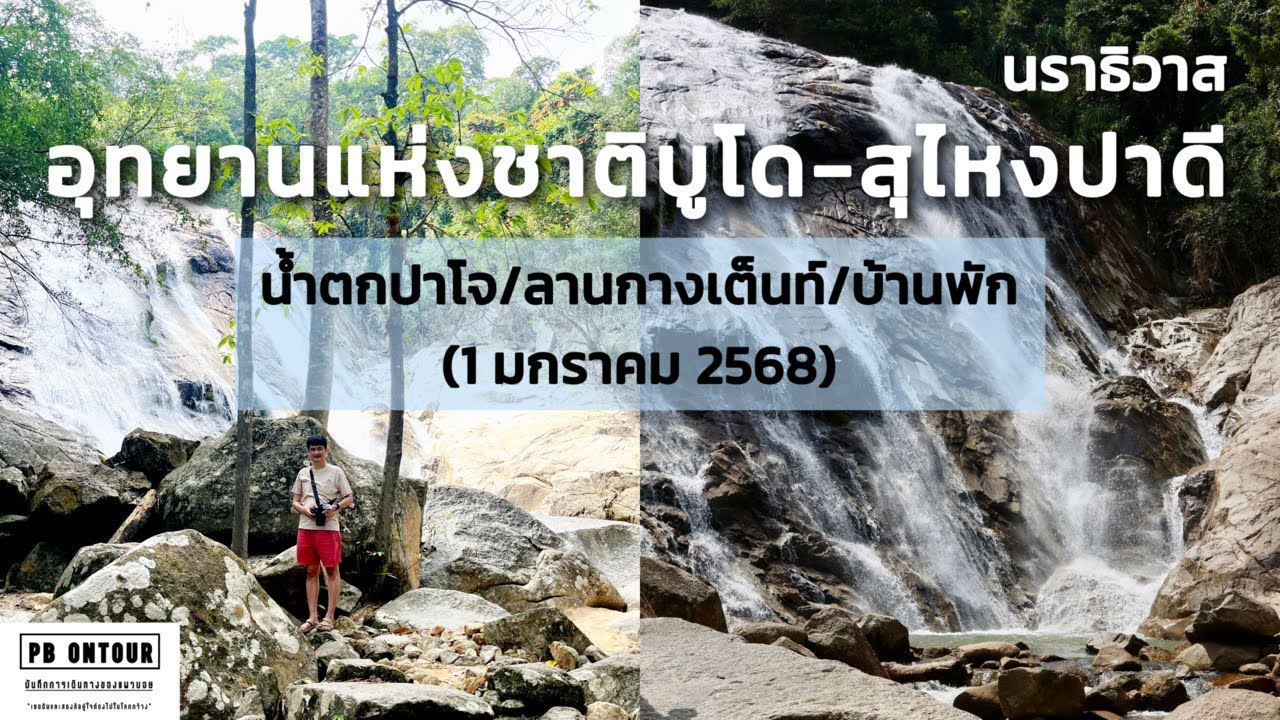
Pacho Waterfall is the main visitor highlight of the park. The word Pacho or Bacho comes from local Malay and means waterfall. The waterfall drops from a broad rock face of about 60 meters into a pool below, surrounded by large boulders and humid evergreen forest. The lower tier is the most accessible and most frequently visited section. It is suitable for general travelers, families, and visitors who want a rewarding rainforest waterfall experience without a strenuous trek.
Pacho Waterfall has water throughout the year, although the water volume changes by season. During the rainy season or shortly after rainfall, the waterfall becomes more powerful and dramatic. During drier periods, the water level may decrease, revealing more of the rock face and streambed. Travelers who want to see a strong waterfall should visit when water levels are higher, but they must also check weather and safety conditions. Heavy rainfall in mountain areas can quickly affect stream levels.
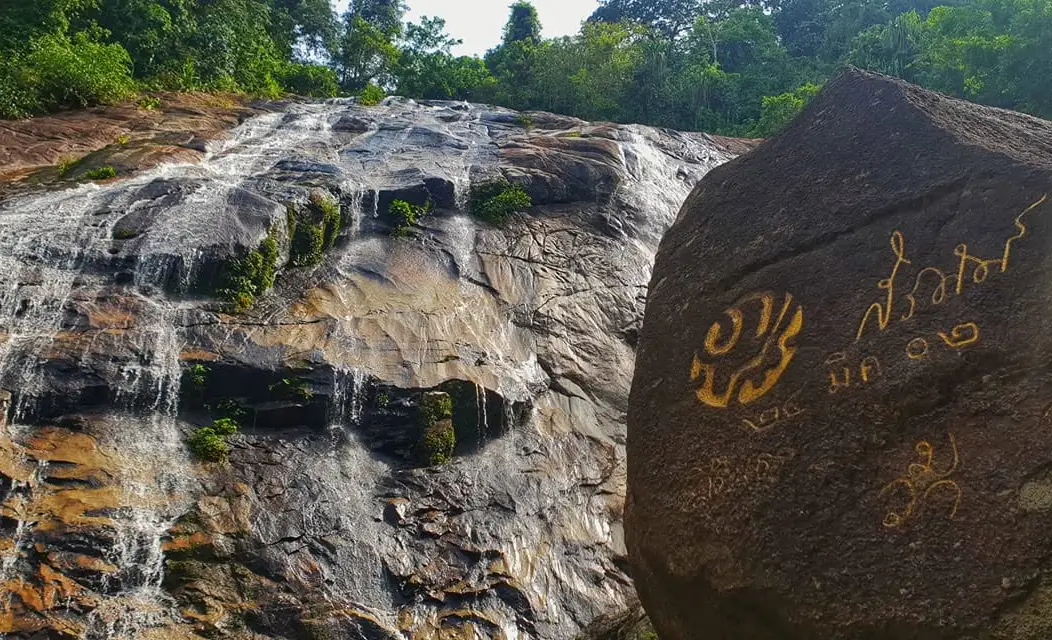
The Pacho Waterfall area also has historical significance. Sala Thanarat was once a royal pavilion used during King Prajadhipok’s visit to Narathiwat. A rock bearing a royal monogram is also located in the waterfall area. These features make Pacho more than a scenic waterfall. It is a place where natural beauty, local history, and royal memory are connected within the same landscape.
The wider park includes several other natural attractions, such as Phu Wae Waterfall, Pako Waterfall, Chatwarin Waterfall, Wang Thong Waterfall, and other sites around the Budo and Su-ngai Padi mountain ranges. Some of these are far from the main park office and require separate travel planning. Visitors who want to go beyond Pacho Waterfall should check conditions with park staff in advance, especially during rainy periods or when traveling on less familiar routes.
What makes this national park different from a typical waterfall stop is its clear rainforest atmosphere. The trail, shade, humidity, bird calls, insects, wet stones, moss, streamside plants, and layered forest canopy all show how water, mountain, and forest function together. Walking to the waterfall is therefore not just a movement from a parking area to a viewpoint. It is a gradual entry into a tropical rainforest environment.
Budo–Su-ngai Padi National Park can be visited throughout the year, but each season gives a different experience. The rainy season brings lush greenery and stronger waterfall flow, but visitors must be careful of slippery paths, flash floods, and changing water conditions. Drier periods are easier for travel and relaxed walking, although the waterfall may carry less water. Checking weather conditions before visiting is essential for safe travel.
Visitors should wear breathable clothing and shoes with good grip. The waterfall area can be wet and slippery. A waterproof bag is useful for phones and cameras. Travelers should avoid single-use plastics and foam containers, take all waste out of the park, and respect national park rules. This is a protected natural area, not a commercial picnic ground.
Travelers who want to see the Golden Leaf Vine should ask park staff for the best viewing point on the day of travel. The appearance of the leaves changes with age, season, humidity, and light. The plant is a living forest species rather than a fixed exhibit, so the experience depends on timing and observation. Seeing it in the forest context is part of its value.
For photography, Pacho Waterfall offers wide-angle views of the 60-meter rock face and close-up details of water spray, boulders, leaf textures, butterflies, and rainforest light. Morning or softer daylight is usually better than harsh midday light. Visitors should avoid climbing slippery rocks and should protect camera gear during rain or near waterfall spray.
Families can enjoy the lower section of Pacho Waterfall because it is relatively accessible, but children should be supervised closely. Water depth, slippery rocks, and changing currents require care. Older visitors should walk slowly and rest as needed. A safe pace allows everyone to appreciate the forest and waterfall without unnecessary risk.
The park is also suitable for educational trips. Students, nature lovers, botanists, birdwatchers, and environmental groups can use the area to study tropical rainforest structure, rare plants, watershed ecology, hornbills, dusky leaf monkeys, stream habitats, and conservation challenges in southern Thailand. Groups should coordinate with park staff in advance so that routes and activities are appropriate for the number of visitors.
Food and accommodation options are available in Ba Cho District and Narathiwat town. Travelers who want convenience can stay in Narathiwat town and visit Pacho Waterfall as a day trip. Those who prefer to stay closer to nature may contact the park about accommodation or camping availability. Park accommodation is limited and should be arranged in advance.
Nearby places that can be combined with the park include Wadi Al-Hussein Mosque, Wat Choeng Khao, Narathat Beach, Narathiwat City Museum, the Bang Nara River mouth, and Narathiwat town. A one-day itinerary can focus on Pacho Waterfall and nearby Ba Cho attractions, while a 2-day, 1-night itinerary allows travelers to combine the park with town culture and seaside attractions.
Daytime travel is recommended because the area is mountainous and forested. Visitors should avoid arriving too late in the day, especially if they are unfamiliar with the route. During heavy rain or official warnings, waterfall activities should be postponed or adjusted according to park staff instructions. Mountain streams can change quickly when rain falls upstream.
Visitors should not collect Golden Leaf Vine leaves, pick plants, feed animals, litter, or walk outside designated routes. Rare plants and wildlife are valuable because they remain alive in their natural habitat. Responsible travel ensures that future generations can continue to experience the natural wonder of the Budo forest.
In summary, Budo–Su-ngai Padi National Park deserves at least half a day and preferably a full day. Its value lies in Pacho Waterfall, tropical rainforest, Golden Leaf Vine, hornbills, dusky leaf monkeys, Sala Thanarat, royal-inscribed rock, and the broader mountain ecosystem. Visitors who come with time and attention will gain much more than waterfall photographs. They will understand a southern rainforest landscape where water, forest, mountain, history, and biodiversity are deeply connected.
Getting There from Narathiwat town is most convenient by private car or rental car. Follow Highway 42 toward Ba Cho District for about 26 km. At the junction leading into Ba Cho town, turn toward the park road and continue for about 2 km to the national park office and Pacho Waterfall area. Travelers using public transport should first reach Ba Cho District and arrange local transport to the park. Daytime travel is recommended for comfort and safety.
| Name | Budo–Su-ngai Padi National Park |
| Location | Ba Cho District, Narathiwat Province, with protected areas extending across parts of Narathiwat, Yala, and Pattani Provinces |
| Address | 67 Phiphit Pacho Road, Ba Cho Subdistrict, Ba Cho District, Narathiwat Province 96170, Thailand |
| Coordinates | 6.5003523, 101.6338574 |
| Highlights | Pacho Waterfall, Indo-Malayan tropical rainforest, Golden Leaf Vine or Ya Dao, dusky leaf monkeys, hornbills, Sala Thanarat, and royal-inscribed rock |
| History | The area began as Pacho Waterfall Forest Park in 1974 before being developed as Budo–Su-ngai Padi National Park to protect rainforest, mountains, watersheds, and biodiversity in Thailand’s southern border region |
| Name Origin | The name comes from the Budo and Su-ngai Padi mountain ranges, important forested highlands in the southern border region |
| Distinctive Features | A humid tropical rainforest landscape with waterfalls, rare plants, protected wildlife, watershed forests, and accessible nature learning near Narathiwat town |
| Travel Information | From Narathiwat town, follow Highway 42 toward Ba Cho District for about 26 km, then continue about 2 km to the park office and Pacho Waterfall |
| Current Status | Open as a national park and nature attraction, with Pacho Waterfall as the main accessible visitor area |
| Open Days | Daily |
| Opening Hours | 08.00 – 16.30 |
| Fees | Thai Adults 20 Baht, Thai Children 10 Baht / Foreign Adults 100 Baht, Foreign Children 50 Baht |
| Facilities | Visitor service area, nature trail, waterfall visit, plant observation, birdwatching, butterfly watching, resting area, park accommodation, and camping area according to park service availability |
| Main Areas / Zones | Park office, Pacho Waterfall, Sala Thanarat, royal-inscribed rock, Golden Leaf Vine viewing area, nature trail, Phu Wae Waterfall, Pako Waterfall, Chatwarin Waterfall, and Wang Thong Waterfall |
| Caretaker / Coordinator | Budo–Su-ngai Padi National Park, Department of National Parks, Wildlife and Plant Conservation |
| Main Contact Number | 073-530-406 |
| Nearby Tourist Attractions | 1. Pacho Waterfall, about 0.3 km 2. Sala Thanarat And Royal-Inscribed Rock, about 0.5 km 3. Wadi Al-Hussein Mosque Or Talo Mano Mosque, about 15 km 4. Wat Choeng Khao And Luang Pho Daeng, about 16 km 5. Narathat Beach, Mueang Narathiwat District, about 29 km 6. Narathiwat City Museum, about 30 km |
| Nearby Restaurants | 1. Cafe’ Intrend Ba Cho Branch, about 6 km, Tel. 081-798-3803 2. Five Star Salam Ba Cho, about 6 km, Tel. 063-134-1857 3. Kayah Crepe, Made-To-Order Food And Noodles, about 7 km, Tel. 082-265-4301 4. Tanyong Restaurant Narathiwat, about 29 km, Tel. 073-511-477 5. Raya Kitchen Narathiwat, about 30 km, Tel. 098-940-1033 |
| Nearby Accommodations | 1. Budo–Su-ngai Padi National Park Accommodation, about 0.5 km, Tel. 073-530-406 2. Tanyong Hotel Narathiwat, about 29 km, Tel. 073-511-477 3. The Imperial Narathiwat Hotel, about 30 km, Tel. 073-515-041 4. Art Nara Resort, about 32 km 5. Paksina Resort, about 33 km 6. Jai Dee Jing Jing Narathiwat, about 34 km, Tel. 062-207-7662, 073-565-805 |
Frequently Asked Questions (FAQ)
Q: Where is Budo–Su-ngai Padi National Park located?
A: Budo–Su-ngai Padi National Park is located mainly in Ba Cho District, Narathiwat Province, with protected areas extending into parts of Narathiwat, Yala, and Pattani Provinces. The main accessible visitor area is Pacho Waterfall.
Q: What is special about Budo–Su-ngai Padi National Park?
A: The park is known for Pacho Waterfall, Indo-Malayan tropical rainforest, the Golden Leaf Vine or Ya Dao, dusky leaf monkeys, hornbills, Sala Thanarat, and the royal-inscribed rock near the waterfall.
Q: Is Pacho Waterfall easy to access?
A: Yes. Pacho Waterfall is close to the park office, and the lower waterfall area is within a short walk from the parking area, making it suitable for general travelers and families.
Q: What is the entrance fee?
A: The entrance fee is 20 Baht for Thai adults and 10 Baht for Thai children. For foreign visitors, the fee is 100 Baht for adults and 50 Baht for children.
Q: What is the Golden Leaf Vine?
A: The Golden Leaf Vine, locally known as Ya Dao, is a large forest vine with velvet-like leaves that change color from coppery pink to gold, silver, and green as the leaves mature.
Q: When is the best time to visit?
A: The park can be visited year-round. The rainy season brings stronger waterfall flow and lush forest, while drier periods offer easier travel. Visitors should always check weather and follow park staff guidance.
Q: Are there accommodations in the park?
A: Park accommodation and camping areas may be available according to park service conditions. Travelers should contact the park in advance. Narathiwat town also has convenient hotel options for a day trip to Pacho Waterfall.
Q: How do travelers get to Budo–Su-ngai Padi National Park?
A: From Narathiwat town, follow Highway 42 toward Ba Cho District for about 26 km, then continue about 2 km to the park office and Pacho Waterfall area. Private car or rental car is the most convenient option.
 Category: ●Nature and Wildlife
 Group: ●National Parks and Marine Reserves
Last Update : 2 MonthAgo
 Last Update : 2 MonthAgo
 Click to Access the Navigation Map GPS
Budo–Su-ngai Padi National Park Map

 Art, Culture and Heritage
 Landmarks and Memorials(8)
 Royal Palace(1)
 Art, Craft Centres, Tradition(7)
 Museums(4)
 Art Gallery(1)
 Places of Worship
 Temple(16)
 Mosque(23)
 Other Sacred Sites(5)
 Research and Development
 Royal Project(1)
 Suburban Living
 Village, Community(9)
 Local Market(1)
National Parks and Marine Reserves(5)
 Mountain (Doi)(2)
 Dam, Reservoir, Lake(2)
 Waterfalls(16)
 River, Canal(3)
 Bays and Beaches(5)
 Islands(1)
 Other natural attractions(4)
 Entertainment and Agricultural
 Stadium(1)
 Farms, Parks and Ecotourism(7)
 Shopping
 Shopping and Night Market(1)
 Travel Articles, Recipes
 Travel Review, Food Review(1)


