
lovethailand home >South Travel Attractions >Nakhon Si Thammarat Travel Attractions >Mueang NaKhon Si Thammarat >Nai Muang > Nakhon Si Thammarat National Museum
TL;DR: Nakhon Si Thammarat National Museum is located at Ratchadamnoen Road, opposite Wat Suan Luang, Nai Mueang Subdistrict, Mueang Nakhon Si Thammarat District, Nakhon Si Thammarat 80000, open Wednesday – Sunday, hours 09.00 – 16.00.
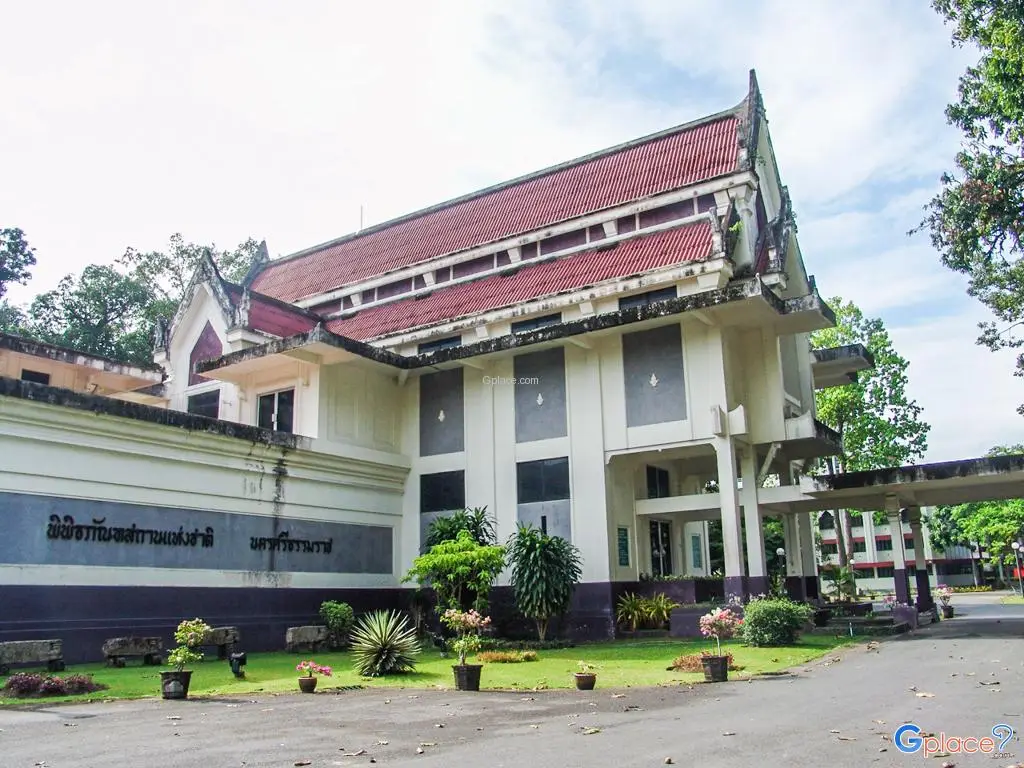
Nakhon Si Thammarat National Museum
Open Days: Wednesday – Sunday
Opening Hours: 09.00 – 16.00
Nakhon Si Thammarat National Museum is one of the most important art and archaeology museums in upper Southern Thailand. It is located on Ratchadamnoen Road in Nai Mueang Subdistrict, Mueang Nakhon Si Thammarat District, opposite Wat Suan Luang and within easy reach of several major cultural sites in the old city area. For travelers who want to understand Nakhon Si Thammarat beyond temples, food, and city scenery, this museum is one of the best starting points. It brings together archaeological objects, religious art, local craftsmanship, and cultural evidence from Nakhon Si Thammarat and nearby provinces, especially Chumphon, Surat Thani, Nakhon Si Thammarat, and Phatthalung.
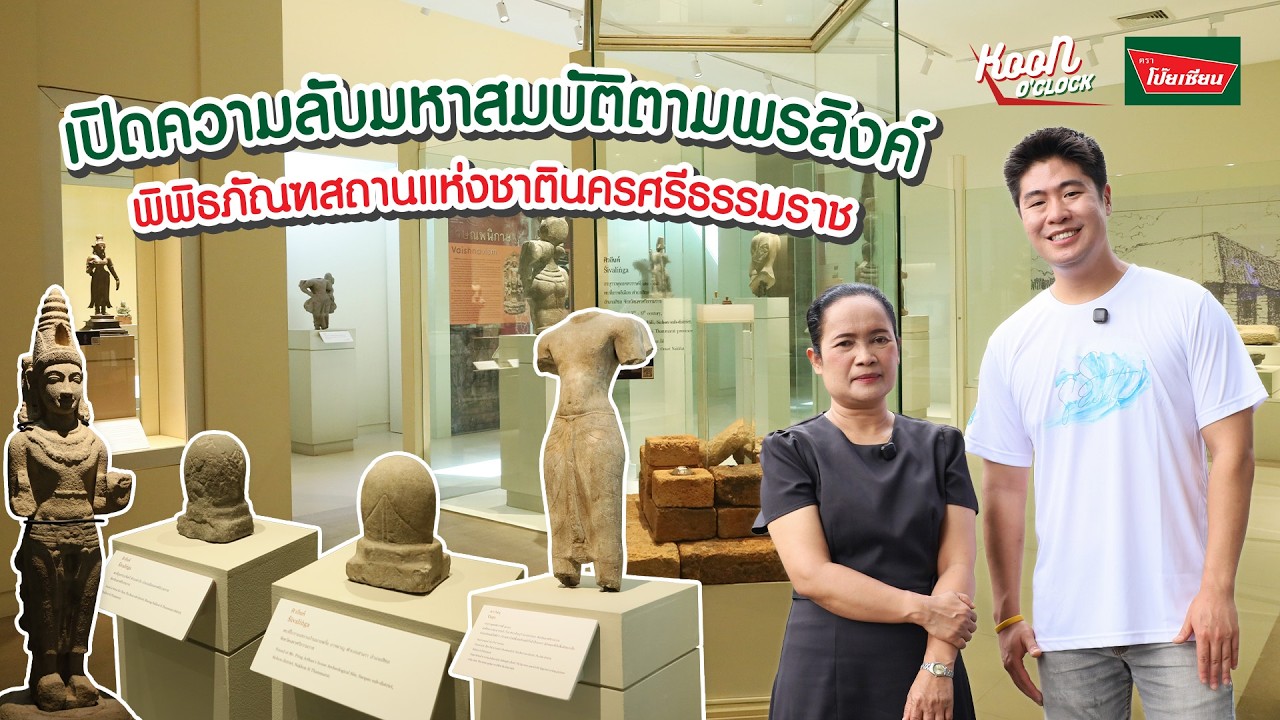
The museum is particularly valuable because it presents Nakhon Si Thammarat as a long-standing cultural center of the southern peninsula. The objects on display are not merely old artifacts. They help explain how people lived, traded, worshipped, created art, and built communities across many historical periods. Visitors can see prehistoric pottery, bronze drums, Hindu and Buddhist religious objects, Chinese and Vietnamese ceramics, Sangkhalok ware, niello work, brassware, old coins, Southern Thai folk art, shadow puppetry, traditional performance objects, and everyday tools used by local people in the South.
The history of Nakhon Si Thammarat National Museum began with the work of Fine Arts Unit 8 of the Fine Arts Department, which was responsible for the conservation of ancient monuments in upper Southern Thailand. In 1964, the unit was actively surveying and caring for archaeological sites in the region. During the excavation and restoration of Chedi Yak in Mueang Nakhon Si Thammarat between 1966 and 1967, a large number of artifacts were discovered. At the same time, more archaeological materials from Nakhon Si Thammarat and nearby provinces were being collected through surveys and excavations. This created a clear need for a permanent museum where the objects could be preserved, studied, and displayed properly.
In 1970, the government approved the budget for the Fine Arts Department to construct the museum building. The main building was constructed as a two-storey applied Thai-style structure in 1971. The museum was officially opened on 26 August 1974 by Their Majesties the King and Queen, together with Princess Sirindhorn and Princess Chulabhorn. It became the sixth regional national museum officially opened by the King. This royal opening reflects the national significance of the museum and the importance of preserving Southern Thai cultural heritage in a formal academic institution.
Nakhon Si Thammarat National Museum is therefore more than a display hall. It is an institution that preserves the memory of upper Southern Thailand. From its early years, the museum has served as a place for storing, conserving, researching, and presenting artifacts from Nakhon Si Thammarat and nearby areas. Later, in 1996, the Fine Arts Department received a budget to build a second museum section. The extension was completed in 1997 and has been used for offices, multipurpose activities, special exhibitions, and museum programs. This development expanded the museum’s role from a permanent exhibition space to a cultural learning center.
The museum’s exhibition begins with evidence from the prehistoric period, allowing visitors to see that the southern peninsula had human settlement and cultural development long before the rise of historical states. One important object is the three-legged pottery vessel from the Neolithic period, dated to around 4,000-2,000 years ago. This type of object reveals early knowledge of pottery production, daily life, and adaptation to the environment. It also shows that Nakhon Si Thammarat and its surrounding region have deep cultural roots that reach far beyond the better-known historical period.
As the exhibition moves into historical periods, visitors encounter objects connected with religion and belief. These include Shiva linga, bronze Shiva Nataraja, Vishnu images, Buddhist objects, and other religious art that reflects the influence of India, Sri Lanka, and maritime cultural networks. These objects help explain the importance of Tambralinga and the role of Nakhon Si Thammarat as a center of religion, trade, and political power in the southern peninsula. The museum makes it clear that the city developed through cultural exchange, not isolation.
One of the museum’s most outstanding objects is the silver niello-gilt panel from a royal barge, known in Thai as the Phanakanya of the royal barge. This large silver piece is decorated with refined niello and gold work and is regarded as one of the finest and largest niello works in Nakhon Si Thammarat. The object demonstrates the high level of craftsmanship associated with the city’s famous niello tradition. It also shows how local artisans could create works of art suitable for elite and royal contexts while preserving a distinctive Southern Thai craft identity.
Another major object is the large bronze Mahorathuek drum, described as the largest bronze drum found in Southern Thailand. Bronze drums are associated with ritual, social authority, and ancient cultural networks across Southeast Asia. Its presence in the museum helps visitors understand the wider connections of the southern peninsula with regional belief systems and exchange routes. It is an object that connects Nakhon Si Thammarat to a much larger cultural world.
The carved wooden pediment showing a dancing deity is another important piece. It represents the refinement of Southern Thai woodcarving and the close relationship between architecture, religion, and decorative art. A wooden pediment is not only an architectural element. It is a visual expression of belief, artistry, and local taste. Through this work, visitors can see how Southern Thai craftsmen translated religious imagery into carved wood with movement, rhythm, and character.
The museum also displays Chinese ceramics, Annamese or Vietnamese ceramics, Sangkhalok ware, coins from different periods, brass objects, niello works, and other trade-related materials. These objects tell the story of Nakhon Si Thammarat as a city connected to maritime commerce. Located on the southern peninsula, the city was part of routes linking the Gulf of Thailand with wider Asian trading networks. Imported ceramics and exchanged objects show that the city was not a remote settlement, but an active cultural and commercial node.
The Local Wisdom Room of Nakhon Si Thammarat adds another important layer to the museum. It presents traditional tools, rice farming equipment, weaving tools, rubber tapping equipment, local crafts, Southern Thai folk performance materials, Nang Talung shadow puppetry, and objects related to everyday life. This section connects archaeology with living culture. Visitors can understand that Nakhon Si Thammarat is not only a city of ancient monuments and religious art, but also a place shaped by local occupations, performance traditions, crafts, language, foodways, and community knowledge.
Southern Thai performing arts also appear in the museum through shadow puppetry and folk entertainment displays. Nang Talung is one of the most important cultural forms of Southern Thailand, combining carved leather figures, performance, poetic narration, music, humor, and local storytelling. Seeing Nang Talung in the museum helps visitors connect this national museum with nearby Ban Nang Talung Suchart Subsin, another important cultural learning center in Nakhon Si Thammarat. Travelers interested in performance traditions can visit both places in one cultural route.
The museum building and its surroundings create a calm and suitable environment for learning. The applied Thai-style two-storey building is surrounded by large trees, giving the site a quiet atmosphere even though it is located in the city. Visitors should allow at least 1-2 hours for a basic visit. Those with a strong interest in archaeology, religious art, Southern Thai crafts, or local history may want to spend more time, as the collection covers a long chronological range and many cultural themes.
A good way to explore the museum is to begin with the broader history of Nakhon Si Thammarat, then move through the prehistoric section, religious art, craft objects, and local wisdom displays. This sequence helps visitors understand the development of the region from early communities to a religious and commercial center, and then to a living cultural city. For travelers who plan to visit Wat Phra Mahathat Woramahawihan, the museum provides essential context. It helps explain why Nakhon Si Thammarat has been such an influential city in Southern Thailand.
For international visitors, Nakhon Si Thammarat National Museum is especially useful because it offers physical evidence of Southern Thailand’s connections with India, Sri Lanka, China, Vietnam, and wider maritime Asia. Even travelers who are unfamiliar with Thai history can understand the city through the objects themselves. Religious sculptures, bronze drums, ceramics, and local craft items reveal how beliefs, trade, art, and daily life changed over time. Visiting the museum before going to the city’s temples makes the rest of the journey more meaningful.
What makes the museum memorable is the way it connects many levels of history. The three-legged pottery vessel represents early human settlement. The bronze drum represents ritual and ancient regional networks. Hindu objects such as Shiva Nataraja and Shiva linga represent religious exchange. Buddhist objects represent the spread of Buddhism. Niello work and the royal barge panel represent refined local craftsmanship. Shadow puppets, farming tools, weaving tools, and rubber tapping equipment represent everyday Southern Thai life. Together, these objects form a cultural map of Nakhon Si Thammarat.
Getting There is straightforward because the museum is located on Ratchadamnoen Road, one of the main roads in Nakhon Si Thammarat city. From Wat Phra Mahathat Woramahawihan, travelers can continue along Ratchadamnoen Road toward Wat Suan Luang. The museum stands opposite Wat Suan Luang. Visitors can travel by private car, local songthaew, local taxi, or ride-hailing service. From the bus terminal or railway station, local transport can connect to Ratchadamnoen Road. From Nakhon Si Thammarat Airport, a taxi or rental car is the most convenient option for combining the museum with other city attractions.
When planning a visit, travelers should note that the museum is open Wednesday to Sunday from 09.00 to 16.00 and is closed on Monday, Tuesday, and public holidays. The admission fee is 30 baht for Thai visitors and 150 baht for foreign visitors. These details are important for planning a smooth trip, especially for travelers who want to visit the museum together with Wat Phra Mahathat Woramahawihan, Ban Nang Talung Suchart Subsin, the City Pillar Shrine, the Old City Wall, or Ho Phra Isuan on the same day.
A recommended half-day cultural route is to begin at Nakhon Si Thammarat National Museum in the morning, continue to Wat Phra Mahathat Woramahawihan, have lunch or coffee near the temple area, and then visit Ban Nang Talung Suchart Subsin or the Old City Wall. This route gives travelers a complete experience of the city through archaeology, religion, craftsmanship, food, folk performance, and urban heritage. It is suitable for both Thai travelers and foreign visitors who want a deeper understanding of Nakhon Si Thammarat.
Nakhon Si Thammarat National Museum deserves a place in any cultural itinerary of the city. It answers key questions about how Nakhon Si Thammarat developed, why the city became important, and how its cultural identity was shaped over thousands of years. A visit here turns the city’s temples, crafts, food, and local traditions into a more complete story. Visitors do not simply see old objects. They see the traces of people, belief, trade, craftsmanship, and wisdom that have shaped one of Southern Thailand’s most important historical cities.
| Name | Nakhon Si Thammarat National Museum |
| Location | Ratchadamnoen Road, opposite Wat Suan Luang, Nai Mueang Subdistrict, Mueang Nakhon Si Thammarat District, Nakhon Si Thammarat 80000, Thailand |
| Address | Nakhon Si Thammarat National Museum, Mueang Nakhon Si Thammarat District, Nakhon Si Thammarat 80000, Thailand |
| Coordinates | 8.400375, 99.970178 |
| Highlights | A major art and archaeology museum of upper Southern Thailand, displaying artifacts from Nakhon Si Thammarat and nearby provinces, including a royal barge niello-gilt panel, bronze Mahorathuek drum, Shiva Nataraja, three-legged prehistoric pottery, niello works, and local wisdom exhibits |
| History | The museum developed from the Fine Arts Department’s effort to preserve archaeological objects from upper Southern Thailand. The government approved the construction budget in 1970, the building was constructed in 1971, and the museum officially opened on 26 August 1974. |
| Name Origin | It is the national museum of Nakhon Si Thammarat under the Fine Arts Department, established to preserve, study, and display archaeological objects, art objects, and cultural heritage of Nakhon Si Thammarat and upper Southern Thailand. |
| Distinctive Features | A two-storey applied Thai-style museum building displaying prehistoric artifacts, Dvaravati to Rattanakosin art, Hindu and Buddhist objects, ceramics, niello work, Southern Thai folk art, shadow puppetry, and local livelihood tools |
| Travel Information | Travel along Ratchadamnoen Road toward Wat Suan Luang. The museum is located opposite Wat Suan Luang. From Wat Phra Mahathat Woramahawihan, continue along Ratchadamnoen Road. Private cars, local songthaews, local taxis, and ride-hailing services are convenient options. |
| Current Status | Open and operating as a national museum under the Fine Arts Department |
| Open Days | Wednesday – Sunday; closed on Monday, Tuesday, and public holidays |
| Opening Hours | 09.00 – 16.00 |
| Fees | Thai visitors: 30 baht Foreign visitors: 150 baht |
| Facilities | Permanent exhibition building, office and multipurpose building, special exhibition area, activity space, outdoor grounds, and shaded surroundings with large trees |
| Main Areas / Zones | 1. Prehistoric Artifact Zone 2. Archaeology And Hindu Religious Art Zone 3. Buddhist Art And Nakhon Si Thammarat Art Zone 4. Ceramics, Niello, Brassware And Coin Zone 5. Southern Thai Folk Art, Nang Talung And Traditional Performance Zone 6. Local Wisdom Room Of Nakhon Si Thammarat 7. Multipurpose Building For Special Exhibitions And Activities |
| Caretaker | The museum is maintained by the Fine Arts Department, Ministry of Culture. Chayanan Butsayarut appears on the museum’s official organization and personnel page. |
| Main Contact Number | 0 7534 1075, 0 7534 0419, 0 7535 6229 |
| nm_nakonsrithammaraj@finearts.go.th | |
| Official Website / Official Page | Fine Arts Department website for Nakhon Si Thammarat National Museum |
| Nearby Tourist Attractions | 1. Wat Suan Luang, about 100 m 2. Wat Phra Mahathat Woramahawihan, about 2 km 3. Ban Nang Talung Suchart Subsin, about 3 km 4. Nakhon Si Thammarat City Pillar Shrine, about 4 km 5. Nakhon Si Thammarat Old City Wall, about 4 km 6. Ho Phra Isuan, about 4 km |
| Nearby Restaurants | 1. Chaba Restaurant, about 300 m, Tel. 098-670-6536 2. Roti Pa Nom Branch 5 Rim Khlong Suan Luang, about 600 m, Tel. 083-665-8189 3. Isan Ban Suan, about 2 km, Tel. 075-343-668, 080-654-1596 4. Krua Ban Than Khun At Wat Phra Mahathat, about 2 km, Tel. 093-672-9330 5. Ligor Na Phra That, about 2 km, Tel. 094-407-4455 6. ERGO Coffee, about 2 km, Tel. 098-067-1996 |
| Nearby Accommodations | 1. The Twin Lotus Hotel, about 2 km, Tel. 075-323-777, 095-372-7575 2. The Original Orange Hotel, about 3 km, Tel. 075-774-675 3. The Plug Hotel, about 4 km, Tel. 061-623-6555 4. Navakitel Design Hotel, about 5 km, Tel. 075-450959, 075-450969, 080-393-9339 5. Bunprasop Garden Hotel, about 5 km, Tel. 096-635-0762 |
Frequently Asked Questions (FAQ)
Q: Where is Nakhon Si Thammarat National Museum located?
A: It is located on Ratchadamnoen Road, opposite Wat Suan Luang, in Nai Mueang Subdistrict, Mueang Nakhon Si Thammarat District, Nakhon Si Thammarat 80000, Thailand.
Q: What days is Nakhon Si Thammarat National Museum open?
A: The museum is open from Wednesday to Sunday and closed on Monday, Tuesday, and public holidays.
Q: What are the opening hours?
A: The museum is open from 09.00 to 16.00.
Q: How much is the admission fee?
A: Admission is 30 baht for Thai visitors and 150 baht for foreign visitors.
Q: What are the main highlights of the museum?
A: Highlights include prehistoric pottery, a bronze Mahorathuek drum, Shiva Nataraja, the royal barge niello-gilt panel, niello works, religious art, ceramics, Southern Thai folk art, and the Local Wisdom Room of Nakhon Si Thammarat.
Q: How long should visitors spend at the museum?
A: Visitors should allow at least 1-2 hours to explore the main exhibitions, read object descriptions, and understand the historical development of Nakhon Si Thammarat.
Q: What nearby attractions can be combined with the museum?
A: Nearby attractions include Wat Phra Mahathat Woramahawihan, Ban Nang Talung Suchart Subsin, Nakhon Si Thammarat City Pillar Shrine, the Old City Wall, and Ho Phra Isuan.
Q: How can visitors get to the museum?
A: Visitors can travel along Ratchadamnoen Road toward Wat Suan Luang. The museum is opposite Wat Suan Luang and can be reached by private car, local songthaew, local taxi, or ride-hailing service.
Tel : 075341075
 Tel : 075341075
 Category: ●Art, Culture and Heritage
 Group: ●Museums
Last Update : 2 MonthAgo
 Last Update : 2 MonthAgo
 Click to Access the Navigation Map GPS
Nakhon Si Thammarat National Museum Map
Recommend

 Historical Sites and Monuments(9)
 Landmarks and Memorials(9)
 Royal Palace(1)
 Art, Craft Centres, Tradition(12)
Museums(5)
 Educational Places
 Educational Gardens, Farm(2)
 Places of Worship
 Temple(44)
 Mosque(2)
 Other Sacred Sites(17)
 Research and Development
 Royal Project(2)
 Suburban Living
 Village, Community(8)
 Local Market(1)
 Floating Market(1)
 Nature and Wildlife
 National Parks and Marine Reserves(6)
 Mountain (Doi)(11)
 Dam, Reservoir, Lake(10)
 Waterfalls(43)
 Hot Springs(1)
 Caves(13)
 River, Canal(3)
 Bays and Beaches(29)
 Islands(2)
 Other natural attractions(3)
 Entertainment and Agricultural
 Farms, Parks and Ecotourism(3)
 Outdoor and Adventure Activities(4)
 Travel Articles, Recipes
 Travel Review, Food Review(5)
 Southern Food Menu, Southern Food Recipes(18)


