
lovethailand home >South Travel Attractions >Krabi Travel Attractions >Ao Luek >Ao Luek Tai > Tham Lod and Phi Hua To Cave
TL;DR: Tham Lod and Phi Hua To Cave is located at Ban Bo Tho, Ao Luek Tai Subdistrict, Ao Luek District, Krabi Province, open Daily, hours 08.30 – 16.30.

Tham Lod and Phi Hua To Cave
Open Days: Daily
Opening Hours: 08.30 – 16.30
Tham Lod and Phi Hua To Cave in Krabi Province form one of the most valuable nature-and-archaeology routes in Ao Luek District. Located around Ban Bo Tho in Ao Luek Tai Subdistrict, within Than Bok Khorani National Park, the site combines limestone mountains, brackish canals, mangrove forest, and prehistoric cave paintings estimated to be around 2,000–3,000 years old. For travelers who want to see a deeper side of Krabi beyond beaches and islands, Phi Hua To Cave is one of the most meaningful places to visit.
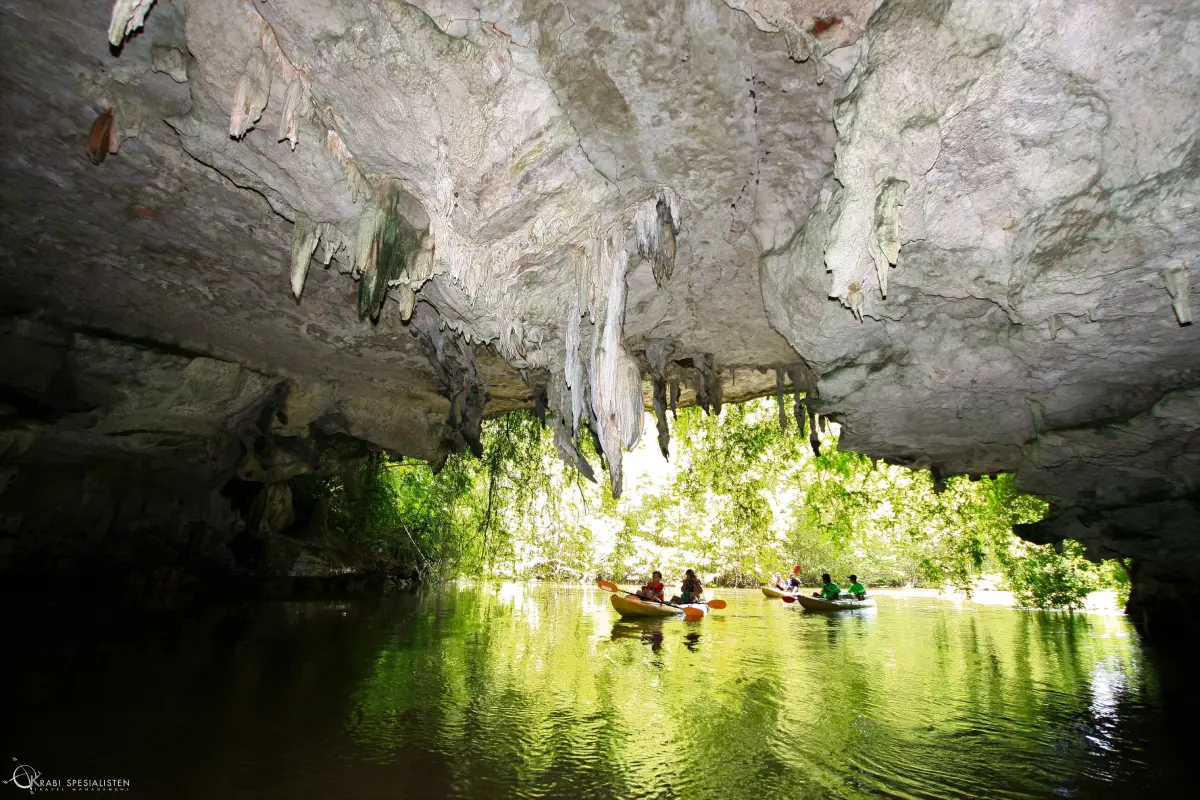
This destination is best understood as part of the Ban Bo Tho waterway route. Visitors usually reach the cave by long-tail boat or kayak, passing through mangrove-lined canals such as Khlong Pa Prang, Khlong Tham Lod, and Khlong Tham Phi Hua To before walking up into the cave. The experience is not just about entering a cave. It is a journey through a coastal landscape where ancient human traces, tidal waterways, limestone formations, and living mangrove ecosystems remain closely connected.
Phi Hua To Cave is also known as Skull Cave. The name is linked to old accounts of human skull remains found inside the cave. The cave sits within a limestone hill group in the Phang Nga Bay landscape and the Phuket Range. Water and mangrove forest surround the area, giving the approach to the cave a distinctive atmosphere. Instead of walking directly from a road into a mountain cave, visitors gradually enter the archaeological landscape by boat or kayak through quiet waterways.
Inside the cave are two large connected chambers. The interior is spacious, airy, and naturally lit in many places, making it easier to view the paintings than in a dark enclosed cave. The cave ceiling is high, and parts of the walls and ceiling show limestone formations. On the cave floor, accumulations of cockle shells are an important clue to the coastal environment and the way ancient communities used the cave and the surrounding waterways.
The cave paintings are the central highlight of Phi Hua To Cave. They were created in red, black, yellow, brown, yellowish-brown, reddish-brown, and dark brown pigments. The paintings are grouped into 23 areas and total 238 images. They include human figures, handprints, footprints, marine animals, birds, chickens, fish, squid, crocodiles, porcupines, shrimp, geometric patterns, and images that resemble tools such as nets, fish traps, and boats. This variety makes Phi Hua To Cave one of the most remarkable rock art sites in Krabi.
The best-known image is a red human-like figure on the ceiling near the cave entrance. It appears to wear a tall headdress or to have an animal-like horned head, and it has become one of the most recognizable symbols of Phi Hua To Cave and Ao Luek. Many visitors stop at this image first because its shape, posture, and details are striking. It gives the cave a strong sense of mystery, artistry, and ritual meaning.
Another notable group is the handprint imagery on the cave ceiling, including a hand with six fingers. These images often raise questions among visitors and make the cave more than a sightseeing stop. Human figures, animal images, and tool-like designs together suggest a community deeply connected to the sea, canals, mangroves, and natural resources of the area.
The importance of Phi Hua To Cave lies not only in the number of paintings but also in the landscape around them. The cave is surrounded by brackish waterways and mangrove forest. Visitors can see archaeological traces and coastal ecology in the same route. Limestone hills rise from the water, creating caves, tunnels, and natural passages. This makes the area ideal for eco-cultural travel, kayaking, long-tail boat trips, and archaeological learning.
Tham Lod, located along the same route, adds another layer to the journey. It is a natural limestone tunnel that can be explored by water when tidal conditions are suitable. The cave passage contains limestone textures, stalactites, and the quiet atmosphere of a natural rock tunnel. When combined with Phi Hua To Cave, the route offers geology, mangrove scenery, ancient art, and local waterway travel in one trip.
Travelers should explore Phi Hua To Cave slowly. The paintings are spread across walls and ceilings, and some require careful observation. The cave floor can be uneven or damp, so visitors should walk carefully and follow local guidance. It is important not to touch the paintings, write on the cave walls, or use flash photography. These paintings are fragile cultural evidence; once damaged, they cannot be replaced.
For archaeology-minded travelers, Phi Hua To Cave offers more than visual beauty. The paintings indicate how ancient communities expressed life, belief, tools, animals, and their relationship with the coastal environment. Marine animal images and net-like forms point to the importance of water resources. Human figures and symbolic imagery suggest social and ritual dimensions. Shell remains on the cave floor help connect the cave to the long history of coastal living in Ao Luek.
The atmosphere here is very different from Krabi’s famous beach destinations. There is no white sand beach or snorkeling reef. Instead, the experience is quiet, layered, and educational. The mangrove canals, limestone cliffs, prehistoric images, and community-based boat services make this a strong destination for families, students, photographers, kayakers, and travelers who want to understand Krabi through history and landscape.
The best time to visit is from morning to early afternoon, when there is enough time for the boat or kayak route and the heat is more manageable. Tides affect waterway access and some parts of the route, so visitors should check with Than Bok Khorani National Park or local boat and kayak operators at Ban Bo Tho before traveling. This is especially important for group trips or longer kayaking programs.
Getting There from Krabi town, take Highway 4 toward Ao Luek District. At Ao Luek, continue toward the Ao Luek–Laem Sak route and turn toward Ban Bo Tho Pier. From the pier, visitors continue by long-tail boat or kayak to Tham Lod and Phi Hua To Cave. The drive from Krabi town to Ao Luek takes about 1 hour, while the water route depends on the boat type, selected program, and tide level.
Travelers with a private car should set Ban Bo Tho, Ao Luek Tai, Ao Luek District, Krabi as the destination and contact a local boat or kayak operator before departure. The main road is convenient, but extra time should be allowed for the pier and water route. Travelers without a private car can take public transport or a van from Krabi town to Ao Luek, then arrange local transport to Ban Bo Tho Pier.
The cave is part of Than Bok Khorani National Park, so national park admission applies. Boat fees, kayak fees, and community tour services are separate and vary by route and operator. Visitors should bring cash, drinking water, a hat, comfortable walking shoes, and a waterproof bag for phones or cameras. Anyone taking photos inside the cave should avoid flash and follow the site’s conservation rules.
Phi Hua To Cave can be visited as a half-day or full-day trip. A shorter visit can include a boat ride to Tham Lod and Phi Hua To Cave, then lunch near Ban Bo Tho Pier. A fuller program can include kayaking, mangrove scenery, and nearby attractions such as Than Bok Khorani National Park, Tham Khlang, Tha Pom Khlong Song Nam, or Wat Mahathat Wachiramongkol. This makes Ao Luek a rewarding district for travelers interested in nature, archaeology, and local culture.
Tham Lod and Phi Hua To Cave deserve a place in any Krabi itinerary focused on meaningful travel. The site brings together ancient human evidence, rare cave paintings, brackish canals, mangrove forest, limestone cliffs, and Ban Bo Tho’s local tourism services. Every painting on the cave wall, every shell deposit on the floor, and every canal along the route helps tell the long story of people, nature, and time in Ao Luek.
| Name | Tham Lod and Phi Hua To Cave |
| Location | Ban Bo Tho, Ao Luek Tai Subdistrict, Ao Luek District, Krabi Province |
| Address | Than Bok Khorani National Park, Moo 2, Ban Bo Tho, Ao Luek Tai Subdistrict, Ao Luek District, Krabi 81110, Thailand |
| Coordinates | 8.3820494, 98.6804351 |
| Highlights | Prehistoric cave paintings in 23 groups totaling 238 images, a limestone cave in a mangrove landscape, and boat or kayak access from Ban Bo Tho |
| History | The cave paintings are estimated to be around 2,000–3,000 years old and are among Krabi’s important prehistoric rock art sites |
| Name Origin | Phi Hua To Cave is also known as Skull Cave, a name linked to old accounts of human skull remains found inside the cave |
| Distinctive Features | A limestone cave with two large connected chambers, natural airflow, daylight access, cave paintings, and shell deposits on the cave floor |
| Travel Information | Drive from Krabi town toward Ao Luek, continue to Ban Bo Tho Pier, then take a long-tail boat or kayak to Tham Lod and Phi Hua To Cave |
| Current Status | Open as a tourist attraction and archaeological learning site under Than Bok Khorani National Park |
| Open Days | Daily |
| Opening Hours | 08.30 – 16.30 |
| Fees | National park admission, Group 3: Thai adult 60 baht, Thai child 30 baht / foreign adult 300 baht, foreign child 150 baht. Boat and kayak services are separate. |
| Facilities | Parking at the national park area, welfare shop, and local boat or kayak services around Ban Bo Tho |
| Main Areas / Zones | Two cave chambers, 23 cave-painting groups, horned human figure, six-finger hand image, shell deposits, mangrove canal route, and nearby Tham Lod |
| Caretaker | Than Bok Khorani National Park, Department of National Parks, Wildlife and Plant Conservation |
| Main Contact Number | 075-681-096 |
| Official Website / Official Page | Than Bok Khorani National Park, Department of National Parks, Wildlife and Plant Conservation |
| Nearby Tourist Attractions | 1. Tham Lod, about 1 km 2. Than Bok Khorani National Park, about 8 km 3. Tham Khlang, about 9 km 4. Tha Pom Khlong Song Nam, about 24 km 5. Wat Mahathat Wachiramongkol, also known as Wat Bang Thong, about 25 km |
| Nearby Restaurants | 1. Aree Seafood & Bo Tho Sea Canoe, about 1 km, Tel. 081-085-7839, 090-485-9273 2. Bo Tho Seafood, about 1 km, Tel. 085-256-9306 3. Chong Khao Noodles House, about 12 km, Tel. 065-426-6163 4. Khanom Jeen To Chong Ao Luek, about 13 km, Tel. 084-242-4648 5. Ao Thong Seafood, about 22 km, Tel. 087-273-0233 |
| Nearby Accommodations | 1. Krabi Bamboo Kingdom at Aoluek Paradise, about 8 km, Tel. 063-619-5354 2. P.N. Mountain Resort, about 9 km, Tel. 093-525-4929 3. Rai Prida Homestay, about 12 km, Tel. 089-866-4954 4. Baan Suanthip Homestay, about 15 km, Tel. 084-544-4614, 098-727-4235 5. Lanlay Homestay, about 18 km, Tel. 087-283-0099 |
Frequently Asked Questions (FAQ)
Q: Where are Tham Lod and Phi Hua To Cave located?
A: They are located around Ban Bo Tho, Ao Luek Tai Subdistrict, Ao Luek District, Krabi Province, within Than Bok Khorani National Park.
Q: What is the main highlight of Phi Hua To Cave?
A: The main highlight is its prehistoric cave paintings, grouped into 23 areas with 238 images, including human figures, animals, handprints, tool-like forms, and a famous horned human-like figure.
Q: How old are the cave paintings at Phi Hua To Cave?
A: The cave paintings are estimated to be around 2,000–3,000 years old.
Q: How do travelers get to Phi Hua To Cave?
A: Travel from Krabi town to Ao Luek District, continue to Ban Bo Tho Pier, then take a long-tail boat or kayak to Tham Lod and Phi Hua To Cave.
Q: What are the opening hours?
A: The site is generally open daily from 08.30 to 16.30, but visitors should check tide conditions and boat schedules before traveling.
Q: How much is the admission fee?
A: National park admission applies: Thai adult 60 baht, Thai child 30 baht, foreign adult 300 baht, and foreign child 150 baht. Boat and kayak services are separate.
Q: How much time should visitors plan for this trip?
A: A compact visit can be done in about half a day. A fuller kayaking, mangrove, and nearby-attraction route is best planned as a full-day trip.
Q: Can visitors take photos inside the cave?
A: Photography for personal travel is allowed according to site rules, but flash should be avoided, and visitors must not touch or damage the cave paintings.
 Category: ●Nature and Wildlife
 Group: ●Caves
Last Update : 2 MonthAgo
 Last Update : 2 MonthAgo

 Click to Access the Navigation Map GPS
Tham Lod and Phi Hua To Cave Map
Recommend

 Art, Culture and Heritage
 Historical Sites and Monuments(1)
 Landmarks and Memorials(7)
 Art, Craft Centres, Tradition(2)
 Museums(2)
 Educational Places
 Educational Gardens, Farm(1)
 Places of Worship
 Temple(3)
 Mosque(2)
 Other Sacred Sites(2)
 Research and Development
 Royal Project(1)
 Suburban Living
 Village, Community(6)
 National Parks and Marine Reserves(5)
 Mountain (Doi)(2)
 Dam, Reservoir, Lake(3)
 Waterfalls(12)
 Hot Springs(3)
Caves(20)
 River, Canal(2)
 Bays and Beaches(36)
 Islands(23)
 Other natural attractions(7)
 Entertainment and Agricultural
 Farms, Parks and Ecotourism(1)
 Outdoor and Adventure Activities(1)
 Travel Articles, Recipes
 Travel Review, Food Review(2)
 Southern Food Menu, Southern Food Recipes(1)


