
lovethailand home >Northeastern Travel Attractions >Sakon Nakhon Travel Attractions >Tao Ngoi >Tao Ngoi > Phu Pha Yon National Park
TL;DR: Phu Pha Yon National Park is located at Ban Huai Huat, Chan Phen Subdistrict, Tao Ngoi District, Sakon Nakhon Province 47260, Thailand, open Daily, hours 06.00 – 18.00.

Phu Pha Yon National Park
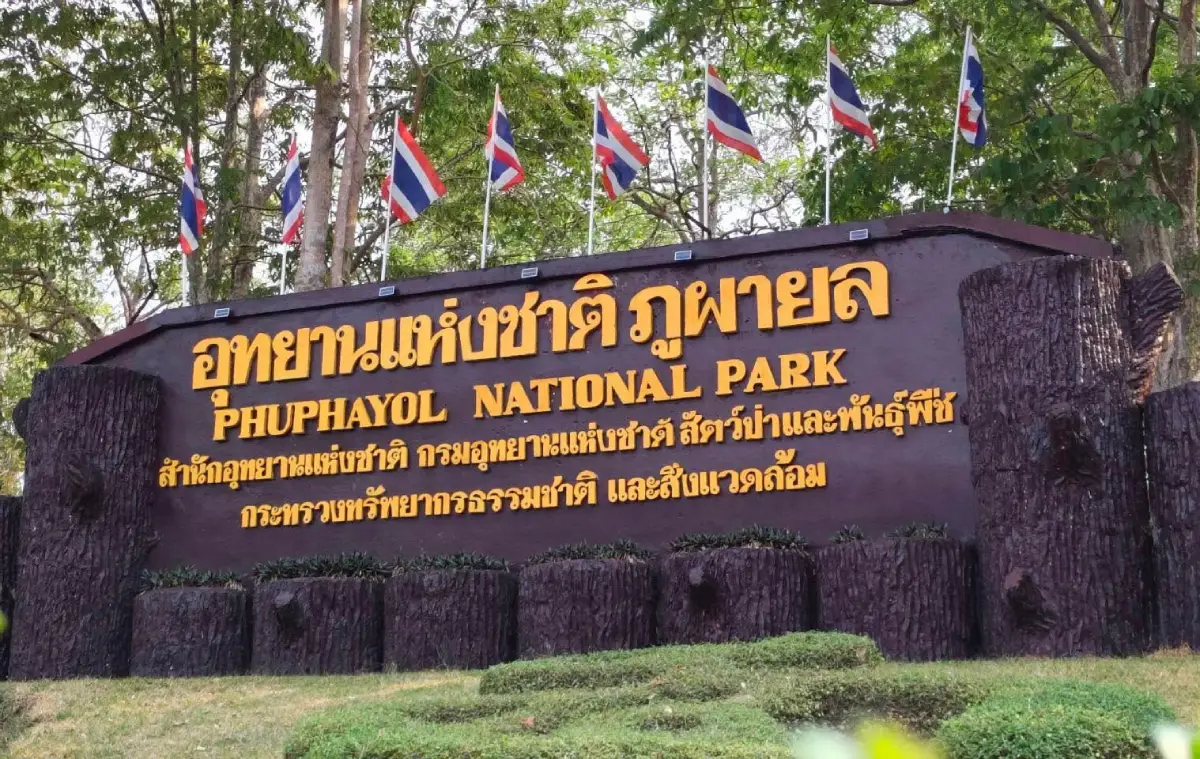
Open Days: Daily
Opening Hours: 06.00 – 18.00
Phu Pha Yon National Park is a large protected mountain forest area on the Phu Phan range in northeastern Thailand. The park is located mainly in Tao Ngoi District, Sakon Nakhon Province, and covers parts of Mueang Sakon Nakhon, Khok Si Suphan, and Tao Ngoi districts in Sakon Nakhon Province, Na Kae District in Nakhon Phanom Province, and Dong Luang and Khamcha-i districts in Mukdahan Province. It covers approximately 825 square kilometers, or 517,850 rai, and was declared a national park on 28 July 1988 as a royal commemorative national park. The area is known for sandstone mountains, forested highlands, waterfalls, reservoirs, rock terraces, wildflower fields, prehistoric carvings, camping areas, and dark-sky stargazing locations.
The park headquarters is located at Ban Huai Huat, Chan Phen Subdistrict, Tao Ngoi District, Sakon Nakhon Province. The landscape around the headquarters is peaceful and natural, with the Huai Huat Reservoir, forested slopes, rocky formations, and waterfall routes nearby. Travelers can visit the park as a day trip from Sakon Nakhon city, or stay overnight for camping, reservoir views, cool-season air, and stargazing. This makes Phu Pha Yon National Park suitable for both relaxed sightseeing and deeper nature-based travel.
The general terrain of the park consists of high plains alternating with sandstone mountain ranges. The forest types include mixed deciduous forest, dry dipterocarp forest, dry evergreen forest, and hill evergreen forest. Important trees found in the park include ta-khian, tabaek, kabok, and many other local species. These varied forest types create different atmospheres across the seasons. During the rainy season, the forest is green and waterfalls are active. During the cool season, the reservoir, camping areas, viewpoints, and night sky become especially attractive.
Wildlife found in the park includes barking deer, deer, dholes, birds, and various smaller forest animals. These species reflect the ecological role of the Phu Phan mountain range as a habitat, water source, and forest corridor. Visitors should travel quietly, avoid feeding wildlife, avoid littering, and stay on marked paths. The value of Phu Pha Yon National Park lies not only in its scenery but also in the living forest ecosystem that supports animals, plants, streams, and nearby communities.
Phu Pha Yon National Park is distinctive because it combines several types of attractions in one area. Visitors can experience Huai Huat Reservoir, Kham Nam Sang Waterfall, Phu Pha Yon cliff and ancient carvings, Pha Phaya Tao Ngoi, Lan Dusita wildflower field, Hiep Phu Pha Nang Cave, Saowapha Cave, Dong Noi Reservoir, Phra Wet Cave, and the dark-sky stargazing zone around Huai Huat Reservoir. The park therefore offers nature, archaeology, local legend, water scenery, camping, and astronomy in a single mountain landscape.
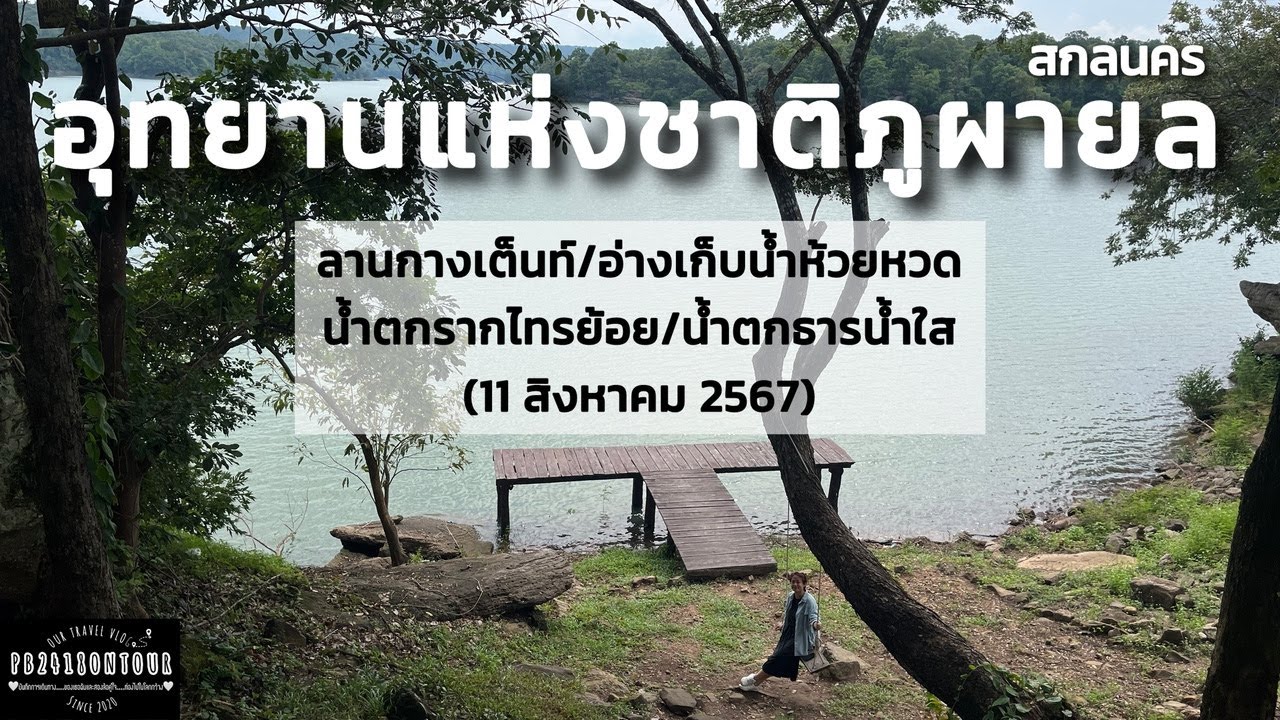
Huai Huat Reservoir is one of the most important landmarks of the park. It is located about 500 meters from the park headquarters and was created through a royal-initiated irrigation project. The reservoir is surrounded by forested hills and has a calm, open-water landscape that is suitable for relaxation, photography, and slow travel. On the right side of the reservoir near the royal pavilion area, unusual rock formations can be seen, and from some viewpoints visitors can see two waterfalls flowing into the reservoir.
Huai Huat Reservoir is also a key location for astronomical tourism. The reservoir ridge and the royal working pavilion area are located around 300–400 meters above sea level. The surrounding open water gives a wide view of the sky, while the area is controlled for light use and remains relatively open. This makes it suitable for stargazing, meteor shower viewing, Milky Way photography, and night-sky activities. Phu Pha Yon National Park is registered as a dark-sky park for the period 2024–2026, making it one of the meaningful stargazing locations in northeastern Thailand.
Kham Nam Sang Waterfall is the highest waterfall in Phu Pha Yon National Park. It is about 1.8 kilometers from the park headquarters and has a height of around 25 meters. From the dam ridge, visitors can look southward and see the waterfall descending through the forested landscape. The waterfall is most impressive during the rainy season and shortly after rainfall, when water flow is strong and the surrounding forest is fresh and green. It is one of the easiest natural waterfall attractions to combine with a visit to Huai Huat Reservoir.
Phu Pha Yon itself is an important cliff viewpoint and archaeological site. The cliff area contains ancient carvings estimated to be about 3,000 years old. These carvings are evidence that the Phu Phan mountain landscape was connected with human presence, belief, and symbolic expression long before the present day. The route to the site follows Highway 2339 on the Tao Ngoi–Si Wicha road, then turns toward Ban Na Ang–Muang Kham, passes Ban Phon Bok and Ban Phon Phaeng, and continues to Ban Na Phang, about 5 kilometers from Tao Ngoi District center. The site can be reached by car.
The ancient carvings at Phu Pha Yon give the park a strong historical dimension. They are not simply decorative marks on stone. They are rare traces of people who lived, traveled, or performed symbolic activities in this mountain landscape thousands of years ago. Visitors should view the carvings with care, avoid touching the rock surface, and never write or mark the stone. Preserving the carvings protects the cultural memory of the site and keeps the connection between landscape and early human history intact.
Pha Phaya Tao Ngoi is another important attraction connected with both nature and local legend. Located along the Ban Huai Huat–Khok Klang route about 7 kilometers from the park headquarters, the site is a sandstone formation shaped like a turtle descending toward the Phung River. Local belief connects the appearance of a turtle with fertile land and good water sources. This story is also linked to the origin of the name Tao Ngoi. The site is therefore meaningful not only as a natural rock formation but also as part of the cultural identity of Tao Ngoi District.
Lan Dusita is a wide rock terrace known for seasonal wildflowers. During the late rainy season and early cool season, many small flowers bloom across the rock field, especially the purple Dusita flower, along with Kradum Ngoen, Soi Suwanna, En-aa, and sundew. These plants are small and fragile, and the park has prepared walking paths to allow visitors to enjoy the flowers without stepping directly on them. Lan Dusita is one of the best places in the park for slow walking, close-up photography, and observing small plants that grow naturally on sandstone rock surfaces.
The beauty of Lan Dusita is different from a cultivated flower garden. The flowers grow naturally according to the rhythm of rainfall, rock moisture, and seasonal weather. When the timing is right, the stone terrace becomes a natural field of small flowers in purple, white, yellow, and other soft colors. Visitors should walk slowly, stay on the prepared paths, and avoid disturbing the plants. This helps preserve one of the most delicate ecological highlights of Phu Pha Yon National Park.
The park also has cave attractions such as Hiep Phu Pha Nang Cave, Saowapha Cave, and Phra Wet Cave. These sites reveal another side of the Phu Phan sandstone landscape, showing natural hollows, rocky passages, and sheltered spaces formed over long periods of time. Cave visits require care, proper lighting, and respect for natural formations. Travelers should follow designated routes and avoid touching fragile cave features.
Dong Noi Reservoir is another water-related attraction that adds to the park’s landscape diversity. Together with Huai Huat Reservoir and the park’s waterfalls, it shows how the Phu Pha Yon area functions as an important water landscape. The reservoirs and streams support the forest, provide scenic views, and help maintain the ecological balance of the surrounding communities. This water-based character gives the park a softer atmosphere compared with purely rocky mountain destinations.
Overnight travel is one of the strongest experiences at Phu Pha Yon National Park. The park provides accommodation, a camping area, a welfare shop, food service, toilets, and visitor facilities. The camping area near the reservoir gives travelers an opportunity to wake up with morning light over water and mountain slopes, then spend the evening under a dark sky. During the cool season and astronomy events, the park becomes especially attractive for campers, photographers, families, and study groups.
The park’s status as a dark-sky park makes it particularly meaningful for international travelers and nature photographers. Stargazing around Huai Huat Reservoir allows visitors to see the night sky in a calm natural setting away from dense urban light. On clear nights, the Milky Way and meteor showers can be observed and photographed. The combination of water, forest, mountain silhouettes, and night sky gives Phu Pha Yon a distinctive identity among national parks in northeastern Thailand.
The best time to visit depends on the activity. The rainy season is best for waterfalls and green forest scenery. The late rainy season to early cool season is ideal for Lan Dusita and wildflowers. The cool season is suitable for camping, stargazing, reservoir views, and comfortable walking. The hot season is still possible for sightseeing, rock carvings, and reservoirs, although some waterfalls may have lower water levels. Choosing the right season helps travelers experience the park in its strongest form.
The national park entrance fee is accessible for most travelers. Thai adults pay 20 baht and Thai children 10 baht. Foreign adults pay 100 baht and foreign children 50 baht. Vehicle fees are charged according to vehicle type, including motorcycles, four-wheel cars, six-wheel vehicles, and larger vehicles. These fees help support visitor facilities, safety management, and conservation of natural resources inside the park.
Phu Pha Yon National Park suits many travel styles. Families can enjoy the reservoir, waterfall, and short nature routes. Students can learn about forests, water systems, rock terraces, wildflowers, and ancient carvings. Photographers can capture reservoirs, waterfalls, rock fields, flowers, cliffs, and the night sky. Foreign travelers can experience a side of Isan that combines mountain forest, archaeological memory, local legend, water landscapes, and dark-sky tourism in one place.
A good route can begin at the park headquarters and Huai Huat Reservoir, continue to Kham Nam Sang Waterfall, then visit Lan Dusita or the stargazing area depending on the season. With more time, travelers can continue to Phu Pha Yon ancient carving site or Pha Phaya Tao Ngoi. This route connects the park’s main themes: water, mountain, history, wildflowers, legend, and night sky.
Visitors who plan to stay overnight should contact the park in advance, especially during the cool season, long weekends, or astronomy events. Accommodation, camping space, and special activities may attract many visitors. Contacting the park also helps travelers confirm current route conditions, open areas, waterfall flow, and visitor regulations. This is especially useful for families, school groups, university groups, and international travelers.
Good national park manners are essential. Visitors should not litter, pick wildflowers, leave walking paths, write on rocks, damage ancient carvings, feed wildlife, or make loud noise in natural areas. Lan Dusita and the dark-sky area require particular care because the flowers are fragile and stargazing depends on darkness and quiet. Responsible travel helps preserve Phu Pha Yon as a meaningful natural and cultural destination.
Food and accommodation are available both inside and outside the park. The park welfare shop and food service support visitors inside the park area, while cafés and restaurants in Tao Ngoi District provide more options before or after the visit. Travelers who want to stay closest to nature can use park accommodation or camping. Those who prefer more urban facilities can stay in Tao Ngoi or Sakon Nakhon city and visit the park by car.
Getting There from Sakon Nakhon city, travel along the Sakon Nakhon–Nakhon Phanom road for about 14 kilometers, then turn right for about 12 kilometers to Tao Ngoi District. Continue for another 6 kilometers to reach Phu Pha Yon National Park headquarters. Another route is to take the Sakon Nakhon–Kalasin road for about 5 kilometers, then turn onto Highway 2339 and continue for about 35 kilometers to the park. The route is suitable for private cars, rental cars, and group vans. Drivers should take care on village roads and mountain sections.
In summary, Phu Pha Yon National Park is one of Sakon Nakhon’s most complete nature and cultural destinations. It combines Huai Huat Reservoir, Kham Nam Sang Waterfall, ancient rock carvings, Phu Pha Yon cliff, Pha Phaya Tao Ngoi, Lan Dusita wildflower field, caves, reservoirs, camping, and dark-sky stargazing in one protected mountain landscape. Visitors can experience water, forest, sandstone, flowers, archaeology, local legend, and the night sky within the same trip, making Phu Pha Yon National Park a highly valuable destination for nature-based and cultural travel in northeastern Thailand.
| Name | Phu Pha Yon National Park |
| Location | Ban Huai Huat, Chan Phen Subdistrict, Tao Ngoi District, Sakon Nakhon Province 47260, Thailand |
| Coverage Area | Mueang Sakon Nakhon, Khok Si Suphan, And Tao Ngoi Districts In Sakon Nakhon Province; Na Kae District In Nakhon Phanom Province; Dong Luang And Khamcha-I Districts In Mukdahan Province |
| Park Size | Approximately 825 Square Kilometers, Or 517,850 Rai |
| National Park Declaration Date | 28 July 1988 |
| Highlights | A Phu Phan Range national park with reservoirs, waterfalls, cliffs, sandstone terraces, wildflower fields, ancient carvings, caves, camping areas, and dark-sky stargazing |
| Forest Types | Mixed Deciduous Forest, Dry Dipterocarp Forest, Dry Evergreen Forest, And Hill Evergreen Forest |
| Key Plant Species | Ta-Khian, Tabaek, Kabok, Mixed Deciduous Trees, Dry Dipterocarp Plants, And Small Seasonal Rock-Field Flowers |
| Wildlife | Barking Deer, Deer, Dholes, Birds, And Various Small Forest Animals |
| Travel Information | From Sakon Nakhon City, Take The Sakon Nakhon–Nakhon Phanom Road For About 14 Km, Turn Right Toward Tao Ngoi For About 12 Km, Then Continue About 6 Km To The Park Headquarters; Another Route Uses Highway 2339 From The Sakon Nakhon–Kalasin Road |
| Current Status | Open As A National Park, Conservation Tourism Destination, Overnight Recreation Area, And Dark-Sky Park In Sakon Nakhon |
| Open Days | Daily |
| Opening Hours | 06.00 – 18.00 |
| Entrance Fee | Thai Visitors: Adult 20 Baht, Child 10 Baht Foreign Visitors: Adult 100 Baht, Child 50 Baht Vehicle Fee: Motorcycle 20 Baht, Four-Wheel Car 30 Baht, Six-Wheel Vehicle 100 Baht, Vehicle Over Six Wheels But Not More Than Ten Wheels 200 Baht |
| Facilities | Camping Service Center, Park Accommodation, Camping Ground, Welfare Shop, Food Service, Toilets, View Pavilion, Huai Huat Reservoir Viewpoint, And Parking Area |
| Main Areas / Zones | Park Headquarters And Visitor Service Zone Huai Huat Reservoir And Reservoir Ridge Zone Royal Working Pavilion And Stargazing Zone Kham Nam Sang Waterfall Zone Phu Pha Yon And 3,000-Year-Old Ancient Carving Zone Pha Phaya Tao Ngoi Zone Lan Dusita Wildflower Field Zone Hiep Phu Pha Nang Cave, Saowapha Cave, And Phra Wet Cave Zone Dong Noi Reservoir Zone Accommodation And Camping Zone |
| Caretaker / Coordinator | Phu Pha Yon National Park, Department Of National Parks, Wildlife And Plant Conservation; Mr. Ekkachai Phetcharat, Chief Of Phu Pha Yon National Park |
| Main Contact Number | Phu Pha Yon National Park Tel. 042-707-214, 083-835-9096, 042-981-057; Department Of National Parks Tel. 02-562-0760 |
| Recommended Activities | Reservoir Viewing, Waterfall Visits, Wildflower Walks, Ancient Carving Study, Pha Phaya Tao Ngoi Visit, Camping, Stargazing, Milky Way Photography, Reservoir Relaxation, And Nature Learning On The Phu Phan Range |
| Nearby Tourist Attractions | 1. Huai Huat Reservoir, about 500 meters, Tel. 083-835-9096 2. Kham Nam Sang Waterfall, about 1.8 km, Tel. 083-835-9096 3. Pha Phaya Tao Ngoi, about 7 km, Tel. 083-835-9096 4. Lan Dusita, about 7 km, Tel. 083-835-9096 5. Phu Pha Yon And 3,000-Year-Old Ancient Carvings, about 12 km, Tel. 083-835-9096 6. Phaya Tao Ngoi, Tao Ngoi District, about 8 km, Tel. 083-626-3353 7. Wat Siri Mangkla Tao Ngoi, about 8 km |
| Nearby Restaurants | 1. Phu Pha Yon National Park Welfare Shop, about 0 km, Tel. 083-835-9096 2. Metta Cafe, Bueng Thawai Subdistrict, Tao Ngoi District, about 14 km, Tel. 093-696-2922 3. Chaphaya Phaya Tao Ngoi Branch, about 8 km, Tel. 094-964-6396 4. Yum Mee Sing 19 Baht Sakon Nakhon, Tao Ngoi Branch, about 8 km, Tel. 088-686-6844 5. Tao Ngoi Laab Ped, about 8 km 6. So_good Tao Ngoi, about 8 km |
| Nearby Accommodations | 1. Phu Pha Yon National Park Accommodation And Camping Ground, about 0 km, Tel. 042-707-214, 083-835-9096 2. Tao Ngoi Resort, about 8 km, Tel. 086-631-9289 3. Mee Tawan Resort, Tao Ngoi District, about 9 km 4. Pang Pond Resort, about 14 km 5. Phunphat Resort, about 15 km 6. Bst Resort, about 15 km 7. Hotels In Sakon Nakhon City, about 35–40 km |
Frequently Asked Questions (FAQ)
Q: Where Is Phu Pha Yon National Park Located?
A: Phu Pha Yon National Park is located at Ban Huai Huat, Chan Phen Subdistrict, Tao Ngoi District, Sakon Nakhon Province, and covers areas in Sakon Nakhon, Nakhon Phanom, and Mukdahan provinces.
Q: What Are The Opening Hours Of Phu Pha Yon National Park?
A: The park is open daily from 06.00 to 18.00 for general tourism areas. Overnight camping and stargazing activities should be coordinated with the park in advance.
Q: How Much Is The Entrance Fee?
A: Thai adults pay 20 baht and Thai children 10 baht. Foreign adults pay 100 baht and foreign children 50 baht. Vehicle fees are charged according to vehicle type.
Q: What Are The Main Attractions In Phu Pha Yon National Park?
A: Major attractions include Huai Huat Reservoir, Kham Nam Sang Waterfall, Phu Pha Yon ancient carvings, Pha Phaya Tao Ngoi, Lan Dusita, Hiep Phu Pha Nang Cave, Saowapha Cave, Dong Noi Reservoir, and Phra Wet Cave.
Q: Is Phu Pha Yon National Park Good For Stargazing?
A: Yes. The reservoir ridge and royal working pavilion area at Huai Huat Reservoir are part of a dark-sky park registered for 2024–2026, making the area suitable for stargazing, meteor showers, and Milky Way photography.
Q: When Is The Best Time To Visit Lan Dusita?
A: The late rainy season to early cool season is the best period because Dusita flowers, Kradum Ngoen, Soi Suwanna, En-aa, and sundew bloom across the sandstone rock field.
Q: Does Phu Pha Yon National Park Have Accommodation?
A: Yes. The park has accommodation and a camping area. Additional accommodation is available in Tao Ngoi District and Sakon Nakhon city.
Q: How Do Travelers Get From Sakon Nakhon City To Phu Pha Yon National Park?
A: Travelers can take the Sakon Nakhon–Nakhon Phanom road for about 14 km, turn right toward Tao Ngoi for about 12 km, then continue about 6 km to the park headquarters. Another route uses Highway 2339 from the Sakon Nakhon–Kalasin road.
 Category: ●Nature and Wildlife
 Group: ●National Parks and Marine Reserves
Last Update : 3 MonthAgo
 Last Update : 3 MonthAgo
 Click to Access the Navigation Map GPS
Phu Pha Yon National Park Map
Recommend

 Art, Culture and Heritage
 Historical Sites and Monuments(9)
 Landmarks and Memorials(2)
 Royal Palace(1)
 Art, Craft Centres, Tradition(8)
 Museums(3)
 Educational Places
 Educational Gardens, Farm(2)
 Places of Worship
 Temple(18)
 Church(2)
 Other Sacred Sites(4)
 Research and Development
 Royal Project(3)
 Suburban Living
 Village, Community(7)
National Parks and Marine Reserves(4)
 Mountain (Doi)(3)
 Dam, Reservoir, Lake(14)
 Waterfalls(4)
 Caves(4)
 River, Canal(9)
 Bays and Beaches(1)
 Islands(1)
 Other natural attractions(5)
 Entertainment and Agricultural
 Zoos and Aquariums(1)
 Farms, Parks and Ecotourism(4)
 Outdoor and Adventure Activities(1)
 Travel Articles, Recipes
 Travel Review, Food Review(1)


