
lovethailand home >Northeastern Travel Attractions >Nong Bua Lamphu Travel Attractions >Non Sang >Khok Muang > Tad Fa Waterfall
TL;DR: Tad Fa Waterfall is located at Phu Kao Side, Phu Kao-Phu Phan Kham National Park, Nong Bua Lamphu Province, open Daily, hours 08.30 – 16.30.

Tad Fa Waterfall
Open Days: Daily
Opening Hours: 08.30 – 16.30
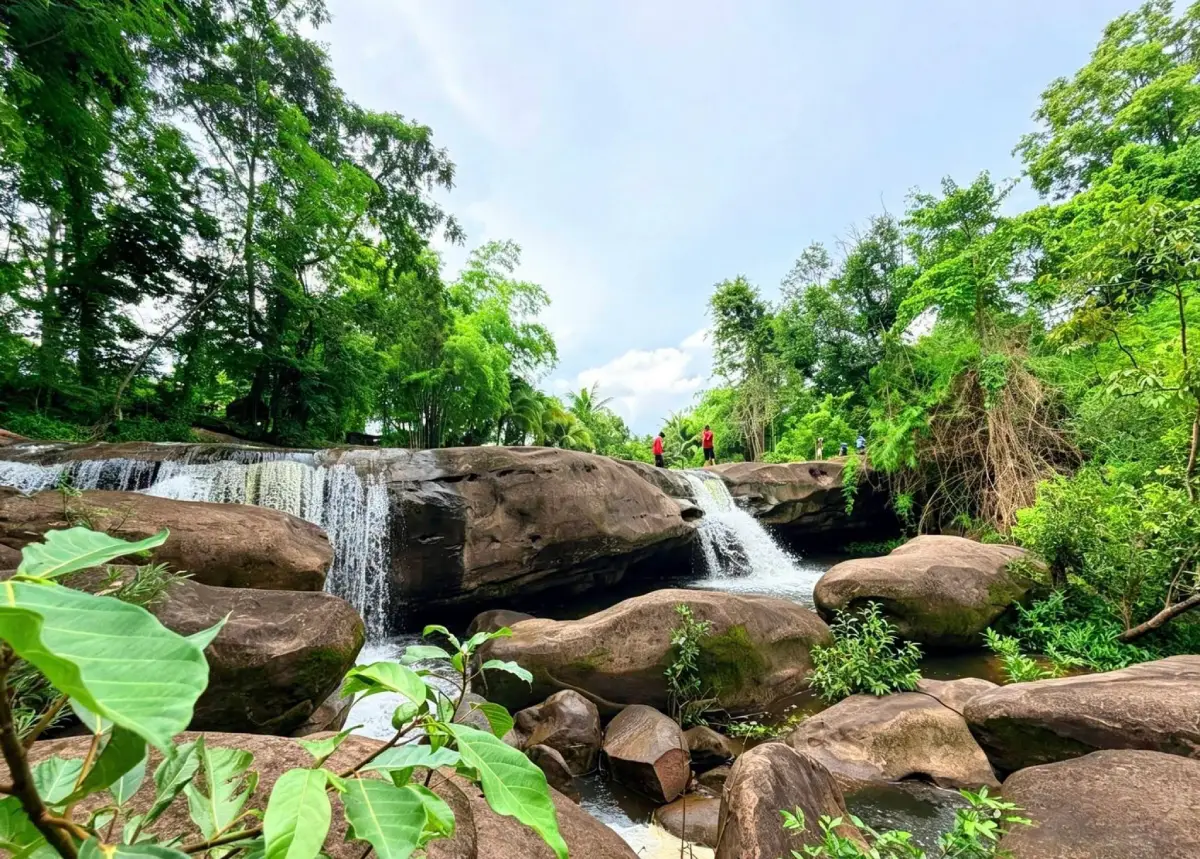
Tad Fa Waterfall in Nong Bua Lamphu is a small seasonal waterfall located on the Phu Kao side of Phu Kao-Phu Phan Kham National Park. It is known for a narrow natural stream that flows through mixed deciduous forest before dropping over a rocky ledge about 7 meters high into a natural pool below. The waterfall is most beautiful during the rainy season, when the stream is full and the forest around the cascade becomes fresh, green, and lively.
Tad Fa Waterfall is not a large year-round waterfall. Its character is closely tied to the seasonal rhythm of the Phu Kao forest. During the rainy season, water gathers from the upper forest streams and runs through shallow rocky channels before forming the waterfall. During the dry season, the flow may become much weaker. For this reason, visitors who want to see the waterfall at its best should plan a trip during the rainy season or shortly after steady rainfall, while also paying careful attention to trail conditions and slippery rocks.
The waterfall is part of the Phu Kao landscape, a sandstone mountain area within Phu Kao-Phu Phan Kham National Park. This national park is known for rugged rock formations, deciduous forest, dry dipterocarp forest, caves, prehistoric archaeological traces, dinosaur footprints, viewpoints, and seasonal waterfalls. Tad Fa Waterfall is therefore not only a place to see water flowing over rocks; it is part of a broader natural and cultural landscape that gives Nong Bua Lamphu Province a distinctive ecological and historical identity.
The appeal of Tad Fa Waterfall lies in its quietness and simplicity. It does not have the highly developed atmosphere of major tourist waterfalls. Instead, visitors find a modest forest waterfall surrounded by trees, rocks, and natural streambeds. The sound of water falling over the stone ledge, the shade of the mixed forest, and the cool air around the stream create a calm setting suitable for travelers who prefer nature in a more understated form.
The Thai word “Tad” is commonly used in northeastern Thailand to refer to a waterfall, rapid, or rocky stream area. The name Tad Fa evokes the image of water dropping from a rocky height in a forested mountain landscape. This simple name fits the character of the place: a small cascade shaped by stream flow, seasonal rain, rock layers, and forest ecology.
The best season to visit is from the rainy season into early cool season. During this period, the forest is greener, the stream is more active, and the waterfall is more likely to have visible water. In the dry season, the waterfall may become a rocky streambed with limited water. This seasonal nature is part of the experience. Travelers should not expect the same view throughout the year, but should appreciate the waterfall as a natural site that changes with rainfall and climate.
Tad Fa Waterfall is suitable for nature-oriented travelers who enjoy quiet forest scenery rather than crowded attractions. It is appropriate for those who want to explore the Phu Kao side of the national park, observe natural rock layers, photograph a seasonal waterfall, and combine the visit with other nearby attractions. It is not a place for rushed sightseeing. The experience is better when travelers allow enough time to walk carefully, look around, listen to the forest, and enjoy the slow atmosphere of the area.
For photography, Tad Fa Waterfall offers several natural compositions. Visitors can photograph the water dropping over the rock ledge, the small stream leading into the waterfall, the natural pool below, and the surrounding forest. When the water flow is strong, the waterfall appears fresh and energetic. When the water flow is light, the texture of the stone, the shape of the stream channel, and the forest environment become more visible. Soft morning or afternoon light is usually better than harsh midday sunlight.
The Phu Kao side of the national park has several nearby attractions that can be combined with Tad Fa Waterfall. These include Tad Hin Taek or Pha Hin Taek Waterfall, Phu Wat dinosaur footprints, Wat Phra Phutthabat Phu Kao, Sao Hin Ham Tang rock formation, Ho Sawan viewpoint, Chong Khao Khat viewpoint, and several archaeological cave sites. Visiting these places together gives the trip more depth, connecting forest, waterfalls, rock formations, local legends, prehistoric evidence, and scenic viewpoints.
The geological and archaeological identity of Phu Kao makes the area especially interesting. The park contains caves with ancient paintings and engravings, dinosaur footprints, sandstone formations, and layered rocks that reveal the long natural history of the landscape. Travelers who come to Tad Fa Waterfall can extend the trip to these learning sites to understand that Nong Bua Lamphu is not only a province of temples and rural communities, but also a place with notable natural history and prehistoric traces.
Because Tad Fa Waterfall is a seasonal forest waterfall, safety is important. Rocks near the stream may become slippery from moss and moisture. Soil paths may become wet after rain. Water flow can change quickly during or after heavy rainfall. Visitors should wear shoes with good grip, avoid standing on wet rocks, stay away from fast-flowing water, and supervise children closely. The waterfall is best experienced with caution and respect for natural conditions.
Travelers should prepare for a basic nature trip. Useful items include drinking water, a hat, lightweight clothing, insect repellent, a waterproof bag for phones or cameras, and a personal trash bag. Food and drink services are not concentrated directly at the waterfall, so visitors should plan meals before entering the deeper park area or bring light snacks. All waste should be carried out. Keeping the site clean helps protect both the stream and the natural atmosphere of the waterfall.
Restaurants around this part of the park are mostly located in communities and in Non Sang District, rather than immediately beside the waterfall. Travelers should plan food stops in advance, especially if visiting in the morning or afternoon. After the waterfall visit, they can continue to local restaurants in Non Sang or return toward Nong Bua Lamphu town for a wider range of dining options. This planning makes the trip more comfortable, especially for families or groups.
Accommodation options can be arranged in Non Sang District, Nong Bua Lamphu town, or near Ubolratana Dam in Khon Kaen, depending on the travel route. Staying in Nong Bua Lamphu town gives easier access to markets, restaurants, and urban services. Staying closer to Non Sang or the Ubolratana side can be useful for travelers who want to continue exploring Phu Kao-Phu Phan Kham National Park and the reservoir landscape on the next day.
Visitors should follow national park rules while traveling in the area. Plants, rocks, wildlife, and natural objects should not be removed. Loud noise should be avoided. Fires should not be made outside permitted areas. Walking off the route without need is not recommended. A small waterfall and its surrounding stream system can be easily affected by careless behavior. Responsible travel helps preserve Tad Fa Waterfall for local communities and future visitors.
A trip to Tad Fa Waterfall gives foreign travelers a quieter view of Nong Bua Lamphu. The province is not as internationally famous as Thailand’s major beach or mountain destinations, but its landscapes have a distinct Isan character. The Phu Kao area combines forest, sandstone, caves, prehistoric traces, viewpoints, and seasonal water. This combination creates a meaningful nature route for travelers who want to go beyond mainstream tourist circuits.
A practical one-day itinerary can begin from Nong Bua Lamphu town, continue toward Non Sang District and the Phu Kao side of the national park, visit a cultural or archaeological point first, then continue to Tad Fa Waterfall during a suitable time of day. After the waterfall, travelers can visit a viewpoint or stop for food in Non Sang before returning. Travelers coming from Khon Kaen or Ubolratana Dam can also link the trip with the Phu Phan Kham side of the national park.
Tad Fa Waterfall should not be treated as a quick roadside stop. It is better to allow enough time for driving, checking route conditions, walking carefully, and adjusting plans according to weather. During the rainy season, visitors should check the weather forecast and contact the park before entering the area if there has been continuous rainfall. During the dry season, visitors should understand that the waterfall may have little water.
For travelers who appreciate modest, seasonal nature sites, Tad Fa Waterfall offers an honest and grounded experience. When water is abundant, the waterfall feels fresh and alive. When water is limited, the stone layers, streambed, and forest details become more visible. Each season presents a different view, and that changing character is part of the site’s natural identity.
Overall, Tad Fa Waterfall in Nong Bua Lamphu is a small but worthwhile nature stop within the Phu Kao side of Phu Kao-Phu Phan Kham National Park. Its main features are the 7-meter rock drop, seasonal water flow, mixed deciduous forest, natural pool, and peaceful mountain atmosphere. With good timing, careful preparation, and respect for the national park environment, the waterfall can become a memorable part of a deeper journey through Nong Bua Lamphu’s natural landscape.
Getting There is most convenient by private car or rental car. Travelers can drive from Nong Bua Lamphu town toward Non Sang District and continue to the Phu Kao side of Phu Kao-Phu Phan Kham National Park. Since attractions on the Phu Kao side are spread across different local routes, visitors should contact or ask park staff about the current route to Tad Fa Waterfall, water conditions, and daily safety guidance before continuing into the waterfall area.
| Name | Tad Fa Waterfall |
| Location | Phu Kao Side, Phu Kao-Phu Phan Kham National Park, Nong Bua Lamphu Province |
| Address | Phu Kao-Phu Phan Kham National Park, Phu Kao Area, Non Sang District, Nong Bua Lamphu Province |
| Highlights | Small seasonal waterfall in mixed deciduous forest, with a stream falling over a rocky ledge about 7 meters high into a natural pool |
| History | A natural attraction on the Phu Kao side of Phu Kao-Phu Phan Kham National Park, an area known for sandstone mountains, forest, archaeological caves, dinosaur footprints, and seasonal waterfalls |
| Name Origin | “Tad” is a northeastern Thai term often used for a waterfall or rocky rapid, while “Fa” evokes the image of water falling from a high rock layer |
| Distinctive Features | Best water flow during the rainy season, quiet forest atmosphere, small stream, rocky layers, and a natural pool below the cascade |
| Travel Information | Travel by private car toward Non Sang District and the Phu Kao side of the national park, then check the current waterfall route with park staff before continuing |
| Current Status | Open as a natural attraction within Phu Kao-Phu Phan Kham National Park, with water volume depending on the season |
| Open Days | Daily |
| Opening Hours | 08.30 – 16.30 |
| Fees | National park entrance fee: Thai adult 20 baht, Thai child 10 baht / foreign adult 100 baht, foreign child 50 baht; vehicle fees apply by vehicle type |
| Facilities | National park office, visitor service points, park accommodation, camping area, and nature attraction areas within the national park |
| Main Areas / Zones | 1. Tad Fa Waterfall stream and rock ledge zone 2. Natural pool zone below the waterfall 3. Mixed deciduous forest zone around the waterfall 4. Phu Kao nature attraction zone 5. National park office and visitor service zone |
| Caretaker / Related Organization | Phu Kao-Phu Phan Kham National Park, Department of National Parks, Wildlife and Plant Conservation |
| Main Contact Number | Phu Kao-Phu Phan Kham National Park, Tel. 063-648-4821, 042-315-837 |
| Nearby Tourist Attractions | 1. Tad Hin Taek / Pha Hin Taek Waterfall, about 3 km 2. Phu Wat Dinosaur Footprints, about 12 km 3. Wat Phra Phutthabat Phu Kao, about 18 km 4. Sao Hin Ham Tang Rock Formation, about 24 km 5. Ho Sawan Viewpoint, about 28 km 6. Chong Khao Khat Viewpoint, about 55 km |
| Nearby Restaurants | 1. Khrua Isan Restaurant, Non Sang, about 35 km, Tel. 042-375-004 2. Made-To-Order Food & Coconut Smoothie Restaurant, Non Sang, about 35 km, Tel. 082-609-8064 3. Kuai Tiao Kai Mara Nong Tun, Kut Du, about 38 km, Tel. 083-459-8955 4. Phung Kang Restaurant, Nong Bua Lamphu, about 55 km, Tel. 097-318-7088, 088-052-1334 5. Rad Na Talat Khuean Ubolratana, about 60 km, Tel. 085-643-7089 |
| Nearby Accommodations | 1. Oranee Resort, Non Sang, about 35 km, Tel. 081-118-2500 2. Muji House Resort, Non Sang, about 36 km, Tel. 083-218-2749, 095-668-1813 3. Ruean Chor Fah Hotel, Nong Bua Lamphu, about 55 km, Tel. 095-658-5544, 042-311-139 4. Rungrod Grand Hotel, Nong Bua Lamphu, about 55 km, Tel. 093-321-1199 5. Nongbua Garden View, Nong Bua Lamphu, about 55 km, Tel. 089-499-5657 |
Frequently Asked Questions (FAQ)
Q: Where is Tad Fa Waterfall located?
A: Tad Fa Waterfall is located on the Phu Kao side of Phu Kao-Phu Phan Kham National Park in Nong Bua Lamphu Province.
Q: Does Tad Fa Waterfall have water all year round?
A: No. Tad Fa Waterfall has the most water during the rainy season. In the dry season, the water flow may become very weak.
Q: What are the opening hours of Tad Fa Waterfall?
A: The waterfall follows the national park opening hours, which are daily from 08.30 to 16.30.
Q: Is there an entrance fee for Tad Fa Waterfall?
A: Yes. Visitors pay the national park entrance fee: Thai adult 20 baht, Thai child 10 baht, foreign adult 100 baht, and foreign child 50 baht. Vehicle fees also apply.
Q: When is the best time to visit Tad Fa Waterfall?
A: The best time is during the rainy season and early cool season, when the stream has more water and the forest is green.
Q: How can travelers get to Tad Fa Waterfall?
A: Travelers should drive toward Non Sang District and the Phu Kao side of Phu Kao-Phu Phan Kham National Park, then check the current route with park staff before continuing to the waterfall.
Q: Is Tad Fa Waterfall suitable for children and seniors?
A: It can be suitable for nature viewing, but children and seniors should be supervised closely because wet rocks and stream areas can be slippery during the rainy season.
Q: What attractions can be visited near Tad Fa Waterfall?
A: Nearby attractions include Tad Hin Taek Waterfall, Phu Wat Dinosaur Footprints, Wat Phra Phutthabat Phu Kao, Sao Hin Ham Tang Rock Formation, Ho Sawan Viewpoint, and Chong Khao Khat Viewpoint.
 Category: ●Nature and Wildlife
 Group: ●Waterfalls
Last Update : 3 MonthAgo
 Last Update : 3 MonthAgo

 Click to Access the Navigation Map GPS

 Art, Culture and Heritage
 Historical Sites and Monuments(4)
 Landmarks and Memorials(1)
 Art, Craft Centres, Tradition(1)
 Museums(3)
 Places of Worship
 Temple(10)
 Other Sacred Sites(6)
 Suburban Living
 Village, Community(3)
 National Parks and Marine Reserves(3)
 Mountain (Doi)(5)
 Dam, Reservoir, Lake(5)
Waterfalls(1)
 Caves(6)
 River, Canal(2)
 Bays and Beaches(1)
 Other natural attractions(3)
 Travel Articles, Recipes
 Travel Review, Food Review(1)


