
lovethailand home >Northeastern Travel Attractions >Khon Kaen Travel Attractions >Ban Phai >Nai Muang > Khon Kaen National Museum
TL;DR: Khon Kaen National Museum is located at Behind the Government Center Road, Nai Mueang Subdistrict, Mueang Khon Kaen District, Khon Kaen Province, open Wednesday – Sunday; Closed on Monday, Tuesday, and Public Holidays, hours 09.00 – 16.00.
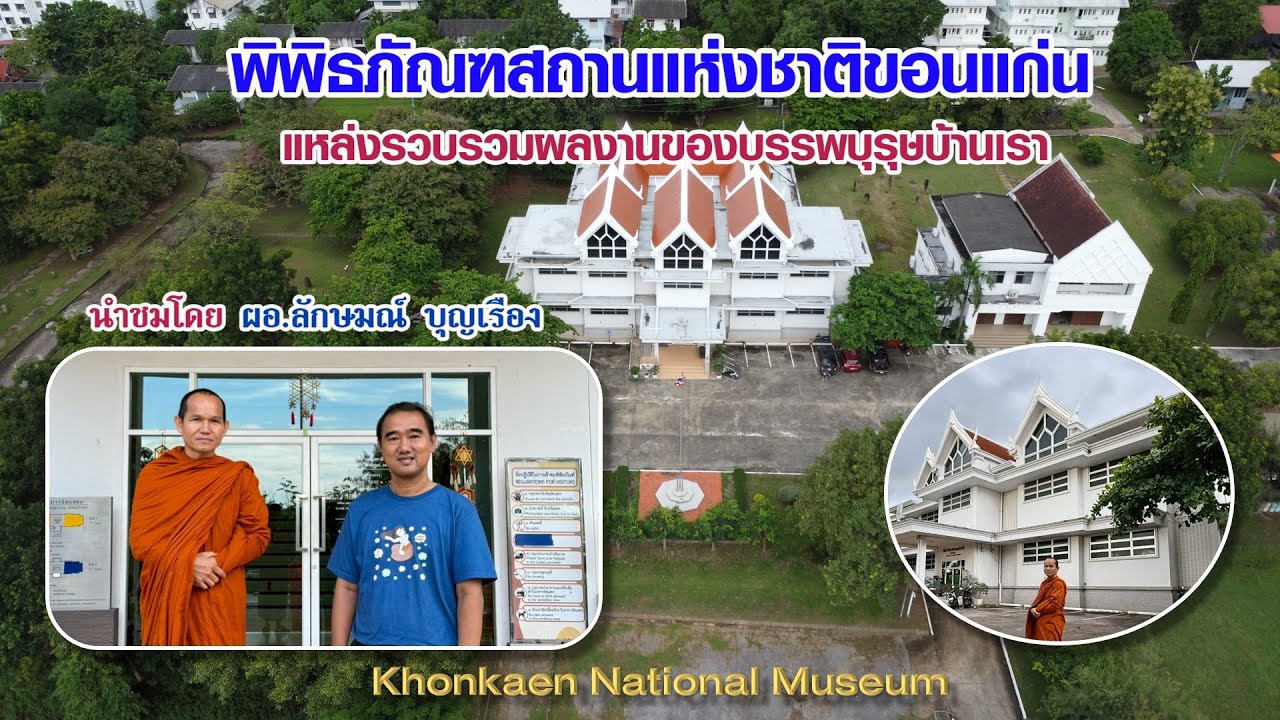
Khon Kaen National Museum

Open Days: Wednesday – Sunday; Closed on Monday, Tuesday, and Public Holidays
Opening Hours: 09.00 – 16.00
Khon Kaen National Museum is one of the most important cultural learning centers in Khon Kaen Province and Upper Northeastern Thailand. Located at 193 Behind the Government Center Road, Nai Mueang Subdistrict, Mueang Khon Kaen District, the museum presents the story of the northern Isan region through geography, geology, history, archaeology, Buddhist art, local culture, folk wisdom, and ethnology. For foreign travelers who want to understand Khon Kaen beyond shopping malls, city streets, and local food, this museum is one of the best places to begin.
The museum is especially valuable because it explains the development of Isan in a structured and accessible way. Visitors can see how the geography of the Khorat Plateau, ancient settlements, burial traditions, religious beliefs, Dvaravati culture, Khmer or Lopburi influence, Lan Xang art, Rattanakosin history, and local Isan ways of life are connected. Instead of presenting isolated artifacts, the museum helps visitors understand how people lived, worshipped, built communities, made tools, created art, and passed on cultural knowledge over many centuries.
Khon Kaen National Museum is not just a quiet building filled with old objects. It is a gateway into the cultural landscape of Upper Northeastern Thailand. Its collections include sandstone sema boundary stones, stone sculptures, votive tablets, Buddha images, Hindu and Mahayana Buddhist figures, pottery, traditional tools, and everyday objects used by local communities. These exhibits show that Isan has long been a region of cultural exchange, connecting Thailand with the Mekong Basin, India, Khmer civilization, Lao culture, and other parts of Southeast Asia.
The history of the museum began in 1967, when the Fine Arts Department started construction to create a place for collecting, preserving, and displaying antiquities and art objects that represent the national cultural heritage of Upper Northeastern Thailand. Between 1968 and 1969, funds were allocated for equipment and construction. The permanent exhibition was completed in 1972, and the museum was officially opened on 20 December 1972 by His Majesty King Bhumibol Adulyadej, accompanied by the Crown Prince at that time. This royal opening marked the museum as a significant cultural institution for the region.
After its opening, the museum continued to develop. Several improvements were made to its exhibition buildings, office areas, meeting rooms, storage facilities, information services, and landscape. Important renovation periods included 1990, 1992, 1993, 1998, 2010, and 2012. These updates helped transform the museum into a more complete center for public education, cultural tourism, and heritage conservation. The exhibitions were designed not only to show beautiful artifacts but also to explain their historical context, original locations, artistic meanings, and relationships with local communities.
The museum’s main narrative begins with geography and geology. This opening section helps visitors understand why people settled in this part of northeastern Thailand. The landscape, water sources, soil conditions, and natural resources all shaped the ways ancient communities lived. From there, the exhibition moves into the prehistoric period, showing stone tools, metal tools, pottery, burial evidence, cave art, and archaeological sites such as Ban Sang Du, Non Nok Tha, Non Chai, Ban Non Mueang, and Ban Chiang. This section is important because it shows that Isan has a long and continuous human history.
The prehistoric displays help visitors see that ancient Isan communities were skilled, adaptive, and socially organized. Pottery, tools, and burial evidence reveal details about technology, food preparation, rituals, and social beliefs. These objects may appear simple at first, but each one provides clues about how people lived thousands of years ago. For foreign travelers, this section offers a clear introduction to the deep archaeological roots of northeastern Thailand before the rise of later kingdoms and religious cultures.
The next major theme is the Dvaravati period, which played an important role in the cultural development of the Isan region. The museum presents Dvaravati culture through architecture, inscriptions, stucco sculpture, religious beliefs, sandstone sema boundary stones, votive tablets, and objects from ancient sites such as Mueang Fa Daet Song Yang in Kalasin Province. The sema stones are among the museum’s most important highlights. These large sandstone markers were used to define sacred Buddhist spaces, and many of them were carved with scenes from the life of the Buddha or Jataka stories.
The sandstone sema stones at Khon Kaen National Museum deserve careful attention. They are not merely boundary markers; they are visual texts that communicate religious stories and ethical teachings. Important examples include sema stones carved with the story of Pimpa Pilap, the scene of Prince Rahula requesting his inheritance, Kulavaka Jataka, and Vessantara Jataka. These carvings show how Buddhist teachings were translated into local artistic forms. They also reveal the craftsmanship, faith, and cultural imagination of communities in ancient northeastern Thailand.
Another important section focuses on Khmer or Lopburi cultural influence in Isan. This part of the museum displays stone sculptures and religious figures connected with Hinduism, Mahayana Buddhism, and local belief systems. Important objects include Vajradhara, a Bayon-style figure; a Naga-protected Buddha image; a Shiva sculpture; Avalokitesvara; and Vishnu riding Garuda. These objects show how Isan was connected to wider religious and political networks in mainland Southeast Asia. They also demonstrate how local communities received and adapted artistic styles from larger cultural centers.
The museum also presents Lan Xang and Rattanakosin-period history, helping visitors understand the later cultural layers of the region. Buddha images, religious art, household objects, and historical materials show how Isan maintained connections with the Mekong world while also becoming part of the Thai state. The exhibition on the history of Khon Kaen City explains the establishment of the city, relocation of settlement centers, and the relationship between Khon Kaen and the central authority in Bangkok. This section is especially useful for travelers who want to understand the modern city through its historical foundations.
For many visitors, the Isan folk culture section is one of the most relatable parts of the museum. It presents local communities, important traditions, the Silk Festival, the Phuk Siao friendship ceremony, Isan music, pong lang, traditional houses, local textiles, spinning tools, kitchen equipment, fishing tools, and farming tools. These displays bring the museum closer to everyday life. They show how culture is not limited to temples and ancient monuments but is also found in food, music, textiles, agriculture, family life, and local wisdom.
The museum’s permanent exhibition is divided into three main parts. The first part is the front exhibition building, covering both the lower and upper floors. It presents geography, geology, archaeological evidence, historical development, settlement patterns, social organization, religion, artistic influences, and the growth of ancient cities and communities in northeastern Thailand. This section is the best starting point because it provides the historical framework needed to understand the rest of the museum.
The second part is the rear exhibition building. This area displays antiquities and art objects, especially sema stones and stone sculptures. It also presents local traditions, ways of life, beliefs, household tools, and folk wisdom of communities in northeastern Thailand. This section is particularly important because it connects monumental religious art with everyday culture. Visitors can move from sacred stone carvings to objects related to farming, cooking, textile production, and community rituals, creating a fuller picture of Isan life.
The third part is the sema storage building and outdoor exhibition area. This area displays sema stones, inscribed sema stones, sandstone sculpture fragments, and sandstone architectural elements found in Upper Northeastern Thailand. The outdoor and storage sections are valuable because many of the objects are larger and more architectural in character. They help visitors imagine the scale of ancient religious spaces and the role that stone monuments played in Buddhist and local sacred landscapes.
Inside the main museum building, the exhibition is arranged into several important rooms. These include the Prehistoric Room on the first floor, the Dvaravati History Room on the first floor, the Lopburi History Room on the second floor, the Lan Xang History Room on the second floor, the Rattanakosin and Khon Kaen History Room on the second floor, the stone sculpture and sema gallery along the exhibition balcony, and the Isan Folk Art and Culture Room on the first floor in the rear west wing. Each room represents a different layer of the region’s cultural development.
Travelers who are interested in Buddhist art should spend extra time with the sema stones. The carved panels show Buddhist narratives in a local visual language that is both simple and powerful. The scenes are not only artistic works but also evidence of how Buddhism was taught, remembered, and localized in ancient Isan. The stone surface, carving technique, symbolic gestures, and narrative composition all help visitors understand how religious knowledge was communicated before modern books and classrooms became common.
Travelers interested in urban history should focus on the Khon Kaen history section. Today, Khon Kaen is known as a major city with universities, hospitals, shopping centers, government offices, and transport links. The museum shows that the city’s importance is not only modern. Its historical development involved settlement changes, administrative relationships, and the gradual rise of Khon Kaen as a regional center. Seeing this section before exploring the city helps visitors understand Khon Kaen with more depth.
The folk culture displays are also highly recommended for foreign travelers because they explain everyday Isan life in a way that is easy to connect with. Textiles, weaving tools, rice-farming equipment, fishing tools, kitchens, musical instruments, and traditional houses all show how people adapted to their environment and built community identity. These displays help visitors understand why Isan culture remains strong, expressive, and distinct within Thailand.
Families with children can enjoy the museum as an educational stop. The objects are real, tangible, and visually engaging. Children can learn that history is not only found in textbooks but also in pottery, stone tools, carved boundary stones, Buddha images, musical instruments, and farming equipment. Parents can make the visit more interactive by asking simple questions, such as what a tool might have been used for, why boundary stones were important, or how ancient people made and decorated pottery.
The atmosphere of Khon Kaen National Museum is calm and suitable for slow travel. It is located in the government center area and not far from Bueng Thung Sang. Visitors can explore the museum in the morning or afternoon, then continue to nearby restaurants, Khon Kaen City Pillar Shrine, Bueng Kaen Nakhon, Phra Mahathat Kaen Nakhon at Wat Nong Waeng, or Ton Tann Market. This makes the museum easy to include in a half-day or full-day cultural itinerary within Khon Kaen city.
Visitors should allow about 2 to 3 hours for a meaningful visit. A quick walk may be enough for basic sightseeing, but the museum rewards careful reading and observation. Many objects contain information about where they were found, what period they belong to, what material they are made from, and how they relate to religion or local life. Reading the labels and moving through the rooms in order will make the experience much more rewarding.
Before visiting, it is useful to wear comfortable shoes and prepare enough time. Photography should be done only where allowed, and visitors should avoid using flash in restricted areas. As with all national museums, artifacts should never be touched. Many objects are hundreds or even more than a thousand years old, and respectful behavior helps protect them for future generations. Quiet observation also allows other visitors to enjoy the museum’s peaceful atmosphere.
Getting There is easiest by private car, rental car, taxi, local transport, or ride-hailing service from central Khon Kaen. The museum is located on Behind the Government Center Road, close to Kasikorn Thung Sang Road and the Fine Arts Office 8 area. From Khon Kaen railway station, bus terminal, central shopping area, or city hotels, visitors can reach the museum conveniently by local transport. Those driving should check the route in advance and allow extra time on weekdays because the surrounding area includes government offices.
Travelers arriving from Bangkok can reach Khon Kaen by plane, train, bus, or private car. From Khon Kaen Airport, the drive to the museum usually takes about 20 to 30 minutes depending on traffic. From the train station or bus terminal, taxis and local transport are available. Because the museum is located inside the city area, it can easily be used as the first cultural stop before continuing to temples, lakes, markets, and restaurants around Khon Kaen.
A good half-day itinerary begins with Khon Kaen National Museum in the morning, followed by lunch near the government center or Thepharak Road. After that, visitors can continue to Bueng Thung Sang, the City Pillar Shrine, Bueng Kaen Nakhon, and Phra Mahathat Kaen Nakhon at Wat Nong Waeng in the late afternoon. This route combines history, local food, city landmarks, public parks, and religious architecture in a practical and enjoyable way.
For travelers with more time, the museum can become the starting point for a wider cultural journey through Isan. After learning about Dvaravati, Khmer, Lan Xang, and local Isan culture inside the museum, visitors can continue to cultural sites in Khon Kaen, Maha Sarakham, Kalasin, Udon Thani, and nearby provinces. The museum helps provide the background knowledge needed to appreciate these places more deeply.
Khon Kaen National Museum is therefore one of the most meaningful places to visit in Khon Kaen. It is suitable for history lovers, cultural travelers, students, families, and foreign visitors who want to understand the roots of northeastern Thailand. The museum brings together archaeology, art, religion, local life, and city history in one accessible location, making it a valuable stop for anyone who wants to experience Isan with context and depth.
| Name | Khon Kaen National Museum |
| Thai Name | พิพิธภัณฑสถานแห่งชาติขอนแก่น |
| Location | Behind the Government Center Road, Nai Mueang Subdistrict, Mueang Khon Kaen District, Khon Kaen Province |
| Address | 193 Behind the Government Center Road, Nai Mueang Subdistrict, Mueang Khon Kaen District, Khon Kaen 40000, Thailand |
| Coordinates | 16.445839, 102.838553 |
| Highlights | A major cultural learning center featuring archaeology, history, sandstone sema boundary stones, stone sculptures, Isan folk culture, and the history of Khon Kaen |
| History | Construction began in 1967. The permanent exhibition was completed in 1972, and the museum was officially opened on 20 December 1972. |
| Name Origin | The museum is a national museum for Khon Kaen Province, established to collect, preserve, and display cultural heritage from Upper Northeastern Thailand. |
| Distinctive Features | The exhibition covers geography, geology, prehistory, Dvaravati culture, Lopburi or Khmer influence, Lan Xang art, Rattanakosin history, Khon Kaen city history, and Isan folk culture. |
| Key Evidence | Carved sandstone sema stones, Vajradhara, Naga-protected Buddha image, Shiva sculpture, Avalokitesvara, Vishnu riding Garuda, votive tablets, pottery, and Isan folk tools |
| Main Areas / Zones | Part 1: Front exhibition building, lower and upper floors, presenting geography, geology, archaeology, historical development, settlement, religion, artistic influence, and ancient communities in northeastern Thailand Part 2: Rear exhibition building, displaying antiquities, sema stones, stone sculptures, traditions, ways of life, beliefs, folk tools, and local wisdom of northeastern communities Part 3: Sema storage building and outdoor exhibition area, displaying sema stones, inscribed sema stones, sandstone sculpture fragments, and sandstone architectural elements |
| Main Exhibition Rooms | Prehistoric Room, Dvaravati History Room, Lopburi History Room, Lan Xang History Room, Rattanakosin and Khon Kaen History Room, Stone Sculpture and Sema Gallery, and Isan Folk Art and Culture Room |
| Travel Information | Accessible by private car, rental car, taxi, local transport, or ride-hailing service from central Khon Kaen via Behind the Government Center Road or Kasikorn Thung Sang Road |
| Current Status | Open to visitors according to the museum’s official operating schedule |
| Open Days | Wednesday – Sunday; Closed on Monday, Tuesday, and Public Holidays |
| Opening Hours | 09.00 – 16.00 |
| Fees | Thai Visitors: 20 Baht / Foreign Visitors: 100 Baht |
| Facilities | Parking area, restrooms, guided-visit and educational activity services, educational documents, and surrounding areas for relaxation during available service hours |
| Caretaker | Khon Kaen National Museum, Fine Arts Department, Ministry of Culture |
| Main Contact Number | 043-246-170 |
| nm_khonkaen@finearts.go.th | |
| Official Website / Official Page | Fine Arts Department Website: finearts.go.th/khonkaenmuseum Facebook: Khon Kaen National Museum พิพิธภัณฑสถานแห่งชาติ ขอนแก่น |
| Nearby Tourist Attractions | 1. Bueng Thung Sang, about 1 km 2. Khon Kaen City Pillar Shrine, about 2 km 3. Khon Kaen Walking Street, about 2 km 4. Central Khon Kaen, about 2 km 5. Bueng Kaen Nakhon, about 4 km 6. Phra Mahathat Kaen Nakhon at Wat Nong Waeng, about 5 km 7. Ton Tann Market, about 5 km |
| Nearby Restaurants | 1. Coffee Carp Khon Kaen, about 1 km, Tel. 081-380-2188 2. Captain Pizza Government Center Branch, about 1 km, Tel. 064-784-0901 3. Khao Hor Took Jai Behind Government Center Road, about 1 km, Tel. 063-732-2027 4. Larb Koi Soi Nana Government Center Branch, about 2 km, Tel. 081-717-1795 5. Wanida Rosewises Khon Kaen, about 3 km, Tel. 043-225-004 6. Krua Supanniga By Khun Yai Somsie, about 6 km, Tel. 063-424-1665 |
| Nearby Accommodations | 1. Romantic Khon Kaen Hotel, about 1 km, Tel. 061-929-8484 2. Avani Khon Kaen Hotel & Convention Centre, about 1 km, Tel. 043-209-888 3. Piman Garden Boutique Hotel, about 1 km, Tel. 043-334-111, 089-276-7111 4. OMG Hotel Khon Kaen, about 2 km, Tel. 043-239-060, 085-681-3131 5. Le Cassia Hotel, about 2 km, Tel. 043-333-666, 043-242-222 |
Frequently Asked Questions (FAQ)
Q: Where is Khon Kaen National Museum located?
A: Khon Kaen National Museum is located at 193 Behind the Government Center Road, Nai Mueang Subdistrict, Mueang Khon Kaen District, Khon Kaen Province, Thailand.
Q: What are the opening days and hours of Khon Kaen National Museum?
A: The museum is open from Wednesday to Sunday, from 09.00 to 16.00. It is closed on Monday, Tuesday, and public holidays.
Q: How much is the admission fee?
A: The admission fee is 20 Baht for Thai visitors and 100 Baht for foreign visitors.
Q: What can visitors see inside Khon Kaen National Museum?
A: Visitors can see exhibitions on geography, geology, prehistory, Dvaravati culture, Lopburi or Khmer influence, Lan Xang art, Rattanakosin history, Khon Kaen city history, sandstone sema stones, stone sculptures, and Isan folk culture.
Q: How long should travelers spend at the museum?
A: Travelers should allow about 2 to 3 hours to explore the main exhibition buildings, sema storage area, and outdoor displays at a comfortable pace.
Q: Is Khon Kaen National Museum suitable for foreign travelers?
A: Yes. It is one of the best places for foreign travelers to understand the history, archaeology, religion, art, and local culture of northeastern Thailand.
Q: How can visitors get to Khon Kaen National Museum?
A: Visitors can travel by private car, rental car, taxi, local transport, or ride-hailing service from central Khon Kaen via Behind the Government Center Road or Kasikorn Thung Sang Road.
Q: What attractions can be visited after Khon Kaen National Museum?
A: Nearby places include Bueng Thung Sang, Khon Kaen City Pillar Shrine, Khon Kaen Walking Street, Bueng Kaen Nakhon, Phra Mahathat Kaen Nakhon at Wat Nong Waeng, and Ton Tann Market.
 Category: ●Art, Culture and Heritage
 Group: ●Museums
Last Update : 4 MonthAgo
 Last Update : 4 MonthAgo
 Click to Access the Navigation Map GPS
Khon Kaen National Museum Map
Recommend

 Historical Sites and Monuments(7)
 Landmarks and Memorials(3)
 Art, Craft Centres, Tradition(2)
Museums(4)
 Educational Places
 Museum for Study(2)
 Places of Worship
 Temple(27)
 Other Sacred Sites(5)
 Suburban Living
 Village, Community(3)
 Local Market(1)
 Nature and Wildlife
 National Parks and Marine Reserves(5)
 Mountain (Doi)(1)
 Dam, Reservoir, Lake(4)
 Waterfalls(8)
 Caves(9)
 River, Canal(10)
 Bays and Beaches(3)
 Islands(1)
 Other natural attractions(5)
 Entertainment and Agricultural
 Zoos and Aquariums(2)
 Animal camps and shows(2)
 Farms, Parks and Ecotourism(7)
 Waterpark(3)
 Travel Articles, Recipes
 Travel Review, Food Review(1)


