
lovethailand home >North Travel Attractions >Chiang Rai Travel Attractions >Mae Sai >Pong Pha > Tham Luang–Khun Nam Nang Non National Park
TL;DR: Tham Luang–Khun Nam Nang Non National Park, Chiang Rai attractions : Nature and Wildlife, National Parks and Marine Reserves.
Tham Luang–Khun Nam Nang Non National Park
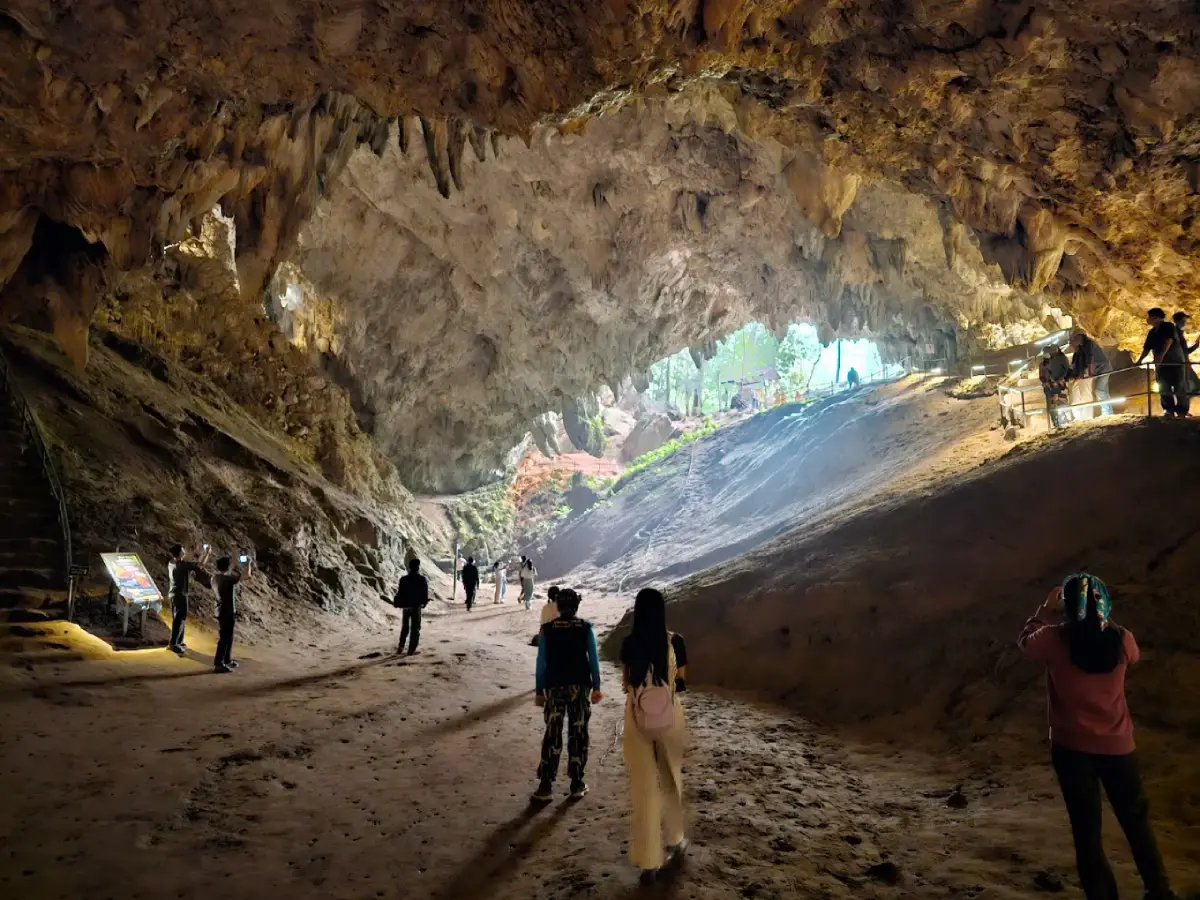
Open Days: Daily in designated visitor areas when access is authorized. Seasonal conservation closures and cave-specific restrictions apply.
Opening Hours: 08:30–16:30 for general visitor services.
Tham Luang–Khun Nam Nang Non National Park, Chiang Rai Province, Thailand, is both a remarkable natural attraction and an important landmark in the country's contemporary history. Located in Pong Pha Subdistrict, Mae Sai District, Chiang Rai Province, the area is known for its extensive limestone cave system, the Doi Nang Non mountain range, watershed forests, emerald-colored natural pools and memorials dedicated to the extraordinary rescue of 13 members of the Wild Boars youth football team in 2018. That event brought Tham Luang international recognition and transformed this northern Thai landscape into a place associated with geology, rescue operations, international cooperation and the value of human life.
The principal tourism areas comprise Tham Luang Cave and Khun Nam Nang Non, each offering a different natural environment. Tham Luang contains an extensive limestone cave system with underground passages and watercourses, while Khun Nam Nang Non features a forested watershed, a natural emerald pool and nature-study trails. Both areas form part of the same mountain environment and underground water system. Visiting them provides an opportunity to appreciate not only their scenery but also the processes that created the surrounding landscape.
The mountain range resembles the outline of a woman lying on her back. From the surrounding plains, sections of the ridges appear to form a head, body and legs. This unusual shape gave rise to the name Doi Nang Non, or the Mountain of the Sleeping Lady, and inspired local legends about a princess whose body became the mountain. The relationship between the landscape and these stories gives the destination both geological and cultural significance.
The protected area is administered as Tham Luang–Khun Nam Nang Non National Park (Under Establishment) by Thailand's Department of National Parks, Wildlife and Plant Conservation. Its visitor and administrative address is 345, Pong Pha Subdistrict, Mae Sai District, Chiang Rai Province. The area was previously managed as Tham Luang–Khun Nam Nang Non Forest Park before progressing toward national park designation. Its management responsibilities include cave and ecosystem conservation, watershed protection, visitor safety and preservation of places associated with the historic 2018 rescue.
History of Tham Luang–Khun Nam Nang Non begins with the protection of the Doi Nang Non forest landscape, which has been recognized as a significant natural area of Mae Sai District for decades. The Royal Forest Department established Tham Luang–Khun Nam Nang Non Forest Park on October 1, 1986, to conserve the cave system and surrounding forests. Published information on the original forest park describes an area of approximately 12,000 rai within the Doi Nang Non National Reserved Forest, characterized by interconnected limestone mountains.
Before the Wild Boars rescue, Tham Luang was already known to residents of Chiang Rai and travelers passing through Mae Sai as a natural attraction. The cave contained large chambers, winding passages, stalactites, stalagmites and limestone formations created by natural processes over immense periods of time. The nearby Khun Nam Nang Non area offered clear water and shaded forests suitable for nature observation and outdoor recreation.
Tham Luang became the center of worldwide attention in June 2018 when 12 members of the Wild Boars youth football team and their assistant coach entered the cave and were unable to leave. Heavy rainfall caused water to enter the cave system and flood several sections of the route. A major search and rescue operation followed, involving Thai authorities and specialists from numerous countries.
The search faced extraordinary difficulties, including rising water levels, complete darkness, narrow passages, strong currents and the complexity of the cave network. Rescue personnel coordinated diving operations, water pumping, the investigation of shafts and cave openings, oxygen supplies, equipment transportation and medical and logistical support.
On July 2, 2018, two British cave divers located all 13 members of the group alive deep inside the cave after they had been missing for several days. Their discovery brought enormous relief to the families and people following the operation worldwide. However, locating the group was only one stage of the mission. Bringing everyone back through flooded passages remained an extremely difficult challenge.
The rescue required careful planning to move the trapped group through underground chambers and submerged sections. Teams managed diving equipment, established guide lines and organized assistance along different parts of the route. Medical teams and support personnel also prepared outside the cave to receive those brought to safety.
Lieutenant Commander Saman Kunan, widely known in Thailand as Ja Sam, was a former Thai Navy SEAL who volunteered to support the operation. He died during a mission inside the cave on July 6, 2018. His death became a lasting symbol of the sacrifices made by rescue personnel, and a memorial in the national park commemorates his contribution.
The extraction of the Wild Boars team took place between July 8 and July 10, 2018, through a coordinated operation involving divers, medical specialists, rescue teams and support personnel. All 13 members were successfully brought out by July 10. The operation attracted worldwide media attention and became one of the most widely recognized cave rescues in modern history.
Following the rescue, the cave area underwent restoration and improvements to visitor management. These efforts emphasized preservation of the cave environment, protection from flooding hazards, development of memorial spaces and interpretation of the lessons learned during the rescue. Later, cave access was organized according to the different risks associated with particular chambers, separating ordinary sightseeing from specialist-led cave exploration.
Official Status of Tham Luang–Khun Nam Nang Non remains that of a national park under establishment. This distinguishes the present administrative arrangement from the original forest park and from national parks already fully declared under the relevant legislation. The managing authorities control access under protected-area regulations and issue seasonal opening or closure notices according to weather and safety conditions.
In 2026, the park announced a complete closure of visitor and camping areas from September 1 through September 30 to allow environmental recovery and reduce rainy-season risks. Seasonal closures are particularly important in a landscape shaped by underground water and sensitive forest ecosystems. Published general visitor service hours are 08:30–16:30, while access to individual cave passages depends on specific authorization.
Tham Luang Cave is an extensive limestone cave system with a published surveyed passage length of approximately 10.3 kilometers. Its interior contains broad chambers, narrower passages, cavities, crawl spaces and underground streams connected with the water system of Doi Nang Non. Changes in the elevation of the cave floor leave some sections above water during dry periods, while other passages can become flooded during the rainy season.
The complexity of the cave developed as water moved through fractures and openings in limestone over long geological periods. Slightly acidic water slowly dissolved the rock, enlarging cracks into underground channels and chambers. As the process continued, the cave acquired an irregular network of spaces. Some chambers have high ceilings and broad floors, while other sections are narrow or contain steep rock surfaces.
Stalactites and Stalagmites form through the deposition of calcium carbonate carried by water moving through limestone. When water drips from the cave ceiling, mineral deposits can accumulate downward to form stalactites. Droplets reaching the ground can gradually build stalagmites upward. This extremely slow process creates formations that record aspects of the cave's natural development.
Some cave walls display layered textures and mineral surfaces that reflect light. Where illumination is permitted, visitors can observe details of the rock and patterns produced by water movement. The cave environment also differs from the outside in temperature, humidity and air circulation, making it a specialized habitat that requires careful protection.
Chamber 1 of Tham Luang is the area nearest the cave entrance and has been used as a visitor learning space when access is permitted. It provides an introduction to the cave entrance, rocky floor and underground conditions. Earlier visitor access descriptions identified approximately 200 meters between the entrance and the first chamber, distinguishing this introductory area from more demanding guided exploration deeper inside.
The entrance and first chamber also have historical significance because they help visitors understand the real physical setting of the 2018 rescue. Equipment, personnel and essential supplies had to enter the underground system through this general area. Looking from daylight into the cave illustrates the contrast between the outside environment and passages requiring artificial lighting.
Chambers 2 and 3 of Tham Luang have previously been included in specialist-guided cave activities. The routes contain narrow spaces, steep rocks and sections requiring assistance or technical equipment. Visitor numbers were controlled to protect participants and minimize impacts on the cave environment.
When guided cave exploration to Chambers 2 and 3 was introduced in December 2023, the announced activity price was THB 950 for Thai visitors and THB 1,500 for foreign visitors. Participation was limited to small groups and required advance booking. These charges were for a special activity involving expert guides and safety equipment, not a general national park entrance fee. The availability of this activity and the applicable price depend on subsequent park arrangements.
Exploring deeper chambers presents significant challenges because a route that is dry and passable at one time can become flooded after heavy rain. Access requires evaluation of water levels, weather, ranger preparedness and participants' physical capabilities. Following park safety rules is essential for any activity involving the deeper cave system.
Khun Nam Nang Non is a well-known watershed attraction featuring an emerald-colored natural pool and shaded forest. Located in Pong Pha Subdistrict, Mae Sai District, it belongs to the same broader limestone landscape as Tham Luang. Underground water and springs are associated with rainfall collected across the Doi Nang Non mountains. The pool's appearance changes with sunlight, depth, sediment and surrounding vegetation.
The Emerald Pool at Khun Nam Nang Non is known for clear green water and reflections of surrounding trees. When the surface is calm, the sky and forest can appear sharply reflected in it. Changes in sunlight can make the color seem lighter or darker at different times, giving the area a varied atmosphere throughout the day.
The pool's emerald appearance is influenced by the physical characteristics of the water, the bottom of the pool, the scattering of light and surrounding environmental conditions. Its color is not equally intense every day. Rainfall and sediment movement can affect the water's clarity and appearance, making protection of the watershed directly relevant to the beauty of the site.
The Khun Nam Nang Non Nature Study Area provides opportunities to learn about forests, freshwater and organisms that depend on moist habitats. Some parts of the landscape have wetland-like or waterlogged conditions, supporting plants and animals different from those found on drier slopes. Following designated paths allows visitors to observe the relationships among water, soil and vegetation without entering remote forest areas.
One animal associated with nature interpretation in the area is a small freshwater crab known locally as Pu Dok Kho Daeng. The presence of aquatic and moisture-dependent organisms demonstrates that the watershed is more than a scenic pool. It provides specialized habitats and forms part of a natural ecosystem requiring conservation.
The Tham Liang Pha–Tham Phaya Nak Nature Trail is another route featured in the park's tourism information. It connects forest environments and limestone landscapes with opportunities to learn about natural caves. The surrounding terrain demonstrates relationships among rock surfaces, fractures, streams and plants adapted to differing moisture conditions.
Walking through limestone environments requires visitors to remain on marked routes because rock surfaces can be uneven and slippery when wet. Staying on designated paths also helps protect small plants and animals living among rocks or beneath fallen leaves. Visitors should walk carefully and respect ranger guidance throughout the experience.
The Limestone Geology of Doi Nang Non explains the formation of both Tham Luang and Khun Nam Nang Non. Limestone can slowly dissolve when exposed to slightly acidic water. Over long periods, water moving through fractures enlarges underground openings and passages. This process creates karst landscapes featuring caves, sinkholes, springs and limestone cliffs.
Underground water systems are closely connected with seasonal rainfall. During heavy rain, water can enter fractures and underground channels rapidly. Some caves consequently experience seasonal flooding, and passages that are accessible in the dry season can become active watercourses during wet weather. Understanding this process is essential to managing visitor safety at Tham Luang.
Underground water levels depend not only on rain falling near the cave entrance but also on precipitation across the wider mountain catchment. Water may enter the system at higher elevations and emerge far from its original entry point. Accurate safety decisions therefore require weather information and water-level monitoring rather than observations of the sky at the cave entrance alone.
Conservation of Tham Luang Cave includes protecting stalactites and stalagmites, managing visitor numbers, maintaining underground water systems and controlling waste from tourism. Cave environments change slowly, and damage to mineral formations that took centuries or longer to develop cannot be repaired quickly. Visitor access must therefore remain within areas managed for safety and conservation.
Lighting and equipment used inside the cave require appropriate safeguards. Touching or climbing on mineral formations can damage their surfaces and interfere with natural deposition. Waste left underground may contaminate water systems. Protecting cave walls, floors and formations is therefore fundamental to responsible cave tourism.
The Memorial to Lieutenant Commander Saman Kunan is an important commemorative landmark within the park. It honors Ja Sam, who lost his life supporting the 2018 rescue. More than a photography location, the memorial offers an opportunity to remember the sacrifices made by him and the many people who worked to save the trapped team.
On June 23, 2025, an event marking the seventh anniversary of the Tham Luang rescue was held near the memorial. Activities included a Buddhist merit-making ceremony attended by 99 monks and novices and commemorations honoring those involved in the operation. The event demonstrates that Tham Luang remains an important place of collective memory for Chiang Rai and Thailand.
The Shrine of the Sleeping Lady and Local Beliefs form another cultural dimension of the area. Local stories describe a princess who became the Doi Nang Non mountain, and spiritual traditions are associated with the landscape. These legends give meaning to the mountain's unusual outline alongside geological explanations for its limestone formations.
Versions of the Sleeping Lady legend tell of a young woman who experienced tragic love and died, after which her body became the mountains visible today. Details vary among local traditions, but the central theme explains the shape of the range, resembling a reclining woman, and illustrates how communities historically interpreted distinctive natural features.
Exploring the History of the Rescue can begin in designated visitor and interpretation areas before continuing to the memorial and authorized viewpoints near the cave entrance. This approach helps visitors understand the sequence of the 2018 events, from the initial search and establishment of a rescue command operation to the mobilization of specialists and the successful extraction of the team.
The historical significance of the operation lies in its remarkable cooperation among military personnel, police officers, divers, rescue teams, doctors, engineers, volunteers and local residents. The rescue was not the achievement of a single individual. It was the result of specialized knowledge, resource coordination and teamwork under extraordinarily difficult conditions.
The Tham Luang story also offers lessons in crisis communication, coordination among organizations and decision-making under severe time constraints. The involvement of specialists from several countries demonstrates how expertise across different disciplines can be brought together to address complex emergencies.
Educational Visits for Families are well suited to the park's general visitor areas because natural science and history can be explored in one trip. Children can learn about limestone, caves, groundwater, watershed forests and teamwork through the history of the rescue. Adults can enjoy the scenery and managed walking routes without entering technically demanding cave passages.
General visitor facilities include parking areas, toilets, shops and designated walking areas where services are operating. The availability of specific facilities depends on current management arrangements. Organizing access for different visitor groups helps reduce congestion and allows people to learn about the site without exposing themselves to the risks associated with deeper cave exploration.
Winter at Tham Luang–Khun Nam Nang Non brings comparatively cooler weather and less rainfall than the wet season. Forests and limestone mountains provide a pleasant setting for outdoor sightseeing. Underground water conditions still depend on previous rainfall, so cave access remains subject to assessment. During suitable periods, visitors can enjoy several forms of nature observation and historical learning in authorized areas.
Summer Around Doi Nang Non brings warmer daytime temperatures and drier conditions in some areas. The mountain landscape and forests look different from their winter appearance. Outdoor visitors should consider heat and strong sunlight, while conservation personnel also focus on forest-fire risks and protection of freshwater sources.
The Rainy Season at Tham Luang–Khun Nam Nang Non requires the highest level of safety management. Limestone mountains can collect rainfall and transfer water into underground passages rapidly. Rising water may block cave routes, while outdoor paths can become slippery or experience flooding. Closing some or all visitor areas is therefore an important measure for protecting visitors and allowing environmental recovery.
Rainy-season restrictions serve conservation as well as public safety. Saturated trails and wet forest soils can be damaged by repeated trampling. Entering caves during periods of rising water can be extremely dangerous. Protected-area management must therefore consider the condition of the natural environment as well as the safety of visitors.
Getting to Tham Luang–Khun Nam Nang Non National Park is possible via Highway 1 toward Mae Sai District in Chiang Rai Province. From the main highway, local roads lead into Pong Pha Subdistrict, following signs for Tham Luang and Khun Nam Nang Non. The attractions lie west of the main route approaching Mae Sai. Private vehicles or local transport services allow visitors to travel between the different visitor areas.
Travelers starting in Chiang Rai city can follow Highway 1 through Mae Chan District toward Mae Sai before turning into Pong Pha. The route passes communities, agricultural areas and gradually more visible mountain scenery. The distinctive reclining-woman outline of Doi Nang Non can be seen from several points along the highway.
Mae Sai also provides connections to nearby attractions such as Wat Tham Pla, Doi Pha Mee, Doi Pha Hee and the Doi Tung Development Project. These destinations offer different landscapes and activities. Using Mae Sai as an accommodation base allows travelers to explore natural attractions and cultural communities in the northernmost part of Chiang Rai Province.
Doi Pha Mee is a mountain community in Mae Sai District known for scenic viewpoints, coffee shops and Akha cultural traditions. The village lies among the mountains west of Mae Sai and can be connected with a visit to Tham Luang. The journey offers a contrast between the cave and groundwater environment and a highland community associated with locally grown coffee.
Doi Pha Hee is another mountain village recognized for Akha culture and locally produced coffee. Viewpoints overlook the surrounding hills, while coffee businesses use agricultural products from the area. Visiting Doi Pha Hee offers cultural experiences different from the geological and historical attractions at Tham Luang.
Wat Tham Pla is a Buddhist temple and natural attraction in Mae Sai District. Limestone mountains, caves and freshwater features are part of the temple environment. The site illustrates connections between religious traditions and limestone landscapes in northern Thailand. Visiting it provides an opportunity to compare natural cave settings while learning about the role of temples in local communities.
Wat Phra That Doi Tung and the Doi Tung Development Project are other important destinations in northern Chiang Rai. The temple is significant to Buddhism and the religious heritage of Lanna, while the development project offers educational attractions associated with community development, forest conservation and highland agriculture. These destinations can be connected with Tham Luang to create a varied journey through nature, history and community life.
Wat Phra That Doi Wao and Mae Sai Market are located in the Mae Sai town area. The temple stands on a hill overlooking the border town, while the market reflects Mae Sai's role as a commercial and community center near the international border. Although very different from the cave, both can be included in the same regional itinerary.
Accommodation in Pong Pha and Mae Sai includes small resorts, guesthouses, hotels and locally operated lodging along main roads and near the Doi Nang Non mountains. Visitors intending to see Tham Luang and Khun Nam Nang Non on the same day can stay in Pong Pha or Mae Sai. Those continuing toward Doi Tung or highland communities can choose accommodation suited to their onward route.
Restaurants Around Tham Luang and Mae Sai include northern Thai eateries, noodle shops, cafés and made-to-order restaurants in Pong Pha and along the main highway. Mae Sai's dining scene reflects the cultural diversity of the border region and Lanna food traditions. Visitors can eat in nearby communities after visiting the park or continue to mountain cafés at Doi Pha Mee or Doi Pha Hee.
Rules for Visiting Tham Luang Cave begin with respecting signs and ranger instructions. Visitors must not enter closed chambers, climb on or touch delicate mineral formations, or leave designated routes. Deeper cave exploration requires authorization, specialist guidance and approved equipment because the environment includes darkness, narrow passages and potentially rapid increases in water levels.
At Khun Nam Nang Non, visitors should protect the emerald pool and forest environment by keeping the area clean, avoiding contamination of the water and leaving wildlife undisturbed. Nature-study routes should be followed carefully to reduce damage to vegetation and avoid slipping on wet ground.
Visitors to the memorial should behave respectfully because it commemorates the sacrifices made during the 2018 rescue. Historical displays and designated photography areas can be enjoyed without disturbing commemorative events or other people paying their respects.
The Park's Importance to Local Communities includes both conservation and tourism. The limestone forests help collect and convey water while providing habitats for wildlife. Tourism creates economic opportunities for restaurants, accommodation providers and businesses in Pong Pha and Mae Sai. Protecting the environment is therefore connected with the natural resources and livelihoods of surrounding communities.
The Wild Boars rescue has also made Tham Luang an international symbol of cooperation, courage and the use of knowledge to protect human life. The story adds a profound historical dimension to the cave environment, allowing visitors to learn about geological processes and a remarkable human experience at the same location.
Tham Luang–Khun Nam Nang Non National Park in Chiang Rai Province is a destination of exceptional natural, historical and educational significance. Tham Luang illustrates the complexity of an extensive limestone cave system, while Khun Nam Nang Non offers a beautiful emerald pool and forest watershed. The Ja Sam memorial and rescue-related sites commemorate an event remembered around the world. Visiting with respect for nature, history and safety regulations helps preserve the importance of this remarkable place.
| Place Name | Tham Luang–Khun Nam Nang Non National Park (Under Establishment), Chiang Rai, Thailand |
| Address | 345, Pong Pha Subdistrict, Mae Sai District, Chiang Rai Province 57130, Thailand |
| Tham Luang Location Reference | 9VJ9+G5V, Pong Pha, Mae Sai District, Chiang Rai |
| Official Status | National Park Under Establishment |
| Managing Authority | Department of National Parks, Wildlife and Plant Conservation; Protected Areas Regional Office 15, Chiang Rai |
| Original Protected-Area Establishment | Tham Luang–Khun Nam Nang Non Forest Park, October 1, 1986 |
| Original Forest Park Area | Approximately 12,000 rai |
| Open Days | Daily in Authorized Visitor Areas, Subject to Seasonal Closures |
| General Opening Hours | 08:30–16:30 |
| 2026 Seasonal Closure | September 1–30, 2026, for All Tourism and Camping Areas |
| General Cave Visit | Earlier access arrangements allowed visits to the first chamber without a special guided-cave activity fee |
| Previously Announced Guided Cave Activity Fee | Thai Visitors: THB 950; Foreign Visitors: THB 1,500 per Person for Chambers 2–3, under the 2023 activity arrangements. Not a general park admission fee. |
| Park Contact Number | +66 61 606 5101 |
| Published Cave System Length | Approximately 10.3 km |
| Natural Characteristics | Limestone Mountains, Extensive Cave System, Underground Streams, Watershed Forests, Emerald Pool and Wetlands |
| Main Visitor Zones | 1. Tham Luang Visitor Area and Cave Entrance 2. Tham Luang Chamber 1 3. Chambers 2–3, Subject to Special Authorization 4. Lieutenant Commander Saman Kunan Memorial Area 5. Khun Nam Nang Non and Emerald Pool 6. Tham Liang Pha–Tham Phaya Nak Nature Trail |
| Main Landmarks | Tham Luang Cave, Khun Nam Nang Non, Emerald Pool, Ja Sam Memorial, Sleeping Lady Shrine and Nature Trails |
| Historical Significance | 2018 Rescue of 13 Members of the Wild Boars Youth Football Team |
| Rescue Completion Date | July 10, 2018 |
| Visitor Facilities | Ranger Contact Points, Parking, Toilets, Shops and Designated Visitor Walkways |
| Nearby Attractions | 1. Khun Nam Nang Non – Within the Protected Area 2. Doi Nang Non – Limestone Mountain Range Associated with Tham Luang 3. Wat Tham Pla – Pong Ngam Subdistrict, Mae Sai, Tel. +66 65 718 1344 4. Doi Pha Mee – Mae Sai District 5. Doi Pha Hee – Highland Community in Mae Sai District 6. Wat Phra That Doi Wao – Mae Sai Town 7. Wat Phra That Doi Tung – Mae Fa Luang District 8. Mae Fah Luang Garden and Doi Tung Royal Villa – Doi Tung Development Project |
| Restaurants and Cafés in the Surrounding Area | 1. Nam Ngiao Pa Lee – Khun Nam Nang Non Lane, Pong Pha, Tel. +66 86 430 2653 2. Phurada – Ban San Sai Pu Yi, Pong Pha, Tel. +66 83 463 6459 3. Bear House Cafe – Highway 1149, Pong Pha 4. Doi Pha Mee Coffee – Doi Pha Mee Village 5. Ozone Pha Mee – Doi Pha Mee Village |
| Accommodation in Pong Pha and Surrounding Areas | 1. Nang Non Mountain Resort – Ban San Sai Pu Yi, Pong Pha, Tel. +66 84 279 3417 2. Nang Non Phu View Resort – Pong Pha, Tel. +66 90 673 1158 3. Nang Non Camping Ville – Mae Sai District, Tel. +66 91 010 0153 4. Ban Tham Hill Farmhouse – Pong Pha Subdistrict 5. Hill Cave House – Pong Ngam Subdistrict, Tel. +66 61 294 4236 6. Natachapal – Pong Pha Subdistrict, Tel. +66 95 982 3294 |
| Getting There | Follow Highway 1 toward Mae Sai, then take the signed local roads in Pong Pha Subdistrict toward Tham Luang and Khun Nam Nang Non |
Frequently Asked Questions (FAQ)
Q: Where is Tham Luang–Khun Nam Nang Non National Park located?
A: The park is located at 345, Pong Pha Subdistrict, Mae Sai District, Chiang Rai Province, Thailand. Its major visitor attractions are Tham Luang Cave and Khun Nam Nang Non.
Q: What are the opening hours?
A: General published visitor service hours are 08:30–16:30 daily in authorized areas. Seasonal closures apply, and entry to individual cave chambers is controlled separately.
Q: When was the park closed in 2026?
A: The park announced the closure of all tourism and camping areas from September 1 through September 30, 2026, for environmental restoration and rainy-season safety.
Q: How much does it cost to enter Tham Luang?
A: Previous arrangements allowed visits to the first cave chamber without a special activity charge. Guided exploration of Chambers 2 and 3 was announced in 2023 at THB 950 for Thai visitors and THB 1,500 for foreign visitors. These were specialized activity fees, and current availability and pricing depend on park announcements.
Q: Why is Tham Luang historically significant?
A: Tham Luang was the site of the 2018 rescue of 13 members of the Wild Boars youth football team, including their assistant coach. All 13 were successfully brought out of the cave by July 10, 2018.
Q: What is special about Khun Nam Nang Non?
A: The area features a beautiful emerald-colored natural pool, watershed forests and nature-study routes associated with the limestone mountains of Doi Nang Non.
Q: Can visitors enter every chamber of Tham Luang?
A: No. Cave access is restricted for safety reasons. Deeper passages contain flooding hazards, narrow spaces and steep terrain. Visitors may enter only the sections authorized by park management, and specialist-guided access is required for certain chambers.
Q: What attractions are near Tham Luang?
A: Nearby destinations include Khun Nam Nang Non, Doi Pha Mee, Doi Pha Hee, Wat Tham Pla, Wat Phra That Doi Wao, Wat Phra That Doi Tung and Mae Fah Luang Garden.
 Category: ●Nature and Wildlife
 Group: ●National Parks and Marine Reserves
Last Update : 2 WeekAgo
 Last Update : 2 WeekAgo
 Click to Access the Navigation Map GPS
Tham Luang–Khun Nam Nang Non National Park Map
Recommend

 Art, Culture and Heritage
 Historical Sites and Monuments(3)
 Landmarks and Memorials(7)
 Art, Craft Centres, Tradition(6)
 Museums(8)
 Historic Homes and Cities(1)
 Educational Places
 Museum for Study(1)
 Library(1)
 Educational Gardens, Farm(3)
 Places of Worship
 Temple(38)
 Other Sacred Sites(5)
 Research and Development
 Royal Project(9)
 Suburban Living
 Village, Community(16)
 Local Market(5)
National Parks and Marine Reserves(20)
 Mountain (Doi)(20)
 Dam, Reservoir, Lake(8)
 Waterfalls(16)
 Hot Springs(6)
 Caves(8)
 River, Canal(10)
 Sea, Beach(1)
 Other natural attractions(3)
 Entertainment and Agricultural
 Animal camps and shows(1)
 Farms, Parks and Ecotourism(9)
 Waterpark(1)
 Shopping
 Shopping and Night Market(2)
 Call Customer Service in Tourism
 Call Customer Service in Tourism(1)
 Travel Articles, Recipes
 Travel Review, Food Review(1)
 Food Menu, North Recipes(1)


