
lovethailand home >North Travel Attractions >Tak Travel Attractions >Ban Tak >Tak Ok > Doi Soi Malai–Petrified Wood National Park
TL;DR: Doi Soi Malai–Petrified Wood National Park, open Daily for the petrified wood exhibition area. Mountain trekking and camping, hours 08:00–17:30 for the petrified wood visitor area.

Doi Soi Malai–Petrified Wood National Park
Open Days: Daily for the petrified wood exhibition area. Mountain trekking and camping activities operate according to designated seasonal schedules.
Opening Hours: 08:00–17:30 for the petrified wood visitor area.
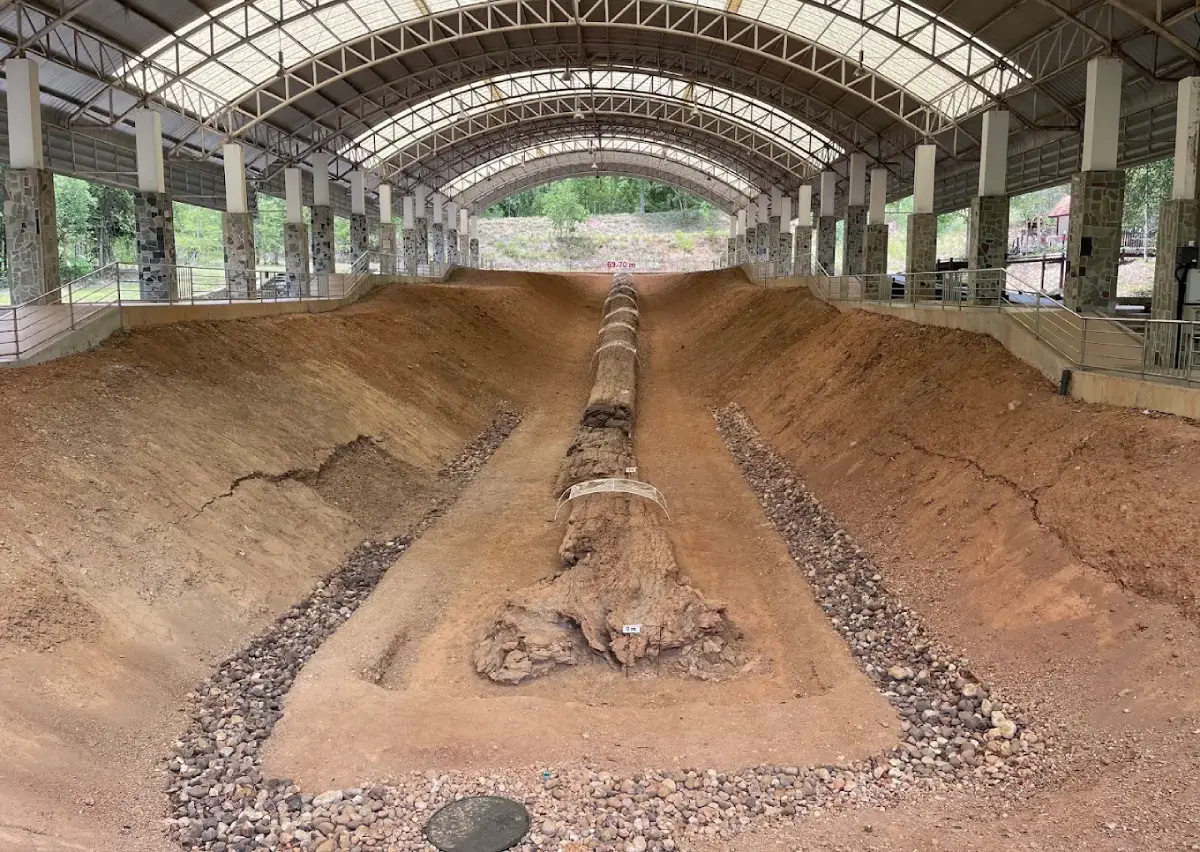
Doi Soi Malai–Petrified Wood National Park, Tak Province, Thailand, is an important natural conservation area and geological learning destination. Its main visitor center and remarkable petrified wood fossils are located in Moo 7, Tak Ok Subdistrict, Ban Tak District. The site's most celebrated attraction is an enormous fossilized tree trunk officially recognized by Guinness World Records on July 8, 2022, for its length of 69.70 meters. Beyond this extraordinary fossil, the wider protected landscape includes mountains, pine forests, natural grasslands, waterfalls, and trekking destinations associated with Doi Soi Malai and Doi Luang Tak. Together, these features make the area significant for geology, biodiversity, nature tourism, and environmental education.
What distinguishes Doi Soi Malai–Petrified Wood National Park is the extraordinary contrast between its different natural environments. In Ban Tak District, visitors can observe fossilized tree trunks and learn how wood can gradually transform into stone through geological processes. In the mountainous areas of Doi Soi Malai, the scenery changes to highland grasslands, forests, panoramic ridges, and cooler conditions during winter. Elsewhere, waterfalls and streams reveal the relationship between flowing water, forested watersheds, and the gradual transformation of the landscape.
The area is officially managed as a proposed national park undergoing the legal establishment process. Thailand's Department of National Parks, Wildlife and Plant Conservation continues to undertake boundary surveys, environmental management, and consultations with local communities. In 2026, the proposed protected area was revised to approximately 184,249 rai, equivalent to 294.80 square kilometers. The proposed boundaries encompass several ecologically important forest environments and reflect the objective of creating a coordinated conservation framework for the area's natural resources.
For visitors interested in geology and natural history, the destination provides an exceptional opportunity to explore evidence of Earth's ancient environments. The enormous fossilized tree trunks preserved within the sediment are physical records of past vegetation and geological conditions. At the same time, the surrounding forests and mountains represent ecosystems that continue to evolve today. Visiting both environments creates a connection between the prehistoric landscape and the living natural world of modern Tak Province.
History of Doi Soi Malai–Petrified Wood National Park is closely associated with the discovery and scientific investigation of petrified wood in Ban Tak District. The fossil site lies within the Mae Salit–Pong Daeng National Reserved Forest, where dry dipterocarp woodland historically dominated much of the surrounding landscape. The discovery of exceptionally large fossilized tree trunks attracted interest from forestry authorities and geological specialists, leading to systematic exploration, excavation, study, and the development of visitor facilities.
Between 2003 and 2005, extensive field investigations and fossil excavations took place in the Ban Tak area. Numerous petrified wood specimens of different sizes were discovered, demonstrating the importance of the locality as a fossil-bearing landscape. Some specimens were relatively small, while others extended for several tens of meters. These discoveries created new opportunities to investigate ancient plant remains and the environmental conditions that allowed wood to become mineralized and preserved underground.
The area was subsequently developed as a natural learning destination. Excavation pits, visitor walkways, protective shelters, and educational displays were introduced to make the fossils accessible while preserving their geological context. Allowing visitors to see fossilized trunks in their original discovery locations provides a particularly valuable experience, because the specimens remain connected to the surrounding sediments and natural landscape.
In 2015, further surveys were conducted as part of the proposed establishment of Petrified Wood National Park. On February 14, 2017, the National Park Committee approved the proposal to establish a national park associated with the petrified wood landscape in Tak Province. This represented an important development in efforts to expand conservation from a specialized fossil site into a wider protected area containing several different natural environments.
On May 22, 2018, the proposed park's name changed from Petrified Wood National Park to Doi Soi Malai National Park. The new name emphasized the importance of the highland forests and mountain ecosystems included in the conservation proposal. On December 2, 2020, the park advisory committee endorsed the name Doi Soi Malai–Petrified Wood National Park. This combined name acknowledges the two defining natural features of the proposed protected area: the mountainous Doi Soi Malai landscape and the internationally significant petrified wood fossils.
In 2026, the Department of National Parks conducted further public consultations concerning the proposed park boundaries. An earlier surveyed area of approximately 222,140 rai was revised to around 184,249 rai after additional boundary assessments and discussions with local leaders and residents. These procedures are important for integrating environmental protection with community participation and ensuring that conservation boundaries are established through the required legal and administrative processes.
The proposed park incorporates forest landscapes associated with several national reserved forests, including Mae Salit–Pong Daeng, Mae Tho–Huai Tak on the right bank, and Mae Tuen. It also brings together conservation areas associated with Petrified Wood Forest Park, Huai Mae Khai Waterfall Forest Park, and Kaeng Huai Tak Forest Park. This wider approach recognizes the ecological connections between fossil sites, waterfalls, mountainous habitats, forests, and natural watersheds.
What Is Petrified Wood? Petrified wood is a type of fossil formed when the original material of a tree becomes mineralized under suitable geological conditions. Mineral-rich groundwater, especially water containing dissolved silica, can penetrate buried wood and gradually deposit minerals within its structure or replace its original components. Over long periods, the wood becomes stone-like while preserving recognizable features of the original tree.
The process usually begins when a fallen tree becomes buried under natural sediments. Burial conditions that limit decomposition allow portions of the original wood structure to remain intact. As groundwater containing dissolved minerals moves through the sediment and the buried wood, minerals accumulate within cellular spaces and can progressively replace organic matter. The resulting fossil preserves the shape and sometimes intricate details of the original trunk.
What makes petrified wood different from an ordinary stone is its biological origin. Visitors can sometimes recognize the outline of the trunk, wood grain, branches, and patterns corresponding to the tree's internal structure. These preserved features provide important scientific evidence about ancient plants and the environmental changes that occurred after the trees died.
Petrification does not occur immediately after a tree falls. It requires a combination of suitable burial conditions, groundwater movement, mineral availability, and preservation of the original structure. The discovery of exceptionally large, well-preserved fossilized trunks is therefore scientifically valuable because it allows researchers to investigate both ancient vegetation and the geological processes that shaped the landscape.
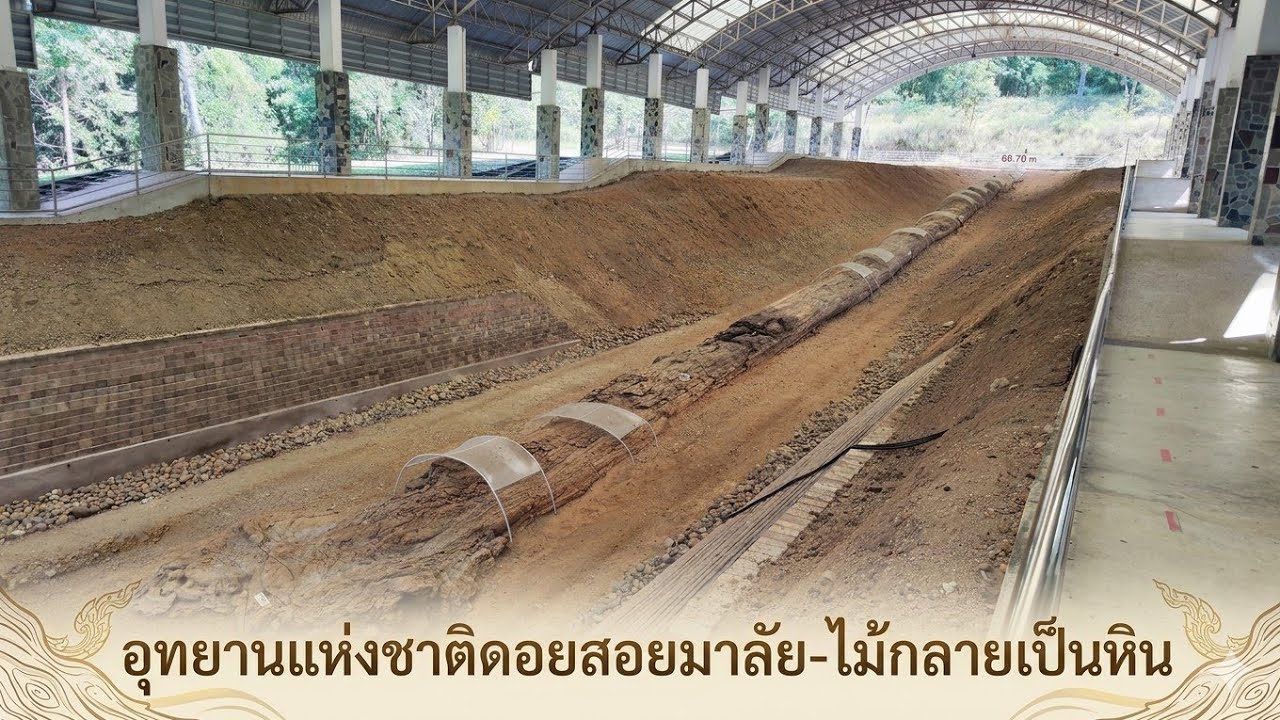
The World's Longest Petrified Wood in Tak is the outstanding attraction at the Ban Tak fossil site. Fossilized trunk number 1 has an officially recognized length of 69.70 meters and an approximate diameter of 1.80 meters. Guinness World Records confirmed its record on July 8, 2022, bringing international recognition to one of Thailand's most remarkable geological discoveries.
The exceptional size of the fossil allows visitors to appreciate the enormous dimensions of the original tree. The trunk extends through a large excavation pit protected by a roof, with designated walkways that provide suitable viewing opportunities. Presenting the specimen in its discovery location preserves the relationship between the fossil and the sediments surrounding it.
The fossil's measurement history is also noteworthy. Early surveys reported an original measured length exceeding 72 meters. Later assessments of the specimen's condition resulted in the official record length of 69.70 meters. This is the measurement associated with the Guinness World Records recognition and is the appropriate figure for identifying the internationally recognized specimen.
At nearly 70 meters long, the fossil is striking even when compared with large modern structures. Walking alongside the excavation reveals the remarkable scale of the ancient tree and provides a direct impression of its original size. Although the visible remains are mineralized rather than living wood, the preserved shape offers an extraordinary connection with the ancient natural environment.
Age of the Petrified Wood is another important aspect of the site. The large fossils at Ban Tak are described in visitor information as being approximately 120,000 years old. This age provides a sense of the considerable passage of geological time represented by the remains. Scientific investigation of the fossils also involves examining their relationship with sedimentary layers and the environmental conditions that preserved them.
The importance of this age extends beyond the number itself. The existence of such large fossilized trunks provides evidence that substantial trees once grew in the ancient environment of the region. Their burial and preservation offer information about landscape processes, sediment accumulation, and changes in the natural environment. The fossils therefore contribute to understanding the long-term history of Tak Province's terrain.
The Seven Petrified Wood Exhibition Sites are among the principal visitor attractions. The park office has developed access to seven excavated petrified wood specimens distributed across several pits. The specimens vary in size, shape, and preservation, allowing visitors to compare different examples of fossilized wood and better understand the natural processes involved.
Petrified wood specimens 1 through 4 are connected by a nature-learning walking route of approximately 170 meters. This is an excellent starting area for exploring the fossil displays. The most important feature is specimen number 1, the record-holding trunk. Walkways and protective structures allow visitors to observe the fossil from suitable positions while minimizing direct contact with the fragile geological site.
Specimen number 5 is approximately 230 meters from the visitor center and is accessible on foot. The approach provides an opportunity to observe the surrounding forest environment as well as the fossil itself. The vegetation reflects the dry dipterocarp woodland characteristic of the Ban Tak fossil locality, connecting the geological history of the area with its present-day natural environment.
Specimens 6 and 7 lie approximately 1.7 kilometers from the visitor center and are reached by a vehicle-access route. Their location demonstrates that the fossil discoveries are spread across a broader landscape rather than confined to a single excavation. This distribution is important for understanding how ancient plant material and sediments accumulated within the area.
Visitors should remain on designated walkways throughout the fossil site. Petrified wood is an irreplaceable natural resource, and collecting fragments, striking the fossils, or entering protected excavation areas can damage scientific evidence. Preserving the specimens in their existing condition is essential for research, education, and future generations.
The Visitor Center and Geological Learning Area form an important part of the experience. The visitor center provides an introduction to the fossil landscape and serves as the main starting point for exploring the excavation sites. Educational information explains the formation of petrified wood, the history of its discovery, and its significance for understanding natural history.
The fossil exhibition facilities include protective roofs, viewing walkways, educational signs, and designated visitor areas. Roof structures reduce direct exposure to rain and sunlight, while walkways help maintain a safe distance between visitors and the preserved specimens. These facilities are designed to support access without compromising the conservation value of the site.
Viewing fossils where they were discovered creates a different educational experience from seeing specimens inside a conventional museum. Visitors can observe the relationship between the fossil trunks, soil, sediments, and surrounding terrain. This connection helps explain how geological evidence is interpreted in its natural context.
Geological Importance of the Tak Petrified Wood lies in its ability to preserve evidence of environmental processes extending over long periods. Researchers can study fossil structure and the geological conditions associated with burial and mineralization. The preserved shape and characteristics of ancient tree trunks provide information that would otherwise have been lost through natural decomposition.
The petrified wood locality also illustrates the role of groundwater in geological processes. Dissolved minerals transported through underground water systems can gradually accumulate in buried organic structures. Understanding this process reveals how changes occurring beneath the ground can produce natural evidence of international scientific importance.
Conservation is especially important because fossil resources are limited and cannot be recreated. Damage to a fossil may result in the permanent loss of scientific information. Protecting excavation pits and surrounding sedimentary layers therefore preserves both the visible attraction and the geological context essential for future investigation.
Doi Soi Malai is another major natural attraction within the proposed national park landscape. Rising to approximately 1,664 meters above sea level, the mountain is often described as the Roof of Tak because of its elevation. Its defining features include panoramic mountain ridges, natural grasslands, pine forests, and views extending toward the Bhumibol Dam reservoir from suitable elevated locations.
The mountain environment differs greatly from the fossil site in Ban Tak District. Lower-elevation areas around the fossil excavations are characterized largely by dry dipterocarp woodland, while Doi Soi Malai experiences cooler conditions associated with its greater altitude. Highland grasslands and pine-dominated vegetation contribute to a landscape of open ridges and sweeping views.
Doi Soi Malai attracts travelers interested in trekking, camping, and highland nature. Access to the mountain requires preparation because of steep terrain and road conditions that vary seasonally. Certain forms of access involve four-wheel-drive vehicles, while a trekking option of approximately 10 kilometers provides an alternative for physically prepared visitors approaching the camping area.
Early mornings on Doi Soi Malai can be particularly scenic. When weather conditions are favorable, mist accumulates in the valleys, and sunlight gradually reaches the surrounding ridges. The open highland landscape provides extensive views, while relatively limited artificial light can make clear nights attractive for observing stars.
The appeal of Doi Soi Malai is not limited to mist. Highland grasslands and vegetation change appearance throughout the seasons. During wetter periods, green plants cover the slopes, while drier conditions can turn the grasslands golden. These changes contribute to the mountain's distinctive visual character and make it popular among landscape photographers.
Doi Soi Dao and the Highland Camping Areas are associated with trekking and outdoor experiences in the Doi Soi Malai mountain landscape. Open ridgelines provide broad views of surrounding terrain, while designated camping locations support overnight visits under the management arrangements established for the area.
Camping in exposed highland conditions requires careful preparation. Strong winds, cooler temperatures, and sudden changes in weather can affect comfort and safety. Suitable tents and secure anchoring are important, particularly when camping on open mountain ridges where wind conditions may differ considerably from those in sheltered valleys.
All camping must take place in authorized locations. Visitors should avoid damaging sensitive grasslands, disturbing natural vegetation, or leaving waste behind. Responsible use of the designated areas helps preserve the landscape and reduces the impact of tourism on mountain ecosystems.
Doi Luang Tak is another important mountain destination within the conservation landscape and is particularly associated with guided trekking. Its attractions include forest environments, mountain slopes, and views from higher elevations. Access is managed through designated reservation arrangements, with visitor numbers and operating periods controlled according to the relevant management plan.
Trekking to Doi Luang Tak requires physical readiness and appropriate equipment. Routes can include steep climbs, uneven ground, muddy sections, and changing weather conditions. Visitors must follow reservation requirements, ranger instructions, and local guiding arrangements. Unauthorized trekking can create safety risks and increase pressure on sensitive forest habitats.
The mountain also provides opportunities to learn about ecological changes associated with increasing elevation. Vegetation and environmental conditions vary along the route, offering insight into the relationships between altitude, moisture, temperature, and forest composition. Such experiences give trekking a deeper educational value beyond reaching a scenic summit.
Kaeng Huai Tak Waterfall is an important natural attraction in the proposed protected area. Water flows through rocky channels and a forested stream environment, creating natural pools and cascades. The character of the waterfall reflects the interaction between flowing water and the geological formations through which the stream passes.
Kaeng Huai Tak provides an opportunity to observe erosion and sediment movement in a mountainous watershed. Water gradually shapes rock surfaces, carries loose material downstream, and contributes to the formation of stream channels and natural pools. These processes are part of the continuing geological development of the landscape.
Water levels vary seasonally. Rainfall increases stream flow, while dry periods may reduce the volume of water. Visitors must exercise caution near slippery rocks and fast-moving currents, particularly after heavy rain. Safety restrictions should always be respected when conditions become hazardous.
Huai Mae Khai Waterfall is another natural area included in the wider national park establishment proposal. Its associated former forest park forms part of the conservation landscape considered during the boundary planning process. The presence of multiple waterfalls reflects the importance of Tak's mountain forests as natural watershed areas.
Forests surrounding waterfalls help preserve humid environments and provide habitats for plants and animals associated with streams. Streamside vegetation responds to seasonal water levels and local moisture conditions. Protecting waterfall habitats is therefore important for maintaining ecological processes as well as preserving scenic landscapes.
Ecosystems of Doi Soi Malai–Petrified Wood National Park are exceptionally diverse because of variations in elevation, terrain, and humidity. Surveys reported in 2026 identified five principal ecosystem types within the proposed protected area: lower montane evergreen forest, dry evergreen forest, mixed deciduous forest, dry dipterocarp forest, and grassland. These environments differ in vegetation, seasonal cycles, and the wildlife habitats they provide.
Lower montane evergreen forests generally occur under conditions associated with cooler mountain environments and adequate moisture. Dry evergreen forests retain relatively dense vegetation in suitable areas. Both forest types help maintain soil moisture and provide habitats for numerous organisms.
Mixed deciduous forests contain different tree species, many of which shed their leaves during the dry season to reduce water loss. Dry dipterocarp forests are associated with seasonal conditions and plants adapted to relatively dry environments. This latter forest type is particularly characteristic of parts of the Ban Tak petrified wood landscape.
Highland grasslands contrast with dense forest because they are more directly exposed to sunlight and wind. Plants growing in these environments must tolerate conditions associated with open mountain terrain. The absence of a continuous tree canopy also creates the expansive scenery that attracts visitors to Doi Soi Malai.
Wildlife and Biodiversity are among the most important conservation values of the proposed park. Official surveys have reported significant wildlife species including serows, gorals, gaur, salamanders, peafowl, Himalayan griffon vultures, and great hornbills. Their presence reflects the diversity of habitats and the importance of maintaining large, connected forest ecosystems.
Serows and gorals are mountain-dwelling mammals associated with steep terrain and suitable forest habitats. Their survival depends on access to food, shelter, and relatively undisturbed environments. Gaur, as large wild cattle, require suitable feeding areas and sufficient habitat to support their natural movements.
Salamanders are amphibians associated with particular moisture and freshwater conditions. Their presence is important for understanding the biodiversity of mountain environments because amphibians can be sensitive to changes in temperature, humidity, and water quality.
Peafowl, hornbills, vultures, and other bird species play different ecological roles. Some contribute to seed dispersal, while others form part of forest food webs. Protecting connected woodland habitats supports bird populations and provides opportunities for responsible birdwatching in authorized visitor areas.
Wildlife tourism must prioritize minimal disturbance. Visitors should maintain a respectful distance, avoid feeding animals, and remain on designated routes. Loud noises, pursuing animals, and entering restricted habitats can interfere with natural behavior and undermine conservation objectives.
Watershed Conservation is another major reason for protecting the mountains and surrounding forests. Highlands collect rainfall that feeds streams and lower-elevation water systems. Forest vegetation helps retain soil, slow surface runoff, and maintain moisture, supporting both natural ecosystems and downstream communities.
Tree roots stabilize soil on steep slopes, while fallen leaves and organic matter protect the ground from direct rainfall and help reduce rapid surface flow. These processes contribute to limiting erosion and maintaining water quality. Conserving forest cover therefore supports the long-term environmental condition of the region.
The proposed national park also provides an extensive setting for learning about relationships among natural resources. At the petrified wood site, visitors can explore geology and ancient vegetation. On Doi Soi Malai, trekking reveals changes in highland habitats. At waterfalls, travelers can observe how flowing water shapes the landscape. Together, these experiences illustrate the complexity of natural systems.
The Park's Relationship with Local Communities involves both natural resource conservation and tourism-related economic opportunities. Communities around the proposed protected area can participate in environmental management, guiding activities, food services, and the sale of local products. Appropriate tourism development offers opportunities to connect local livelihoods with conservation objectives.
Public consultation is an important element of the national park designation process because conservation areas are closely connected with surrounding settlements and land-use patterns. Listening to local residents and other stakeholders helps authorities assess boundaries and management arrangements while considering the needs of communities and the long-term protection of natural resources.
The petrified wood site also serves an important educational role for schools and universities. Its preserved fossils provide tangible examples of geological change and ancient natural environments. Field visits allow students to connect classroom subjects such as science, geography, geology, and environmental studies with real evidence found in nature.
Best Time to Visit depends on the destination and activity. The Ban Tak petrified wood exhibition can be visited throughout the year, with November through January offering generally more comfortable outdoor temperatures than the hottest months. Visits to Doi Soi Malai and Doi Luang Tak, however, are subject to seasonal access arrangements and the operating schedules announced by park authorities.
The cooler season is especially appealing for mountain tourism. Visitors come to Doi Soi Malai for fresh highland air, sunrise scenery, and panoramic views. Mist may form in valleys when atmospheric conditions are favorable. Because highland temperatures can be considerably lower than those in Ban Tak District, suitable clothing is important.
The rainy season brings green forests and grasslands, while waterfalls and streams receive greater volumes of water. However, mountain roads and trekking routes can become slippery, and certain areas may be affected by flash floods or erosion. Seasonal access restrictions are therefore important measures for protecting visitors.
During the warmer season, the fossil site remains an attractive geological learning destination. Outdoor visits are more comfortable when planned around the heat of the day. Meanwhile, seasonal changes in deciduous forests and grasslands create different colors across the wider landscape.
Activities for Families and Students are especially well suited to the petrified wood exhibition area. The visitor center and designated walkways make the fossils accessible for educational visits. Children and young people can learn how petrification occurs, why the form of ancient tree trunks remains visible, and why fossil conservation is essential.
Photography enthusiasts can explore two very different types of natural scenery. The petrified wood site offers opportunities to document geological details and the extraordinary scale of the fossils. Doi Soi Malai provides open mountain views, ridgeline scenery, grasslands, and sunrise landscapes. Combining these experiences reveals the broad natural diversity of Tak Province.
Getting to the Petrified Wood Site is convenient by private car. From Tak city, travelers can follow Phahonyothin Road toward Ban Tak District and continue into Tak Ok Subdistrict using the signs directing visitors to the petrified wood attraction. The visitor area is approximately 4 kilometers from the Ban Tak District Office. Access is generally more straightforward than reaching the mountain trekking areas because the fossil site has been developed for sightseeing and education.
A connecting road from Phahonyothin Highway leads toward the fossil site through the local community and surrounding woodland. The journey can be combined with other destinations in Ban Tak District, including Wat Phra Borommathat Ban Tak, the historic Old Tak area, and attractions associated with the Ping River.
Getting to Doi Soi Malai requires different arrangements because the mountain routes are steeper and more sensitive to seasonal weather. Access to the highland areas should be coordinated with park personnel, particularly when arranging four-wheel-drive transportation, trekking, or camping. Some activities operate under specific reservation requirements.
Travelers heading into the mountains should consider road conditions, vehicle suitability, personal fitness, and the experience of local guides. Routes can become challenging during wet weather, especially where natural surfaces are involved. Following established access arrangements helps protect both visitors and the surrounding ecosystems.
Nearby Attractions in Ban Tak District include Wat Phra Borommathat Ban Tak, an important Buddhist temple associated with the historical Old Tak settlement. Located in Ko Taphao Subdistrict, the temple is a significant destination for travelers interested in religious architecture, cultural heritage, and the history of the former city of Tak.
Bhumibol Dam in Sam Ngao District provides another major attraction within the wider region. The dam is significant for Thailand's water management and electricity generation and is surrounded by an extensive reservoir and mountainous scenery. Views toward the reservoir from the Doi Soi Malai highlands provide a different perspective on the landscape.
Visitors continuing to Tak city can also explore cultural and historical attractions such as King Taksin the Great Shrine and the Rattanakosin Bicentennial Suspension Bridge. Combining these destinations with the fossil site creates a varied itinerary incorporating geological heritage, Buddhist culture, Thai history, and natural landscapes.
Accommodation and Services Around Ban Tak include restaurants, cafés, resorts, and hotels situated in local communities and along major roads. Staying in Ban Tak District is practical for visitors focusing on the petrified wood site and nearby attractions, while accommodation in Tak city offers access to a broader range of urban services.
Local restaurants and cafés reflect the everyday character of the Ban Tak area. Visitors can find Thai food, noodle dishes, coffee, and refreshments along the travel routes. Accommodation should be selected according to whether the itinerary focuses on the relatively accessible fossil site or includes longer journeys into the mountains and surrounding districts.
Facilities at the Petrified Wood Site include parking, toilets, a visitor center, designated fossil-viewing paths, protective shelters, and educational information displays. These facilities make the area suitable for families, students, and travelers interested in nature without requiring long-distance trekking. Services in mountain areas differ and are subject to the operational limitations of their natural settings.
Rules for Visiting the Petrified Wood Fossils are essential because the specimens are irreplaceable geological evidence. Visitors must remain on established paths, avoid entering excavation pits, refrain from striking or marking fossil surfaces, and never remove stones or fossil fragments. Respecting these rules helps preserve the site's scientific value for future research and education.
Mountain trails and camping areas require equally responsible behavior. Visitors must remain on authorized routes, avoid feeding wildlife, refrain from lighting fires outside designated locations, and remove rubbish. Grasslands, pine forests, and freshwater habitats are sensitive environments that depend on careful management and minimal disturbance.
Traveling to higher elevations also requires attention to changing weather and physical preparedness. Temperatures can fall rapidly, strong winds may develop, and fog can reduce visibility. Using authorized guides and following official access procedures contributes to a safer visit and reduces damage to natural landscapes.
Doi Soi Malai–Petrified Wood National Park represents an extraordinary combination of geological history and living ecosystems. Its internationally recognized petrified wood, ancient sediments, mountain landscapes, grasslands, waterfalls, forests, and wildlife habitats make the area significant for conservation and environmental education. Experiencing both the fossilized remains of prehistoric trees and the highland scenery of Doi Soi Malai offers a deeper understanding of the remarkable natural heritage of Tak Province.
The site's enduring importance lies in protecting evidence of the ancient Earth while conserving the ecosystems that exist today. The petrified wood reveals how trees and landscapes changed over long periods, while the forests of Doi Soi Malai continue to support wildlife, watersheds, and natural ecological processes. Responsible tourism and respect for conservation regulations will help preserve this remarkable natural destination as a valuable source of knowledge and inspiration for future generations.
| Name | Doi Soi Malai–Petrified Wood National Park (Under Establishment), Tak Province, Thailand |
| Office and Petrified Wood Site Location | Moo 7, Tak Ok Subdistrict, Ban Tak District, Tak Province 63120, Thailand |
| Category | Proposed National Park, Protected Natural Area, Petrified Wood Fossil Site, Geological Tourism Destination and Mountain Conservation Landscape |
| Legal Status | Under the formal national park designation process, including boundary assessments and public consultation |
| Proposed Protected Area | Approximately 184,249 rai, or 294.80 square kilometers, according to the 2026 boundary proposal |
| Managing Authority | Department of National Parks, Wildlife and Plant Conservation, Thailand |
| Significance | World-Record Petrified Wood, Geological Education, Forest Conservation, Biodiversity Protection and Mountain Watershed Preservation |
| World Record | Petrified wood measuring 69.70 meters in length and approximately 1.80 meters in diameter; Guinness World Records recognition dated July 8, 2022 |
| Approximate Fossil Age | 120,000 years |
| Petrified Wood Exhibits | Seven excavated petrified wood specimens accessible through the designated visitor routes |
| Fossil Exhibition Zones | 1. Specimens 1–4: Approximately 170-meter walking route 2. Specimen 5: Approximately 230 meters from the Visitor Center 3. Specimens 6–7: Approximately 1.7 km from the Visitor Center via a vehicle-access route |
| Major Natural Areas | Doi Soi Malai, Doi Soi Dao, Doi Luang Tak, Kaeng Huai Tak Waterfall, Huai Mae Khai Waterfall and Ban Tak Petrified Wood Fossil Site |
| Doi Soi Malai Elevation | Approximately 1,664 meters above mean sea level |
| Main Ecosystems | Lower Montane Evergreen Forest, Dry Evergreen Forest, Mixed Deciduous Forest, Dry Dipterocarp Forest and Grassland |
| Notable Wildlife | Serow, Goral, Gaur, Salamanders, Peafowl, Himalayan Griffon Vulture and Great Hornbill |
| Open Days | Daily for the Petrified Wood Exhibition Area; seasonal and scheduled access for trekking destinations |
| Opening Hours | 08:00–17:30 for the Petrified Wood Exhibition Area |
| Petrified Wood Admission Fee | Free Admission |
| Activities | Fossil Viewing, Geological Education, Mountain Sightseeing, Authorized Trekking, Birdwatching and Designated Camping |
| Visitor Facilities | Visitor Center, Parking, Toilets, Fossil Viewing Walkways, Protective Exhibition Shelters and Educational Displays |
| Getting There | Follow Phahonyothin Highway toward Ban Tak District, then use the access road into Tak Ok Subdistrict. The fossil site is approximately 4 km from the Ban Tak District Office. |
| Office Contact | +66 96 402 9013 |
| Tourism Office Contact | +66 85 871 3306 |
| Official Website | https://doisoimalainp.net/ |
| Nearby and In-Area Attractions | 1. Petrified Wood Specimens 1–4 – 170-meter walking route 2. Petrified Wood Specimen 5 – 230 meters from the Visitor Center 3. Petrified Wood Specimens 6–7 – 1.7 km from the Visitor Center 4. Wat Phra Borommathat Ban Tak, Ban Tak District 5. Bhumibol Dam, Sam Ngao District 6. Doi Soi Malai Mountain Area 7. Kaeng Huai Tak Waterfall 8. Doi Luang Tak Trekking Area |
| Restaurants and Cafés in Ban Tak and Along the Tak City Route | 1. Mindset Cafe, Tak Ok, Tel. +66 84 575 7079 2. Ban Tak Kitchen, Ko Taphao 3. Thana Ban Tak Restaurant, Tak Tok 4. Wattana Hip Restaurant, Tak Tok 5. Ruan Sano Noy, Ban Tak 6. Tiengna Coffee and Bakery Farm, Mueang Tak, Tel. +66 96 805 0363 |
| Accommodation in Ban Tak and Along the Tak City Route | 1. Suksamran Ban Tak, Tak Ok, Tel. +66 62 940 4419 2. Trakanta Park View Resort, Ban Tak Area 3. BanRai ChernMa Resort, Mueang Tak, Tel. +66 55 893030 4. Tak Andaman Resort & Hotel, Mueang Tak, Tel. +66 55 517565 5. Home Paradise Resort Tak, Tel. +66 86 440 5731 |
Frequently Asked Questions (FAQ)
Q: Where is Doi Soi Malai–Petrified Wood National Park located?
A: The park office and main petrified wood site are located in Moo 7, Tak Ok Subdistrict, Ban Tak District, Tak Province, Thailand. The wider conservation landscape includes mountains and forests in other parts of Tak Province.
Q: Is the petrified wood site open every day?
A: Yes. The petrified wood visitor area is listed as open daily from 08:00 to 17:30. Mountain trekking destinations operate according to separate seasonal schedules and visitor access arrangements.
Q: How much is the entrance fee?
A: Admission to the petrified wood exhibition area is free. Mountain trekking and highland activities are managed under separate reservation and visitor arrangements.
Q: Where is the world's longest petrified wood located?
A: The officially recognized record-holding petrified wood is located in Ban Tak District, Tak Province, Thailand. It measures 69.70 meters in length and received Guinness World Records recognition on July 8, 2022.
Q: How does petrified wood form?
A: Petrified wood forms when buried tree remains are gradually mineralized through the movement of mineral-rich groundwater. Minerals accumulate within or replace parts of the original wood, preserving recognizable features of the tree in stone-like material.
Q: How many petrified wood specimens can visitors see?
A: Seven excavated specimens are included in the visitor routes. Specimens 1–4 are along a 170-meter walking route, specimen 5 is approximately 230 meters from the visitor center, and specimens 6–7 are approximately 1.7 kilometers from the visitor center.
Q: What makes Doi Soi Malai special?
A: Doi Soi Malai rises to approximately 1,664 meters above sea level and features mountain ridges, natural grasslands, pine forests, and views toward the Bhumibol Dam reservoir. It is associated with trekking and seasonal camping activities.
Q: Is trekking to Doi Luang Tak available throughout the year?
A: Trekking to Doi Luang Tak operates according to designated schedules and advance reservation arrangements. Visitors must comply with the relevant access requirements and follow the instructions of park personnel.
 Category: ●Nature and Wildlife
 Group: ●National Parks and Marine Reserves
Last Update : 2 WeekAgo
 Last Update : 2 WeekAgo
 Click to Access the Navigation Map GPS
Doi Soi Malai–Petrified Wood National Park Map
Recommend

 Art, Culture and Heritage
 Historical Sites and Monuments(2)
 Landmarks and Memorials(3)
 Art, Craft Centres, Tradition(6)
 Historic Homes and Cities(2)
 Educational Places
 Educational Gardens, Farm(2)
 Places of Worship
 Temple(22)
 Other Sacred Sites(9)
 Research and Development
 Royal Project(1)
 Suburban Living
 Village, Community(5)
 Local Market(3)
National Parks and Marine Reserves(11)
 Mountain (Doi)(9)
 Dam, Reservoir, Lake(14)
 Waterfalls(23)
 Hot Springs(2)
 Caves(6)
 River, Canal(1)
 Bays and Beaches(1)
 Islands(1)
 Other natural attractions(1)
 Entertainment and Agricultural
 Farms, Parks and Ecotourism(5)
 Outdoor and Adventure Activities(4)
 Travel Articles, Recipes
 Travel Review, Food Review(1)


