
lovethailand home >Central Travel Attractions >Prachuap Khiri Khan Travel Attractions >Hua Hin >Thap Tai > Hua Hin Safari
TL;DR: Hua Hin Safari is located at 333 Moo 3, Thap Tai Subdistrict, Hua Hin District, Prachuap Khiri Khan Province 77110, Thailand, open Daily, hours 08:00 – 17:00.

Hua Hin Safari
Open Days: Daily
Opening Hours: 08:00 – 17:00
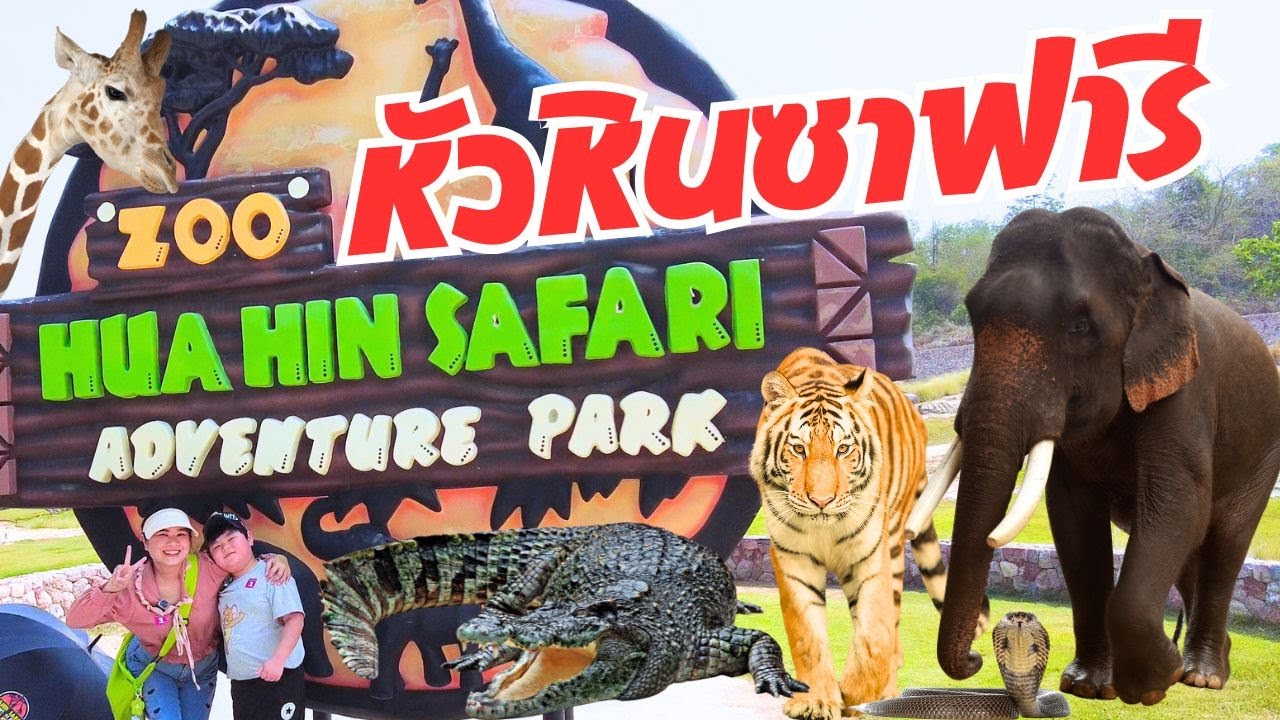
Hua Hin Safari & Adventure Park is a privately operated animal attraction and outdoor activity destination in Thap Tai Subdistrict, Hua Hin District, Prachuap Khiri Khan Province, Thailand. Located at 333 Moo 3, the park occupies approximately 60 rai and is open daily from 08:00 to 17:00. Its principal activities include elephant, crocodile, snake, and tiger shows, together with animal-related experiences and selected outdoor adventure activities. The park is situated in Hua Hin's inland countryside and can be reached by car or taxi from the town center. It can also be combined with visits to Rajabhakti Park, Vana Nava Water Jungle, Cicada Market, and the Khao Takiab area.
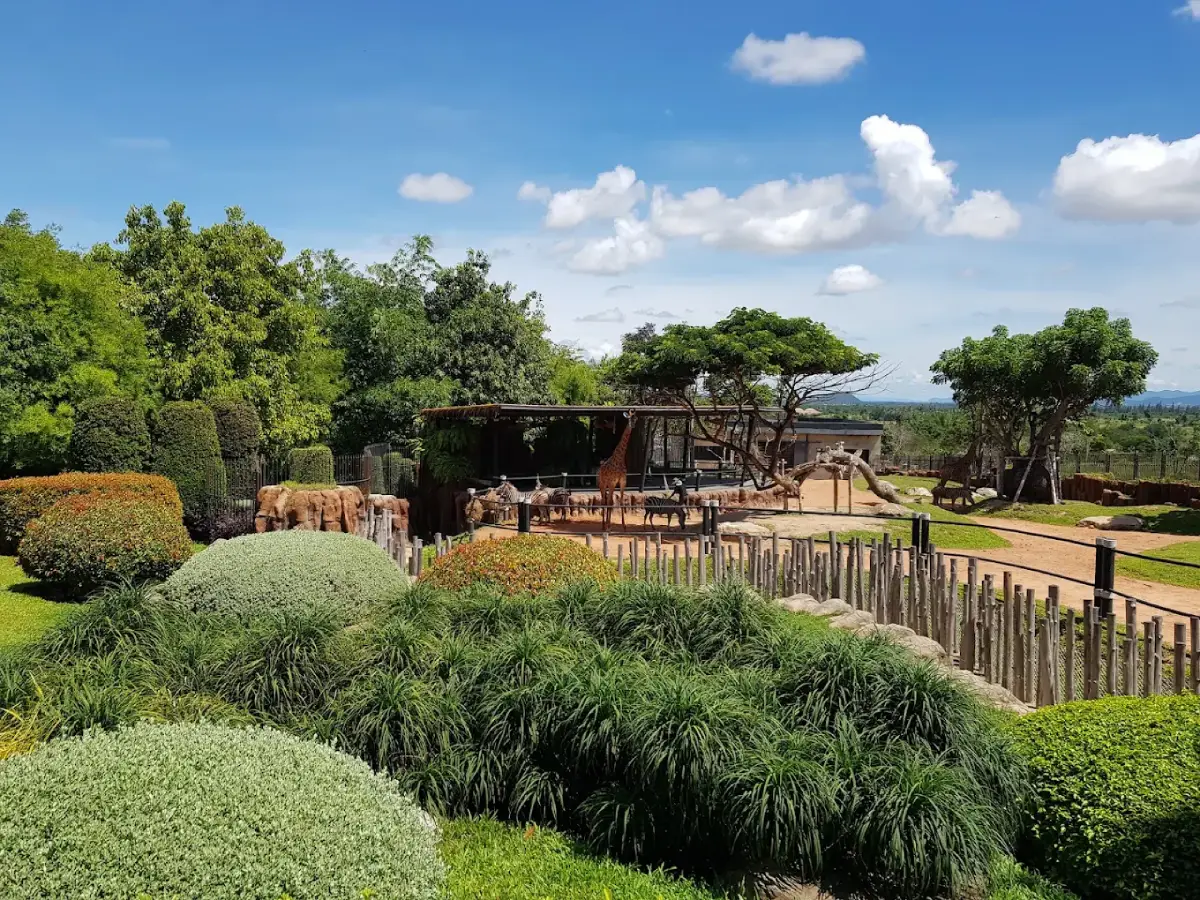
Hua Hin Safari & Adventure Park is a family-oriented attraction combining animal viewing, educational experiences, and outdoor activities within one property. Situated in Thap Tai Subdistrict, Hua Hin District, Prachuap Khiri Khan Province, the park covers approximately 60 rai and has been landscaped with elements inspired by African safari scenery. Its main features include animal areas, show venues, visitor facilities, and outdoor activity spaces. Elephants, tigers, crocodiles, snakes, camels, and other animals have been associated with the experiences offered at the park.
One distinctive feature of Hua Hin Safari is its location in the countryside inland from the coast. The journey passes residential communities and agricultural land rather than the densely developed beachfront. This provides a different perspective on Hua Hin, allowing visitors to experience the district beyond its familiar hotels, seaside restaurants, and beaches.
Hua Hin is a major tourism destination in Prachuap Khiri Khan Province, famous for its beaches, historic resort-town identity, cultural food traditions, and family attractions. The expansion of tourism over recent decades has brought additional recreational businesses to inland areas west of Phet Kasem Road, including resorts, private villas, animal parks, water attractions, and adventure facilities. Hua Hin Safari is part of this broader development.
Thap Tai is characterized by established communities, agricultural land, residential areas, and sections of gently rising terrain. Its landscape differs substantially from Hua Hin's busy coastal center. The development of safari attractions in this setting reflects the growing use of countryside land for recreation and tourism supporting the wider destination.
The park is located at 333 Moo 3, Thap Tai Subdistrict, Hua Hin District, Prachuap Khiri Khan 77110. Access is available from the Hua Hin urban area through Phet Kasem Road and connecting local roads west of the main highway. The road network is associated with Hua Hin Soi 112 and the Hua Na–Thap Tai community area. Private vehicles and taxis are practical choices because the park is not situated directly along the beachfront or in the central tourist shopping district.
Hua Hin Safari has operated as an animal attraction for many years. Local administrative information describing its animal activities and facilities was published in 2019, showing that the destination was already established by that time. In 2026, Hua Hin Safari Company Limited was registered for business activities involving zoological attractions and animal shows, reflecting the current corporate arrangements associated with the operation.
The approximately 60-rai site uses a safari-inspired atmosphere to connect wildlife themes with outdoor recreation. Historically, the word safari has been associated with journeys through African landscapes and has subsequently been adopted by many animal attractions around the world. Hua Hin Safari, however, is a managed animal attraction rather than an open natural wilderness inhabited by free-ranging wild animals.
Unlike zoological gardens focused primarily on walking between animal enclosures, Hua Hin Safari offers organized performances and activities sold through different ticket packages. Visitors can choose from elephant, crocodile, snake, and tiger shows, along with selected feeding, photography, and outdoor experiences. Individual programs have their own schedules and participation conditions.
Elephant shows are among the activities historically associated with Hua Hin Safari. Elephants are exceptionally large mammals with a long relationship to Thai history and culture, including transportation, work, and ceremonial traditions. Asian elephants are recognizable by their trunks, broad ears, thick skin, and powerful legs. Observing them provides an introduction to the anatomy and behavior of one of Thailand's most culturally significant animals.
An elephant's trunk is a highly versatile organ used for collecting food, handling water, touching objects, and detecting odors. It contains an extraordinary number of muscles and can make precise movements despite having no bones. This flexibility allows elephants to handle objects ranging from branches and grass to comparatively small pieces of food.
Elephants also possess complex social behavior and impressive abilities to remember individuals and experiences. Caring for them requires experienced personnel who understand the needs of individual animals. Their daily management involves sufficient food, water, healthcare, and suitable movement areas, since their resource requirements are far greater than those of smaller domesticated species.
Hua Hin Safari has historically provided elephant performances and feeding activities. These allow visitors to observe elephant anatomy and movement in a supervised setting. The use of elephants in performances also raises important welfare considerations concerning the animals' physical abilities, behavioral requirements, and opportunities for rest.
Elephant riding has been among the activities previously offered at the park, using designated routes through its grounds and surrounding natural scenery. Unlike observing elephants from a distance, riding involves carrying additional weight and following a managed route. Animal welfare considerations include physical condition, activity duration, and adequate rest between sessions.
Foot health is especially important for elephants because their legs and feet must support enormous body weight. Walking surfaces and the time spent standing or moving can affect long-term comfort. Food production and dietary planning are equally important, as elephants consume substantial quantities of appropriate vegetation every day.
Crocodile shows are another feature associated with Hua Hin Safari. Crocodiles are large reptiles whose bodies are adapted for life both in water and on land. They possess tough skin, powerful tails, and jaws equipped with teeth designed for grasping prey. Their ability to move rapidly over short distances and produce strong bites makes proper separation between animals and spectators essential.
Crocodiles have specialized sensory adaptations for aquatic environments. Their eyes and nostrils are positioned so that they can remain above water while much of the body stays submerged. Their muscular tails provide propulsion when swimming. These characteristics distinguish crocodiles from terrestrial mammals and illustrate an evolutionary history closely tied to aquatic habitats.
Crocodile performances involve handlers working near powerful predatory reptiles. Even animals accustomed to people can react suddenly, and the danger presented by their jaws and movement remains significant. Spectators must stay behind designated barriers and avoid entering the performance area without authorization.
Snake performances introduce another diverse group of reptiles. Snakes have elongated bodies and move through coordinated muscular action. Their feeding and defensive strategies differ greatly among species. Some constrict prey, while others possess venom used for feeding or defense. Understanding snakes therefore requires recognizing differences among individual species rather than treating all snakes as equally dangerous.
Cobras are venomous snakes recognizable for their ability to expand the skin around the neck into a hood. This behavior is a defensive warning response rather than an action naturally performed for entertainment. Learning about cobras can help people understand how to avoid dangerous encounters with snakes in agricultural areas, forests, and residential surroundings.
Pythons are large constricting snakes that use their muscular bodies to restrain prey. Their teeth and jaw structure allow them to seize and swallow food. These reptiles also play ecological roles by influencing populations of certain prey species. Understanding those roles provides a more complete perspective than focusing only on their intimidating appearance.
Tiger shows are another established activity at Hua Hin Safari. Tigers are carnivorous mammals belonging to the cat family, scientifically known as Panthera tigris. Their appearance includes orange coats marked with black stripes, powerful muscles, and prominent canine teeth. They are large predators that play important ecological roles in Asian forests.
In natural habitats, tigers generally live alone and occupy hunting territories. They communicate through scent, vocalizations, and physical markings. Each animal possesses a distinctive arrangement of stripes, which can help researchers distinguish individual tigers. Observing their anatomy provides an opportunity to compare predatory mammals with herbivorous species.
Wild tigers are apex predators whose survival depends on healthy prey populations and suitable natural habitats. Protecting them requires extensive forests, efforts against illegal wildlife trade, and the preservation of prey species. Exhibiting captive tigers is different from conserving wild populations, although it may introduce visitors to the animals' biology and ecological importance.
Photography experiences involving tigers have also appeared among Hua Hin Safari's offerings. These activities bring people into close proximity to powerful predatory animals under staff management. Familiarity with handlers cannot completely eliminate the risks presented by wild species. Participation must therefore follow the operator's restrictions and the circumstances of each animal encounter.
Photographing an animal from outside its enclosure differs fundamentally from posing close to it. Distance observation allows people to record natural activities such as walking, resting, and responding to the surroundings. Close photography raises additional safety and animal welfare considerations, both of which must be addressed during the management of encounters.
Hua Hin Safari has also promoted opportunities to feed camels. Camels are mammals adapted to dry environments and possess physiological characteristics that help them manage limited water and energy resources. Their legs and feet are suited to walking across dry terrain. They provide an example of how animals evolve physical characteristics appropriate to climates very different from Thailand's.
A camel's hump stores fat rather than functioning as a water tank. This fat serves as an energy reserve that can be used when food is scarce. The hump is therefore an example of a physiological adaptation associated with living under challenging environmental conditions.
Feeding koi carp is another activity historically promoted by the safari park. Koi are ornamental freshwater fish valued for their varied colors and patterns. Caring for them requires appropriate water quality, oxygen levels, and food quantities. Overfeeding can affect water conditions and, consequently, the health of the fish.
Owl photography has also been associated with the park. Owls are predatory birds with sensory adaptations suited to the hunting periods of individual species. Their eyes and facial feather arrangements support environmental awareness, while many owls have wing feathers that help reduce flight noise.
Many nocturnal birds have activity and resting cycles different from those of humans. Appropriate lighting, quiet surroundings, and suitable rest periods are therefore important when such birds are kept under human care. Learning about owls highlights the fact that different species do not share the same daily rhythms.
Outdoor quad-bike activities have also formed part of Hua Hin Safari's historical visitor offerings. These vehicles are designed to operate on tracks and uneven ground rather than ordinary paved roads. Participation requires following the provider's safety rules and any restrictions concerning age, weight, and the ability to operate a vehicle safely.
The landscape of Thap Tai provides a setting for various outdoor activities because it includes open spaces and roads connecting with low hills. This makes countryside adventure recreation a natural complement to the park's animal-themed experiences, distinguishing it from urban zoos focused mainly on indoor exhibits or formal pedestrian routes.
The combination of animal presentations and outdoor experiences allows visitors to organize their time according to personal interests. Families with children may focus on observation and animal shows, while others may select additional activities. Tickets and packages vary according to the experiences included.
Published elephant show times are 10:30, 13:00, and 15:00. Crocodile and snake show times are 11:15, 13:45, and 15:45, while tiger shows are listed at 09:50, 12:20, 14:30, and 16:35. The separate performance times allow visitors to attend several animal presentations during the same day.
Hua Hin Safari admission has been offered in several formats, with prices differing according to included activities and the ticket seller. Published examples include an animal-show package covering elephants, snakes, crocodiles, and tigers at THB 250 for adults and THB 150 for children. A package adding elephant riding has been advertised at THB 450 for adults and THB 250 for children, while a further package including tiger photography has been listed at THB 800 for adults and THB 500 for children. Online travel agencies may offer different packages and prices.
Ticket differences matter because some packages provide show admission only, whereas others include close-contact animal activities or additional services. A higher package price is not necessarily the park's general admission charge, and online booking prices may differ from rates published in travel articles.
Hua Hin Safari offers families the opportunity to compare animals belonging to different biological groups. Elephants are large herbivorous mammals, tigers are carnivorous predators, crocodiles are reptiles adapted to water and land, and owls are birds with specialized hunting senses. Comparing these animals introduces important concepts concerning biodiversity and ecological adaptation.
Seeing living animals can help children understand characteristics that are difficult to appreciate through books or digital media alone. Differences in size, movement, food, and defensive behavior become more apparent during observation. Explaining how species relate to their environments also helps establish a basic understanding of ecosystems.
Animals under human care retain biological needs associated with their species. Food, water, living space, healthcare, and opportunities to express appropriate behavior must be considered. Carnivores have different nutritional requirements from herbivores, while reptiles depend on suitable environmental temperatures. Visiting a zoo can therefore introduce the responsibilities humans take on when keeping wild animals.
Modern discussions about zoological attractions extend beyond displaying animals for public viewing. Animal quality of life, opportunities for natural behavior, and environmental suitability are important considerations. Activities involving large animals and predators should consequently be evaluated with attention to both visitor safety and animal welfare.
Spectators watching animal shows should remain in designated viewing areas. Animals may respond unpredictably to noise, movement, or other environmental stimuli. Avoiding loud noises, thrown objects, and unauthorized entry into performance spaces helps reduce unnecessary disturbance and risks.
Animal feeding should involve only food approved by staff and offered in appropriate quantities. Different species have different digestive systems, and food suitable for one animal may be harmful to another. Unauthorized feeding can create health problems or interfere with established dietary management.
During hot weather, many animals naturally choose to rest in shaded areas or near water. Seeing an animal remain still is not necessarily unusual behavior. Calm observation provides opportunities to understand resting, feeding, and movement patterns without attempting to make the animal continuously active.
A Hua Hin Safari visit can be incorporated into a wider holiday in Hua Hin. The time required depends on which shows and additional activities visitors choose. Those wishing to attend several presentations can organize their visit around the scheduled show times, while travelers interested primarily in general observation may spend less time at the park.
Private vehicles are convenient for reaching the park because it is located in Thap Tai, inland from the main beachfront area. A car or taxi also makes it easier to continue to other attractions in the district, particularly those in Nong Kae and the southern part of Hua Hin.
Rajabhakti Park is an important historical attraction in Hua Hin's Nong Kae area. It contains large monuments honoring seven Thai kings who played significant roles in the country's history. Its landscaped public grounds and historic theme provide an opportunity to combine an animal attraction with learning about Thai history and commemorative architecture.
The royal statues at Rajabhakti Park are notable for their size and sculptural detail. They represent important historical figures from different eras of Thailand. The site introduces aspects of the evolution of Thai kingdoms and the ways in which national history is commemorated.
Wat Huay Mongkol is another important religious destination in the wider Hua Hin area. It is particularly recognized for its large statue of Luang Pu Thuat, a Buddhist monk revered by many Thai people. Situated inland from the coast, the temple has a different atmosphere from the city's beach resorts. Visiting it alongside Hua Hin Safari adds a religious and cultural element to a family itinerary.
Luang Pu Thuat is an important figure in Thai Buddhist devotional traditions, particularly in southern Thailand. Stories associated with the monk have been passed down through religious beliefs and local narratives. The temple is both a place of worship and an opportunity to explore the connection between Thai Buddhism and community identity.
Vana Nava Water Jungle is a family attraction in Nong Kae, Hua Hin, featuring water rides and recreational facilities within a tropical-themed setting. Its emphasis on swimming and water-based recreation differs from the animal presentations at Hua Hin Safari, providing an alternative activity during a holiday.
Cicada Market is a popular visitor market in Nong Kae. It is known for artistic products, handicrafts, food, and creative activities. Its evening atmosphere makes it a convenient cultural and recreational addition to a day spent exploring other parts of Hua Hin.
Unlike a traditional fresh market or conventional shopping center, Cicada Market provides space for artists and small creative businesses to present handmade products, jewelry, home decorations, and other designs. Food and entertainment add to the experience, contributing to the market's role as a distinctive weekend attraction.
Khao Takiab is a coastal area south of central Hua Hin, recognizable for its hill beside the sea, sandy beaches, and Buddhist temple. Restaurants and other recreational attractions are concentrated nearby. Traveling from the inland safari park to Khao Takiab provides a contrast between countryside terrain and coastal scenery.
Wat Khao Takiab is a religious site associated with the hill overlooking Hua Hin's coastline. Its worship areas and elevated views provide a combination of cultural and scenic experiences. A visit can be connected with dining or relaxing along the nearby beach.
Suan Son Pradiphat Beach is another recreational area south of central Hua Hin. Its pine trees and shoreline create an atmosphere distinct from the busier central beachfront. The area can be combined with Rajabhakti Park and Khao Takiab during a coastal sightseeing trip.
Hua Hin also has inland recreational businesses offering outdoor adventure activities, including tree-based experiences in landscaped or forested resort grounds. Thap Tai is among the areas where such activities can be found. Combining them with animal observation adds physical recreation to a countryside visit.
Restaurants in Thap Tai include everyday Thai eateries, northeastern Thai food, casual dining, and small international restaurants serving local residents and visitors. Many are located along community roads and local lanes rather than in major tourist shopping complexes.
Thai grilled dishes, spicy salads, soups, and regional specialties are readily associated with local dining in Thap Tai. Restaurants toward Nong Kae and Khao Takiab offer a wider selection of seafood and contemporary cuisine, reflecting the differences between residential inland neighborhoods and the coastal tourism economy.
Accommodation near Hua Hin Safari includes resorts in Thap Tai, private villas, and properties along Hua Hin Soi 112. Staying inland provides a quieter countryside environment, while hotels in Nong Kae or central Hua Hin offer easier access to beaches, markets, and concentrations of restaurants.
Resorts in Thap Tai often use larger grounds and more secluded surroundings than high-rise beachfront hotels. Some provide gardens, swimming pools, and individual villas suitable for family holidays. Staying in the area may also reduce travel through the busiest parts of the city when visiting inland attractions.
Families visiting with young children can use Hua Hin Safari as an introduction to several animal groups. However, large animals and predators require close adult supervision and compliance with the operator's rules. Children must not enter restricted areas, cross barriers, or approach animals without permission.
Older visitors can choose animal shows and viewing activities according to mobility and personal comfort. The park includes outdoor areas and activities in different locations. Allowing time to rest between presentations can make the experience more comfortable.
Weather conditions influence outdoor sightseeing. Mornings may be more comfortable than the hottest part of the day, while rainy periods can produce wet paths and surfaces. Suitable shoes, hats, and sun protection are useful, particularly for families attending several scheduled performances.
Animal photography should take place only in approved areas and avoid light, noise, or behavior that might disturb the animals. Observing from an appropriate distance allows visitors to record anatomy and movement while respecting the space between people and the animals under the park's care.
Travelers from Bangkok can reach Hua Hin by road through Samut Songkhram and Phetchaburi before continuing into Prachuap Khiri Khan Province. From Hua Hin, local roads connect Phet Kasem Road with Thap Tai. Setting the destination to Hua Hin Safari at 333 Moo 3 helps identify the correct attraction in the inland district.
Visitors staying in central Hua Hin can reach Thap Tai by taxi or private vehicle. The park is not within walking distance of the town's main beachfront or railway station, so the final section of the journey requires road transport.
Its inland location allows Hua Hin Safari to fit into itineraries connecting Rajabhakti Park, Suan Son Pradiphat Beach, and other southern Hua Hin attractions. Visitors may also travel toward Nong Kae for water recreation and an evening market experience. These routes illustrate the variety of history, nature, animal attractions, and seaside leisure available in the district.
Visiting a managed safari park differs from observing wild animals in their natural habitats. Animals in a zoological attraction live under human care within designated areas. Wild animals in protected forests depend on natural ecosystems and move according to their ecological needs. Understanding this distinction helps clarify the different roles of wildlife exhibitions and nature conservation.
The variety of activities at Hua Hin Safari reflects an approach intended to introduce several animal groups in a single visit. Elephant, crocodile, snake, and tiger presentations highlight animals with very different physical characteristics. Feeding activities and outdoor recreation provide additional ways to experience the park.
Hua Hin Safari also represents the broader tourism identity of Hua Hin beyond the shoreline. Inland areas contain agricultural communities, low hills, temples, learning destinations, and adventure facilities. Traveling to Thap Tai provides an opportunity to see how rural areas support the recreational economy of a major coastal resort town.
Overall, Hua Hin Safari & Adventure Park is a distinctive attraction in Thap Tai, with approximately 60 rai of grounds and animal-related activities covering several species. Elephant, crocodile, snake, and tiger shows are among its established features, alongside other animal experiences and outdoor recreation. The location adds a countryside dimension to a visit to Hua Hin and can be connected with the area's historical, religious, natural, and coastal attractions.
Getting There Hua Hin Safari & Adventure Park is located at 333 Moo 3, Thap Tai Subdistrict, Hua Hin District, Prachuap Khiri Khan Province 77110, Thailand. From central Hua Hin, travel via Phet Kasem Road and the roads connecting with Hua Hin Soi 112 and the Thap Tai countryside. The park opens daily from 08:00 to 17:00. Contact numbers: +66 89 810 1351 and +66 81 441 1627.
| Name | Hua Hin Safari & Adventure Park |
| Category | Private Zoo, Animal Attraction, and Outdoor Adventure Destination |
| Address | 333 Moo 3, Thap Tai Subdistrict, Hua Hin District, Prachuap Khiri Khan Province 77110, Thailand |
| Operator | Hua Hin Safari Co., Ltd. |
| Business History | Established as a Visitor Attraction Before 2019; Hua Hin Safari Co., Ltd. Was Registered on January 21, 2026 |
| Area | Approximately 60 Rai |
| Highlights | Safari-Themed Countryside Setting, Elephant Shows, Crocodile Shows, Snake Shows, Tiger Shows, and Selected Animal and Outdoor Activities |
| Featured Animals | Elephants, Crocodiles, Snakes, Tigers, Camels, Owls, and Koi Carp, According to the Programs and Animal Areas Available |
| Main Areas and Activities | 1. Elephant Show Area 2. Crocodile Show Area 3. Snake Show Area 4. Tiger Show Area 5. Animal Feeding Activities 6. Supervised Animal Photography 7. Elephant Riding Programs as Offered 8. Quad-Bike Adventure Activities as Available 9. Visitor Reception and Service Areas |
| Open Days | Daily |
| Opening Hours | 08:00 – 17:00 |
| Elephant Show Times | 10:30, 13:00, and 15:00 |
| Crocodile and Snake Show Times | 11:15, 13:45, and 15:45 |
| Tiger Show Times | 09:50, 12:20, 14:30, and 16:35 |
| Admission and Activity Packages | Animal Shows: Adult THB 250, Child THB 150 Shows Plus Elephant Riding: Adult THB 450, Child THB 250 Shows, Elephant Riding, and Tiger Photography: Adult THB 800, Child THB 500 Online Ticket Sellers May Offer Other Packages and Prices |
| Facilities | Parking, Restrooms, Visitor Service Areas, Food or Beverage Facilities, and Amenities Associated With Available Programs |
| Getting There | From Central Hua Hin, Follow Phet Kasem Road and Roads Connecting With Hua Hin Soi 112 Toward Thap Tai |
| Telephone | +66 89 810 1351, +66 81 441 1627 |
| Current Status | Operating With Visitor Activity Tickets Available |
| Attractions in the Surrounding Area and Along Local Routes | 1. Tree Top Adventure Park Hua Hin, Thap Tai, Tel. +66 98 278 8725 2. Rajabhakti Park, Nong Kae 3. Vana Nava Water Jungle Hua Hin, Nong Kae, Tel. +66 32 909 606 4. Cicada Market, Nong Kae 5. Suan Son Pradiphat Beach, Hua Hin 6. Khao Takiab, Nong Kae 7. Wat Huay Mongkol, Hua Hin District |
| Restaurants in Thap Tai and Along Local Routes | 1. Farm To Fork Studio, Thap Tai, Tel. +66 63 780 5554 2. Zap Podi Hua Hin 112, Hua Na–Thap Tai Road, Tel. +66 82 657 2228 3. Weena Kaisab Thap Tai, Moo 1, Tel. +66 88 758 8581 4. Jum Yum Tam Yang Thap Tai, Tel. +66 95 759 1469 5. Sister Noy Grilled Fish, Ban Thap Tai, Tel. +66 80 613 2498 6. Ton Koon Restaurant, Thap Tai, Tel. +66 61 043 6965 7. Kebara, Thap Tai, Tel. +66 83 812 3771 |
| Accommodation in Thap Tai and Along Local Routes | 1. Vana Varin Resort, Thap Tai, Tel. +66 83 332 2345 2. Thitinaddha Resort Hua Hin, Soi 112, Tel. +66 82 327 7545 3. Itz Time Hua Hin Pool Villa, Soi 112, Tel. +66 61 414 5926 4. Wanna Resort and Yoshioka, Thap Tai, Tel. +66 32 900 219 5. Thailand Resort Hua Hin, Soi 112, Tel. +66 86 160 6226 6. Club 112 Hua Hin, Thap Tai, Tel. +66 89 516 2812 7. Lotus Hua Hin, Soi 112, Tel. +66 32 510 106 |
Frequently Asked Questions (FAQ)
Q: Is Hua Hin Safari & Adventure Park still open?
A: Yes. Hua Hin Safari remains in operation in Thap Tai, Hua Hin District, Prachuap Khiri Khan Province, with daily opening hours listed as 08:00–17:00.
Q: Where is Hua Hin Safari located?
A: The park is located at 333 Moo 3, Thap Tai Subdistrict, Hua Hin District, Prachuap Khiri Khan Province 77110, Thailand. It is accessible from central Hua Hin through Phet Kasem Road and connecting local roads.
Q: How much does Hua Hin Safari admission cost?
A: Several packages have been advertised. A basic animal-show package has been listed at THB 250 for adults and THB 150 for children. A package with elephant riding costs THB 450 for adults and THB 250 for children, while a package including tiger photography has been listed at THB 800 for adults and THB 500 for children. Online booking prices vary by package.
Q: What animal shows are available at Hua Hin Safari?
A: The park is known for elephant, crocodile, snake, and tiger shows, alongside additional animal observation and activities included in selected packages.
Q: What times are the elephant, crocodile, and tiger shows?
A: Elephant shows are listed at 10:30, 13:00, and 15:00. Crocodile and snake shows take place at 11:15, 13:45, and 15:45. Tiger shows are listed at 09:50, 12:20, 14:30, and 16:35.
Q: Is Hua Hin Safari suitable for families with children?
A: The park offers several opportunities for children to learn about animals. Adults must supervise children closely and follow the age and safety restrictions of each activity.
Q: Can visitors reach Hua Hin Safari without a private car?
A: Yes. Visitors can take a taxi or another hired vehicle from central Hua Hin to Thap Tai. The park is inland and not within walking distance of the main beachfront.
Q: What attractions are near Hua Hin Safari?
A: Nearby and connecting-route destinations include Tree Top Adventure Park Hua Hin, Rajabhakti Park, Vana Nava Water Jungle, Cicada Market, Suan Son Pradiphat Beach, Khao Takiab, and Wat Huay Mongkol.
 Category: ●Entertainment and Agricultural
 Group: ●Zoos and Aquariums
Last Update : 1 WeekAgo
 Last Update : 1 WeekAgo
 Click to Access the Navigation Map GPS
Hua Hin Safari Map
Recommend

 Art, Culture and Heritage
 Historical Sites and Monuments(3)
 Landmarks and Memorials(1)
 Royal Palace(1)
 Art, Craft Centres, Tradition(1)
 Art Gallery(1)
 Educational Places
 Museum for Study(1)
 Educational Gardens, Farm(1)
 Places of Worship
 Temple(19)
 Other Sacred Sites(7)
 Research and Development
 Royal Project(1)
 Suburban Living
 Village, Community(8)
 Local Market(2)
 Floating Market(1)
 Nature and Wildlife
 National Parks and Marine Reserves(7)
 Mountain (Doi)(7)
 Dam, Reservoir, Lake(6)
 Waterfalls(10)
 Caves(14)
 River, Canal(1)
 Bays and Beaches(19)
 Islands(5)
 Other natural attractions(3)
Zoos and Aquariums(1)
 Animal camps and shows(1)
 Farms, Parks and Ecotourism(2)
 Waterpark(2)
 Outdoor and Adventure Activities(2)
 Shopping
 Shopping and Night Market(5)
 Travel Articles, Recipes
 Travel Review, Food Review(1)


