
lovethailand home >Central Travel Attractions >Prachuap Khiri Khan Travel Attractions >Bang Saphan >Mae Ramphueng > Ao Siam National Park
TL;DR: Ao Siam National Park is located at Bang Saphan and Bang Saphan Noi Districts, Prachuap Khiri Khan Province.

Ao Siam National Park
Status: Conservation area managed by Ao Siam National Park (Preparatory Unit)
Ao Siam National Park is an important conservation area in Prachuap Khiri Khan Province, southern Thailand, along the western coast of the Gulf of Thailand. The area encompasses a remarkable variety of natural environments, including lowland forests, peat swamp forests, wetlands, coastal habitats, offshore islands, and marine ecosystems. Its principal conservation areas include Pa Klang Ao Forest, Mae Ramphueng Forest, Ko Talu, Ko Sing, and Ko Sang, situated across Bang Saphan and Bang Saphan Noi districts. What makes the area particularly distinctive is the relationship between these different ecosystems, from towering yang na trees in mature forests to coral reefs and important sea turtle nesting habitats.
Ao Siam differs from a conventional seaside attraction because its appeal extends far beyond beaches and offshore scenery. It includes forests associated with Thailand's conservation history, habitats that support a variety of wildlife, and fishing communities whose livelihoods have long depended on the natural resources of the Gulf of Thailand. Exploring the region offers an opportunity to appreciate natural landscapes, biodiversity, and the traditions of coastal communities within the same journey.
Another important characteristic of Ao Siam is that its conservation areas are geographically separated rather than concentrated around a single entrance. Some sections are located on the mainland, others encompass wetlands close to the shoreline, while Ko Talu, Ko Sing, and Ko Sang lie offshore near Bang Saphan Noi District. Consequently, exploring these areas involves different types of travel and activities, ranging from forest-based nature education and coastal sightseeing to boat excursions and marine experiences.
Administratively, the area operates under the name Ao Siam National Park (Preparatory Unit), overseen by Thailand's Department of National Parks, Wildlife and Plant Conservation. Its responsibilities include protecting and restoring terrestrial and marine ecosystems, conserving wildlife habitats, and coordinating with local communities on sustainable resource management. Some locations within the wider area are already established tourist destinations, while access to particular conservation zones remains subject to regulations established by the responsible authorities.
The history of Ao Siam National Park is closely connected with conservation efforts in Pa Klang Ao Forest, Mae Ramphueng Forest, and the offshore islands of Prachuap Khiri Khan. The forests around Bang Saphan have long held ecological importance because they preserve mature trees and distinctive forest communities within a coastal landscape. Their protection represents a continuing effort to safeguard natural resources that are valuable both environmentally and historically.
A significant event in the area's history occurred on 20 May 1977, when His Majesty King Bhumibol Adulyadej the Great, accompanied by Her Majesty Queen Sirikit the Queen Mother and members of the Royal Family, visited the Pa Klang Ao area in Bang Saphan District. This royal visit became an important part of the local community's historical memory and helped establish a lasting association between Pa Klang Ao and the broader ideals of natural resource conservation.
Pa Klang Ao therefore possesses significance beyond its botanical richness and role as wildlife habitat. The forest also reflects the relationship between the Thai monarchy, local communities, and the continuing effort to preserve natural landscapes for future generations. This combination of historical and ecological importance distinguishes it from many other coastal forest areas in Thailand.
The process of preparing Ao Siam for national park designation has involved several stages of administrative planning and consultation. The proposed protected landscape includes Pa Klang Ao, the Khlong Mae Ramphueng forest area, and offshore islands in Bang Saphan Noi District. Establishing appropriate conservation boundaries requires consideration of biodiversity, land use, existing communities, and the interests of people whose livelihoods are connected to the area.
In 2023, the Department of National Parks, Wildlife and Plant Conservation conducted a public consultation process concerning the proposed designation of Ao Siam National Park. The proposed area discussed at that time covered approximately 8,021 rai and included national reserved forest areas and important islands. The consultation process demonstrated the importance of addressing both environmental protection and the interests of local stakeholders.
During 2025 and 2026, the Ao Siam National Park Preparatory Unit continued to undertake conservation activities, particularly marine habitat restoration, coastal waste management, improvements to fish habitats, and cooperation with small-scale fishing communities in Bang Saphan District. These activities demonstrate that conservation involves more than establishing protected boundaries. It also requires practical restoration efforts and sustained collaboration between government agencies and local residents.
The origin of the name Ao Siam is associated with the geographical character of the area along the Gulf of Thailand. The name reflects a conservation landscape that brings together mainland forests, coastal environments, and offshore islands within the same regional natural system. Rather than referring to a single beach or island, Ao Siam represents a wider network of habitats linked by their location along the Gulf coast.
Pa Klang Ao Forest: An Ancient Yang Na Forest Near the Sea is among the most remarkable natural features associated with Ao Siam. Located in Mae Ramphueng Subdistrict, Bang Saphan District, it is a lowland forest close to the coast. Unlike tropical forests commonly associated with mountainous terrain, Pa Klang Ao occupies relatively flat land with sandy loam soils and a forest community dominated by large yang na trees.
The forest's most striking feature is the presence of mature yang na trees that have grown for generations. Some reach heights of several tens of metres, with tall trunks and extensive canopies forming a shaded environment. Their presence creates conditions that contrast dramatically with the more exposed beaches nearby. Looking upwards through the forest reveals different layers of vegetation, including emergent trees, smaller woody plants, and vegetation growing beneath the canopy.
Yang na trees play a vital ecological role. Their extensive crowns provide shade, their trunks and branches contribute to carbon storage, and their root systems help stabilise the soil. Leaves and other organic material falling to the forest floor gradually decompose, returning nutrients to the soil and supporting the ecological processes that sustain the forest community.
Alongside yang na, Pa Klang Ao supports other important tree species, including phayom and takhian, as well as a wider variety of native plants. Together, they create habitats for birds, small mammals, reptiles, and insects. This biodiversity illustrates how even a relatively compact forest can make a meaningful contribution to wildlife conservation, especially in landscapes surrounded by human settlements and coastal development.
Wildlife recorded in the Pa Klang Ao area includes squirrels, treeshrews, lizards, oriental magpie-robins, and greater coucals, together with other forest-dwelling species. The forest does not need to contain large, highly visible mammals to be ecologically valuable. Its significance also lies in providing feeding grounds, shelter, and breeding environments for smaller animals.
Pa Klang Ao's importance therefore rests on two complementary qualities: the natural beauty of its mature forest and its ecological functions. Protecting the area helps preserve coastal biodiversity, maintain environmental conditions, and provide opportunities to understand the relationship between forest ecosystems and the surrounding Gulf of Thailand.
Mae Ramphueng Forest and Its Wetland Ecosystem form another significant component of the Ao Siam conservation landscape. Mae Ramphueng is characterised by peat swamp habitats and wetland vegetation adapted to waterlogged soils and high moisture levels. One notable plant is the white paperbark tree, known locally as samet khao, which occurs in wetland ecosystems in parts of Thailand's coastal regions.
Peat swamp forests and wetlands perform several essential environmental functions. They retain water, help maintain local moisture conditions, and provide habitats for wildlife adapted to wet environments. They also contribute to the movement and recycling of nutrients across the landscape, linking terrestrial environments with waterways and coastal ecosystems.
The ecological character of Mae Ramphueng differs considerably from that of Pa Klang Ao. The latter is particularly recognisable for its towering yang na trees, while Mae Ramphueng is distinguished by wetland conditions and plant species adapted to saturated soils. Understanding both areas provides a broader appreciation of the ecological diversity found in Prachuap Khiri Khan Province.
Wetland habitats are especially important to birds and aquatic organisms because the combination of water, vegetation, and naturally occurring food sources creates suitable environments for feeding and shelter. The ecological connection between swamps, coastal areas, and the sea forms an important part of the region's environmental balance.
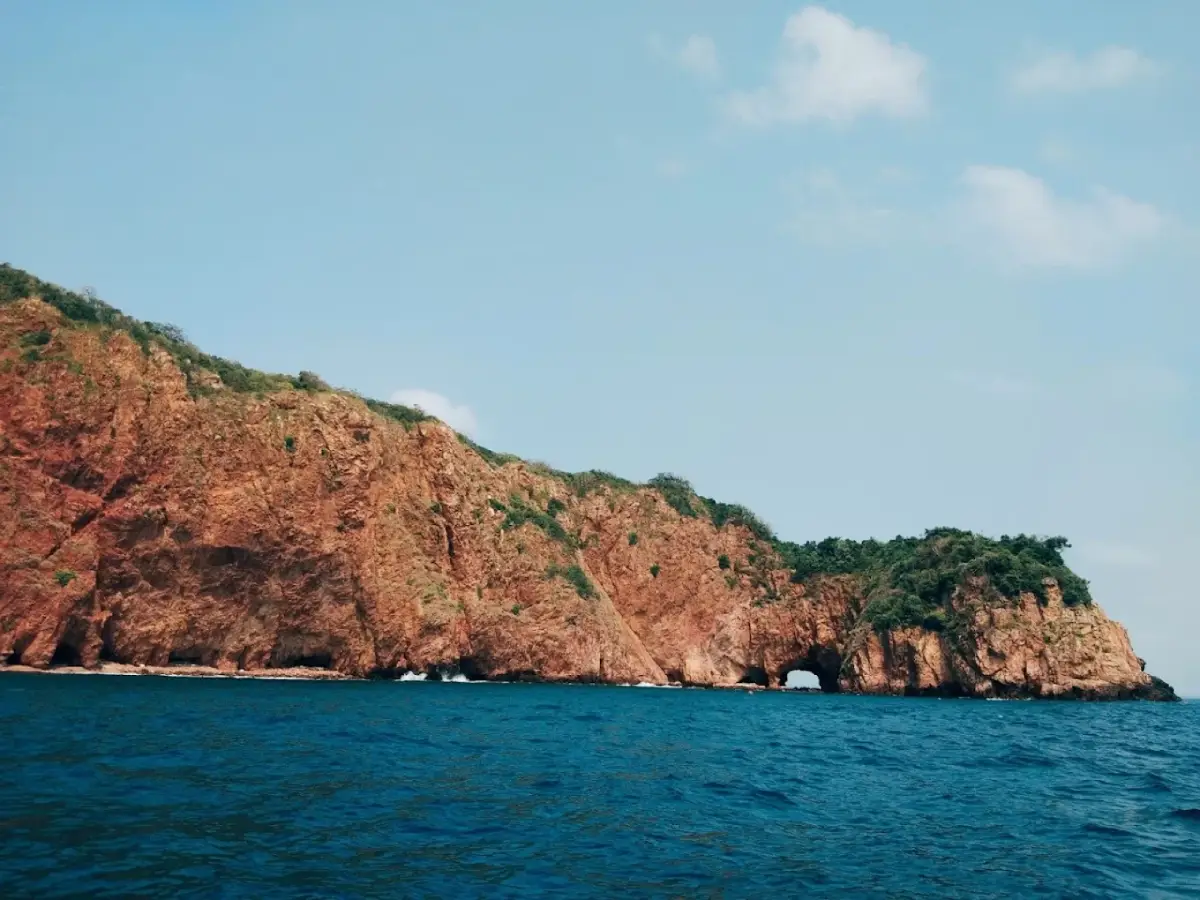
Ko Talu: A Distinctive Island of Bang Saphan Noi is one of the best-known island destinations in Prachuap Khiri Khan Province. Located offshore from Bang Saphan Noi District, the island is famous for a large natural opening through a rocky formation at its northern end. This striking feature gives the island its Thai name, Ko Talu, meaning an island with a passage or opening through the rock.
Ko Talu's combination of mountainous island scenery and its distinctive rock opening makes it one of the most recognisable coastal landmarks in this part of the Gulf of Thailand. Its surrounding waters support marine resources, including coral reefs, fish, and other organisms associated with tropical coastal ecosystems.
The island has particular significance for sea turtle conservation, especially the hawksbill turtle. The beaches and surrounding environment have been associated with sea turtle nesting activity, making the protection of coastal habitats especially important. Maintaining suitable nesting conditions is essential for the long-term survival of marine turtles, which face threats from habitat disturbance, pollution, and other pressures.
Ko Talu is also known for marine tourism. Visitors travel to the island by boat, and snorkelling is among the best-known activities in its surrounding waters. These experiences offer opportunities to observe the marine environment and appreciate the variety of organisms associated with coral reef habitats. Access and activities are governed by weather conditions, safety considerations, and applicable conservation requirements.
Coral reefs play an important role in supporting marine biodiversity. Their complex structures provide shelter and feeding habitats for fish and invertebrates, creating environments that sustain a variety of marine species. Healthy reefs also contribute to the ecological productivity of surrounding waters and help maintain balanced coastal ecosystems.
Protecting coral is therefore directly connected to preserving the quality of marine tourism. Physical damage caused by stepping on coral, careless anchoring, or touching fragile marine organisms can reduce habitat quality. Responsible activities around Ko Talu depend on maintaining the natural conditions that make the island attractive in the first place.
Ko Sing and Ko Sang are two additional islands associated with the Ao Siam proposed conservation area. Both lie offshore from Bang Saphan Noi District, within the same broader coastal environment as Ko Talu. Their importance is primarily connected with the protection of marine habitats and the ecological continuity of the island group.
Although Ko Talu is more widely recognised by travellers, Ko Sing and Ko Sang are important within the wider conservation landscape. Marine ecosystems do not function as isolated units defined by individual islands. Water movement, wildlife dispersal, and the movement of marine organisms connect habitats across considerable distances.
Protecting the island group helps conserve different types of marine habitat, including rocky coastlines and surrounding waters. The wider objective is not simply to create additional tourist destinations, but to preserve natural resources that support marine biodiversity and ecological stability over the long term.
The Biodiversity of Ao Siam is closely linked to the concentration of different ecosystems within the same coastal region. Mainland forests provide habitats for terrestrial wildlife, wetlands support specialised vegetation and aquatic organisms, while the sea around the islands contains coral reefs, fish, marine turtles, and many other organisms.
Among the area's significant marine animals is the hawksbill turtle, a protected species associated with nesting beaches around Ko Talu. Whale sharks have also been reported feeding in waters connected with the conservation area. Despite their enormous size, whale sharks feed by filtering small organisms from seawater and are recognised as an important protected marine species.
The ecological importance of the marine environment extends far beyond large animals. Plankton, juvenile fish, bottom-dwelling organisms, and other small forms of marine life play essential roles within food webs. Their relationships support the larger organisms that attract public attention and contribute to the broader productivity of the Gulf of Thailand.
Healthy coastal ecosystems are closely linked to local fishing resources and community livelihoods. When habitats provide suitable feeding and nursery conditions, they support the natural processes required for marine populations to develop and reproduce. Conservation therefore has direct relevance to communities that depend on marine resources for food and income.
Restoring Marine Habitats with Traditional Fish Shelters is one of the conservation approaches undertaken in the Ao Siam area. Locally known as sang ko, these structures are made using natural materials such as bamboo and coconut fronds. They are placed in appropriate marine environments to create shelter for juvenile fish and other aquatic organisms.
The underlying principle is to provide additional habitat structure where young marine animals can find cover. Bamboo and coconut materials create shaded spaces and physical shelter, bringing traditional fishing knowledge into marine restoration activities.
During May and June 2026, the Ao Siam National Park Preparatory Unit cooperated with local fishing networks and other organisations on projects involving the placement of these traditional fish shelters in coastal waters around Bang Saphan. The projects aimed to improve fish habitats, contribute to marine resource recovery, and strengthen community participation in conservation.
These activities demonstrate the value of conservation approaches that involve local residents. Fishing communities possess practical knowledge of weather, seasonal changes, fishing grounds, and marine resource conditions. Cooperation between these communities and conservation officers creates opportunities to combine traditional experience with organised environmental management.
Marine Waste Management and Conservation on Ko Talu provide another example of cooperation between conservation authorities, tourism operators, and local communities. In May 2026, the Ao Siam National Park Preparatory Unit and participating organisations conducted marine waste collection activities around Ko Talu.
Marine litter creates environmental problems that affect wildlife and coastal landscapes. Some materials can entangle marine animals or be mistaken for food. Plastic debris can also break into smaller fragments that remain in the environment and contribute to long-term pollution. Removing waste and preventing additional litter from entering the sea are therefore important conservation measures.
For Ko Talu, maintaining clean beaches and coastal environments is relevant to both tourism and sea turtle conservation. Reducing litter can limit physical obstacles and hazards along shorelines, particularly where beaches have ecological significance as potential nesting habitats.
The Role of Ao Siam in the Bang Saphan Community extends across environmental protection, public education, and cooperation with local residents. Coastal communities around Bang Saphan have long depended on the sea through small-scale fishing, local commerce, and tourism.
Traditional fishing practices reflect an understanding of seasonal changes, sea conditions, and the behaviour of marine animals. Fishermen must consider weather and local environmental conditions when planning their work, while the availability of marine resources remains fundamental to household incomes and local food supplies.
Where protected areas overlap with community livelihoods and resource-use traditions, effective management must take both conservation and local needs into account. Public consultation, cooperative projects, and marine habitat restoration offer ways to strengthen the relationship between conservation agencies and coastal communities.
Ao Siam therefore illustrates the close connection between people and nature. The condition of forests and marine ecosystems affects biodiversity as well as the lives of local residents. Environmental protection consequently involves not only government officers but also fishing communities, tourism businesses, local organisations, and visitors.
Nature Tourism Around Ao Siam offers varied experiences because of the diversity of local landscapes. Travellers interested in forests can explore the natural history of Pa Klang Ao and the ecological importance of Mae Ramphueng wetlands. Those attracted to the sea can discover coastal destinations around Bang Saphan and the offshore islands of Bang Saphan Noi, subject to the access arrangements for each location.
The appeal of Pa Klang Ao lies in its mature trees, shaded surroundings, and opportunities to appreciate a forest ecosystem situated unusually close to the sea. Rather than relying on large visitor facilities or entertainment activities, its value is found in the natural structure of the forest and the diversity of its vegetation.
For marine visitors, Ko Talu offers distinctive island landscapes and underwater environments. Reaching the island requires a boat journey, with conditions dependent on the weather and sea state. Marine activities must follow the requirements of authorised operators and the agencies responsible for conservation, especially in locations associated with coral reefs and protected wildlife.
Ban Krut Beach is another well-known destination in Bang Saphan District that can be included in a broader trip around the Ao Siam region. Located in Thong Chai Subdistrict, it stretches for approximately 12 kilometres and is known for its relaxed atmosphere and long coastal scenery.
The beach is characterised by pale sand, coconut palms, and a scenic coastal road. Khao Thong Chai separates the northern and southern sections of Ban Krut Beach. Restaurants, accommodation, and local communities are found along the coastline, making the area an attractive example of a quieter Thai seaside destination.
On Khao Thong Chai stands Phra Mahathat Chedi Phakdi Prakat, a significant Buddhist monument, together with the large Phra Phuttha Kiti Sirichai Buddha image. The elevated location provides extensive views over Ban Krut's sweeping coastline and the Gulf of Thailand. It offers visitors an opportunity to combine coastal scenery with Thailand's religious and cultural heritage.
Travelling through Bang Saphan and Bang Saphan Noi can therefore involve several distinct experiences. Pa Klang Ao is particularly relevant to forest and nature education, Ban Krut Beach offers coastal relaxation, Khao Thong Chai combines scenic viewpoints with religious landmarks, while Ko Talu provides marine excursions under the applicable conservation and safety requirements.
The Best Time to Visit depends on the activities being planned. Mainland nature visits require consideration of rainfall and local weather, while offshore trips demand particular attention to sea conditions. Weather patterns in the Gulf of Thailand vary seasonally and can affect the safety and availability of boat services.
The Prachuap Khiri Khan coastline is influenced by seasonal monsoon conditions. Heavy rainfall, strong winds, and high waves can restrict boat travel and snorkelling activities. Anyone planning an excursion to Ko Talu must therefore take account of current maritime conditions and the instructions of boat operators and responsible authorities.
For forest enthusiasts, changes in moisture, vegetation, and natural light create different atmospheres throughout the year. The colour of the foliage, the quality of light passing through the canopy, and the seasonal condition of the forest can all influence the visitor experience. These characteristics make a forest visit distinctly different from spending time on the nearby beaches.
Responsible Tourism and Nature Conservation are essential throughout the Ao Siam region. Visitors should avoid leaving litter, removing plants or animals, disturbing wildlife, and damaging marine habitats. These practices help minimise the environmental impact of tourism and support the protection of sensitive natural areas.
During snorkelling activities, visitors should not stand on coral, touch fragile reef organisms, chase marine animals, or discard objects into the sea. In forest areas, visitors should remain on permitted routes and follow the instructions of conservation officers. Certain locations may have particular importance for ecological research or habitat protection and may be subject to additional restrictions.
Getting to Ao Siam National Park is most practical by road. Highway 4, also known as Phetkasem Road, provides the main north–south connection through Prachuap Khiri Khan Province. Travellers heading for Pa Klang Ao and the Mae Ramphueng area can continue towards Bang Saphan District. A private vehicle or rental car is convenient when exploring multiple sites separated by considerable distances.
Rail travel is another option. Thailand's southern railway line serves stations in the wider Bang Saphan area, including Ban Krut Railway Station. From the selected station, visitors can arrange local transportation to reach individual destinations. Forest sites and boat departure points are not necessarily within walking distance of railway facilities.
Reaching Ko Talu requires an additional journey to a boat departure point in the Bang Saphan Noi area. Visitors then travel by boat using an appropriate local service. Offshore travel should be planned separately from mainland forest sightseeing because transportation arrangements, weather considerations, and safety requirements are different.
Accommodation is available across Bang Saphan District, especially around Ban Krut Beach and other coastal destinations. Travellers primarily interested in Pa Klang Ao may prefer accommodation with convenient road access towards Mae Ramphueng, while those planning an excursion to Ko Talu can consider locations that provide practical connections to the relevant boat departure area.
Local food also forms an important part of travelling through Bang Saphan. Coastal communities offer Thai dishes and seafood associated with traditional fishing livelihoods. Eating at local restaurants provides an additional opportunity to experience the atmosphere of the region beyond its forests and beaches.
The Overall Importance of Ao Siam National Park lies in the conservation of an unusually diverse range of natural environments. Mature forests, peat swamps, wetlands, coastal habitats, offshore islands, coral reefs, and important marine wildlife areas all contribute to the ecological significance of the region.
What gives Ao Siam particular value is the close relationship between conservation and the surrounding communities. Pa Klang Ao possesses both ecological and historical importance, Mae Ramphueng plays a valuable role as a wetland ecosystem, and Ko Talu is significant for sea turtle habitats and coral reef conservation. Marine restoration projects undertaken with fishing communities further demonstrate how local knowledge can contribute to environmental protection.
Ao Siam National Park is therefore more than a destination for coastal excursions. It represents a connected natural landscape where forests, wetlands, marine environments, wildlife, and human communities influence one another. Preserving these relationships is fundamental to responsible tourism and the long-term conservation of the Gulf of Thailand's coastal resources.
| Name | Ao Siam National Park (Preparatory Unit) |
| Province | Prachuap Khiri Khan, Thailand |
| Location | Bang Saphan and Bang Saphan Noi Districts, Prachuap Khiri Khan Province |
| Pa Klang Ao Forest Address | Mu 6, Mae Ramphueng Subdistrict, Bang Saphan District, Prachuap Khiri Khan Province, Thailand |
| Managing Authority | Department of National Parks, Wildlife and Plant Conservation, Thailand |
| Unit Head | Ms. Waraporn Chaiyasamut (named in the Department of National Parks' June 2026 news releases) |
| Natural Environment | Terrestrial forests, peat swamp forests, wetlands, coastal habitats, offshore islands, and marine ecosystems |
| Key Conservation Areas | Pa Klang Ao Forest, Mae Ramphueng Forest, Ko Talu, Ko Sing, and Ko Sang |
| Highlights | Ancient yang na trees, wetland ecosystems, Ko Talu, coral reefs, sea turtle nesting habitats, and community-based marine conservation |
| Historical Significance | Royal visit to Pa Klang Ao on 20 May 1977; public consultation concerning proposed national park designation on 4 September 2023 |
| Wildlife Importance | Habitats for terrestrial wildlife, marine organisms, coral reefs, and hawksbill sea turtle nesting activity around Ko Talu |
| Conservation Activities | Traditional fish habitat restoration, marine waste collection, and cooperative projects with local fishing communities |
| Current Status | The preparatory unit continues its conservation activities. Access to individual sites is governed by the requirements of the responsible authorities. |
| Getting There | Take Highway 4 towards Bang Saphan for Pa Klang Ao Forest and Mae Ramphueng, or continue towards Bang Saphan Noi for boat-based trips to Ko Talu. |
| Attractions Within and Around the Area | 1. Pa Klang Ao Forest Park 2. Mae Ramphueng Forest Area 3. Ko Talu 4. Ko Sing 5. Ko Sang 6. Ban Krut Beach 7. Khao Thong Chai and Phra Mahathat Chedi Phakdi Prakat |
| Restaurants in Bang Saphan District | 1. Rabiang Isan Restaurant 2. Coffee Hut Bang Saphan 3. Pla Too Seafood, Ban Krut 4. Sunshine Restaurant 5. Cuisine Home |
| Accommodation in Bang Saphan District | 1. Ban Krut Resort, Tel. +66 81 421 1186 2. Baan Grood Arcadia Resort & Spa 3. Baan Klang Aow Beach Resort 4. Bayview Beach Resort 5. Coral Hotel Bangsaphan |
Frequently Asked Questions (FAQ)
Q: Where is Ao Siam National Park located?
A: Ao Siam is situated in Prachuap Khiri Khan Province, Thailand, covering conservation areas in Bang Saphan and Bang Saphan Noi districts. Its principal sites include Pa Klang Ao Forest, Mae Ramphueng Forest, Ko Talu, Ko Sing, and Ko Sang.
Q: Is Ao Siam National Park open to tourists?
A: Ao Siam National Park operates as a preparatory conservation unit. Access arrangements differ among individual forests, coastal destinations, and offshore islands. It should not be treated as a fully designated national park with one shared entrance and admission ticket.
Q: What are the main attractions of Ao Siam?
A: Its most distinctive features include the mature yang na forest at Pa Klang Ao, the Mae Ramphueng wetland ecosystem, Ko Talu, coral reefs, and important marine turtle habitats.
Q: Why is Pa Klang Ao Forest important?
A: Pa Klang Ao is a coastal forest containing mature yang na trees and other native vegetation. It has ecological importance and a historical connection with the royal visit of 20 May 1977.
Q: Is Ko Talu part of the Ao Siam conservation area?
A: Parts of Ko Talu and its surrounding waters are associated with the proposed Ao Siam National Park area. The island is particularly important for marine biodiversity and hawksbill sea turtle conservation.
Q: How can travellers reach Ko Talu?
A: Travellers can reach Bang Saphan Noi District in Prachuap Khiri Khan and continue by boat using an appropriate local operator. Boat excursions depend on sea conditions and applicable safety requirements.
Q: What other attractions can be visited in the Ao Siam region?
A: A wider journey can include Pa Klang Ao Forest, Ban Krut Beach, Khao Thong Chai, Phra Mahathat Chedi Phakdi Prakat, and Ko Talu. Mainland attractions and boat excursions require different travel arrangements.
Q: Why is Ao Siam important to local communities?
A: The area supports forests and marine resources closely connected with the livelihoods of coastal fishing communities. Conservation activities include fish habitat restoration and environmental projects carried out with local residents.
 Category: ●Nature and Wildlife
 Group: ●National Parks and Marine Reserves
Last Update : 2 WeekAgo
 Last Update : 2 WeekAgo
 Click to Access the Navigation Map GPS
Ao Siam National Park Map
Recommend

 Art, Culture and Heritage
 Historical Sites and Monuments(3)
 Landmarks and Memorials(1)
 Royal Palace(1)
 Art, Craft Centres, Tradition(1)
 Art Gallery(1)
 Educational Places
 Museum for Study(1)
 Educational Gardens, Farm(1)
 Places of Worship
 Temple(19)
 Other Sacred Sites(7)
 Research and Development
 Royal Project(1)
 Suburban Living
 Village, Community(8)
 Local Market(2)
 Floating Market(1)
National Parks and Marine Reserves(7)
 Mountain (Doi)(7)
 Dam, Reservoir, Lake(6)
 Waterfalls(10)
 Caves(14)
 River, Canal(1)
 Bays and Beaches(19)
 Islands(5)
 Other natural attractions(3)
 Entertainment and Agricultural
 Zoos and Aquariums(1)
 Animal camps and shows(1)
 Farms, Parks and Ecotourism(2)
 Waterpark(2)
 Outdoor and Adventure Activities(2)
 Shopping
 Shopping and Night Market(5)
 Travel Articles, Recipes
 Travel Review, Food Review(1)


