
lovethailand home >Northeastern Travel Attractions >Khon Kaen Travel Attractions >Phu Pha Man >Na Fai > Phu Pha Man National Park
TL;DR: Phu Pha Man National Park is located at Phu Pha Man and Chum Phae districts, Khon Kaen Province, with part of the park extending into Phu Kradueng District, Loei Province, open Daily, hours 08.30 – 16.30.

Phu Pha Man National Park
Open Days: Daily
Opening Hours: 08.30 – 16.30
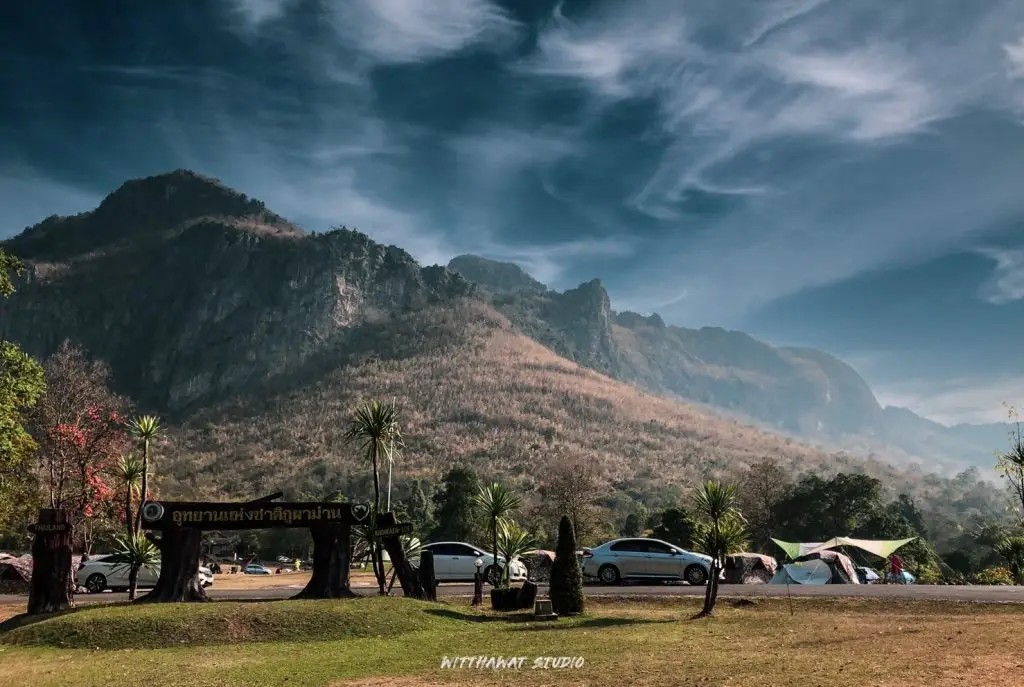
Phu Pha Man National Park in Khon Kaen Province is one of northeastern Thailand’s most distinctive limestone mountain landscapes. The park is famous for its dramatic limestone cliffs, which rise steeply and drop almost vertically in long ridged lines that resemble a giant curtain. This striking visual character gives the area its name, “Phu Pha Man,” and makes it one of the most memorable nature destinations in Khon Kaen. Travelers visiting the district will see the limestone wall standing above rice fields, villages, caves, forests, and seasonal waterfalls, creating a landscape that feels very different from the urban side of Khon Kaen.
The national park covers approximately 218,750 rai, or about 350 square kilometers, across Phu Pha Man and Chum Phae districts in Khon Kaen Province, as well as part of Phu Kradueng District in Loei Province. The area includes limestone mountains, evergreen forest, mixed deciduous forest, caves, cliffs, streams, and waterfalls. The climate is often cool and humid, especially around forested valleys, cave entrances, and waterfall areas. This combination of limestone geology and moist forest gives the park a unique atmosphere that is both rugged and refreshing.
Phu Pha Man National Park is not a single-point attraction. Its natural sites are scattered across different routes, so travelers should plan their visit carefully. The main travel areas can be grouped into two broad routes. The first route follows the Phu Pha Man District side and includes Bat Cave, Phra Cave, Dong Lan Forest Development Project 4, Phu Ta Lo Cave, and Tat Fa Waterfall. The second route follows the park office direction and Highway 201, leading to Phaya Nakarat Cave, Lai Thaeng Cave, and Tat Rong Waterfall, also known locally as Tat Hong Waterfall.
The park’s limestone mountains were shaped by long-term erosion. Water slowly dissolved and carved the limestone, creating caves, chambers, stalactites, stalagmites, stone pillars, and vertical cliffs. This karst landscape makes Phu Pha Man an excellent place to observe geology in a travel-friendly setting. Visitors can enjoy the scenery from outside the cliffs, explore selected caves, and learn how natural processes have created the striking landforms that define the district.
Bat Cave is the most famous attraction in the park. It is located on Phu Pha Man Mountain, about 2.5 km from the Phu Pha Man District Office. The cave mouth sits on a limestone cliff about 100 meters above ground level and can be seen from a distance. Inside the cave live millions of small bats. Every evening at around 18.00, the bats fly out in a continuous stream to feed. The emergence usually lasts about 30–45 minutes, forming a long moving line across the evening sky. This natural phenomenon is one of the most impressive wildlife experiences in Khon Kaen.
Visitors who want to watch the bats should arrive before sunset to choose a suitable viewing spot. It is important to remain quiet, avoid shining strong lights toward the cave, and never disturb the bats or their flight path. The bat emergence is not only a tourist spectacle; it is part of the local ecosystem. Bats help control insects and play an important role in the food chain. Protecting the cave environment is therefore essential for keeping this natural event alive.
Near Bat Cave is Phra Cave, a long cave that slopes upward and can connect toward the top of Phu Pha Man. The route is difficult in parts, so visitors should be physically prepared if they plan to explore deeper areas. Inside the cave are beautiful stalactites, stalagmites, and large stone pillars. Vehicles can reach the cave area throughout the year, but the best season to visit is the cool season. During the rainy season, water can flow through parts of the cave and make rock surfaces slippery with moss.
Phra Cave also reflects the close relationship between caves, mountains, and local belief. In many limestone areas of Thailand, caves are respected as quiet, cool, and mysterious places connected with faith and meditation. Visitors should explore respectfully, avoid touching limestone formations, avoid writing on cave walls, and never remove rocks or natural objects from the cave.
Dong Lan Forest Development Project 4 is located at Ban Wang Sawap, Moo 1, Wang Sawap Subdistrict, about 14 km from the Phu Pha Man District Office. The area is associated with forestry work and has a quiet, cool atmosphere. It is suitable for group visits, nature-based rest, and simple rural retreats. Some accommodation and a small meeting space may be available for group use, so travelers who plan to use the facilities should contact the relevant office before traveling.
Phu Ta Lo Cave is also located around Ban Wang Sawap, about 17 km from the Phu Pha Man District Office. It is a spacious cave with a high ceiling of around 5–7 meters and an interior area of roughly more than one rai. The cave floor is relatively flat and cool, with natural stalactites and stalagmites still in good condition. Some stones resemble quartz-like shapes. Vehicles can reach the area only during the dry season, so travelers should avoid this cave during periods of heavy rain unless road conditions are confirmed safe.
Tat Fa Waterfall is one of the most beautiful waterfall attractions in the park. It is formed by Huai Tat Fa, a stream that marks the boundary between Phu Pha Man District in Khon Kaen and Nam Nao District in Phetchabun. The waterfall is located near Ban Dong Sakhran, Moo 7, Wang Sawap Subdistrict, about 40 km from the Phu Pha Man District Office. Vehicles can reach only Ban Tat Fa, after which visitors must continue on foot. The waterfall has 5 levels, with the final level being the most impressive at around 80 meters high. The rainy season is the best time to see it at full strength.
A trip to Tat Fa Waterfall requires more preparation than a visit to Bat Cave or Phra Cave. The route includes both driving and walking, and some sections may be slippery, steep, or crossed by streams. Travelers should wear proper walking shoes, bring drinking water, snacks, a rain jacket, and waterproof protection for valuables. Those unfamiliar with the route should ask park staff or local people for guidance before entering the waterfall trail.
Another important cave route leads to Phaya Nakarat Cave. Inside the cave are beautiful limestone formations, including curtain-like ridges and sparkling mineral surfaces. The cave bends and twists like the body of a naga, which explains the name Phaya Nakarat. The cave is about 1 km long and offers a striking combination of geology, imagination, and local belief. Visitors should bring proper lighting and follow safe routes inside the cave.
Lai Thaeng Cave is located about 800 meters beyond Phaya Nakarat Cave. It contains ancient colored paintings on the cave wall, covering an area of about 2 square meters. The paintings include human figures, animals, and other forms, totaling around 70 images. Local people once believed the paintings were a treasure map, which led to the name “Lai Thaeng Cave.” Today, these images are valuable archaeological evidence and should be protected carefully. Visitors must not touch, trace, scratch, or damage the paintings in any way.
Tat Rong Waterfall, also known as Tat Hong Waterfall, is a large waterfall near the boundary between Phu Kradueng National Park and Phu Pha Man National Park in Loei Province. It is about 70 meters high and is famous for the story that the waterfall “sings.” Local accounts explain that a large stone slab beneath the falls receives the falling water like a giant tongue. When water strikes the rock and rebounds through gaps in the stone, it creates a strange echoing sound that can be heard through the forest. This story gives the waterfall both natural and cultural appeal.
The forest in Phu Pha Man National Park is a mixture of evergreen forest and mixed deciduous forest. Evergreen forest helps maintain moisture around streams, caves, and waterfalls, while mixed deciduous forest changes with the seasons. During the rainy season and early cool season, the forest becomes green and humid. During the dry season, some areas become more open, revealing the structure of the limestone cliffs more clearly. These different forest types support wildlife such as birds, insects, bats, reptiles, small mammals, and cave-related species.
The bats of Bat Cave are especially important to the local ecosystem. Their evening flight is beautiful to watch, but it is also part of a daily ecological cycle. By feeding on insects, the bats help maintain natural balance. This is why visitors should treat the bat viewing area as a wildlife habitat rather than just a photo spot. Quiet observation is the best way to experience the phenomenon.
Recommended activities in Phu Pha Man National Park include watching the bat emergence, exploring limestone caves, photographing the limestone cliffs, visiting waterfalls during the rainy season, learning about ancient cave paintings, hiking short nature routes, and staying overnight in the surrounding Phu Pha Man area. In recent years, more cafes, homestays, restaurants, and resorts have developed around the district, allowing travelers to enjoy the mountain view from morning to evening.
The best season depends on the activity. For waterfalls, the rainy season and early cool season are best because Tat Fa Waterfall and Tat Rong Waterfall have more water. For bat watching, cliff photography, and overnight stays, the cool season is especially pleasant because the air is comfortable and the sky is often clearer. The rainy season offers green forest and strong waterfalls, but travelers should check weather and road conditions before visiting caves or remote waterfall areas.
A one-day trip can include Phra Cave or Phaya Nakarat Cave during the day, a local cafe or restaurant in the afternoon, and Bat Cave at sunset. A two-day trip allows more time for Phu Ta Lo Cave, Tat Fa Waterfall, Lai Thaeng Cave, Tat Rong Waterfall, and a relaxed stay with views of the limestone cliffs. Because attractions are spread out, a private car or rented vehicle is the most convenient way to travel.
Although Phu Pha Man now has more visitor services than in the past, many natural attractions inside the park remain relatively rugged. Travelers should bring a flashlight, walking shoes, drinking water, insect repellent, a personal trash bag, and rain protection during the wet season. For caves and waterfalls, avoid traveling alone, and ask local people or park staff about current route conditions before entering remote areas.
Getting There from Khon Kaen city, take Highway 12 on the Chum Phae-Phetchabun route toward Chum Phae District. Then connect to Highway 201 and follow the road toward Phu Pha Man District. The distance from Khon Kaen city is approximately 100–115 km, depending on the final destination inside the park. Travelers coming from Chum Phae can reach Phu Pha Man more quickly and continue to Bat Cave, Phra Cave, or nearby accommodation areas.
Travelers coming from Loei or Phu Kradueng can use connecting routes toward the Tat Rong Waterfall and Phu Pha Man side, but road conditions and travel time should be checked in advance. Public transport travelers can go to Chum Phae or Phu Pha Man town, then arrange a local vehicle to individual attractions. For visitors who want to see several caves, waterfalls, and viewpoints in one trip, a private vehicle is strongly recommended.
Visitors should follow park rules at all times. Do not leave trash, disturb bats, shout inside caves, touch stalactites or stalagmites, write on cave walls, touch ancient paintings, walk outside marked trails, or enter waterfalls during heavy rain or strong currents. Cave and waterfall tourism requires awareness because rock surfaces can be slippery, water levels can rise quickly, and cave interiors can change with the season.
In summary, Phu Pha Man National Park is one of the most impressive limestone landscapes in northeastern Thailand. Its appeal lies in the combination of curtain-like cliffs, caves, waterfalls, evergreen forest, ancient paintings, local legends, and the evening spectacle of millions of bats leaving their cave. Travelers who prepare well and respect the natural setting will experience Phu Pha Man as a powerful and memorable destination in Khon Kaen Province.
| Name | Phu Pha Man National Park |
| Location | Phu Pha Man and Chum Phae districts, Khon Kaen Province, with part of the park extending into Phu Kradueng District, Loei Province |
| Address | Na Nong Thum Subdistrict, Chum Phae District, Khon Kaen 40290, Thailand |
| Coordinates | Approximately 16.709, 101.900 |
| Area | Approximately 218,750 rai or 350 sq km |
| Highlights | Curtain-like limestone cliffs, Bat Cave, Phra Cave, Phu Ta Lo Cave, Phaya Nakarat Cave, Lai Thaeng Cave, Tat Fa Waterfall, and Tat Rong Waterfall |
| History | A major protected limestone and forest landscape of Khon Kaen, with caves, ancient paintings, waterfalls, and local natural heritage linked to surrounding communities |
| Name Origin | The name refers to the limestone cliffs that drop in vertical ridges resembling a curtain |
| Distinctive Features | Limestone mountains, caves, stalactites, stalagmites, high cliffs, evergreen forest, mixed deciduous forest, waterfalls, and large bat colonies |
| Travel Information | From Khon Kaen city, take Highway 12 toward Chum Phae and Phetchabun, then connect to Highway 201 toward Phu Pha Man District. The distance is about 100–115 km depending on the destination inside the park. |
| Current Status | Open for visitors; access to some caves and waterfalls may depend on weather and seasonal conditions |
| Open Days | Daily |
| Opening Hours | 08.30 – 16.30 |
| Fees | Thai adults 20 THB, Thai children 10 THB / foreign adults 100 THB, foreign children 50 THB / motorcycle 20 THB / car 30 THB / 6-wheel vehicle 100 THB |
| Facilities | Visitor center, parking areas, restrooms, bat-viewing areas, access routes to selected caves and waterfalls, and private restaurants and accommodations around Phu Pha Man District |
| Main Areas / Zones | 1. Bat Cave 2. Phra Cave 3. Dong Lan Forest Development Project 4 4. Phu Ta Lo Cave 5. Tat Fa Waterfall 6. Phaya Nakarat Cave 7. Lai Thaeng Cave 8. Tat Rong / Tat Hong Waterfall 9. Limestone Cliff and Viewpoint Areas around Phu Pha Man |
| Caretaker | Phu Pha Man National Park, Department of National Parks, Wildlife and Plant Conservation |
| Main Contact Number | 043-001-753 / 064-168-2251 |
| Official Website / Official Page | Phuphaman National Park Official Facebook Page |
| Nearby Tourist Attractions | 1. Bat Cave, about 3 km 2. Phra Cave, about 4 km 3. Phu Pha Man Bat Viewing Area, about 3 km 4. Blue Lagoon Phu Pha Man, about 8 km 5. Phaya Nakarat Cave, about 12 km 6. Lai Thaeng Cave, about 13 km 7. Phu Ta Lo Cave, about 18 km 8. Tat Fa Waterfall, about 40 km |
| Nearby Restaurants | 1. Pha Man Fun Cafe and Restaurant, about 3 km, Tel. 095-169-9564 2. Farmkits, about 5 km, Tel. 081-920-0252 3. EKIA, about 5 km, Tel. 086-607-6957 4. Mapak Mahug, about 6 km, Tel. 063-258-8555 5. Takayai Cafe’ de Phuphaman, about 5 km, Tel. 061-059-8337 6. Hug Phaman, about 5 km, Tel. 081-636-4787 7. Hai-Na Garden House, about 6 km, Tel. 096-640-2999 8. Gangnam Cafe Park & Resort Phu Pha Man, about 7 km, Tel. 063-504-7328 |
| Nearby Accommodations | 1. Takayai Homestay Phu Pha Man, about 5 km, Tel. 083-144-1377 / 088-648-9640 2. Pha Man Fun, about 3 km, Tel. 096-243-6156 3. Huen Suwanna Homestay, about 5 km, Tel. 081-262-6282 4. Gangnam Cafe Park & Resort Phu Pha Man, about 7 km, Tel. 063-504-7328 5. Baan Rai Kanok Nuan Farmstay, about 35 km, Tel. 043-313-554 / 095-508-4059 6. Dusita Resort, about 35 km, Tel. 043-423-305 7. Phu Pha Man Grand Resort, about 10 km, Tel. 095-619-0252 |
Frequently Asked Questions (FAQ)
Q: Where is Phu Pha Man National Park located?
A: Phu Pha Man National Park covers parts of Phu Pha Man and Chum Phae districts in Khon Kaen Province, with some areas extending into Phu Kradueng District in Loei Province. It is known for limestone cliffs, caves, forests, and waterfalls.
Q: Why is it called Phu Pha Man?
A: The name comes from the limestone cliffs that drop in vertical ridges like a curtain, creating the signature landscape of Phu Pha Man.
Q: What time should visitors go to Bat Cave?
A: Visitors should arrive before sunset. The bats usually begin flying out of the cave around 18.00, and the emergence can last about 30–45 minutes.
Q: Is there an entrance fee for Phu Pha Man National Park?
A: Yes. Thai adults pay 20 THB and Thai children pay 10 THB. Foreign adults pay 100 THB and foreign children pay 50 THB. Vehicle fees apply separately.
Q: What are the opening hours of Phu Pha Man National Park?
A: The park is open daily from 08.30 to 16.30. Visitors planning to watch the bats in the evening should check the latest local guidance before traveling.
Q: When is Tat Fa Waterfall most beautiful?
A: Tat Fa Waterfall is most beautiful during the rainy season and early cool season, when the water level is higher and the surrounding forest is green.
Q: How do I get from Khon Kaen city to Phu Pha Man National Park?
A: Take Highway 12 toward Chum Phae and Phetchabun, then connect to Highway 201 toward Phu Pha Man District. The trip is about 100–115 km depending on the destination inside the park.
Q: Is Phu Pha Man National Park suitable for an overnight trip?
A: Yes. Staying overnight is recommended because visitors can watch the bats in the evening and explore caves, viewpoints, and waterfalls the next day. Most travelers stay in Phu Pha Man District or nearby accommodation areas.
 Category: ●Nature and Wildlife
 Group: ●National Parks and Marine Reserves
Last Update : 3 MonthAgo
 Last Update : 3 MonthAgo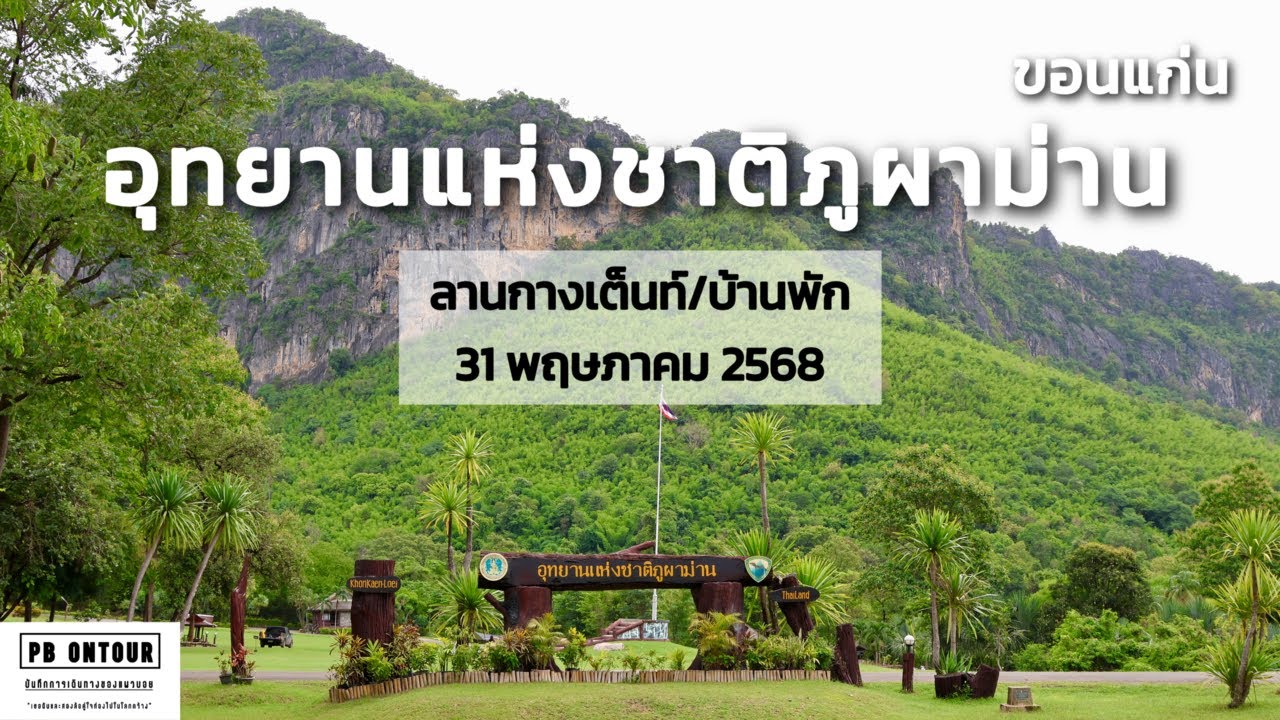
 Click to Access the Navigation Map GPS
Phu Pha Man National Park Map
Recommend

 Art, Culture and Heritage
 Historical Sites and Monuments(7)
 Landmarks and Memorials(3)
 Art, Craft Centres, Tradition(2)
 Museums(4)
 Educational Places
 Museum for Study(2)
 Places of Worship
 Temple(27)
 Other Sacred Sites(5)
 Suburban Living
 Village, Community(3)
 Local Market(1)
National Parks and Marine Reserves(5)
Local Market(1)
National Parks and Marine Reserves(5)
 Mountain (Doi)(1)
 Dam, Reservoir, Lake(4)
 Waterfalls(8)
 Caves(9)
 River, Canal(10)
 Bays and Beaches(3)
 Islands(1)
 Other natural attractions(5)
 Entertainment and Agricultural
 Zoos and Aquariums(2)
 Animal camps and shows(2)
 Farms, Parks and Ecotourism(7)
 Waterpark(3)
 Travel Articles, Recipes
 Travel Review, Food Review(1)


