
lovethailand home >Northeastern Travel Attractions >Nakhon Phanom Travel Attractions >Muang Nakhon Phanom >Nong Yat > Mekong Underwater World
TL;DR: Mekong Underwater World is located at Nakhon Phanom Science Centre for Education, 355 Moo 6, Nong Yat Subdistrict, Mueang Nakhon Phanom District, Nakhon Phanom Province 48000, open Daily, including public holidays, hours 08:30 – 16:30.
Mekong Underwater World
Open Days: Daily, including public holidays
Opening Hours: 08:30 – 16:30
Admission Fees: Children 20 baht, adults 30 baht; Buddhist monks, novices, and visitors aged 60 or over enter free of charge
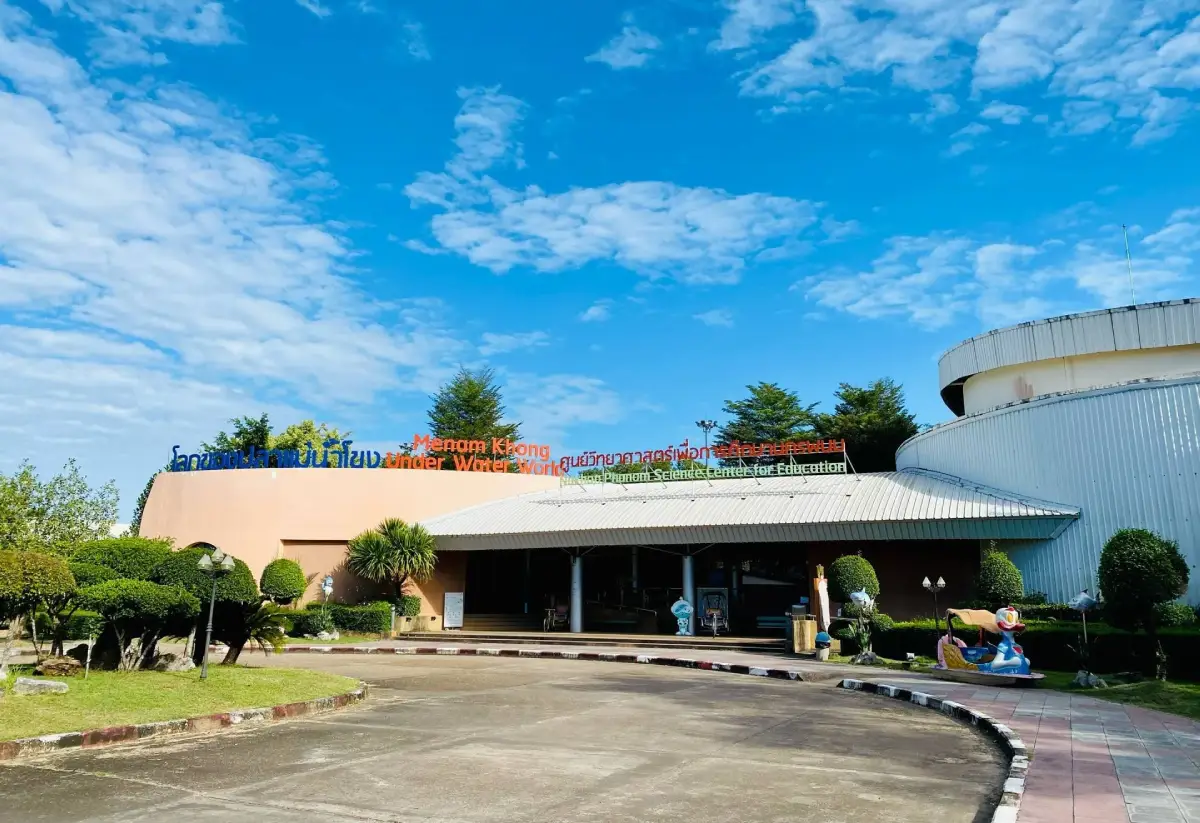
Mekong Underwater World, also known as Nong Yat Freshwater Aquarium, is an important science-based and freshwater-ecology attraction in Nakhon Phanom Province. It is located within the Nakhon Phanom Science Centre for Education beside Nong Yat Reservoir, in Nong Yat Subdistrict, Mueang Nakhon Phanom District. The building brings together information about fish from the Mekong River, the Kam River, the Songkhram River, and the freshwater ecosystems of northeastern Thailand. Its highlights include an underwater fish tunnel, aquariums in several formats, exhibitions on rare and endangered fish, a 50-seat audiovisual room, three-dimensional displays, and learning spaces that connect nature, science, history, and the way of life of people in the Mekong Basin.
The attraction is suitable for families with children, school and university groups, general travelers, and anyone interested in the biodiversity of the Mekong River. Visitors can observe fish at close range while learning about their body shapes, behavior, habitats, and relationships with riverside communities. The exhibits also explain why many Mekong fish species are important to food, livelihoods, traditions, and the long-term security of natural resources across the region. The journey from central Nakhon Phanom takes about 15–20 minutes, making the aquarium easy to include in a half-day itinerary or combine with major attractions in the city.
The aquarium is located at 355 Moo 6, Nong Yat Subdistrict, Mueang Nakhon Phanom District, Nakhon Phanom Province 48000, along the Nakhon Phanom–Na Kae Road. The Nakhon Phanom Science Centre for Education covers approximately 58 rai and adjoins Nong Yat Reservoir, a large body of water close to Nakhon Phanom Municipality. The surrounding landscape includes wetlands, residential communities, agricultural land, fisheries-related agencies, and science-learning areas. The museum is therefore not isolated from its environment; it stands within a landscape that clearly reflects the relationship between water, fish, and human life.
Nong Yat Reservoir covers approximately 2,500 rai, or about 4 square kilometers. It is an important water source near the city and supports water management, fisheries, recreation, and environmental education. The open landscape around the reservoir has long been familiar to people in Nakhon Phanom. Establishing Mekong Underwater World here was therefore an appropriate choice, as visitors do not learn about fish only as animals in tanks but can also connect the information presented indoors with a real water source and the surrounding environment.
Nong Yat Reservoir also has significance in local history. King Bhumibol Adulyadej, Rama IX, and Queen Sirikit visited Nakhon Phanom Province on royal duties in 1962. That royal visit remains in the memory of local residents. Later, the development of educational areas within the science center connected this history with the Chakri Royal Family Commemorative Hall, allowing visitors to learn both about the natural environment of the Mekong Basin and the historical relationship between the monarchy and communities along Thailand’s northeastern border.
Nakhon Phanom has several important river systems. The Mekong is the principal international river flowing along the eastern side of the province, while the Kam and Songkhram rivers form regional networks linking wetlands, ponds, marshes, streams, and floodplains. These waterways create many types of fish habitat, from fast-flowing sections of the main river and deep pools to shallow water, seasonally flooded forests, and floodplains. This environmental diversity supports a large variety of aquatic life and makes Nakhon Phanom an important area for the spawning, nursery, and reproduction cycles of many fish species.
Fish in the Mekong Basin are important for far more than food. They are closely connected with household economies, traditional fishing, local trade, food-preservation knowledge, and community food culture. Some species migrate over long distances with the seasons, some live in deep water, and others use floodplains for spawning and feeding. When water levels or migration routes change, fish life cycles are directly affected. The exhibitions therefore help visitors understand that fish conservation cannot focus on the animals alone; rivers, riparian forests, wetlands, and migration corridors must also be protected.
The diversity of fish in the Mekong, Kam, and Songkhram rivers was a major reason for creating a permanent learning center for aquatic species. The purpose was not simply to arrange attractive fish tanks, but to give students, travelers, and the general public opportunities to see aquatic animals that may be difficult to encounter in the wild. Some species are active at night, some live in turbid or deep water, and others have declined to the point that they are rarely seen. The indoor exhibits therefore act as a window into ecosystems normally hidden beneath the surface.
The idea for Mekong Underwater World gained momentum when General Chavalit Yongchaiyudh, Thailand’s 22nd prime minister, recognized the suitability of establishing an aquatic-species collection beside Nong Yat Reservoir. The facility was intended to display and share knowledge about aquatic life from the Mekong River, the Kam River, and the Songkhram River. The concept matched Nakhon Phanom’s potential as a Mekong riverside province with diverse aquatic resources and a geographical position well suited to becoming a regional center for river and environmental learning.
The project was further developed through the work of Chavalit Wichayasuth, a former Member of Parliament for Nakhon Phanom, who joined a study visit to Australia in 1994 and observed modern aquarium-display methods. That experience inspired a vision for a Mekong fish exhibition building where visitors could closely view large fish and species of regional importance, especially the Mekong giant catfish, one of the basin’s most recognizable symbols. Ideas observed overseas were then adapted to suit Nakhon Phanom and Thailand’s freshwater resources.
During the term of Nakhon Phanom mayor Phisit Pitiphat, the municipality and its executive team took part in establishing Mekong Underwater World. The project received support from the Nong Yat Subdistrict Administrative Organization, the governor of Nakhon Phanom, Chavalit Wichayasuth, and related agencies. Its development was therefore a collaboration among provincial administration, local government, political representatives, educational organizations, and aquatic-resource agencies. Their shared goal was to create a useful public learning center while strengthening the province’s tourism resources.
The building was designed as a freshwater aquarium capable of supporting both animal viewing and structured learning. Its interior includes fish tanks of different sizes, an underwater viewing tunnel, information exhibitions, an audiovisual room, three-dimensional displays, and visitor-service areas. The visitor route progresses from introductions to rivers and habitats, through displays of different fish species, and finally toward conservation issues. Visitors therefore gain more than the enjoyment of watching fish swim; they also learn why different groups of fish have distinct body forms and behavior.
The building and project were officially handed over for use as a learning facility on 25 April 2013. The Nakhon Phanom Science Centre for Education was formally established on 9 August 2013. The center was created to provide learning opportunities in science, technology, the environment, history, and lifelong non-formal education. Mekong Underwater World became one of its principal exhibitions, alongside the Chakri Royal Family Commemorative Hall, science camps, energy exhibitions, and other learning stations throughout the grounds.
Today, the attraction is managed by the Nakhon Phanom Science Centre for Education under the Department of Learning Encouragement, Ministry of Education. Phornsak Thammawanit serves as director of the center. Because it operates as an educational institution, the aquarium has a role beyond tourism: it receives general visitors, school groups, science camps, training programs, and lifelong-learning activities. Large groups and organizers of special activities should contact the Promotion and Services Section in advance so staff can prepare appropriate arrangements.
On arrival, visitors will find spacious grounds containing several educational buildings. The freshwater aquarium is an indoor attraction suitable for year-round visits, particularly during hot weather or the rainy season. The entrance area is the starting point for buying tickets, requesting information, and preparing to enter the exhibitions. Visitors, especially organized groups requiring scheduled sessions or activity rooms, should check whether special activities, temporary exhibitions, or maintenance closures of particular tanks are taking place on the day of their visit.
The first section introduces the Mekong Basin and the importance of aquatic life. Visitors encounter information about rivers, fish origins, habitats, and community livelihoods. This material provides useful context before viewing live fish because species do not all inhabit the same water conditions. Some need flowing water with high oxygen levels, while others tolerate still or muddy environments. Large migratory fish require extensive waterways and long migration routes. Understanding habitat makes each aquarium display more meaningful.
The aquarium contains long tanks, tall tanks, smaller displays for particular groups of fish, and large tanks for species requiring more swimming space. Their arrangement allows visitors to observe fish from different angles and study body shape, scales, barbels, fins, mouths, and movement. Bottom-dwelling fish often have forms and behavior unlike species that swim in midwater, while predators possess mouths and body structures suited to catching prey. Moving slowly through the exhibits reveals details that are easy to miss during brief encounters in nature.
The underwater fish tunnel is the attraction’s most prominent feature. Visitors can walk beneath a large tank while watching fish pass beside and above them. This perspective creates a stronger sense of entering an underwater world than viewing fish through a single flat panel. Children often enjoy following individual fish, while adults can clearly observe schooling, evasive movement, and differences in size. Visitors should keep moving in an orderly way, avoid blocking the tunnel for long periods, and refrain from using flash photography that could disturb aquatic animals or other guests.
The center’s knowledge database includes information on common, rare, and endangered fish, covering 47 species. Published lists include fish locally known as pla ka dam, pla salu, pla chalat, pla takok, pla wian, large-striped tigerfish, pla sai, pla cha-on, pla krachon, pla khao dam, Jullien’s golden carp, pla wa na no, giant mottled eel, clown knifefish, giant barb, giant freshwater stingray, giant pangasius, black-ear catfish, Mekong giant catfish, and other freshwater species. Live-animal displays may rotate according to animal care, health, and tank suitability, but information about each species remains available through signs and educational media.
The Mekong giant catfish attracts particular attention because it is a huge scaleless fish native to the Mekong Basin and has long been connected with stories of the river. Its enormous body, life in the main river channel, and natural migration cycle make it a symbol of both abundance and vulnerability. Habitat decline, changing water levels, and barriers along migration routes can have severe effects on large fish. Learning about the Mekong giant catfish therefore leads to a broader understanding of why the entire river system must be protected.
Giant pangasius and black-ear catfish are examples of scaleless fish that allow visitors to compare body shapes, behavior, and habitats. Giant pangasius has a powerful, elegant appearance and acts as a predator within freshwater ecosystems, while black-ear catfish is important to fisheries and food in many areas. Their displays help children understand food chains by making the relationships among predators, smaller fish, bottom-dwelling organisms, and other aquatic resources easier to see without beginning with complex academic explanations.
Giant freshwater stingrays and other freshwater rays clearly demonstrate the diversity of body forms found in river ecosystems. Their flattened bodies, broad fins, and bottom-oriented behavior differ greatly from the streamlined form of typical fish. These animals depend on particular habitats and can be affected by changes to riverbeds, pollution, and accidental capture. Their story reminds visitors that rivers contain not only fish swimming in open water, but also animals dependent on sandy beds, mud, and bottom ecosystems that are difficult to observe.
Giant barb, Jullien’s golden carp, pla takok, and other members of the carp family demonstrate the diversity of scaled fish in Thai waters. Each species differs in size, diet, and behavior. Some eat plants or fruit that falls into the water, some feed on small animals, and others move with rising water levels during the rainy season. The connection between fish and riverside forest is therefore essential, as trees and riparian vegetation provide food, shelter, and protection for water quality.
The large-striped tigerfish is another species that illustrates the value of rare aquatic life. Its striking markings make it especially attractive to visitors, but its beauty also once led to heavy capture for trade. Combined with habitat loss, this pressure caused wild populations to decline. The display encourages visitors to understand that rare aquarium fish should come only from legal sources and that uncontrolled capture from the wild should not be supported.
The giant mottled eel, sometimes locally associated with serpent-like forms, has a long body resembling a snake and can survive in habitats unlike those used by many typical fish. Its appearance often surprises children and visitors seeing it for the first time. Observing the eel opens discussion about biological adaptation, including body forms suited to moving through aquatic plants or mud, tolerance of particular environmental conditions, and the ways aquatic animals use habitats that people may consider unimportant. Such knowledge can replace fear or misunderstanding with scientific curiosity.
The display of rare and endangered fish is intended primarily to raise awareness, not simply to make a visit more exciting. Visitors should understand that “endangered” means wild populations face risks from many causes, including overfishing, changes to waterways, barriers to migration, destruction of spawning grounds, chemical contamination, plastic waste, and climate change. Addressing these threats requires cooperation among countries, government agencies, communities, and consumers.
The Mekong flows through several countries, and the movement of water, sediment, nutrients, and fish does not stop at national borders. Aquatic conservation is therefore a regional issue. Events in the upper river can affect downstream areas, while changes in tributaries also influence the main channel. Mekong Underwater World makes these distant or complex issues easier to understand through animals visitors can see directly. Observing the size, form, and vitality of fish makes the importance of river protection clearer than statistics alone.
The exhibitions also explain the relationship between seasons and fish life. During the rainy season, rising water connects rivers with floodplains, allowing fish to enter former fields and forests to feed and spawn. In the dry season, water levels fall and many species return to rivers, deep channels, or permanent water bodies. This cycle forms the basis of community fisheries. If waterways are blocked or water levels change at the wrong time, spawning and growth are disrupted. Learning about the water cycle is therefore essential to understanding Mekong fish.
For media-based learning, the building has a 50-seat audiovisual room used for films and presentations that expand on information presented in the aquariums. The room is particularly suitable for school groups, as students can watch material together before or after touring the exhibitions. Teachers can use it to introduce lessons on ecosystems, biodiversity, animal adaptation, or the effects of human activity. Groups wishing to use the room should arrange this in advance because it may be scheduled for activities, camps, or equipment maintenance.
Three-dimensional displays make the exhibitions more enjoyable and help visitors engage with scientific content. They provide visual landmarks, photography opportunities, and different perspectives on aquatic-animal forms. Photography should still respect other users of the space: visitors should not block walkways, use flash close to fish tanks, or strike glass and exhibition equipment. Parents should help children distinguish between areas intended for play and educational equipment that must be handled carefully.
A souvenir area forms part of the building, allowing visitors to choose items related to fish, science, or the identity of Nakhon Phanom. Souvenirs can extend learning after the visit, particularly books, educational materials, and useful objects containing information about aquatic life. Products and sales hours may change over time. Visitors planning to make bulk purchases or arriving with an organized group should ask staff for current details on the day of their visit.
In addition to the freshwater aquarium, the same grounds contain the Chakri Royal Family Commemorative Hall, created as a memorial to the loyalty of Nakhon Phanom residents toward King Bhumibol Adulyadej, Rama IX, and Queen Sirikit. The displays offer another perspective on the province, moving from rivers and the natural world to regional development history, royal duties, and the relationship between the monarchy and local communities.
The first floor of the commemorative hall focuses on royal biographies, royal duties, and the royal visit to Nakhon Phanom. Its presentation links the events of 1962 with the later development of border communities. Families can use this section to explain to children that national development is not limited to large cities but includes remote areas, agriculture, water resources, health, education, and the security of people living along national borders.
The second floor presents Nakhon Phanom from several perspectives, including important sites, ethnic communities, local ways of life, and the province’s culture of sacred stupas associated with days of birth. Nakhon Phanom is known for stupas linked to people born on different days of the week and for ethnically diverse communities that have shaped the province’s identity. Visiting the commemorative hall after Mekong Underwater World helps travelers understand that the river is not only a natural system but also a route of settlement, travel, trade, religion, and cultural exchange across generations.
The Nakhon Phanom Science Centre for Education also presents several types of indoor science exhibition. Themes may include basic science, astronomy, renewable energy, STEM education, technology, and the environment. Some exhibits are designed for hands-on experimentation, play, or independent discovery. This approach makes science feel less difficult and less confined to classrooms, allowing children to learn through observation, questions, and practical interaction with equipment. Visitors should check which activities are operating on the day of travel because some stations run in scheduled sessions or are reserved for pre-booked groups.
The energy exhibition explains energy production, transmission, and efficient use. Its central message is to identify problems, understand facts, and work together on solutions. Visitors can connect energy directly with aquarium operations, as fish tanks rely on filtration systems, pumps, oxygen supply, lighting, and temperature control. Responsible energy use therefore affects both operating costs and the welfare of aquatic animals.
Astronomy activities and the mobile planetarium dome extend learning from the underwater world to the sky and the universe. The broad variety of subjects within one center makes it suitable for school excursions that aim to show connections among scientific fields, from biology, ecology, physics, energy, and meteorology to astronomy. Programs and screening times depend on the center’s activity schedule and should not be assumed to operate continuously like a commercial cinema. Visitors whose main purpose is the planetarium should ask in advance.
Outdoor learning areas include activity stations connecting science with daily life, such as sufficiency-economy principles, small-space agriculture, energy, royal rainmaking, weather, global warming, and practical science activities powered by pedaling or movement. These stations help learners understand that knowledge exists not only on signs or in air-conditioned rooms but can also be applied to food, water, energy, and household resource management.
The weather-monitoring station and climate displays are directly related to the world of fish. Temperature, rainfall, humidity, and seasonal patterns influence water levels, water quality, and the timing of fish migration. As the climate changes, cycles familiar to communities may no longer occur in the same way. Learning about weather therefore helps visitors understand that aquatic conservation is connected with reducing greenhouse-gas emissions, preserving forests, and managing water responsibly.
For schools, the center can serve as a multidisciplinary outdoor classroom. Science lessons can examine animal structure, adaptation, food chains, and ecosystems. Social studies can link rivers with settlement and culture. Thai and foreign-language classes can use information signs for reading and summarizing practice, while art can explore the forms, colors, and patterns of fish. Preparing worksheets before the visit and asking students to summarize what they learned afterward gives the excursion greater value than a simple walk through the exhibits.
Families with young children should allow them time to watch the fish without rushing, but there is no need to read every sign in a single visit. Parents can ask simple questions such as which body parts a fish uses for swimming, what shape its mouth has, whether it stays near the bottom or in midwater, and which species swim in schools. This encourages children to observe and think independently. Giving every answer immediately may take away the opportunity to discover interesting details through careful looking.
Adults and environmentally minded visitors can use the visit as an introduction to more complex issues, including transboundary watershed management, the relationship between dams and fish migration, sustainable fisheries, and the effects of introduced species. Some fish on display may not be native to the Mekong Basin. Learning to distinguish native from non-native species helps explain the risks of releasing pets or farmed animals into natural waterways.
A visit focused only on the freshwater aquarium generally takes about 45–90 minutes, depending on interest and visitor numbers. Those who also wish to explore the commemorative hall, science exhibitions, and outdoor stations should allow at least 2–3 hours. Student groups attending activities or lectures may spend half a day or a full day. Building in time for rest, toilets, and regrouping helps organized parties avoid rushing and reduces the risk of members becoming separated.
The morning shortly after opening is suitable for families and visitors seeking a quieter experience, as outdoor temperatures are still comfortable and crowds are usually smaller than later in the day. Weekdays without large groups are best for reading exhibitions in detail, while weekends and school holidays may attract more families and student parties. Arriving before 15:00 provides enough time, as the museum closes at 16:30 and visitors should not expect to see every section if they arrive close to closing.
The attraction opens daily, including public holidays, from 08:30 to 16:30. Admission is 20 baht for children and 30 baht for adults. Buddhist monks, novices, and visitors aged 60 or over enter free of charge. These rates apply to the freshwater aquarium and the commemorative hall. Special activities, camps, meals, camp accommodation, or services for particular groups may have separate conditions. Large groups should contact the center to ask about booking procedures, capacity, and the schedule on their intended date.
Main facilities include parking, toilets, a ticket counter, waiting areas, the audiovisual room, indoor exhibition spaces, a shop or souvenir point, and areas for educational activities. Most indoor spaces are suitable during hot or rainy weather. Older visitors and wheelchair users should ask staff about accessible routes, level changes, and suitable toilets before beginning their visit so they can choose the most convenient path.
Visitors should follow all signs and staff instructions. Do not tap on aquarium glass, feed animals without permission, place hands or objects inside tank areas, or make excessive noise near aquatic life. Tapping creates vibration and stress for fish even when no immediate reaction is visible. Keeping a respectful distance from the glass and moving quietly reduces disturbance and improves the experience for everyone.
Flash should be switched off when taking photographs because sudden light can disturb fish and create reflections on the glass. Holding a camera close to the glass without touching it and lowering screen brightness can improve photographs. In the tunnel, visitors should avoid stepping backward into others or setting up tripods that block the route. Parents should prevent children from running in dimly lit areas or climbing barriers. Commercial filming or the use of large equipment should be approved in advance.
Getting There from central Nakhon Phanom, follow the Nakhon Phanom–Na Kae Road toward Nong Yat Subdistrict. The attraction is about 8 kilometers from the Mekong riverside and city center and takes approximately 15–20 minutes by road. On entering Nong Yat, follow signs for the Nakhon Phanom Science Centre for Education and the freshwater aquarium. The address is 355 Moo 6, at approximately 17.37449, 104.73631. Entering the Thai names “ศูนย์วิทยาศาสตร์เพื่อการศึกษานครพนม” or “โลกของปลาแม่น้ำโขง” into a navigation app helps avoid confusion with riverside attractions in central Nakhon Phanom.
The aquarium is approximately 13 kilometers from Nakhon Phanom Airport, and travelers should allow around 20 minutes depending on traffic. Rental cars, taxis, or pre-booked transfers are practical options. Those continuing into the city after the visit should clearly arrange a pickup point or waiting time because public transport around Nong Yat is less frequent than in central Nakhon Phanom. Travelers with luggage should choose transport that can wait or be called reliably.
Visitors without private transport can use a hired car or ride-hailing service from the city, but should check service coverage and fares before departure. Walking from the city is not practical because of the distance and because some road sections are not designed for tourists on foot. Renting a car or motorcycle suits travelers continuing to other attractions, but drivers must hold the appropriate license, wear a helmet when required, and follow traffic laws, especially during rain when roads may become slippery and visibility can fall.
The rainy season is a good time to use the museum as a backup activity because the main displays are indoors. Travelers should still check road and storm conditions before leaving their accommodation. The cool season is comfortable and easy to combine with riverside sightseeing, while summer visitors should arrive in the morning, carry drinking water, and avoid long periods outdoors. Although the building provides relief from the heat, walking between buildings and outdoor stations still involves sun exposure.
A half-day itinerary can begin when the museum opens at 08:30. Allow about 2–3 hours for Mekong Underwater World, the commemorative hall, and the science exhibitions, then have lunch in Nong Yat or continue into Nakhon Phanom city. In the afternoon, visit the Ho Chi Minh Memorial at Ban Na Chok, approximately 5 kilometers away. This program works well for families and student groups because travel distances are short and the content combines nature, science, and history.
A full-day itinerary can start at the freshwater aquarium before continuing into the city to visit the Former Nakhon Phanom Governor’s Residence Museum, Saint Anna Nong Saeng Catholic Church, and the Phaya Si Sattanakharat Plaza, ending with an evening walk along the Mekong. This route reveals several dimensions of Nakhon Phanom, from fish ecology and political history to religious diversity and naga beliefs. Travelers adding the Third Thai–Lao Friendship Bridge should allow extra travel time and check current requirements for the border area.
Restaurants near the museum are scattered through the Nong Yat community and along Road 2033. Options include noodle shops, made-to-order dishes, pad Thai, cafés, and local restaurants. Families can eat before or after visiting, but should check opening hours on the travel date because small businesses may close on different days. Food should not be taken into aquatic-display areas and should be eaten only in rest zones or locations approved by the center.
Most nearby accommodation is in central Nakhon Phanom, about 7–10 kilometers from the aquarium. Staying in the city makes it easy to travel to Nong Yat in the morning and return to the Mekong riverside in the evening. Options range from budget lodging and mid-range hotels to riverside properties. Travelers visiting during the Illuminated Boat Procession, long weekends, or major festivals should book early because city rooms can fill quickly.
Responsible visiting begins with not disturbing animals, not littering, and not buying rare aquatic species from illegal sources. Fish keepers should never release non-native or unwanted fish into rivers, ponds, or reservoirs, as they may compete with native species, spread disease, or alter ecological balance. Releasing animals for religious merit should be based on correct species information and take place only in areas approved by relevant agencies. Good intentions alone do not prevent ecological harm.
Mekong Underwater World is valuable because it brings stories hidden below the water’s surface into public view. Every fish species reflects evolution, adaptation, and the connection between rivers and people. Seeing large fish in the tunnel, observing unusual species in specialized tanks, and reading about rare fish transforms “biodiversity” from a textbook term into living creatures that require secure habitats.
Maintaining a high-quality museum requires animal care, water-filtration systems, buildings, staff, and support from visitors. Affordable admission makes the attraction accessible to families and students, while guests also have a responsibility to use the facility carefully, follow rules, and inform staff if they notice damaged equipment, leaking water, or behavior that could endanger animals. This kind of participation helps the learning center operate safely and continuously.
For first-time visitors to Nakhon Phanom, Nong Yat Freshwater Aquarium offers a perspective on the province beyond its Mekong views and sacred stupas. Nakhon Phanom is not only a scenic destination but also part of a vast river basin supporting people across several countries. Beginning a trip by learning about the world of fish gives deeper meaning to an evening beside the Mekong because visitors understand that life, migration, feeding, and natural cycles are constantly continuing beneath the surface.
Mekong Underwater World therefore functions as an aquarium, a science classroom, a family attraction, and a center for environmental awareness. Its importance lies not only in the fish tunnel but in the way it brings together knowledge about rivers, aquatic life, local history, royal duties, energy, climate, and lifelong learning within the Nong Yat area. Visitors who allow enough time and observe carefully will gain enjoyment, knowledge, and a fuller understanding of the value of the Mekong Basin.
| Name | Mekong Underwater World, also known as Nong Yat Freshwater Aquarium |
| English Name | Mekong Underwater World / Nong Yat Freshwater Aquarium |
| Attraction Type | Freshwater aquarium, science-learning center, family attraction, and Mekong Basin ecosystem learning center |
| Location | Nakhon Phanom Science Centre for Education, 355 Moo 6, Nong Yat Subdistrict, Mueang Nakhon Phanom District, Nakhon Phanom Province 48000 |
| Coordinates | 17.37449, 104.73631 |
| Surrounding Area | Located beside Nong Yat Reservoir, which covers approximately 2,500 rai, while the Nakhon Phanom Science Centre for Education occupies approximately 58 rai |
| Open Days | Daily, including public holidays |
| Opening Hours | 08:30 – 16:30 |
| Admission Fees | Children 20 baht; adults 30 baht |
| Free Admission | Buddhist monks, novices, and visitors aged 60 or over |
| Highlights | Underwater fish tunnel, varied Mekong fish tanks, rare and endangered fish, a 50-seat audiovisual room, three-dimensional displays, and science exhibitions |
| Historical Background | The attraction developed from an initiative to establish a collection of Mekong fish beside Nong Yat Reservoir. It was created through cooperation among local and provincial agencies, handed over as a learning facility on 25 April 2013, and incorporated into the Nakhon Phanom Science Centre for Education, formally established on 9 August 2013. |
| Aquatic-Life Information | The center’s database contains information on 47 common, rare, and endangered fish species, including the Mekong giant catfish, giant pangasius, black-ear catfish, giant barb, large-striped tigerfish, pla wa na no, giant mottled eel, and giant freshwater stingray |
| Main Aquarium Zones | 1. Reception and ticket counter 2. Mekong Basin ecosystem exhibition 3. Freshwater tanks in different sizes and forms 4. Underwater fish tunnel 5. Rare and endangered fish exhibition 6. 50-seat audiovisual room 7. Three-dimensional display area 8. Souvenir point |
| Learning Zones Within the Center | Chakri Royal Family Commemorative Hall, basic-science exhibitions, renewable-energy exhibitions, STEM education, astronomy activities, a mobile planetarium, and environmental learning stations |
| Outdoor Learning Stations | Sufficiency-economy learning, small-space agriculture, royal rainmaking, energy, weather, global warming, and practical science activities |
| Facilities | Parking, toilets, ticket counter, waiting areas, audiovisual room, indoor exhibition buildings, activity areas, and a souvenir point |
| Recommended Visit Duration | 45–90 minutes for the aquarium alone, or 2–3 hours when combining it with other learning areas within the center |
| Travel Information | From central Nakhon Phanom, follow the Nakhon Phanom–Na Kae Road toward Nong Yat Subdistrict. The distance is approximately 8 kilometers and the journey takes about 15–20 minutes. Private cars, rental cars, and hired vehicles are the most convenient options. |
| Visitor Guidelines | Do not tap aquarium glass or feed fish without permission. Switch off flash photography, do not run inside the building, and avoid blocking the walkway in the fish tunnel. |
| Section 2: Management and Trip-Planning Information | |
| Managing Organization | Nakhon Phanom Science Centre for Education, Department of Learning Encouragement, Ministry of Education |
| Director | Phornsak Thammawanit, Director of the Nakhon Phanom Science Centre for Education |
| Activity Coordinator | Kraisorn Thai Saentha, Head of the Promotion and Services Section, Tel. 089-284-8027 |
| Aquarium Contact Number | 042-530-747 |
| Office Contact Number | 042-530-780 |
| Official Website and Page | Nakhon Phanom Science Centre for Education website and the official Mekong Underwater World freshwater aquarium page |
| Nearby Tourist Attractions | 1. Ho Chi Minh Memorial at Ban Na Chok – approximately 5 kilometers, Tel. 081-708-8304 2. Phaya Si Sattanakharat Plaza – approximately 9 kilometers, Tel. 042-511-287 3. Former Nakhon Phanom Governor’s Residence Museum – approximately 9 kilometers, Tel. 085-853-8503 4. Saint Anna Nong Saeng Catholic Church – approximately 10 kilometers, Tel. 063-712-2258 5. Third Thai–Lao Friendship Bridge, Nakhon Phanom–Khammouane – approximately 18 kilometers, Tel. 042-511-574 |
| Nearby Restaurants | 1. Sud Sen Nong Yat, noodle and made-to-order food restaurant – approximately 2 kilometers, Tel. 089-448-1795 2. Pad Thai Nua Nong Yat – approximately 3 kilometers, Tel. 095-670-3046 3. The Ga8den Cafe – approximately 4 kilometers, Tel. 095-235-4553 4. Kafae Khang Siam – approximately 4 kilometers, Tel. 097-056-8003 5. DC De Cafe – approximately 5 kilometers, Tel. 094-663-9246 |
| Nearby Accommodations | 1. U Home Hotel – approximately 7 kilometers, Tel. 042-514-789 2. The Square Hotel Nakhon Phanom – approximately 8 kilometers, Tel. 081-261-1011 3. The Nest Hotel Nakhon Phanom – approximately 8 kilometers, Tel. 042-543-333, 092-858-5558 4. The River Hotel Nakhon Phanom – approximately 9 kilometers, Tel. 042-522-999, 083-669-2999 5. Mekong Heritage Hotel Nakhon Phanom – approximately 9 kilometers, Tel. 042-511-189 |
Frequently Asked Questions (FAQ)
Q: Where is Mekong Underwater World located?
A: It is located within the Nakhon Phanom Science Centre for Education at 355 Moo 6, Nong Yat Subdistrict, Mueang Nakhon Phanom District, Nakhon Phanom Province, near Nong Yat Reservoir and approximately 8 kilometers from the city center.
Q: On which days and at what times is Nong Yat Freshwater Aquarium open?
A: It is open daily, including public holidays, from 08:30 to 16:30. Visitors should arrive before 15:00 to allow enough time to explore the exhibitions.
Q: How much is admission to Mekong Underwater World?
A: Admission is 20 baht for children and 30 baht for adults. Buddhist monks, novices, and visitors aged 60 or over enter free of charge. Camps and special group services may have separate fees.
Q: What are the main highlights inside the aquarium?
A: Highlights include the underwater fish tunnel, varied Mekong fish tanks, rare and endangered fish exhibitions, a 50-seat audiovisual room, three-dimensional displays, and educational media about freshwater ecosystems.
Q: How long should visitors spend at the museum?
A: Allow approximately 45–90 minutes for the freshwater aquarium alone. Those also visiting the commemorative hall, science exhibitions, and other learning stations should allow 2–3 hours.
Q: Is the attraction suitable for young children and older visitors?
A: Yes. The main exhibition areas are indoors and suitable for families. Older visitors and wheelchair users should ask staff about accessible routes and level changes before beginning the visit.
Q: Can schools bring student groups or organize activities at the center?
A: Yes. Schools and groups can arrange visits and educational activities. Contact the aquarium in advance at 042-530-747 or the Promotion and Services Section at 089-284-8027 to ask about schedules, group size, and booking details.
Q: How do visitors travel from central Nakhon Phanom?
A: Follow the Nakhon Phanom–Na Kae Road toward Nong Yat Subdistrict. The attraction is approximately 8 kilometers away and the drive takes about 15–20 minutes. A private car, rental car, or hired vehicle is the most convenient option.
 Category: ●Entertainment and Agricultural
 Group: ●Zoos and Aquariums
Last Update : 3 MonthAgo
 Last Update : 3 MonthAgo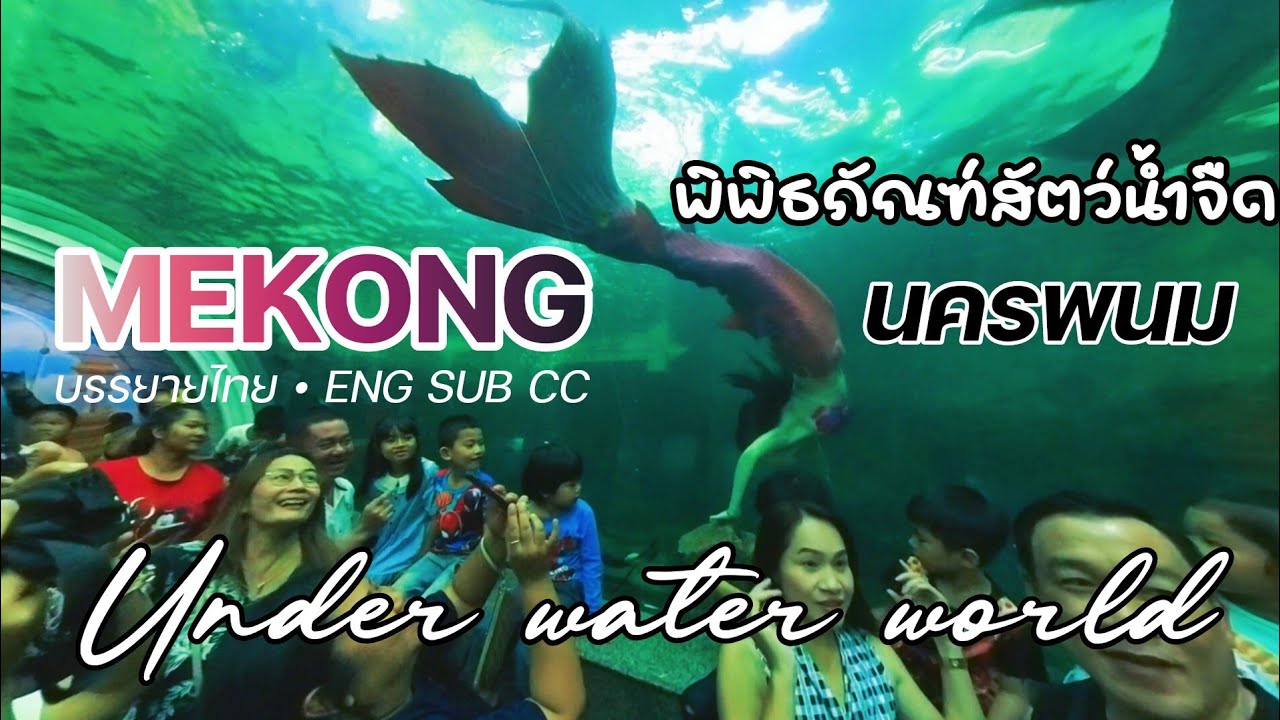
 Click to Access the Navigation Map GPS
Mekong Underwater World Map
Recommend

 Art, Culture and Heritage
 Historical Sites and Monuments(3)
 Landmarks and Memorials(2)
 Art, Craft Centres, Tradition(3)
 Museums(3)
 Educational Places
 Library(1)
 Places of Worship
 Temple(23)
 Church(1)
 Other Sacred Sites(11)
 Suburban Living
 Village, Community(5)
 Nature and Wildlife
 National Parks and Marine Reserves(1)
 Dam, Reservoir, Lake(5)
 Waterfalls(2)
 River, Canal(3)
 Bays and Beaches(3)
 Other natural attractions(2)
Zoos and Aquariums(1)
Other natural attractions(2)
Zoos and Aquariums(1)
 Farms, Parks and Ecotourism(2)
 Shopping
 Shopping and Night Market(1)
 Travel Articles, Recipes
 Travel Review, Food Review(1)


