
lovethailand home >North Travel Attractions >Phrae Travel Attractions >Muang Phrae >Cho Hae > Wat Phra That Cho Hae
TL;DR: Wat Phra That Cho Hae is located at Cho Hae Subdistrict, Mueang Phrae District, Phrae, open Daily, hours 06:00 - 18:00.
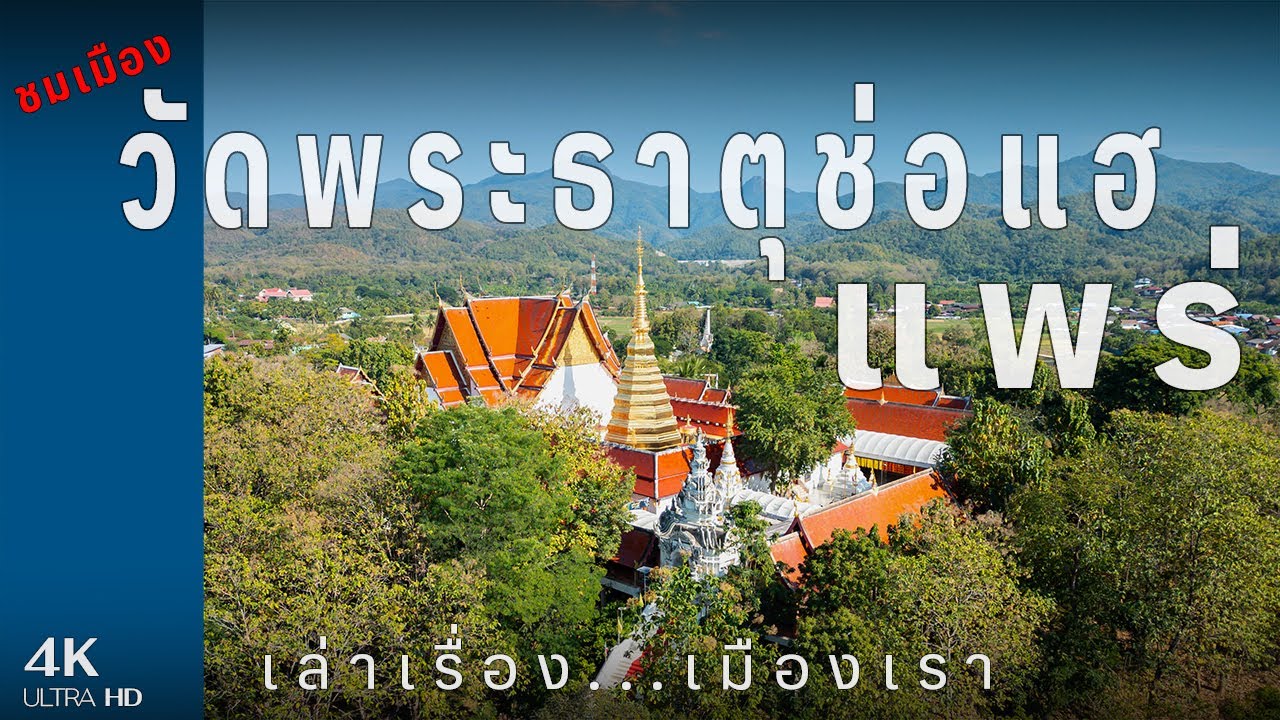
Wat Phra That Cho Hae

Open Days: Daily
Opening Hours: 06:00 - 18:00
Wat Phra That Cho Hae Phra Aram Luang is one of the most important sacred landmarks in Phrae and one of the province’s defining cultural destinations. For many travelers, this temple is the first place that comes to mind when planning a spiritual or heritage route in Phrae. Located in Cho Hae Subdistrict, around 9 kilometers from central Phrae along Highway 1022, the temple is easy to reach and highly suitable for both pilgrims and general visitors. More than just a famous temple, it is a major religious center deeply tied to local identity, annual tradition, and Lanna belief.
The heart of the temple is Phra That Cho Hae, a highly revered golden chedi that has long been regarded as a sacred symbol of Phrae. According to traditional accounts, the temple was built between 1879 and 1881 BE during the reign of Phra Maha Thammaracha Lithai, with Khun Lua Ai Kom playing a major role in its construction. This gives the site not only religious value but also strong historical depth. Visitors are not simply looking at an old monument. They are standing before a sacred structure that has been central to local devotion for centuries.
The chedi itself is one of the temple’s greatest attractions. It is an eight-sided structure with a modified twelve-cornered base in Chiang Saen artistic style, rising 33 meters high with a square base measuring 11 meters on each side. Built of brick and plaster and covered in lacquered gilded brass plates, the stupa carries a powerful visual presence. In morning light and late afternoon light, its gold surface becomes especially striking, giving the temple an atmosphere that feels both majestic and serene.
What makes the temple spiritually exceptional is the belief that it enshrines both the Buddha’s hair relics and a relic from the left elbow of the Buddha. This belief has shaped the temple’s reputation for generations and is one of the main reasons why visitors continue to come here in large numbers throughout the year. For worshippers, a visit is not only about admiring architecture. It is about paying respect to relics believed to be directly connected to the Buddha, which gives the experience profound devotional meaning.
The name “Cho Hae” also carries cultural significance. One explanation links it to fine woven cloth from Xishuangbanna that local people used to tie in worship around the stupa. Another says the cloth came from what Khun Lua Ai Kom offered to the sacred monument. These traditions help explain why the temple name is remembered not just as a place-name but as something rooted in ritual, offering, and local faith. For travelers interested in the deeper meanings behind northern Thai sacred sites, this adds another layer of value to the visit.
Wat Phra That Cho Hae is especially important because it is regarded as the birth-year stupa for those born in the Year of the Tiger. This makes it one of the best-known annual zodiac pilgrimage temples in northern Thailand. Many visitors come here specifically because of that association, believing that worship at the stupa brings blessings, strength, and auspicious protection. At the same time, people of all birth years continue to visit for general merit-making and spiritual devotion, so the temple remains lively and relevant to a broad public.
The temple grounds reflect its status as a major royal monastery. The layout is orderly, spacious, and well suited to receiving large numbers of worshippers, especially during festival periods. Visitors can walk around the central stupa, stop at surrounding worship points, make offerings, and take time to appreciate the wider atmosphere of the temple complex. This is not a small local shrine visited briefly and then forgotten. It is a major sacred destination designed to hold both ritual importance and visitor flow.
Another reason the temple stands out is the annual Cho Hae worship festival and Tung Luang procession, one of Phrae’s most important traditional events. It is usually held from the 9th waxing moon to the 15th waxing moon of the 4th lunar month, roughly around March. During this period, the temple becomes the center of large-scale community participation, religious offerings, ceremonial processions, and local cultural expression. Travelers who visit during the festival will experience a very different side of the temple from an ordinary weekday visit.
In everyday conditions, however, the atmosphere is calmer and more reflective. Visitors who prefer a quieter experience can come on ordinary weekdays to admire the stupa with less crowding. This makes the temple highly flexible as a destination. It can be visited in a festival context for vibrant local culture, or in a quieter setting for prayer, photography, and architectural appreciation. That balance is one of the reasons Wat Phra That Cho Hae remains compelling for many types of travelers.
Within the temple, worship does not focus only on the stupa itself. Other sacred figures, including Phra Chao Cho Hae and Phra Chao Than Jai Cho Hae, are also important to devotees. These additional worship points help create a fuller spiritual experience and encourage visitors to spend more time in the temple rather than simply viewing the main monument and leaving. The temple therefore works both as a pilgrimage site and as a broader religious complex.
Getting There is straightforward. The most convenient route is by private car from Phrae city along Highway 1022 toward Cho Hae, a journey of about 9 kilometers. Local public transport on the Cho Hae route can also serve the area in some cases, making the temple accessible for travelers who do not drive. Because the temple lies in the same general zone as Wat Phra That Chom Chaeng and Wat Phra That Doi Leng, it is easy to build a linked temple route in one trip without excessive travel time.
For travelers planning a full cultural day, Wat Phra That Cho Hae combines well with nearby sacred sites and the heritage attractions of central Phrae. A practical itinerary might begin here in the morning, continue to Wat Phra That Chom Chaeng or Wat Phra That Doi Leng, and then return to the city for Khum Chao Luang, Vongburi House, and local restaurants. This gives visitors a richer view of Phrae, connecting its spiritual geography with its old-town architecture and everyday culture.
The temple also remains very active in the present day. Its official page continues to publicize annual religious events, merit-making opportunities, and community activities in 2026, while provincial religious offices still reference the temple in public ceremonies. That confirms that Wat Phra That Cho Hae is not simply a preserved historical landmark. It remains a living religious institution at the center of provincial Buddhist life.
In the end, Wat Phra That Cho Hae Phra Aram Luang is one of the essential sacred places in Phrae. It offers a combination of legendary origin, revered relics, Chiang Saen-style architecture, living ritual practice, and easy access from the city. Whether you are visiting for faith, history, architecture, or a deeper understanding of Phrae’s cultural identity, this temple deserves a major place in the itinerary.
| Name | Wat Phra That Cho Hae Phra Aram Luang |
| Place Summary | A major royal monastery and sacred landmark of Phrae, enshrining the Buddha’s hair relics and a relic from the left elbow of the Buddha, and recognized as the birth-year stupa for people born in the Year of the Tiger |
| Location | Cho Hae Subdistrict, Mueang Phrae District, Phrae |
| Address | Cho Hae Road, Cho Hae, Mueang Phrae, Phrae 54000 |
| Highlights | Golden Chiang Saen-style stupa, birth-year stupa for the Tiger year, annual Cho Hae worship festival and Tung Luang procession, one of Phrae’s most revered sacred monuments |
| History | Traditionally dated to 1879-1881 BE during the reign of Phra Maha Thammaracha Lithai, with Khun Lua Ai Kom associated with its construction |
| Name Origin | The name is associated with fine ceremonial cloth offerings known as “cho hae,” believed to have been tied in worship or offered by Khun Lua Ai Kom |
| Distinctive Features | An eight-sided, twelve-cornered Chiang Saen-style stupa, 33 meters high with an 11-meter-wide base, covered with gilded brass plates |
| Main Sacred Features | Phra That Cho Hae, Phra Chao Cho Hae, Phra Chao Than Jai Cho Hae, and the ceremonial walking area around the stupa |
| Travel Information | About 9 km from central Phrae via Highway 1022; convenient by private car and can be combined with nearby temple routes in Cho Hae |
| Current Status | Open daily and actively used for major religious ceremonies and annual community festivals |
| Open Days | Daily |
| Opening Hours | 06:00 - 18:00 |
| Entrance Fee | No entrance fee |
| Latest Abbot | Phra Kosai Chediyarak (Wichan Kittipanyo) |
| Main Contact Number | 054-599209 |
| Official Website / Official Page | www.phrathatchohae.com, Facebook: Wat Phra That Cho Hae Phra Aram Luang |
| Nearby Tourist Attractions | 1. Wat Phra That Chom Chaeng, approx. 2 km, Tel. 054-599024, 089-5599568 2. Wat Phra That Doi Leng, approx. 4 km 3. Wat Phra Bat Ming Mueang Worawihan, approx. 10 km, Tel. 054-531208, 054-511848 4. Khum Chao Luang, approx. 10 km, Tel. 054-524158 5. Vongburi House, approx. 10 km, Tel. 054-620153, 054-511189 |
| Nearby Restaurants | 1. Khao Phan Phak Cho Hae, approx. 1 km, Tel. 081-7774935 2. Cho Hae Cafe, approx. 2 km, Tel. 086-3662050 3. Hom Mae Kon, approx. 3 km, Tel. 089-1996459 4. Ban Mon Nok Yung, approx. 5 km, Tel. 098-2695636 5. Pinto Mueang Phrae, approx. 8 km, Tel. 083-9146595, 064-5974965 |
| Nearby Accommodations | 1. Rommai Saithan Resort, approx. 4 km, Tel. 099-9787963 2. Huern Na Na Boutique Hotel Phrae, approx. 8 km, Tel. 054-524800, 088-5477002 3. Phrae Nakara Hotel, approx. 9 km, Tel. 054-521321 4. B2 Phrae Boutique & Budget Hotel, approx. 9 km, Tel. 1328, 054-060633 5. Taris Art Hotel Phrae, approx. 10 km, Tel. 054-511122, 088-2523098 6. Phoomthai Garden Hotel, approx. 10 km, Tel. 054-627359 7. Hug Inn Phrae Hotel, approx. 10 km, Tel. 062-5720077 |
Frequently Asked Questions (FAQ)
Q: Where is Wat Phra That Cho Hae located?
A: It is located in Cho Hae Subdistrict, Mueang Phrae District, Phrae Province, about 9 kilometers from central Phrae along Highway 1022.
Q: When was Wat Phra That Cho Hae built?
A: Traditional accounts place its construction between 1879 and 1881 BE during the reign of Phra Maha Thammaracha Lithai.
Q: Why is Wat Phra That Cho Hae important?
A: It is one of the most sacred monuments of Phrae, believed to enshrine the Buddha’s hair relics and a relic from the left elbow of the Buddha.
Q: Which zodiac year is associated with this temple?
A: Wat Phra That Cho Hae is the birth-year stupa for people born in the Year of the Tiger.
Q: Is there an entrance fee?
A: No. The temple does not charge an entrance fee.
Q: When is the main annual festival held?
A: The main annual worship festival is traditionally held from the 9th to the 15th waxing moon of the 4th lunar month, usually around March.
Q: Can this temple be combined with other attractions in the same trip?
A: Yes. It is commonly visited together with Wat Phra That Chom Chaeng, Wat Phra That Doi Leng, and old-town landmarks in Phrae city.
 Category: ●Places of Worship
 Group: ●Temple
Last Update : 6 MonthAgo
 Last Update : 6 MonthAgo
 Click to Access the Navigation Map GPS
Wat Phra That Cho Hae Map
Recommend

 Art, Culture and Heritage
 Historical Sites and Monuments(4)
 Landmarks and Memorials(5)
 Art, Craft Centres, Tradition(3)
 Museums(6)
 Historic Homes and Cities(2)
 Educational Places
 Museum for Study(1)
 Educational Gardens, Farm(2)
Temple(31)
 Other Sacred Sites(8)
 Suburban Living
 Village, Community(6)
 Local Market(1)
 Nature and Wildlife
 National Parks and Marine Reserves(4)
 Dam, Reservoir, Lake(14)
 Waterfalls(6)
 Hot Springs(1)
 Caves(5)
 River, Canal(3)
 Islands(1)
 Other natural attractions(5)
 Entertainment and Agricultural
 Farms, Parks and Ecotourism(5)
 Outdoor and Adventure Activities(1)
 Travel Articles, Recipes
 Travel Review, Food Review(2)


