
lovethailand home >South Travel Attractions >Songkhla Travel Attractions >Hat Yai >Hat Yai > Kim Yong Market
TL;DR: Kim Yong Market is located at Downtown Hat Yai shopping district around Supasarnrangsan Road, Nipat Uthit Road, and Saeng Arthit Road, Hat Yai Subdistrict, Hat Yai, open Daily, hours 06.30 – 18.30.
Kim Yong Market
Open Days: Daily
Opening Hours: 06.30 – 18.30
Kim Yong Market is one of the most iconic traditional markets in downtown Hat Yai, Songkhla Province. More than a place to buy souvenirs, it is a long-standing commercial landmark that reflects Hat Yai’s identity as a southern trading city. The market is located around Supasarnrangsan Road, Nipat Uthit Road, and Saeng Arthit Road in Hat Yai City Municipality, surrounded by hotels, shopping streets, restaurants, the railway station, and the central business district. For many visitors, Kim Yong Market is both a shopping destination and one of the easiest ways to understand the rhythm of Hat Yai.
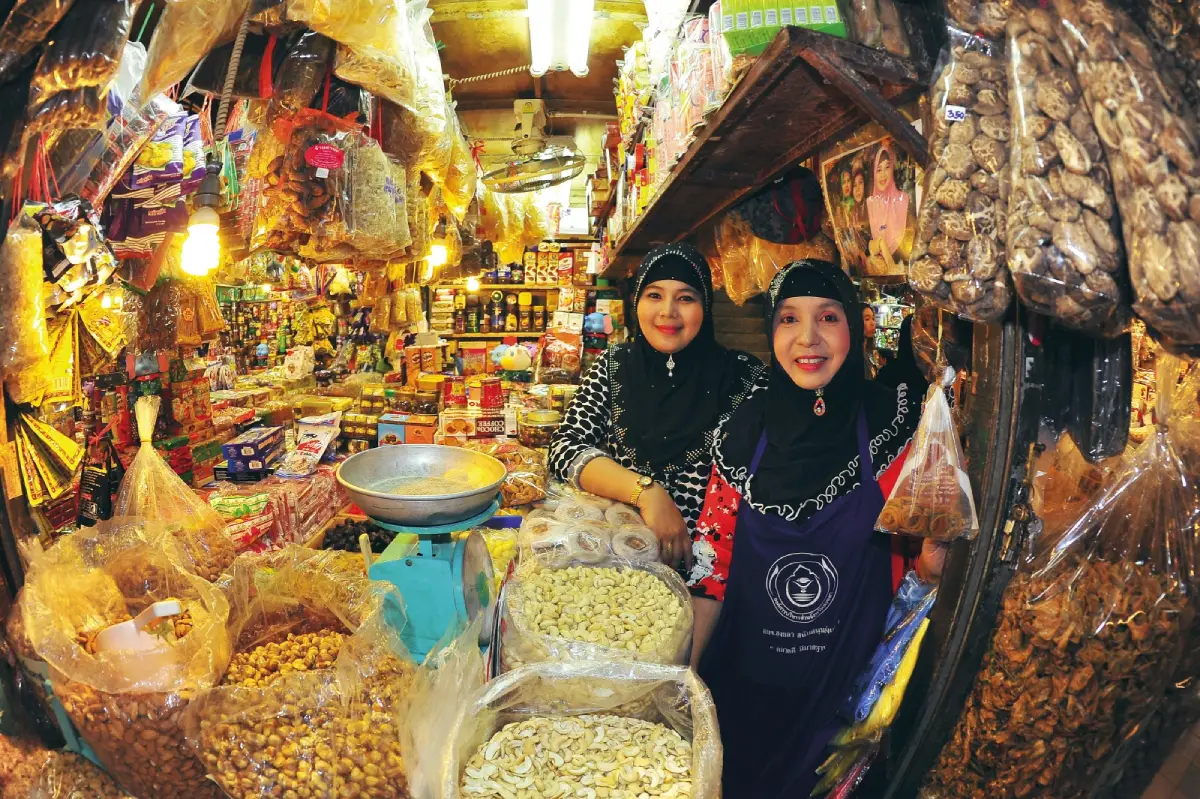
The charm of Kim Yong Market lies in its density, energy, and variety. Inside the market and along the surrounding streets, stalls and shops are packed closely together. Some walkways feel narrow because the space is filled with goods, but this is also part of the market’s character. Visitors will find fresh food, dried food, dried fruits, nuts, imported snacks, instant beverages, souvenirs, clothing, bags, shoes, cosmetics, perfumes, household goods, batik fabrics, headscarves, and southern Thai local products in one compact area.
Kim Yong Market is important because it connects local trade with cross-border commerce. Many products sold here come from neighboring countries and regional trade centers, including Malaysia, Singapore, China, Hong Kong, and Japan. This gives the market a strong reputation for imported snacks, roasted nuts, dried fruits, processed seafood, coffee, tea, and affordable gift items. Thai visitors, Malaysian travelers, Singaporean visitors, and people from nearby provinces often come here specifically to buy goods to take home.
The market’s original full name is commonly associated with Si Kim Yong Market, linked to the name of a Chinese landowner in the area. This origin reflects the role of Chinese communities in the development of Hat Yai’s commercial district. The city’s trading core grew through shops, warehouses, imported goods, and market networks shaped by different communities, especially Thai-Chinese merchants. Over time, the name Kim Yong became inseparable from Hat Yai’s souvenir and imported goods culture.
The market building has two levels and has long been part of the city’s commercial landscape. The lower level is especially known for dried goods, snacks, nuts, dried fruits, processed food, and souvenirs. The upper level and surrounding shop areas offer general merchandise such as clothing, bags, daily-use items, and accessories. This makes the market easy to explore: visitors can start with food gifts and imported snacks, then continue to clothing, fabrics, and other useful goods without leaving the district.
Kim Yong Market changes character throughout the day. In the early morning, the surrounding area functions like a fresh market, with food, fruit, daily ingredients, and local shoppers. By late morning and afternoon, it becomes more focused on souvenirs and general goods. Shops selling imported snacks, dried fruits, roasted nuts, processed seafood, clothing, and household products become busier. This time-based character is one reason Kim Yong Market remains lively and useful for both residents and tourists.
Morning visitors see the market as part of real Hat Yai life. Vendors arrange fresh goods, local buyers move through the streets, and the area is full of the sound and movement of everyday trade. This period is suitable for travelers who want to observe how local people actually use the market, not only how tourists shop there.
Late morning to afternoon is the best period for souvenir shopping. Most dried goods, imported snacks, nuts, dried fruits, squid products, instant beverages, and gift shops are active during this time. Visitors can compare prices, package sizes, expiry dates, and product types from many shops located close to one another. Many items are available in small packs, family packs, or bulk quantities for travelers buying gifts for several people.
Nuts and dried fruits are among the most recognized products at Kim Yong Market. Popular choices include cashew nuts, almonds, pistachios, roasted nuts, raisins, dates, prunes, dried mango, dried strawberries, and many other preserved fruits. These products are practical souvenirs because they travel well, last longer than fresh food, and are suitable for many recipients. Buyers should check freshness, packaging, production dates, expiry dates, and shop cleanliness before purchasing.
Imported snacks are another major category. Visitors can find wafers, chocolate, biscuits, candies, snacks, coffee, tea, cocoa, and instant drinks from different countries. The appeal of the market is its wide selection and range of prices. These products are suitable for personal use, family gifts, office souvenirs, or festival giveaways. Checking labels, ingredients, expiry dates, and package condition is important before buying.
Southern Thai dried food and local souvenirs also form an important part of the market. Dried squid, crispy fish, dried shrimp, chili pastes, shrimp paste, local sweets, curry pastes, and other southern products are available in many shops. These items show that Kim Yong Market is not only a place for imported goods. It also brings together the flavors of southern Thailand in forms that travelers can easily take home.
Beyond food and souvenirs, Kim Yong Market offers clothing, batik fabrics, headscarves, bags, shoes, perfumes, cosmetics, toys, small electrical items, and household products. This variety allows the market to serve both local residents and travelers. Local shoppers use the market for everyday needs, while visitors use it to buy souvenirs and imported products at accessible prices.
The market’s price appeal comes from the large number of shops and strong competition. Buyers can compare similar items easily. Some categories, especially clothing, general merchandise, and bulk purchases, may allow polite bargaining. For dried food, snacks, and edible souvenirs, quality, freshness, package weight, and shop reliability are more important than choosing the lowest price alone.
Kim Yong Market is especially lively during weekends and festivals. It is a common final shopping stop for Thai and Malaysian travelers before returning home. Many vendors are used to serving customers from different backgrounds and languages. The sight of visitors carrying bags of snacks, nuts, dried fruits, and souvenirs is part of the market’s everyday identity.
The market remains active and open as one of Hat Yai’s key commercial areas. After the major flooding in late 2025, the market recovered and most shops returned to operation, with the area becoming cleaner and more walkable. This recovery reflects the strength of Kim Yong as a commercial district and its continuing importance to local entrepreneurs and tourism in Hat Yai.
Kim Yong Market is very convenient for travelers because it is close to Hat Yai Railway Station, Lee Gardens, Central Hat Yai, Santisuk Market, hotels, and food streets. Visitors staying in downtown Hat Yai can often walk to the market, or use tuk-tuks, songthaews, local taxis, or ride-hailing services. Those arriving by private car should plan parking in advance because roads around the market can become busy, especially in the morning, on weekends, and during holiday periods.
Getting There is easiest from downtown Hat Yai. Visitors can walk from many central hotels or take a local tuk-tuk. From Hat Yai Railway Station, the market is close enough for a short walk or brief local ride. From Hat Yai International Airport, travelers can take a taxi, van, rental car, or ride-hailing service into the city and get off around Kim Yong Market, Supasarnrangsan Road, Nipat Uthit Road, or Saeng Arthit Road.
Visitors should allow about 1 to 2 hours for general souvenir shopping. Those who want to compare prices, taste local food, take photos, and continue to nearby Santisuk Market or Lee Gardens should allow 2 to 3 hours. Since the market has many goods and some narrow walkways, walking slowly and planning purchases helps reduce confusion and unnecessary backtracking.
Preparation makes shopping easier. Visitors should decide in advance whether they want family gifts, children’s snacks, nuts and dried fruits for adults, dried food for cooking, or fabrics and practical goods. A simple shopping list helps because many shops sell similar products. Without a plan, visitors may spend more time than expected and carry heavier bags than necessary.
For edible souvenirs, choose shops with orderly displays, clear labels, fresh-looking products, good packaging, and visible expiry dates. Nuts, dried fruits, and dried seafood should be dry, well sealed, and free from unusual odor. Imported snacks should be checked for labels, ingredients, expiry dates, and package condition before purchase.
For bulk purchases, ask clearly about the price per pack, per kilogram, or per carton. Some shops offer better prices for multiple units or carton purchases. Travelers buying from several shops should check the quantity and package condition before leaving each shop. Heavy items should be packed at the bottom, while fragile snacks should be kept on top. A cloth bag or small wheeled bag can make the walk more comfortable.
Kim Yong Market suits many types of visitors. Families can buy gifts and snacks. Children often enjoy the snack and toy sections. Adults may prefer nuts, dried fruits, dried food, and practical goods. Food-focused travelers can explore nearby local restaurants, while those interested in city life can observe the trading rhythm of Hat Yai. The market therefore functions as both a shopping place and a living example of the city’s economy and culture.
The surrounding area is also worth exploring. Santisuk Market is nearby and is known for general merchandise, electrical items, perfumes, cosmetics, bags, and imported goods. Combining Kim Yong Market with Santisuk Market gives visitors a broader view of central Hat Yai shopping: Kim Yong is strongest for food gifts and snacks, while Santisuk is better known for general goods and imported products.
Lee Gardens and Sanehanusorn Road are also closely connected to the Kim Yong route. This district includes hotels, malls, restaurants, and evening activity. Travelers staying around Lee Gardens can walk to Kim Yong Market, return to the hotel to drop off purchases, and later continue to dinner or evening walks. The route linking Kim Yong, Santisuk, and Lee Gardens is one of the classic downtown Hat Yai walking routes.
Wat Chue Chang is another nearby stop for visitors interested in Chinese-Thai religious culture. Located on Supasarnrangsan Road, the temple contains Buddhist and Chinese deity images and reflects the role of Chinese communities in Hat Yai. Visiting the temple together with Kim Yong Market adds cultural depth to the shopping route and shows that downtown Hat Yai is shaped by both commerce and belief.
Food around Kim Yong Market is another major reason to visit the area. Nearby options include old Thai-Chinese restaurants, Hat Yai fried chicken shops, curry rice stalls, street food, and desserts. A practical itinerary is to visit the market in the morning, eat nearby, and shop for souvenirs later, or visit in the afternoon and continue to dinner in the downtown area.
Notable nearby food choices include Nai Roo, a long-running Thai-Chinese restaurant beside the market; Kaitod Meena on Nipat Uthit 3 Road; Tayern Betong Thai-Chinese Restaurant; Rad Na Ko Chon on Supasarnrangsan Road; curry rice stalls around Kim Yong; and evening street food on Saeng Arthit Road. These options allow visitors to experience Hat Yai food without traveling far from the market.
Accommodation near Kim Yong Market ranges from large downtown hotels and Lee Gardens area hotels to boutique hotels and budget stays. Travelers focused on shopping should stay within walking distance of the market so they can easily return to their rooms after buying goods. Travelers exploring several parts of Hat Yai can use the downtown area as a base before continuing to Greenway Market, ASEAN Night Bazaar, or Hat Yai Municipal Park.
The best time to visit depends on the purpose. Morning is best for seeing the fresh market and local activity. Late morning to afternoon is best for souvenir shopping and imported snacks. Travelers who prefer easier walking should avoid the busiest periods on weekend afternoons and major holidays. Families and travelers with luggage should store bags at the hotel before visiting because large suitcases are inconvenient in narrow walkways.
Good market etiquette includes walking to the side, not blocking narrow paths, not opening or tasting food without permission, asking politely before taking photos of vendors, and bargaining respectfully where appropriate. The market is built on direct interaction between buyers and sellers, so tone and manners matter. Buyers should check products before leaving the shop.
Kim Yong Market is also a useful place to understand Hat Yai as a commercial city. Hat Yai is not primarily a beach destination like Songkhla city. It is a city of trade, transport, hotels, food, and cross-border movement. Kim Yong Market represents this role clearly because products from many sources, local vendors, and travelers from many backgrounds all meet in one compact district.
In a Hat Yai itinerary, Kim Yong Market works well as either the first stop or the final stop. As a first stop, it introduces the commercial heart of the city before visitors continue to Wat Chue Chang, Lee Gardens, Santisuk Market, Greenway Market, or Hat Yai Municipal Park. As a final stop, it is ideal for souvenir shopping before departing by train, bus, car, or flight.
Overall, Kim Yong Market is far more than a souvenir market. It represents old trade, Thai-Chinese commercial heritage, imported goods, border culture, local food, tourism, and the resilience of downtown Hat Yai. Visitors should give the market enough time. Simply walking through the stalls, listening to the sounds of trade, tasting local food, and observing shoppers can reveal much about Hat Yai’s identity as one of southern Thailand’s most important commercial cities.
Kim Yong Market is suitable for both serious shoppers and travelers who want to experience local urban life. With the right timing, a simple shopping plan, and a route that includes nearby food and attractions, a visit to Kim Yong becomes a complete Hat Yai experience: shopping, eating, observing local culture, and understanding why this market has remained one of the city’s defining landmarks for so long.
| Name | Kim Yong Market / Si Kim Yong Market |
| Location | Downtown Hat Yai shopping district around Supasarnrangsan Road, Nipat Uthit Road, and Saeng Arthit Road, Hat Yai Subdistrict, Hat Yai District, Songkhla 90110, Thailand |
| Address | Kim Yong Market, Nipat Uthit 2 Road and connected areas around Supasarnrangsan Road, Hat Yai Subdistrict, Hat Yai District, Songkhla 90110, Thailand |
| Coordinates | 7.0076, 100.46981 |
| Highlights | A long-standing downtown Hat Yai market known for souvenirs, imported snacks, roasted nuts, dried fruits, dried food, clothing, general goods, and local southern Thai products |
| History / Background | An old market associated with Hat Yai’s commercial development. The name Si Kim Yong is linked with a Chinese landowner in the area, and the market became a major center for souvenirs and imported goods |
| Name Origin | The name Kim Yong comes from the older name Si Kim Yong Market, reflecting Chinese commercial influence in Hat Yai’s historic shopping district |
| Key Characteristics | A market building and surrounding street stalls with morning fresh-market activity and late morning-to-evening souvenir, snack, dried-goods, clothing, and general merchandise trade |
| Main Products | 1. Imported Snacks 2. Roasted Nuts and Grains 3. Dried Fruits 4. Dried Seafood and Processed Food 5. Instant Drinks, Tea, and Coffee 6. Clothing, Bags, Shoes, Cosmetics, and General Goods 7. Batik Fabrics, Headscarves, and Southern Thai Local Products |
| Travel Information | Accessible by private car, rental car, tuk-tuk, songthaew, local taxi, ride-hailing service, or on foot from downtown Hat Yai hotels. The market is close to Hat Yai Railway Station, Lee Gardens, and Santisuk Market |
| Current Status | Open as an active commercial district and popular shopping area for local residents, Thai travelers, and Malaysian visitors |
| Open Days | Daily |
| Opening Hours | 06.30 – 18.30. Individual shops and street stalls may operate different hours depending on product type |
| Admission Fee | No admission fee for walking through the market and surrounding public areas |
| Facilities | Shops, restaurants, souvenir stores, cafés, nearby banking services, hotels, local transport, private parking areas, and municipal facilities in downtown Hat Yai |
| Main Areas / Zones | 1. Morning Fresh-Market and Food Area 2. Lower-Level Dried Goods and Souvenir Area 3. Imported Snacks, Nuts, and Dried Fruits Area 4. Clothing, Fabrics, Bags, and General Goods Area 5. Shops around Supasarnrangsan Road 6. Nipat Uthit and Saeng Arthit Road Area 7. Connection to Santisuk Market and Lee Gardens District |
| Caretaker / Related Agencies | Kim Yong Market management, market operators, Hat Yai City Municipality, and local agencies responsible for public-space order around the market |
| Local Authority Contact Number | Hat Yai City Municipality, Tel. 074-200000 |
| Nearby Tourist Attractions | 1. Santisuk Market, about 0.3 km 2. Lee Gardens Plaza, about 0.3 km 3. Wat Chue Chang, about 0.5 km, Tel. 074-350-111 4. Hat Yai Railway Station, about 0.7 km 5. Hat Yai Clock Tower, about 0.8 km 6. Greenway Market, about 2.2 km 7. ASEAN Night Bazaar Hat Yai, about 2.2 km 8. Central Hat Yai, about 2.3 km 9. Hat Yai Municipal Park, about 5.4 km |
| Nearby Restaurants | 1. Nai Roo beside Kim Yong Market, about 0.1 km, Tel. 074-237-680, 081-898-7656 2. Kaitod Meena on Nipat Uthit 3 Road, about 0.1 km, Tel. 083-193-3379 3. Khao Man Kaeng Kai Kim Yong Market, about 0.1 km, Tel. 087-394-0025, 086-297-2657 4. Joe’s Shrimp Paste with Boiled Vegetables, Kim Yong, about 0.1 km, Tel. 098-671-8054 5. Rad Na Ko Chon on Supasarnrangsan Road, about 0.5 km, Tel. 074-233-555 6. Tayern Betong Thai-Chinese Restaurant, Hat Yai Branch, about 0.8 km, Tel. 074-354-051 |
| Nearby Accommodations | 1. Centara Hat Yai, about 0.2 km, Tel. 074-352-222 2. Lee Gardens Plaza Hotel Hat Yai, about 0.3 km, Tel. 074-261-111 3. New Season Square Hotel, about 0.4 km, Tel. 074-352-888, 074-801-188 4. Red Planet Hotel Hatyai, about 0.8 km, Tel. 074-261-011 5. Hop Inn Hat Yai Downtown, about 1.2 km, Tel. 02-080-2222 6. The Habita Hatyai, about 2.0 km, Tel. 074-220-555 |
Frequently Asked Questions (FAQ)
Q: Where is Kim Yong Market located?
A: Kim Yong Market is located in downtown Hat Yai, Songkhla Province, around Supasarnrangsan Road, Nipat Uthit Road, and Saeng Arthit Road in Hat Yai Subdistrict.
Q: What time does Kim Yong Market open?
A: Kim Yong Market opens daily from 06.30 to 18.30. Individual shops may operate different hours depending on their product category.
Q: Is there an admission fee for Kim Yong Market?
A: There is no admission fee for walking through the market and the surrounding public areas. Visitors pay only for goods, food, parking, or services they choose to use.
Q: What is Kim Yong Market famous for?
A: It is famous for imported snacks, roasted nuts, dried fruits, dried seafood, instant drinks, souvenirs, clothing, batik fabrics, cosmetics, household goods, and southern Thai local products.
Q: What is the best time to visit Kim Yong Market?
A: Morning is best for seeing local fresh-market activity, while late morning to afternoon is better for souvenir shopping, imported snacks, nuts, dried fruits, and general goods.
Q: Is Kim Yong Market near Hat Yai Railway Station?
A: Yes. Kim Yong Market is close to Hat Yai Railway Station and can be reached by walking, tuk-tuk, songthaew, or a short local ride.
Q: What nearby places can be visited with Kim Yong Market?
A: Nearby places include Santisuk Market, Lee Gardens Plaza, Wat Chue Chang, Hat Yai Clock Tower, Greenway Market, ASEAN Night Bazaar, Central Hat Yai, and Hat Yai Municipal Park.
Q: What should visitors prepare before going to Kim Yong Market?
A: Visitors should prepare a shopping list, small cash, a cloth bag or carry bag, check expiry dates on snacks and dried food, walk carefully in narrow areas, and plan parking in advance when arriving by private car.
 Category: ●Suburban Living
 Group: ●Local Market
Last Update : 2 MonthAgo
 Last Update : 2 MonthAgo
 Click to Access the Navigation Map GPS
Kim Yong Market Map
Recommend

 Art, Culture and Heritage
 Historical Sites and Monuments(2)
 Landmarks and Memorials(7)
 Royal Palace(1)
 Art, Craft Centres, Tradition(4)
 Museums(4)
 Art Gallery(1)
 Educational Places
 Library(1)
 Educational Gardens, Farm(3)
 Places of Worship
 Temple(52)
 Mosque(2)
 Other Sacred Sites(11)
 Village, Community(3)
Local Market(3)
 Floating Market(2)
 Nature and Wildlife
 National Parks and Marine Reserves(5)
 Mountain (Doi)(6)
 Dam, Reservoir, Lake(5)
 Waterfalls(12)
 Caves(4)
 River, Canal(2)
 Bays and Beaches(13)
 Islands(3)
 Other natural attractions(2)
 Entertainment and Agricultural
 Zoos and Aquariums(2)
 Animal camps and shows(1)
 Farms, Parks and Ecotourism(6)
 Waterpark(1)
 Travel Articles, Recipes
 Travel Review, Food Review(1)
 Southern Food Menu, Southern Food Recipes(2)


