
lovethailand home >South Travel Attractions >Songkhla Travel Attractions >Muang Songkhla >Bo Yang > Khao Tang Kuan
TL;DR: Khao Tang Kuan is located at Bo Yang Subdistrict, Mueang Songkhla District, Songkhla Province, open Daily, hours Monday–Friday 10.00 – 19.00 / Saturday–Sunday And Public Holidays 08.00 – 19.00.
Khao Tang Kuan
Open Days: Daily
Opening Hours: Monday–Friday 10.00 – 19.00 / Saturday–Sunday And Public Holidays 08.00 – 19.00
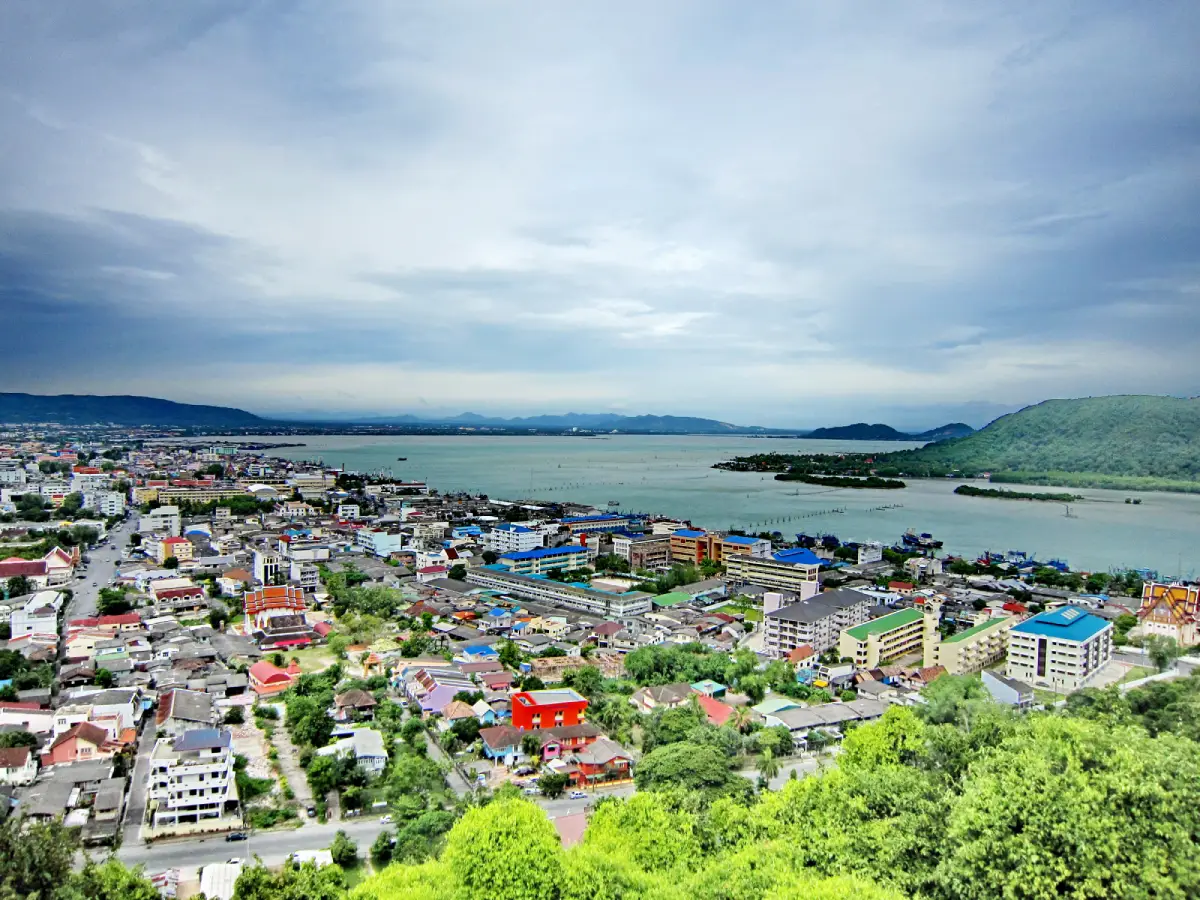
Khao Tang Kuan in Songkhla Province is one of the most important hilltop viewpoints and historical sites in Songkhla city. Located in Bo Yang Subdistrict, Mueang Songkhla District, the hill rises about 105 meters above sea level. Although it is not a large mountain, it brings together city views, Buddhist heritage, royal history, architecture, and the cultural memory of Songkhla in one compact site. At the summit stands Phra Chedi Luang, the sacred chedi of Songkhla, together with Sala Phra Wihan Daeng, the royal pavilion associated with King Rama IV, a lighthouse, the naga staircase, and panoramic viewpoints overlooking Songkhla city, Songkhla Lake, the Gulf of Thailand, Samila Beach, Laem Son On, and the old town.
The strength of Khao Tang Kuan is that it offers several layers of experience in one visit. Travelers can pay respect at Phra Chedi Luang, explore historic structures, photograph the city from above, walk around Sala Phra Wihan Daeng, see the lake and sea in one view, or climb the naga staircase for a more traditional ascent. For visitors who prefer an easier route, the passenger lift near the road between Khao Tang Kuan and Khao Noi provides convenient access to the summit and makes the hill suitable for many ages.
Khao Tang Kuan is one of the best places to understand the geography of Songkhla. The city is often described as a city of two seas because it sits between Songkhla Lake on one side and the Gulf of Thailand on the other. From the summit, visitors can see how the city is positioned between these bodies of water, with Samila Beach, Laem Son On, Ko Nu, Ko Maeo, and the old town spreading below. This makes the hill more than a photo stop; it is a natural observation point for understanding the shape and identity of Songkhla.
Phra Chedi Luang is the spiritual center of Khao Tang Kuan. The chedi is a brick-and-plaster bell-shaped structure standing prominently on the hilltop above Songkhla city. It is regarded as the sacred chedi of the city and an important focus of local devotion. The present form reflects major restoration work during the Rattanakosin period while preserving the presence of an older hilltop religious monument. Its elevated position gives the chedi both religious and symbolic power, making it one of the most recognizable landmarks in Songkhla.
The chedi has a clear record of major restoration during the reign of King Mongkut, Rama IV. In 1859, King Rama IV visited Songkhla and ascended Khao Tang Kuan to pay respect to the chedi and view the city from above. He later ordered the chedi to be restored and enlarged. The restoration was completed in 1866, together with important surrounding elements such as worship structures at the base, small Chinese-style corner pavilions, and an enclosing wall around the chedi compound.
In 1996, during the reign of King Bhumibol Adulyadej, Rama IX, sacred relics and ceremonial offerings were granted for enshrinement at Phra Chedi Luang on Khao Tang Kuan. This further strengthened the chedi’s role as a sacred landmark and a spiritual center for the people of Songkhla. Every October, the hill is associated with important religious and cultural traditions, including the robe-wrapping ceremony for the chedi, Tak Bat Devo, and the local Chak Phra procession.
Sala Phra Wihan Daeng, also known as the red pavilion or the royal pavilion associated with King Rama IV, is another major historic structure on Khao Tang Kuan. The building is distinctive because of its red color and architectural character. King Rama IV initiated the idea of a royal pavilion on the hill, and construction was completed during the reign of King Chulalongkorn, Rama V, in 1889. The pavilion therefore connects the hill with the history of two important reigns.
The interior of Sala Phra Wihan Daeng is open and airy, with passages running through the building and allowing views toward the lower slope and the city. It functions as both a historic structure and a pleasant resting point between the ascent, the viewpoint, and Phra Chedi Luang. Behind the pavilion, the naga staircase connects the lower hillside with the chedi area, preserving the traditional walking route up the hill.
The naga staircase is the classic walking route to the summit. Climbing the steps gives visitors a closer sense of the hill, its trees, its slope, and the changing views of the city. Although the lift now makes the summit easier to reach, the staircase remains meaningful for visitors who enjoy walking, photography, and a slower approach to the hilltop. It is especially rewarding in the morning when the weather is cooler.
The lighthouse on the summit adds another layer to the identity of Khao Tang Kuan. Songkhla has long been a coastal and port city, and the hill’s position near the lake mouth and the Gulf of Thailand makes it a logical landmark in the maritime landscape. Together with the chedi and red pavilion, the lighthouse helps define Khao Tang Kuan as a place where religion, royal history, city geography, and the sea meet.
The viewpoint is the most popular area for general visitors. From the top of Khao Tang Kuan, the view opens in every direction: Songkhla city and Songkhla Lake on one side, the Gulf of Thailand and Samila Beach on another, and Laem Son On, Ko Nu, Ko Maeo, and the old town within the same wider scene. Morning visits offer softer light and a quieter atmosphere, while late afternoon is ideal for warmer light and photographs of the lake and sea.
A statue of Luang Pu Thuat is also located around the viewpoint area, allowing visitors to combine sightseeing with a short act of reverence. Because the viewpoint is close to Phra Chedi Luang, the summit feels calmer than the city streets below. Weekday mornings usually provide the most relaxed experience, while weekends and holidays are livelier.
Long-tailed macaques live around the base of the hill and in some areas along the ascent. Visitors should keep food and plastic bags out of sight, avoid feeding monkeys, and avoid approaching them for close-up photos. Feeding monkeys encourages aggressive behavior and can create safety problems. Careful behavior protects both visitors and the animals living around the hill.
There are 2 main ways to reach the summit. The first is the passenger lift located near the road between Khao Tang Kuan and Khao Noi. This is the most convenient option for elderly visitors, families with children, and travelers with limited time. The second is the naga staircase on the western side of the hill, which suits visitors who want a more active and atmospheric approach. Both routes lead to the same summit, but they offer different experiences.
There is no general admission fee for Khao Tang Kuan. Visitors who use the passenger lift pay a service fee of 30 baht for adults and 20 baht for children. Walking up the naga staircase is free. Travelers planning to photograph the late afternoon view should check the lift schedule and allow enough time to descend, especially on busy days.
Facilities around Khao Tang Kuan include the passenger lift, toilets, food, shops, parking, viewpoint areas, and walking access via the naga staircase. The lift makes the hill easier to visit than many other viewpoints in Songkhla, so Khao Tang Kuan works well in a half-day or full-day city itinerary without making the schedule too demanding.
Khao Tang Kuan suits many types of travelers. History-focused visitors can learn about Phra Chedi Luang, King Rama IV’s visit to Songkhla, and the site’s status as a registered national monument. Visitors interested in Buddhist art and architecture can observe the bell-shaped chedi and the hilltop religious setting. Photographers can capture a high viewpoint over the city. Travelers who want to understand Songkhla as a city of two seas can clearly see the relationship between the lake, the gulf, the old town, and the coastal communities.
The best times to visit are morning and late afternoon. Morning is suitable for walking up the staircase and enjoying cooler weather, while late afternoon is best for photography and wide views over Songkhla Lake and the Gulf of Thailand. Visitors who want to combine the hill with Songkhla Old Town can go up the hill in the morning and then continue to Nakhon Nai Road, Nakhon Nok Road, Nang Ngam Road, the City Pillar Shrine, and historic local restaurants.
For a half-day route, travelers can begin at Khao Tang Kuan, visit Phra Chedi Luang, Sala Phra Wihan Daeng, and the lighthouse, then continue to Samila Beach, Laem Son On, or Songkhla Old Town. This route is suitable for visitors with limited time because it covers hilltop views, the sea, religious heritage, and urban history in a compact plan.
For a full-day route, Khao Tang Kuan can be the starting point for exploring Songkhla city. After descending, continue to Songkhla Old Town, Ban Nakhon Nai, the City Pillar Shrine, the old city wall area, Songkhla National Museum, and restaurants on Nang Ngam Road. In the afternoon or evening, continue to Samila Beach, Ko Nu and Ko Maeo viewpoint areas, and Laem Son On. This itinerary gives travelers a broad view of Songkhla through religion, history, local food, old communities, and the sea.
Getting There is easy because Khao Tang Kuan is located within Songkhla city municipality, near Samila Beach and the old town. Drivers can head toward Sukhum Road in Bo Yang Subdistrict or follow the route toward Laem Son On and Samila Beach before reaching the lift station area. Travelers already in the city can use local red buses, tuk-tuks, motorcycle taxis, or other local transport. The distance from the old town and Samila Beach is short, making the hill easy to include in a Songkhla city itinerary.
Drivers should be careful near the base of the hill because macaques live in the area and visitors may cross the road to reach the lift station or staircase. Park only in designated areas, avoid blocking traffic, and do not leave visible food in vehicles or carry food bags near monkeys.
From a cultural travel perspective, Khao Tang Kuan deserves more than a quick photo stop. The summit contains several layers of meaning: Phra Chedi Luang as the city’s sacred chedi, Sala Phra Wihan Daeng as a royal and architectural landmark, the lighthouse as a coastal symbol, and the viewpoint as a clear visual explanation of Songkhla’s geography. Spending enough time on the hill allows visitors to understand how these elements form one of the most important places in the city.
Khao Tang Kuan is therefore much more than a viewpoint. It is a compact but powerful site where sacred heritage, registered monuments, cityscape, lake, sea, old town, and hillside atmosphere come together. With the right timing, respectful behavior, and enough time to explore, Khao Tang Kuan can make any Songkhla trip feel more complete.
| Name | Khao Tang Kuan |
| Location | Bo Yang Subdistrict, Mueang Songkhla District, Songkhla Province |
| Address | Sukhum Road, Bo Yang Subdistrict, Mueang Songkhla District, Songkhla Province 90000, Thailand |
| Coordinates | 7.2103554, 100.5871116 |
| Highlights | Phra Chedi Luang, Sala Phra Wihan Daeng, lighthouse, naga staircase, passenger lift, and panoramic city viewpoint |
| History / Period | Phra Chedi Luang was significantly restored during the reign of King Rama IV and completed in 1866. Sala Phra Wihan Daeng was completed during the reign of King Rama V, and the chedi and royal pavilion were later registered as national monuments. |
| Name Origin | The name Khao Tang Kuan appears in historical evidence related to old Phatthalung temple maps from the Ayutthaya period and is associated with the important hill at the tip of Songkhla city. |
| Distinctive Features | An urban hill about 105 meters above sea level, overlooking Songkhla city, Songkhla Lake, the Gulf of Thailand, Samila Beach, Laem Son On, Ko Nu, and Ko Maeo |
| Travel Information | Travel into Songkhla city municipality toward Sukhum Road near Samila Beach and Laem Son On. Visitors can reach the summit by passenger lift or by walking up the naga staircase. |
| Current Status | Open as a major tourist viewpoint and historic monument area in Songkhla city |
| Open Days | Daily |
| Opening Hours | Monday–Friday 10.00 – 19.00 Saturday–Sunday And Public Holidays 08.00 – 19.00 |
| Fees | No general admission fee Passenger lift fee: adults 30 baht, children 20 baht |
| Facilities | Passenger lift, toilets, food, shops, parking, viewpoint area, and walking access via the naga staircase |
| Main Areas / Zones | Khao Tang Kuan Lift Station, naga staircase, Phra Chedi Luang, Sala Phra Wihan Daeng, lighthouse, viewpoint area, and macaque area around the hill base |
| Caretaker / Related Agencies | Songkhla City Municipality for tourism access and hill facilities, and the Fine Arts Department for national monument heritage matters |
| Official Website / Related Official Sources | Songkhla City Municipality website and relevant official cultural heritage databases |
| Nearby Tourist Attractions | 1. Sala Phra Wihan Daeng, about 0.2 km 2. Samila Beach And Golden Mermaid Statue, about 1.5 km 3. Songkhla National Museum, about 1.6 km 4. Nang Ngam Road And Songkhla Old Town, about 1.8 km 5. Songkhla City Pillar Shrine, about 2 km 6. Laem Son On And Suan Song Thale, about 2.5 km |
| Nearby Restaurants | 1. Tae Hiang Aew, about 1.5 km, Tel. 074-311-505 2. Khao Stu Kiat Fang, about 1.6 km, Tel. 093-584-4179 3. Jin Kua Yuan Ice Cream, about 1.6 km, Tel. 074-441-123, 089-737-6066 4. Paijit Beef Noodles And Fresh Coconut Ice Cream, about 1.8 km, Tel. 081-609-3115, 074-321-710 5. SMOKED CRAFT Songkhla Old Town, about 1.8 km, Tel. 095-146-2882, 064-356-2224 |
| Nearby Accommodations | 1. Montana Hotel Songkhla, about 1 km, Tel. 074-300-614 2. The Roo Classic Hometel, about 1.5 km, Tel. 081-823-1433 3. Songkhla Tae Raek Antique Hotel, about 1.7 km, Tel. 094-317-3338 4. Glow Rattana Place Hotel, about 2 km, Tel. 093-479-8889 5. The Bed Vacation Rajamangala Hotel, about 2.5 km, Tel. 090-674-4444 |
Frequently Asked Questions (FAQ)
Q: Where is Khao Tang Kuan located?
A: Khao Tang Kuan is located on Sukhum Road, Bo Yang Subdistrict, Mueang Songkhla District, Songkhla Province, near Samila Beach, Songkhla Old Town, and Laem Son On.
Q: What are the main highlights of Khao Tang Kuan?
A: The main highlights are Phra Chedi Luang, Sala Phra Wihan Daeng, the lighthouse, the naga staircase, the passenger lift, the panoramic viewpoint, and views of Songkhla Lake and the Gulf of Thailand.
Q: What time does Khao Tang Kuan open?
A: Khao Tang Kuan opens Monday to Friday from 10.00 to 19.00, and on Saturday, Sunday, and public holidays from 08.00 to 19.00.
Q: Is there an admission fee for Khao Tang Kuan?
A: There is no general admission fee. Visitors who use the passenger lift pay 30 baht for adults and 20 baht for children.
Q: How can visitors reach the summit?
A: Visitors can reach the summit by using the passenger lift near the road between Khao Tang Kuan and Khao Noi, or by walking up the naga staircase on the western side of the hill.
Q: Why is Phra Chedi Luang important?
A: Phra Chedi Luang is the sacred chedi of Songkhla. It was significantly restored during the reign of King Rama IV and later received sacred relics for enshrinement in 1996.
Q: When is the best time to visit Khao Tang Kuan?
A: Morning is best for cooler weather and walking, while late afternoon is best for photography and views of Songkhla Lake, the Gulf of Thailand, and the city in warm light.
Q: What should visitors be careful about at Khao Tang Kuan?
A: Visitors should be careful around macaques near the hill base and some upper areas. Keep food hidden, avoid feeding monkeys, and keep personal belongings secure.
Tel : 074316330
 Tel : 074316330
 Category: ●Nature and Wildlife
 Group: ●Mountain (Doi)
Last Update : 1 MonthAgo
 Last Update : 1 MonthAgo
 Click to Access the Navigation Map GPS
Khao Tang Kuan Map
Recommend

 Art, Culture and Heritage
 Historical Sites and Monuments(2)
 Landmarks and Memorials(7)
 Royal Palace(1)
 Art, Craft Centres, Tradition(4)
 Museums(4)
 Art Gallery(1)
 Educational Places
 Library(1)
 Educational Gardens, Farm(3)
 Places of Worship
 Temple(52)
 Mosque(2)
 Other Sacred Sites(11)
 Suburban Living
 Village, Community(3)
 Local Market(3)
 Floating Market(2)
 National Parks and Marine Reserves(5)
Mountain (Doi)(6)
 Dam, Reservoir, Lake(5)
 Waterfalls(12)
 Caves(4)
 River, Canal(2)
 Bays and Beaches(13)
 Islands(3)
 Other natural attractions(2)
 Entertainment and Agricultural
 Zoos and Aquariums(2)
 Animal camps and shows(1)
 Farms, Parks and Ecotourism(6)
 Waterpark(1)
 Travel Articles, Recipes
 Travel Review, Food Review(1)
 Southern Food Menu, Southern Food Recipes(2)


