
lovethailand home >South Travel Attractions >Songkhla Travel Attractions >Muang Songkhla >Bo Yang > Songkhla Old Town
TL;DR: Songkhla Old Town, Songkhla attractions : Suburban Living, Village, Community.
Songkhla Old Town
Open Days: Daily
Opening Hours: The public streets can be explored throughout the day; the recommended walking period is 08.00 – 20.00
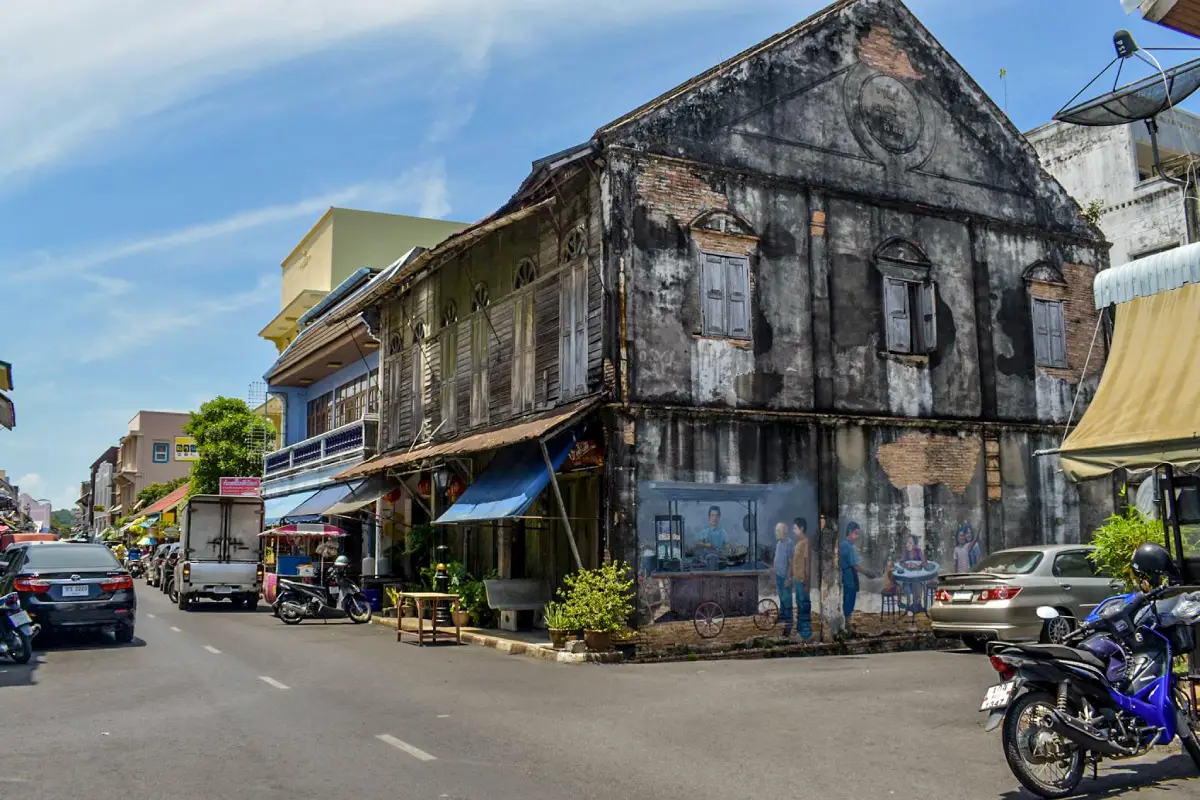
Songkhla Old Town is located in Bo Yang Subdistrict, Mueang Songkhla District, Songkhla Province. Its historic core is formed by 3 important streets: Nakhon Nok Road, Nakhon Nai Road, and Nang Ngam Road, together with Yala Road and the small alleys that connect the old neighborhood. This is not only a photogenic old quarter. It is a living historic district where port-town history, lakeside trade, Thai-Chinese-Malay community life, Sino-European architecture, Chinese shrines, wooden shophouses, the Red Rice Mill, old restaurants, traditional sweets, and street art remain closely connected.
The strongest charm of Songkhla Old Town is that it still functions as a real community. People live here, run shops, cook local food, maintain old houses, welcome visitors, and continue the memory of the town through everyday life. Many buildings retain Chinese wooden shophouse forms, Chinese commercial architecture, Sino-European details, wooden shutters, ventilation panels, arched openings, stucco decorations, terracotta roofs, and carved timber elements. Walking through this quarter is therefore like reading local history through houses, streets, food, and people.
Before Songkhla became established on the Bo Yang side, the town had earlier developed on the western side of Songkhla Lake around Laem Son and Hua Khao Daeng. That earlier town was connected with navigation, fortifications, and port activity. In 1842, Songkhla expanded to the eastern side at Bo Yang, forming the foundation of the present city. The earliest main streets of Bo Yang were Nakhon Nok Road, running near the lakefront, and Nakhon Nai Road, located further inland. A third road was later built for the city pillar celebration. It was first known as Kao Hong Road, or the Nine-Rooms area, and later became known as Nang Ngam Road.
Nakhon Nok Road is directly connected with Songkhla Lake. In the past, this lakeside road was associated with piers, warehouses, trade, and water transport. Boats carrying passengers and goods could reach the town conveniently from the lake. For this reason, Nakhon Nok Road represents the former economic edge of the port town. Today, it still offers old buildings, the Red Rice Mill or Hub Ho Hin, lake views, and the atmosphere of a community that grew from trade and water routes.
Hub Ho Hin, the Red Rice Mill, is one of the most recognizable landmarks on Nakhon Nok Road. The red building by the lake was once a major rice mill connected with rice trade, transport, and Songkhla’s prosperity as a port. After the mill’s commercial role ended, the building gained a new life as a historical learning and activity space. Visitors starting their walk from Nakhon Nok Road should take time to understand this place because it brings together the story of rice, trade, boats, water, and the old community.
Nakhon Nai Road lies between Nakhon Nok and Nang Ngam roads. It is quieter than Nang Ngam Road but highly valuable for architecture and heritage learning. The street includes Chinese wooden houses, white Sino-European buildings, old residences, and shophouses that retain the scale and atmosphere of the historic town. Ban Nakhon Nai is a key stop on this road. It is an old house and cultural learning space displaying antiques, old furniture, photographs, and stories of Songkhla’s former way of life. This road is ideal for slow walking and careful observation of wooden doors, window shutters, arches, and old shopfronts.
Nang Ngam Road is the liveliest of the 3 old-town streets. It was formerly known as Kao Hong Road because the area once had only 9 shophouse units. The road was built in connection with the city pillar celebration. The name Nang Ngam became established after a beauty pageant held in 1935, when the first Miss Songkhla came from the Kao Hong area. Today, Nang Ngam Road is known for local food, traditional sweets, the Songkhla City Pillar Shrine, the Guan Yu Shrine, old shophouses, wooden hotels, cafés, and popular wall paintings.
The Songkhla City Pillar Shrine and Guan Yu Shrine on Nang Ngam Road reflect the importance of Chinese communities in the old port town. These shrines remain respected by Thai-Chinese residents and Songkhla people. They help visitors understand the relationship between trade, settlement, and belief in a historic maritime town. Nang Ngam Road is therefore not only a place for food and photographs. It also has a sacred and communal dimension that should be approached with respect.
Street art has helped Songkhla Old Town become more visible to younger travelers. The murals do not function merely as photo backdrops. They tell stories of local life, including coffee houses, children of different ethnic backgrounds, mobile coffee vendors, Chinese opera figures, and scenes from old tea shops. These paintings connect the present generation with the town’s memory, turning old walls into accessible storytelling spaces. Visitors should view the murals together with the surrounding buildings and streets because the images are rooted in the real life of the district.
The architecture of Songkhla Old Town is one of its major strengths. Chinese commercial shophouses reflect family businesses that used the ground floor for trade and the upper floor for living. Wooden Chinese houses reveal local craftsmanship and material culture. Sino-European buildings show how southern port towns absorbed outside influences through trade and contact. Some buildings have stucco window frames, column heads, arches, carved wood, and ventilation details. These features make the old town an architectural learning area that can be understood by walking.
Food is another heart of the old town. Nang Ngam Road and Nakhon Nai Road contain several long-established restaurants that draw visitors specifically for eating. Khao Stu Kiat Fang is well known for Songkhla-style stew rice and steamed buns. Nakhon Nai Suki preserves the atmosphere of an old-style sukiyaki restaurant. Itim Ong is a famous ice cream shop on Nang Ngam Road. Traditional sweets such as khi mot, thong ek, khao fang kuan, khanom krabok, khanom butu, and sampanni help visitors experience Songkhla through taste. In this old quarter, history can be tasted as well as seen.
The best way to explore Songkhla Old Town is to walk in a loop rather than drive from one point to another. A practical route starts at the old city gate area, continues along Nakhon Nok Road to see the lakefront and the Red Rice Mill, then turns into Nakhon Nai Road for old houses and Ban Nakhon Nai, and ends at Nang Ngam Road for shrines, food, sweets, cafés, and street art. This route reveals the 3 identities of the district: the waterfront port, the old residential-commercial street, and the cultural food street.
Travelers interested in history should connect Songkhla Old Town with Songkhla National Museum, Phathammarong Museum, Wat Matchimawat, and Tang Kuan Hill. These nearby sites help complete the story of the city. Songkhla National Museum is housed in an important old building and presents the history and culture of the region. Wat Matchimawat is one of the major temples in the city. Tang Kuan Hill provides a viewpoint over the city, lake, and sea. Together, these places turn an old-town walk into a broader understanding of Songkhla’s urban and cultural landscape.
Songkhla Old Town also has wider heritage significance. It is one of the components of the cultural heritage property known as Songkhla and its Associated Lagoon Settlements, which is on the UNESCO World Heritage Tentative List. The inclusion of old Songkhla at Bo Yang highlights the value of the district beyond local tourism. It represents the development of lagoon settlements, maritime trade, urban relocation, multicultural communities, and the relationship between people and Songkhla Lake.
Walking in Songkhla Old Town helps visitors understand why Songkhla is often described as a city of 2 seas. The province is not defined only by the Gulf of Thailand side, including Samila Beach and Chalathat Beach. Songkhla Lake has long been central to trade, transport, food culture, and urban growth. Nakhon Nok Road shows the economic role of the lakefront, while Nakhon Nai and Nang Ngam roads show how the community expanded inland through houses, shrines, shops, food culture, and social life.
The old town suits many types of travelers. Photographers will find wooden doors, red lanterns, old shop signs, brick walls, painted murals, and vintage shopfronts. Food travelers will find old restaurants and local sweets. History-focused visitors can follow the story of the move from Laem Son to Bo Yang. Families can use the area as an outdoor learning route about old houses, shrines, local food, and cultural diversity. Slow travelers can simply walk, observe, eat, and absorb the rhythm of a living historic district.
The best times to visit are morning to late morning and late afternoon to evening. Morning is suitable for photographing old buildings in softer light, walking before the streets become busier, and eating at long-established breakfast or lunch shops. Late afternoon is good for cafés, murals, and lakeside light on Nakhon Nok Road. Evening is suitable for food walks, but visitors should remain careful because some streets are narrow and still used by vehicles.
Getting to Songkhla Old Town is convenient by private car, rental car, local taxi, songthaew, or walking from accommodation in Songkhla city. From Hat Yai, travel along the Hat Yai-Songkhla route into Bo Yang and set the destination around Nakhon Nok, Nakhon Nai, or Nang Ngam Road. From Singhanakhon, visitors can cross Songkhla Lake by vehicle ferry and continue into the old town. Parking should be planned carefully because some roads are narrow and the most rewarding experience is on foot.
Getting There inside the old town is best done by walking. The 3 main streets are close to each other, and short alleys make it easy to move between them. Walking allows visitors to see details that would be missed by car: carved wood, old signs, window panels, ventilation openings, stucco details, wall paintings, food smells, and everyday conversations. When available, the municipal sightseeing tram can also be used as an easy way to learn the city’s old routes.
Visitors should allow at least 2 to 3 hours to walk the main streets, eat local food, take photographs, and visit Ban Nakhon Nai. Those who want a deeper experience should plan a half-day or full-day itinerary. A strong route begins on Nakhon Nok Road, continues to the Red Rice Mill, enters Nakhon Nai Road and Ban Nakhon Nai, then moves to Nang Ngam Road for shrines and food. The itinerary can then continue to Songkhla National Museum, Wat Matchimawat, Tang Kuan Hill, Chalathat Beach, or Laem Son On.
Respect for local residents is important. Many buildings are private homes or active shops, not public photo sets. Visitors should avoid blocking entrances, photographing inside homes without permission, making loud noise, leaving rubbish, or parking in a way that obstructs local access. The beauty of Songkhla Old Town depends on the continued life of the community, not only on the appearance of its buildings.
Food planning is useful because many old restaurants open only in the morning or during the daytime, and some sell out before closing time. Morning is best for visitors who want to try famous local food. Travelers focused on cafés and photography may prefer late morning to evening. Nang Ngam Road has the densest food choices, Nakhon Nai Road offers quieter heritage settings, and Nakhon Nok Road is best for the lakefront and historic buildings.
Accommodation near the old town ranges from boutique hotels in old buildings and guesthouses to city hotels and beach-area stays. Visitors who want to walk the old town easily should stay near Nakhon Nok, Nakhon Nai, or Nang Ngam Road. Those who also want Samila Beach and Chalathat Beach can choose accommodation between the old town and the coast. Staying nearby allows travelers to experience both the quiet morning and the evening atmosphere of the district.
In summary, Songkhla Old Town is one of the best places to understand the identity of Songkhla. It brings together the relocation of the city from Laem Son to Bo Yang, the 3 historic roads, Chinese and Sino-European architecture, the Red Rice Mill, Ban Nakhon Nai, Chinese shrines, old restaurants, street art, museums, and Songkhla Lake. A visit here is not simply a walk among old buildings. It is a way to understand how this port city grew from water, trade, multicultural communities, faith, food, and local conservation.
| Name | Songkhla Old Town |
| Location | Nakhon Nok Road, Nakhon Nai Road, Nang Ngam Road, Yala Road, and nearby alleys in Bo Yang Subdistrict, Mueang Songkhla District, Songkhla Province 90000, Thailand |
| Address | Bo Yang Subdistrict, Mueang Songkhla District, Songkhla Province 90000, Thailand |
| Coordinates | 7.1989, 100.5927 |
| Highlights | Three historic streets: Nakhon Nok Road, Nakhon Nai Road, and Nang Ngam Road; Chinese shophouses, Sino-European architecture, Ban Nakhon Nai, Hub Ho Hin Red Rice Mill, Songkhla City Pillar Shrine, Guan Yu Shrine, old restaurants, traditional sweets, and street art |
| History / Period | Songkhla expanded from the Laem Son side to the Bo Yang side after 1842. Nakhon Nok and Nakhon Nai were the early main streets, followed later by Kao Hong Road, now known as Nang Ngam Road |
| Name Origin of Nang Ngam Road | Originally known as Kao Hong Road or the Nine-Rooms area, it later became known as Nang Ngam Road after the first Miss Songkhla came from this neighborhood in 1935 |
| Key Characteristics | A living lakeside historic district with Chinese, Chinese commercial, Sino-European, and mixed contemporary architecture, still used by local residents and businesses |
| Key Evidence | Nakhon Nok Road, Nakhon Nai Road, Nang Ngam Road, Hub Ho Hin Red Rice Mill, Ban Nakhon Nai, Songkhla City Pillar Shrine, Guan Yu Shrine, old buildings, street art, and the lakeside community |
| Heritage Status | Part of the cultural heritage property Songkhla and its Associated Lagoon Settlements, which is on the UNESCO World Heritage Tentative List |
| Travel Information | Travel by private car, rental car, local taxi, songthaew, or on foot from accommodation in Songkhla city. From Hat Yai, follow the Hat Yai-Songkhla route into Bo Yang. From Singhanakhon, cross Songkhla Lake by vehicle ferry and continue to the old town |
| Current Status | Open to the public as a historic district, living community, local food area, and cultural tourism destination under Songkhla City Municipality |
| Open Days | Daily |
| Opening Hours | The public streets can be explored throughout the day. The recommended walking period is 08.00 – 20.00. Shops, restaurants, and museums each operate their own hours |
| Admission Fee | No admission fee for walking through the main streets and public areas of the old town |
| Facilities | Restaurants, cafés, traditional sweet shops, some parking areas, restrooms at individual venues, community shops, municipal sightseeing tram service when available, and urban facilities within Songkhla City Municipality |
| Main Areas / Zones | 1. Nakhon Nok Road and Songkhla Lakefront 2. Nakhon Nai Road and Ban Nakhon Nai 3. Nang Ngam Road and Local Food Area 4. Songkhla City Pillar Shrine and Guan Yu Shrine 5. Hub Ho Hin Red Rice Mill 6. Street Art and Connecting Alleys 7. Yala Road and Nearby Old Buildings |
| Caretaker / Related Agencies | Songkhla City Municipality, Songkhla Province, cultural agencies, tourism agencies, and the Songkhla Old Town community |
| Local Authority Contact Numbers | Songkhla City Municipality, Tel. 0-7431-1015 Tourism Promotion Section, Songkhla City Municipality, Tel. 09-1048-6673 Songkhla Provincial Public Relations Office, Tel. 074-321105 |
| Nearby Tourist Attractions | 1. Ban Nakhon Nai, about 0.2 km 2. Hub Ho Hin Red Rice Mill, about 0.3 km 3. Songkhla City Pillar Shrine, about 0.3 km 4. Wat Matchimawat, about 0.6 km 5. Phathammarong Museum, about 0.9 km 6. Songkhla National Museum, about 1.0 km 7. Tang Kuan Hill, about 1.8 km 8. Chalathat Beach, about 1.9 km 9. Laem Son On, about 2.1 km |
| Nearby Restaurants | 1. Khao Stu Kiat Fang, Nang Ngam Road, about 0.1 km, Tel. 074-311-998 2. Itim Ong, Nang Ngam Road, about 0.1 km, Tel. 074-315-594 3. Itim Khom Nang Ngam, about 0.2 km, Tel. 095-421-5668, 095-325-4565 4. Nakhon Nai Suki, about 0.3 km, Tel. 074-314-146 5. Tae Hiang Iew, Nang Ngam Road, about 0.2 km, Tel. 074-311-505 6. Barbecue 1 Nakhon Nai, about 0.3 km, Tel. 084-198-8138 |
| Nearby Accommodations | 1. Songkhla Tae Raek Antique Hotel, about 0.5 km, Tel. 074-322-227, 094-317-3338 2. The Roo Classic Hometel, about 0.8 km, Tel. 081-823-1433 3. Ban Kaew Songkhla, about 1.0 km, Tel. 083-185-5688 4. Club Tree Hotel, about 1.6 km, Tel. 074-313-888 5. Montana Hotel, about 2.0 km, Tel. 074-300-614 |
Frequently Asked Questions (FAQ)
Q: Where is Songkhla Old Town located?
A: Songkhla Old Town is located in Bo Yang Subdistrict, Mueang Songkhla District, Songkhla Province. It covers Nakhon Nok Road, Nakhon Nai Road, Nang Ngam Road, Yala Road, and nearby alleys.
Q: What are the main streets of Songkhla Old Town?
A: The 3 main streets are Nakhon Nok Road, Nakhon Nai Road, and Nang Ngam Road. Each has its own character: lakeside port history, old residences, and local food culture.
Q: What was the former name of Nang Ngam Road?
A: Nang Ngam Road was formerly called Kao Hong Road or the Nine-Rooms area. It was later known as Nang Ngam Road after the first Miss Songkhla came from this neighborhood.
Q: What can visitors see in Songkhla Old Town?
A: Visitors can see Chinese shophouses, Sino-European buildings, wooden houses, Hub Ho Hin Red Rice Mill, Ban Nakhon Nai, Songkhla City Pillar Shrine, Guan Yu Shrine, street art, old restaurants, and traditional sweets.
Q: Is there an admission fee for Songkhla Old Town?
A: There is no admission fee for walking through the main streets and public areas of the old town. Individual shops, restaurants, and venues operate under their own conditions.
Q: How long should visitors spend in Songkhla Old Town?
A: At least 2 to 3 hours are recommended for the main streets, food, and photography. A half-day or full-day itinerary is better for museums, temples, viewpoints, and nearby beaches.
Q: What is the best time to visit Songkhla Old Town?
A: Morning is best for soft light and local food, while late afternoon to evening is suitable for cafés, street art, food walks, and the lakefront atmosphere.
Q: What nearby places can be visited with Songkhla Old Town?
A: Nearby places include Ban Nakhon Nai, Hub Ho Hin Red Rice Mill, Wat Matchimawat, Songkhla National Museum, Phathammarong Museum, Tang Kuan Hill, Chalathat Beach, and Laem Son On.
 Category: ●Suburban Living
 Group: ●Village, Community
Last Update : 2 MonthAgo
 Last Update : 2 MonthAgo

 Click to Access the Navigation Map GPS
Songkhla Old Town Map
Recommend

 Art, Culture and Heritage
 Historical Sites and Monuments(2)
 Landmarks and Memorials(7)
 Royal Palace(1)
 Art, Craft Centres, Tradition(4)
 Museums(4)
 Art Gallery(1)
 Educational Places
 Library(1)
 Educational Gardens, Farm(3)
 Places of Worship
 Temple(52)
 Mosque(2)
 Other Sacred Sites(11)
Village, Community(3)
 Local Market(3)
 Floating Market(2)
 Nature and Wildlife
 National Parks and Marine Reserves(5)
 Mountain (Doi)(6)
 Dam, Reservoir, Lake(5)
 Waterfalls(12)
 Caves(4)
 River, Canal(2)
 Bays and Beaches(13)
 Islands(3)
 Other natural attractions(2)
 Entertainment and Agricultural
 Zoos and Aquariums(2)
 Animal camps and shows(1)
 Farms, Parks and Ecotourism(6)
 Waterpark(1)
 Travel Articles, Recipes
 Travel Review, Food Review(1)
 Southern Food Menu, Southern Food Recipes(2)


