
lovethailand home >South Travel Attractions >Ranong Travel Attractions >Muang Ranong >Bang Rin > Namtok Ngao National Park
TL;DR: Namtok Ngao National Park, open Daily, hours 08.30 – 16.30. Highlights include Ngao Waterfall, Tropical Rainforest, Panda Crab, Komazum Orchid, Phon Rang Hot Spring, Khlong Phrao Waterfall, Nature Trails, And Mountain.
Namtok Ngao National Park
Open Days: Daily
Opening Hours: 08.30 – 16.30
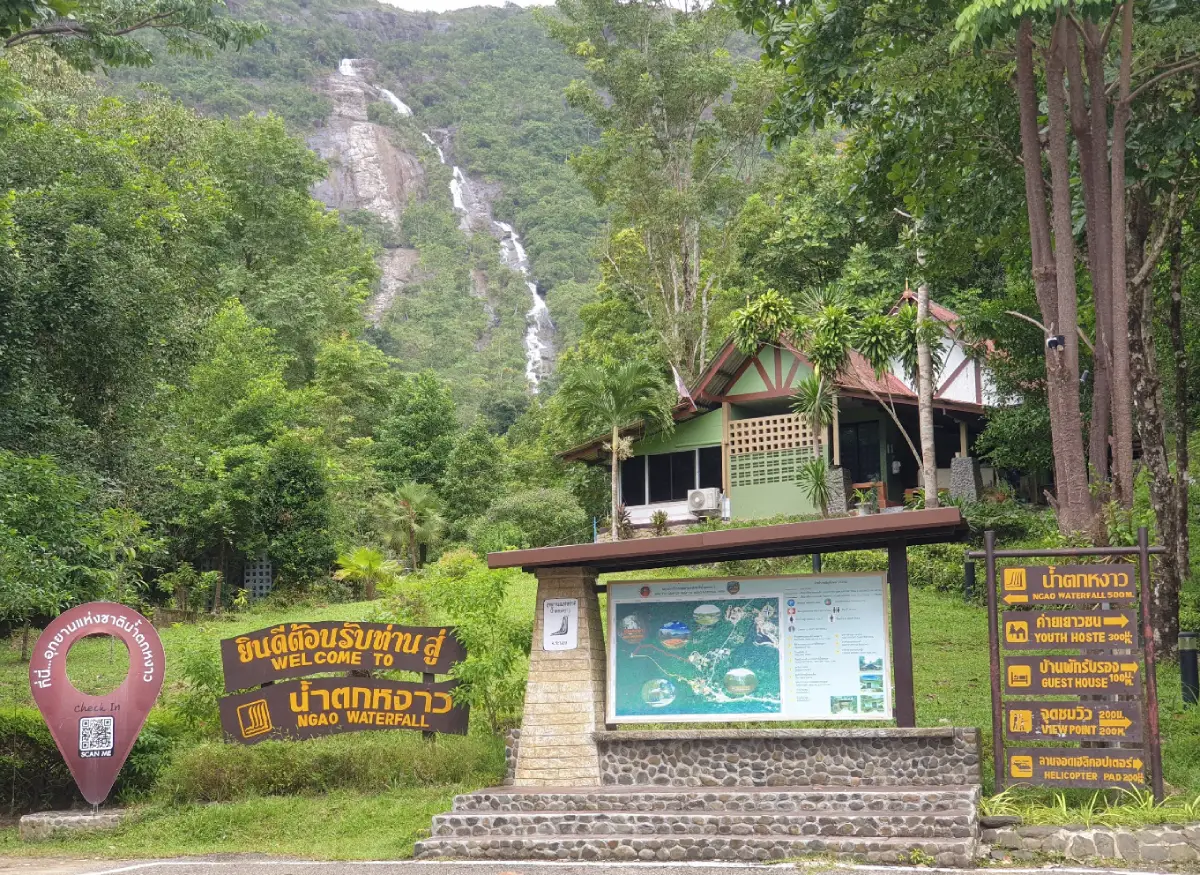
Namtok Ngao National Park in Ranong Province is one of the most important nature destinations on Thailand’s upper Andaman coast. The park is best known for Ngao Waterfall, a high cascade that drops from a steep mountain cliff and can be seen from a distance when traveling along the main road into Ranong. The park covers forest areas in both Ranong and Chumphon provinces, including La-un and Mueang Ranong districts in Ranong, as well as Sawi, Thung Tako, Lang Suan, and Phato districts in Chumphon. It covers about 417,500 rai, or roughly 668 square kilometres, and was declared a national park on 3 June 1999. Before taking its current name, the area was known as Khlong Phrao National Park.
The main appeal of Namtok Ngao National Park is its combination of tropical rainforest, mountain ridges, waterfalls, streams, hot springs, rare wildlife, orchids, and nature trails. Ngao Waterfall is the signature landmark. It appears as a white stream flowing down a steep rock face, framed by the dense green rainforest of Ranong. Because it can be seen from the highway before visitors even enter the park, the waterfall has become one of the most recognizable natural images of Ranong.
The park is suitable for visitors who want a meaningful nature experience without needing to join a strenuous trek. From the park headquarters area, visitors can walk to the waterfall viewpoint on a relatively accessible route. The short nature path makes the site suitable for families, students, general travelers, and nature lovers. At the same time, the park also contains more sensitive forest routes that require advance coordination, official permission, and staff supervision.
The waterfall changes significantly by season. The rainy season is the best period for strong water flow, especially from June to October. June is widely noted as the month when the water volume is especially impressive. From November to April, travel conditions are generally easier, skies can be clearer, and mountain views may be more open. Visitors who want to see the waterfall at its most powerful should focus on the rainy season, while those who prefer easier driving and clearer viewpoints may prefer the period after the heaviest rains.
Namtok Ngao National Park is an important headwater forest for both Ranong and Chumphon. The landscape consists of complex mountain ranges running north to south. Khao Nom Sao, about 1,089 metres above sea level, is one of the highest and most important peaks in the park and forms part of the natural divide between Ranong and Chumphon. Streams originating in the park feed several waterways, including Khlong Ngao, Khlong Bang Rin, Khlong Ratchakrut, Khlong La-un, Khlong Hat Som Paen, and river systems on the Chumphon side.
The dominant forest type is tropical evergreen rainforest, supported by Ranong’s humid climate and frequent rainfall. The forest contains large trees, understory plants, ferns, rattans, orchids, and many epiphytes. This forest type plays an essential ecological role. It protects watersheds, supports biodiversity, stores moisture, and maintains the streams that flow down toward nearby communities, lowland areas, and coastal ecosystems.
The best-known animal associated with Ngao Waterfall is the panda crab, locally called Pu Chao Fa. This rare freshwater crab is known for its striking colour pattern: a pale body and claws with dark purplish-black areas around the legs, eye sockets, and mouth. It was first discovered in the streams of Ngao Waterfall and has become one of the most important symbols of the park’s freshwater ecosystem. Sightings depend on season, stream condition, humidity, and staff guidance.
Visitors should treat the panda crab with care. It often shelters under stones, leaves, and moist streamside areas. Visitors should never catch it, move rocks, disturb leaf litter, shine lights too closely, or enter restricted stream areas. Ngao Waterfall is a clear example of why responsible nature travel matters. Small species can be as important to an ecosystem as large waterfalls and mountain views.
Another important natural highlight is the Komazum orchid, also known as Ueang Ngoen Luang, the provincial flower of Ranong. It is a white wild orchid with a soft yellow marking and a delicate fragrance. The orchid usually blooms from October to December and grows in humid forest conditions. Seeing this flower in the setting of Ngao Waterfall helps visitors understand that Ranong’s provincial flower is not only a symbol, but a living part of the province’s rainforest ecosystem.
The park’s main zones include the headquarters and Ngao Waterfall area, the waterfall walking route, nature-study trails, viewpoints, accommodation and camping areas, Phon Rang Hot Spring, and Khlong Phrao Waterfall on the Chumphon side. Each zone offers a different experience. Ngao Waterfall is ideal for short walks and photography, Phon Rang Hot Spring is suited to relaxation, and Khlong Phrao Waterfall expands the visitor’s understanding of the park as a large forest system across two provinces.
The main walking route from the parking area to the near-waterfall viewpoint is about 500 metres. It gradually takes visitors from the service area into the forest. Along the route, visitors can observe rainforest plants, streams, wet rocks, ferns, mosses, and epiphytes. The viewing area near the waterfall is good for photography and listening to the sound of the cascade, but visitors should avoid climbing slippery rocks or entering unsafe water areas, especially during the rainy season.
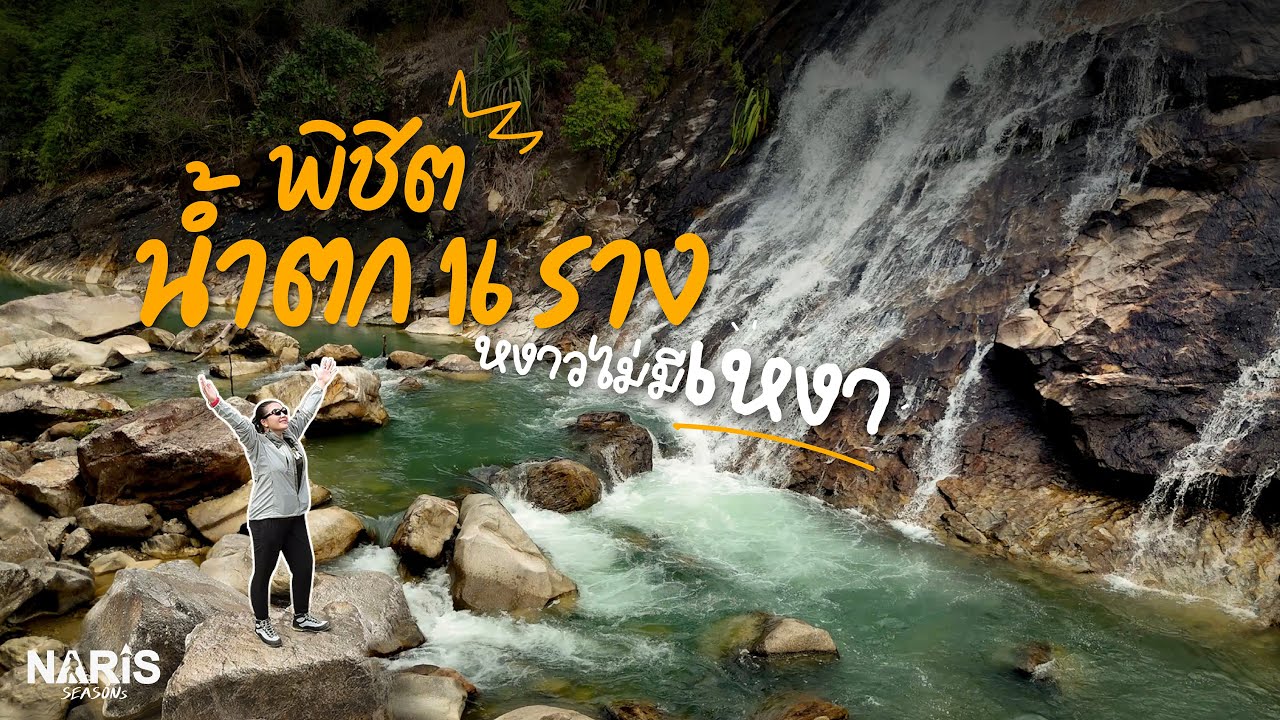
For more serious nature travelers, the park has been preparing the “16 Rang” nature-study route as a controlled day trek of about 7 kilometres. The round trip takes about 5 to 6 hours and begins from the Phon Rang Hot Spring area. The route includes the Bang Rin stream corridor, old kaolin mining traces, forest plants, and a wide viewpoint. This is not an independent open-access trail. It is arranged under park conditions because the ecosystem is fragile and visitor safety must be controlled.
The park has also planned a longer route toward the Ngao Waterfall ridge, rising over 900 metres and covering about 8 to 9 kilometres. This route is intended as an overnight nature route with views over Phu Khao Ya, Ranong town, and the surrounding mountains. It is suitable only for prepared trekkers and must be arranged through the park when officially available.
Phon Rang Hot Spring is another major attraction within Namtok Ngao National Park. It sits in a green valley where natural mineral hot water and forest streams meet. The site is suitable for relaxation after a nature walk. Visitors should follow staff instructions, avoid using soap or shampoo in natural water areas, and be careful when soaking in hot water. People with heart conditions, high blood pressure, pregnancy, heat sensitivity, or other medical concerns should use hot springs carefully.
Khlong Phrao Waterfall is another important waterfall within the same national park system, located on the Chumphon side. It is known as a large multi-level waterfall with water throughout the year. This shows that Namtok Ngao National Park is not only a single waterfall destination in Ranong, but a large headwater forest system linking multiple districts and watersheds.
The park provides accommodation, camping areas, and visitor services in selected zones. Travelers who wish to stay overnight should book through the Department of National Parks, Wildlife and Plant Conservation reservation system or contact park staff in advance. Accommodation and camping capacity is limited, especially during weekends, holidays, and the peak travel season.
The latest published visitor fee information lists Thai adult admission at 20 baht per person, vehicle fee at 30 baht per car, and free entry for Thai visitors aged 60 and above. Visitors should prepare cash at the entrance checkpoint and confirm current rates with the park before entering, especially when traveling in groups or visiting multiple park zones on the same day.
Recommended activities include waterfall viewing, nature photography, short forest walks, orchid observation during the blooming season, responsible learning about the panda crab, hot spring relaxation at Phon Rang, camping, staying in park accommodation, and combining the visit with nearby places such as Phu Khao Ya and Ranong old town. A visit should not be limited to a quick photograph of the waterfall; the park is best appreciated by walking slowly and observing the living forest.
Phu Khao Ya, also known as Khao Hua Lan, is one of the easiest nearby attractions to combine with the park. It lies very close to the waterfall area and offers a contrasting landscape. During the rainy season, the hills are green, while in the dry season they turn golden brown. Visiting Phu Khao Ya and Ngao Waterfall together gives travelers a clear picture of Ranong’s diverse terrain: open grassy hills on one side, humid rainforest and waterfall on the other.
Wat Ban Ngao is another nearby stop suitable before or after visiting the waterfall. The temple is part of the local Ngao community and can be included in a simple half-day route with Ngao Waterfall, Phu Khao Ya, and local restaurants or cafes in the subdistrict. This route gives visitors a balanced experience of Buddhist culture, nature, local food, and rural Ranong atmosphere.
Ranong Mangrove Research Centre and the Ranong Biosphere Reserve area add another ecological layer to the trip. Ngao Waterfall represents upland rainforest and headwater streams, while the mangrove area represents coastal wetlands that receive water flowing from inland forests toward the Andaman Sea. Combining these places helps travelers understand the natural sequence from mountain forest to mangrove and sea.
Ranong Canyon, Raksa Warin Hot Spring, Rattanarangsan Palace, and Ranong City Pillar Shrine can also be combined with a Namtok Ngao route. Travelers with half a day can focus on the park, waterfall, and Phu Khao Ya. Travelers with a full day can continue into Ranong town for hot springs, cultural sites, old-town streets, and local food.
Getting There is easiest by private car, rental car, van, or local hired transport. From Ranong town, take Highway 4 on the Ranong–Ratchakrut route for about 13 kilometres, then turn onto a paved local road for about 1 kilometre to reach the park headquarters. Another practical reference point is Phu Khao Ya, which is located very close to the park entrance area. Visitors should use navigation together with national park signage along Phetkasem Road.
Travelers coming from Bangkok can take Highway 4 south through Chumphon and continue toward Ranong. Those arriving by air at Ranong Airport can rent a car or take a local transfer into Ranong town before continuing to the park. Private transport is the most convenient option because it allows visitors to combine the park with Phu Khao Ya, Phon Rang Hot Spring, Wat Ban Ngao, and attractions in Ranong town.
Visitors should prepare for a humid rainforest environment. Footpaths can be slippery, especially during the rainy season. Wear shoes with good grip, bring drinking water, a rain jacket or umbrella, a hat, and waterproof protection for electronic devices. Do not swim in restricted areas, do not feed wildlife, do not bring food into prohibited zones, and do not remove orchids, plants, rocks, or animals from the park.
Overall, Namtok Ngao National Park is one of the most meaningful nature destinations in Ranong. It combines a high waterfall visible from the main road, tropical rainforest, the rare panda crab, the Komazum orchid, Phon Rang Hot Spring, Khlong Phrao Waterfall, new nature-study trails, and convenient access to Phu Khao Ya and Ranong town. A visit here shows that Ranong is not only about islands, beaches, and hot springs. It is also a province of living headwater forests that deserve careful learning, responsible travel, and long-term protection.
| Name | Namtok Ngao National Park |
| Former Name | Khlong Phrao National Park |
| Place Type | National Park, Waterfall, Tropical Rainforest, Nature Learning Site, And Eco-Tourism Attraction |
| Headquarters Address | 76/5 Moo 1, Ngao Subdistrict, Mueang Ranong District, Ranong Province 85000 |
| Coordinates | 9.855554, 98.628677 |
| Coverage Area | La-un And Mueang Ranong Districts In Ranong Province, And Sawi, Thung Tako, Lang Suan, And Phato Districts In Chumphon Province |
| Area Size | About 417,500 Rai, Or About 668 Square Kilometres |
| National Park Declaration | 3 June 1999 |
| Park Chief / Responsible Officer | Chalit Sinrotthanakon |
| Contact Numbers | 077-848-181, 077-810-651 |
| Highlights | Ngao Waterfall, Tropical Rainforest, Panda Crab, Komazum Orchid, Phon Rang Hot Spring, Khlong Phrao Waterfall, Nature Trails, And Mountain Viewpoints Around Ranong |
| Important Species | Panda Crab, First Found In The Streams Of Ngao Waterfall, And Komazum Orchid / Ueang Ngoen Luang, The Provincial Flower Of Ranong |
| Best Waterfall Season | Rainy Season, Especially June To October; June Is Noted For Strong Water Flow |
| Komazum Orchid Blooming Period | October To December Each Year |
| Main Zones | Headquarters And Ngao Waterfall Area, Waterfall Walking Route, Nature Trails, Viewpoints, Accommodation And Camping Area, Phon Rang Hot Spring, And Khlong Phrao Waterfall Zone |
| Main Waterfall Walk | About 500 Metres From The Parking Area To The Near-Waterfall Viewpoint |
| Special Nature Trail | 16 Rang Trail, About 7 km Round Trip, About 5–6 Hours, Limited Access And Operated Under Park Conditions |
| Current Status | Open As A National Park And Nature Attraction In Ranong, With Ongoing Safety Upgrades And Nature-Trail Development |
| Open Days | Daily |
| Opening Hours | 08.30 – 16.30 |
| Admission Fee | Published Rate: Thai Adult 20 Baht / Car 30 Baht / Thai Visitors Aged 60+ Free |
| Facilities | Parking, Toilets, Welfare Shop, Nature Walkway, Park Accommodation, Camping Area, Viewpoints, And Park Safety Staff |
| Visitor Etiquette | Do Not Disturb Panda Crabs, Do Not Collect Orchids Or Wild Plants, Do Not Feed Wildlife, Do Not Litter, Stay On Designated Paths, And Follow Staff Instructions. |
| Travel Information | From Ranong town, take Highway 4 on the Ranong–Ratchakrut route for about 13 km, then turn onto a paved road for about 1 km to reach the park headquarters. Phu Khao Ya is a useful nearby landmark. |
| Nearby Tourist Attractions | 1. Phu Khao Ya / Khao Hua Lan, about 1 km 2. Wat Ban Ngao, about 3 km 3. Phon Rang Hot Spring, about 12 km 4. Ranong Mangrove Research Centre And Ranong Biosphere Reserve, about 15 km 5. Raksa Warin Hot Spring, about 18 km 6. Rattanarangsan Palace And Ranong Old Town, about 18 km |
| Nearby Restaurants | 1. Somtam Phu Khao Ya Jae Jim, about 1 km, Tel. 064-058-9415, 086-560-3299 2. Tin Cafe Ngao, about 2 km, Tel. 065-403-5959 3. Ngao Smoothie & Pork Noodles, about 3 km, Tel. 082-288-3822 4. Isan Ban Hao Ngao, about 4 km, Tel. 089-170-5147, 065-123-2963 5. Ngao Valley, about 5 km, Tel. 065-568-7643 6. Daorung Sai Daeng Seafood, about 16 km, Tel. 085-797-9501, 085-797-9516 |
| Nearby Accommodations | 1. Baroque Boutique Resort, about 1.5 km, Tel. 065-496-2239 2. The White Village Ranong Resort, about 2 km, Tel. 082-729-9229 3. Siamese Tin Park Ranong, about 3 km, Tel. 062-445-3509 4. Mee Farm Suk Hostel, about 4 km, Tel. 085-928-2469 5. Ranong Adventure Resort & Park, about 8 km, Tel. 061-390-0179 6. Sook Hotel Ranong, about 18 km, Tel. 077-812-555-8, 093-581-2500 |
Frequently Asked Questions (FAQ)
Q: Where is Namtok Ngao National Park located?
A: The park headquarters is located at 76/5 Moo 1, Ngao Subdistrict, Mueang Ranong District, Ranong Province 85000. The park covers forest areas in both Ranong and Chumphon provinces.
Q: What are the opening days and hours?
A: Namtok Ngao National Park is open daily from 08.30 to 16.30.
Q: Is there an admission fee?
A: The latest published rate lists Thai adult admission at 20 baht, car fee at 30 baht, and free entry for Thai visitors aged 60 and above.
Q: When is the best time to visit Ngao Waterfall?
A: The rainy season is best for strong water flow, especially from June to October. June is often noted as the period when the waterfall has especially impressive water volume.
Q: What is the panda crab and where can it be found?
A: The panda crab, locally called Pu Chao Fa, is a rare freshwater crab with white and purplish-black colouring. It was first discovered in the streams of Ngao Waterfall and lives in moist streamside habitats.
Q: When does the Komazum orchid bloom?
A: The Komazum orchid, also known as Ueang Ngoen Luang and recognized as the provincial flower of Ranong, usually blooms from October to December each year.
Q: Does the park have accommodation?
A: Yes. The park has accommodation and camping areas in selected zones. Visitors should book through the national park reservation system or contact park staff in advance.
Q: How do travelers get to Namtok Ngao National Park?
A: From Ranong town, take Highway 4 on the Ranong–Ratchakrut route for about 13 km, then turn onto a paved road for about 1 km to reach the park headquarters. Private car, rental car, van, or local hired transport is recommended.
 Category: ●Nature and Wildlife
 Group: ●National Parks and Marine Reserves
Last Update : 2 MonthAgo
 Last Update : 2 MonthAgo
 Click to Access the Navigation Map GPS
Namtok Ngao National Park Map
Recommend

 Art, Culture and Heritage
 Historical Sites and Monuments(4)
 Landmarks and Memorials(1)
 Royal Palace(1)
 Art, Craft Centres, Tradition(4)
 Educational Places
 Educational Gardens, Farm(1)
 Places of Worship
 Temple(12)
 Other Sacred Sites(2)
 Suburban Living
 Village, Community(2)
National Parks and Marine Reserves(6)
 Mountain (Doi)(4)
 Waterfalls(15)
 Hot Springs(3)
 Caves(4)
 River, Canal(2)
 Bays and Beaches(10)
 Islands(8)
 Other natural attractions(3)
 Travel Articles, Recipes
 Travel Review, Food Review(1)


