
lovethailand home >South Travel Attractions >Narathiwat Travel Attractions >Muang Narathiwat >Ka Lu Wo Nuea > Ao Manao Forest Park
TL;DR: Ao Manao Forest Park is located at Village No. 1 and Bukit Ao Manao Area, Kaluwo Nuea Subdistrict, Mueang Narathiwat District, Narathiwat Province, open Daily, hours 08.00 – 17.00.

Ao Manao Forest Park
Open Days: Daily
Opening Hours: 08.00 – 17.00
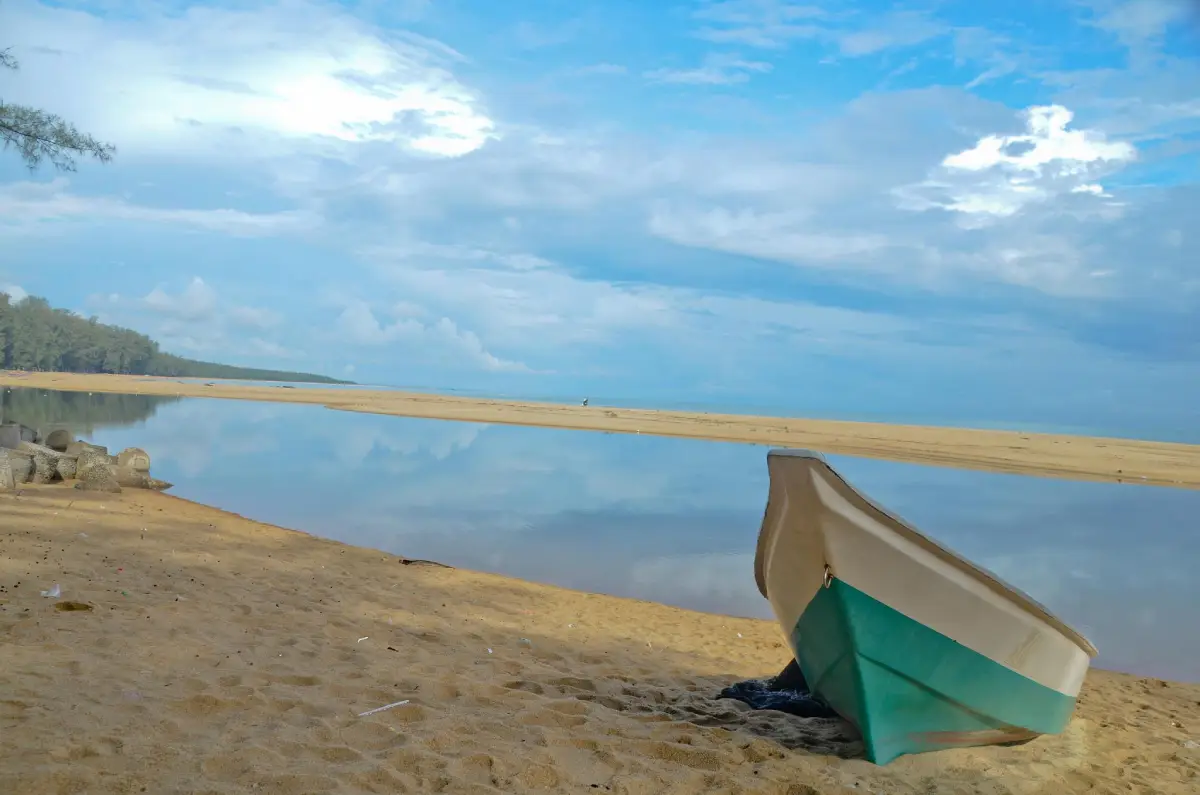
Ao Manao Forest Park, also known as Ao Manao-Khao Tanyong National Park in Narathiwat Province, is one of the most important coastal nature attractions near Narathiwat town. Located in Kaluwo Nuea Subdistrict, Mueang Narathiwat District, this seaside area features a sweeping bay of about 4 km, sandy beach sections, granite rocks, casuarina trees, a seaside arboretum, and a 1 km beach forest nature trail. Its value is not limited to the beach scenery. Ao Manao is also a place where travelers can learn about coastal forest ecology, drought-tolerant seaside plants, natural rock formations, and the relationship between sea, forest, hill, and protected land in southern Thailand.
Ao Manao is located around Village No. 1 and the Bukit Ao Manao area of Kaluwo Nuea Subdistrict. From Narathiwat town, travelers can follow Highway 4084 on the Narathiwat-Tak Bai route for about 3 km, then take the side road toward the beach for another 3 km. Because it is close to the town, this destination works well for a half-day trip, a coastal break on the way to Tak Bai, or a nature-focused itinerary combined with Narathat Beach, Ko Leng Chi Shrine, Narathiwat Central Mosque, and Thaksin Ratchaniwet Palace.
Many Thai travelers still know the place by its older name, Ao Manao Forest Park. Current tourism and agency information often refers to it as Ao Manao-Khao Tanyong National Park, or a national park preparation area. The site brings together coastal beach, beach forest, hill forest, peatland, and protected forest around Khao Tanyong. Travelers who stop only for beach photos will see only one part of the area. Those who spend more time walking the nature trail will understand that Ao Manao is a compact natural landscape where sea, sand, forest, and hill ecosystems meet.
The main beach is a curved bay stretching for about 4 km. Sand alternates with rock formations, giving the shoreline more character than a flat, uninterrupted beach. Some parts are suitable for relaxing under casuarina trees, some for walking along the sand, and some for photographing the rocks and sea. One side of the area is adjacent to Thaksin Ratchaniwet Palace, which helps preserve the surrounding natural environment. This proximity contributes to the calm and green atmosphere that makes Ao Manao feel different from more urban beaches.
The seafront is shaded by casuarina trees and a seaside arboretum, making it a pleasant place for picnics, short walks, and quiet rest. The shade is one of the strongest advantages of Ao Manao. Visitors can enjoy the sea breeze without being exposed to direct sun all the time. On clear days, the combination of casuarina trees, white sand, granite rocks, and the hill backdrop creates one of the most peaceful coastal views in Narathiwat Province.
The 1 km beach forest nature trail is one of the most important features of the area. It introduces visitors to plants that survive in dry, windy, sandy, and salty coastal conditions. Species found in the area include sea poison tree, wild lime, pandanus, tropical almond, sea hibiscus, and other beach forest plants. These plants often have thick leaves, glossy surfaces, bent trunks, or root systems adapted to coastal stress. Walking this trail turns a beach visit into a meaningful nature-learning experience without requiring a long journey away from town.
The wild lime tree, locally known as manao phi, is one of the notable plant species associated with Ao Manao-Khao Tanyong. Its name attracts attention, but its real importance is ecological. It is a hardy coastal plant that can grow in conditions affected by wind, heat, dry sand, and salt exposure. Pandanus is another memorable beach plant, especially because its fruit resembles a pineapple. Paying attention to these plants helps travelers see Ao Manao not just as a scenic beach, but as a living coastal ecosystem.
Khao Tanyong is the hill that gives the wider park its name. It rises to about 293 meters above mean sea level and is part of the natural landscape connected with protected forest and the royal palace grounds. Viewpoints around the hill allow visitors to see Ao Manao from a higher angle when access conditions are suitable. This elevated perspective shows the shape of the bay, the coastal forest, and the sea more clearly than the beach level alone.
The Ao Manao-Khao Tanyong area also includes small waterfalls and seasonal water features such as Thara Sawan Waterfall and Rim Pha Waterfall. These natural features add another layer to the visit, allowing travelers to experience beach, coastal forest, hill, and freshwater environments in one area. Access to these points should follow designated routes, and visitors should check local conditions before walking to waterfall areas, especially during or after heavy rain.
The area is also home to wildlife that moves through coastal forest and nearby protected zones. Squirrels, monkeys, birds, jungle fowl, and other small animals may be found in the broader natural area. Visitors should observe wildlife quietly, avoid feeding animals, and avoid disturbing habitats. The presence of wildlife is one reason Ao Manao-Khao Tanyong has more ecological value than a typical seaside recreation area.
Ao Manao is suitable for several types of travelers. Leisure travelers can sit under the trees, walk along the beach, or enjoy the rocks and sea breeze. Nature lovers can follow the beach forest trail and observe coastal plants. Photographers can capture the bay curve, casuarina line, rock formations, beach shadows, and hill scenery. Families can use the area as a calm daytime stop before continuing to other attractions in Mueang Narathiwat or Tak Bai District.
The best time to visit is in the morning or late afternoon. The light is softer, the heat is lower, and walking on the beach or nature trail is more comfortable. For photography, morning and evening light adds texture to the trees, rocks, and shoreline. During the rainy season, travelers should check weather and sea conditions in advance because Narathiwat’s Gulf of Thailand coast can be affected by monsoon rain and rougher sea conditions.
Although Ao Manao is easy to reach from town, visitors should treat it as a conservation area. Do not litter, pick plants, damage beach vegetation, climb slippery rocks, or enter restricted areas. This is especially important because parts of the area are near Thaksin Ratchaniwet Palace and protected natural zones. Respecting these boundaries helps keep the beach forest and coastal ecosystem intact.
Ao Manao can be included in several short itineraries. Travelers interested in coastal scenery can combine it with Narathat Beach and the Bang Nara River mouth. Those interested in town culture can add Ko Leng Chi Shrine, Narathiwat Central Mosque, and local restaurants in Narathiwat town. Nature-focused visitors can spend more time around Khao Tanyong, the beach forest trail, and the waterfall areas when conditions are suitable.
Facilities in the area are more modest than in fully developed commercial beach destinations. Visitors should bring drinking water and personal items, and should not assume that all services will be available at all times. Nearby private accommodations, restaurants, and cafés can be found in Narathiwat town and surrounding areas. Staying in town is the most convenient option for travelers who want easy access to food, transport, and basic services while visiting Ao Manao in the morning or afternoon.
Historically, Ao Manao was known as a forest park before being promoted as a marine national park preparation area. The proposed protected area was developed because the coastline, beach forest, hill terrain, marine environment, and reserved forest around Khao Tanyong are important to both nature conservation and tourism in Narathiwat. Because it remains a preparation-stage national park area, some management details may differ from fully declared national parks, including entrance fees, lodging, and visitor services.
Many travel descriptions mention only the long beach, casuarina trees, and nature trail. A stronger way to understand Ao Manao is to see how its different ecosystems connect. The beach forest protects the coast, the hill shapes the landscape, the rocks break the rhythm of the shoreline, and the nearby palace grounds help maintain the green buffer around the area. This makes Ao Manao more than a beach stop; it is a compact coastal ecology classroom near Narathiwat town.
For photography, the best subjects include the casuarina rows, curved bay, rock formations, beach forest plants, and elevated views from Khao Tanyong if the route is open. Visitors should avoid stepping on fragile beach vegetation and should be careful on wet or algae-covered rocks. Shoes with good grip are useful, especially after rain or during high humidity.
Families traveling with children or older visitors should choose flatter beach sections and shaded areas near the casuarina trees. The beach forest trail can be walked slowly, but it is best avoided during heavy rain. Ao Manao is more suitable for relaxed nature appreciation than strenuous activity. Moving slowly allows visitors to see plant details, shoreline shapes, and small changes in the coastal environment more clearly.
Ao Manao is also useful for environmental learning. Students and nature-focused visitors can study beach forest plants, coastal wind adaptation, sandy soil, granite rocks, coastal erosion, sea breeze, and protected-area management in one place. A guided group should coordinate with local staff in advance for route advice and responsible visitor conduct.
In summary, Ao Manao Forest Park or Ao Manao-Khao Tanyong National Park deserves at least half a day. Its true value is found by walking slowly under the casuarina shade, listening to the sea, observing beach forest plants, looking at the rocks along the bay, and understanding how Narathiwat’s coast combines recreation, conservation, and landscape diversity. With good timing and respectful travel, Ao Manao becomes one of the most rewarding natural stops in Narathiwat Province.
Getting There is straightforward by private car or rental car. From Narathiwat town, follow Highway 4084 on the Narathiwat-Tak Bai route for about 3 km, then take the side road to the beach for another 3 km. Private transport is the most convenient option because travelers can combine Ao Manao with Narathat Beach, Ko Leng Chi Shrine, Narathiwat Central Mosque, and town restaurants in one day. If using local transport, arrange a pickup or hired vehicle in advance and travel during the daytime for convenience and safety.
| Name | Ao Manao Forest Park / Ao Manao-Khao Tanyong National Park |
| Location | Village No. 1 and Bukit Ao Manao Area, Kaluwo Nuea Subdistrict, Mueang Narathiwat District, Narathiwat Province |
| Address | Kaluwo Nuea Subdistrict, Mueang Narathiwat District, Narathiwat Province 96000, Thailand |
| Coordinates | 6.4475, 101.8275 |
| Highlights | A 4 km curved bay with sandy beach, rock formations, casuarina trees, seaside arboretum, 1 km beach forest nature trail, and Khao Tanyong viewpoint |
| History | Formerly known as Ao Manao Forest Park and later promoted as Ao Manao-Khao Tanyong National Park preparation area for coastal, beach forest, hill, and marine conservation |
| Name Origin | Ao Manao refers to the coastal bay area, while Khao Tanyong is the hill within the park area rising about 293 meters above mean sea level |
| Distinctive Features | A coastal natural area combining beach, beach forest, hill terrain, peatland, and coastal ecology close to Narathiwat town |
| Travel Information | From Narathiwat town, follow Highway 4084 toward Tak Bai for about 3 km, then take the side road to the beach for another 3 km |
| Current Status | Open as a nature attraction and national park preparation area |
| Open Days | Daily |
| Opening Hours | 08.00 – 17.00 |
| Fees | No entrance fee while the area remains a national park preparation site |
| Facilities | Beach resting area, casuarina shade, seaside arboretum, nature trail, viewpoint, camping area, and small shops near the entrance |
| Main Areas / Zones | Ao Manao Beach, Khao Tanyong Beach, beach forest nature trail, Khao Tanyong, viewpoint, Thara Sawan Waterfall, Rim Pha Waterfall, and seaside arboretum area |
| Caretaker / Coordinator | Ao Manao-Khao Tanyong National Park |
| Main Contact Number | 081-957-8166 |
| Nearby Tourist Attractions | 1. Thaksin Ratchaniwet Palace, about 2 km 2. Narathat Beach, about 4 km 3. Ko Leng Chi Shrine, about 7 km 4. Narathiwat Central Mosque, about 8 km 5. Narathiwat City Museum, about 9 km 6. Bang Nara River Mouth, about 10 km |
| Nearby Restaurants | 1. Rim Nam Bang Nara Restaurant, about 7 km, Tel. 073-511-869 2. Ja Cartoon Restaurant, about 8 km, Tel. 073-512-619 3. Nam Cha Kopi, about 8 km, Tel. 073-513-277 4. Raya Kitchen Narathiwat, about 9 km, Tel. 098-940-1033 5. Local Restaurants In Narathiwat Town, about 8 km |
| Nearby Accommodations | 1. Tanyong Hotel Narathiwat, about 5 km, Tel. 073-511-477 2. The Imperial Narathiwat Hotel, about 5 km, Tel. 073-515-041 3. Art Nara Resort, about 8 km 4. Paksina Resort, about 9 km 5. Jai Dee Jing Jing, about 10 km, Tel. 062-207-7662, 073-565-805 |
Frequently Asked Questions (FAQ)
Q: Where is Ao Manao Forest Park located?
A: Ao Manao Forest Park, also known as Ao Manao-Khao Tanyong National Park, is located in Kaluwo Nuea Subdistrict, Mueang Narathiwat District, Narathiwat Province.
Q: What is special about Ao Manao in Narathiwat?
A: It has a 4 km curved bay, sandy beach, rock formations, casuarina trees, beach forest nature trail, Khao Tanyong viewpoint, and distinctive coastal plants such as wild lime and pandanus.
Q: Is there an entrance fee?
A: No entrance fee is collected while Ao Manao-Khao Tanyong remains a national park preparation area.
Q: How long is the beach forest nature trail?
A: The beach forest nature trail is about 1 km long and is suitable for learning about coastal plants and seaside ecology.
Q: When is the best time to visit Ao Manao?
A: Morning and late afternoon are the best times because the weather is more comfortable and the light is suitable for walking and photography.
Q: How can travelers get to Ao Manao?
A: From Narathiwat town, follow Highway 4084 toward Tak Bai for about 3 km, then take the side road to the beach for another 3 km.
Q: What nearby places can be visited with Ao Manao?
A: Nearby places include Thaksin Ratchaniwet Palace, Narathat Beach, Ko Leng Chi Shrine, Narathiwat Central Mosque, Narathiwat City Museum, and the Bang Nara River mouth.
Q: Are there accommodations near Ao Manao?
A: Yes. Private accommodations and hotels are available nearby, especially in Narathiwat town, which is convenient for food, transport, and other services.
 Category: ●Nature and Wildlife
 Group: ●National Parks and Marine Reserves
Last Update : 2 MonthAgo
 Last Update : 2 MonthAgo
 Click to Access the Navigation Map GPS
Ao Manao Forest Park Map

 Art, Culture and Heritage
 Landmarks and Memorials(8)
 Royal Palace(1)
 Art, Craft Centres, Tradition(7)
 Museums(4)
 Art Gallery(1)
 Places of Worship
 Temple(16)
 Mosque(23)
 Other Sacred Sites(5)
 Research and Development
 Royal Project(1)
 Suburban Living
 Village, Community(9)
 Local Market(1)
National Parks and Marine Reserves(5)
 Mountain (Doi)(2)
 Dam, Reservoir, Lake(2)
 Waterfalls(16)
 River, Canal(3)
 Bays and Beaches(5)
 Islands(1)
 Other natural attractions(4)
 Entertainment and Agricultural
 Stadium(1)
 Farms, Parks and Ecotourism(7)
 Shopping
 Shopping and Night Market(1)
 Travel Articles, Recipes
 Travel Review, Food Review(1)


