
lovethailand home >South Travel Attractions >Nakhon Si Thammarat Travel Attractions >Mueang NaKhon Si Thammarat >Nai Muang > Wat Phra Mahathat Woramahawihan
TL;DR: Wat Phra Mahathat Woramahawihan is located at Ratchadamnoen Road, Nai Mueang Subdistrict, Mueang Nakhon Si Thammarat District, Nakhon Si Thammarat 80000, Thailand, open Daily, hours 08.00 – 16.30.
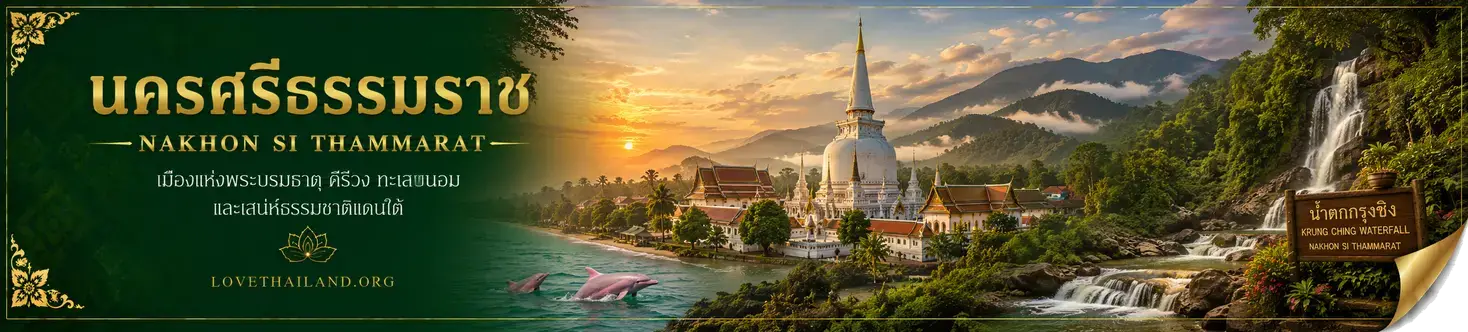
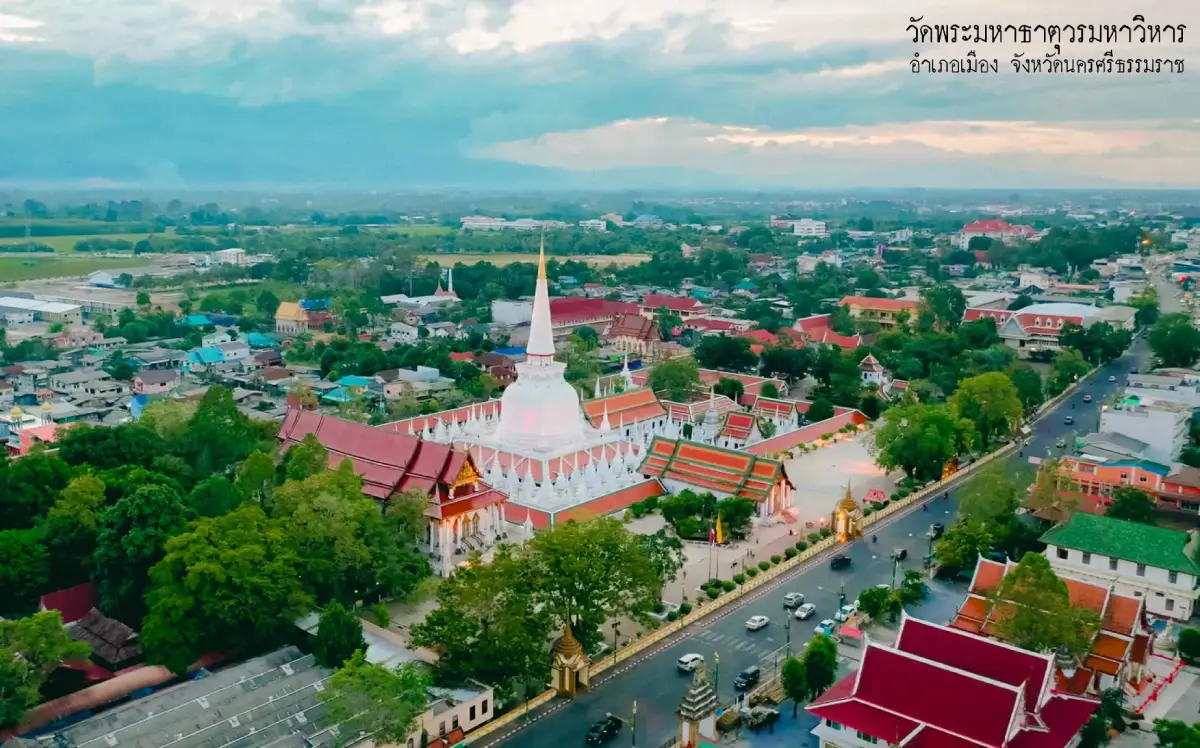
Wat Phra Mahathat Woramahawihan
Open Days: Daily
Opening Hours: 08.00 – 16.30
Wat Phra Mahathat Woramahawihan in Nakhon Si Thammarat is one of the most important Buddhist temples in Southern Thailand and one of the most significant sacred sites in the country. It is located on Ratchadamnoen Road in Nai Mueang Subdistrict, Mueang Nakhon Si Thammarat District. The temple was formerly known as Wat Phra Borommathat and is often called Wat Phra That by local people. At the heart of the temple stands the great Phra Borommathat Chedi, a Sri Lankan-style reliquary stupa with a golden spire. According to local tradition, the stupa enshrines a sacred relic of the Buddha, associated with the left canine tooth relic. For Thai Buddhists, especially people of the South, this temple is not only a historic monument, but also a living spiritual center.
The importance of Wat Phra Mahathat Woramahawihan can be understood on several levels. It is a first-class royal temple, a sacred Buddhist pilgrimage destination, a center of Nakhon Si Thammarat identity, a masterpiece of religious architecture, and a living cultural site where rituals are still performed throughout the year. Visitors arriving at the temple immediately see the white bell-shaped stupa rising above the surrounding halls and smaller chedis. The golden spire catches the light and creates one of the most memorable images of Nakhon Si Thammarat. This image has become a visual symbol of the city and a powerful expression of Buddhist devotion in Southern Thailand.
The sacred character of the temple does not come only from its antiquity. It also comes from continuous worship, ritual practice, community memory, and pilgrimage. Local people and visitors come to pay respect to the Buddha relic, offer cloth, make merit, join candlelight ceremonies, take part in the annual cloth-wrapping ceremony, and learn about the history of the city. A visit to Wat Phra Mahathat Woramahawihan is therefore not simply a visit to an old monument. It is an entry into a living sacred space where faith, architecture, legend, and everyday Buddhist practice remain closely connected.
According to the Nakhon Si Thammarat chronicle tradition, Prince Thanakumara and Princess Hemachala brought the sacred relic to Hat Sai Kaew and marked the site with a small stupa. Later, in the year corresponding to 1176, King Sri Thammasokarat founded the city of Nakhon Si Thammarat and rebuilt the great stupa. This legend connects the temple with the founding of the city, the establishment of Buddhism, and the identity of Nakhon Si Thammarat as a major religious center. Whether approached as history, legend, or sacred memory, the story gives the temple a depth that goes beyond architecture alone.
Historically, the temple is connected with Tambralinga and the development of Nakhon Si Thammarat as an important city on the southern peninsula. The city was influenced by maritime trade networks and by religious and cultural contacts with India, Sri Lanka, Java, the Mon region, and other parts of Southeast Asia. Brahmanism, Hinduism, Mahayana Buddhism, and Theravada Buddhism all contributed to the cultural environment of the region before being integrated into the temple’s buildings, rituals, and artistic traditions. This long and layered history is one of the reasons Wat Phra Mahathat Woramahawihan was inscribed as a UNESCO World Heritage Site in 2026.
The Phra Borommathat Chedi is the central structure of the temple. It is a Sri Lankan-style bell-shaped stupa standing 55.78 meters high, based on measurements taken during the Fine Arts Department’s restoration of the golden spire in 1995. The upper golden section, from the inverted and upturned lotus base to the finial, measures 6.80 meters and is covered with high-quality gold. The form of the stupa reflects the strong influence of Sri Lankan Theravada Buddhism in the southern peninsula, while its local setting and surrounding structures give it a distinct Nakhon Si Thammarat identity.
The base of the great stupa, known in connection with Wihan Thap Kaset, contains 22 important niches with elephant heads projecting outward as if supporting the stupa. These elephant-head elements are meaningful both visually and symbolically. They suggest the support of Buddhism and the strength of the faith that sustains the sacred monument. For visitors, the base of the stupa is one of the most interesting areas to observe because it reveals the combination of religious symbolism, craftsmanship, and architectural imagination within the temple.
The great stupa is also widely known as the shadowless stupa. This belief has become part of the temple’s identity and adds another layer of sacred meaning to the monument. The idea of the shadowless stupa reflects how local observation, architectural wonder, and devotion can come together in Buddhist culture. For many visitors, this belief strengthens the feeling that the Phra Borommathat Chedi is not only an architectural structure, but a sacred presence at the center of the city.
Several important halls stand within the temple complex. The Phra Wihan Luang is one of the most significant buildings and is admired for its architectural beauty in the Ayutthaya style. It reflects the temple’s role as a royal and religious center and shows the refinement of traditional Thai temple architecture. Visitors should take time to observe its proportions, roofline, columns, and sacred atmosphere. The temple’s value lies not only in the great stupa, but also in the group of surrounding halls that together form a complete Buddhist sacred compound.
Wihan Sam Chom is another important area. It enshrines a royal-attired Buddha image known as Phra Sri Thammasokarat, which is connected with the memory of King Sri Thammasokarat and the founding tradition of Nakhon Si Thammarat. This hall helps visitors understand how local history, royal legend, Buddhist devotion, and sacred image worship are interwoven in the temple. The presence of this image shows that the history of the city is remembered not only through written chronicles, but also through sacred spaces and religious images.
Wihan Phra Mahaphinetkrom, also known as Wihan Phra Song Ma, is especially important in relation to the ritual route for offering cloth to the great stupa. It is associated with ceremonies performed in honor of the Buddha relic and plays an important role in the annual cloth-wrapping tradition. Visitors who walk through this area can see that worship at the temple follows a sacred order and spatial logic. The ceremony is not only a public festival, but also a ritual movement through meaningful parts of the temple.
Wihan Khian and Wihan Pho Langka are also important because they are connected with the display of objects and offerings dedicated to the Buddha. These items reflect the devotion of generations of Buddhists who brought valuable objects, artworks, and offerings to the temple. They allow visitors to see the temple as a place where faith has been materialized through objects, craftsmanship, donation, and ritual. These halls add an art historical and cultural dimension to the spiritual experience of the temple.
The annual Hae Pha Khuen That, or cloth-wrapping ceremony, is one of the most important living traditions of Wat Phra Mahathat Woramahawihan. During this ceremony, Buddhists prepare a long sacred cloth, known as Pha Phra Bot, and carry it in procession to the temple before offering it to wrap the base of the great stupa. The ceremony is commonly associated with Makha Bucha and Visakha Bucha. It expresses devotion to the Buddha relic and represents a collective act of faith by the people of Nakhon Si Thammarat and pilgrims from other regions.
The essence of the cloth-wrapping ceremony is the offering of cloth to the Phra Borommathat Chedi as a symbolic act of worship. Participants often walk clockwise around the stupa before the cloth is brought to the designated sacred area. This tradition makes the temple a living heritage site rather than a silent historical monument. It continues to bring people together, renews the relationship between community and sacred place, and shows how Buddhist devotion is expressed through collective ritual.
In addition to Hae Pha Khuen That, the temple is active during major Buddhist holy days. Visitors may encounter chanting, merit-making, candlelight processions, almsgiving, meditation activities, and devotional offerings. The temple therefore remains a living monastery and religious center throughout the year. Its atmosphere combines the calmness of a sacred site with the vitality of a place that continues to serve real communities.
Around the temple, visitors can find local craft products and souvenirs associated with Nakhon Si Thammarat, such as silverware, niello work, and Nang Talung shadow puppets. These items connect the temple with the artistic identity of the city. Niello work is one of Nakhon Si Thammarat’s most refined craft traditions, while shadow puppetry is one of Southern Thailand’s most distinctive performing arts. The area around the temple therefore allows visitors to experience religion, art, craft, and local economy in one place.
A good visit should begin with paying respect to the Phra Borommathat Chedi, then continue through the important halls and surrounding areas. Visitors should allow at least 1-2 hours for a basic visit. Those who want to observe architectural details, learn the history, visit nearby craft shops, and take photographs respectfully should allow more time. The temple can also be combined with Nakhon Si Thammarat National Museum and Ban Nang Talung Suchart Subsin to create a full cultural route covering religion, archaeology, art, and Southern Thai performance heritage.
As a World Heritage Site, Wat Phra Mahathat Woramahawihan has become even more important for international visitors. It is a living example of Theravada Buddhist heritage that has continued for many centuries. The temple shows influences from Sri Lanka, India, Java, the Mon region, and maritime Southeast Asia, while remaining deeply rooted in the local culture of Nakhon Si Thammarat. For travelers interested in Southern Thai Buddhist heritage, this temple is the most important place to begin.
For Thai visitors, the temple is often connected with personal and family memory. Many families come to pay respect to the great stupa, offer cloth, make merit on birthdays, bring children to learn local history, or return after many years because the temple was part of their childhood. These emotional connections make the temple more than a tourist destination. It is a place of memory, gratitude, devotion, and continuity.
Visitors should dress and behave respectfully. As a royal temple and sacred Buddhist site, Wat Phra Mahathat Woramahawihan requires modest clothing. Shoulders should be covered, and trousers or skirts should cover the knees. Shoes must be removed before entering designated halls. Visitors should not climb on historic structures, touch fragile architectural elements, make loud noise, fly drones without permission, or photograph ceremonies in a way that disturbs monks or worshippers. Respectful behavior preserves both the sanctity and the dignity of the site.
Getting There from Nakhon Si Thammarat city center is straightforward. Follow Ratchadamnoen Road through the city, passing Sanam Na Mueang, the provincial administrative area, and the municipal hospital. The Phra Borommathat Chedi is clearly visible from the road. Parking is available inside or near the temple depending on traffic conditions and the number of visitors. During major festivals and Buddhist holy days, visitors should allow extra time because the area around the temple becomes crowded.
Local transport is also convenient. Songthaews on the Hua Thanon-Sanam Kila route pass along Ratchadamnoen Road and can drop passengers near the front of the temple. Visitors staying in the city can also use local taxis, tuk-tuks, or ride-hailing services. From Nakhon Si Thammarat Airport, travelers can take a taxi or rental car into the city and continue to the temple. The temple can easily be included in a one-day city itinerary with the National Museum, City Pillar Shrine, Old City Wall, and other cultural attractions.
The best time to visit is in the morning, when the air is cooler, the light is clear, and the temple is usually calmer. Afternoon visits are suitable for those who want to observe architectural details and explore the surrounding shops. Late afternoon offers softer light for exterior photography. Visitors who want to join Hae Pha Khuen That should check the Buddhist lunar calendar and local announcements, as the ceremony is linked with major Buddhist holy days.
A meaningful one-day route can begin at Wat Phra Mahathat Woramahawihan in the morning, followed by local food or coffee near the temple. After that, visitors can continue to Nakhon Si Thammarat National Museum to see archaeological objects related to the history of the city, then visit Ban Nang Talung Suchart Subsin or the City Pillar Shrine. This route gives a strong overview of Nakhon Si Thammarat through religion, history, craftsmanship, folk performance, and the living culture of the old city.
Visitors interested in art should observe details carefully: the stupa base, smaller chedis, elephant-head niches, gates, halls, pediments, columns, murals, and important Buddha images. Each element has meaning and should not be seen only as decoration. The beauty of Wat Phra Mahathat Woramahawihan comes from the combination of sacred proportion, craftsmanship, and faith across many periods. A slow walk through the temple reveals far more than a quick photograph of the golden spire.
Visitors interested in history should connect the temple with the wider history of Nakhon Si Thammarat. The city was an important religious and trading center in the southern peninsula. The great stupa is a key piece of evidence for the role of Nakhon Si Thammarat as a center of Theravada Buddhism. Studying the temple together with the Old City Wall, Ho Phra Isuan, the National Museum, and nearby communities helps visitors understand the full cultural landscape of the city.
Those interested in contemporary culture can use the temple as a starting point for learning about local crafts and traditions, including niello work, shadow puppetry, woven textiles, Southern Thai food, and festival culture. The surrounding neighborhood contains restaurants, coffee shops, souvenir shops, and local products. The temple is therefore not isolated from daily life. It remains the spiritual and cultural center of a living urban community.
For educational groups, Wat Phra Mahathat Woramahawihan is a large open-air classroom. It connects history, art, religion, Thai language, geography, community studies, and World Heritage learning. Students can study the legend of the Buddha relic, Sri Lankan-style stupa architecture, the cloth-wrapping tradition, local craftsmanship, and the role of a Buddhist temple in Thai society. Learning from the actual site makes history more vivid than textbook study alone.
For international travelers, the temple deserves at least half a day if time allows. It should be understood as a living Theravada Buddhist temple, not as an abandoned archaeological ruin. Visitors should walk respectfully, observe rituals quietly, and take time to understand why the Phra Borommathat Chedi holds such deep meaning for the people of Southern Thailand. This understanding makes the visit more meaningful and culturally sensitive.
Wat Phra Mahathat Woramahawihan is therefore a complete cultural destination. It combines religion, history, architecture, ritual, local craft, pilgrimage, and community life. Visitors can pay respect to the golden-spired Phra Borommathat Chedi, explore significant halls, learn about the cloth-wrapping ceremony, observe local craftsmanship, and understand Nakhon Si Thammarat as one of the most important Buddhist cities in Southern Thailand.
In summary, Wat Phra Mahathat Woramahawihan is the spiritual heart of Nakhon Si Thammarat and one of Thailand’s most important Buddhist sacred sites. The 55.78-meter Phra Borommathat Chedi is a symbol of devotion and the city’s historic greatness. The surrounding halls reflect many layers of religious art. The Hae Pha Khuen That tradition keeps the temple alive as a cultural heritage site, and its UNESCO World Heritage inscription in 2026 confirms its importance not only for Nakhon Si Thammarat and Thailand, but also for the wider world of Buddhist heritage.
| Name | Wat Phra Mahathat Woramahawihan |
| Location | Ratchadamnoen Road, Nai Mueang Subdistrict, Mueang Nakhon Si Thammarat District, Nakhon Si Thammarat 80000, Thailand |
| Address | 435 Ratchadamnoen Road, Nai Mueang Subdistrict, Mueang Nakhon Si Thammarat District, Nakhon Si Thammarat 80000, Thailand |
| Coordinates | 8.411475, 99.966217 |
| Highlights | A first-class royal temple, the golden-spired Phra Borommathat Chedi, the spiritual center of Southern Thai Buddhism, the Hae Pha Khuen That cloth-wrapping ceremony, important temple halls, and UNESCO World Heritage status in 2026 |
| History | According to local tradition, Prince Thanakumara and Princess Hemachala brought the sacred relic to Hat Sai Kaew. Later, in 1176, King Sri Thammasokarat founded Nakhon Si Thammarat and rebuilt the great reliquary stupa. |
| Name Origin | The temple was formerly known as Wat Phra Borommathat and is locally called Wat Phra That. Its present name reflects its status as a first-class royal temple and a major sacred site of Nakhon Si Thammarat. |
| Distinctive Features | The main stupa is a 55.78-meter Sri Lankan-style reliquary stupa with a golden upper section measuring 6.80 meters from the lotus base to the finial. The base area includes 22 elephant-head niches symbolically supporting the great stupa. |
| Travel Information | From Nakhon Si Thammarat city center, follow Ratchadamnoen Road past Sanam Na Mueang, the provincial administrative area, and the municipal hospital. The great stupa is clearly visible from the road. Visitors can arrive by private car, local songthaew on the Hua Thanon-Sanam Kila route, local taxi, tuk-tuk, or ride-hailing service. |
| Current Status | Open to visitors and active as a major Buddhist temple where religious ceremonies, merit-making, and local traditions continue throughout the year |
| World Heritage Status | Inscribed as a UNESCO World Heritage cultural property in 2026 under the name Wat Phra Mahathat Woramahawihan, Nakhon Si Thammarat |
| Open Days | Daily |
| Opening Hours | 08.00 – 16.30 |
| Fees | Free Admission; donations can be made according to personal faith |
| Facilities | Parking area, worship areas, important temple halls, offering stalls, local craft and souvenir shops, rest areas, toilets, and surrounding local product shops |
| Main Areas / Zones | 1. Phra Borommathat Chedi 2. Wihan Thap Kaset And 22 Elephant-Head Niches 3. Phra Wihan Luang 4. Wihan Sam Chom 5. Wihan Phra Mahaphinetkrom Or Wihan Phra Song Ma 6. Wihan Khian 7. Wihan Pho Langka 8. Sacred Worship And Candlelight Procession Area 9. Hae Pha Khuen That Ritual Area 10. Offering, Niello Work, Silverware, And Nang Talung Souvenir Area Around The Temple |
| Important Tradition | Hae Pha Khuen That, the annual cloth-wrapping ceremony, is commonly held on Makha Bucha and Visakha Bucha. Buddhists offer a long sacred cloth to wrap the base of the great stupa in honor of the Buddha relic. |
| Caretaker / Abbot | Phra Thep Winayaphon (Sompong Panyathipo), Abbot of Wat Phra Mahathat Woramahawihan |
| Main Contact Number | 075-343-411 |
| Buddhist Outreach Contact | 081-103-0738 |
| Visitor Guidelines | Dress modestly, remove shoes before entering designated halls, do not climb or touch historic structures, keep noise low, do not fly drones without permission, and respect monks, worshippers, and ritual areas. |
| Nearby Tourist Attractions | 1. Nakhon Si Thammarat National Museum, about 2 km 2. Ban Nang Talung Suchart Subsin, about 1 km 3. Nakhon Si Thammarat City Pillar Shrine, about 2 km 4. Nakhon Si Thammarat Old City Wall, about 2 km 5. Ho Phra Isuan, about 2 km 6. Sanam Na Mueang, about 2 km 7. Nakhon Si Thammarat City Museum, about 6 km 8. King Srinagarindra 84 Park, about 6 km |
| Nearby Restaurants | 1. Ligor Na Phra That, about 300 m, Tel. 094-407-4455 2. ERGO Coffee, about 300 m, Tel. 098-067-1996 3. Krua Ban Than Khun At Wat Phra Mahathat, about 500 m, Tel. 093-672-9330 4. Khanom Jeen Mueang Kon Sen Sod, about 1 km, Tel. 086-475-7641, 088-764-8430, 084-293-2456 5. Kopi Roaster Nai Mueang, about 700 m, Tel. 099-495-4459 6. Roti Pa Nom Branch 5 Rim Khlong Suan Luang, about 2 km, Tel. 083-665-8189 |
| Nearby Accommodations | 1. The Twin Lotus Hotel, about 2 km, Tel. 075-323-777, 095-372-7575 2. The Original Orange Hotel, about 3 km, Tel. 075-774-675 3. Bunprasop Garden Hotel, about 3 km, Tel. 096-635-0762 4. The Plug Hotel, about 4 km, Tel. 061-623-6555 5. Navakitel Design Hotel, about 4 km, Tel. 075-450-959, 075-450-969, 080-393-9339 |
Frequently Asked Questions (FAQ)
Q: Where is Wat Phra Mahathat Woramahawihan located?
A: It is located at 435 Ratchadamnoen Road, Nai Mueang Subdistrict, Mueang Nakhon Si Thammarat District, Nakhon Si Thammarat 80000, Thailand.
Q: What days is Wat Phra Mahathat Woramahawihan open?
A: The temple is open daily.
Q: What are the opening hours?
A: The temple is open from 08.00 to 16.30.
Q: Is there an admission fee?
A: Admission is free. Visitors may make donations according to their faith.
Q: What are the main highlights of the temple?
A: The main highlights are the golden-spired Phra Borommathat Chedi, Phra Wihan Luang, Wihan Sam Chom, Wihan Phra Song Ma, Wihan Khian, Wihan Pho Langka, the 22 elephant-head niches, the Hae Pha Khuen That ceremony, and UNESCO World Heritage status in 2026.
Q: Who is the abbot of Wat Phra Mahathat Woramahawihan?
A: The abbot is Phra Thep Winayaphon (Sompong Panyathipo).
Q: How long should visitors spend at the temple?
A: Visitors should allow at least 1-2 hours to pay respect to the great stupa, explore the main halls, and understand the temple’s history and living traditions.
Q: What nearby attractions can visitors combine with the temple?
A: Nearby attractions include Nakhon Si Thammarat National Museum, Ban Nang Talung Suchart Subsin, Nakhon Si Thammarat City Pillar Shrine, the Old City Wall, Ho Phra Isuan, Nakhon Si Thammarat City Museum, and King Srinagarindra 84 Park.
 Category: ●Places of Worship
 Group: ●Temple
Last Update : 2 MonthAgo
 Last Update : 2 MonthAgo
 Click to Access the Navigation Map GPS
Wat Phra Mahathat Woramahawihan Map
Gellery
Recommend

 Art, Culture and Heritage
 Historical Sites and Monuments(9)
 Landmarks and Memorials(9)
 Royal Palace(1)
 Art, Craft Centres, Tradition(12)
 Museums(5)
 Educational Places
 Educational Gardens, Farm(2)
Temple(44)
Educational Gardens, Farm(2)
Temple(44)
 Mosque(2)
 Other Sacred Sites(17)
 Research and Development
 Royal Project(2)
 Suburban Living
 Village, Community(8)
 Local Market(1)
 Floating Market(1)
 Nature and Wildlife
 National Parks and Marine Reserves(6)
 Mountain (Doi)(11)
 Dam, Reservoir, Lake(10)
 Waterfalls(43)
 Hot Springs(1)
 Caves(13)
 River, Canal(3)
 Bays and Beaches(29)
 Islands(2)
 Other natural attractions(3)
 Entertainment and Agricultural
 Farms, Parks and Ecotourism(3)
 Outdoor and Adventure Activities(4)
 Travel Articles, Recipes
 Travel Review, Food Review(5)
 Southern Food Menu, Southern Food Recipes(18)


