
lovethailand home >South Travel Attractions >Nakhon Si Thammarat Travel Attractions >Phrom Khiri >Ban Koh > Wat Khao Khun Phanom
TL;DR: Wat Khao Khun Phanom is located at Moo 3, Ban Ko Subdistrict, Phrom Khiri District, Nakhon Si Thammarat Province, open Daily, hours 08.00 – 17.00.
Wat Khao Khun Phanom
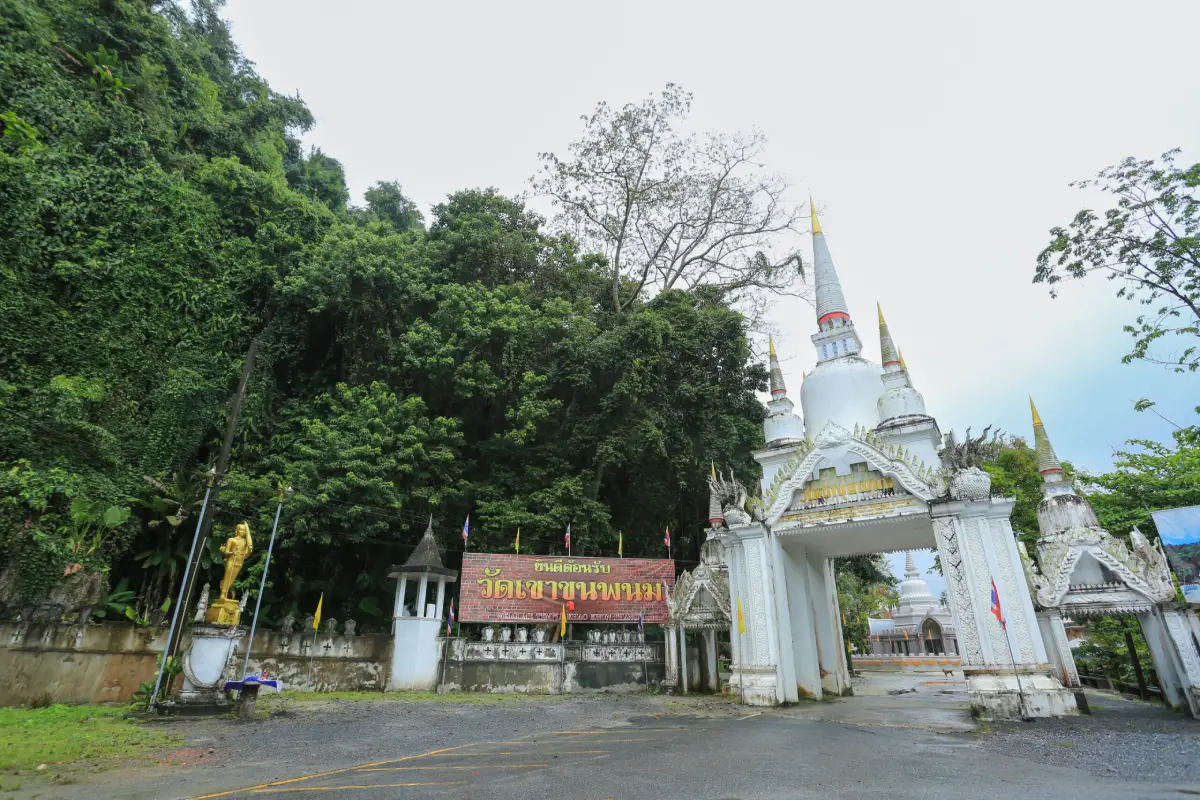
Open Days: Daily
Opening Hours: 08.00 – 17.00
Wat Khao Khun Phanom in Nakhon Si Thammarat is an old Buddhist temple and an important historical and archaeological site in Phrom Khiri District, Nakhon Si Thammarat Province. Located in Moo 3, Ban Ko Subdistrict, the temple sits at the foot of a limestone hill surrounded by greenery, caves, and local community life. It is widely associated with local traditions about King Taksin the Great, and it is known for its hill cave, ancient bronze Buddha images, bronze Buddha footprint, brick-and-plaster walls, boundary markers, Chinese porcelain decoration, sacred well, and the monument of King Taksin the Great.
Wat Khao Khun Phanom is a historically important temple in Phrom Khiri, about 24 km from central Nakhon Si Thammarat. The highlight is the cave on the hill, reached by more than 200 steps, where visitors can see ancient bronze Buddha images, a bronze Buddha footprint, and a sacred atmosphere connected with local beliefs about King Taksin the Great. The temple is open daily from 08.00 to 17.00 and has no admission fee. It is suitable for worship, historical travel, cave exploration, cultural learning, and a combined route with Phra Tamnak Mueang Nakhon, Promlok Waterfall, Ai Khiao Waterfall, and the natural attractions of Phrom Khiri.
Wat Khao Khun Phanom is located northwest of the Phra Borommathat Chedi of Nakhon Si Thammarat. The site stands in a landscape where limestone hills, caves, old Buddhist remains, and local legends meet. The temple is connected with old stories about Phra Maha Thera Satchanuthep, who is said to have moved from an earlier temple site to establish a new sacred place near a limestone hill once known locally as Khao Khum Phanom. Over time, the name became associated with Wat Khao Khun Phanom, a temple that now carries religious, historical, and archaeological significance.
The temple has both a ground-level area and a hill-cave area. This makes the site especially distinctive. On the lower level, visitors can pay respect to the monument of King Taksin the Great, see the temple grounds, and observe the sacred well and old architectural features. On the upper level, visitors climb the stairway to the cave, where ancient Buddhist objects are enshrined. This combination of temple, hill, cave, and historical memory gives Wat Khao Khun Phanom a depth that differs from ordinary community temples.
Wat Khao Khun Phanom was officially established as a temple in 1787 CE / 2330 BE and received its consecrated boundary in 1817 CE / 2360 BE. Archaeological evidence around the temple suggests that the site has older cultural layers connected with the Ayutthaya period and later periods. The presence of bronze Buddha images, a bronze Buddha footprint, cave shrines, and old architectural remains reflects long-standing Buddhist activity in the area. These elements make the temple a valuable place for understanding the religious history of southern Thailand.
The most famous local tradition associated with Wat Khao Khun Phanom concerns King Taksin the Great. Many local people believe that after the end of the Thonburi period, King Taksin came to Nakhon Si Thammarat, entered monkhood, and practiced meditation in the cave at Khao Khun Phanom. Another local tradition links the site with Princess Ketsini, daughter of Chao Narasuriyawong, the ruler of Nakhon Si Thammarat during the late 18th century. These traditions make the temple a place where national history, local memory, and spiritual belief overlap.
The cave on the hill is the main highlight for most visitors. Reaching it requires climbing more than 200 steps, with some accounts giving the number as around 245 to 250 steps. The climb is part of the experience. It requires physical effort and creates a sense of pilgrimage. Along the way, visitors can see the limestone hill environment and the surrounding greenery. Once inside the cave, the atmosphere becomes cooler, quieter, and more solemn, creating a strong contrast with the open temple grounds below.
Inside the cave are around 30 bronze Buddha images and a bronze Buddha footprint. These sacred objects are among the most important reasons the temple is valued as an archaeological and religious site. The Buddha images are linked with local craftsmanship and the Buddhist artistic tradition of Nakhon Si Thammarat. Visitors should observe them respectfully and avoid touching any old objects, walls, or sacred surfaces. The cave should be treated as both a place of worship and a heritage space.
The architecture of Wat Khao Khun Phanom is also distinctive. The brick-and-plaster walls and boundary markers resemble the form of old city walls, giving the temple a fortified appearance. The front wall is decorated with stucco patterns and Chinese porcelain, reflecting cultural connections between southern Thailand, maritime trade, Chinese artistic influence, and local Buddhist art. These features make the temple valuable not only for worship but also for studying regional artistic traditions.
The monument of King Taksin the Great is an important worship point inside the temple grounds. Many visitors begin their visit here before climbing to the cave. King Taksin is deeply respected in Thai history as the monarch who restored independence after the fall of Ayutthaya. At Wat Khao Khun Phanom, the monument is connected with the local tradition that the king lived and practiced meditation in this area. This gives the temple a special role in the cultural memory of Nakhon Si Thammarat.
The sacred well in front of the temple is another meaningful feature. Local belief connects it with King Taksin and his stay at Khao Khun Phanom. In Thai sacred landscapes, water often carries meanings of purity, blessing, protection, and continuity. At this temple, the well belongs to a wider environment of cave, mountain, Buddhist worship, and local faith. It adds another layer to the spiritual character of the place.
Wat Khao Khun Phanom also has a hall or storage area where Buddhist objects found in the cave and nearby areas have been kept. These objects include Buddha images and other sacred items connected with the cave and the temple. Visitors who want to see this area should follow the temple’s arrangements and ask monks or temple caretakers directly. This helps protect the objects and keeps the visit respectful and orderly.
Another respected figure connected with the temple is Pho Than Klai, a former abbot remembered by local people for his role in restoring and developing Wat Khao Khun Phanom. Many visitors pay respect to him during their visit. His memory reflects the importance of monks in maintaining temples, reviving sacred places, and connecting communities with their religious heritage. This gives the temple both national historical meaning and local spiritual meaning.
The current abbot of Wat Khao Khun Phanom is Phra Khru Khiri Phanomrak Chanthammo. The temple remains an active local Buddhist temple with resident monks and religious activities. It is not an abandoned historical site. It continues to function as a place for worship, merit-making, Buddhist ceremonies, and cultural travel. This active status is important because it shows that the temple is still part of living community faith.
For travelers interested in King Taksin the Great, Wat Khao Khun Phanom is one of the most meaningful places in Nakhon Si Thammarat. The local tradition surrounding the king gives the temple a special place in historical travel. Even though the story is preserved through local belief and different historical interpretations, the site remains highly significant because of the strength of community memory and the presence of physical places associated with the tradition, including the monument, cave, and sacred well.
Wat Khao Khun Phanom is also a natural attraction. The limestone hill, cave chambers, shaded vegetation, and rural surroundings give the temple a calm atmosphere. Phrom Khiri District is known for waterfalls, fruit gardens, mountain scenery, and community-based tourism. A visit to the temple can therefore be combined with natural attractions such as Promlok Waterfall, Ai Khiao Waterfall, and Kiriwong Village.
Visitors should prepare carefully before climbing to the cave. The stairway is long enough to require moderate physical effort. Elderly visitors, young children, and anyone with knee or breathing problems should climb slowly and rest when needed. Comfortable shoes are strongly recommended. Visitors should also bring drinking water, especially in hot weather, but should avoid leaving rubbish anywhere in the temple or cave area.
The most important areas to see at Wat Khao Khun Phanom are the King Taksin monument, the sacred well, the brick-and-plaster wall, the boundary markers, the porcelain-decorated stucco work, the stairway to the cave, the bronze Buddha images, the bronze Buddha footprint, and the shrine area connected with Pho Than Klai. Visitors who want to experience the temple properly should allow around 1.5 to 2 hours rather than making only a quick stop.
The temple is a strong starting point for a Phrom Khiri itinerary. A history-focused route can combine Wat Khao Khun Phanom with Phra Tamnak Mueang Nakhon. A nature-focused route can continue to Promlok Waterfall and Ai Khiao Waterfall. A longer full-day route can include Kiriwong Village and then return to Nakhon Si Thammarat city for Wat Phra Mahathat Woramahawihan. This makes the temple flexible for several types of travelers.
Getting to Wat Khao Khun Phanom is convenient by private car or rental car from Nakhon Si Thammarat city. Use Highway 4016 toward Phrom Khiri District. After passing the Phrom Khiri District Office, continue to the intersection where a convenience store is visible on the left, then turn right and continue for about 2.5 km. Direction signs appear along the way. The temple is about 24 km from central Nakhon Si Thammarat. Visitors using public transport can take the Nakhon Si Thammarat–Phrom Khiri local route and continue by local hired transport to the temple.
The best time to visit is in the morning or late afternoon. The weather is more comfortable, and the climb to the cave is easier. Morning light is also suitable for photographing the hill and temple surroundings. Visitors should avoid climbing to the cave during heavy rain because stone surfaces and stairways may become slippery. The temple is open daily from 08.00 to 17.00 and has no admission fee.
Wat Khao Khun Phanom is suitable for Thai visitors, foreign travelers, families, students, cultural researchers, and those interested in Thai history. It offers a rare combination of cave worship, historical legend, Buddhist art, local faith, and natural scenery. For foreign travelers, it is especially useful for understanding how Thai history and local belief can be preserved through living temples, sacred landscapes, and community memory.
Visitors should dress modestly and behave respectfully throughout the temple grounds. Shoulders and knees should be covered when entering sacred areas. Shoes should be removed where required. Inside the cave, visitors should speak quietly, avoid touching ancient objects, and keep the area clean. The temple is both a place of worship and a heritage site, so respectful behavior is essential.
Overall, Wat Khao Khun Phanom is one of the most distinctive temples in Nakhon Si Thammarat. It combines three important dimensions: faith, history, and nature. The cave and stairway create a physical journey; the King Taksin tradition gives the place historical meaning; the bronze Buddha images, old walls, and porcelain decoration add artistic and archaeological value; and the surrounding mountain environment makes the visit peaceful and memorable. Travelers who want to see a deeper side of Nakhon Si Thammarat should include Wat Khao Khun Phanom in their itinerary.
| Name | Wat Khao Khun Phanom |
| Location | Moo 3, Ban Ko Subdistrict, Phrom Khiri District, Nakhon Si Thammarat Province |
| Address | Moo 3, Ban Ko Subdistrict, Phrom Khiri District, Nakhon Si Thammarat Province 80320, Thailand |
| Coordinates | 8.543495, 99.843335 |
| Highlights | Hill cave, King Taksin the Great monument, sacred well, brick-and-plaster wall, boundary markers, bronze Buddha images, bronze Buddha footprint, and a stairway of more than 200 steps |
| History | The temple was officially established in 1787 CE / 2330 BE and received its consecrated boundary in 1817 CE / 2360 BE. Archaeological evidence connects the site with older Buddhist activity from the Ayutthaya to early Rattanakosin periods |
| Name Origin | The name is connected with the limestone hill known as Khao Khun Phanom and earlier local traditions referring to the area as Khao Khum Phanom |
| Distinctive Features | A local Buddhist temple on a limestone hill with strong historical, archaeological, spiritual, and natural value |
| Travel Information | From Nakhon Si Thammarat city, take Highway 4016 toward Phrom Khiri District, pass the district office, turn right at the main intersection, and continue about 2.5 km following the signs to the temple |
| Current Status | Open to visitors and remains an active local Buddhist temple and historical attraction in Phrom Khiri District |
| Open Days | Daily |
| Opening Hours | 08.00 – 17.00 |
| Fees | No admission fee |
| Facilities | Worship area, King Taksin monument, stairway to the cave, temple grounds, parking area, and nearby restaurants and cafés in Phrom Khiri District |
| Main Areas / Zones | 1. King Taksin the Great monument 2. Ancient sacred well 3. Brick-and-plaster wall and boundary markers 4. Hill cave / King Taksin cave area 5. Bronze Buddha images and bronze Buddha footprint inside the cave 6. Temple hall or storage area for sacred objects 7. Pho Than Klai worship area |
| Abbot / Caretaker | Phra Khru Khiri Phanomrak Chanthammo |
| Main Contact Number | 075-396-363 |
| Nearby Tourist Attractions | 1. Phra Tamnak Mueang Nakhon, about 0.5 km 2. Promlok Waterfall, about 7 km, Tel. 093-579-1959 3. Young Tam Farm • Farm & Cafe • PromKhiri, about 9 km, Tel. 062-668-8126 4. Ai Khiao Waterfall, about 13 km 5. Nakhon Si Thammarat Science Centre for Education, about 16 km 6. Kiriwong Village, about 30 km 7. Wat Phra Mahathat Woramahawihan, about 26 km, Tel. 081-103-0738 |
| Nearby Restaurants | 1. Than Khiri Phrom Khiri, about 3 km, Tel. 088-340-4009 2. Baanmaihom Phrom Khiri, about 4 km 3. Par.D Phrom Khiri, about 5 km 4. I-Yacafe Phrom Khiri, about 7 km, Tel. 086-334-3178 5. Young Tam Farm • Farm & Cafe • PromKhiri, about 9 km, Tel. 062-668-8126 6. Lamphu Mookata, Phrom Khiri Branch, about 18 km, Tel. 090-923-8084 |
| Nearby Accommodations | 1. Phrom Khiri Homestay, about 3 km 2. Phutara Hotel & Resort – Promlok Waterfall, about 8 km, Tel. 086-120-8075, 098-253-5638 3. Porntep Resort Phrom Khiri, about 12 km, Tel. 093-582-5430, 061-183-6411 4. B2 Nakhon Si Thammarat Premier Hotel, about 23 km, Tel. 1328, 075-804-288 5. Navakitel Design Hotel, about 24 km, Tel. 080-393-9339 6. Grand Fortune Hotel Nakhon Si Thammarat, about 28 km, Tel. 075-841-888 |
Frequently Asked Questions (FAQ)
Q: Where is Wat Khao Khun Phanom located?
A: Wat Khao Khun Phanom is located in Moo 3, Ban Ko Subdistrict, Phrom Khiri District, Nakhon Si Thammarat Province 80320, about 24 km from central Nakhon Si Thammarat.
Q: What are the opening days and hours of Wat Khao Khun Phanom?
A: The temple is open daily from 08.00 to 17.00.
Q: Is there an admission fee for Wat Khao Khun Phanom?
A: No. Visitors can enter the temple, pay respect to King Taksin the Great, and climb to the cave without an admission fee.
Q: What is the main highlight of Wat Khao Khun Phanom?
A: The main highlight is the hill cave reached by more than 200 steps. Inside the cave are around 30 bronze Buddha images, a bronze Buddha footprint, and a sacred atmosphere linked with local traditions about King Taksin the Great.
Q: How is Wat Khao Khun Phanom connected with King Taksin the Great?
A: Local tradition says that King Taksin the Great came to Khao Khun Phanom, entered monkhood, and practiced meditation in the cave. The temple has a monument and worship area dedicated to him.
Q: How many steps are there to the cave at Wat Khao Khun Phanom?
A: Visitors climb more than 200 steps to reach the cave, with local accounts commonly mentioning around 245 to 250 steps.
Q: How long should visitors spend at Wat Khao Khun Phanom?
A: Visitors should allow around 1.5 to 2 hours to worship at the King Taksin monument, see the sacred well, climb to the cave, and view the bronze Buddha images inside.
Q: What nearby places can be visited with Wat Khao Khun Phanom?
A: Nearby places include Phra Tamnak Mueang Nakhon, Promlok Waterfall, Ai Khiao Waterfall, Young Tam Farm, Kiriwong Village, and Wat Phra Mahathat Woramahawihan.
 Category: ●Places of Worship
 Group: ●Temple
Last Update : 2 MonthAgo
 Last Update : 2 MonthAgo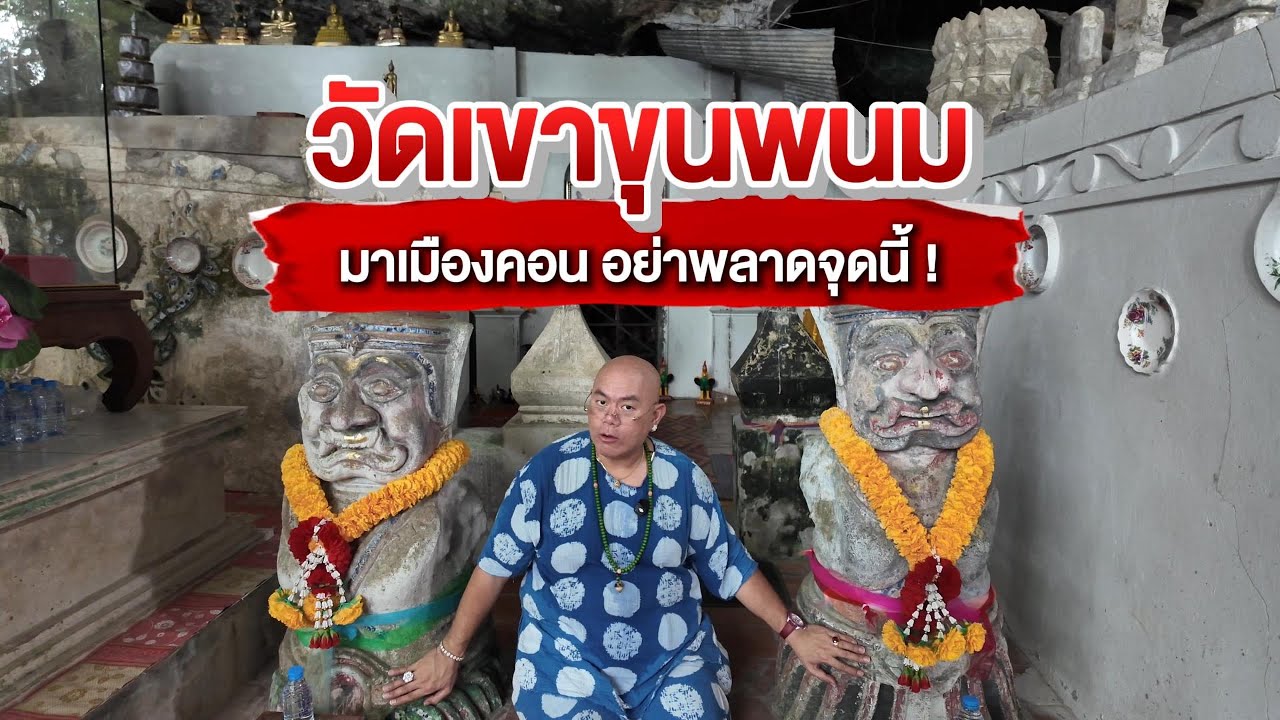
 Click to Access the Navigation Map GPS
Wat Khao Khun Phanom Map
Gellery
Recommend

 Art, Culture and Heritage
 Historical Sites and Monuments(9)
 Landmarks and Memorials(9)
 Royal Palace(1)
 Art, Craft Centres, Tradition(12)
 Museums(5)
 Educational Places
 Educational Gardens, Farm(2)
Temple(44)
Educational Gardens, Farm(2)
Temple(44)
 Mosque(2)
 Other Sacred Sites(17)
 Research and Development
 Royal Project(2)
 Suburban Living
 Village, Community(8)
 Local Market(1)
 Floating Market(1)
 Nature and Wildlife
 National Parks and Marine Reserves(6)
 Mountain (Doi)(11)
 Dam, Reservoir, Lake(10)
 Waterfalls(43)
 Hot Springs(1)
 Caves(13)
 River, Canal(3)
 Bays and Beaches(29)
 Islands(2)
 Other natural attractions(3)
 Entertainment and Agricultural
 Farms, Parks and Ecotourism(3)
 Outdoor and Adventure Activities(4)
 Travel Articles, Recipes
 Travel Review, Food Review(5)
 Southern Food Menu, Southern Food Recipes(18)


