
TL;DR: Ko Poda is located at Ao Nang Subdistrict, Mueang Krabi District, Krabi Province, south of Ao Nang and about 8 kilometers from the coastline, open Daily, only in areas and for activities permitted by the national park; boat, hours 08.00 – 16.30.

Ko Poda
Open Days: Daily, only in areas and for activities permitted by the national park; boat operations depend on weather, sea conditions, and official park announcements
Opening Hours: 08.00 – 16.30
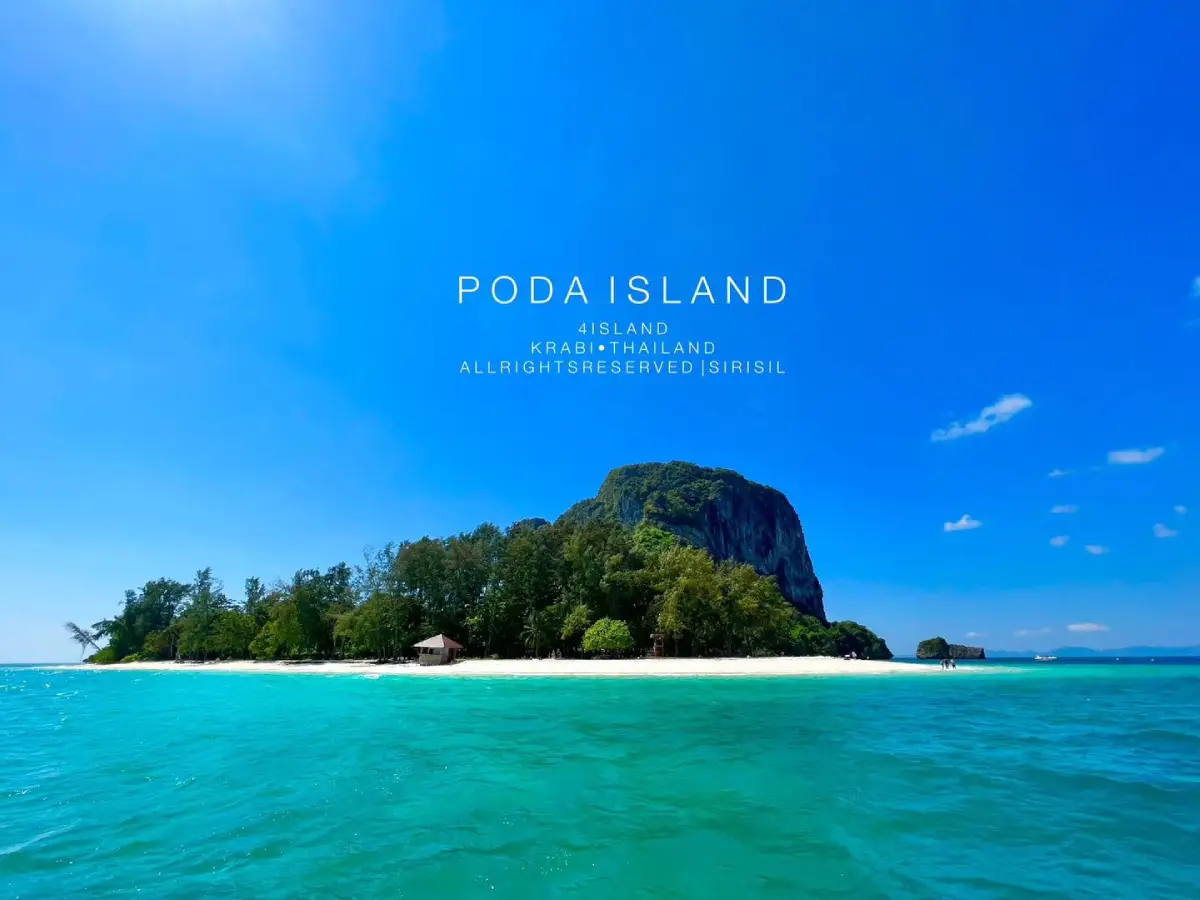
Ko Poda in Krabi Province is one of the main islands in the Poda island group and one of the most popular stops on Krabi’s four-island route, together with Chicken Island, Ko Thap, and Ko Mor. The island is known for its long white beach, clear water, shady pine trees, and a striking limestone rock formation rising from the sea in front of the beach. Located only a short boat ride from Ao Nang, Ko Poda is an excellent day-trip island for travelers who want classic Krabi scenery without traveling as far as the Phi Phi Islands or Hong Island.
Ko Poda lies south of Ao Nang, about 8 kilometers from the coastline, inside Hat Noppharat Thara-Mu Ko Phi Phi National Park. The island has a natural limestone-and-beach landscape. Its main beach is on the eastern side, where white sand stretches along the clear water and pine trees provide shade in some areas. The western side is more exposed, with cliffs and stronger wave influence, so it is not the main area for swimming or beach relaxation.
The appeal of Ko Poda comes from the combination of beauty and easy access. From Ao Nang, Noppharat Thara Beach, or Railay, the boat ride is short enough for a half-day or full-day trip. Travelers can combine Ko Poda with Chicken Island, Thale Waek, Ko Thap, Ko Mor, Railay, and Phra Nang Cave Beach. This makes the island especially suitable for visitors who have limited time but still want to experience white sand, clear water, limestone scenery, and island-hopping in one route.
Ko Poda is the largest island in the Poda group. Compared with the nearby smaller islands, it offers more space for resting on the beach. This is why many four-island tours use Ko Poda as the main lunch or beach stop. Visitors can walk on the sand, swim in safe areas, sit under the trees, photograph the limestone scenery, and enjoy the relaxed feeling of being on a small Andaman Sea island.
The island’s most recognizable feature is the limestone rock that stands in the sea in front of the beach. From the sand, this rock creates a dramatic natural backdrop against the turquoise water. It is one of the strongest photography points on Ko Poda and helps distinguish the island from other beaches in the Ao Nang area. The view is especially attractive when the light is clear and the water color shifts from pale green near shore to deeper blue offshore.
The eastern beach is the best area for general visitors. The sand is bright and clean, and the water near the shore is often clear enough to see the sandy bottom on calm days. The area is suitable for beach walking, swimming, photography, and resting. However, Ko Poda is a popular boat stop, so visitors should stay alert around boat-landing areas and swim only where it is safe and away from moving boats.
The northern and eastern sides of Ko Poda include reef areas where snorkeling may be permitted depending on national park rules, sea conditions, and current conservation measures. Snorkeling should be done only in approved zones. Visitors must not step on coral, touch marine animals, feed fish, or leave rubbish in the water. Reef areas around Krabi have previously faced coral bleaching stress, so responsible visitor behavior is essential for long-term recovery and protection.
Ko Poda is most often visited as part of Krabi’s four-island route. This route usually includes Ko Poda, Chicken Island, Ko Thap, Ko Mor, Thale Waek, Railay, or Phra Nang Cave Beach depending on the operator and conditions. The route is popular because it gives travelers several types of scenery in one day: Ko Poda’s white beach, Chicken Island’s distinctive rock shape, the sandbar at Thale Waek, and the limestone cliffs of Railay and Phra Nang.
The best general season for visiting Ko Poda is from November to April, when the Andaman Sea is usually calmer, visibility is better, and boat travel is more comfortable. From May to October, trips may still operate on suitable days, but travelers should check the weather forecast, wave conditions, and national park announcements before booking. Even though Ko Poda is close to the mainland, it remains an offshore island affected by sea conditions.
Travel to Ko Poda is by boat only. The most popular departure points are Ao Nang Beach, Noppharat Thara Beach, and Railay. Travelers can choose a long-tail boat, traditional local boat, or speedboat depending on group size, budget, and itinerary. The distance from Ao Nang is about 8 kilometers, and the boat ride usually takes around 25–30 minutes depending on boat type, route, and sea conditions.
Getting There from Krabi is easiest by heading to Ao Nang or Noppharat Thara Beach, then arranging a boat to Ko Poda. Before booking, travelers should confirm which islands are included, how long the stop at Ko Poda will be, whether national park fees are included, and whether the trip provides drinking water, snorkeling equipment, life jackets, insurance, and hotel transfer. Clear information before departure makes the trip safer and more comfortable.
Trip costs usually include two main parts: boat service and national park fees. Boat prices depend on boat type, passenger number, route, and operator conditions. National park fees may be included in some tour packages but excluded in others. Travelers should follow the fee information provided by the official collection point or authorized operator on the travel date, especially when the route includes several national park areas.
Facilities on Ko Poda are limited. The island should be planned as a day-trip destination rather than an overnight stay. Travelers should bring drinking water, a towel, a dry bag, a hat, sunglasses, reef-conscious sunscreen, sandals or beach shoes, and a small bag for taking rubbish back to the mainland. Families with children or elderly visitors should choose a boat that is easy to board and should inform the operator in advance.
Older travel information sometimes mentions Poda Island Resort as accommodation on the island. That information should not be used for current trip planning. Ko Poda is now best treated as a national park day-trip island, while overnight stays should be arranged on the mainland or nearby coastal areas such as Ao Nang, Noppharat Thara, Railay, Klong Muang, or Tubkaek.
Main activities on Ko Poda include beach walking, swimming in safe areas, photography, resting under the trees, snorkeling only in permitted zones, and kayaking when available through authorized operators and when sea conditions are suitable. Visitors should stay aware of the boat schedule and the meeting point because tours often continue to Chicken Island, Thale Waek, or Railay after stopping at Ko Poda.
Safety is important because Ko Poda is a busy boat destination during the high season. Travelers should not swim close to boat propellers, boat lanes, or landing areas. If guides or boat crews mark a safe area, follow their instructions. Children and weak swimmers should wear life jackets. During rough sea conditions, visitors should avoid swimming far from shore and should follow the boat operator’s decision if the route changes.
Sun exposure is another practical concern. Ko Poda has some shade from pine trees, but much of the beach is exposed to direct sunlight. Visitors should bring sun protection and enough water. Midday can be very hot, so short swimming sessions, rest in the shade, and light clothing help keep the trip comfortable.
Responsible travel is essential on Ko Poda because the island is popular and easily affected by visitor pressure. Travelers should not litter, feed fish, collect shells, step on coral, touch marine life, or use disposable plastics carelessly. The island’s beauty depends on clean beaches, healthy water, and protected reef areas. Every visitor can help preserve the island simply by following national park rules.
Compared with nearby stops, Ko Poda has a clear role. Thale Waek is known for the low-tide sandbar. Chicken Island is known for its rock formation. Railay and Phra Nang are known for limestone cliffs and cave scenery. Ko Poda is best known for its long beach, clear water, and relaxed island atmosphere. A good four-island trip should allow enough time here because it is one of the best places in the route to rest and enjoy the beach.
For photography, the best compositions include the white beach, long-tail boats, pine shade, clear water, and the limestone rock offshore. Morning tours may offer fewer crowds, while later daylight can give richer water color. Drone use in national park areas requires permission and should not be done casually.
Travelers who want to stay close to the boat departure points should choose Ao Nang or Noppharat Thara. Railay is also a good base for those who prefer limestone-cliff scenery and a more secluded beach atmosphere. Klong Muang and Tubkaek are quieter coastal alternatives, but may require additional transport to the boat departure point depending on the operator.
Ko Poda suits many travel styles. Families can use it as a short, manageable island trip. Couples can enjoy the beach and photography. Friends can include it in a full-day four-island itinerary. Travelers who enjoy snorkeling should join trips that follow current park rules and use safe snorkeling zones. Anyone looking for a dedicated dive trip should choose more specialized dive sites around Krabi or the Phi Phi Islands instead.
In summary, Ko Poda is one of Krabi’s most rewarding day-trip islands. It offers white sand, clear water, pine shade, limestone scenery, easy boat access, and a practical connection to Chicken Island, Ko Thap, Ko Mor, Thale Waek, and Railay. The island is best visited as a responsible day trip with a licensed boat operator, current national park information, and respect for reef and beach conservation. With good timing and safe planning, Ko Poda delivers one of the most classic Andaman Sea experiences near Ao Nang.
| Name | Ko Poda Or Ko Po Da Nai |
| Location | Ao Nang Subdistrict, Mueang Krabi District, Krabi Province, south of Ao Nang and about 8 kilometers from the coastline |
| Park Office Address | Hat Noppharat Thara-Mu Ko Phi Phi National Park, 79 Moo 5, Ao Nang Subdistrict, Mueang Krabi District, Krabi 81000 |
| Coordinates | Approximately 7.9709, 98.8080 |
| Highlights | Long white beach, clear water, pine shade, offshore limestone rock, and a major stop on Krabi’s four-island route |
| Distinctive Features | The largest island in the Poda group, with an eastern beach suitable for swimming, relaxation, photography, and snorkeling only in permitted areas |
| Current Status | Open only in areas and for activities permitted by the national park; boat operations and water activities depend on weather, sea conditions, and official park announcements |
| Open Days | Daily in permitted areas |
| Opening Hours | 08.00 – 16.30 |
| Fees | Pay the national park fee according to the rate announced by officers or authorized operators on the travel date. The basic Group 2 national park rate is Thai adults 40 THB, Thai children 20 THB; foreign adults 200 THB, foreign children 100 THB. Some routes may include special-area conditions or separate boat-service fees. |
| Caretaker | Hat Noppharat Thara-Mu Ko Phi Phi National Park |
| Main Contact Number | 075-656-150 |
| Local Boat Contact | Ao Nang Longtail Boat Cooperative, Tel. 075-661-131 |
| Main Areas / Zones | Eastern beach, pine-shaded beach zone, boat-landing area, offshore limestone photo point, northern and eastern reef areas, and the western cliff side exposed to stronger waves |
| Facilities | Facilities are limited. No currently verified overnight accommodation is available on the island. Visitors should bring drinking water, essentials, and take all waste back to the mainland. |
| Travel Information | Travel by boat from Ao Nang, Noppharat Thara Beach, or Railay. The island is about 8 kilometers from Ao Nang and the boat ride usually takes around 25–30 minutes. |
| Nearby Tourist Attractions | 1. Chicken Island, about 3 km 2. Ko Thap And Ko Mor, about 3 km 3. Thale Waek, about 3 km 4. Phra Nang Cave Beach, about 5 km 5. Railay Bay, about 6 km 6. Ao Nang, about 8 km 7. Noppharat Thara Beach, about 10 km |
| Nearby Restaurants | 1. Krua Thara, Noppharat Thara Beach, about 10 km, Tel. 075-637-361 2. Lae Lay Grill, Ao Nang, about 9 km, Tel. 075-661-588 3. Jenna’s Bistro & Wine, Ao Nang, about 8 km, Tel. 075-695-152 4. REEVE Beach Club Krabi, Ao Nang, about 8 km, Tel. 093-631-7599 5. Carnivore Steak & Grill, Ao Nang, about 9 km, Tel. 075-661-061 6. Raitalay Terrace At Rayavadee, Railay, about 6 km, Tel. 075-817-630 |
| Nearby Accommodations | 1. Rayavadee, Railay, about 6 km, Tel. 075-817-630 2. Railay Bay Resort & Spa, Railay, about 6 km, Tel. 075-819-401 3. Centara Grand Beach Resort & Villas Krabi, Pai Plong Bay, about 7 km, Tel. 075-637-789 4. Aonang Princeville Villa Resort & Spa, Ao Nang, about 8 km, Tel. 075-637-971 5. Panan Krabi Resort, Ao Nang, about 9 km, Tel. 075-817-788 6. Holiday Ao Nang Beach Resort Krabi, Noppharat Thara Beach, about 10 km, Tel. 075-810-888 |
Frequently Asked Questions (FAQ)
Q: Where is Ko Poda located?
A: Ko Poda is located in Ao Nang Subdistrict, Mueang Krabi District, Krabi Province, south of Ao Nang and about 8 kilometers from the coastline, inside Hat Noppharat Thara-Mu Ko Phi Phi National Park.
Q: Is Ko Poda open to visitors?
A: Ko Poda is open only in areas and for activities permitted by the national park. Boat operations and water activities depend on weather, sea conditions, and official announcements.
Q: What is Ko Poda known for?
A: Ko Poda is known for its long white beach, clear water, pine shade, offshore limestone rock, and its role as a major stop on Krabi’s four-island route.
Q: How do travelers get to Ko Poda?
A: Travelers must go by boat from Ao Nang, Noppharat Thara Beach, or Railay. The ride from Ao Nang usually takes about 25–30 minutes.
Q: Is there accommodation on Ko Poda?
A: No currently verified overnight accommodation is available on Ko Poda. Travelers should stay on the mainland or nearby coastal areas such as Ao Nang, Noppharat Thara, Railay, Klong Muang, or Tubkaek.
Q: Is snorkeling allowed at Ko Poda?
A: Snorkeling is allowed only in areas permitted by the national park and operator guidance. Visitors must not step on coral, touch marine life, feed fish, or leave rubbish in the sea.
Q: When is the best time to visit Ko Poda?
A: November to April is generally the best period because the Andaman Sea is usually calmer, visibility is better, and boat travel is more comfortable.
Q: What should visitors be careful about on Ko Poda?
A: Visitors should be careful around boat-landing areas, strong sun, rough sea conditions, and reef zones. They should follow national park rules, avoid littering, avoid feeding fish, avoid collecting shells, and swim only in safe areas.
 Category: ●Nature and Wildlife
 Group: ●Islands
Last Update : 2 MonthAgo
 Last Update : 2 MonthAgo
 Click to Access the Navigation Map GPS
Ko Poda Map
Gellery
Recommend

 Art, Culture and Heritage
 Historical Sites and Monuments(1)
 Landmarks and Memorials(7)
 Art, Craft Centres, Tradition(2)
 Museums(2)
 Educational Places
 Educational Gardens, Farm(1)
 Places of Worship
 Temple(3)
 Mosque(2)
 Other Sacred Sites(2)
 Research and Development
 Royal Project(1)
 Suburban Living
 Village, Community(6)
 National Parks and Marine Reserves(5)
 Mountain (Doi)(2)
 Dam, Reservoir, Lake(3)
 Waterfalls(12)
 Hot Springs(3)
 Caves(20)
 River, Canal(2)
 Bays and Beaches(36)
Islands(23)
Bays and Beaches(36)
Islands(23)
 Other natural attractions(7)
 Entertainment and Agricultural
 Farms, Parks and Ecotourism(1)
 Outdoor and Adventure Activities(1)
 Travel Articles, Recipes
 Travel Review, Food Review(2)
 Southern Food Menu, Southern Food Recipes(1)


