
lovethailand home >Northeastern Travel Attractions >Sakon Nakhon Travel Attractions >Muang Sakon Nakhon >Dong Ma Fai > Wat Tham Pha Daen
TL;DR: Wat Tham Pha Daen is located at Ban Dong Noi, Dong Mafai Subdistrict, Mueang Sakon Nakhon District, Sakon Nakhon 47000, Thailand, open Open Daily, hours 06.00 - 17.00.

Wat Tham Pha Daen
Open Days: Open Daily
Opening Hours: 06.00 - 17.00
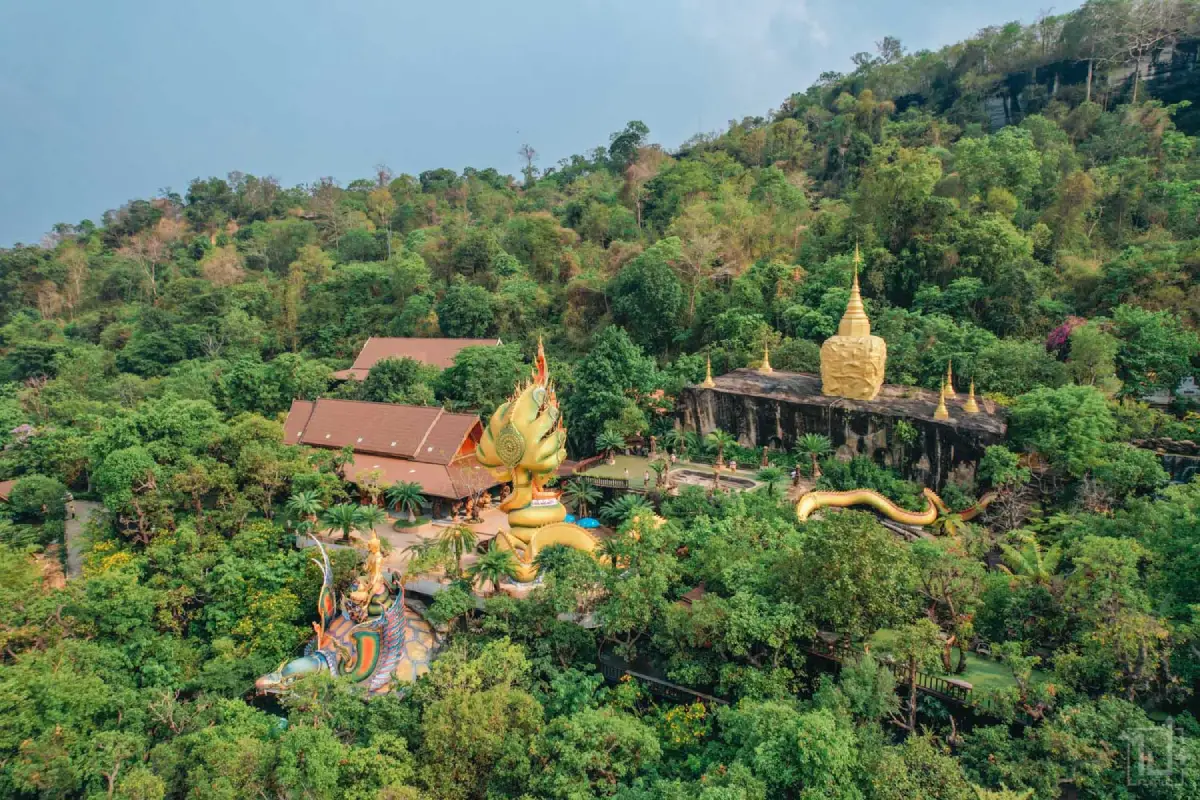
Wat Tham Pha Daen In Sakon Nakhon is a remarkable Buddhist mountain temple located on the Phu Phan mountain range at Ban Dong Noi, Dong Mafai Subdistrict, Mueang Sakon Nakhon District, Sakon Nakhon Province. It is one of the province’s most distinctive spiritual and scenic destinations, combining the atmosphere of a forest meditation temple with large-scale Buddhist sculpture, sandstone cliff carvings, landscaped gardens, panoramic viewpoints, and the natural setting of the Phu Phan mountains. The temple is widely known for its large Naga-protected Buddha image, sandstone reliefs, reclining Buddha carving, replica Buddha footprints, golden rock chedi, Phu Pha Daen turtle sculpture, wooden pavilion with natural tree-trunk columns, flower gardens, and mountain viewpoints overlooking the surrounding landscape.
Wat Tham Pha Daen is a local Buddhist temple under the Mahanikaya order. It was officially established in 1940 and received its consecrated boundary in 2018. The temple is located in a forested mountain area connected with Phu Pha Daen Forest Park and national forest land. This gives the site a strong natural character: large boulders, steep mountain terrain, shaded paths, forest cover, and viewpoints that open toward Sakon Nakhon’s plains and Nong Han Lake. The current abbot, Phra Ajahn Pakorn Kantawiro, has played an important role in developing the temple as both a meditation place and a Buddhist tourism destination since around 2007.
The name “Tham Pha Daen” reflects the temple’s natural setting of caves, cliffs, and rock formations. “Pha” refers to cliffs or rock faces, while “Daen” is connected with the local name of the mountain area. The temple’s identity comes from using the mountain itself as part of Buddhist art. Instead of separating sculpture from nature, Wat Tham Pha Daen integrates cliff faces, rocks, trees, gardens, and viewpoints into the religious experience. This makes the temple feel different from conventional city temples or flatland monasteries.
Historically, the area was known as a quiet place for forest meditation. Many meditation masters and forest monks practiced in this area, including Ajahn Mun Bhuridatto, one of the most important teachers of the Thai Forest Tradition. This background gives Wat Tham Pha Daen spiritual depth beyond its visual beauty. Before becoming a popular travel destination, it was a forest retreat suited to solitude, discipline, and contemplation. Visitors today should therefore see the temple not only as a scenic viewpoint, but also as a place rooted in Buddhist practice.
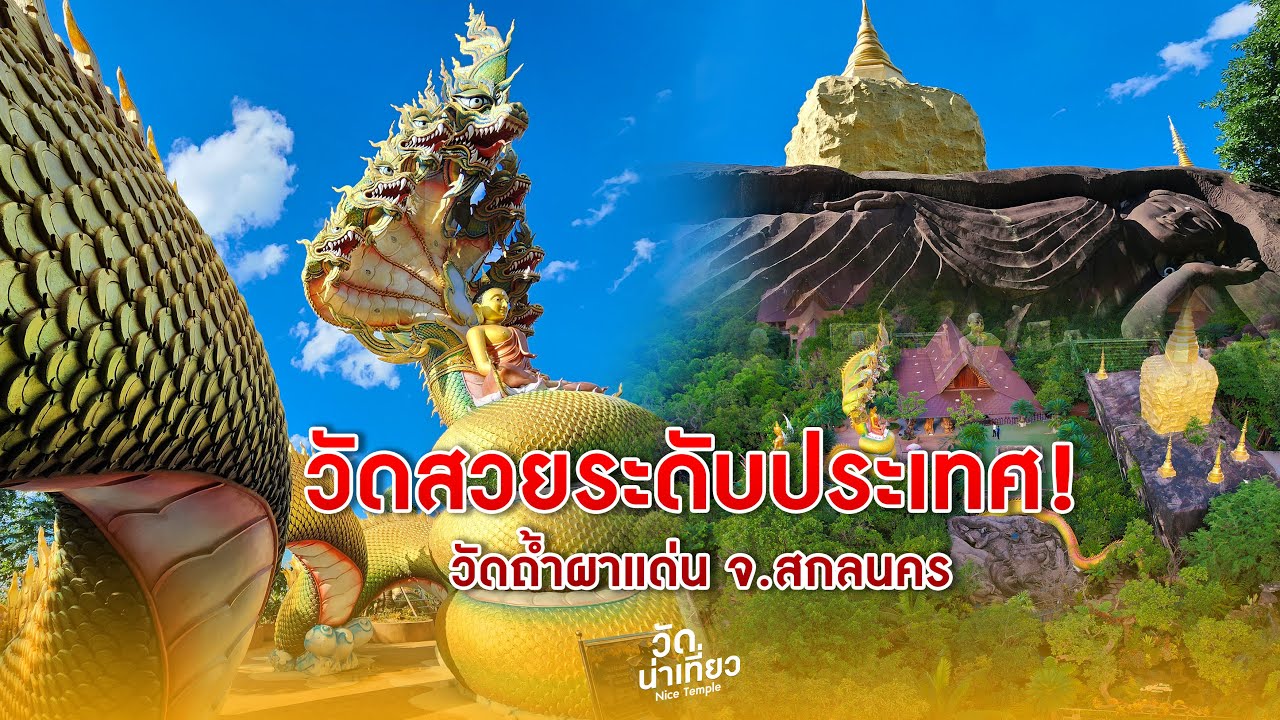
The most iconic feature is the large Naga-protected Buddha image. The multi-headed Naga rises dramatically behind the seated Buddha and stands against a broad mountain backdrop. In Buddhist and Isan cultural belief, the Naga is associated with protection, sacred water, faith, and the guardianship of Buddhist places. At Wat Tham Pha Daen, the Naga image creates a powerful visual connection between Buddhism, local belief, and the Phu Phan landscape. It is one of the most photographed points in the temple, but it remains primarily a place of worship.
The sandstone cliff carvings are central to the temple’s identity. Large rock surfaces are carved with Buddhist stories, sacred figures, and symbolic images, including scenes from the life of the Buddha, the reclining Buddha, Luang Pu Thuat, respected Thai monks, Garuda, Vessavana, and other protective or symbolic figures. These carvings transform the mountain into a visual Dhamma narrative. Visitors walking through the temple move from one carved scene to another, encountering Buddhist teachings through stone, landscape, and symbolic art.
The reclining Buddha relief carved into the rock is one of the most meaningful works within the temple. The reclining posture recalls the Buddha’s final passing into Parinirvana and invites reflection on peace, impermanence, and release. Because the image is carved into a natural rock face, its meaning becomes closely connected with the mountain itself. The work does not feel like an object placed in a temple; it feels as if the mountain has become part of the sacred story.
The replica of the 4 Buddha footprints is another important worship point. Visitors come to pay respect, make merit, offer coins, and reflect on the continuity of Buddhist faith across the ages. In the mountain setting, the act of walking to the footprints becomes part of the spiritual experience. It encourages visitors to slow down, move mindfully, and see the temple as a path rather than a single viewpoint.
The golden rock chedi is another landmark of Wat Tham Pha Daen. Its form suggests Mount Meru, the cosmic mountain at the center of Buddhist and Brahmanic cosmology. Placed on a golden rock, the chedi creates a strong symbolic image of a sacred mountain within a real mountain. It can be seen from different points in the temple and adds to the sense that the entire landscape has been shaped into a sacred space.
Phu Pha Daen Turtle is a popular sculptural feature within the temple grounds. The turtle symbolizes longevity, endurance, stability, and auspiciousness. Its presence among gardens and rock formations adds a softer, more accessible element to the temple’s symbolic landscape. For many visitors, it is both a meaningful image and an attractive photo point.
The temple’s wooden pavilion, often recognized for its natural tree-trunk columns, is another memorable structure. The use of large wooden trunks gives the building a direct connection with the surrounding forest. Instead of hiding the natural form of the wood, the design preserves it, creating a pavilion that feels organic and grounded. This structure reflects the temple’s wider approach: religious art, architecture, and nature are meant to support one another.
The viewpoint areas are among the strongest reasons to visit. From the upper platforms, visitors can see the forested Phu Phan mountains, the plains of Sakon Nakhon, and in clear weather, the direction of Nong Han Lake. The wide view creates a feeling of openness and calm. It also helps explain why mountain temples have long been associated with meditation: the physical elevation encourages mental distance from everyday concerns.
Access to the temple is managed for safety. Because the road up the mountain is steep and winding, visitors park at the lower parking area and use local songthaew service to reach the upper temple area. The commonly reported service fee is about 20 baht per person. This system helps reduce traffic congestion, improves safety, and supports local community transport. Visitors should allow extra time during weekends, public holidays, and major religious events.
Getting There from Sakon Nakhon city is convenient by private car, rental car, or local transport. Travel toward Dong Mafai Subdistrict and Ban Dong Noi, about 17 - 20 km from the city area. The drive usually takes about 30 - 40 minutes depending on the starting point and traffic. After reaching the lower parking area, visitors transfer to the local songthaew service for the uphill section. Travelers using online maps should search for Wat Tham Pha Daen, Sakon Nakhon.
Visitors should allow at least 1 - 2 hours for a complete visit. This includes waiting for the songthaew, traveling uphill, paying respect at the main worship points, walking through the gardens, viewing the sandstone carvings, photographing the Naga-protected Buddha, visiting the footprint area, and enjoying the viewpoint. Morning is suitable for cooler air and clearer light, while late afternoon offers softer light and a more relaxed atmosphere.
The temple has also become connected with an annual merit-making event: the festival of worshiping Luang Pho Phu Pha Daen and wrapping the Phu Pha Daen chedi cloth around the sacred stupa. The event is held around Makha Bucha and includes a Dhamma pilgrimage walk up to the temple, the offering of a ceremonial cloth, and rituals connected with auspicious tree supports. This tradition reinforces the temple’s identity as both a meditation heritage site and an active Buddhist community center.
Respectful conduct is essential. Visitors should dress modestly, speak softly, avoid climbing on sculptures or rock formations, avoid touching carvings unnecessarily, keep the temple clean, and be mindful of people who come to worship or meditate. Since the temple is both a sacred place and a scenic attraction, visitors should balance photography with respect for religious activities.
Wat Tham Pha Daen can be combined with other important places in Sakon Nakhon, including Phu Phan Ratchaniwet Palace, Kham Hom Waterfall, Phu Phan National Park, the Phu Phan Royal Development Study Center, Kram Sakon, Farm Hug, Wat Phra That Choeng Chum Worawihan, Nong Han Lake, and Wat Pa Sutthawat. This route allows visitors to experience mountains, forest temples, royal development sites, craft culture, city temples, and local food in one trip.
For international visitors, Wat Tham Pha Daen is an excellent example of a Thai Buddhist mountain temple. It is not only a temple with buildings. It is a sacred landscape shaped by forest, cliffs, sculpture, pilgrimage, community transport, viewpoints, and Buddhist symbolism. The temple helps visitors understand how Buddhism in Thailand can be expressed through nature, art, architecture, local belief, and living worship practices.
Overall, Wat Tham Pha Daen is one of the most complete cultural and spiritual destinations in Sakon Nakhon. Its value lies in its forest-meditation background, its connection with the Thai Forest Tradition, its dramatic Buddhist sculpture, its panoramic mountain setting, and its ability to bring modern visitors into contact with temple life. Travelers who come with respect will find more than beautiful scenery. They will find a mountain temple where art, faith, nature, and local community life continue to meet.
| Place Name | Wat Tham Pha Daen, Sakon Nakhon |
| Place Type | Local Buddhist Temple Under The Mahanikaya Order, Forest Meditation Site, And Buddhist Mountain Tourism Destination On The Phu Phan Range |
| Main Location | Ban Dong Noi, Moo 9, Dong Mafai Subdistrict, Mueang Sakon Nakhon District, Sakon Nakhon Province |
| Address | Ban Dong Noi, Dong Mafai Subdistrict, Mueang Sakon Nakhon District, Sakon Nakhon 47000, Thailand |
| Approximate Coordinates | 17.031153, 104.073181 |
| Highlights | Large Naga-Protected Buddha Image, Sandstone Cliff Carvings, Reclining Buddha Relief, Replica 4 Buddha Footprints, Golden Rock Chedi, Phu Pha Daen Turtle, Wooden Pavilion With Natural Tree-Trunk Columns, Mountain Gardens, Viewpoints, And Temple Café |
| History / Importance | Established In 1940, Wat Tham Pha Daen Is An Old Mountain Temple With A Forest-Meditation Background. It Has Been Associated With Meditation Masters Of The Thai Forest Tradition And Was Developed Into A Buddhist Learning And Travel Destination From Around 2007 |
| Name Origin | The Name Refers To The Caves, Cliffs, And Rock Landscape Of The Phu Pha Daen Area, Which Forms The Natural Setting And Artistic Foundation Of The Temple |
| Site Character | A Mountain Temple Located In Forest And Phu Pha Daen Landscape, With Large Boulders, Cliff Faces, Forest Paths, Worship Points, Sculptural Gardens, And Panoramic Viewpoints |
| Travel Information | From Sakon Nakhon City, Travel Toward Dong Mafai Subdistrict And Ban Dong Noi, About 17 - 20 km Away. The Journey Usually Takes About 30 - 40 Minutes. Park At The Lower Parking Area And Use The Local Songthaew Service To Reach The Upper Temple Area |
| Current Status | Open As An Active Buddhist Temple, Meditation Site, And Major Spiritual Tourism Attraction Of Sakon Nakhon Province |
| Open Days | Open Daily |
| Opening Hours | 06.00 - 17.00 |
| Fees | No Admission Fee; Donations Can Be Made Voluntarily |
| Uphill Transport Fee | Local Songthaew Service From The Lower Parking Area To The Temple, About 20 Baht Per Person |
| Facilities | Lower Parking Area, Local Songthaew Service, Walking Paths, Worship Points, Viewpoints, Café, Landscaped Gardens, Restrooms, Donation Points, And Rest Areas Around The Temple |
| Main Areas / Zones | Naga-Protected Buddha And Viewpoint Terrace Sandstone Reclining Buddha Cliff Relief Replica 4 Buddha Footprints Golden Rock Chedi Phu Pha Daen Turtle Sculpture Wooden Pavilion With Natural Tree-Trunk Columns Flower Gardens And Artificial Waterfall Area Viewpoints Toward Sakon Nakhon, Nong Han, And The Phu Phan Range |
| Annual Merit-Making / Important Traditions | Festival Of Worshiping Luang Pho Phu Pha Daen And Wrapping The Phu Pha Daen Chedi Cloth During Makha Bucha, Dhamma Pilgrimage Walk Up The Mountain, Chedi Cloth Offering, Auspicious Tree-Support Ritual, Buddhist Holy Day Merit-Making, And Meditation Activities According To The Temple’s Schedule |
| Caretaker / Abbot | Phra Ajahn Pakorn Kantawiro, Abbot Of Wat Tham Pha Daen |
| Contact Numbers | Wat Tham Pha Daen Tel. 083-626-3475 Dong Mafai Subdistrict Administrative Organization Tel. 042-707-342 |
| Visitor Guidelines | Dress Respectfully, Speak Softly, Do Not Climb On Sculptures Or Rock Formations, Do Not Touch Carvings Unnecessarily, Keep The Temple Clean, Be Careful On Mountain Paths, And Respect Worshippers And Meditation Practitioners |
| Nearby Tourist Attractions | 1. Phu Phan Ratchaniwet Palace, About 8 km 2. Kham Hom Waterfall, About 10 km 3. Phu Phan National Park, About 12 km 4. Phu Phan Royal Development Study Center, About 14 km 5. Kram Sakon, About 15 km 6. Farm Hug Sakon Nakhon, About 18 km 7. Wat Phra That Choeng Chum Worawihan, About 20 km |
| Nearby Restaurants | 1. Phu Pha Daen Coffee, About 0 km, Tel. 085-453-5442 2. Isan Kitchen Near The Uphill Area, About 1 km 3. View Phu Phan, Sakon Nakhon - Kalasin Road, About 10 km, Tel. 086-569-8252 4. Thong Nuea Hom, Huai Yang Subdistrict, About 15 km, Tel. 084-282-2898 5. Kram Sakon Café And Indigo Learning Site, About 15 km, Tel. 080-582-6655 6. Farm Hug / Khokhun Khun Thong Phon Yang Kham, About 18 km, Tel. 098-929-3565, 088-572-6288 7. Café Amazon PTT Pratu Mueang Sakon Nakhon, About 20 km, Tel. 084-031-4920 |
| Nearby Accommodations | 1. Ban Aob Mai, Huai Yang Subdistrict, About 10 km 2. The Nature Resort, About 18 km, Tel. 042-707-319 3. The Room Boutique Hotel, About 20 km, Tel. 099-262-9269 4. The Majestic Sakon Nakhon Hotel, About 20 km, Tel. 042-733-771 5. Dusit Hotel Sakon Nakhon, About 21 km, Tel. 042-711-198 6. Imperial Sakon Hotel, About 21 km, Tel. 042-711-119 7. Hop Inn Sakon Nakhon, About 22 km, Tel. 042-716-399 |
Frequently Asked Questions (FAQ)
Q: Where Is Wat Tham Pha Daen Located?
A: Wat Tham Pha Daen is located at Ban Dong Noi, Moo 9, Dong Mafai Subdistrict, Mueang Sakon Nakhon District, Sakon Nakhon Province, on the Phu Phan mountain range about 17 - 20 km from Sakon Nakhon city.
Q: What Are The Opening Days And Hours?
A: The temple is open daily from 06.00 to 17.00.
Q: Is There An Admission Fee?
A: There is no admission fee. Visitors may make voluntary donations, and the local songthaew service uphill costs about 20 baht per person.
Q: Why Do Visitors Need To Use A Songthaew To Go Up The Temple?
A: The road up the mountain is steep and winding. Visitors park at the lower parking area and use the local songthaew service for safety, traffic control, and community transport management.
Q: What Are The Main Highlights Inside Wat Tham Pha Daen?
A: Highlights include the large Naga-protected Buddha image, sandstone cliff carvings, reclining Buddha relief, replica 4 Buddha footprints, golden rock chedi, Phu Pha Daen turtle sculpture, wooden pavilion, mountain gardens, and panoramic viewpoints.
Q: Who Is The Abbot Of Wat Tham Pha Daen?
A: The abbot is Phra Ajahn Pakorn Kantawiro.
Q: How Is Wat Tham Pha Daen Connected With The Thai Forest Tradition?
A: The temple area has long been associated with forest meditation practice. Meditation masters of the Thai Forest Tradition, including Ajahn Mun Bhuridatto, practiced in this area in the past.
Q: What Nearby Places Can Visitors See After Wat Tham Pha Daen?
A: Nearby places include Phu Phan Ratchaniwet Palace, Kham Hom Waterfall, Phu Phan National Park, the Phu Phan Royal Development Study Center, Kram Sakon, Farm Hug, and Wat Phra That Choeng Chum Worawihan.
 Category: ●Places of Worship
 Group: ●Temple
Last Update : 3 MonthAgo
 Last Update : 3 MonthAgo
 Click to Access the Navigation Map GPS
Wat Tham Pha Daen Map
Recommend

 Art, Culture and Heritage
 Historical Sites and Monuments(9)
 Landmarks and Memorials(2)
 Royal Palace(1)
 Art, Craft Centres, Tradition(8)
 Museums(3)
 Educational Places
 Educational Gardens, Farm(2)
Temple(18)
 Church(2)
 Other Sacred Sites(4)
 Research and Development
 Royal Project(3)
 Suburban Living
 Village, Community(7)
 Nature and Wildlife
 National Parks and Marine Reserves(4)
 Mountain (Doi)(3)
 Dam, Reservoir, Lake(14)
 Waterfalls(4)
 Caves(4)
 River, Canal(9)
 Bays and Beaches(1)
 Islands(1)
 Other natural attractions(5)
 Entertainment and Agricultural
 Zoos and Aquariums(1)
 Farms, Parks and Ecotourism(4)
 Outdoor and Adventure Activities(1)
 Travel Articles, Recipes
 Travel Review, Food Review(1)


