
lovethailand home >Northeastern Travel Attractions >Sakon Nakhon Travel Attractions >Kut Bak >Kut Hai > Wat Thep Wisuttharam (Wat Luang Pu Chiam)
TL;DR: Wat Thep Wisuttharam (Wat Luang Pu Chiam) is located at Moo 1, Kut Hai Subdistrict, Kut Bak District, Sakon Nakhon 47180, Thailand, open Open Daily, hours 08.00 - 17.00.
Wat Thep Wisuttharam (Wat Luang Pu Chiam)
Open Days: Open Daily
Opening Hours: 08.00 - 17.00
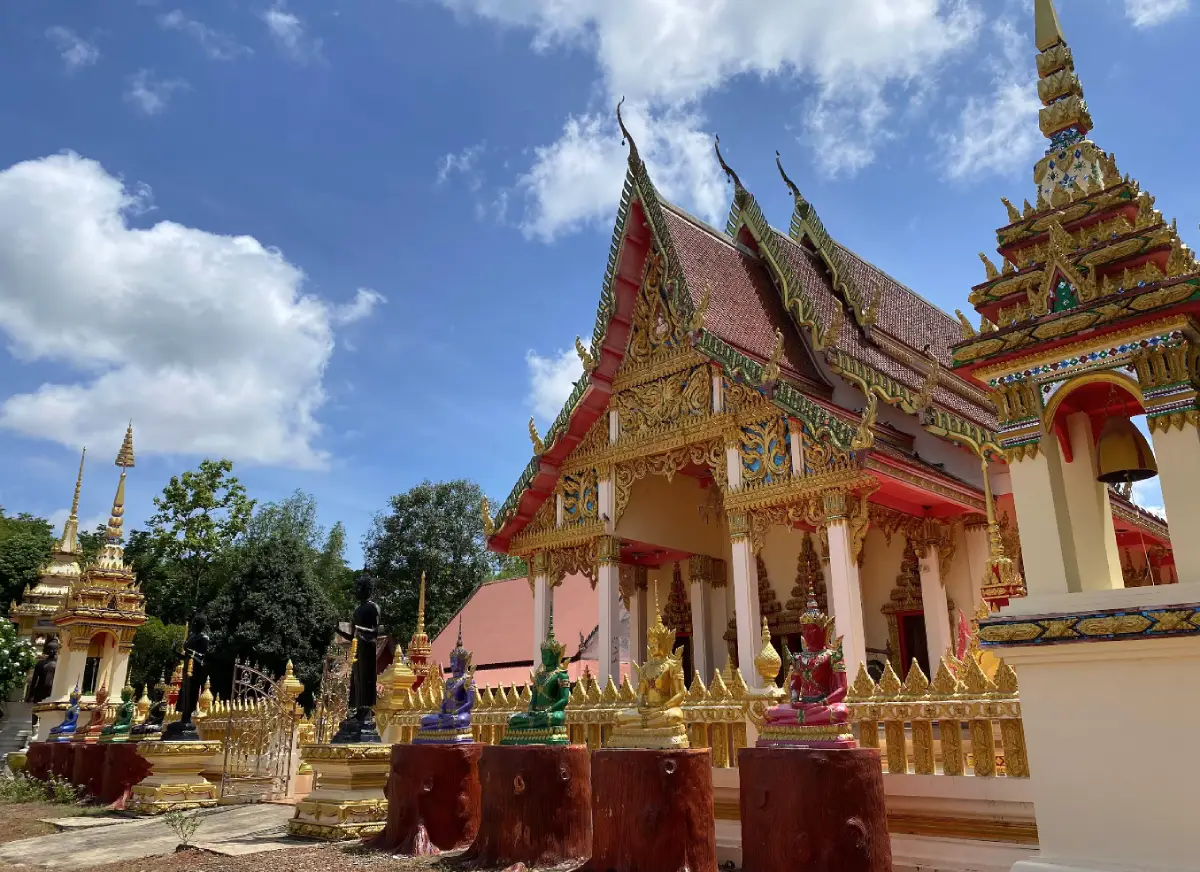
Wat Thep Wisuttharam In Sakon Nakhon, also widely known as Wat Luang Pu Jiam or Wat Ban Kut Hai, is a long-standing forest community temple located at Ban Kut Hai, Moo 1, Kut Hai Subdistrict, Kut Bak District, Sakon Nakhon Province. The temple is known as a peaceful place for merit-making, blessing ceremonies, spiritual reflection, and local Buddhist worship. It is closely connected with the memory of Phra Khru Witit Thammaphon, better known as Luang Pu Jiam Wititthammo, a respected former abbot of the temple and former ecclesiastical head of Kut Hai Subdistrict. For local people, this temple is not simply a religious site. It is a spiritual center of Ban Kut Hai, a place of community memory, and a living example of a village forest temple in Northeastern Thailand.
The history of Wat Thep Wisuttharam reaches back to 1889. The temple was originally established by local villagers led by Khun Pho Si and Khun Mae La Lamkham on garden land near Thung Na Mat. Because of this location, the temple was first called Wat Daen Mat. Later, its name was changed to Wat Thep Wisuttharam. This long history gives the temple strong local importance. It has developed together with the settlement of Kut Hai and has continued to serve as a place for worship, merit-making, community ceremonies, and Buddhist practice through many generations.
Wat Thep Wisuttharam is a local temple under the Mahanikaya order. The temple grounds cover about 30 rai, 2 ngan, and 25 square wa. It is located within the cultural landscape of Kut Hai Subdistrict, an area associated with old settlements, local water sources, upland terrain, farming communities, and the cultural heritage of the Yaw and Phu Thai people. In the local language, “kut” refers to a small natural water body or pond, and the name Kut Hai reflects the relationship between settlement and water sources. The temple therefore stands within a landscape shaped by land, water, forest, farming, and Buddhist faith.
The temple’s identity as a forest temple is important. In Northeastern Thailand, forest temples are often simple, quiet, and connected with meditation, merit-making, and local spiritual life. Wat Thep Wisuttharam does not need grand tourist-scale architecture to be meaningful. Its value lies in its calm atmosphere, sacred objects, village setting, and relationship with local faith. Visitors come to pay respect, make merit, ask for blessings, take part in spiritual-cleansing rites, and spend time in a peaceful temple environment.
The name Wat Luang Pu Jiam reflects the temple’s deep connection with Luang Pu Jiam Wititthammo, also known by his ecclesiastical title Phra Khru Witit Thammaphon. He served as the abbot of Wat Thep Wisuttharam and as the ecclesiastical head of Kut Hai Subdistrict. He passed away on 8 September 2016 at the age of 76, after 55 years in the monkhood. Although he has passed away, his name remains strongly associated with the temple. Many people continue to call the temple Wat Luang Pu Jiam out of respect and familiarity.
A visit to Wat Thep Wisuttharam therefore has 2 layers of meaning. First, it is a visit to a local Buddhist temple for worship, merit-making, and spiritual reassurance. Second, it is a visit to a place connected with the memory of a respected local monk who served the temple and the community. Luang Pu Jiam’s memory gives the temple a personal and emotional identity. It reminds visitors that many important temples in Thailand are shaped not only by buildings or monuments, but also by the lives of monks who cared for them.
The temple contains several important monastic structures. Historical records mention a wooden sermon hall, a chanting hall, monks’ residences, a reinforced-concrete viharn, a multi-purpose pavilion, and 2 merit-making halls. The sermon hall was built in 1977, the chanting hall in 1982, the viharn in 1983, and the multi-purpose pavilion in 1985. These structures show how the temple developed gradually through the support of monks and villagers. Each building served practical religious and community needs: chanting, sermons, merit-making, ceremonies, residence, and gathering.
Important sacred objects inside the temple include 9 Khmer-period boundary stones, stone Buddha images, main Buddha images in the Subduing Mara posture, a meditation-posture Buddha image, a Sivali figure carved from mountain stone, a Naga-protected Buddha carved from mountain stone, Phra Sangkachai, and a chedi. These sacred objects give Wat Thep Wisuttharam cultural and historical depth. The Khmer-period boundary stones are especially significant because they suggest older layers of Buddhist and regional history in the area.
Boundary stones, or bai sema, are important in Thai Buddhist temples because they mark sacred monastic boundaries for formal religious acts. The presence of 9 Khmer-period boundary stones makes the temple more than a simple village religious site. It links the area with older cultural and artistic traditions that once spread through Northeastern Thailand. For visitors, these stones are not only old objects. They represent the long continuity of Buddhist sacred space in the region.
Another important worship point is Luang Pho Phra Ong Dam, the black Buddha image associated with the temple in local tourism information. The image has a distinctive appearance and is one of the temple’s recognizable sacred points. Local worshippers come to pay respect, pray for well-being, ask for blessings, and take part in merit-making or spiritual-cleansing practices. The image helps define the temple’s devotional character and gives visitors a clear focal point for worship.
The practice of spiritual cleansing or “sadao khro” at a community temple should be understood as a form of merit-making and mental renewal. People come to the temple when they feel burdened, anxious, or in need of a fresh start. They make offerings, chant, receive blessings, or take part in simple temple rites. The deeper meaning is not fear, but the cultivation of calm, mindfulness, and moral confidence. Wat Thep Wisuttharam serves this role for local people and visitors who seek reassurance through Buddhist practice.
The atmosphere of the temple is suitable for quiet visiting. Visitors can begin by paying respect to the main Buddha images or Luang Pho Phra Ong Dam, then walk through the temple grounds to observe the viharn, sermon hall, chanting hall, chedi, boundary stones, and other sacred objects. Because the temple remains an active community religious space, visitors should move calmly, dress modestly, speak softly, and avoid touching sacred objects or old stones without permission.
Wat Thep Wisuttharam is part of the wider cultural identity of Kut Bak District. Kut Bak is known for its diverse local cultures and ethnic communities, including Kaleng, Yaw, and Phu Thai groups. The district was formerly part of Mueang Sakon Nakhon District, became a minor district in 1964, and became a full district in 1967. The name “Kut Bak” is associated with a water source surrounded by kabak trees. This landscape of water, forest, upland farming, and local communities helps explain the temple’s character as a forest community temple rather than an urban temple.
Kut Hai Subdistrict itself is about 3 km west of Kut Bak District center. The area contains uplands, valleys, lower plains, forest patches, and water sources rising from the Phu Phan mountain area. Important local streams include Huai Krachoe, Huai I Don, and Huai Saen Phan. The area’s physical setting gives the temple a strong connection with agriculture, forest life, and local water management. A temple in such a place functions as a spiritual and social center for people whose lives are connected with land and seasons.
Throughout the year, Wat Thep Wisuttharam supports local Buddhist activities such as Buddhist holy days, Buddhist Lent, the end of Buddhist Lent, Kathin, robe-offering ceremonies, merit-making for ancestors, and spiritual-cleansing practices according to the temple’s schedule. These activities make the temple a gathering point for families, village groups, elders, young people, and visitors. The temple is therefore not only a place for individual worship, but also a space where community bonds are renewed through Buddhist rituals.
For those interested in local monks and community history, Luang Pu Jiam is central to the temple’s story. His role as former abbot and former ecclesiastical head of Kut Hai Subdistrict gave him importance beyond the temple grounds. He is remembered as a monk who helped maintain the temple, guide laypeople, and support the religious life of the community. The continued use of his name in connection with the temple shows how deeply local temples can be shaped by the memory of respected monks.
Wat Thep Wisuttharam is best visited by those who appreciate quiet community temples rather than heavily developed tourist attractions. Its strengths are its forest-temple atmosphere, old sacred objects, Luang Pho Phra Ong Dam, the memory of Luang Pu Jiam, and its connection with Kut Hai local culture. Visitors will experience a more grounded side of Sakon Nakhon, away from the famous city temples and large provincial landmarks.
Getting There from Sakon Nakhon city is straightforward by private car, rental car, or local hired vehicle. Travel toward Kut Bak District, about 55 - 60 km from the city, which usually takes around 1 hour to 1 hour 15 minutes depending on traffic and starting point. From Kut Bak District center, continue toward Kut Hai Subdistrict, about 3 km away. Visitors using online maps should search for “Wat Thep Wisuttharam Kut Hai” or “Wat Luang Pu Jiam Kut Bak” to match the local name.
Travelers coming from Udon Thani or nearby districts can also connect through Kut Bak and Kut Hai. The temple can be included in a half-day or full-day cultural route. Nearby places include Wat Pa Khun Kham Vipassana, Huai Krachoe Reservoir under the Royal Initiative, Tham Phuang, Nam Un Dam, and later the city landmarks of Sakon Nakhon such as Phra That Narai Cheng Weng and Wat Phra That Choeng Chum Worawihan.
Wat Pa Khun Kham Vipassana is one of the most meaningful nearby sites. It is located in Kut Hai Subdistrict and is known for its large chedi and a major reclining Buddha image. Combining Wat Thep Wisuttharam and Wat Pa Khun Kham Vipassana gives visitors a clearer understanding of forest Buddhist culture in Kut Bak District. This route is especially suitable for travelers interested in temples, local faith, and quiet rural landscapes.
Huai Krachoe Reservoir is another nearby learning point. It is connected with a royal-initiative water project designed to provide water for local farming, livestock, and household use. Visiting the reservoir after the temple helps travelers understand the relationship between temples, farming communities, water resources, and local development in Kut Hai. It also adds a natural and community-based dimension to the route.
Tham Phuang in Ban Kut Haet adds a natural-attraction element to the trip. Kut Bak District is linked with upland terrain and the Phu Phan landscape, so a route that includes a forest temple, reservoir, cave, and local community gives visitors a fuller view of the district. This makes Wat Thep Wisuttharam a useful starting point for exploring the quieter western side of Sakon Nakhon Province.
Food options are available around Kut Bak and Kut Hai. Visitors can find cafés, noodle shops, buffet restaurants, grilled meat restaurants, and local made-to-order food. Publicly listed options include Jungle Cafe Kut Bak, Kuai Tiao Kut Bak, Fueang Fa Buffet, and Kiwi Breakfast. Accommodation is also available in Kut Bak District, including local resorts and homestays such as Thai Phu Ban Suan, Nana Resort, Lung Kan Farmstay, Hoi Kham Resort, Tata Home, and Suan Pa Resort. These options make the area suitable for travelers who want to stay overnight before continuing to Sakon Nakhon city or nearby districts.
Respectful behavior is important when visiting Wat Thep Wisuttharam. Visitors should dress modestly, speak softly, remove shoes in designated areas, avoid touching boundary stones, stone Buddha images, the Naga-protected Buddha, or sacred objects without permission, and avoid disturbing monks or local worshippers. Those joining blessing or spiritual-cleansing activities should follow the temple’s instructions calmly and respectfully.
For international visitors, Wat Thep Wisuttharam is a good example of a forest community temple in Sakon Nakhon. It shows how Buddhism in rural Isan is lived through merit-making, local monks, village history, blessing rites, old boundary stones, sacred Buddha images, and community ceremonies. This is not a large tourist complex, but it offers an authentic view of how temples function in everyday Thai Buddhist life.
Overall, Wat Thep Wisuttharam is a valuable temple for understanding Kut Hai and Kut Bak District. Its importance comes from its long history, its forest-temple atmosphere, its sacred objects, its association with Luang Pu Jiam, and its role as a place for merit-making and spiritual reassurance. For travelers who want to understand Sakon Nakhon beyond the major city temples, Wat Thep Wisuttharam offers a quiet, sincere, and culturally grounded experience.
| Place Name | Wat Thep Wisuttharam Sakon Nakhon / Wat Luang Pu Jiam / Wat Ban Kut Hai |
| Place Type | Local Buddhist Temple Under The Mahanikaya Order, Forest Community Temple, And Merit-Making Site In Kut Hai Subdistrict |
| Main Location | Ban Kut Hai, Moo 1, Kut Hai Subdistrict, Kut Bak District, Sakon Nakhon Province |
| Address | Moo 1, Kut Hai Subdistrict, Kut Bak District, Sakon Nakhon 47180, Thailand |
| Site Character | A Peaceful Forest Community Temple Suitable For Merit-Making, Worship, Blessing Rites, Spiritual Cleansing, Remembering Luang Pu Jiam, And Visiting Old Sacred Objects |
| Highlights | Luang Pho Phra Ong Dam, 9 Khmer-Period Boundary Stones, Stone Buddha Images, Mountain-Stone Naga-Protected Buddha, Sivali Figure Carved From Mountain Stone, Phra Sangkachai, Chedi, Sermon Hall, Chanting Hall, Viharn, And The Memory Of Luang Pu Jiam Wititthammo |
| History / Importance | Established In 1889 By Local Villagers Led By Khun Pho Si And Khun Mae La Lamkham. The Temple Was First Known As Wat Daen Mat Because It Was Built Near Thung Na Mat, And Later Became Wat Thep Wisuttharam |
| Name Origin | The Former Name Wat Daen Mat Refers To The Temple’s Original Location Near Thung Na Mat. The Popular Name Wat Luang Pu Jiam Comes From Local Devotion To Phra Khru Witit Thammaphon, Or Luang Pu Jiam Wititthammo, A Respected Former Abbot |
| Temple Area | About 30 Rai, 2 Ngan, And 25 Square Wa |
| Main Sacred Objects | 9 Khmer-Period Boundary Stones Luang Pho Phra Ong Dam Stone Buddha Images Main Buddha Images In The Subduing Mara Posture Meditation-Posture Buddha Image Sivali Figure Carved From Mountain Stone Naga-Protected Buddha Carved From Mountain Stone Phra Sangkachai Chedi Within The Temple |
| Temple Structures | Sermon Hall Chanting Hall Monks’ Residences Viharn Multi-Purpose Pavilion Merit-Making Halls Community Ceremony Areas |
| Travel Information | From Sakon Nakhon City, Travel Toward Kut Bak District, About 55 - 60 km Away. The Journey Usually Takes Around 1 Hour To 1 Hour 15 Minutes. From Kut Bak District Center, Continue To Kut Hai Subdistrict, About 3 km Away |
| Current Status | Open As A Community Buddhist Temple And Merit-Making Site In Kut Hai Subdistrict, Kut Bak District, Sakon Nakhon Province |
| Open Days | Open Daily |
| Opening Hours | 08.00 - 17.00 |
| Fees | No Admission Fee; Donations Can Be Made Voluntarily |
| Facilities | Parking Area, Worship Areas, Sermon Hall, Chanting Hall, Viharn, Monks’ Residences, Merit-Making Halls, Restrooms In The Temple Area, And Community Ceremony Spaces |
| Main Areas / Zones | Luang Pho Phra Ong Dam Worship Area Stone Buddha Images And Sacred Objects Area Khmer-Period Boundary Stone Area Sermon Hall Chanting Hall Viharn Monks’ Residence Area Multi-Purpose And Merit-Making Halls Merit-Making, Blessing, And Spiritual-Cleansing Area |
| Annual Merit-Making / Important Traditions | Buddhist Holy Days, Buddhist Lent, End-Of-Lent Activities, Kathin, Robe-Offering Ceremonies, Ancestor Merit-Making, Spiritual-Cleansing Rites, And Community Buddhist Activities According To The Temple’s Schedule |
| Important Monk Connected With The Temple | Phra Khru Witit Thammaphon, Or Luang Pu Jiam Wititthammo, Former Abbot Of Wat Thep Wisuttharam And Former Ecclesiastical Head Of Kut Hai Subdistrict. He Passed Away On 8 September 2016 At The Age Of 76, After 55 Years In The Monkhood |
| Contact Numbers | Wat Thep Wisuttharam Tel. 090-253-4796 Kut Hai Municipality Tel. 042-784-291 |
| Visitor Guidelines | Dress Respectfully, Speak Softly, Remove Shoes In Designated Areas, Do Not Touch Boundary Stones, Stone Buddha Images, Mountain-Stone Buddha Images, Or Sacred Objects Without Permission, Do Not Disturb Monks Or Worshippers, And Keep The Temple Area Clean |
| Nearby Tourist Attractions | 1. Kut Bak Market And Kut Bak Town Center, About 3 km 2. Wat Pa Khun Kham Vipassana, Kut Hai Subdistrict, About 7 km 3. Huai Krachoe Reservoir Under The Royal Initiative, About 14 km 4. Tham Phuang, Ban Kut Haet, Kut Bak Subdistrict, About 16 km 5. Nam Un Dam, About 28 km 6. Phra That Narai Cheng Weng, Mueang Sakon Nakhon, About 55 km 7. Wat Phra That Choeng Chum Worawihan, Mueang Sakon Nakhon, About 60 km |
| Nearby Restaurants | 1. Jungle Cafe Kut Bak Sakon Nakhon Branch, About 3 km, Tel. 088-311-4491 2. Kuai Tiao Kut Bak, About 4 km, Tel. 087-358-9407 3. Fueang Fa Buffet, About 5 km, Tel. 042-090-207 4. Kiwi Breakfast, About 4 km, Tel. 061-170-8198 5. Racha Nuea Yang Korea, Kut Bak District, About 4 km 6. Khrua Khon Lang Khao, Kut Bak District, About 5 km 7. Kaleng Coffee, Kut Bak District, About 5 km |
| Nearby Accommodations | 1. Thai Phu Ban Suan, Kut Bak District, About 8 km, Tel. 042-784-028 2. Nana Resort, Kut Bak District, About 6 km, Tel. 042-784-099 3. Lung Kan Farmstay, Kut Bak District, About 8 km, Tel. 080-190-9026 4. Hoi Kham Resort, Kut Bak District, About 10 km, Tel. 088-573-4067 5. Tata Home, Kut Bak District, About 5 km, Tel. 085-317-0719 6. Suan Pa Resort, Kut Bak District, About 7 km, Tel. 083-457-1738 |
Frequently Asked Questions (FAQ)
Q: Where Is Wat Thep Wisuttharam Located?
A: Wat Thep Wisuttharam is located at Ban Kut Hai, Moo 1, Kut Hai Subdistrict, Kut Bak District, Sakon Nakhon Province, about 3 km from Kut Bak District center.
Q: What Are The Opening Days And Hours?
A: The temple is open daily from 08.00 to 17.00.
Q: Is There An Admission Fee?
A: No. There is no admission fee. Visitors may pay respect, make merit, join blessing rites according to the temple’s schedule, and make voluntary donations.
Q: Why Is Wat Thep Wisuttharam Also Called Wat Luang Pu Jiam?
A: The temple is closely associated with Phra Khru Witit Thammaphon, or Luang Pu Jiam Wititthammo, a respected former abbot of Wat Thep Wisuttharam and former ecclesiastical head of Kut Hai Subdistrict.
Q: What Are The Main Highlights Inside The Temple?
A: Highlights include Luang Pho Phra Ong Dam, 9 Khmer-period boundary stones, stone Buddha images, the mountain-stone Naga-protected Buddha, the Sivali figure carved from mountain stone, Phra Sangkachai, the chedi, and the peaceful forest-temple atmosphere.
Q: Is Wat Thep Wisuttharam Suitable For Merit-Making And Spiritual Cleansing?
A: Yes. The temple is known locally as a peaceful place for merit-making, worship, blessing, and spiritual-cleansing practices for visitors seeking auspiciousness and calmness.
Q: How Can Visitors Get There From Sakon Nakhon City?
A: Travel from Sakon Nakhon city toward Kut Bak District, about 55 - 60 km away, then continue to Kut Hai Subdistrict, about 3 km from Kut Bak District center. Private cars, rental cars, and local hired vehicles are suitable.
Q: What Nearby Places Can Visitors See After Wat Thep Wisuttharam?
A: Nearby places include Wat Pa Khun Kham Vipassana, Huai Krachoe Reservoir, Tham Phuang, Nam Un Dam, Phra That Narai Cheng Weng, and Wat Phra That Choeng Chum Worawihan.
 Category: ●Places of Worship
 Group: ●Temple
Last Update : 3 MonthAgo
 Last Update : 3 MonthAgo
 Click to Access the Navigation Map GPS
Wat Thep Wisuttharam (Wat Luang Pu Chiam) Map
Recommend

 Art, Culture and Heritage
 Historical Sites and Monuments(9)
 Landmarks and Memorials(2)
 Royal Palace(1)
 Art, Craft Centres, Tradition(8)
 Museums(3)
 Educational Places
 Educational Gardens, Farm(2)
Temple(18)
Educational Gardens, Farm(2)
Temple(18)
 Church(2)
 Other Sacred Sites(4)
 Research and Development
 Royal Project(3)
 Suburban Living
 Village, Community(7)
 Nature and Wildlife
 National Parks and Marine Reserves(4)
 Mountain (Doi)(3)
 Dam, Reservoir, Lake(14)
 Waterfalls(4)
 Caves(4)
 River, Canal(9)
 Bays and Beaches(1)
 Islands(1)
 Other natural attractions(5)
 Entertainment and Agricultural
 Zoos and Aquariums(1)
 Farms, Parks and Ecotourism(4)
 Outdoor and Adventure Activities(1)
 Travel Articles, Recipes
 Travel Review, Food Review(1)


