
lovethailand home >Northeastern Travel Attractions >Nakhon Ratchasima Travel Attractions >Phi Mai >Samrit > Wat Ban Samrit Tawan Ok
TL;DR: Wat Ban Samrit Tawan Ok is located at Ban Samret, Mu 13, Samrit Subdistrict, Phimai District, Nakhon Ratchasima Province, open Daily, hours 08.00 – 17.00.
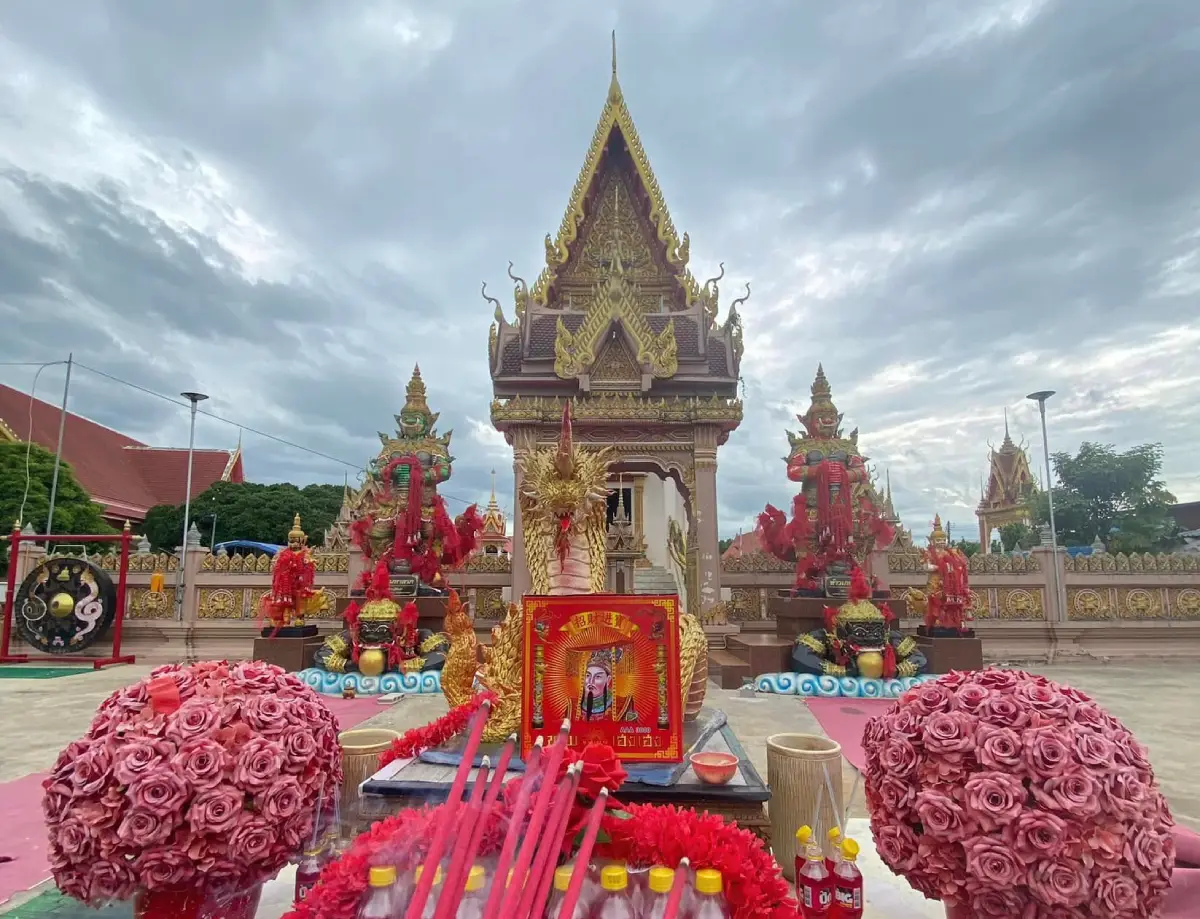
Wat Ban Samrit Tawan Ok
Open Days: Daily
Opening Hours: 08.00 – 17.00
Wat Ban Samrit Tawan Ok, also known in several public and monastic records as Wat Samrit Tawan Ok, is located around Ban Samret, Mu 13, Samrit Subdistrict, Phimai District, Nakhon Ratchasima Province. This peaceful community temple is one of the meaningful Buddhist sites in the Mun River landscape of Phimai. The temple is known for its clean and well-kept grounds, attractive ordination hall, sermon hall, calm atmosphere suitable for meditation and Buddhist precept observance, and the natural fish conservation area along the Mun River behind the temple. For foreign travelers who want to understand local Thai Buddhist life beyond major monuments, this temple offers a quiet and sincere experience rooted in community, faith, and riverside nature.
The charm of Wat Ban Samrit Tawan Ok is not based on grand tourism infrastructure. Instead, its value lies in cleanliness, order, simplicity, and the close relationship between the temple and the local community. Visitors entering the temple will find a calm rural atmosphere rather than a crowded tourist scene. The ordination hall and sermon hall are kept in good condition, making the temple suitable for worship, quiet reflection, and merit-making. It is a place for people who want to slow down, pay respect to the Buddha, and spend time in a peaceful Buddhist environment.
Historically, Wat Samrit Tawan Ok is a local Buddhist temple under the Mahanikaya order. It was established in 1916 and received its official consecrated boundary in 1992. In Thai Buddhism, a consecrated boundary is important because it allows the temple to conduct formal monastic acts, including ordination and important Sangha ceremonies. This means the temple is not merely a small shrine or resting place for monks, but a fully functioning Buddhist temple with a recognized religious role in the community.
The temple is located in Samrit Subdistrict of Phimai District, an area shaped by both history and geography. Phimai is widely known for its ancient Khmer-related heritage, especially Phimai Historical Park, but the district is also a living landscape of villages, agriculture, waterways, and local temples. Wat Ban Samrit Tawan Ok helps visitors see this present-day community side of Phimai. It stands in a rural environment where Buddhist practice, community life, and the Mun River remain closely connected.
The ordination hall, or ubosot, is one of the temple’s most important religious areas. It is used for worship and monastic ceremonies and represents the formal Buddhist center of the temple. Visitors may come here to pay respect, bow before the Buddha image, and calm the mind. As with all Thai temples, modest clothing and quiet behavior are expected. The ubosot is not simply an architectural feature; it is a sacred space where the community’s Buddhist life is formally anchored.
The sermon hall is another key part of the temple. In Thai village temples, the sermon hall is often used for merit-making, Dhamma listening, communal meals, ceremonies, and gatherings between monks and laypeople. At Wat Ban Samrit Tawan Ok, the sermon hall contributes strongly to the temple’s clean and welcoming atmosphere. It shows how the temple functions as a shared community space, not only as a place for individual worship.
The most distinctive natural feature of the temple is the area behind the grounds along the Mun River. This riverside area is known as a natural fish conservation zone. Many fish live in the protected waters, making the area attractive for quiet observation and local nature learning. In Thai Buddhist culture, such protected areas are often associated with compassion and non-harming. They remind visitors that temple life can include care for animals, water, and the local environment.
The fish conservation area behind the temple is best appreciated quietly. Visitors should avoid throwing rubbish into the river, feeding fish excessively, or disturbing the water. The site is not an amusement area, but a peaceful riverside conservation space connected with Buddhist values. For foreign travelers, this is a useful example of how temples in Thailand can help protect local ecosystems through community respect and religious custom.
The overall value of Wat Ban Samrit Tawan Ok comes from the way its main elements work together. The ubosot serves as the sacred ceremonial center. The sermon hall supports community religious activities. The riverside area provides natural calm and conservation value. The temple grounds offer space for merit-making, meditation, and precept observance. Together, these elements create a temple that is simple but meaningful, especially for travelers who prefer sincere local experiences over crowded sightseeing.
The temple is suitable for meditation because its atmosphere is quiet and not overly commercial. Visitors can use the calm surroundings to sit peacefully, reflect, or observe the rhythm of village temple life. Meditation at a riverside community temple has a special quality because it combines the stillness of a Buddhist place with the natural presence of water and fish. Even a short visit can help travelers experience a slower and more mindful side of Phimai.
For residents of Ban Samret and Samrit Subdistrict, the temple is a spiritual center connected with everyday life. Local people come for Buddhist holy days, food offerings, merit-making, sermons, funeral rites, and community ceremonies. Children learn temple manners here, adults support religious activities, older people use the temple as a place of calm, and monks maintain the Buddhist tradition of the village. This living relationship makes the temple more than a point on a map. It is part of the community’s social and spiritual structure.
Wat Ban Samrit Tawan Ok is also meaningful during Buddhist festivals and annual ceremonies. On important Buddhist days such as Makha Bucha, Visakha Bucha, Asalha Bucha, Buddhist Lent, and Kathin season, the temple becomes a gathering place for villagers and devotees. These occasions show the continuing role of Thai temples as centers of merit, generosity, and community cooperation. Visitors who come during such events should behave respectfully and allow local religious activities to proceed without disturbance.
The temple’s location in Phimai makes it easy to combine with a wider cultural itinerary. Phimai Historical Park, Phimai National Museum, Sai Ngam, Ban Prasat Archaeological Site, and other attractions are all part of the broader travel landscape of the district. A meaningful route may begin with the ancient monuments of Phimai, continue to the museum, and then include Wat Ban Samrit Tawan Ok for a quieter view of present-day Buddhist community life along the Mun River.
The connection between the temple and the Mun River deserves special attention. The river is not just a scenic background. It has supported agriculture, settlement, local food culture, and community life for generations. Temples near rivers often become gathering points, spiritual shelters, and places where people express compassion toward animals through protected fish areas. At Wat Ban Samrit Tawan Ok, the river gives the temple a natural identity that complements its religious role.
Getting to Wat Ban Samrit Tawan Ok is easiest by private car or rental vehicle. From Nakhon Ratchasima city, travel toward Phimai District, then continue to Samrit Subdistrict and Ban Samret. From central Phimai, the temple can be included in a short local trip. Because the temple is located within a community area, visitors should use navigation apps together with local signs, drive carefully, and avoid blocking village roads or temple entrances when parking.
Getting There can be planned from Phimai Historical Park or central Phimai town. From there, continue toward Samrit Subdistrict and Ban Samret to reach the temple. On arrival, begin with the ubosot and sermon hall, then walk quietly toward the Mun River area behind the temple. This route allows visitors to understand the temple step by step, from religious space to community space and finally to the riverside conservation zone.
The best time to visit is during the temple’s normal opening hours from 08.00 to 17.00. Morning is suitable for worship and quiet reflection because the weather is generally more comfortable. Late afternoon is also pleasant for seeing the riverside atmosphere behind the temple. Visitors interested in meditation or precept observance should choose a quiet day and avoid times when large ceremonies may be taking place, unless they specifically wish to observe local Buddhist activity.
Proper temple etiquette is essential. Visitors should dress modestly, speak softly, avoid running or playing loudly in the temple grounds, and treat all religious buildings with respect. Around the riverside fish conservation area, visitors should avoid littering, excessive feeding, or any activity that may harm the water environment. When children visit, adults should supervise them carefully, especially near the river.
Photography is suitable in general outdoor areas, but it should be done respectfully. The temple’s best images are not only the ordination hall or sermon hall, but also the clean temple grounds, the quiet community atmosphere, and the Mun River conservation area. Visitors should avoid disturbing monks, local worshippers, or anyone practicing meditation. If photographing inside buildings, it is best to observe signs or ask permission first.
For families, the temple is a useful educational stop. Children can learn what an ubosot is, how a sermon hall functions, why people make merit, and how a temple can protect fish and water. This makes the visit more meaningful than a simple stop for photographs. It becomes a lesson in Buddhist manners, environmental care, and community responsibility.
For travelers exploring Phimai, Wat Ban Samrit Tawan Ok can help balance the itinerary. After visiting major historical sites, the temple offers a quieter local experience. It shows that Phimai is not only a place of ancient ruins, but also a district where present-day Buddhist communities continue to live beside the Mun River. This contrast between ancient heritage and living temple culture makes the trip more complete.
The temple also reflects the idea of a clean community temple. Cleanliness is not only visual; it expresses care, discipline, and respect. A clean temple invites people to make merit, sit peacefully, and take part in religious life. Visitors can help preserve this quality by not leaving rubbish, not damaging plants or buildings, and not disturbing the riverside conservation area.
In environmental terms, the fish conservation area behind the temple is a small but meaningful example of community-based conservation. It does not require a large tourist facility to be valuable. By protecting fish, keeping the river clean, and encouraging non-harming behavior, the temple helps create a safe space for aquatic life and a peaceful place for people. This is one reason Wat Ban Samrit Tawan Ok is worth including in a thoughtful Phimai itinerary.
Wat Ban Samrit Tawan Ok is therefore best visited with patience and respect. Its importance lies in the well-kept temple grounds, the attractive ubosot and sermon hall, the peaceful atmosphere for meditation and precept observance, the Mun River behind the temple, and the natural fish conservation area maintained by community faith. It is a modest but meaningful destination for travelers who want to see the living Buddhist and riverside culture of Phimai.
| Name | Wat Ban Samrit Tawan Ok / Wat Samrit Tawan Ok |
| Location | Ban Samret, Mu 13, Samrit Subdistrict, Phimai District, Nakhon Ratchasima Province |
| Address | Mu 13, Ban Samret, Samrit Subdistrict, Phimai District, Nakhon Ratchasima 30110, Thailand |
| Highlights | Clean and peaceful temple grounds, beautiful ubosot, sermon hall, meditation-friendly atmosphere, precept observance setting, Mun River behind the temple, and natural fish conservation area |
| History | A local Buddhist temple under the Mahanikaya order, established in 1916 and granted its consecrated boundary on 3 September 1992 |
| Distinctive Features | A community temple beside the Mun River combining Buddhist worship, meditation space, and a natural fish conservation area |
| Travel Information | From Nakhon Ratchasima city, travel toward Phimai District, then continue to Samrit Subdistrict and Ban Samret. Private car or rental vehicle is the most convenient option |
| Current Status | Open for worship, merit-making, meditation, precept observance, and quiet visits to the Mun River fish conservation area |
| Open Days | Daily |
| Opening Hours | 08.00 – 17.00 |
| Facilities | Ubosot, sermon hall, chanting hall, monks’ residence, multipurpose pavilion, merit-making pavilion, Mun River area, and temple spaces for Buddhist activities |
| Main Areas / Zones | Ubosot zone, sermon hall zone, chanting hall zone, monks’ residence zone, multipurpose pavilion zone, merit-making pavilion zone, Mun River zone, and natural fish conservation zone behind the temple |
| Abbot / Caretaker | Phra Khru Worathammaphiphit |
| Resident Monks | 9 monks |
| Local Administrative Contact | Samrit Subdistrict Administrative Organization, Tel. 044-482-901 |
| Nearby Tourist Attractions | 1. Samrit Village Cultural Center, about 2 km 2. Phimai Historical Park, about 5 km 3. Phimai National Museum, about 5 km 4. Sai Ngam Phimai, about 6 km 5. Ban Prasat Archaeological Site, about 28 km |
| Nearby Restaurants | 1. Krua Khun Phim By Chef Watch Phimai, about 4 km, Tel. 091-776-6198 2. Thiw Phai Roasted Duck Phimai, about 5 km, Tel. 044-287-500, 081-878-1466 3. Wan Wan Na Phimai, about 5 km, Tel. 098-641-4541 4. Term Suk Na Phimai, about 5 km, Tel. 081-877-1414, 080-364-6266 5. Phonsin Thai-Isan Restaurant, about 5 km, Tel. 081-879-4179, 081-976-4252 |
| Nearby Accommodations | 1. Phimai Paradise Hotel, about 5 km, Tel. 044-287-565, 044-471-575, 086-468-8402 2. Phimai Residence, about 5 km, Tel. 081-931-3740 3. Moon River Resort Phimai, about 6 km, Tel. 061-423-6939 4. Phimai Inn Hotel, about 6 km, Tel. 044-471-175 5. Rabbit Hotel Phimai, about 7 km, Tel. 081-202-2250 |
Frequently Asked Questions (FAQ)
Q: Where is Wat Ban Samrit Tawan Ok located?
A: Wat Ban Samrit Tawan Ok is located around Ban Samret, Mu 13, Samrit Subdistrict, Phimai District, Nakhon Ratchasima Province.
Q: What are the opening hours of Wat Ban Samrit Tawan Ok?
A: The temple is open daily from 08.00 to 17.00.
Q: What is the main highlight of Wat Ban Samrit Tawan Ok?
A: The main highlights are the clean and peaceful temple grounds, beautiful ubosot, sermon hall, meditation-friendly atmosphere, and the Mun River fish conservation area behind the temple.
Q: Is Wat Ban Samrit Tawan Ok suitable for meditation and precept observance?
A: Yes. The temple has a calm and orderly atmosphere suitable for worship, meditation, quiet reflection, and Buddhist precept observance.
Q: What is behind Wat Ban Samrit Tawan Ok?
A: Behind the temple is the Mun River, where a natural fish conservation area is found. It is a peaceful riverside spot that reflects Buddhist compassion and community-based environmental care.
Q: Who is the abbot of Wat Ban Samrit Tawan Ok?
A: The abbot is Phra Khru Worathammaphiphit.
Q: How can travelers get to Wat Ban Samrit Tawan Ok?
A: From Nakhon Ratchasima city, travel toward Phimai District, then continue to Samrit Subdistrict and Ban Samret. Private car or rental vehicle is the most convenient option.
Q: What nearby places can be visited on the same trip?
A: Nearby places include Samrit Village Cultural Center, Phimai Historical Park, Phimai National Museum, Sai Ngam Phimai, and Ban Prasat Archaeological Site.
 Category: ●Places of Worship
 Group: ●Temple
Last Update : 3 MonthAgo
 Last Update : 3 MonthAgo
 Click to Access the Navigation Map GPS
Wat Ban Samrit Tawan Ok Map
Recommend

 Art, Culture and Heritage
 Historical Sites and Monuments(20)
 Landmarks and Memorials(5)
 Art, Craft Centres, Tradition(7)
 Museums(6)
 Art Gallery(1)
 Educational Places
 Educational Gardens, Farm(4)
Temple(29)
 Mosque(1)
 Other Sacred Sites(6)
 Research and Development
 Royal Project(3)
 Suburban Living
 Village, Community(6)
 Local Market(4)
 Floating Market(1)
 Nature and Wildlife
 National Parks and Marine Reserves(3)
 Mountain (Doi)(5)
 Dam, Reservoir, Lake(8)
 Waterfalls(9)
 Hot Springs(1)
 Caves(2)
 Flower Field(1)
 River, Canal(8)
 Bays and Beaches(2)
 Other natural attractions(3)
 Entertainment and Agricultural
 Zoos and Aquariums(2)
 Animal camps and shows(1)
 Farms, Parks and Ecotourism(21)
 Waterpark(4)
 Outdoor and Adventure Activities(6)
 Shopping
 Shopping and Night Market(2)
 Travel Articles, Recipes
 Travel Review, Food Review(6)


