
lovethailand home >Northeastern Travel Attractions >Nakhon Ratchasima Travel Attractions >Muang Nakhon Ratchasima >Nai Muang > Wat Isan
TL;DR: Wat Isan is located at Kudun Road, Nai Mueang Subdistrict, Mueang Nakhon Ratchasima District, Nakhon Ratchasima Province, open Daily, hours 08.00 – 18.00.
Wat Isan
Open Days: Daily
Opening Hours: 08.00 – 18.00
Wat Isan in Nakhon Ratchasima is one of the historic temples inside the old city area of Korat. Located on Kudun Road in Nai Mueang Subdistrict, Mueang Nakhon Ratchasima District, the temple stands northeast of Wat Phra Narai Maharat, also known locally as Wat Klang. Wat Isan is closely connected with the urban history of Nakhon Ratchasima during the reign of King Narai the Great. It is one of the old temples associated with the city plan created in 1677, or B.E. 2220, when temples were built to strengthen Buddhism and provide a spiritual center for the people of the newly organized city.
For travelers, Wat Isan is not a large or highly commercialized temple attraction. Its value lies in its quiet dignity, old ordination hall, Ayutthaya-style architectural features, mural paintings, double boundary stones, and the important main Buddha image known as Phra Sri Rattanapratikarn. This temple is especially suitable for visitors who want to understand Korat through history, city planning, Buddhist art, and the faith of ordinary people. It is also convenient to visit because it stands in the old city area, not far from Thao Suranari Monument, Chumphon Gate, Wat Phra Narai Maharat, Korat City Pillar Shrine, and other central landmarks.
The history of Wat Isan begins in the reign of King Narai the Great of Ayutthaya. In B.E. 2220, Nakhon Ratchasima was developed as an important city, with Phraya Yommarat, also known as Sang, playing a major role in the city’s construction. French craftsmen are traditionally said to have helped with the city planning. After the city plan was completed, people, wealthy citizens, and officials were encouraged to build six important temples: Wat Phra Narai Maharat, Wat Burapha, Wat Isan, Wat Phayap, Wat Bueng, and Wat Sa Kaeo. These temples became spiritual anchors for the new city and helped support Buddhism within the urban settlement.
The name Wat Isan reflects the temple’s position. In Thai, “Isan” means northeast. The temple stands northeast of Wat Phra Narai Maharat, the central temple of the old city, and therefore received the name Wat Isan. This directional naming helps travelers understand how temples were placed within Korat’s historical urban landscape. The temple name is not arbitrary; it is a clue to the old city’s spatial organization and the relationship between religious sites and the city plan.
Local tradition explains that some temples in the old city were built mainly by officials, while others were built by wealthy citizens and ordinary people. Wat Phra Narai Maharat, Wat Bueng, and Wat Sa Kaeo are often described as temples associated with officials, while Wat Isan, Wat Burapha, and Wat Phayap are remembered as temples built by citizens and local patrons. This distinction is important. Even if Wat Isan may not display the same level of ornate craftsmanship as some temples supported by officials, its meaning is powerful because it represents the faith and participation of the people of Korat.
Seen in this way, Wat Isan is a temple of public devotion. It was created by collective faith, not only by elite patronage. The people of Nakhon Ratchasima helped create Buddha images, sacred objects, temple buildings, and spaces for worship. More than three centuries later, that legacy remains. The temple still serves as a place of worship, merit-making, meditation, and cultural memory. Visitors should therefore understand Wat Isan as a living historical temple rather than as an isolated old structure.
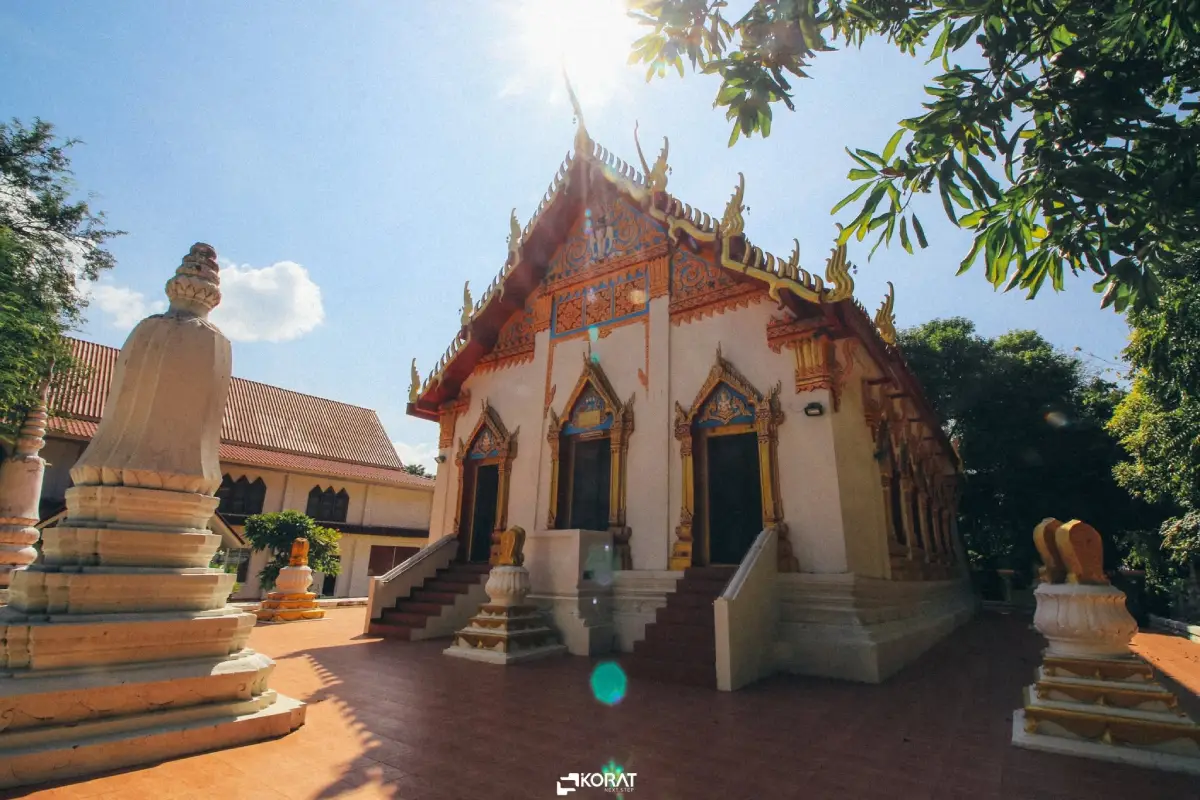
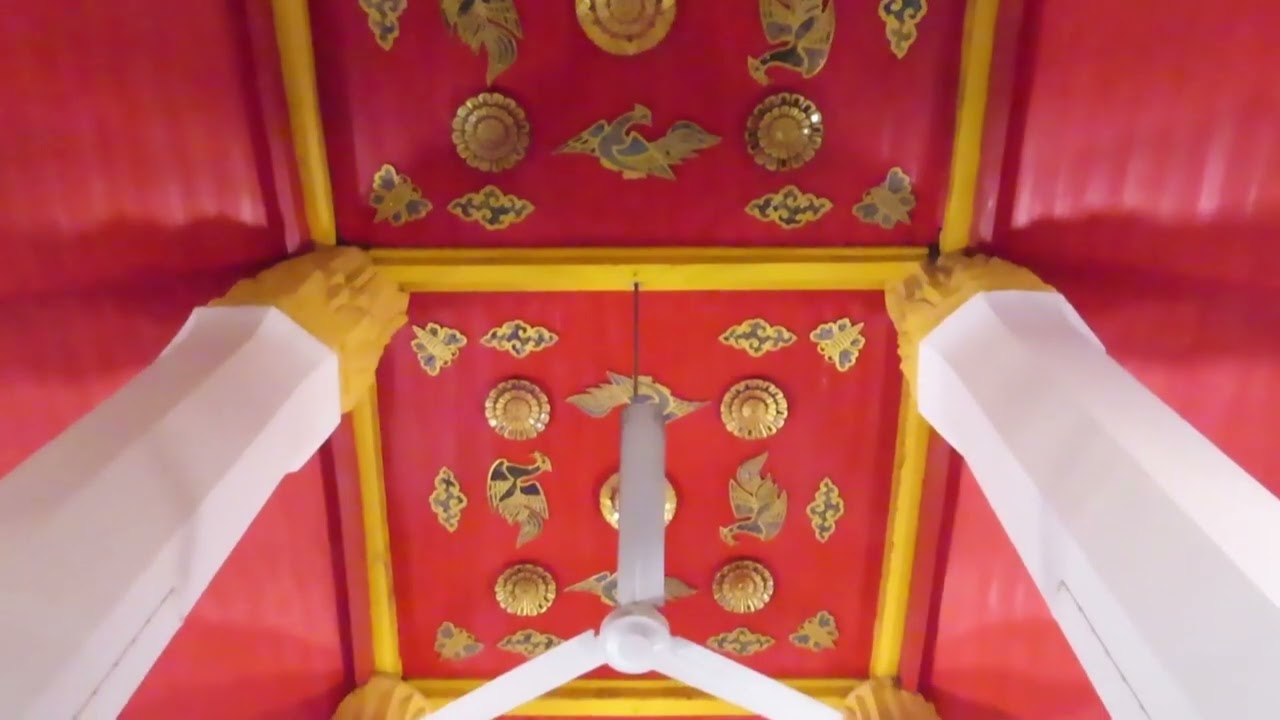
The ordination hall is the most important architectural feature of Wat Isan. It measures approximately 11.28 meters wide, 22.60 meters long, and 14 meters high. Inside are 12 octagonal pillars with decorative capitals, sometimes understood through the symbolic idea of the Noble Eightfold Path. The base of the ordination hall curves like a ship, a form associated with old Ayutthaya-style Buddhist architecture. In Buddhist symbolism, the image of a boat or vessel can represent the Dhamma carrying beings across the sea of suffering toward liberation.
The old ordination hall also contains details that deserve close attention: carved gable elements, mural paintings, double boundary stones, and decorative pillars around the wall. Although parts of the roof and gable have been repaired over time, the overall structure still preserves the feeling of an old Korat temple. The double boundary stones, known in Thai as sema, mark the sacred area of the ordination hall used for important monastic ceremonies. These elements make Wat Isan valuable for anyone interested in Buddhist architecture and ritual space.
Inside the ordination hall is the temple’s main Buddha image, Phra Sri Rattanapratikarn. The name can be translated as an auspicious crystal-like Buddha who grants success beyond one’s wishes. The image is regarded as a precious sacred object created through the devotion of the people of Nakhon Ratchasima. It preserves the distinctive character of Chiang Saen-style Buddhist art while standing within an Ayutthaya-period temple context. This artistic combination makes the image particularly interesting for visitors who want to see how Buddhist art forms from different regions appear in local Thai temples.
Phra Sri Rattanapratikarn is not only admired for its appearance. It is the spiritual heart of Wat Isan. Local Buddhists come to pay respect, make wishes, and seek peace of mind before the image. The meaning of its name adds to its devotional importance. Visitors entering the ordination hall should dress modestly, remove their shoes, keep their voices low, and avoid touching the Buddha image or sacred objects. This is a living place of worship, not only an art display.
The mural paintings inside the ordination hall are another significant highlight. The paintings above the window frames depict ten former Buddhas and are dated to B.E. 2470. These murals help visitors understand that the ordination hall is not only a structure for worship but also a visual space for Buddhist teaching. The images communicate the idea of multiple Buddhas in the Buddhist cosmological and doctrinal tradition. Travelers interested in mural art should look carefully at the placement, style, and narrative function of these paintings.
Other important objects and areas inside Wat Isan include Buddha relics, a Sri Maha Bodhi tree grown from a branch brought from India, palm-leaf manuscript cabinets, and a Tipitaka scripture cabinet housed in the sermon hall. These items reflect the temple’s role as both a sacred site and a center of Buddhist knowledge. Palm-leaf manuscripts and scripture cabinets are especially important because they represent the transmission of Dhamma, literacy, and monastic learning through generations.
The Buddha relics give Wat Isan additional religious significance. In Thai Buddhist culture, relics are honored as sacred reminders of the Buddha and his teachings. Paying respect to relics is not merely an act of belief; it is a way to turn the mind toward the qualities of the Buddha, the Dhamma, and the Sangha. Visitors should approach such areas with quiet respect and avoid treating them as ordinary museum exhibits.
The Sri Maha Bodhi tree at Wat Isan connects the temple with Bodh Gaya in India, the place traditionally associated with the Buddha’s enlightenment. For foreign visitors familiar with Buddhist pilgrimage sites, this connection may be especially meaningful. A Bodhi tree in a Thai temple is more than a plant; it is a living symbol of awakening, wisdom, and continuity in Buddhism. Visitors should treat the area around the tree respectfully, as it is part of the temple’s sacred landscape.
Wat Isan is also registered as a provincial meditation practice center of Nakhon Ratchasima, known as Meditation Practice Center No. 22. This gives the temple a role beyond historical preservation. It remains a place for mindfulness practice, Dhamma learning, and spiritual cultivation in the city. Visitors interested in meditation should contact the temple directly, dress appropriately, keep silence, and follow temple regulations.
The temple has had many abbots over its long history. Known names include Phra Athikan Suea, Phra Athikan Kham, Phra Winaithon Khong, Phra Khru Sila Wisutthiprot, Phra Athikan Le, Phra Maha It Yanawuttho, Phra Maha Kaew Anandiyo, Phra Anusat Koson, Phra Khru Palat Somphong Mahaphalo, and Phra Khru Sri Pariyattikij. The current abbot is Phra Khru Sri Pariyattikij, Dr. This continuity of monastic leadership reflects the temple’s continuing role as a religious and community institution.
Phra Khru Sri Pariyattikij, Dr., is connected with both the administration of Wat Isan and Buddhist activities in Nakhon Ratchasima. The temple remains active through merit-making, Kathin ceremonies, meditation activities, and local religious practice. This means Wat Isan should not be viewed only as a historical relic. It is still used by monks, local residents, students, and Buddhist practitioners.
The temple grounds include several functional areas, such as the ordination hall, sermon hall, drum and bell towers, library, monks’ residences, meditation area, worship areas, and merit-making zones. These areas show how a Thai temple functions on multiple levels: as a ritual space, a learning space, a monastic residence, a community center, and a place for personal reflection. Visitors should respect restricted monastic areas and avoid entering monks’ residences without permission.
A meaningful visit to Wat Isan should begin by understanding its position in the old city. Visitors can then walk to the old ordination hall, observe the ship-shaped base, octagonal pillars, double sema stones, and gable details, and then enter the hall to pay respect to Phra Sri Rattanapratikarn. After that, they should look at the murals above the window frames, the Bodhi tree, the manuscript cabinets, scripture cabinet, Buddha relic area, and meditation grounds. This route allows the temple’s story to unfold through architecture, art, and faith.
For architecture enthusiasts, Wat Isan is a valuable example of an old ordination hall in Korat. The curved ship-like base, octagonal pillars, double boundary stones, and Ayutthaya-style elements all provide evidence of old Buddhist architectural thinking. Although some parts have been repaired, the building still communicates the atmosphere of a historic temple within the old city. Photography should focus on respectful documentation of details rather than intrusive posing.
For visitors interested in Korat’s history, Wat Isan should be visited together with Wat Phra Narai Maharat, Wat Burapha, Wat Phayap, Wat Bueng, and Wat Sa Kaeo. These six temples help explain the religious geography of old Nakhon Ratchasima. Wat Phra Narai Maharat functioned as the central temple, while the names of other temples reflect directions within the city. Understanding this group helps travelers see Korat as a planned historical city rather than only a modern provincial center.
For foreign travelers, Wat Isan is a compact but meaningful introduction to Korat’s old city heritage. It explains the link between the Ayutthaya kingdom, King Narai the Great, French-assisted city planning, citizen-built temples, Buddhist art, mural painting, and the continuing role of temples in Thai society. The temple does not require a long visit, but it rewards travelers who look carefully and ask what each detail means.
Temple etiquette is essential. Visitors should dress modestly, with shoulders and knees covered. Shoes should be removed before entering the ordination hall. Voices should be kept low. Buddha images, sacred objects, manuscript cabinets, and religious items should not be touched. Photography of monks or practitioners should not be taken at close range without permission. Families with children should supervise them carefully inside the ordination hall and around sacred objects.
The best time to visit is in the morning or late afternoon, when the weather is more comfortable and the temple is quieter. A basic visit may take about 45 minutes to 1 hour. Travelers who want to study the architecture, murals, Buddha image, and old-city context should allow more time. Because the temple is centrally located, it can easily be combined with other old-city landmarks in the same day.
Getting There is easy from central Nakhon Ratchasima. From Thao Suranari Monument or Chumphon Gate, travelers can follow old-city roads such as Chomphon Road or Chumphon Road and connect to Kudun Road. Private cars, tuk-tuks, local songthaews, taxis, and ride-hailing services are convenient options. Navigation apps should search for Wat Isan Korat or วัดอิสาน นครราชสีมา and confirm the location on Kudun Road in Nai Mueang Subdistrict.
A good half-day old-city route can begin at Wat Isan, continue to Wat Phra Narai Maharat, Korat City Pillar Shrine, Thao Suranari Monument, Chumphon Gate, and Maha Weerawong National Museum. With more time, travelers can continue to Wat Phayap, Wat Sala Loi, or Wat Pa Salawan. This route is ideal for visitors who want to understand Korat through temples, old city planning, local devotion, and Buddhist art.
There is no admission fee at Wat Isan. Visitors can enter during opening hours to pay respect and see the main areas. Donations may be made voluntarily at designated merit-making points. This distinction is important for foreign travelers: many Thai temples are primarily living religious spaces rather than ticketed attractions. A donation is an act of merit-making and support, not a required entrance charge.
During major Buddhist observance days such as Makha Bucha, Visakha Bucha, Asalha Bucha, Buddhist Lent, the end of Buddhist Lent, and Kathin season, Wat Isan becomes an active place of merit-making and religious practice. Visitors during these periods may see local worshippers, monks, offerings, and temple activities. Photography should be discreet, and worshippers should be given priority.
Wat Isan also shows that history exists outside museums. It is visible in the ordination hall, pillars, Buddha image, murals, sema stones, Bodhi tree, manuscripts, and living ceremonies. The temple is modest, but its modesty is part of its value. It represents the faith of citizens and the long continuity of Buddhist life in the old city of Korat.
In summary, Wat Isan in Nakhon Ratchasima is one of the most meaningful old temples in Korat’s historic city area. Built in B.E. 2220 during the reign of King Narai the Great, it belongs to the group of six temples associated with the old city plan. Its highlights include the Ayutthaya-style ordination hall, ship-shaped base, octagonal pillars, double sema stones, mural paintings of ten former Buddhas, the main Buddha image Phra Sri Rattanapratikarn, Buddha relics, Sri Maha Bodhi tree from India, palm-leaf manuscript cabinet, and its role as a provincial meditation practice center. The temple is easy to reach, has no admission fee, and is highly suitable for Thai and foreign visitors who want to understand Korat through Buddhism, old city history, and local faith.
| Name | Wat Isan, Nakhon Ratchasima |
| Location | Kudun Road, Nai Mueang Subdistrict, Mueang Nakhon Ratchasima District, Nakhon Ratchasima Province |
| Address | 2 Kudun Road, Nai Mueang, Mueang Nakhon Ratchasima, Nakhon Ratchasima 30000, Thailand |
| Coordinates | 14.9787, 102.11136 |
| Highlights | Old Ayutthaya-style ordination hall, ship-shaped curved base, octagonal pillars, double sema stones, mural paintings, Phra Sri Rattanapratikarn, Buddha relics, and a Sri Maha Bodhi tree from India |
| History | Founded in B.E. 2220 during the reign of King Narai the Great. It is one of six important temples associated with the old city plan of Nakhon Ratchasima |
| Name Origin | The name refers to the northeast direction because the temple stands northeast of Wat Phra Narai Maharat, the central temple of the old city |
| Distinctive Features | A citizen-built historic temple in old Korat with an Ayutthaya-style ordination hall, Chiang Saen-style main Buddha image, murals, and sacred objects that remain important to local Buddhists |
| Travel Information | From Thao Suranari Monument or Chumphon Gate, follow old-city roads to Kudun Road. Accessible by private car, tuk-tuk, local songthaew, taxi, or ride-hailing service |
| Current Status | Active Maha Nikaya Buddhist temple and Nakhon Ratchasima Provincial Meditation Practice Center No. 22 |
| Open Days | Daily |
| Opening Hours | 08.00 – 18.00 |
| Fees | No admission fee; voluntary donations may be made according to personal faith |
| Facilities | Ordination hall, sermon hall, drum tower, bell tower, library, monks’ residences, meditation ground, worship areas, and merit-making areas |
| Main Areas / Zones | Old Ayutthaya-style ordination hall Phra Sri Rattanapratikarn main Buddha image Murals of ten former Buddhas Buddha relic worship area Sri Maha Bodhi tree from India Palm-leaf manuscript and Tipitaka cabinet area Sermon hall Meditation ground and practice area |
| Abbot / Caretaker | Phra Khru Sri Pariyattikij, Dr. |
| Main Contact Number | 044-244-044 |
| Official Website / Official Page | Wat Isan, Nakhon Ratchasima |
| Nearby Tourist Attractions | 1. Wat Phra Narai Maharat, about 0.5 km 2. Korat City Pillar Shrine, about 0.9 km 3. Nakhon Ratchasima City Museum, about 1.1 km 4. Thao Suranari Monument, about 1.3 km 5. Chumphon Gate, about 1.4 km 6. Wat Sala Loi, about 1.7 km 7. Maha Weerawong National Museum, about 1.8 km |
| Nearby Restaurants | 1. Jojo Phet Yang Phimai, about 1.0 km, Tel. 044-267-347, 092-239-9246 2. Yim Cafe Wat Sala Loi, about 1.5 km, Tel. 065-198-2249 3. Bandai Cafe, about 1.6 km, Tel. 086-865-7050 4. Yenta4 Salaloi, about 1.6 km, Tel. 085-766-9900 5. Khai Uan Khon Tup & Salaloy Coffee Wat Sala Loi, about 1.7 km, Tel. 095-451-5352 6. Krua Khru Pom, about 2.7 km, Tel. 044-285-304 |
| Nearby Accommodations | 1. Korat Hotel, about 1.0 km, Tel. 044-341-345 2. Thai Inter Korat Hotel, about 1.1 km, Tel. 044-247-700 3. Mayflower Grand Hotel Korat, about 1.3 km, Tel. 044-243-825, 091-047-1446 4. Centre Point Hotel Terminal21 Korat, about 2.0 km, Tel. 044-498-880 5. Fortune Hotel Korat, about 2.1 km, Tel. 044-079-900 6. Romyen Garden Place, about 2.4 km, Tel. 044-285-816-7, 098-105-7978 |
Frequently Asked Questions (FAQ)
Q: Where is Wat Isan located?
A: Wat Isan is located on Kudun Road in Nai Mueang Subdistrict, Mueang Nakhon Ratchasima District, Nakhon Ratchasima Province, northeast of Wat Phra Narai Maharat.
Q: What are the opening days and hours of Wat Isan?
A: Wat Isan is open daily from 08.00 to 18.00. Morning and late afternoon are suitable times for worship and quiet exploration of the old ordination hall.
Q: Is there an admission fee at Wat Isan?
A: There is no admission fee. Visitors may make voluntary donations, offer merit, or support temple activities according to personal faith.
Q: Why is Wat Isan historically important?
A: Wat Isan was founded in B.E. 2220 during the reign of King Narai the Great and is one of six historic temples associated with the old city plan of Nakhon Ratchasima.
Q: What are the main highlights of Wat Isan?
A: The highlights include the old Ayutthaya-style ordination hall, ship-shaped curved base, octagonal pillars, double sema stones, mural paintings, and the main Buddha image Phra Sri Rattanapratikarn.
Q: What kind of Buddha image is Phra Sri Rattanapratikarn?
A: Phra Sri Rattanapratikarn is the main Buddha image inside the ordination hall. It preserves Chiang Saen-style artistic features and remains highly respected by local Buddhists in Nakhon Ratchasima.
Q: How can travelers get to Wat Isan?
A: Travelers can reach the temple easily from Thao Suranari Monument or Chumphon Gate by private car, tuk-tuk, local songthaew, taxi, or ride-hailing service via Kudun Road.
Q: What should foreign visitors know before visiting Wat Isan?
A: Visitors should dress modestly, remove shoes before entering the ordination hall, keep quiet, avoid touching Buddha images or sacred objects, and take time to understand the temple’s old-city history, murals, and main Buddha image.
 Category: ●Places of Worship
 Group: ●Temple
Last Update : 3 MonthAgo
 Last Update : 3 MonthAgo
 Click to Access the Navigation Map GPS

 Art, Culture and Heritage
 Historical Sites and Monuments(20)
 Landmarks and Memorials(5)
 Art, Craft Centres, Tradition(7)
 Museums(6)
 Art Gallery(1)
 Educational Places
 Educational Gardens, Farm(4)
Temple(29)
 Mosque(1)
 Other Sacred Sites(6)
 Research and Development
 Royal Project(3)
 Suburban Living
 Village, Community(6)
 Local Market(4)
 Floating Market(1)
 Nature and Wildlife
 National Parks and Marine Reserves(3)
 Mountain (Doi)(5)
 Dam, Reservoir, Lake(8)
 Waterfalls(9)
 Hot Springs(1)
 Caves(2)
 Flower Field(1)
 River, Canal(8)
 Bays and Beaches(2)
 Other natural attractions(3)
 Entertainment and Agricultural
 Zoos and Aquariums(2)
 Animal camps and shows(1)
 Farms, Parks and Ecotourism(21)
 Waterpark(4)
 Outdoor and Adventure Activities(6)
 Shopping
 Shopping and Night Market(2)
 Travel Articles, Recipes
 Travel Review, Food Review(6)


