
lovethailand home >Northeastern Travel Attractions >Nakhon Ratchasima Travel Attractions >Muang Nakhon Ratchasima >Pho Klang > Wat Sala Loi
TL;DR: Wat Sala Loi is located at Thao Sura Road, Nai Mueang Subdistrict, Mueang Nakhon Ratchasima District, Nakhon Ratchasima Province, open Daily, hours 08.00 – 18.00.
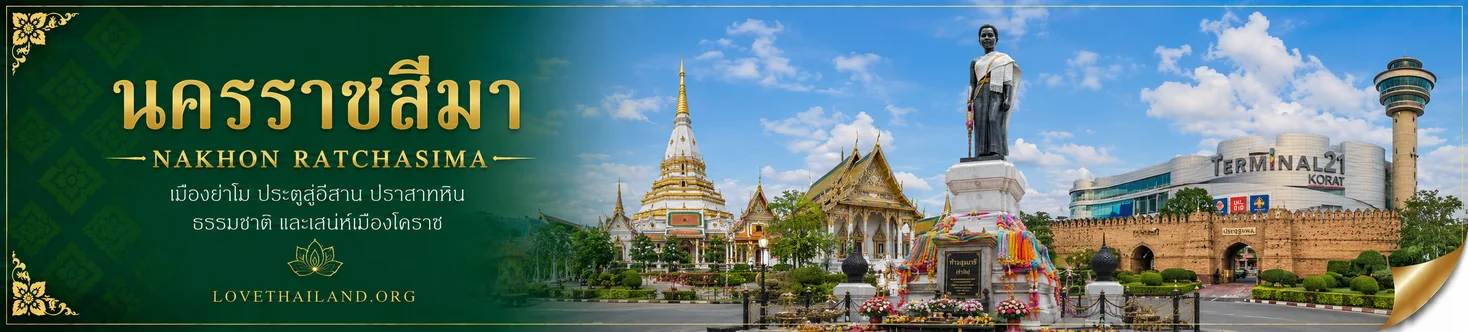
Wat Sala Loi
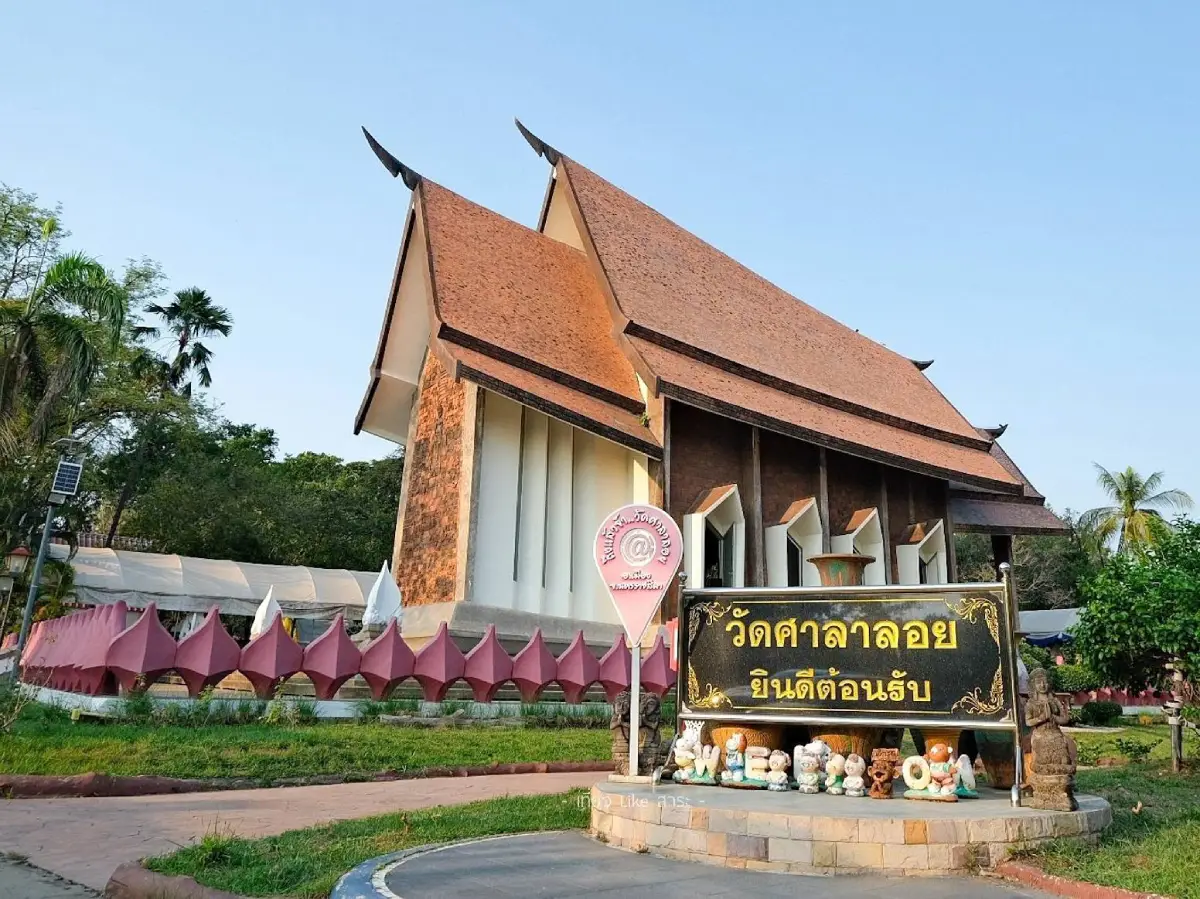
Open Days: Daily
Opening Hours: 08.00 – 18.00
Wat Sala Loi in Nakhon Ratchasima is one of Korat’s most meaningful temples, closely connected with Thao Suranari, or Ya Mo, the revered heroine of Nakhon Ratchasima. The temple stands to the northeast of the city center, about 500 meters from the ring road, near Lam Takhong, a stream that passes through the northern side of Korat before flowing toward the Mun River. The temple is known for its distinctive ordination hall shaped like a Chinese junk riding the waves, its use of Dan Kwian terracotta tiles, its white standing Buddha image in the gesture of calming the ocean, and its connection with the ashes and memory of Thao Suranari. For travelers who want to understand Korat beyond its city gate and monument, Wat Sala Loi is one of the most important cultural stops in the city.
Wat Sala Loi is ideal for visitors who want to combine worship, local history, architecture, and Thai Buddhist culture in one place. The temple is not only remembered as a temple founded by Ya Mo, but also as an architectural landmark. Its ordination hall is one of the most recognizable religious buildings in northeastern Thailand because it departs from conventional temple design while preserving Buddhist meaning. The temple can be included in the same city route as Thao Suranari Monument, Chumphon Gate, Korat City Pillar Shrine, Maha Weerawong National Museum, Wat Phra Narai Maharat, and Wat Sala Thong. This makes it especially useful for foreign travelers who have limited time in Nakhon Ratchasima but want a deep cultural experience.
The history of Wat Sala Loi begins after one of the defining events in Korat’s local memory. After Thao Suranari and her husband, Phraya Palat or Phraya Suriyadet, helped the people of Nakhon Ratchasima resist the army of Chao Anouvong of Vientiane, they returned from the battlefield at Thung Samrit. On the way back to the city, Ya Mo stopped at Tha Tako and ordered soldiers to make a raft in the shape of a pavilion. She then set an intention that if the floating pavilion raft stopped at any place along Lam Takhong, she would build a temple there as a memorial. The raft came to rest on the right bank of Lam Takhong at the site of an abandoned temple, and the present Wat Sala Loi was established there.
The year 1827, or B.E. 2370, is therefore central to the identity of Wat Sala Loi. It marks the founding of the temple as a memorial of courage, devotion, and victory. Wat Sala Loi is not simply a neighborhood temple; it is a place where local history, heroic memory, and Buddhist faith come together. Visitors walking through the temple should understand three main layers of meaning: the story of Thao Suranari, the symbolic architecture of the boat-shaped ordination hall, and the temple’s continuing role as a sacred space for the people of Korat. These layers make the temple far more significant than a quick photo stop.
The location beside Lam Takhong is essential to the temple’s name and story. The stream is part of the geography of Nakhon Ratchasima, and the legend of the floating pavilion raft transforms this waterway into a sacred narrative landscape. The word “Sala Loi” means “floating pavilion,” directly referring to the raft that Ya Mo released as a form of spiritual divination. Understanding the role of Lam Takhong allows travelers to see the temple not only as a building complex but also as a place shaped by water, movement, faith, and local memory.
The present ordination hall is the most famous feature of Wat Sala Loi. It is designed as a junk-like vessel riding the waves, a form that differs sharply from traditional Thai ordination halls. The building rises with strong rooflines and a sense of movement, as if the temple itself were a vessel crossing a symbolic sea. In Buddhist interpretation, the boat can represent the Dhamma as a means of crossing the sea of suffering toward peace and liberation. This gives the building a meaning that is both architectural and spiritual. The design invites visitors to read the entire structure as a visual teaching, not merely as an unusual shape.
The ordination hall received an outstanding pioneering religious architecture award from the Association of Siamese Architects under Royal Patronage and an award from the Sathirakoses-Nagapradipa Foundation in 1973. These honors reflect the importance of the building as a bold modern interpretation of Thai religious architecture. It demonstrates how a temple can innovate without losing its sacred function. For travelers interested in architecture, Wat Sala Loi is one of the most valuable temple visits in Korat because it shows how Buddhist symbolism, local materials, and modern design can work together.
The material that gives the ordination hall its local identity is Dan Kwian terracotta. Dan Kwian is a well-known pottery area of Nakhon Ratchasima, famous for its distinctive clay, color, and texture. By using Dan Kwian terracotta tiles to decorate the ordination hall, the temple turns a regional craft material into a sacred architectural surface. Visitors should pay attention to the warmth of the clay, the texture of the tiles, and the way local material becomes part of Buddhist storytelling. This is one of the reasons Wat Sala Loi feels deeply rooted in Korat rather than imported from another artistic tradition.
The front wall of the ordination hall depicts the episode of the Buddha subduing Mara, an important moment symbolizing spiritual victory over temptation and delusion. The rear wall depicts the Buddha descending from Tavatimsa Heaven, a story associated with the Buddha returning to the human world after teaching the Abhidhamma to his mother. These images are not simply decorative panels; they are narrative surfaces that allow visitors to read Buddhist history through sculpture and clay. The walls transform the building into a visual scripture.
The metal relief doors of the ordination hall tell the story of the Vessantara Jataka in 13 chapters. This Jataka is one of the most important narratives in Thai Buddhist culture because it presents the perfection of generosity through Prince Vessantara. Placing this story on the doors is meaningful. A door marks the transition from the outer world into a sacred space. Passing through doors that depict generosity reminds visitors of giving, sacrifice, and moral cultivation before they enter the hall to pay respect to the Buddha image.
Inside the ordination hall stands the main Buddha image, a white stucco standing Buddha in the gesture of calming the ocean. The image represents the Buddha standing at the gate of Sankassa city. Its full name is Phra Phuttha Prapat Sunthon Tham Phisan Sala Loi Phiman Worasanti Suk Munin. The gesture of calming the ocean carries a powerful meaning: the Dhamma can quiet the waves of conflict, fear, and suffering. When this image is placed inside a boat-shaped ordination hall, the symbolism becomes even stronger. The building and the Buddha image together express the idea of spiritual crossing and peace.
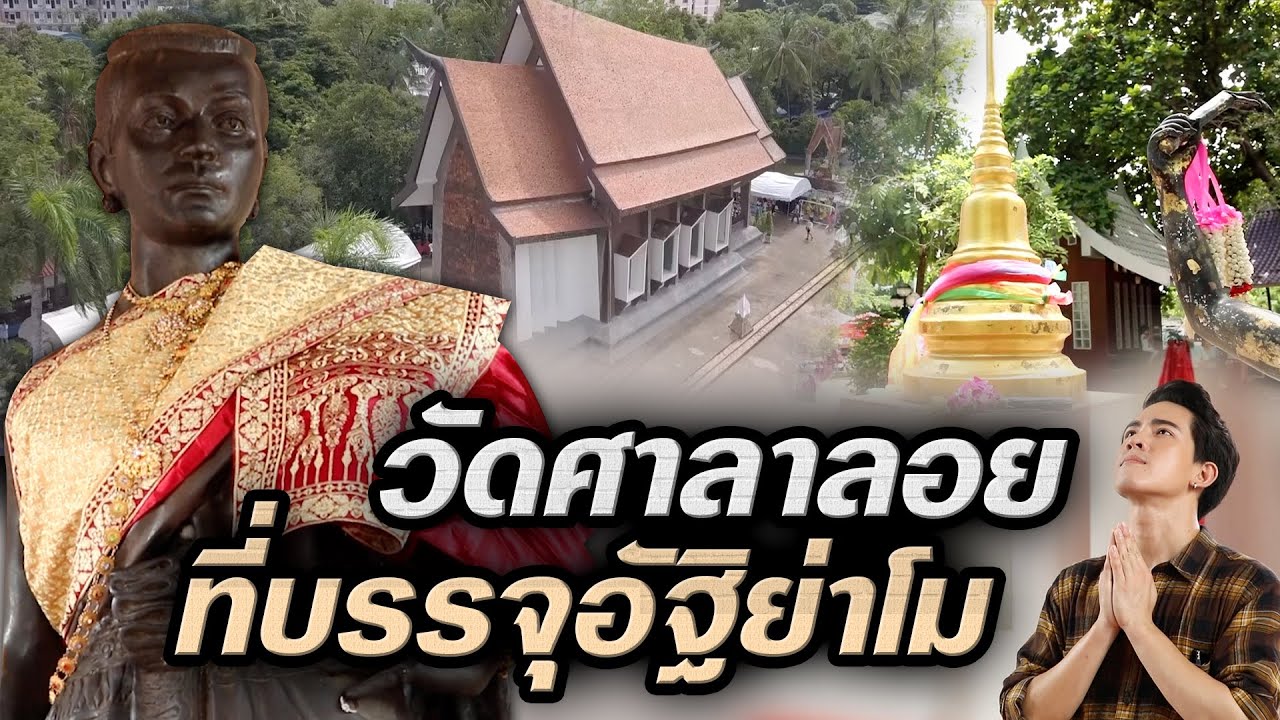
In front of the ordination hall, visitors will find a stucco statue of Thao Suranari seated with palms pressed together in the middle of a pond. This is one of the temple’s most recognizable and meaningful sights. The pond is not only a landscape element; it reinforces the story of water, floating, and the founding of the temple. The seated figure of Ya Mo creates a direct visual link between the temple, the floating pavilion legend, and the continuing devotion of Korat people to their heroine.
The ordination hall is surrounded by a boundary wall shaped with sema motifs, symbolizing the ancient city of Sema. This detail links Wat Sala Loi not only with the history of Ya Mo in the early Rattanakosin period, but also with older layers of cultural memory in the region. Travelers should walk around the ordination hall slowly rather than only photographing the front. The roofline, walls, sema forms, terracotta surfaces, and water elements all speak in the language of architecture.
Beside the ordination hall is a small stupa associated with the ashes of Thao Suranari. After Ya Mo passed away in 1852, funeral rites were performed at Wat Sala Loi, and a stupa was built to hold her ashes. This makes the temple deeply connected with the final memory of Korat’s heroine. Travelers who visit Thao Suranari Monument in the city center should also visit Wat Sala Loi to understand the fuller story. The monument represents public honor, while the temple represents sacred memory, devotion, and personal worship.
Wat Sala Loi also preserves an older ordination hall. This older structure helps visitors understand the development of the temple from an older sacred site into a modern religious landmark. The old hall is associated with a Buddha image in the Mara Vijaya posture in a local Lao-Lan Chang style. The presence of both the old and new ordination halls gives the temple an unusually rich artistic range. It brings together local Isan Buddhist art, Lan Chang influence, Thai Buddhist iconography, and modern Thai religious architecture.
The sacred importance of Wat Sala Loi extends beyond architecture. Local people come to make merit, offer food to monks, donate coffins, release animals, and pay respect at various sacred points within the temple. These practices show that Wat Sala Loi is still a living temple. It is not only a preserved heritage site or a tourist attraction. It remains a place where people seek peace of mind, express gratitude, and connect their daily lives with Buddhist merit-making.
The temple is also closely connected with the annual celebration of Thao Suranari’s victory, one of the most important events in Nakhon Ratchasima. During this period, usually from late March to early April, people in Korat come together to honor Ya Mo and remember the courage of the city’s ancestors. Wat Sala Loi becomes part of this wider landscape of remembrance. Visitors during this period can experience a stronger local atmosphere, while those who prefer quiet reflection should visit in the morning on a regular weekday.
For foreign visitors, Wat Sala Loi is a compact but rich introduction to Thai culture. In one temple, travelers can learn about a local heroine, a founding legend tied to a river, a symbolic boat-shaped ordination hall, Dan Kwian terracotta craft, Buddhist narrative art, the Vessantara Jataka, and a standing Buddha image in the gesture of calming the ocean. When explained clearly, Wat Sala Loi is not merely a beautiful temple. It is a living cultural text that tells the story of Korat through faith, architecture, water, and memory.
A complete visit should begin at the front of the ordination hall, where the overall form of the boat, the pond, and the statue of Thao Suranari can be seen together. Visitors can then observe the front wall depicting the Buddha subduing Mara, walk around to the rear wall showing the Buddha descending from Tavatimsa Heaven, and then enter the hall to pay respect to the white standing Buddha image. After that, they should visit the small stupa connected with Ya Mo, the old ordination hall, and the merit-making areas. This route helps the temple’s story unfold in a logical order.
The best time to visit is in the morning or late afternoon. The temperature is more comfortable, and the light enhances the texture and warm color of the terracotta tiles. Morning is best for quiet worship, while late afternoon is good for photography. Visitors should always remember that this is a sacred site. Do not climb the boundary wall, touch artworks, pose disrespectfully with Buddha images, or disturb monks and worshippers. Responsible travel is essential in a living temple.
Proper temple etiquette is important at Wat Sala Loi. Visitors should dress modestly, with shoulders and knees covered. Shoes should be removed before entering sacred buildings. Voices should be kept low. Buddha images, metal relief doors, terracotta decorations, and sacred objects should not be touched unnecessarily. These actions show respect for both religion and heritage. They also help preserve the temple’s art for future visitors.
There is no commercial-style admission fee at Wat Sala Loi. Visitors can enter during opening hours and pay respect without buying a ticket. Donations may be made voluntarily at designated points. This distinction is important for foreign travelers: a Thai temple is primarily a religious space, not an attraction built around ticket sales. A donation is an act of merit-making and support for the temple according to personal faith.
Getting There is easy from central Nakhon Ratchasima. Travelers can use the ring road or the Nakhon Ratchasima-Chok Chai road, then turn into the temple area for about 500 meters. Those driving can enter Wat Sala Loi, Thao Sura Road, or the plus code X4J8+6JP into a navigation app. From Thao Suranari Monument, the trip is short, as the temple is only a few kilometers from the city center. Morning and evening traffic in Korat can be busy, so allowing extra time is recommended.
Travelers without a private car can take a local songthaew, tuk-tuk, taxi, or ride-hailing service from the city center or bus station. Some local songthaew routes pass near the temple, but for foreign travelers and first-time visitors, a taxi or ride-hailing service is usually the easiest option because the destination can be entered directly. After visiting Wat Sala Loi, it is convenient to continue to Thao Suranari Monument, Chumphon Gate, or restaurants in central Korat.
The main areas inside the temple can be understood as several zones: the boat-shaped ordination hall, the main Buddha image area, the pond and Thao Suranari statue, the stupa associated with Ya Mo’s ashes, the old ordination hall, merit-making areas, sacred worship points, and the surrounding temple grounds. Knowing these zones helps visitors move through the temple with purpose and understand how each area contributes to the whole story.
A typical visit takes about 45 minutes to 1.5 hours. A short visit is enough for worship and photography, but travelers interested in architecture, Buddhist stories, local materials, and the history of Ya Mo should allow more time. Walking slowly reveals details that are easy to miss: the color of the terracotta, the sema-shaped boundary wall, the symbolic relationship between the pond and the boat-shaped building, and the narrative meaning of each wall.
Wat Sala Loi is also an excellent place to understand Korat’s local identity through Dan Kwian ceramics. Dan Kwian is one of Nakhon Ratchasima’s best-known craft traditions, and its use in the ordination hall turns local clay into sacred art. Travelers interested in craft and design can connect a visit to Wat Sala Loi with broader learning about Dan Kwian pottery. The temple shows how local material can become part of modern Thai Buddhist architecture.
For those following the story of Thao Suranari, Wat Sala Loi should be visited together with Thao Suranari Monument. The monument in the city center represents public honor and civic pride, while Wat Sala Loi represents sacred memory, the floating pavilion legend, and the personal devotion of local people. Visiting both places gives a more complete understanding of Ya Mo and the cultural identity of Nakhon Ratchasima.
Wat Sala Loi can be visited throughout the year. The cool season offers the most comfortable weather. In the hot season, morning or late afternoon visits are preferable. During the rainy season, the pond and greenery around the temple can look especially fresh, but visitors should watch for slippery paths. Families with children should take care around the pond, while elderly visitors should choose comfortable walking shoes and avoid the hottest part of the day.
In summary, Wat Sala Loi in Nakhon Ratchasima is one of Korat’s most valuable cultural and spiritual sites. It was founded in 1827 by Thao Suranari and her husband after the victory over Chao Anouvong’s army. Its name comes from the floating pavilion raft released along Lam Takhong. Its boat-shaped ordination hall won architectural recognition in 1973 and is decorated with Dan Kwian terracotta tiles, Buddhist narrative panels, metal relief doors, and a white standing Buddha image in the gesture of calming the ocean. The temple is also associated with the ashes of Ya Mo and remains deeply respected by the people of Korat. For both Thai and foreign travelers, Wat Sala Loi is a place where history, faith, architecture, and local identity meet in a clear and memorable way.
| Name | Wat Sala Loi, Nakhon Ratchasima |
| Location | Thao Sura Road, Nai Mueang Subdistrict, Mueang Nakhon Ratchasima District, Nakhon Ratchasima Province |
| Address | 205 Soi 1, Thao Sura Road, Nai Mueang, Mueang Nakhon Ratchasima, Nakhon Ratchasima 30000, Thailand |
| Coordinates | 14.97999, 102.11666 |
| Highlights | Boat-shaped ordination hall, Dan Kwian terracotta decoration, white standing Buddha image in the gesture of calming the ocean, Thao Suranari statue in the pond, and a stupa associated with Ya Mo’s ashes |
| History | Founded in 1827 by Thao Suranari and her husband after the victory over Chao Anouvong’s army. The temple is linked with the legend of a pavilion-shaped raft floating along Lam Takhong |
| Name Origin | The name means “Floating Pavilion Temple” and comes from the legend of Ya Mo releasing a pavilion-shaped raft to determine where a memorial temple should be built |
| Distinctive Features | Thai applied-style ordination hall shaped like a junk riding the waves, awarded for pioneering religious architecture in 1973 and decorated with local Dan Kwian terracotta tiles |
| Travel Information | Located northeast of central Nakhon Ratchasima, about 500 meters from the ring road. Accessible by private car, taxi, tuk-tuk, local songthaew, or ride-hailing service |
| Current Status | Active and highly respected Buddhist temple in Nakhon Ratchasima, closely associated with Thao Suranari |
| Open Days | Daily |
| Opening Hours | 08.00 – 18.00 |
| Fees | No admission fee; voluntary donations may be made according to personal faith |
| Facilities | Ordination hall, worship areas, pond, temple halls, merit-making areas, resting areas, and parking space within the temple grounds |
| Main Areas / Zones | Boat-shaped ordination hall Main Buddha image in the gesture of calming the ocean Pond and Thao Suranari statue in front of the ordination hall Stupa associated with Thao Suranari’s ashes Old ordination hall Merit-making and sacred worship areas Lam Takhong-side temple area |
| Abbot / Caretaker | Phra Mongkhon Rattana Suthee, District Ecclesiastical Chief of Prathai (Dhammayut) |
| Main Contact Number | 083-461-2999 |
| Nearby Tourist Attractions | 1. Wat Phra Narai Maharat, about 1.1 km 2. Nakhon Ratchasima City Museum, about 1.4 km 3. Chao Por Chang Puek Shrine, about 1.4 km 4. Thao Suranari Monument, about 2.1 km 5. Chumphon Gate, about 2.1 km 6. Maha Weerawong National Museum, about 2.3 km |
| Nearby Restaurants | 1. Yim Cafe Wat Sala Loi, about 0.1 km, Tel. 065-198-2249 2. Kin Laew Ruay Cafe Wat Sala Loi, about 0.1 km, Tel. 090-229-7195 3. Bandai Cafe, about 0.3 km, Tel. 086-865-7050 4. Yenta4 Salaloi, about 0.3 km, Tel. 085-766-9900 5. Khai Uan Khon Tup & Salaloy Coffee Wat Sala Loi, about 0.4 km, Tel. 095-451-5352 6. Sala Loi Lon Phung Jan Yai, about 0.7 km, Tel. 093-820-2481 |
| Nearby Accommodations | 1. Thai Inter Korat Hotel, about 1.8 km, Tel. 044-247-700 2. Punjadara Hotel, about 2.0 km, Tel. 044-257-567 3. Korat Hotel, about 2.0 km, Tel. 044-341-345 4. Siri Hotel, about 2.4 km, Tel. 086-469-5630, 044-341-822 5. Chaophaya Inn, about 2.6 km, Tel. 044-260-555 6. Hermitage Hotel & Resort, about 2.8 km, Tel. 044-247-444, 087-712-2137 |
Frequently Asked Questions (FAQ)
Q: Where is Wat Sala Loi located?
A: Wat Sala Loi is located on Thao Sura Road in Nai Mueang Subdistrict, Mueang Nakhon Ratchasima District, Nakhon Ratchasima Province. It lies northeast of the city center near Lam Takhong.
Q: What are the opening days and hours of Wat Sala Loi?
A: Wat Sala Loi is open daily from 08.00 to 18.00. Morning and late afternoon are the most comfortable times for worship and photography.
Q: Is there an admission fee at Wat Sala Loi?
A: There is no admission fee. Visitors may make voluntary donations at designated merit-making points inside the temple.
Q: What is Wat Sala Loi famous for?
A: Wat Sala Loi is famous for its boat-shaped ordination hall, Dan Kwian terracotta decoration, Buddhist narrative panels, metal relief doors depicting the Vessantara Jataka, the white standing Buddha image, and its connection with Thao Suranari.
Q: How is Wat Sala Loi connected with Thao Suranari?
A: The temple was founded by Thao Suranari and her husband in 1827 after the victory over Chao Anouvong’s army. Its name comes from the legend of a pavilion-shaped raft released along Lam Takhong to determine the temple site.
Q: What is the main Buddha image inside Wat Sala Loi?
A: The main Buddha image is a white stucco standing Buddha in the gesture of calming the ocean, named Phra Phuttha Prapat Sunthon Tham Phisan Sala Loi Phiman Worasanti Suk Munin.
Q: How can travelers get to Wat Sala Loi?
A: Travelers can reach the temple by private car, taxi, tuk-tuk, local songthaew, or ride-hailing service. It is only a short distance from central Korat and can be combined with Thao Suranari Monument and Chumphon Gate.
Q: What should foreign visitors know before visiting Wat Sala Loi?
A: Visitors should dress modestly, remove shoes before entering the ordination hall, keep their voices low, avoid touching sacred objects, and take time to understand the symbolism of the boat-shaped hall, Dan Kwian terracotta, and Thao Suranari’s story.
 Category: ●Places of Worship
 Group: ●Temple
Last Update : 3 MonthAgo
 Last Update : 3 MonthAgo
 Click to Access the Navigation Map GPS
Wat Sala Loi Map
Recommend

 Art, Culture and Heritage
 Historical Sites and Monuments(20)
 Landmarks and Memorials(5)
 Art, Craft Centres, Tradition(7)
 Museums(6)
 Art Gallery(1)
 Educational Places
 Educational Gardens, Farm(4)
Temple(29)
 Mosque(1)
 Other Sacred Sites(6)
 Research and Development
 Royal Project(3)
 Suburban Living
 Village, Community(6)
 Local Market(4)
 Floating Market(1)
 Nature and Wildlife
 National Parks and Marine Reserves(3)
 Mountain (Doi)(5)
 Dam, Reservoir, Lake(8)
 Waterfalls(9)
 Hot Springs(1)
 Caves(2)
 Flower Field(1)
 River, Canal(8)
 Bays and Beaches(2)
 Other natural attractions(3)
 Entertainment and Agricultural
 Zoos and Aquariums(2)
 Animal camps and shows(1)
 Farms, Parks and Ecotourism(21)
 Waterpark(4)
 Outdoor and Adventure Activities(6)
 Shopping
 Shopping and Night Market(2)
 Travel Articles, Recipes
 Travel Review, Food Review(6)


