
lovethailand home >Northeastern Travel Attractions >Nakhon Ratchasima Travel Attractions >Pak Thong Chai >Kasem Sap > Wat Pa Nang Hoen
TL;DR: Wat Pa Nang Hoen is located at Ban Kao Nang Hoen, Mu 5, Kasem Sap Subdistrict, Pak Thong Chai District, Nakhon Ratchasima Province, open Daily, hours 06.00 – 18.00.
Wat Pa Nang Hoen
Open Days: Daily
Opening Hours: 06.00 – 18.00
Wat Pa Nang Hoen, officially known as Wat Monmawat, is located in Ban Kao Nang Hoen, Mu 5, Kasem Sap Subdistrict, Pak Thong Chai District, Nakhon Ratchasima Province. This rural Buddhist temple is one of the most distinctive spiritual destinations in Pak Thong Chai, especially for travelers who appreciate peaceful temple landscapes, unusual religious architecture, forested surroundings, and places that combine worship with meditation. The temple is widely recognized for its beautiful water-surrounded chedi, the large reclining Buddha image in a wooded setting, an ordination hall located on a raised earthen mound, and a calm atmosphere that makes the entire temple feel suitable for reflection and Dhamma practice.
The temple is best known locally as Wat Pa Nang Hoen, a name that has remained familiar among villagers and visitors. Its official name, Wat Monmawat, is connected with the people who donated the land for the establishment of the temple. For foreign travelers, this dual naming is useful to know because maps, local residents, and online sources may use different versions of the name. Both names refer to the same temple in Kasem Sap Subdistrict of Pak Thong Chai District. The place is not a large commercial tourist attraction, but a living Buddhist temple with sacred areas, meditation spaces, local religious activity, and natural surroundings that encourage visitors to slow down.
Wat Pa Nang Hoen was established in 1970 under the Mahanikaya order and received its official consecrated boundary on 9 July 2002. The site was originally an old burial ground where monks later came to stay. Local villagers began calling it Wat Pa Nang Hoen. Later, Pu Yai Mon and Nang Ma Yamsamrong donated the land for the construction of the temple, and the ecclesiastical authorities approved the official name Wat Monmawat. This origin gives the temple a meaningful community history. A place once associated with impermanence and death was transformed into a Buddhist temple devoted to merit-making, meditation, worship, and the cultivation of mindfulness.
This history is important because it adds spiritual depth to the temple landscape. In Buddhist thought, a former cemetery can become a powerful place for reflection on impermanence. The transformation of the land into a peaceful temple suggests the movement from fear toward understanding, from attachment toward contemplation, and from ordinary community land toward a sacred Buddhist space. Visitors who know this background will see Wat Pa Nang Hoen not only as a beautiful temple, but as a place where local faith has reshaped the meaning of the land itself.
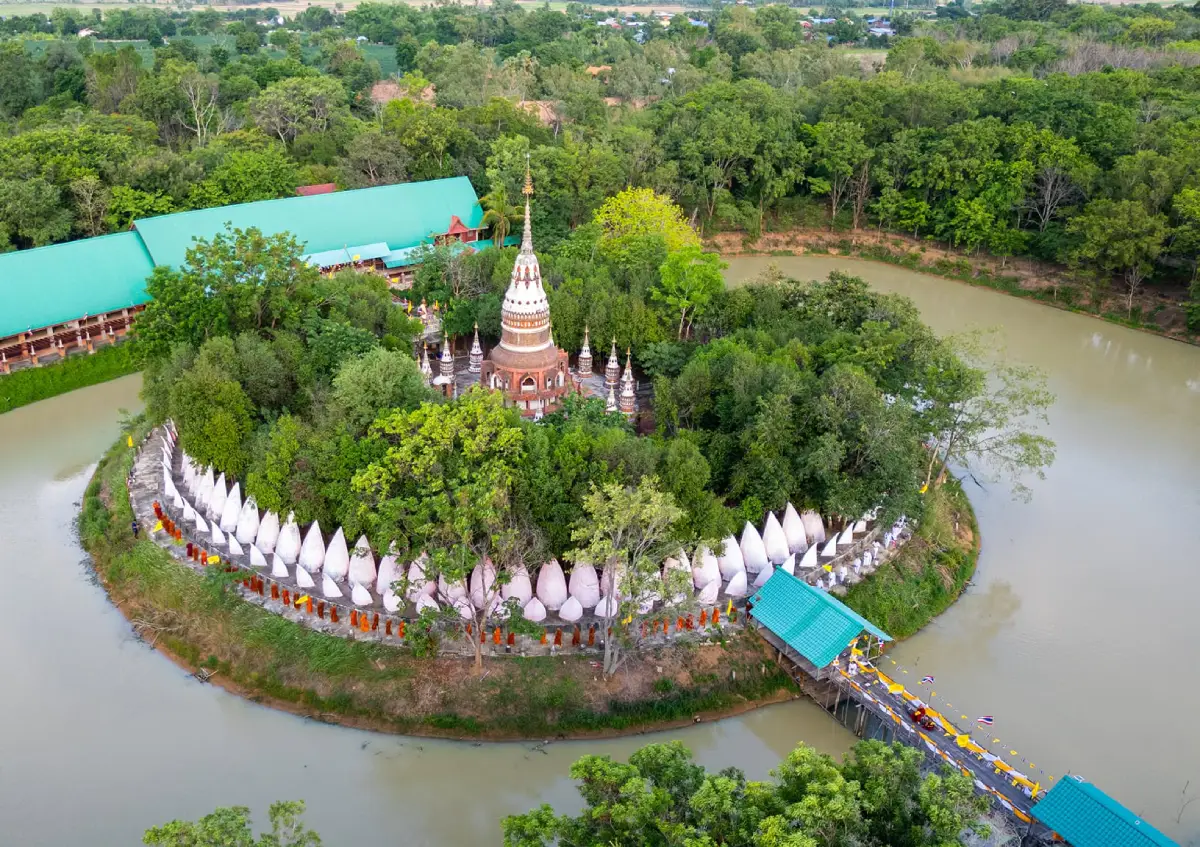
The most visually striking feature of the temple is the large chedi standing in the middle of a pond. Known as Phra Phuttha Solot Chedi, this water-surrounded structure is both graceful and symbolic. The chedi is enclosed by a lotus-petal-style railing, making the whole area feel like a sacred island set apart from the ordinary world. When the water is still, the reflection of the chedi creates one of the most memorable views in the temple. This makes it an excellent place for quiet photography, but it should always be visited respectfully because the chedi is not merely decorative. It is a sacred structure used for worship and meditation.
Inside the chedi, Buddha relics are enshrined. This gives the building major religious significance for Buddhist devotees. The chedi is also used as a space for meditation and Dhamma practice. The pond surrounding it helps create a natural boundary of stillness, encouraging visitors to move more slowly and enter the sacred area with a calmer mind. For travelers from outside Thailand, this is a helpful example of how Thai Buddhist architecture often uses water, elevation, enclosure, and symbolism to guide the emotional and spiritual experience of visitors.
Another major sacred feature is the large reclining Buddha image, or Phra Phuttha Parinibbana, located among trees. A reclining Buddha is associated with the Buddha’s final passing into Parinibbana and carries deep meaning in Buddhist culture. It reminds visitors of impermanence, calm acceptance, and the completion of the Buddha’s teaching mission. At Wat Pa Nang Hoen, the reclining Buddha stands out because it is set in a forested environment rather than in a crowded urban shrine. This gives the image a gentle and contemplative presence. Visitors often feel that the surrounding trees make the scene quieter and more meaningful.
The ordination hall, or ubosot, is located on a raised earthen mound. This position gives the building a sense of importance within the temple grounds. In Thai Buddhist tradition, the ubosot is one of the most sacred buildings in a temple because it is used for important monastic ceremonies such as ordination and formal acts of the Sangha. The fact that the temple received its consecrated boundary in 2002 means that this sacred space has official ritual significance. For visitors, the raised position of the ubosot also creates a visual transition from ordinary walking areas into a more sacred architectural zone.
The temple grounds include several important structures and facilities, such as the ubosot, sermon hall, dining hall, meditation hall, monks’ residences, bell tower, funeral pavilion, and crematorium. These facilities show that Wat Pa Nang Hoen is a fully functioning rural temple. It serves the local community not only for worship, but also for merit-making, funerary rites, Dhamma listening, monastic activities, and meditation practice. This living function is important for understanding rural Thai temples. They are not museums; they remain closely connected to the full cycle of community life.
The atmosphere of Wat Pa Nang Hoen is one of its strongest qualities. The temple is surrounded by greenery and has a calm forest-like feeling. Shady trees, open temple grounds, and water elements create a peaceful setting suitable for walking slowly, sitting quietly, and observing temple life with respect. Visitors who prefer quiet spiritual travel will likely appreciate this temple more than those looking for entertainment or busy tourist activity. Its beauty is subtle, grounded in stillness, natural shade, and sacred symbolism.
Wat Pa Nang Hoen is also suitable for meditation-oriented visitors. The temple has a meditation hall, and the interior of the chedi is also associated with meditation practice. The surrounding forest atmosphere supports concentration and calmness. Even travelers who do not practice meditation formally can benefit from the environment by spending time quietly near the pond, walking around the chedi, or paying respect to the reclining Buddha. The temple encourages a slower form of travel, where the purpose is not to collect many destinations but to experience one place with attention.
The temple is associated with Phra Khru Phattharathammakon, also known as Luang Pu Phat, the current abbot. He is respected by followers and is connected with meditation work and Buddhist practice in Nakhon Ratchasima. The presence of a respected teacher adds another layer to the temple’s identity. Wat Pa Nang Hoen is not only known for its scenic chedi and reclining Buddha, but also for its role as a practice-oriented temple guided by monastic leadership.
Another notable aspect of the temple is its connection with the Saeng Thian Song Thang Project office. The name of the project suggests the idea of candlelight guiding the way, a meaningful symbol for wisdom, moral support, and the spread of goodness. This role shows how Thai temples can function beyond ritual worship. They may also serve as centers for social, educational, and moral activities within the community. For foreign travelers, this is an important insight: temples in Thailand often operate as community anchors, not only as places for monks and religious ceremonies.
Wat Pa Nang Hoen is suitable for several types of visitors. Buddhist devotees can pay respect to the Buddha relics inside the chedi and the large reclining Buddha image. Cultural travelers can observe a rural temple that has developed from local faith and community donation. Photography enthusiasts can capture the chedi reflected in water, the raised ubosot, and the quiet forest atmosphere. Meditation visitors can find a calm place to pause and reflect. Families can also visit, provided children are guided to behave respectfully in sacred areas.
The temple is located in Kasem Sap Subdistrict, about 11 km from central Pak Thong Chai District. Private car or rental vehicle is the most convenient way to visit. From Nakhon Ratchasima city, travelers can take Highway 304 toward Pak Thong Chai, then continue along local routes toward Kasem Sap Subdistrict and Ban Kao Nang Hoen. Some sections are rural roads, so visitors should check a map before departure, especially if traveling late in the day. The route can be combined with other cultural attractions in Pak Thong Chai, making the temple a meaningful stop on a wider local itinerary.
Getting There can begin from the Thao Suranari Monument area or central Nakhon Ratchasima. Take Highway 304 toward Pak Thong Chai District. After reaching the Lam Phra Phloeng intersection area, continue toward the Pak Thong Chai–Chok Chai route and local roads leading through Ban Nok Ok and Kasem Sap Subdistrict. Because the temple is located away from the main highway, navigation apps and local signs are useful. Allow enough time to reach the temple calmly so the visit does not feel rushed.
The best times to visit are early morning and late afternoon. In the morning, the air is cooler and the temple is quieter. The chedi reflected in the pond can look especially beautiful when the water is still. In the late afternoon, softer light gives the temple grounds a more atmospheric character, especially around the water and trees. Midday visits are possible, but travelers should prepare for heat and bring water. Comfortable walking shoes are recommended because the temple grounds include several areas worth exploring.
Visitors should observe proper temple etiquette. Dress modestly, speak softly, avoid climbing on religious structures, and do not touch sacred objects unnecessarily. Shoes should be removed where required, especially in shrine or meditation areas. Photography should be done respectfully, particularly around the Buddha relics, reclining Buddha image, and meditation spaces. If monks or practitioners are present, avoid photographing them closely without permission. The temple’s peaceful character depends on visitors helping to preserve its atmosphere.
For families, Wat Pa Nang Hoen can be an educational temple visit. Children can learn about the meaning of a chedi, the symbolism of the reclining Buddha, the role of an ubosot, and the importance of behaving respectfully in a Buddhist place. The water-surrounded chedi and forested setting make the temple visually engaging, while the quiet atmosphere provides a good opportunity to teach mindfulness and cultural awareness. Adults should supervise children carefully, especially near the pond and sacred areas.
For art and architecture enthusiasts, the temple should be viewed as an integrated landscape. The chedi in the pond creates a sense of sacred separation. The ubosot on the mound gives vertical emphasis to the ritual center. The reclining Buddha in the wooded area links nature with the Buddhist teaching on impermanence. The meditation hall and shaded grounds show the temple’s role as a place for practice. These elements work together to make Wat Pa Nang Hoen more meaningful than a single photo spot.
In the context of the local community, Wat Pa Nang Hoen functions as a spiritual anchor for Kasem Sap Subdistrict. Local people use the temple for merit-making, funerary ceremonies, religious observances, and community activities. The presence of a crematorium within the temple grounds reflects the important role Thai temples play across the full cycle of life. They are places where people celebrate merit, seek guidance, remember loved ones, and confront the reality of impermanence. This community role gives the temple a depth that casual visitors may not notice at first glance.
Wat Pa Nang Hoen can be included in a cultural route through Pak Thong Chai. After visiting the temple, travelers may continue to Wat Pathum Khongkha, Pak Thong Chai Silk Market, Nakhon Chai Burin Silk Center, Wat Na Phra That, or Lam Phra Phloeng Dam. This route combines temple heritage, local silk culture, rural scenery, and religious architecture. It is especially suitable for travelers who want to understand Pak Thong Chai beyond a quick stop on the highway.
Accommodation can be arranged in Pak Thong Chai town or along nearby routes, depending on the travel plan. Staying near Pak Thong Chai is convenient for temple and silk-related visits, while staying farther east may suit travelers continuing toward Lam Phra Phloeng Dam or Wang Nam Khiao. Restaurants and cafes are more readily available in the town area, so it is practical to plan meals before or after the temple visit rather than expecting many tourist facilities immediately at the temple.
Wat Pa Nang Hoen is therefore a valuable destination for travelers seeking a quiet Buddhist temple in Nakhon Ratchasima. Its importance lies in the beautiful water-surrounded chedi, the Buddha relics, the large reclining Buddha image, the raised ubosot, the forested atmosphere, its community history, and its connection with meditation and moral work. For foreign travelers exploring Pak Thong Chai, this temple offers a calm and meaningful encounter with rural Thai Buddhism, local faith, and sacred landscape design.
| Name | Wat Monmawat (Wat Pa Nang Hoen) |
| Location | Ban Kao Nang Hoen, Mu 5, Kasem Sap Subdistrict, Pak Thong Chai District, Nakhon Ratchasima Province |
| Address | Kasem Sap Subdistrict, Pak Thong Chai District, Nakhon Ratchasima 30150, Thailand |
| Coordinates | 14.66407, 102.0542 |
| Highlights | Water-surrounded Phra Phuttha Solot Chedi, large reclining Buddha image, ubosot on a raised mound, shaded forest atmosphere, and meditation spaces |
| History | Established in 1970 under the Mahanikaya order and officially granted its consecrated boundary on 9 July 2002. The land was originally an old burial ground before being donated for temple construction |
| Name Origin | The local name Wat Pa Nang Hoen comes from the old local area name. The official name Wat Monmawat honors Pu Yai Mon and Nang Ma Yamsamrong, who donated land for the temple |
| Distinctive Features | A peaceful rural temple with a large chedi in the middle of a pond, lotus-petal-style enclosure, Buddha relics, and areas for meditation practice |
| Travel Information | From Nakhon Ratchasima city, take Highway 304 toward Pak Thong Chai, then continue through local roads toward Ban Nok Ok and Kasem Sap Subdistrict |
| Current Status | Open for worship, merit-making, visits to the water-surrounded chedi, respect to the reclining Buddha, and meditation activities where appropriate |
| Open Days | Daily |
| Opening Hours | 06.00 – 18.00 |
| Facilities | Ubosot, sermon hall, dining hall, meditation hall, monks’ residences, bell tower, merit-making pavilion, crematorium, and shaded temple grounds |
| Main Areas / Zones | Phra Phuttha Solot Chedi in the pond, Buddha relics inside the chedi, large reclining Buddha image, ubosot on a raised mound, meditation hall, Saeng Thian Song Thang Project office, and shaded forest areas |
| Abbot / Caretaker | Phra Khru Phattharathammakon, also known as Luang Pu Phat |
| Local Administrative Contact | Kasem Sap Subdistrict Administrative Organization, Tel. 044-009892 |
| Nearby Tourist Attractions | 1. Wat Pathum Khongkha (Wat Nok Ok), about 10 km 2. Pak Thong Chai Silk Market, about 12 km 3. Nakhon Chai Burin Silk Center, about 13 km 4. Wat Na Phra That (Wat Taku), about 15 km 5. Lam Phra Phloeng Dam, about 36 km |
| Nearby Restaurants | 1. Wan Wang Cafe Pak Thong Chai, about 12 km, Tel. 086-309-1932 2. Mee Korat Ha Dao Pak Thong Chai, about 13 km, Tel. 084-887-7725 3. Krua Phi Ka Nong Pak Thong Chai, about 14 km, Tel. 082-536-9215, 090-918-6555 4. Coffee And Food Shops In Mueang Pak Area, about 12 km 5. Local Restaurants Around Ban Nok Ok And Kasem Sap, about 5 km |
| Nearby Accommodations | 1. Mulberry House Korat, about 14 km 2. Chao At Hotel, about 16 km, Tel. 085-015-1199 3. Bosswin Home Resort, about 17 km 4. Korat Country Club Golf & Resort, about 30 km 5. The Frog Cabana, about 45 km |
Frequently Asked Questions (FAQ)
Q: What is the official name of Wat Pa Nang Hoen?
A: The official name is Wat Monmawat. The temple is more commonly known locally as Wat Pa Nang Hoen.
Q: What are the opening hours of Wat Pa Nang Hoen?
A: The temple is open daily from 06.00 to 18.00.
Q: What is the main highlight of Wat Pa Nang Hoen?
A: The main highlight is the beautiful Phra Phuttha Solot Chedi standing in the middle of a pond, together with the large reclining Buddha image and peaceful forest atmosphere.
Q: Why is the water-surrounded chedi important?
A: The chedi enshrines Buddha relics and serves as a sacred space for worship, meditation, and quiet Dhamma practice.
Q: Who should visit Wat Pa Nang Hoen?
A: The temple is suitable for Buddhist devotees, cultural travelers, photographers, meditation visitors, and anyone looking for a quiet rural temple in Pak Thong Chai.
Q: How can travelers get to Wat Pa Nang Hoen?
A: From Nakhon Ratchasima city, take Highway 304 toward Pak Thong Chai, then continue through local roads toward Ban Nok Ok and Kasem Sap Subdistrict.
Q: How is Wat Pa Nang Hoen connected with the Saeng Thian Song Thang Project?
A: The temple is the location of the Saeng Thian Song Thang Project office, reflecting its role in connecting Buddhist values, moral development, and community-oriented work.
Q: What nearby places can be visited on the same trip?
A: Nearby places include Wat Pathum Khongkha, Pak Thong Chai Silk Market, Nakhon Chai Burin Silk Center, Wat Na Phra That, and Lam Phra Phloeng Dam.
 Category: ●Places of Worship
 Group: ●Temple
Last Update : 3 MonthAgo
 Last Update : 3 MonthAgo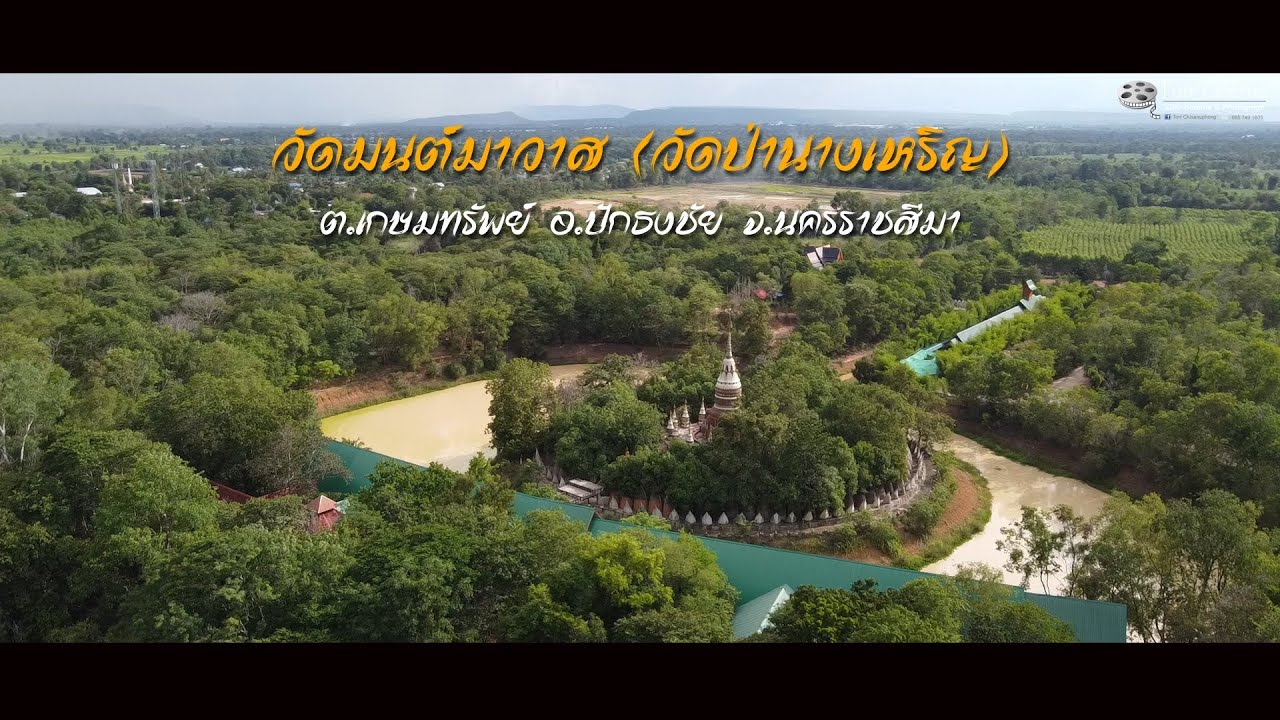
 Click to Access the Navigation Map GPS
Wat Pa Nang Hoen Map
Recommend

 Art, Culture and Heritage
 Historical Sites and Monuments(20)
 Landmarks and Memorials(5)
 Art, Craft Centres, Tradition(7)
 Museums(6)
 Art Gallery(1)
 Educational Places
 Educational Gardens, Farm(4)
Temple(29)
Educational Gardens, Farm(4)
Temple(29)
 Mosque(1)
 Other Sacred Sites(6)
 Research and Development
 Royal Project(3)
 Suburban Living
 Village, Community(6)
 Local Market(4)
 Floating Market(1)
 Nature and Wildlife
 National Parks and Marine Reserves(3)
 Mountain (Doi)(5)
 Dam, Reservoir, Lake(8)
 Waterfalls(9)
 Hot Springs(1)
 Caves(2)
 Flower Field(1)
 River, Canal(8)
 Bays and Beaches(2)
 Other natural attractions(3)
 Entertainment and Agricultural
 Zoos and Aquariums(2)
 Animal camps and shows(1)
 Farms, Parks and Ecotourism(21)
 Waterpark(4)
 Outdoor and Adventure Activities(6)
 Shopping
 Shopping and Night Market(2)
 Travel Articles, Recipes
 Travel Review, Food Review(6)


