
lovethailand home >Northeastern Travel Attractions >Nakhon Ratchasima Travel Attractions >Pak Thong Chai >Sakae Rat > Wat Khao Takrut Rang
TL;DR: Wat Khao Takrut Rang is located at Around Mu 5, Ban Khlong Toei, Sakae Rat Subdistrict, Pak Thong Chai District, Nakhon Ratchasima Province, with part of the mountain, open Daily, hours 08.00 – 17.00.
Wat Khao Takrut Rang
Open Days: Daily
Opening Hours: 08.00 – 17.00
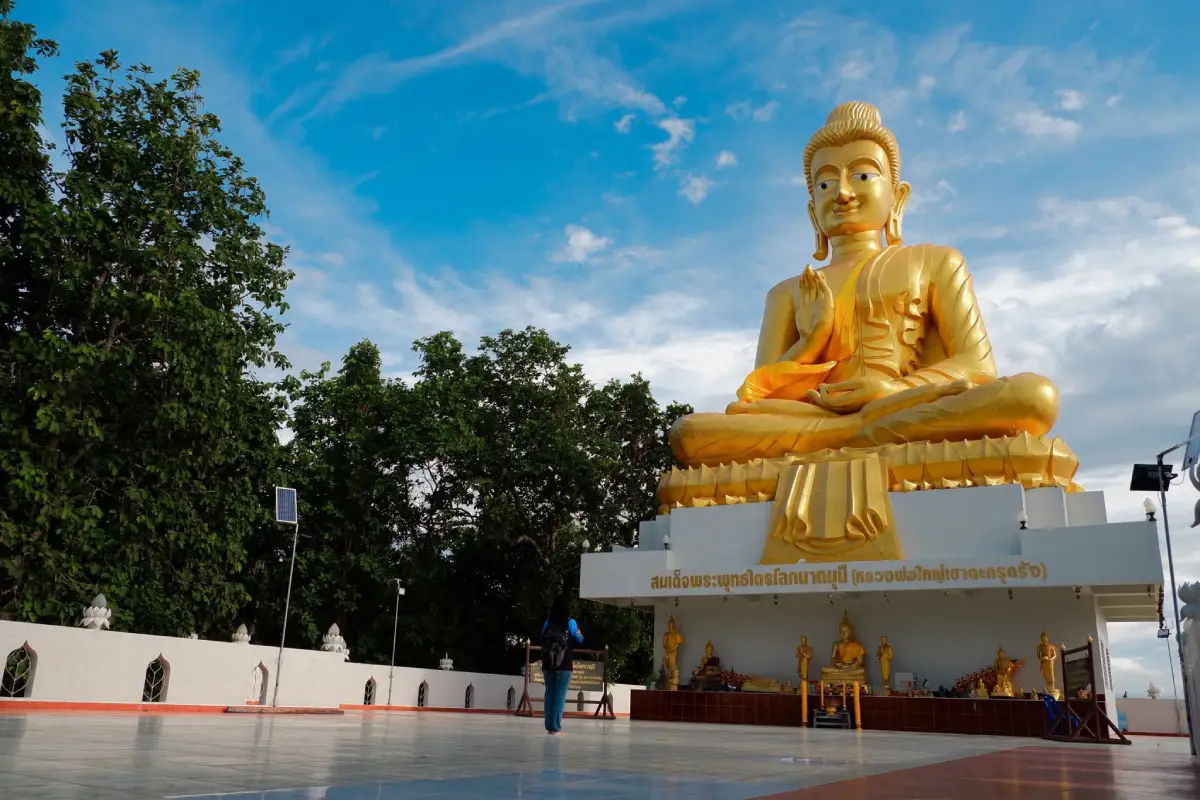
Wat Khao Takrut Rang is a hilltop Buddhist temple and meditation site located around Mu 5, Ban Khlong Toei, Sakae Rat Subdistrict, Pak Thong Chai District, Nakhon Ratchasima Province. The temple landscape also connects with the mountain area of Udom Sap Subdistrict in Wang Nam Khiao District, making it a distinctive religious destination on the natural borderland between Pak Thong Chai and Wang Nam Khiao. Set within a conservation forest and surrounded by mountains, farmland, and rural scenery, Wat Khao Takrut Rang is known for its peaceful atmosphere, panoramic views, and the large Buddha image called Somdet Phra Phuttha Trailokanat Muni, widely known by local devotees as Luang Pho Yai Khao Takrut Rang.
The temple was established in 1994 as a local Buddhist temple and a place for meditation practice. Unlike many urban temples, Wat Khao Takrut Rang is shaped by its mountain environment. Visitors arriving at the temple immediately sense the shift from ordinary rural roads to a quieter spiritual landscape. The air is fresher, the slopes are greener, and the soundscape is calmer. This natural setting is central to the temple’s identity. It supports meditation, merit-making, and quiet reflection, while also giving travelers one of the most scenic religious viewpoints in this part of Nakhon Ratchasima.
The most important landmark at Wat Khao Takrut Rang is the large Buddha image, Somdet Phra Phuttha Trailokanat Muni, or Luang Pho Yai Khao Takrut Rang. The image is placed prominently on the mountain and can be seen from a distance, especially by travelers using Highway 304 between Pak Thong Chai and Wang Nam Khiao. For local Buddhists, the large Buddha is not merely a visual landmark. It represents calmness, protection, spiritual confidence, and the presence of Buddhist faith within the mountain landscape. For travelers, the image becomes the focal point of the visit and the main reason to climb up to the temple area.
The name Khao Takrut Rang is closely tied to the mountain itself. This is not a temple whose identity is separated from its physical surroundings. The hill, forest, rural settlements, and Buddha image all work together to create a single sacred landscape. Visiting the temple feels like moving from the lowland world into a quieter spiritual zone. As visitors ascend toward the Buddha image and the sacred areas, the surrounding scenery opens gradually, revealing views of mountains, fields, and forested land. This experience gives the temple a contemplative quality that is difficult to find in crowded tourist sites.
Inside the temple grounds, the key areas include the large Buddha image, the Buddha footprint, the sermon hall, monks’ residences, hill paths, scenic viewpoints, and forested surroundings. These areas are arranged naturally with the mountain terrain. The route through the temple is therefore part of the experience. Visitors do not simply walk from one building to another; they move through a landscape of elevation, wind, open sky, and changing views. This makes Wat Khao Takrut Rang suitable for people who enjoy both Buddhist worship and nature-based travel.
The Buddha footprint is another sacred point that visitors often pay respect to. In Thai Buddhist culture, a Buddha footprint symbolizes remembrance of the Buddha, his teaching, and the path of spiritual practice. At a hilltop temple, this symbol becomes even more meaningful because visitors physically ascend toward the sacred area. The act of climbing, pausing, paying respect, and looking out across the landscape can feel like a gentle form of inner reflection. For foreign travelers, this is a useful way to understand how Thai Buddhist sites often connect physical movement with spiritual meaning.
Wat Khao Takrut Rang is especially suitable for meditation-oriented visitors. The temple’s forest setting creates a calm environment for;
Wat Khao Takrut Rang is especially suitable for meditation-oriented visitors. The temple&rsquo contemplation, prayer, walking meditation, and quiet sitting. Even visitors who are not experienced meditation practitioners can still benefit from the atmosphere. The temple offers a slower rhythm than conventional tourist attractions. There are no loud commercial activities dominating the space. Instead, the appeal lies in silence, views, fresh air, and the sense of being away from daily distractions.
The landscape is one of the temple’s strongest features. Pak Thong Chai and Wang Nam Khiao form a transition zone between agricultural lowlands and higher mountain terrain. From the temple, visitors can see a combination of forest, farmland, ridgelines, and wide sky. In the rainy season and cool season, mist may appear in the surrounding hills, giving the temple a softer and more atmospheric appearance. Early morning is especially recommended for those who want cool air and gentle light, while late afternoon is suitable for scenic photography and a peaceful visit before sunset.
Wat Khao Takrut Rang also works well as part of a wider cultural and nature route. Travelers coming from Nakhon Ratchasima city can follow Highway 304 toward Pak Thong Chai and Wang Nam Khiao, then continue along local roads to reach the temple. Those coming from Wang Nam Khiao can combine the visit with forest research areas, reservoirs, viewpoints, and cafes along the 304 route. Nearby destinations include Sakaerat Environmental Research Station, Lam Chiang Sa Reservoir, Wang Nam Khiao Forestry Student Training and Research Station, Prasat Hin Ban Non Ngio, and Pha Nang Dam. This makes the temple a meaningful stop for travelers who want to combine Buddhist worship with natural landscapes and local exploration.
The temple also reflects the relationship between local communities and conservation forest. The surrounding area is not a dense urban environment but a living rural landscape shaped by agriculture, forest, and religion. The temple’s location within this environment gives it a responsibility beyond worship alone. Visitors should treat the area as both a sacred Buddhist site and a sensitive natural setting. Keeping the area clean, avoiding loud noise, respecting forest edges, and not disturbing local wildlife are all part of responsible travel here.
For cultural travelers, Wat Khao Takrut Rang provides insight into how rural Thai communities create sacred meaning in natural places. The large Buddha image on the mountain is more than a monument. It transforms the hill into a shared spiritual landmark for people in Sakae Rat, Udom Sap, Pak Thong Chai, Wang Nam Khiao, and travelers passing through the region. The temple functions as a place of worship, a meditation site, a scenic viewpoint, and a community landmark. This layered role makes it more meaningful than a simple photo stop.
The best way to visit is to arrive with enough time to move slowly. Start by paying respect to Luang Pho Yai Khao Takrut Rang, then continue to the Buddha footprint and viewpoints. Take time to look at the surrounding mountains and fields rather than rushing back immediately. If monks or temple caretakers are present, visitors should behave respectfully and speak quietly. Photography is generally suitable in outdoor areas, but visitors should avoid posing in disrespectful ways near sacred objects.
Travelers should prepare for a hilltop temple visit. Comfortable walking shoes are recommended, along with modest clothing appropriate for a Buddhist site. Bring drinking water, especially during the hot season, but avoid leaving plastic waste behind. The road into hill and rural areas may require more careful driving than city routes, particularly after rain. Visitors with mobility concerns should check the route and walking conditions before going up to the higher areas of the temple.
From Nakhon Ratchasima city, private car or rental car is the most convenient way to reach Wat Khao Takrut Rang. Use Highway 304 toward Pak Thong Chai and Wang Nam Khiao, then follow local roads toward Ban Khlong Toei or the Udom Sap mountain area. The route can be included in a half-day trip from Pak Thong Chai or a full-day itinerary through Wang Nam Khiao. Travelers coming from Bangkok may approach via Kabin Buri and Wang Nam Khiao, or via Nakhon Ratchasima city, depending on their broader travel plan.
Respectful behavior is essential. Wat Khao Takrut Rang is both a temple and a meditation place, not only a viewpoint. Visitors should dress modestly, keep noise low, avoid climbing on sacred structures, and refrain from using drones or photography equipment in ways that disturb monks, practitioners, or other visitors. The temple’s peaceful quality depends on the care of everyone who enters the grounds.
Compared with larger and more commercial temples in Nakhon Ratchasima, Wat Khao Takrut Rang offers a quieter experience. It is not designed as a busy entertainment destination. Its strength lies in the beauty of the mountain, the presence of the large Buddha image, the Buddha footprint, the meditation atmosphere, and the wide natural views. Travelers who want restaurants, cafes, and hotels nearby can connect the visit with Wang Nam Khiao or Pak Thong Chai routes, while those seeking a peaceful spiritual stop will find the temple rewarding on its own.
A well-planned visit can begin in the morning with worship at the temple, followed by scenic viewpoints and nearby natural attractions. Lunch can be arranged at restaurants in Wang Nam Khiao, and travelers who want to stay overnight can choose from resorts and hotels in the wider Wang Nam Khiao area. This approach allows visitors to experience both the religious atmosphere of the temple and the broader landscape of one of Nakhon Ratchasima’s most refreshing mountain districts.
Wat Khao Takrut Rang is therefore a meaningful destination for travelers who want to combine Buddhist faith, mountain scenery, rural culture, and quiet reflection. Its large Buddha image is the visual highlight, but the deeper value of the temple lies in the way it connects people with nature, community, and mindfulness. For foreign travelers exploring Nakhon Ratchasima beyond the usual routes, this temple offers a calm and memorable encounter with a local Thai Buddhist landscape.
| Name | Wat Khao Takrut Rang |
| Location | Around Mu 5, Ban Khlong Toei, Sakae Rat Subdistrict, Pak Thong Chai District, Nakhon Ratchasima Province, with part of the mountain landscape connected to Udom Sap Subdistrict, Wang Nam Khiao District |
| Address | Ban Khlong Toei, Mu 5, Sakae Rat Subdistrict, Pak Thong Chai District, Nakhon Ratchasima 30150, Thailand |
| Highlights | Somdet Phra Phuttha Trailokanat Muni, also known as Luang Pho Yai Khao Takrut Rang; Buddha footprint; mountain viewpoints; meditation atmosphere; forest and farmland scenery |
| History | Established in 1994 as a local Buddhist temple and meditation place in the conservation forest landscape of Khao Takrut Rang |
| Name Origin | The temple name is connected with Khao Takrut Rang, the mountain landscape where the temple is located |
| Distinctive Features | Hilltop Buddhist temple in a conservation forest area, with a large Buddha image visible from a distance and panoramic views over mountains, farmland, and Udom Sap Subdistrict |
| Travel Information | From Nakhon Ratchasima city, take Highway 304 toward Pak Thong Chai and Wang Nam Khiao, then continue on local roads toward Ban Khlong Toei or the Udom Sap mountain area to reach the temple |
| Current Status | Open to Buddhist devotees and travelers for worship, meditation, and scenic visits |
| Open Days | Daily |
| Opening Hours | 08.00 – 17.00 |
| Main Areas / Zones | Luang Pho Yai Khao Takrut Rang area, Buddha footprint, sermon hall, monks’ residences, hill paths, mountain viewpoints, and surrounding conservation forest areas |
| Abbot / Caretaker | Phra Athikan Soraphong Aphakaro |
| Local Administrative Contact | Udom Sap Subdistrict Administrative Organization, Tel. 0-4444-1008 |
| Nearby Tourist Attractions | 1. Sakaerat Environmental Research Station, about 13 km 2. Lam Chiang Sa Reservoir, about 17 km 3. Wang Nam Khiao Forestry Student Training and Research Station, about 18 km 4. Prasat Hin Ban Non Ngio, about 20 km 5. Pha Nang Dam, Forest Culture Research Center 6, Nakhon Ratchasima, about 22 km |
| Nearby Restaurants | 1. TERRA cafe, about 24 km, Tel. 062-426-5446 2. Krua Ton Sai Wang Nam Khiao, about 30 km, Tel. 099-426-2359 3. Pla Phao Khao Salad Dai & VeggieHut Resort, about 31 km, Tel. 082-481-4737, 086-868-0504 4. Krua Ban Wang Tan Wang Nam Khiao, about 32 km 5. Lalinna Cafe & Restaurants, about 38 km, Tel. 080-302-2200 |
| Nearby Accommodations | 1. Moon River Village, about 25 km, Tel. 092-888-0390 2. Nicslongstay Wang Nam Khiao, about 30 km, Tel. 081-699-8484 3. Villa Khao Phaeng Ma, about 39 km, Tel. 0-2930-0658, 081-846-6768 4. Cool Living Farmhouse, about 40 km 5. The Sept Korat, about 55 km, Tel. 044-001-358-9, 092-393-8788, 064-969-7888 |
Frequently Asked Questions (FAQ)
Q: Where is Wat Khao Takrut Rang located?
A: Wat Khao Takrut Rang is located around Mu 5, Ban Khlong Toei, Sakae Rat Subdistrict, Pak Thong Chai District, Nakhon Ratchasima Province, with part of its mountain landscape connected to Wang Nam Khiao District.
Q: What are the opening hours of Wat Khao Takrut Rang?
A: The temple is open daily from 08.00 to 17.00.
Q: Is there an admission fee?
A: No official admission fee is listed. Visitors may worship and make merit according to their faith.
Q: What is the main highlight of Wat Khao Takrut Rang?
A: The main highlight is Somdet Phra Phuttha Trailokanat Muni, or Luang Pho Yai Khao Takrut Rang, a large Buddha image on the mountain, together with the Buddha footprint and panoramic views.
Q: Who is Wat Khao Takrut Rang suitable for?
A: It is suitable for Buddhist devotees, meditation visitors, nature lovers, scenic photographers, and travelers looking for a peaceful hilltop temple experience.
Q: How can travelers get to Wat Khao Takrut Rang?
A: The most convenient way is by private car. Take Highway 304 toward Pak Thong Chai and Wang Nam Khiao, then continue on local roads toward Ban Khlong Toei or the Udom Sap mountain area.
Q: When is the best time to visit?
A: Morning and late afternoon are the best times because the weather is more comfortable and the mountain scenery is clearer, especially during the rainy and cool seasons.
Q: What nearby attractions can be included in the same trip?
A: Nearby attractions include Sakaerat Environmental Research Station, Lam Chiang Sa Reservoir, Wang Nam Khiao Forestry Student Training and Research Station, Prasat Hin Ban Non Ngio, and Pha Nang Dam.
 Category: ●Places of Worship
 Group: ●Temple
Last Update : 3 MonthAgo
 Last Update : 3 MonthAgo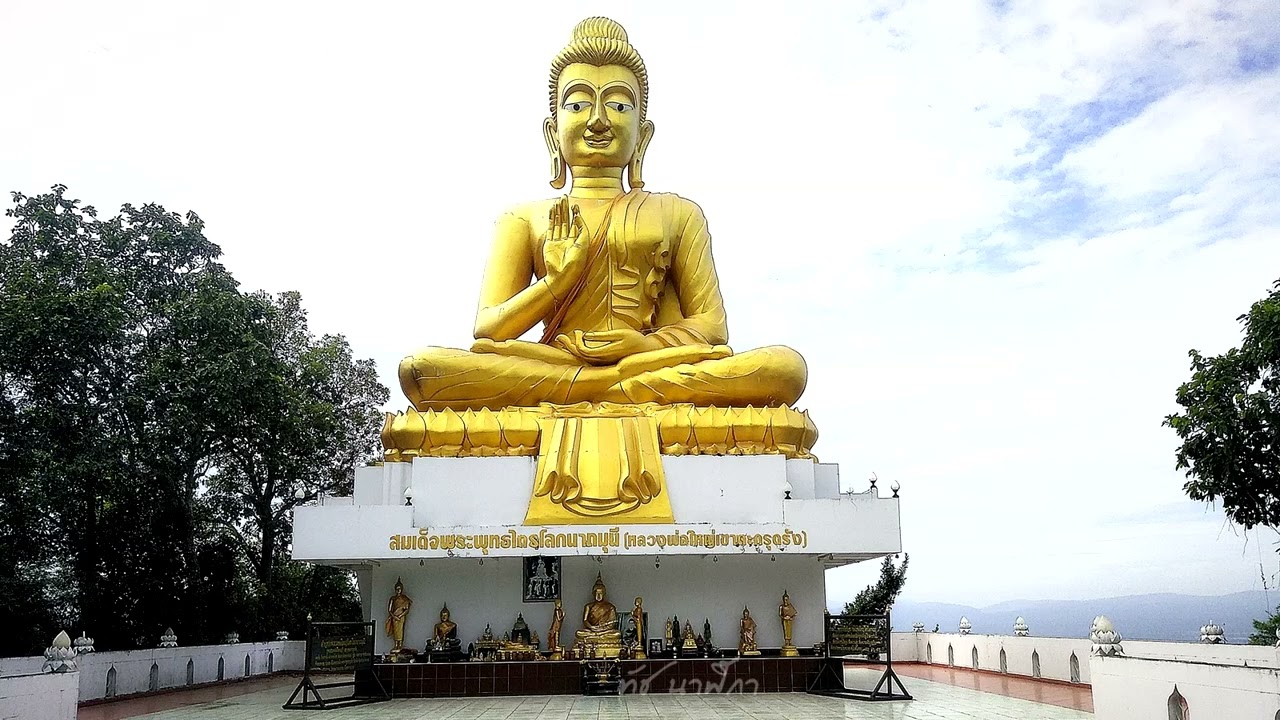
 Click to Access the Navigation Map GPS
Wat Khao Takrut Rang Map
Recommend

 Art, Culture and Heritage
 Historical Sites and Monuments(20)
 Landmarks and Memorials(5)
 Art, Craft Centres, Tradition(7)
 Museums(6)
 Art Gallery(1)
 Educational Places
 Educational Gardens, Farm(4)
Temple(29)
Educational Gardens, Farm(4)
Temple(29)
 Mosque(1)
 Other Sacred Sites(6)
 Research and Development
 Royal Project(3)
 Suburban Living
 Village, Community(6)
 Local Market(4)
 Floating Market(1)
 Nature and Wildlife
 National Parks and Marine Reserves(3)
 Mountain (Doi)(5)
 Dam, Reservoir, Lake(8)
 Waterfalls(9)
 Hot Springs(1)
 Caves(2)
 Flower Field(1)
 River, Canal(8)
 Bays and Beaches(2)
 Other natural attractions(3)
 Entertainment and Agricultural
 Zoos and Aquariums(2)
 Animal camps and shows(1)
 Farms, Parks and Ecotourism(21)
 Waterpark(4)
 Outdoor and Adventure Activities(6)
 Shopping
 Shopping and Night Market(2)
 Travel Articles, Recipes
 Travel Review, Food Review(6)


