
lovethailand home >Northeastern Travel Attractions >Nakhon Ratchasima Travel Attractions >Pak Thong Chai >Tum > Wat Phrommarat Museum
TL;DR: Wat Phrommarat Museum is located at Wat Phrommarat, Ban Phrommarat, Toom Subdistrict, Pak Thong Chai District, Nakhon Ratchasima Province, open Please Contact in Advance Before Visiting, hours Please Contact in Advance Before Visiting.
Wat Phrommarat Museum
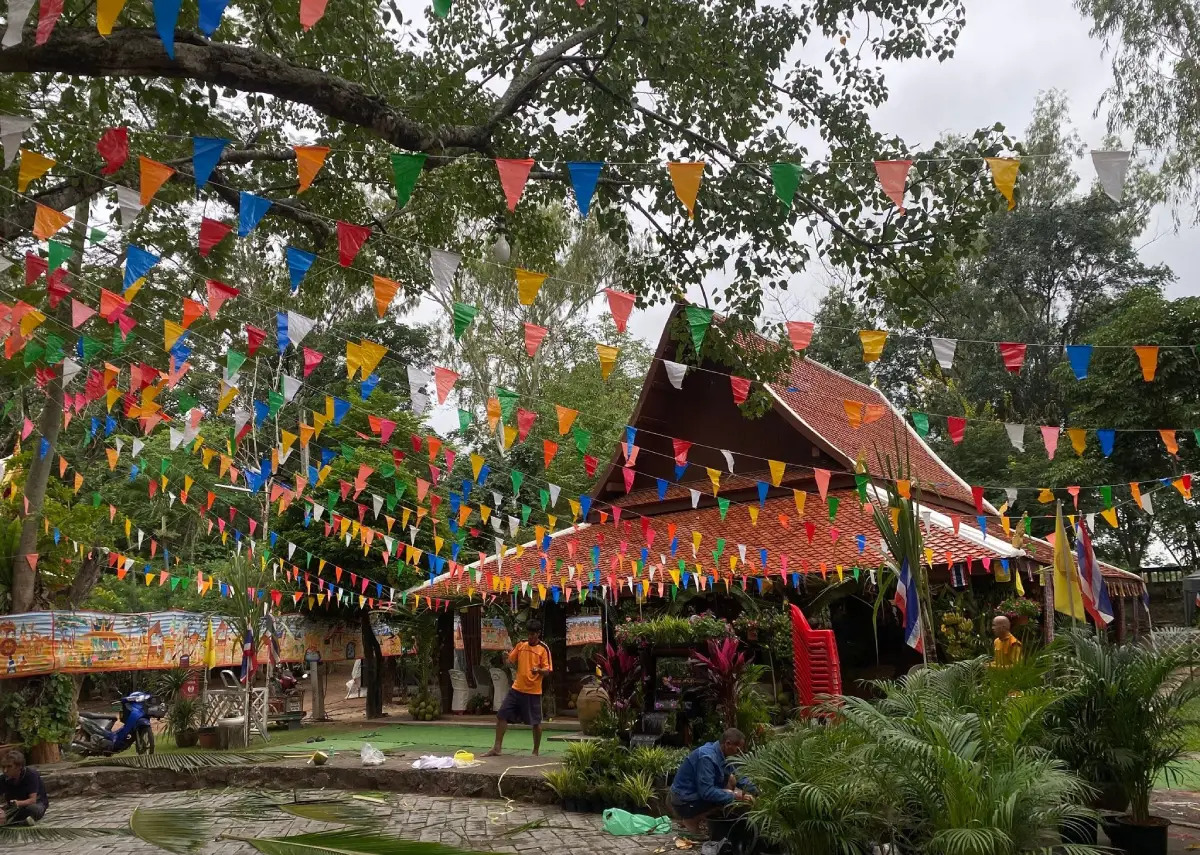
Open Days: Please Contact in Advance Before Visiting
Opening Hours: Please Contact in Advance Before Visiting
Wat Phrommarat Museum in Nakhon Ratchasima Province is a community-based folk museum located inside Wat Phrommarat at 1 Moo 8, Ban Phrommarat, Toom Subdistrict, Pak Thong Chai District, Nakhon Ratchasima 30150. The museum is an important local learning center for visitors who want to understand rural Khorat culture through real objects from everyday life. Its value lies not only in the number of collected items, but also in the intention of the temple and the local community to preserve old household objects, farming tools, textiles, pottery, religious objects, musical instruments, basketry, coins, ancient documents, Buddha images, and many other materials that once formed part of village life.
For international travelers, Wat Phrommarat Museum offers a meaningful way to see Thai culture at community level. Many visitors know Thailand through royal temples, national museums, beaches, markets, and major historical parks, but fewer have the chance to see a temple-based museum created from the memory of a village. This museum helps explain how a rural Thai community lived, worked, worshipped, cooked, farmed, stored food, wove textiles, used tools, played music, welcomed guests, and passed objects from one generation to another. In this sense, the museum is not only a display of antiques. It is a compact archive of local wisdom and everyday heritage.
The origin of Wat Phrommarat Museum is closely connected with the vision of the former abbot of Wat Phrommarat, Phra Siharatchasamacharamuni, also known as Opas Niruttimethi, who later held the ecclesiastical title Phra Thamwaranayok and served as an important senior monk in Nakhon Ratchasima. He initiated the establishment of the museum in 1987 with the purpose of collecting and preserving cultural objects from the community before they disappeared. This origin is significant because the museum was born from a temple and a village, not from a distant institution. It grew from the relationship between Buddhism, local trust, community memory, and the wish to protect heritage for younger generations.
The present museum building was constructed around 2001 with support from the community development fund and the temple budget. Nakhon Ratchasima Rajabhat University also contributed to the information used in the exhibition. This cooperation between the temple, the community, and an educational institution makes the museum a good example of local heritage management. It uses cultural materials that already existed in the community and organizes them as a learning resource. Although the display style remains simple and local in character, this simplicity allows visitors to feel the authenticity of a community museum closely connected with its place.
The museum building has 2 floors, and both floors are used for exhibitions. Objects are displayed in cabinets, on shelves, and on wooden platforms. The collection includes pottery, antiquities, agricultural tools, weaving tools, daily household items, clothing and woven textiles, gold and silver objects, wooden objects, musical instruments, basketry, banknotes, coins, stones, weapons, clocks, ancient documents, and Buddha images. Walking through the museum feels like slowly opening the memory cabinets of a village. Each group of objects represents a different part of rural life, temple culture, domestic practice, work, belief, and local craftsmanship.
The first floor presents a wide variety of objects that help visitors understand everyday community life. The northern section includes a Buddha image corner, cabinets displaying ceramic wares, benjarong ware, blue-and-white porcelain, lamps, spittoons, and boxes. These objects reflect faith, beauty, domestic life, and changing tastes in household use. Ceramic and porcelain objects were not merely containers. They also show aesthetic influence, trade connections, and the social meaning of household possessions. Lamps and spittoons, meanwhile, reveal details of life before modern utilities and modern household goods became common.
The central western section of the first floor includes gable decorations, weapons, tea sets, pottery, sandstone objects, a preserved clouded leopard, a stuffed hornbill, sandstone platforms, a sugarcane press, and stone displays. This section is especially interesting because the objects come from different contexts: religion, architecture, nature, hunting, agriculture, production, and local craft. The sugarcane press, for example, reflects agricultural processing and the household economy. Weapons and sandstone objects connect visitors with local history, protection, ritual use, and the material culture of earlier generations.
The central eastern section of the first floor includes woven textiles, pottery, ceramic wares, metal objects, pottery shelves, and pottery display platforms. This area is important for understanding local craftsmanship. Woven textiles and pottery both require knowledge of materials, technique, design, and function. Textiles reflect weaving skill, color selection, patterns, dress culture, and household economy. Pottery reveals how people stored water, preserved food, cooked, and managed domestic life. For travelers interested in handicrafts, this section gives a useful introduction to the practical intelligence of village life.
The southern section of the first floor includes pottery, household objects, display tables, utility objects, and musical instruments. These materials bring visitors closer to ordinary daily life. Household items may appear simple at first, but they are important evidence for understanding how families lived, cooked, stored things, received guests, worked, and enjoyed entertainment. Musical instruments also reveal the soundscape of community life, including festivals, temple fairs, merit-making events, and local performances that brought people together.
The second floor includes a room for Buddha images and ancient documents. This is one of the most valuable parts of the museum because it connects religious life with local historical knowledge. Buddha images show devotional practice, artistic style, and the continuing presence of Buddhism in the village. Ancient documents may include manuscripts, religious texts, or written materials connected with rituals, temple education, and community knowledge. Preserving such documents is important because many traditional documents in rural communities are vulnerable to decay, loss, or neglect over time.
The central area of the second floor displays Buddha images, carved stone platforms, coins and banknotes, stones, pottery, household objects, betel sets, shells, and additional ceramic wares. The currency display helps visitors understand older economic systems and exchange practices. Betel sets reflect social customs, hospitality, and traditional Thai manners. Stones and shells link the exhibition with natural materials, collection habits, and the curiosity of local people. Although these objects may have different origins and uses, together they present a broad picture of the cultural world once familiar to the community.
One important feature of the museum is that some objects have information labels showing their names, origins, periods, and functions, while others carry the names of donors. This detail reveals the character of a community museum. Many objects entered the museum through donation, trust, or local transfer. The names of donors are therefore not minor details. They are traces of relationships between people, families, the village, and the temple. Wat Phrommarat Museum preserves not only objects, but also the memory of those who entrusted their heritage to the temple.
From the perspective of local history, Wat Phrommarat Museum is important because it shows that history does not exist only in major cities, stone sanctuaries, national museums, or famous monuments. It also exists in villages and temples. Weaving tools, basketry, agricultural tools, pottery, household items, musical instruments, and old documents may seem modest compared with grand monuments, but they are evidence of real life. They show how people worked, used local resources, made practical objects by hand, adapted to the seasons, and organized their homes and communities. Preserving these objects means preserving the knowledge that once sustained everyday life.
Wat Phrommarat itself is also important as a Buddhist and cultural center of Toom Subdistrict. The temple has long served as a place for religious practice, community gatherings, local learning, and village traditions. Community information describes Wat Phrommarat as an old temple over 100 years in age and a center for Buddhism, customs, culture, and local life. The temple supports meditation, merit-making, assistance among villagers, and cooperation between homes, the temple, schools, and local agencies. This context gives the museum deeper meaning because it is part of a living community system, not an isolated storage room for old objects.
Local traditions also keep the museum connected with living culture. Important activities associated with the community include worship related to the local relic on Makha Bucha Day, the annual event honoring the replica Buddha Footprint, the procession of wooden supports for the Bodhi tree, traditional Songkran activities, sand pagoda building, bathing the relic, basket weaving, and the making of banana-stem lanterns. These practices show how local culture, Buddhism, environmental awareness, and community cooperation continue to work together. When visitors understand these traditions, the objects in the museum become more meaningful because they are linked to real practices rather than being disconnected antiques.
The cultural products and local wisdom of the Wat Phrommarat community are also interesting. They include local dishes such as phla mee, kaeng bon, khao pong, and old-style dok chok sweets, as well as long-drum performance, ramthon, retro-style ramwong dancing, and two-layer basket weaving. These forms of cultural capital show that the village still has knowledge that can support community-based tourism. With proper coordination, visitors can connect the museum visit with local food, craft, performance, or community activities, making the trip richer and more personal.
For cultural travelers, Wat Phrommarat Museum is best visited slowly. It is not a place to rush through for a quick photograph. Visitors should observe the materials, shapes, functions, and meanings of each group of objects. Pottery can be connected with storing water and food. Weaving tools can be connected with clothing and household income. Farming tools can be connected with seasons and labor. Musical instruments can be connected with temple festivals and entertainment. Weapons can be connected with protection and local history. Buddha images and ancient documents can be connected with religious education and temple-based learning.
For families and young visitors, the museum is a useful outdoor classroom. Children can see real objects that make the word “past” easier to understand. They can ask how people cooked rice, stored water, wove cloth, worked in fields, used lamps, prepared betel, or read old documents. Such questions are excellent starting points for learning local history through things that are close to daily life. The museum can help younger generations appreciate the skill and creativity of their ancestors.
For people interested in museums and community heritage, Wat Phrommarat Museum is a valuable case study. It shows both the strengths and the real character of Thai community museums. Its strengths include real locally connected objects, the involvement of villagers, donated collections, a temple-based setting, and accessibility for community members. Like many small community museums, not every item has a detailed label, but the exhibition still has strong authenticity. Visitors who understand this context will appreciate the museum as a living heritage space rather than judging it by the standards of a large national museum.
Visitors should contact the temple in advance before going to the museum. The available visiting information indicates that advance contact is required. This is especially important for school groups, student groups, researchers, or organized travelers who need guidance or access to the museum building. Advance coordination helps the temple prepare the building, arrange a caretaker, and support a smoother visit. The museum does not charge an admission fee, making it accessible to the public, but visitors should help protect the place through respectful behavior.
Because the museum is located inside a temple, proper visitor etiquette is important. Visitors should dress politely, behave respectfully, avoid touching objects without permission, avoid opening display cabinets, and supervise children closely. Photography should follow the guidance of the caretaker. Many objects are old and meaningful to the local community. Some may be fragile or have religious value. Respectful behavior is part of preserving the heritage of the village for future generations.
Getting There is most convenient by private car. Set the destination to Wat Phrommarat, Toom Subdistrict, Pak Thong Chai District, Nakhon Ratchasima Province. From Nakhon Ratchasima city, travel toward Pak Thong Chai District and continue to Toom Subdistrict and Ban Phrommarat. Visitors without a private vehicle can travel to Pak Thong Chai first, then use local transport to reach the temple. A private car is the most convenient option, especially for travelers who want to combine the museum with nearby attractions such as Jim Thompson Farm, Lam Phra Phloeng Dam, or other sites in Pak Thong Chai District.
A visit to Wat Phrommarat Museum can be planned in several ways. Travelers interested in community culture can begin at Wat Phrommarat and the museum, then explore local village life in Toom Subdistrict if activities are available. Travelers interested in nature can combine the visit with Lam Phra Phloeng Dam or agricultural areas in Pak Thong Chai. Families visiting during the tourism season may combine the museum with Jim Thompson Farm. Adding Wat Phrommarat Museum to the route gives the trip a stronger cultural and educational dimension.
The temple is also suitable for visitors interested in Buddhism and local traditions. Wat Phrommarat has a replica Buddha Footprint, relic-related traditions, and annual religious activities connected with community faith. The annual Buddha Footprint event and Buddhist holy day activities show how religion and culture continue to shape village life. Visitors who come during a local event may experience more than the museum objects. They may also see merit-making, traditional dress, local performance, community cooperation, and the atmosphere of a living temple.
Overall, Wat Phrommarat Museum deserves attention as a community learning center in Nakhon Ratchasima. It preserves objects, memory, local wisdom, history, and faith in one place. Although it is not a large urban museum, its charm lies in the fact that it was created by the temple and the community. Each displayed object is connected to real life, and visiting the museum helps travelers see Khorat beyond the image of a large regional city. It reveals a village-level Khorat with its own memory, skills, beliefs, and identity.
For international visitors, the museum is a good place to understand rural Thai culture and community-based heritage. In Thailand, a temple is not only a place of worship. It can also function as a school, community center, archive of memory, place of festivals, and guardian of local wisdom. Wat Phrommarat Museum clearly shows this relationship between Buddhism, village life, local craftsmanship, and Thai community identity. It is a small museum, but it offers a deep and authentic view of how culture is preserved at the grassroots level.
In summary, Wat Phrommarat Museum in Nakhon Ratchasima is a cultural attraction suitable for travelers interested in local history, folk wisdom, rural life, and the role of temples in Thai society. The 2-storey museum displays Buddha images, ancient documents, pottery, ceramics, farming tools, textiles, household items, musical instruments, basketry, coins, stones, weapons, and many other collected objects. Visitors should contact the temple in advance, there is no admission fee, and a meaningful visit should take at least 1 to 1.5 hours. When combined with other attractions in Pak Thong Chai District, the museum adds depth, context, and cultural value to a trip in Khorat.
| Name | Wat Phrommarat Museum |
| Location | Wat Phrommarat, Ban Phrommarat, Toom Subdistrict, Pak Thong Chai District, Nakhon Ratchasima Province |
| Address | 1 Moo 8, Toom Subdistrict, Pak Thong Chai District, Nakhon Ratchasima 30150, Thailand |
| Coordinates | 14.679, 101.98117 |
| Highlights | A temple-based folk museum preserving community objects, antiquities, farming tools, textiles, musical instruments, basketry, Buddha images, and ancient documents |
| History | Established in 1987 by Phra Siharatchasamacharamuni, or Opas Niruttimethi, former abbot of Wat Phrommarat. The present museum building was constructed around 2001. |
| Name Origin | The museum is named after Wat Phrommarat, the temple that preserves and displays the cultural heritage and local wisdom of Ban Phrommarat community. |
| Distinctive Features | A 2-storey community museum using cabinets, shelves, and wooden platforms to display objects by category in a simple temple-based setting |
| Travel Information | From Nakhon Ratchasima city, travel toward Pak Thong Chai District, then continue to Toom Subdistrict and Ban Phrommarat. A private car is the most convenient option; local transport can be arranged from Pak Thong Chai. |
| Current Status | A community learning center and folk museum inside Wat Phrommarat, open by advance arrangement |
| Open Days | Please Contact in Advance Before Visiting |
| Opening Hours | Please Contact in Advance Before Visiting |
| Fees | No Admission Fee |
| Facilities | 2-storey museum building, temple parking area, religious spaces, folk object displays, and community activity areas inside Wat Phrommarat |
| Main Areas / Zones | 1. First Floor Northern Section: Buddha Image Corner, Ceramics, Benjarong Ware, Blue-And-White Porcelain, Lamps, Spittoons, And Boxes 2. First Floor Central Western Section: Gable Decorations, Weapons, Tea Sets, Pottery, Sandstone Objects, Sugarcane Press, Stones, And Preserved Animals 3. First Floor Central Eastern Section: Woven Textiles, Pottery, Ceramic Wares, Metal Objects, And Pottery Platforms 4. First Floor Southern Section: Pottery, Household Objects, And Musical Instruments 5. Second Floor Buddha Images And Ancient Documents Room 6. Second Floor Central Area: Buddha Images, Carved Stone Platform, Currency, Stones, Pottery, Household Objects, Betel Sets, Shells, And Folk Objects |
| Abbot / Caretaker | Abbot of Wat Phrommarat: Phra Khru Kosol Thammawibun / Museum Caretaker: Wat Phrommarat and Ban Phrommarat Community |
| Main Contact Number | 089-842-9536, 044-441-929, 089-531-9536 |
| Official Website / Official Page | watpromrach.blogspot.com / Facebook: พิพิธภัณฑ์วัดพรหมราช |
| Nearby Tourist Attractions | 1. Wat Na Phra That, also known as Wat Ta Khu, about 10 km 2. Pak Thong Chai Folk Arts And Culture Center, about 12 km, Tel. 044-441080 3. Jim Thompson Farm, about 16 km 4. Lam Phra Phloeng Dam, about 22 km 5. Nakhon Ratchasima Zoo, about 30 km 6. Petrified Wood Museum, Ancient Elephants And Dinosaurs, about 32 km |
| Nearby Restaurants | 1. Phat Mee Pai Yuan Pak Thong Chai Korat, about 10 km 2. Kam Thong Restaurant, about 12 km 3. Ta Kiat Pork Noodle, about 12 km 4. Kha Mu Pa Ouan, about 11 km 5. Khun Yai Chicken Rice Pak Thong Chai, about 12 km 6. Mae Muan Kai Mun Pak Thong Chai, about 13 km |
| Nearby Accommodations | 1. Mulberry House Korat, about 14 km 2. Bosswin Home Resort, about 15 km 3. Baan Nimit Resort, about 16 km 4. Korat Country Club Golf And Resort, about 20 km 5. Earth Elements Eco Resort, about 24 km 6. The Frog Cabana, about 25 km |
Frequently Asked Questions (FAQ)
Q: Where is Wat Phrommarat Museum located?
A: Wat Phrommarat Museum is located inside Wat Phrommarat at 1 Moo 8, Ban Phrommarat, Toom Subdistrict, Pak Thong Chai District, Nakhon Ratchasima 30150, Thailand.
Q: What are the opening days and hours of Wat Phrommarat Museum?
A: Visitors should contact the temple in advance before visiting so the museum building and caretaker can be properly arranged.
Q: Is there an admission fee?
A: No. Wat Phrommarat Museum does not charge an admission fee, but advance contact is recommended before visiting.
Q: What can visitors see inside Wat Phrommarat Museum?
A: The museum displays Buddha images, ancient documents, pottery, ceramics, textiles, farming tools, musical instruments, basketry, currency, stones, weapons, and many household objects from local community life.
Q: Who established Wat Phrommarat Museum?
A: The museum was initiated in 1987 by Phra Siharatchasamacharamuni, or Opas Niruttimethi, former abbot of Wat Phrommarat.
Q: How many floors does the museum have?
A: The museum has 2 floors. The first floor displays folk objects, pottery, textiles, tools, musical instruments, and household items, while the second floor includes Buddha images, ancient documents, currency, stones, betel sets, and other collected objects.
Q: How long should visitors spend at the museum?
A: Visitors should allow at least 1 to 1.5 hours to explore both floors and understand the community wisdom behind the objects.
Q: What nearby attractions can be visited after Wat Phrommarat Museum?
A: Nearby places include Wat Na Phra That, Pak Thong Chai Folk Arts And Culture Center, Jim Thompson Farm, Lam Phra Phloeng Dam, Nakhon Ratchasima Zoo, and the Petrified Wood Museum, Ancient Elephants And Dinosaurs.
 Category: ●Art, Culture and Heritage
 Group: ●Museums
Last Update : 3 MonthAgo
 Last Update : 3 MonthAgo
 Click to Access the Navigation Map GPS
Wat Phrommarat Museum Map
Recommend

 Historical Sites and Monuments(20)
 Landmarks and Memorials(5)
 Art, Craft Centres, Tradition(7)
Museums(6)
Art, Craft Centres, Tradition(7)
Museums(6)
 Art Gallery(1)
 Educational Places
 Educational Gardens, Farm(4)
 Places of Worship
 Temple(29)
 Mosque(1)
 Other Sacred Sites(6)
 Research and Development
 Royal Project(3)
 Suburban Living
 Village, Community(6)
 Local Market(4)
 Floating Market(1)
 Nature and Wildlife
 National Parks and Marine Reserves(3)
 Mountain (Doi)(5)
 Dam, Reservoir, Lake(8)
 Waterfalls(9)
 Hot Springs(1)
 Caves(2)
 Flower Field(1)
 River, Canal(8)
 Bays and Beaches(2)
 Other natural attractions(3)
 Entertainment and Agricultural
 Zoos and Aquariums(2)
 Animal camps and shows(1)
 Farms, Parks and Ecotourism(21)
 Waterpark(4)
 Outdoor and Adventure Activities(6)
 Shopping
 Shopping and Night Market(2)
 Travel Articles, Recipes
 Travel Review, Food Review(6)


