
lovethailand home >Northeastern Travel Attractions >Nakhon Ratchasima Travel Attractions >Bua Yai >Kut Chok > Wat Pa Ban Don Han Kut Chok
TL;DR: Wat Pa Ban Don Han Kut Chok is located at Ban Don Han, Moo 11, Kut Chok Subdistrict, Bua Yai District, Nakhon Ratchasima Province, open Daily, hours 08.00 – 17.00.
Wat Pa Ban Don Han Kut Chok
Open Days: Daily
Opening Hours: 08.00 – 17.00
Wat Pa Ban Don Han Kut Chok in Nakhon Ratchasima is an important forest temple located at Ban Don Han, Moo 11, Kut Chok Subdistrict, Bua Yai District, Nakhon Ratchasima Province. Established in 1957 on approximately 103 rai of land, the temple is known for its peaceful forest atmosphere, large meditation Buddha image on a lotus base, water-surrounded boundary hall, Than Barami Hall, meditation training areas, and its role as a Buddhist learning and practice center for the local community. Unlike city temples that are visited mainly for architecture, Wat Pa Ban Don Han Kut Chok is best understood as a quiet forest temple where worship, ordination, meditation, monastic education, and community faith come together.
The temple is meaningful because it uses a natural setting as part of Buddhist practice. Visitors will notice that the grounds are spacious, shaded by many trees, and quieter than temples in urban areas. This environment supports meditation and inner reflection. For Thai Buddhists, the temple serves as a place to make merit, worship, take part in religious activities, and join meditation practice. For foreign travelers, it offers a useful example of a Thai forest temple where simplicity, discipline, and mental cultivation are more important than spectacle.
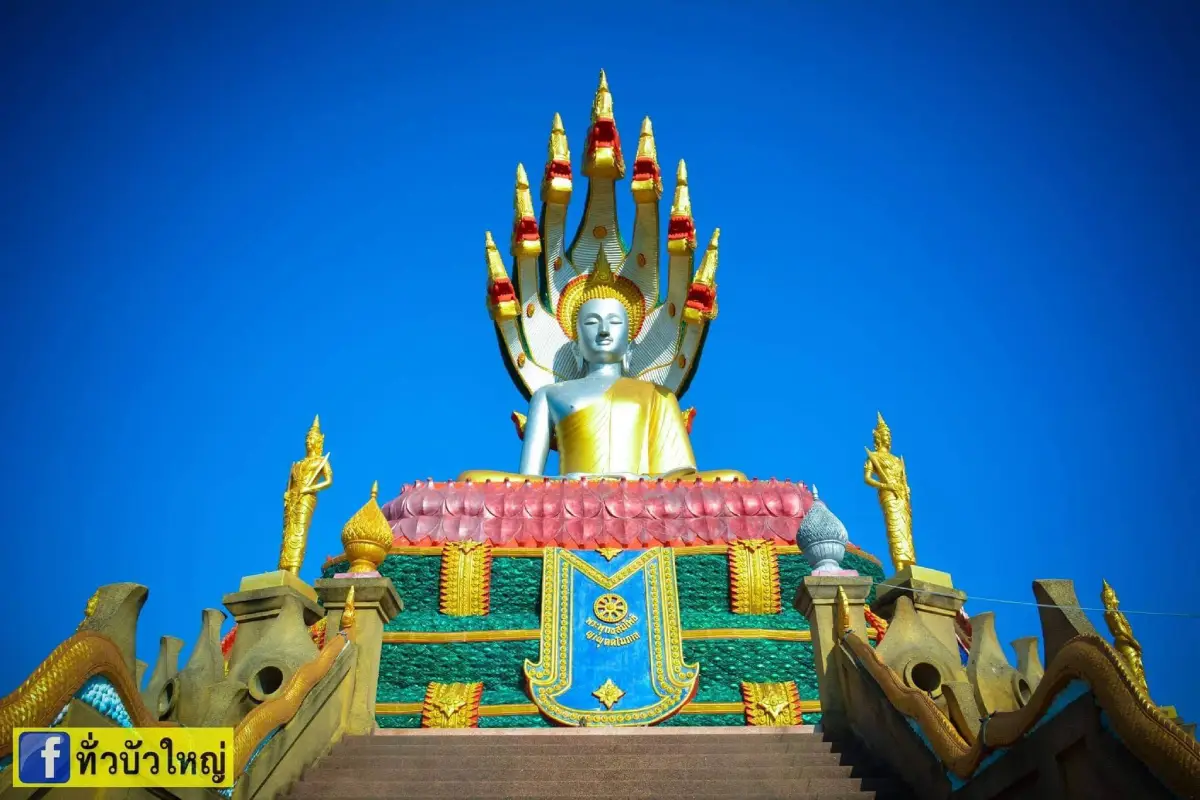
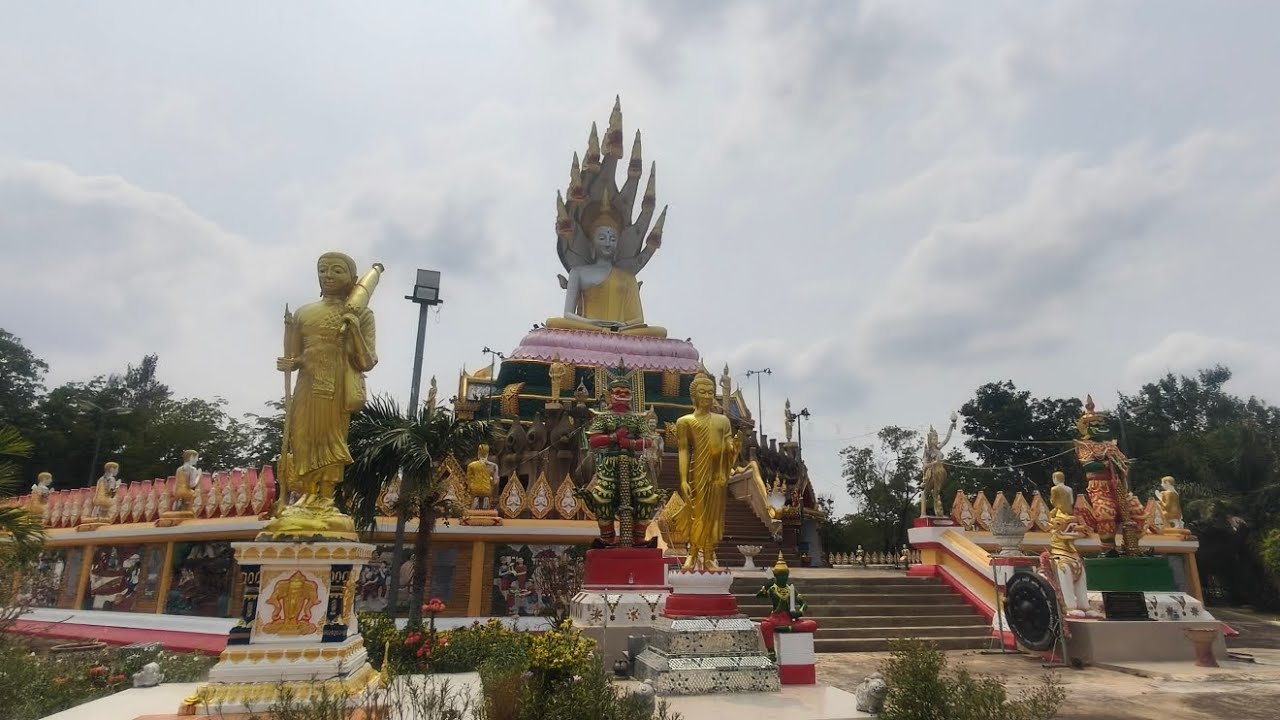
The most visible landmark of the temple is the large Buddha image in the meditation posture seated on a lotus. The image was built so that Buddhists could pay respect and use it as a spiritual center for Kut Chok Subdistrict. The meditation posture represents stillness, mindfulness, and inner stability. The lotus base adds another layer of meaning because the lotus is a Buddhist symbol of purity, awakening, and rising above impurity. For visitors, this area is a natural starting point for the temple visit.
Local information also identifies an important large Buddha image at the temple as Phra Phuttha Samphothiyan Uttamophat, a name meaning the Buddha who shines supremely with the light of enlightenment. The name was granted by Somdet Phra Nyanasamvara, the Supreme Patriarch of Thailand from Wat Bowonniwet Vihara, on 24 May 1993. The large image is associated with a naga-protected form and is one of the temple’s important sacred objects. This gives the worship area spiritual and historical depth beyond its visual size.
Another major feature of the temple is the water-surrounded boundary hall, used for novice ordination, monk ordination, and formal Sangha acts. The structure is described as a Thai-style pavilion inspired by Ayutthaya-period architecture and was built in 1980. In Thai Buddhism, a consecrated boundary area is important because certain monastic ceremonies must be performed within a formally defined ritual space. For this reason, the water pavilion is not merely a scenic building. It is a sacred functional space connected with the continuation of the monastic community.
The idea of a sema or consecrated boundary is central to the function of an ordination area. It defines where important Sangha acts such as ordination can be properly carried out. At Wat Pa Ban Don Han Kut Chok, the boundary hall in the water creates a calm and separate environment for sacred ceremonies. This setting helps participants and visitors feel that they are entering a more focused and respectful ritual space. Foreign visitors should treat this zone carefully and avoid entering restricted areas without permission.
Than Barami Hall is another important building. It was built in January 2001 and is used for various Buddhist ceremonies. It also serves as a place for meditation training before practitioners enter the forest area of the temple to sit in meditation. The name Than Barami refers to the perfection of generosity. In Buddhist practice, generosity helps reduce attachment and prepares the mind for deeper training. The use of this hall for meditation preparation therefore fits the temple’s overall emphasis on moral and mental cultivation.
The layout of the temple supports religious practice in several ways. There is a main Buddha worship area, the consecrated boundary pavilion in the water, Than Barami Hall, a sermon hall, monks’ residences, a bell tower, a merit-making hall, a crematorium, and shaded forest areas for meditation. These areas are not isolated features. They work together to make the temple a place for worship, ordination, ceremonies, learning, meditation, and community service.
Wat Pa Ban Don Han Kut Chok belongs to the Dhammayut order and is classified as a private Buddhist temple. Local records describe it as a forest temple or monastic residence with important facilities such as the sermon hall, monks’ residences, bell tower, merit-making hall, and crematorium. This combination of facilities shows that the temple serves both monastic and community needs. It supports monks, practitioners, lay Buddhists, and villagers who rely on the temple for ceremonies throughout life.
Meditation training is one of the temple’s core roles. Practitioners can use the forest atmosphere to reduce distraction, develop mindfulness, and reflect on Dhamma. Forest-temple practice is not only about sitting quietly. It also includes restraint, discipline, walking meditation, listening to Dhamma, observing precepts, and living simply. The temple’s natural environment helps support this way of practice by providing shade, calmness, and distance from the noise of daily life.
The temple is also used for temporary white-robed lay practice, summer novice ordination, and other Buddhist training activities. These activities are important for children, youth, and adults who want to learn discipline and Buddhist values. Summer novice ordination, in particular, is a meaningful tradition in Thailand because it gives boys and young men an opportunity to study precepts, gratitude, patience, monastic manners, chanting, and basic Dhamma during school holidays.
Wat Pa Ban Don Han Kut Chok also functions as an examination site for Buddhist studies. It is used for novice-level examinations during the Buddhist Lent season and for Dhamma examinations organized by the central ecclesiastical Dhamma examination system. These examinations include Nak Tham levels for monks and novices, as well as Dhamma studies for laymen and laywomen. This role shows that the temple is not only a place for faith and meditation but also a local center of Buddhist education.
Becoming an examination site connects the temple with monks, novices, lay students, teachers, and Buddhist learners from the surrounding area. Dhamma study helps people understand Buddhist teachings, monastic discipline, Buddhist history, and ethical principles more systematically. By supporting these examinations every year, the temple helps strengthen Buddhist knowledge in the community and gives laypeople a structured path to learn the Dhamma.
The shaded forest atmosphere is one of the temple’s greatest assets. Many kinds of trees grow within the temple grounds, creating coolness and quietness. This is not only visually pleasant but also spiritually useful. Trees, shade, and natural sound help calm the mind. Visitors who come only to take photographs may miss the temple’s deeper value. The best way to experience this place is to slow down, walk mindfully, sit quietly, and allow the surroundings to support inner stillness.
A meaningful visit should begin at the large Buddha image, followed by the water boundary hall, Than Barami Hall, the sermon hall, the bell tower, and the shaded forest areas. This route allows visitors to understand the temple step by step: first worship, then ritual space, then meditation preparation, then education and community function, and finally the quiet forest that supports practice. The temple is best experienced as a whole environment rather than as a series of disconnected sights.
For families, the temple can teach children about Thai Buddhist life in a calm and practical way. Parents can explain the meaning of the meditation Buddha image, the lotus, the consecrated boundary, ordination, novice training, and the importance of silence in a forest temple. Children can learn that visiting a temple is not only about making a wish but also about learning self-control, respect, and mindfulness.
For serious Dhamma learners, the temple should be approached slowly and respectfully. Its value lies in the atmosphere of practice. A visitor can spend time sitting under the trees, walking quietly, observing the breath, or simply resting the mind. A forest temple is not a place for hurried sightseeing. It is a place that invites visitors to pause, simplify their behavior, and notice the quality of the mind.
Current Buddhist activity records identify Phra Khru Thammakit Sophon as the abbot of Wat Ban Don Han. Earlier Dhamma teaching records also connect his name with Wat Pa Ban Don Han Kut Chok in Kut Chok Subdistrict, Bua Yai District, Nakhon Ratchasima. This confirms his role as the monk associated with the temple’s administration and Dhamma activities. Under ongoing monastic care, the temple continues to serve worshippers, practitioners, students, and the local community.
As a Dhammayut forest temple, Wat Pa Ban Don Han Kut Chok emphasizes restraint, simplicity, discipline, and practice. The Dhammayut tradition is often associated with careful monastic conduct and a strong focus on meditation and Dhamma learning. Visitors should therefore understand that this temple is not a lively entertainment-oriented attraction. It is a religious and contemplative place where respectful behavior is essential.
Getting to the temple is easiest by private car, van, or local hired transport. From Nakhon Ratchasima city, travelers should head toward Bua Yai District, then continue to Kut Chok Subdistrict and Ban Don Han. The temple is located in a local community area, so navigation apps should search specifically for Wat Pa Ban Don Han Kut Chok in Kut Chok Subdistrict, Bua Yai District. Confirming the coordinates around 15.56104, 102.45833 helps avoid confusion with similarly named temples.
Getting There from Bua Yai town requires following local roads into Kut Chok Subdistrict. The distance from Bua Yai town to the temple is approximately 10 to 15 kilometers, depending on the selected route. From Nakhon Ratchasima city, the journey is longer and is better planned as a full-day trip or an overnight stay in Bua Yai. Groups should use suitable vans or buses and contact the temple in advance if they plan to join meditation training, educational activities, or formal Buddhist events.
The temple is open daily from 08.00 to 17.00. There is no admission fee. Visitors may enter to worship, make merit, and visit the main areas during opening hours. Donations may be made voluntarily according to personal faith. Those who wish to join meditation training, temporary lay practice, novice ordination programs, or specific activities should contact the temple or local organizers in advance to confirm schedules and requirements.
Temple etiquette is especially important here. Visitors should dress modestly, keep their voices low, avoid disturbing monks or practitioners, and should not enter monastic or restricted meditation areas without permission. Do not litter, do not behave loudly, and do not treat the forest areas as recreational picnic zones. A forest temple should be visited with quietness, restraint, and respect for the practice environment.
During summer novice ordination programs, Dhamma examinations, or Buddhist Lent-related activities, the temple may be more active than usual. Monks, novices, lay students, and families may gather for training or examinations. Visitors should give priority to temple activities, avoid disturbing classes or examinations, and use the opportunity to observe how temples support Buddhist education in local communities.
Wat Pa Ban Don Han Kut Chok can be combined with a wider Bua Yai travel route. Visitors may begin with worship and meditation at the temple in the morning, then continue to Bua Yai town for food, the local market, Bua Yai Railway Station, or Bueng Bua Yai. With more time, nearby community temples such as Wat Ban Sema Yai and Wat Mongkhon Hatthi Santiwat can be added. This creates a route focused on forest-temple practice, rural community faith, and local Bua Yai life.
Restaurants near the temple are mostly found in Bua Yai town and along routes through Kut Chok Subdistrict. Visitors can choose local restaurants, family dining places, noodle shops, cafés, or food options near Bua Yai market. Publicly listed options include Baan Suan Dokmai, Roy Yim Restaurant Bua Yai, Malee Chinese Restaurant Bua Yai, and Baan Suan Khun Yai Restaurant. Groups should call ahead where phone numbers are available because local restaurants may have flexible opening days and hours.
Accommodation is also easier to find in Bua Yai town than directly around the temple. Options include White Orchid Hotel, Marina Resort Bua Yai, Bua Yai Resort, Khao Hom Resort, and daily accommodation near the railway station and market area. Staying in Bua Yai gives visitors better access to restaurants, fuel stations, shops, and onward travel routes. This is practical for travelers who want to visit the temple calmly rather than rush back to Korat city on the same day.
For foreign visitors, Wat Pa Ban Don Han Kut Chok is a useful example of a Thai forest temple. It introduces the atmosphere of meditation, the importance of monastic boundaries, the role of ordination, the meaning of a meditation Buddha image, Dhamma study, novice training, and the relationship between temple and community. It is not a temple designed primarily for sightseeing, but for Buddhist practice and local religious life. Visitors who approach it respectfully will gain a deeper understanding of Thai Buddhism.
Overall, the temple should be understood as a center of worship, meditation, Buddhist study, ordination, and community religious life. Its value includes the large Buddha image, water boundary hall, Than Barami Hall, forest meditation areas, annual Buddhist study activities, summer novice ordination, and its peaceful 103-rai setting. These elements make Wat Pa Ban Don Han Kut Chok important not only for Ban Don Han and Kut Chok Subdistrict but also for travelers who want to understand the quieter, contemplative side of Buddhism in Nakhon Ratchasima.
In summary, Wat Pa Ban Don Han Kut Chok in Nakhon Ratchasima is a meaningful Dhammayut forest temple in Bua Yai District. Founded in 1957 on approximately 103 rai of land, it is known for its large meditation Buddha image on a lotus, Phra Phuttha Samphothiyan Uttamophat, the water-surrounded ordination boundary hall built in 1980, Than Barami Hall built in 2001, shaded forest areas for meditation, and its role in meditation training, white-robed lay practice, summer novice ordination, Buddhist examinations, and community religious life. The temple is open daily, has no admission fee, and is suitable for Thai and foreign visitors seeking worship, quiet reflection, and a deeper understanding of Thai forest-temple culture.
| Name | Wat Pa Ban Don Han Kut Chok, Nakhon Ratchasima |
| Related Names | Wat Ban Don Han, Wat Pa Ban Don Han-Kut Chok, Wat Ban Don Han Temple |
| Location | Ban Don Han, Moo 11, Kut Chok Subdistrict, Bua Yai District, Nakhon Ratchasima Province |
| Address | Ban Don Han Kut Chok, Kut Chok Subdistrict, Bua Yai District, Nakhon Ratchasima 30120, Thailand |
| Coordinates | 15.56104, 102.45833 |
| Type | Private Buddhist temple, Dhammayut order, forest temple, religious site, and meditation practice place |
| Highlights | Large meditation Buddha image on a lotus, Phra Phuttha Samphothiyan Uttamophat, water-surrounded boundary hall, Ayutthaya-inspired Thai pavilion, Than Barami Hall, forest meditation areas, and shaded natural temple grounds |
| History | Established as a temple in 1957 on approximately 103 rai of land. The water boundary hall was built in 1980, and Than Barami Hall was built in January 2001 to support Buddhist ceremonies and meditation training |
| Distinctive Features | A forest temple that supports worship, ordination, Sangha rituals, meditation training, temporary white-robed lay practice, summer novice ordination, and annual Buddhist education examinations |
| Travel Information | From Nakhon Ratchasima city, travel toward Bua Yai District, then continue to Kut Chok Subdistrict and Ban Don Han. From Bua Yai town, the temple is approximately 10 – 15 km away depending on the route. Private car, van, or local hired transport is the most convenient option |
| Current Status | Active Dhammayut forest temple, worship site, meditation practice place, and Buddhist activity center for Kut Chok Subdistrict |
| Open Days | Daily |
| Opening Hours | 08.00 – 17.00 |
| Fees | No admission fee; voluntary donations may be made according to personal faith |
| Facilities | Sermon hall, monks’ residences, bell tower, merit-making hall, crematorium, Than Barami Hall, water boundary hall, meditation areas, large Buddha worship area, and shaded forest areas for quiet sitting |
| Main Areas / Zones | Large Meditation Buddha Image On A Lotus Phra Phuttha Samphothiyan Uttamophat Five Buddhas Area Water Boundary Hall Ayutthaya-Inspired Thai Pavilion Than Barami Hall Sermon Hall Monks’ Residences Bell Tower Merit-Making Hall Crematorium Meditation Training Area Forest Sitting-Meditation Area Shaded Tree Areas Throughout The Temple |
| Important Activities | Meditation training Temporary white-robed lay practice Summer novice ordination Novice-level examinations during Buddhist Lent Central ecclesiastical Dhamma examinations for Nak Tham levels and lay Dhamma studies Ordination and Sangha ritual ceremonies |
| Abbot / Caretaker | Phra Khru Thammakit Sophon |
| Main Contact Number | Contact the temple directly or through local Kut Chok community channels, as no main temple phone number was publicly listed and clearly cross-verified |
| Nearby Tourist Attractions | 1. Bua Yai Town / Bua Yai Market, about 12 km 2. Bua Yai Railway Station, about 12 km 3. Bueng Bua Yai, about 13 km 4. Wat Ban Sema Yai, Bua Yai District, about 18 km 5. Wat Mongkhon Hatthi Santiwat, Sema Yai Subdistrict, about 20 km 6. Wat Dan Chang, Bua Yai District, about 25 km 7. Wat Ban Rai, Dan Khun Thot District, about 80 km, Tel. 082-834-9109, 065-826-7686 |
| Nearby Restaurants | 1. Baan Suan Dokmai, Bua Yai, about 12 km, Tel. 083-373-3351, 086-458-8685, 090-237-3206 2. Roy Yim Restaurant Bua Yai, about 12 km, Tel. 096-953-6632, 044-461-640 3. Malee Chinese Restaurant Bua Yai, about 13 km, Tel. 044-461-938, 081-265-4359 4. Baan Suan Khun Yai Restaurant, Bua Yai, about 13 km, Tel. 095-396-9622 5. Baan Suan Khun Yai Restaurant, Another Local Listing, about 13 km, Tel. 087-868-3370 6. Café Amazon In Bua Yai Town Area, about 12 km |
| Nearby Accommodations | 1. White Orchid Hotel Bua Yai, about 12 km, Tel. 044-461-371-2 2. Marina Resort Bua Yai, about 13 km, Tel. 080-166-9549 3. Bua Yai Resort, about 12 km, Tel. 087-449-9777, 061-071-0889 4. Khao Hom Resort Bua Yai, about 13 km, Tel. 098-309-1889, 081-076-0305, 086-246-9096 5. Daily Accommodation Near Bua Yai Railway Station, about 12 km 6. Accommodation Around Bua Yai Town And Market Area, about 12 km |
Frequently Asked Questions (FAQ)
Q: Where is Wat Pa Ban Don Han Kut Chok located?
A: Wat Pa Ban Don Han Kut Chok is located at Ban Don Han, Moo 11, Kut Chok Subdistrict, Bua Yai District, Nakhon Ratchasima Province. It is a peaceful Dhammayut forest temple suitable for worship and meditation practice.
Q: What are the opening days and hours of Wat Pa Ban Don Han Kut Chok?
A: The temple is open daily from 08.00 to 17.00. Morning and afternoon are suitable for worship, merit-making, and quiet exploration of the forest temple grounds.
Q: Is there an admission fee at Wat Pa Ban Don Han Kut Chok?
A: There is no admission fee. Visitors may make voluntary donations or support temple activities according to personal faith.
Q: What are the main highlights of Wat Pa Ban Don Han Kut Chok?
A: The main highlights include the large meditation Buddha image on a lotus, Phra Phuttha Samphothiyan Uttamophat, the water boundary hall, Than Barami Hall, meditation training areas, and the peaceful forest setting.
Q: What is the water boundary hall used for?
A: The water boundary hall is used for novice ordination, monk ordination, and formal Sangha ceremonies. It is a Thai-style pavilion inspired by Ayutthaya architecture and was built in 1980.
Q: Why is Than Barami Hall important?
A: Than Barami Hall was built in January 2001. It is used for Buddhist ceremonies and meditation training before practitioners continue into the forest areas of the temple for meditation.
Q: What Buddhist activities are held at the temple?
A: The temple supports meditation training, temporary white-robed lay practice, summer novice ordination, novice-level examinations during Buddhist Lent, and Dhamma examinations for monks, novices, and lay Buddhist students.
Q: What should foreign visitors know before visiting Wat Pa Ban Don Han Kut Chok?
A: Foreign visitors should understand that this is a forest temple and meditation-oriented religious site. Dress modestly, keep quiet, avoid disturbing monks or practitioners, and approach the Buddha image, boundary hall, Than Barami Hall, and forest areas respectfully.
 Category: ●Places of Worship
 Group: ●Temple
Last Update : 3 MonthAgo
 Last Update : 3 MonthAgo
 Click to Access the Navigation Map GPS
Wat Pa Ban Don Han Kut Chok Map
Recommend

 Art, Culture and Heritage
 Historical Sites and Monuments(20)
 Landmarks and Memorials(5)
 Art, Craft Centres, Tradition(7)
 Museums(6)
 Art Gallery(1)
 Educational Places
 Educational Gardens, Farm(4)
Temple(29)
 Mosque(1)
 Other Sacred Sites(6)
 Research and Development
 Royal Project(3)
 Suburban Living
 Village, Community(6)
 Local Market(4)
 Floating Market(1)
 Nature and Wildlife
 National Parks and Marine Reserves(3)
 Mountain (Doi)(5)
 Dam, Reservoir, Lake(8)
 Waterfalls(9)
 Hot Springs(1)
 Caves(2)
 Flower Field(1)
 River, Canal(8)
 Bays and Beaches(2)
 Other natural attractions(3)
 Entertainment and Agricultural
 Zoos and Aquariums(2)
 Animal camps and shows(1)
 Farms, Parks and Ecotourism(21)
 Waterpark(4)
 Outdoor and Adventure Activities(6)
 Shopping
 Shopping and Night Market(2)
 Travel Articles, Recipes
 Travel Review, Food Review(6)


