
lovethailand home >Northeastern Travel Attractions >Nakhon Ratchasima Travel Attractions >Bua Yai >Se Ma Yai > Wat Ban Sema Yai
TL;DR: Wat Ban Sema Yai is located at Sema Yai Subdistrict, Bua Yai District, Nakhon Ratchasima Province, open Daily, hours 08.00 – 17.00.
Wat Ban Sema Yai
Open Days: Daily
Opening Hours: 08.00 – 17.00
Wat Ban Sema Yai in Nakhon Ratchasima, also known locally as Wat Sema Yai and historically associated with the name Wat Chantharangsi Muniwong, is an important Buddhist temple in Sema Yai Subdistrict, Bua Yai District, Nakhon Ratchasima Province. It is regarded as one of the oldest and most respected temples in the Sema Yai area. The temple has a long history, a beautiful ordination hall, a finely built temple hall, and a strong relationship with local Buddhist activities held regularly every year. For visitors who want to understand rural Korat beyond the well-known city temples, Wat Ban Sema Yai offers a meaningful insight into community faith, local memory, and the role of a temple as the spiritual center of a village.
The temple is not a commercial tourist attraction. Its importance lies in the way it has remained closely connected with the people of Sema Yai for generations. Local villagers respect the temple as a place for merit-making, Buddhist ceremonies, community gatherings, annual traditions, and remembrance of revered monks. The beauty of Wat Ban Sema Yai is therefore not limited to its buildings. It also appears in the cooperation of villagers, local leaders, monks, and community members who have supported the temple and preserved its traditions over time.
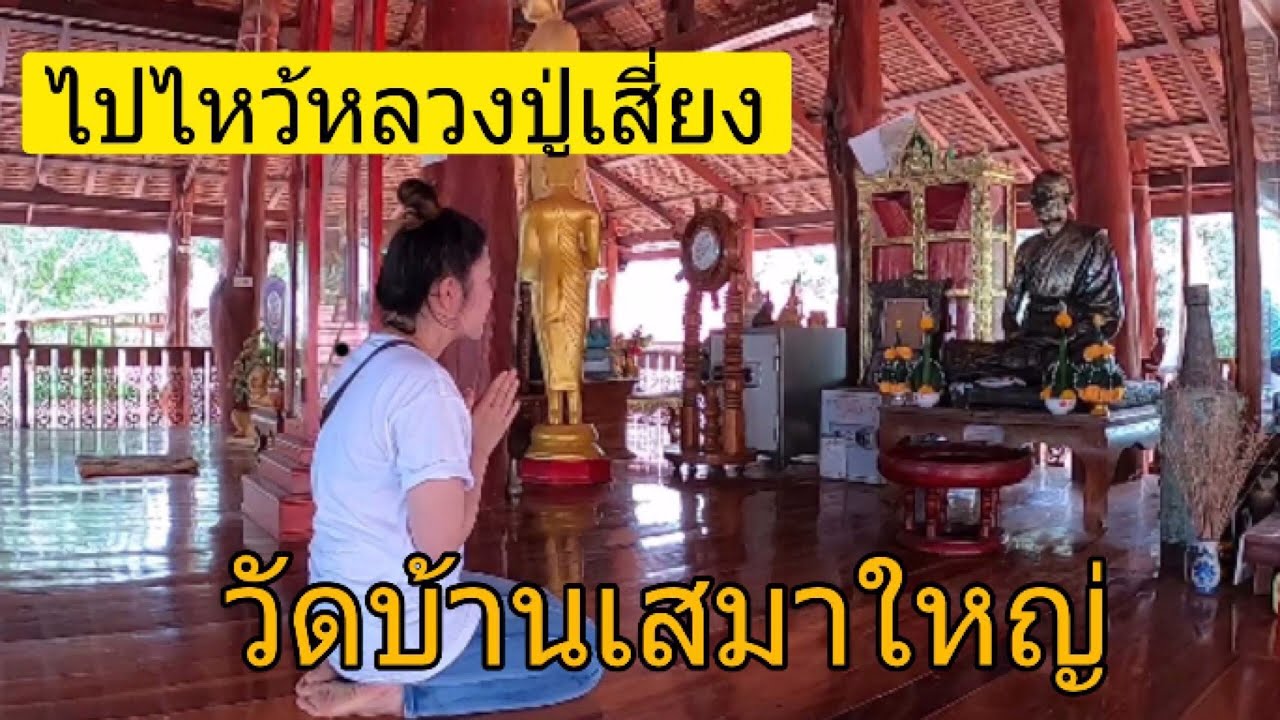
Wat Ban Sema Yai is especially associated with Phra Khru Chanthonsarakhun, widely known as Luang Pu Siang, an old and respected monk of northeastern Thailand. Luang Pu Siang lived from 1867 to 1955 and is remembered as a monk of good conduct, wisdom, calmness, spiritual discipline, and community development. He helped teach morality to the people of Sema Yai, supported education, and encouraged the community to live with ethical values. Because of his lasting influence, many people also refer to the temple as Wat Luang Pu Siang.
The devotion to Luang Pu Siang remains very strong among villagers and descendants of the Sema Yai community. People do not remember him only as a monk connected with sacred objects or amulets. They remember him as a teacher, developer, and moral guide whose work benefited the community. His role in teaching Dhamma, encouraging good conduct, and helping the village created a deep sense of gratitude that continues to this day. This makes Wat Ban Sema Yai a temple of memory as well as a temple of worship.
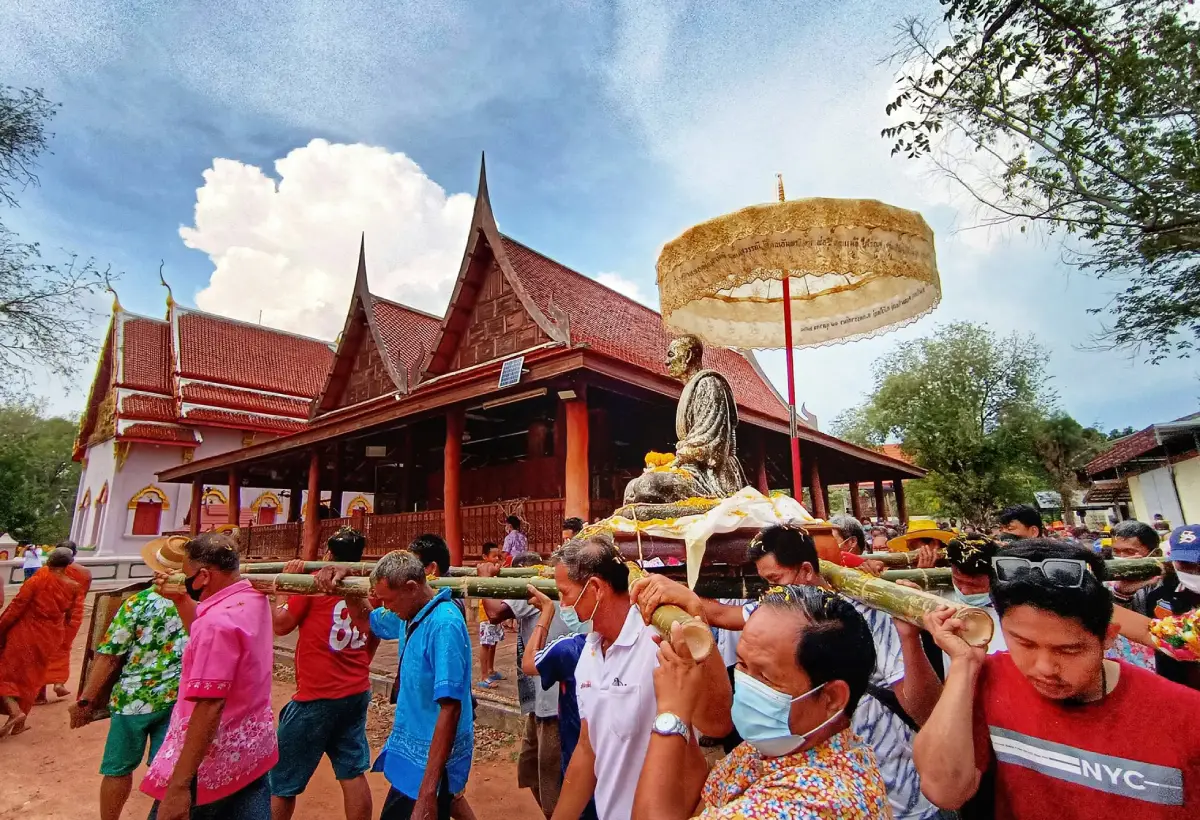
One of the most important traditions of the temple is the Songkran procession of Luang Pu Siang’s image. This annual event is held around 12 – 13 April, especially on 13 April, the Thai New Year period. Villagers and visitors come to make merit, pour water, gild the image, and join the procession in remembrance of Luang Pu Siang’s virtue. The ceremony strengthens community unity and allows younger generations to reconnect with their roots. For cultural travelers, this tradition is one of the most meaningful aspects of Wat Ban Sema Yai.
The procession of Luang Pu Siang’s image is not merely a local festival. It is a living expression of gratitude. Through the procession, villagers publicly remember the monk who shaped their community’s moral life. The event also brings together religion, family reunion, local music, folk performance, and merit-making. Some years include lively community activities such as mor lam performances, but the heart of the tradition remains Buddhist respect and remembrance. This balance of faith and local culture is a key feature of rural Isan temple life.
The temple’s buildings reflect community cooperation. The ordination hall and temple halls were built and maintained through the faith and effort of local people. The beauty of their decorative patterns should be understood not only as craftsmanship but also as the visible result of collective devotion. When villagers contribute labor, funds, and time to build a temple hall, the building becomes a shared spiritual asset. It belongs to the community in both religious and emotional terms.
The temple hall, or sala, is especially important in Thai community temples. It serves as a place for sermons, merit-making, meetings, ceremonies, and the reception of visitors. In the case of Wat Ban Sema Yai, the construction and development of the temple hall reflect cooperation among monks, local leaders, village heads, the local administration, and villagers from Sema Yai and nearby communities. The hall is therefore not only a building. It is a symbol of unity.
The main areas within Wat Ban Sema Yai include the ordination hall, the sermon hall, the area for paying respect to Luang Pu Siang’s image, open grounds used for annual ceremonies, merit-making areas, and spaces that support community activities. On ordinary days, visitors can experience the temple as a calm rural place of worship. During Songkran and annual ceremonies, the same space becomes lively with devotion, local culture, and community participation.
The temple is also connected with the cultural landscape of Ban Sema Yai. The village has been identified as an old community and a cultural site worthy of conservation. The area is close to Huai Yang, and records mention large stone sema markers associated with the temple area. This is important because sema stones are deeply connected with Buddhist sacred space. In Thai Buddhism, sema stones mark the consecrated boundary of an ordination hall. Their presence or memory gives the area additional religious and cultural significance.
The word Sema itself carries meaning. A sema marker defines sacred space for monastic ceremonies, especially the formal boundary of an ubosot. In many northeastern Thai areas, large stone sema markers are also connected with older cultural and religious traditions. For this reason, the name Sema Yai should not be understood only as a village name. It also points toward a deeper historical and religious landscape. Visitors who know this background will appreciate Wat Ban Sema Yai more fully.
Wat Ban Sema Yai should therefore be approached as a historic community temple rather than a quick sightseeing stop. Its value is found in several layers: the old community of Sema Yai, the meaning of sema stones, the temple’s role as a religious center, the memory of Luang Pu Siang, the annual Songkran procession, and the villagers’ continuing support for temple buildings and ceremonies. These layers make the temple meaningful even though it does not present itself as a modern landmark attraction.
The current abbot associated with Wat Sema Yai is Phra Khru Ophat Chantharangsi. Local sources identify him as the abbot of Wat Sema Yai and as a senior monk connected with the Sema Yai community. In a rural community temple, the abbot plays an important role not only in religious leadership but also in coordinating temple development, ceremonies, community activities, and relations between monks and villagers. This leadership helps the temple remain active across generations.
In community temples like Wat Ban Sema Yai, religious life depends on cooperation. The abbot, monks, temple committee, local administrators, village leaders, and villagers must work together to organize ceremonies, maintain buildings, prepare festival spaces, and welcome visitors. The annual Luang Pu Siang procession requires careful coordination because it involves religious rites, crowds, offerings, performances, and local traffic. This cooperation is part of the temple’s social meaning.
Wat Ban Sema Yai is open daily from 08.00 to 17.00. There is no admission fee. Visitors may enter for worship, merit-making, and a calm walk through the temple grounds. Donations may be made voluntarily according to personal faith. This distinction is important for foreign visitors: a rural Thai temple is not primarily a ticketed attraction. It is a living religious space supported by the devotion of monks and villagers.
Getting There is easiest by private car, van, or local hired transport. From Nakhon Ratchasima city, travel toward Bua Yai District and continue to Sema Yai Subdistrict. Sema Yai Subdistrict is about 12 kilometers from Bua Yai town. Navigation apps should search for Wat Ban Sema Yai, Wat Sema Yai, or Wat Chantharangsi Muniwong and confirm that the destination is in Sema Yai Subdistrict, Bua Yai District, Nakhon Ratchasima Province. This avoids confusion with similarly named temples in other areas.
From Bua Yai town, the temple can be reached by local roads leading into Sema Yai Subdistrict. The distance is suitable for a half-day visit if travelers are already in Bua Yai. From Nakhon Ratchasima city, the journey is longer and is better planned as a full-day route. Visitors can combine Wat Ban Sema Yai with Bua Yai town, Bueng Bua Yai, the railway station area, local markets, and nearby temples.
The best time to visit is in the morning or late afternoon. These periods are more comfortable for walking and photographing the temple buildings respectfully. The Songkran period in April is the most culturally active time because of the Luang Pu Siang procession. However, visitors who prefer quiet worship may choose a normal weekday. Both experiences reveal different aspects of the temple: calm rural faith on ordinary days and strong community devotion during festivals.
Visitors should follow normal Thai temple etiquette. Dress modestly, covering shoulders and knees. Remove shoes before entering the ordination hall or designated sacred buildings. Keep voices low. Do not touch sacred images, monk statues, or ritual objects without permission. Avoid intrusive photography of monks, villagers, or worshippers. Respect monastic areas and do not enter restricted spaces. These practices help preserve the dignity of the temple and the comfort of local worshippers.
For families, Wat Ban Sema Yai is a good place to teach children about local history, gratitude, and community cooperation. Parents can explain why villagers respect Luang Pu Siang, why the annual procession matters, why temple halls are built through community support, and how Buddhist temples serve as centers of village life. This makes a temple visit more than a short act of worship. It becomes a lesson in social responsibility and cultural memory.
For foreign visitors, Wat Ban Sema Yai is an excellent example of a rural Thai Buddhist community temple. It shows how Buddhism is practiced outside famous tourist sites. Here, the temple is a place for merit-making, annual ceremonies, local identity, monk remembrance, and community unity. Foreign travelers who visit respectfully will gain insight into the way temples sustain everyday spiritual life in rural northeastern Thailand.
Travelers interested in local culture should connect the temple with the broader context of Sema Yai Subdistrict and Bua Yai District. Bua Yai is an important district of Nakhon Ratchasima with a town center, railway station, markets, local food, and agricultural communities. A visit to Wat Ban Sema Yai can be combined with the town area, Bueng Bua Yai, and other nearby temples to create a route focused on local faith and everyday life rather than only major provincial attractions.
Nearby places of interest include Bueng Bua Yai, Bua Yai Railway Station, the Bua Yai market area, Wat Mongkhon Hatthi Santiwat in Sema Yai Subdistrict, and other temples in Bua Yai District. Bueng Bua Yai is a local relaxation area and a useful stop for travelers who want to see the everyday atmosphere of the district. The railway station and market area also help visitors understand Bua Yai as a transport and community center.
Restaurants near Wat Ban Sema Yai are mainly located in Bua Yai town rather than immediately next to the temple. Visitors can eat before or after the temple visit. Publicly listed options include Baan Suan Dokmai, Roy Yim Restaurant, Malee Chinese Restaurant, Soy Tee steamed buns, Kim Leng Teochew pork noodles, and cafés around the district. Groups should call ahead where phone numbers are available because local restaurants may have flexible opening days and hours.
Accommodation is also easier to find in Bua Yai town. Options include White Orchid Hotel, Mareena Resort, Bua Yai Resort, Khao Hom Resort, and other daily accommodation near the railway station and market. Staying in Bua Yai is convenient for visitors who want access to food, transport, and local shops. Travelers making a longer route across northern Nakhon Ratchasima should choose accommodation according to their onward travel plan.
Wat Ban Sema Yai is most valuable when understood as a temple of memory and community devotion. Its importance is shaped by the old Sema Yai community, the meaning of sema markers, the presence of Luang Pu Siang in local faith, the beauty of the temple buildings, and the annual Songkran procession. The temple may not be as widely known internationally as major temples in Korat city, but for understanding rural Isan Buddhism, it is highly meaningful.
In summary, Wat Ban Sema Yai in Nakhon Ratchasima is an old and respected temple of Sema Yai Subdistrict, Bua Yai District. It is known for its beautiful ordination hall and temple hall, its role as a major religious center of the subdistrict, and its deep connection with Luang Pu Siang, or Phra Khru Chanthonsarakhun. The annual Songkran procession of Luang Pu Siang’s image keeps the temple’s memory and community faith alive. The temple is open daily, has no admission fee, and is suitable for Thai and foreign visitors who want to understand local Buddhist culture, rural community temples, and the spiritual identity of Sema Yai.
| Name | Wat Ban Sema Yai, Nakhon Ratchasima |
| Related Names | Wat Sema Yai, Wat Chantharangsi Muniwong, Wat Luang Pu Siang, Wat Ban Sema Yai Temple |
| Location | Sema Yai Subdistrict, Bua Yai District, Nakhon Ratchasima Province |
| Address | Ban Sema Yai, Sema Yai Subdistrict, Bua Yai District, Nakhon Ratchasima 30120, Thailand |
| Coordinates Of Ban Sema Yai Area | 15.4908963027, 102.413601187 |
| Type | Community Buddhist temple, local religious site, and cultural faith center of Sema Yai Subdistrict |
| Highlights | Old temple of Sema Yai Subdistrict, beautiful ordination hall and temple hall, devotion to Luang Pu Siang, annual Songkran procession of Luang Pu Siang’s image, and local cultural links with large stone sema markers |
| History | Recognized locally as a large and old temple with the longest history in Sema Yai Subdistrict. The temple is connected with the old community of Ban Sema Yai and cultural traces of large stone sema markers in the area |
| Important Figure | Phra Khru Chanthonsarakhun, or Luang Pu Siang, a respected northeastern monk who lived from 1867 to 1955 and remains deeply revered by the Sema Yai community |
| Distinctive Features | A rural community temple sustained by the cooperation of monks, villagers, local leaders, schools, and community members, serving as a central place for annual religious activities and local Buddhist traditions |
| Travel Information | From Nakhon Ratchasima city, travel to Bua Yai District and continue to Sema Yai Subdistrict, about 12 km from Bua Yai town. Private car, van, or local hired transport is the most convenient option. Navigation apps should search for Wat Ban Sema Yai, Wat Sema Yai, or Wat Chantharangsi Muniwong in Bua Yai District |
| Current Status | Active community temple and important annual religious activity center of Sema Yai Subdistrict |
| Open Days | Daily |
| Opening Hours | 08.00 – 17.00 |
| Fees | No admission fee; voluntary donations may be made according to personal faith |
| Facilities | Ordination hall, sermon hall, multipurpose grounds, Luang Pu Siang image worship area, merit-making areas, annual festival space, and parking depending on temple conditions |
| Main Areas / Zones | Ordination Hall Sermon Hall Luang Pu Siang Image Worship Area Multipurpose Festival Ground Merit-Making And Visitor Reception Area Beautiful Temple Building Area Songkran Festival And Procession Area Area Connected With Local Stone Sema Heritage |
| Tradition / Important Activity | Songkran tradition and Luang Pu Siang image procession, held around 12 – 13 April each year, with merit-making, water-pouring, gilding, and a procession to remember Luang Pu Siang’s virtue |
| Abbot / Caretaker | Phra Khru Ophat Chantharangsi |
| Local Contact Channel | Sema Yai Subdistrict Administrative Organization, Tel. 044-462-218 |
| Nearby Tourist Attractions | 1. Bueng Bua Yai, about 12 km, Tel. 082-159-9664 2. Bua Yai Railway Station, about 12 km 3. Bua Yai Market And Town Area, about 12 km 4. Wat Mongkhon Hatthi Santiwat, Sema Yai Subdistrict, about 6 km 5. Wat Don Han, Bua Yai District, about 15 km 6. Wat Dan Chang, Bua Yai District, about 24 km 7. Wat Ban Rai, Dan Khun Thot District, about 80 km, Tel. 082-834-9109, 065-826-7686 |
| Nearby Restaurants | 1. Baan Suan Dokmai, Bua Yai, about 12 km, Tel. 083-373-3351, 086-458-8685, 090-237-3206 2. Roy Yim Restaurant, Bua Yai, about 12 km, Tel. 096-953-6632, 044-461-640 3. Malee Chinese Restaurant, Bua Yai, about 13 km, Tel. 044-461-938, 081-265-4359 4. Soy Tee Steamed Buns, Bua Yai, about 12 km 5. Kim Leng Teochew Pork Noodles, Bua Yai, about 12 km 6. Café Amazon In Bua Yai Town Area, about 12 km |
| Nearby Accommodations | 1. White Orchid Hotel Bua Yai, about 12 km, Tel. 091-019-7926, 044-461-371 2. Mareena Resort Bua Yai, about 13 km, Tel. 080-166-9549 3. Bua Yai Resort, about 12 km, Tel. 087-449-9777, 061-071-0889 4. Khao Hom Resort Bua Yai, about 12 km, Tel. 098-309-1889 5. Daily Accommodation Near Bua Yai Railway Station, about 12 km 6. Accommodation Around Bua Yai Town And Market Area, about 12 km |
Frequently Asked Questions (FAQ)
Q: Where is Wat Ban Sema Yai located?
A: Wat Ban Sema Yai is located in Ban Sema Yai, Sema Yai Subdistrict, Bua Yai District, Nakhon Ratchasima Province. It is an old and respected community temple of Sema Yai Subdistrict.
Q: What are the opening days and hours of Wat Ban Sema Yai?
A: Wat Ban Sema Yai is open daily from 08.00 to 17.00. Morning and afternoon are suitable times for worship, merit-making, and quiet exploration of the temple.
Q: Is there an admission fee at Wat Ban Sema Yai?
A: There is no admission fee. Visitors may make voluntary donations or support temple activities according to personal faith.
Q: Why is Wat Ban Sema Yai important?
A: Wat Ban Sema Yai is one of the oldest and most important temples in Sema Yai Subdistrict. It has beautiful temple buildings and serves as a central place for annual Buddhist activities and community traditions.
Q: Who was Luang Pu Siang?
A: Luang Pu Siang, or Phra Khru Chanthonsarakhun, was a respected monk of Wat Ban Sema Yai who lived from 1867 to 1955. He is remembered as a teacher, developer, and moral guide for the Sema Yai community.
Q: What is the main annual tradition at Wat Ban Sema Yai?
A: The main tradition is the Songkran procession of Luang Pu Siang’s image, held around 12 – 13 April every year. The event includes merit-making, water-pouring, gilding, and a procession to honor Luang Pu Siang.
Q: How can travelers get to Wat Ban Sema Yai?
A: From Nakhon Ratchasima city, travel to Bua Yai District and continue to Sema Yai Subdistrict, about 12 km from Bua Yai town. Private car, van, or local hired transport is the most convenient option.
Q: What should foreign visitors know before visiting Wat Ban Sema Yai?
A: Wat Ban Sema Yai is a rural Thai Buddhist community temple, not a commercial tourist attraction. Foreign visitors should dress modestly, speak quietly, respect sacred areas, and understand the temple’s role in local faith, memory, and community identity.
 Category: ●Places of Worship
 Group: ●Temple
Last Update : 3 MonthAgo
 Last Update : 3 MonthAgo
 Click to Access the Navigation Map GPS
Wat Ban Sema Yai Map
Recommend

 Art, Culture and Heritage
 Historical Sites and Monuments(20)
 Landmarks and Memorials(5)
 Art, Craft Centres, Tradition(7)
 Museums(6)
 Art Gallery(1)
 Educational Places
 Educational Gardens, Farm(4)
Temple(29)
 Mosque(1)
 Other Sacred Sites(6)
 Research and Development
 Royal Project(3)
 Suburban Living
 Village, Community(6)
 Local Market(4)
 Floating Market(1)
 Nature and Wildlife
 National Parks and Marine Reserves(3)
 Mountain (Doi)(5)
 Dam, Reservoir, Lake(8)
 Waterfalls(9)
 Hot Springs(1)
 Caves(2)
 Flower Field(1)
 River, Canal(8)
 Bays and Beaches(2)
 Other natural attractions(3)
 Entertainment and Agricultural
 Zoos and Aquariums(2)
 Animal camps and shows(1)
 Farms, Parks and Ecotourism(21)
 Waterpark(4)
 Outdoor and Adventure Activities(6)
 Shopping
 Shopping and Night Market(2)
 Travel Articles, Recipes
 Travel Review, Food Review(6)


