
lovethailand home >Northeastern Travel Attractions >Nakhon Ratchasima Travel Attractions >Non Sung >Phon Songkhram > Wat Marum
TL;DR: Wat Marum is located at Ban Marum, Moo 7, Phon Songkhram Subdistrict, Non Sung District, Nakhon Ratchasima Province, open Daily, hours Morning – Evening.
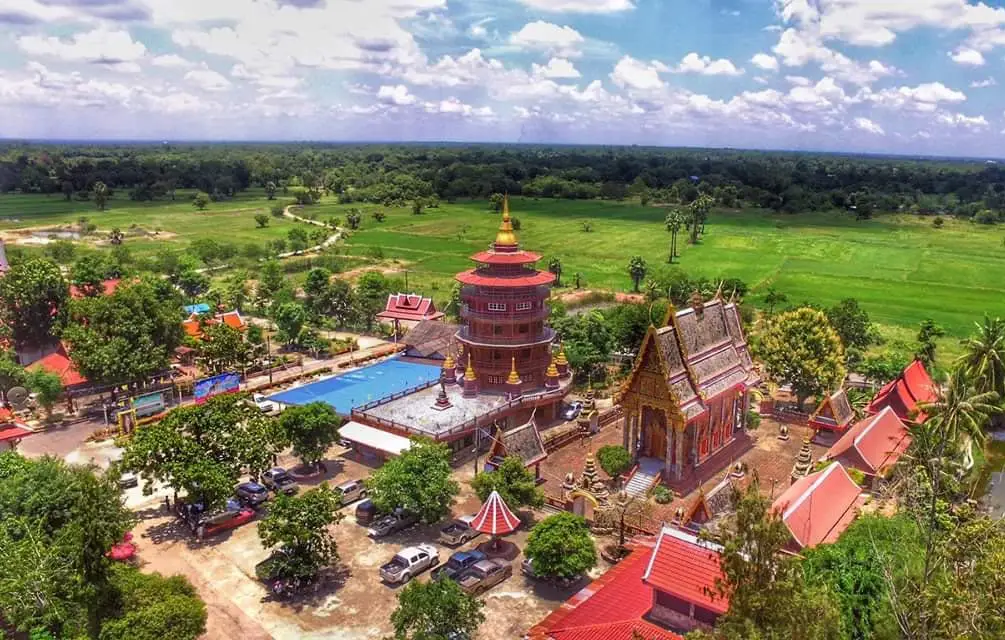
Wat Marum
Open Days: Daily
Opening Hours: Morning – Evening
Wat Marum in Nakhon Ratchasima is an important old community temple located at Ban Marum, Moo 7, Phon Songkhram Subdistrict, Non Sung District, Nakhon Ratchasima Province. It is a respected Buddhist temple for the local community and a meaningful place for visitors who want to understand rural Thai Buddhism beyond major city temples and well-known tourist landmarks. Wat Marum is not a large commercial attraction. Its value lies in its long history, sacred Buddha images, community devotion, meditation role, annual religious activities, and the continuing relationship between the temple and the people of Ban Marum.
The temple is especially suitable for travelers who enjoy quiet cultural routes, local temples, rural landscapes, and places that still function as living centers of community life. Visitors to Wat Marum can pay respect to important Buddha images, see the stupa that enshrines Buddha relics from India, observe the temple buildings, learn about community-based religious activities, and combine the visit with nearby archaeological and historical sites in Phon Songkhram and Non Sung District. This makes Wat Marum a meaningful stop for those who want to experience Korat through local faith, history, and everyday Buddhist practice.
The history of Wat Marum dates back to the Ayutthaya period. The temple is described as an old temple established during the reign of King Songtham, around B.E. 2163 – 2171, and formally founded as a Buddhist temple in B.E. 2169. It belongs to the Maha Nikaya order. Later, the temple received its royal grant of consecrated boundary on 13 January 1994 and held the formal boundary consecration ceremony from 28 January to 6 February 1995. This history gives Wat Marum a strong identity as an old temple that has continued to develop and serve the community into the modern period.
The name Wat Marum comes from Ban Marum, the village where the temple is located. This naming pattern is common among rural Thai temples. The temple is not separate from the village; it is the spiritual center of the village. The name therefore records the relationship between the monastery and the community. When local people say Wat Marum, they are referring not only to a religious site but also to a shared space of identity, memory, merit-making, and community responsibility.
Wat Marum is a good example of a rural temple where faith is expressed through cooperation. The buildings, sacred objects, and religious activities of the temple reflect the combined effort of monks and villagers. Local people have supported the temple through donations, labor, participation in ceremonies, and maintenance of temple grounds. This collective support gives the temple its character. It is not a temple built only by elite patronage or tourism funding. It is a temple sustained by the devotion of the people who live around it.
The temple’s religious buildings include an old ordination hall, a newer ordination hall, a viharn, a sermon hall, a dining hall, a meditation hall, monks’ residences, a bell tower, a merit-making hall, and a crematorium. The old ordination hall was built in B.E. 2224 and consecrated in B.E. 2230. In later years, after the new ordination hall was built in B.E. 2532 and consecrated in early B.E. 2538, the old ordination hall was restored and adapted as a viharn. This shows how Wat Marum has preserved older sacred structures while continuing to update facilities for active monastic use.
The presence of both old and new religious buildings gives Wat Marum architectural and historical depth. The old structure preserves memory and continuity, while the newer structure supports present-day Sangha ceremonies. Visitors should understand that Buddhist temples are not static monuments. They grow, adapt, restore, and transform according to the needs of monks and community members. Wat Marum demonstrates this process clearly through its layered temple buildings.
One of the most important sacred structures inside the temple is Machawirat Chedi, built to enshrine Buddha relics from India. In Thai Buddhist culture, relics are revered as sacred reminders of the Buddha and his teachings. The presence of Buddha relics gives the temple additional spiritual importance for local Buddhists. Visitors should approach the stupa with respect, keep their voices low, and take time to reflect on the meaning of paying homage to the Buddha, the Dhamma, and the Sangha.
Wat Marum is also known for several important Buddha images and sacred objects revered by the community. These include Luang Pho Sila Laeng, a stone Buddha image; Luang Pu Dam Ta Phet; Luang Pho Ring; and Luang Ta Yoi Ket Khot, an image associated as a replacement for Luang Pho Ring. These sacred images represent local devotion and temple memory. They are important not only because of their physical appearance but because generations of villagers have prayed, made merit, and built faith around them.
Luang Pho Sila Laeng is especially interesting because the name refers to stone material. In northeastern Thailand, stone and laterite are closely connected with ancient religious architecture, especially in archaeological landscapes around Korat. Although Wat Marum is a present-day Thai Buddhist temple, the presence of a stone-associated Buddha image adds a deeper sense of locality and sacred material culture. Visitors interested in local art and temple heritage should pay attention to this image respectfully.
Luang Pho Ring is connected with an important community activity: an alcohol-quitting pledge. People who wish to stop drinking can make a vow before Luang Pho Ring. This practice reveals an important social role of Wat Marum. The temple does not function only as a place for ceremonies; it also helps people improve their lives. Faith becomes a moral support system. A person making a vow before a sacred image gains encouragement, self-discipline, and community awareness. This is a powerful example of how Buddhist temples can contribute to public well-being.
The alcohol-quitting activity is particularly meaningful because alcohol-related problems can affect families, health, income, and community harmony. By using a sacred vow as a turning point, the temple provides a culturally familiar path for personal change. This does not replace modern health support, but it strengthens moral intention and social commitment. For foreign visitors, this practice helps explain how Thai temples often serve practical community needs, not only spiritual or ritual functions.
Wat Marum is also registered as Nakhon Ratchasima Provincial Meditation Practice Center No. 148. This confirms its role as a place of Dhamma practice. Visitors interested in meditation, mindfulness, or Buddhist training should contact the temple directly before joining activities. The meditation hall and practice areas allow the temple to serve both local villagers and practitioners who want a quiet rural setting for inner training. This role makes the temple more than a local worship site; it is also a place for mental cultivation.
Other important facilities include the sermon hall, dining hall, meditation hall, monks’ residences, bell tower, merit-making hall, and crematorium. These buildings show how a rural Thai temple supports the full cycle of community life. It is a place for sermons, meals, ceremonies, meditation, funerals, annual festivals, and social gathering. A temple like Wat Marum is therefore deeply woven into the rhythm of village life. It supports people in ordinary days, holy days, festivals, and difficult moments.
One of the temple’s important annual activities is the Dhamma practice and relic worship event held on the full moon of the third lunar month, which corresponds to Makha Bucha Day. This event invites people to make merit, worship the relics, practice Dhamma, and reflect on the teachings of the Buddha. Makha Bucha is one of the most important Buddhist observance days in Thailand, connected with the principles of doing good, avoiding evil, and purifying the mind. Wat Marum uses this occasion to strengthen both faith and community participation.
In addition to the Makha Bucha event, Wat Marum participates in other community religious activities such as Kathin, robe-offering ceremonies, merit-making events, temple fairs, and local support activities. The temple is also associated with community product selling during important events. Villagers may bring handmade goods, local products, food, or souvenirs to sell. This gives visitors a chance to support local livelihoods while participating in temple culture. The relationship between temple events and community economy is one of the important features of rural Thai Buddhism.
The sale of handmade village products also reflects the temple’s role as a shared social space. A temple festival is not only a religious occasion. It is also a time when villagers meet, work together, support each other, and present local skills. Buying a community product at Wat Marum can therefore be understood as a small form of local support. It connects merit-making, travel, and rural economy in a simple but meaningful way.
The current abbot of Wat Marum is Phra Khru Prachot Chaiyakhun. Earlier known leadership includes Phra Khru Thirathammaphitak, also known as Ai Thammathiro. The continuity of abbots reflects the ongoing life of the temple across generations. In a community temple, the abbot’s role includes caring for monks, maintaining temple buildings, guiding religious activities, coordinating with villagers, and preserving the temple’s social and spiritual functions.
The environment around Wat Marum is rural and community-based. The temple is surrounded by village houses, agricultural areas, local roads, and the quiet rhythm of Non Sung District. This setting differs greatly from major temples in Korat city. Visitors who come here should expect simplicity rather than spectacle. The beauty of Wat Marum lies in its calm atmosphere, local faith, village participation, and the historical continuity of its sacred objects and buildings.
Getting to Wat Marum requires attention to location details because there are other temples with similar names in Nakhon Ratchasima. The correct destination is Wat Marum at Ban Marum, Moo 7, Phon Songkhram Subdistrict, Non Sung District. Navigation apps should be checked carefully to avoid confusing it with a different Wat Marum in another district. Travelers should confirm the destination by district and subdistrict before departure.
Getting There from Nakhon Ratchasima city is most convenient by private car, van, or local hired vehicle. Travelers can head toward Non Sung District and continue into Phon Songkhram Subdistrict and Ban Marum. The route distance from Korat city is approximately 35 to 45 kilometers depending on the chosen road. Because the temple is located within a village area, private transportation is easier than relying only on public transport. Those already in Non Sung District can reach the temple in a shorter local trip.
The temple is open daily for worship and merit-making from morning to evening. There is no admission fee. Visitors may make donations according to personal faith at designated points. This distinction is useful for foreign travelers: a rural Thai temple is not a ticketed tourist attraction. It is primarily a religious and community space. Donations are voluntary acts of merit-making and support.
Visitors should dress modestly and behave respectfully. Shoulders and knees should be covered. Shoes should be removed before entering sacred buildings where required. Do not touch Buddha images, relics, or sacred objects without permission. Keep voices low around worship areas and do not enter monks’ residences without permission. Families with children should supervise them around halls, sacred images, and ceremonial spaces.
For travelers interested in local history, Wat Marum can be combined with nearby archaeological sites. Phon Songkhram Castle is located in the same subdistrict and is an ancient Mahayana Buddhist site associated with the Arokayasala or hospital shrine tradition of King Jayavarman VII. Ban Non Wat is another important archaeological site in Phon Songkhram Subdistrict, with evidence of human settlement from the Neolithic, Bronze Age, Iron Age, and early historic periods. Visiting these sites together helps travelers understand the deep cultural landscape of Non Sung District.
Phon Songkhram Castle is especially suitable for visitors who want to connect present-day Buddhist life with older religious history. The site includes remains of a principal shrine, library structure, enclosure wall, and entrance elements built with laterite and sandstone. A visit to Wat Marum followed by Phon Songkhram Castle shows two different religious layers: a living Thai Buddhist community temple and an ancient Khmer-period religious monument within the same local landscape.
Ban Non Wat is also valuable for educational travel. It is one of the important archaeological sites in Nakhon Ratchasima and shows long-term human settlement in the Mun River basin. Archaeological evidence from the area helps explain the deep roots of communities in Non Sung District. Combining Wat Marum with Ban Non Wat gives a trip both Buddhist and archaeological depth, making it suitable for students, researchers, and cultural travelers.
For families, Wat Marum provides a good opportunity to teach children about the role of temples in Thai village life. Parents can explain why villagers build and maintain a temple, why sacred images are respected, why annual temple festivals matter, and how a temple can help people make positive changes such as quitting alcohol. This kind of learning is different from reading about Buddhism in a classroom. It comes from seeing a living temple in an actual village setting.
For foreign visitors, Wat Marum is a good example of a rural Thai Buddhist temple. It shows how Buddhism functions in everyday community life rather than only in famous urban temples. Foreign travelers will see a temple that supports merit-making, meditation, funerals, local gatherings, moral vows, annual festivals, and community product sales. This helps explain why temples remain central to Thai village society.
A basic visit to Wat Marum may take around 45 minutes to 1 hour. Visitors can pay respect to the main sacred images, visit Machawirat Chedi, walk around the old and new temple buildings, and observe the community atmosphere. Those who want to combine the temple with Phon Songkhram Castle, Ban Non Wat, and Ban Prasat Museum should plan a half-day or full-day route. Morning is a suitable time for the temple, while afternoon can be used for archaeological and local history sites.
Restaurants near Wat Marum are mainly local eateries in Phon Songkhram and Non Sung District. They include noodle shops, made-to-order food shops, som tam restaurants, cafés, and market-area dining places. Travelers who want confirmed phone contact should choose restaurants with publicly listed numbers and call before traveling, especially when visiting as a group or on public holidays. Small local restaurants may have flexible opening days and hours.
Accommodation near Wat Marum is more limited than in central Nakhon Ratchasima. Travelers who want to stay near Non Sung can choose local resorts such as Saeng Khan Resort, My Home Resort, or Ton Rak Resort. Those who prefer more hotel options, restaurants, and urban convenience may stay around Cho Ho or Nakhon Ratchasima city and visit Wat Marum as a day trip. The best choice depends on whether the traveler plans to continue toward Non Sung, Phimai, or return to Korat city.
Overall, Wat Marum should be understood as a historic community temple with real local significance. Its value includes an Ayutthaya-period origin, old and new ordination halls, Machawirat Chedi, Buddha relics from India, several locally revered Buddha images, an alcohol-quitting vow tradition, meditation center status, and the Makha Bucha relic worship event. These elements make the temple important not because it is grand or widely commercialized, but because it continues to serve the faith and life of the community.
In summary, Wat Marum in Nakhon Ratchasima is an old and meaningful temple in Ban Marum, Phon Songkhram Subdistrict, Non Sung District. Founded as a temple in B.E. 2169, it preserves sacred objects, community traditions, religious buildings, and Buddhist activities that remain important today. The temple is suitable for worship, merit-making, meditation interest, local cultural travel, and routes connecting nearby archaeological sites such as Phon Songkhram Castle and Ban Non Wat. For Thai visitors, it is a temple of local faith. For foreign visitors, it is a clear example of how a rural Thai Buddhist temple continues to support spiritual life, moral practice, and community identity across generations.
| Name | Wat Marum, Nakhon Ratchasima |
| Related Names | Wat Marum Ban Marum, Wat Marum Temple |
| Location | Ban Marum, Moo 7, Phon Songkhram Subdistrict, Non Sung District, Nakhon Ratchasima Province |
| Address | Ban Marum, Moo 7, Phon Songkhram, Non Sung District, Nakhon Ratchasima 30160, Thailand |
| Type | Community Buddhist temple, Maha Nikaya order, local religious site, and Nakhon Ratchasima Provincial Meditation Practice Center No. 148 |
| Highlights | Machawirat Chedi, Buddha relics from India, Luang Pho Sila Laeng, Luang Pu Dam Ta Phet, Luang Pho Ring, Luang Ta Yoi Ket Khot, restored old ordination hall, and the alcohol-quitting vow activity before Luang Pho Ring |
| History | An old temple from the Ayutthaya period, associated with the reign of King Songtham around B.E. 2163 – 2171. It was formally founded as a Buddhist temple in B.E. 2169 and later received its consecrated boundary in 1994, followed by the boundary ceremony in 1995 |
| Name Origin | Named after Ban Marum, the village where the temple is located |
| Distinctive Features | A historic rural community temple with several revered Buddha images, Buddha relics from India, a meditation role, and community-based religious activities including alcohol-quitting vows |
| Travel Information | From Nakhon Ratchasima city, travel toward Non Sung District and continue to Phon Songkhram Subdistrict and Ban Marum. Private car, van, or local hired vehicle is the most convenient option because the temple is located within a village area |
| Current Status | Active community temple, religious site, and meditation practice center respected by villagers in Ban Marum and Phon Songkhram Subdistrict |
| Open Days | Daily |
| Opening Hours | Morning – Evening |
| Fees | No admission fee; voluntary donations may be made according to personal faith |
| Facilities | New ordination hall, restored old ordination hall used as a viharn, Machawirat Chedi, sermon hall, dining hall, meditation hall, monks’ residences, bell tower, merit-making hall, crematorium, worship areas, and parking depending on temple conditions |
| Main Areas / Zones | New Ordination Hall Old Ordination Hall Restored As Viharn Machawirat Chedi Buddha Relic Worship Area Luang Pho Sila Laeng Luang Pu Dam Ta Phet Luang Pho Ring Luang Ta Yoi Ket Khot Sermon Hall Meditation Hall Dining Hall Bell Tower Monks’ Residences Merit-Making Hall And Crematorium |
| Traditions / Important Activities | Dhamma practice and relic worship on the full moon of the third lunar month, or Makha Bucha Day, every year Alcohol-quitting vow before Luang Pho Ring Annual temple merit-making events, Kathin, robe offerings, and community support activities |
| Abbot / Caretaker | Phra Khru Prachot Chaiyakhun |
| Main Contact Number | 044-381-076 |
| Nearby Tourist Attractions | 1. Phon Songkhram Castle, about 6 km 2. Ban Non Wat Archaeological Site, about 8 km 3. Non Sung District Center / Non Sung Market Area, about 12 km 4. Ban Prasat Museum And Archaeological Site, about 18 km 5. Prasat Hin Phanom Wan, about 28 km 6. Wat Sala Loi, about 34 km, Tel. 083-461-2999 7. Thao Suranari Monument, about 38 km |
| Nearby Restaurants | 1. Thuat Nu Made-To-Order Food And Noodles, Phon Songkhram, about 5 km, Tel. 085-578-8982 2. Chim Yang? Restaurant, Than Prasat, about 13 km, Tel. 098-131-5875, 082-916-1418, 087-143-2211 3. Som Tam Je Tuk Korat Non Sung Branch, about 14 km, Tel. 091-061-7301, 081-008-0969 4. Ton Rak Cake Non Sung, about 14 km, Tel. 097-135-6197, 097-335-5428 5. Mum Mao Bypass Non Sung, about 15 km, Tel. 081-854-2743 6. PunThai Coffee Non Sung Market, about 14 km, Tel. 092-275-2913 |
| Nearby Accommodations | 1. Saeng Khan Resort Non Sung, about 13 km, Tel. 083-378-9159 2. My Home Resort Non Sung, about 14 km, Tel. 088-359-0599 3. Ton Rak Resort Non Sung-Non Thai, about 17 km, Tel. 086-877-7295 4. KoCo Hotel Korat, about 30 km, Tel. 098-251-9388 5. Green Garden Resort Korat, about 31 km, Tel. 044-952-185 6. Thai Inter Korat Hotel, about 39 km, Tel. 044-247-700 |
Frequently Asked Questions (FAQ)
Q: Where is Wat Marum located?
A: Wat Marum is located at Ban Marum, Moo 7, Phon Songkhram Subdistrict, Non Sung District, Nakhon Ratchasima Province. It is an old community temple respected by local villagers.
Q: What are the opening days and hours of Wat Marum?
A: Wat Marum is open daily for worship and merit-making. The best visiting time is from morning to evening.
Q: Is there an admission fee at Wat Marum?
A: There is no admission fee. Visitors may make voluntary donations or support temple activities according to personal faith.
Q: What are the main highlights of Wat Marum?
A: The highlights include Machawirat Chedi, Buddha relics from India, Luang Pho Sila Laeng, Luang Pu Dam Ta Phet, Luang Pho Ring, Luang Ta Yoi Ket Khot, the restored old ordination hall, and the temple’s role as Nakhon Ratchasima Provincial Meditation Practice Center No. 148.
Q: What is the history of Wat Marum?
A: Wat Marum is an old temple associated with the Ayutthaya period during the reign of King Songtham. It was formally founded as a Buddhist temple in B.E. 2169 and later received its consecrated boundary in the modern period.
Q: What is the important annual activity at Wat Marum?
A: The temple holds Dhamma practice and relic worship on the full moon of the third lunar month, or Makha Bucha Day, every year. It is also known for the alcohol-quitting vow activity before Luang Pho Ring.
Q: How can travelers get to Wat Marum?
A: From Nakhon Ratchasima city, travel toward Non Sung District, then continue to Phon Songkhram Subdistrict and Ban Marum, Moo 7. Private car or local hired transport is the most convenient option.
Q: What should foreign visitors know before visiting Wat Marum?
A: Wat Marum is a rural Thai Buddhist community temple, not a commercial tourist attraction. Foreign visitors should dress modestly, speak quietly, avoid touching sacred objects without permission, and respect the temple’s role in local religious and community life.
 Category: ●Places of Worship
 Group: ●Temple
Last Update : 3 MonthAgo
 Last Update : 3 MonthAgo

 Click to Access the Navigation Map GPS

 Art, Culture and Heritage
 Historical Sites and Monuments(20)
 Landmarks and Memorials(5)
 Art, Craft Centres, Tradition(7)
 Museums(6)
 Art Gallery(1)
 Educational Places
 Educational Gardens, Farm(4)
Temple(29)
 Mosque(1)
 Other Sacred Sites(6)
 Research and Development
 Royal Project(3)
 Suburban Living
 Village, Community(6)
 Local Market(4)
 Floating Market(1)
 Nature and Wildlife
 National Parks and Marine Reserves(3)
 Mountain (Doi)(5)
 Dam, Reservoir, Lake(8)
 Waterfalls(9)
 Hot Springs(1)
 Caves(2)
 Flower Field(1)
 River, Canal(8)
 Bays and Beaches(2)
 Other natural attractions(3)
 Entertainment and Agricultural
 Zoos and Aquariums(2)
 Animal camps and shows(1)
 Farms, Parks and Ecotourism(21)
 Waterpark(4)
 Outdoor and Adventure Activities(6)
 Shopping
 Shopping and Night Market(2)
 Travel Articles, Recipes
 Travel Review, Food Review(6)


