
lovethailand home >Northeastern Travel Attractions >Nakhon Ratchasima Travel Attractions >Non Sung >Phon Songkhram > Prasat Phon Songkhram
TL;DR: Prasat Phon Songkhram is located at Moo 2, Ban Phon Songkhram, Phon Songkhram Subdistrict, Non Sung District, Nakhon Ratchasima Province, open Daily, hours 08.00 – 17.00.
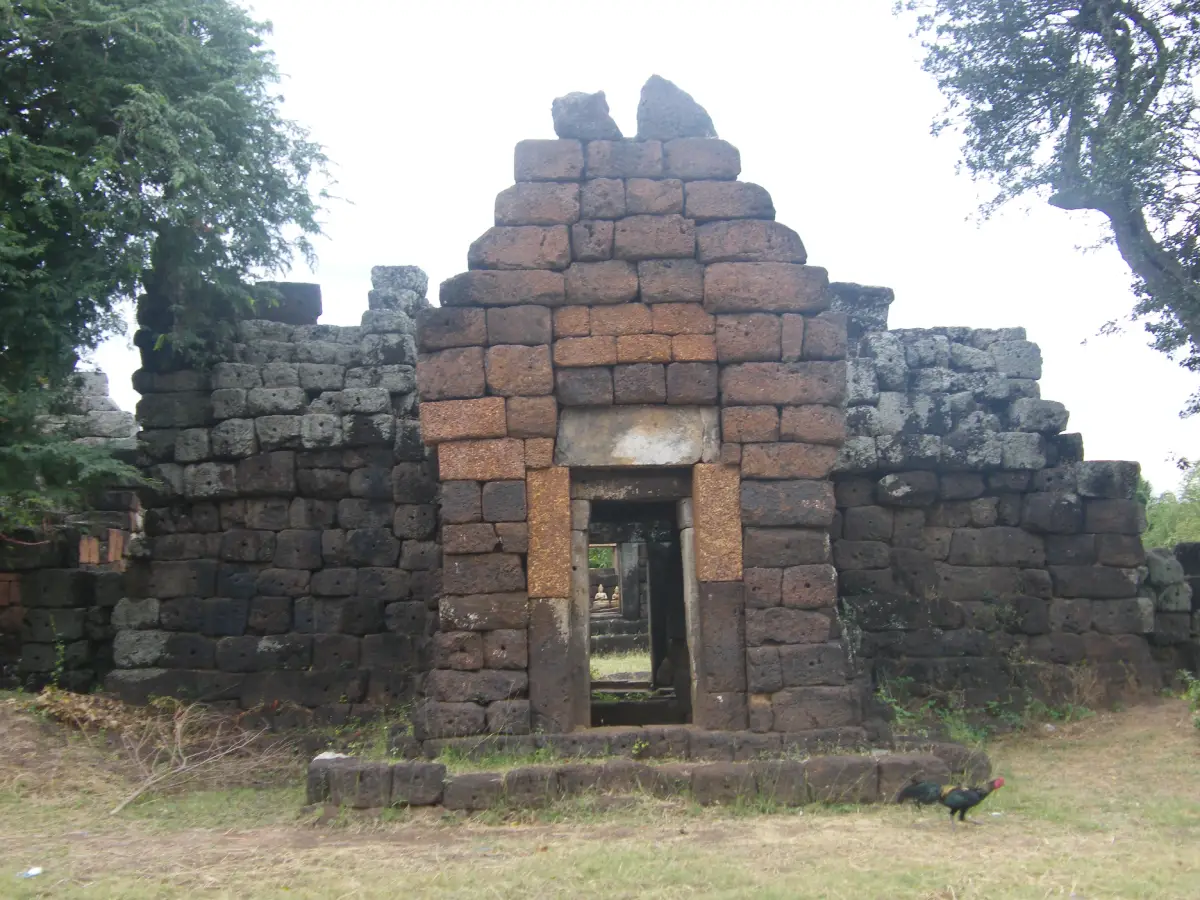
Prasat Phon Songkhram
Open Days: Daily
Opening Hours: 08.00 – 17.00
Admission Fee: Free admission
Prasat Phon Songkhram, also known as Prang Phon Songkhram, is an ancient Khmer sanctuary located within Ban Phon Songkhram, Moo 2, Phon Songkhram Subdistrict, Non Sung District, Nakhon Ratchasima Province. The monument was constructed during the 18th Buddhist century, corresponding to the reign of King Jayavarman VII, and served as the religious sanctuary of an arokayasala, or ancient hospital institution founded according to Mahayana Buddhist beliefs. Although the surviving structure is considerably smaller than the monumental sanctuary at Phimai, its architectural plan, construction materials, sculptures, and archaeological discoveries provide valuable evidence of public healthcare, ritual healing, and social welfare in the ancient Khmer world.
Prasat Phon Songkhram lies within the Upper Mun River Basin, close to several significant archaeological communities, including Ban Non Wat, Ban Prasat, and the historic city of Phimai. This wider region preserves evidence of human settlement extending from prehistoric agricultural communities and the Metal Age through the Dvaravati period and the expansion of ancient Khmer cultural influence into lower northeastern Thailand. A visit to the sanctuary is therefore more than an opportunity to see an old brick and laterite monument. It offers a way to understand a historical landscape in which settlements, waterways, religious institutions, transportation routes, and ancient communities were closely connected.
The correct present-day administrative location is Ban Phon Songkhram, Phon Songkhram Subdistrict, Non Sung District, Nakhon Ratchasima Province. Some older records and copied online descriptions incorrectly place the monument in Marum Subdistrict or a supposed Phon Songkhram District. There is currently no district bearing that name. Phon Songkhram is the name of both a village and a subdistrict within Non Sung District. Using the correct address is important for travelers, especially when entering the destination into a digital navigation system.
The monument is known by several names. The most common are Prasat Phon Songkhram and Prang Phon Songkhram, while some local and documentary sources refer to it as Prasat Sa Phleng, after the large pond situated to the east. These names do not describe different monuments. They reflect two relationships: one between the sanctuary and the village of Phon Songkhram, and another between the ancient compound and the body of water that formed a major part of its cultural landscape.
The original archaeological area covered approximately 12 rai. It included the sanctuary compound, enclosure wall, entrance, pond, and surrounding space that may once have supported activities associated with the arokayasala. Parts of this land were later excavated or modified to form a village pond. Consequently, the visible boundaries today do not reproduce the full extent of the ancient complex. The transformation illustrates how an archaeological site and a living community can share the same landscape over a long period, while also creating the need to balance heritage conservation with the community’s practical use of water.
The sanctuary was constructed from laterite, brick, and sandstone. Each material served a different structural purpose. Laterite was suitable for foundations, walls, and weight-bearing elements because it could be cut into blocks and became harder when exposed to air. Brick was used for walls and portions of the upper structure, while sandstone was preferred for door frames, thresholds, sculpture pedestals, and components requiring greater strength or finer workmanship. The combined use of these materials demonstrates the technical knowledge of the builders and the organized supply of construction resources.
Archaeological investigation has shown that some brickwork was laid in staggered or interlocking courses to create stronger wall joints. At the eastern doorway, stone blocks were positioned together with evidence of metal clamps used to reinforce their connection. These details indicate that the builders did not rely solely on the weight of the masonry. They understood how to distribute pressure, connect brick and stone elements, and construct openings capable of supporting the weight of the structure above.
Although the Thai word prasat is often translated as “castle” or “palace,” Prasat Phon Songkhram was not a royal residence. In the context of ancient Khmer architecture, the term refers to a religious tower or sanctuary used to house sacred images and conduct rituals. The central shrine was therefore the holiest area of the complex rather than a place of domestic residence. Visitors should not expect to find royal rooms, reception halls, or residential apartments.
Prasat Phon Songkhram dates to the 18th Buddhist century, approximately the late 12th to early 13th century CE, and belongs to the Bayon artistic tradition associated with King Jayavarman VII. The king ruled the Khmer Empire from 1181 to 1218 and sponsored a broad program of religious monuments, roads, rest houses, water facilities, and arokayasala hospitals throughout important cities and travel corridors. These institutions strengthened connections between the center of the empire and regional communities while presenting the king as a compassionate protector who sought to relieve the suffering of his subjects.
The inscription of Ta Prohm in present-day Cambodia records 102 arokayasala institutions within Jayavarman VII’s realm. These were not hospitals in the modern sense of large buildings filled with patient wards. They were institutions combining a religious sanctuary, personnel, medicine, herbs, food supplies, and care for the sick. Stone sanctuaries were the most durable components and are often the only structures to survive. Service buildings, kitchens, accommodation, and treatment spaces were probably constructed largely from timber and other perishable materials that disappeared over time.
The surviving monument at Phon Songkhram should therefore be understood as the ritual and spiritual center of a broader hospital institution rather than as the patient ward itself. Sacred images connected with healing were once installed within the central shrine. Worship, chanting, the presentation of medicine and water, and other religious practices may have taken place alongside physical treatment by people knowledgeable in herbal remedies and traditional medicine.
The principal sacred figure associated with an arokayasala was Bhaisajyaguru Vaiduryaprabha, the Medicine Buddha, a symbol of healing for both body and mind. He was commonly represented with attendant bodhisattvas. This religious framework shows that medicine and spirituality were not treated as separate fields. Illness could be addressed through medicine, food, clean water, rest, ritual practice, and the emotional reassurance offered to a patient and family at the same time.
King Jayavarman VII followed Mahayana Buddhism and used the ideal of the compassionate bodhisattva as an important part of royal ideology. Establishing arokayasala institutions therefore carried religious, social, and political meaning. It communicated the ruler’s responsibility to reduce suffering and created a network of institutions connecting regional communities with the authority of the central state. Prasat Phon Songkhram demonstrates that this policy extended into the Mun River region and the communities surrounding Phimai.
Phimai Sanctuary developed over a long period and contains architecture from several phases, while the surviving form of Prasat Phon Songkhram is clearly associated with the Bayon period. The statement that the two monuments belong to the same era should therefore be understood broadly. Phon Songkhram was constructed while Phimai remained an important regional center and was being modified under Jayavarman VII. It does not mean that every building at Phimai and the arokayasala at Phon Songkhram were completed in exactly the same year.
Phimai occupied a strategic position in the Mun River Basin and functioned as a major religious, commercial, and transportation center. Arokayasala institutions established along routes and near surrounding communities could assist travelers, officials, soldiers, monks, and local residents. Phon Songkhram was therefore probably part of a wider network of public infrastructure connected to Phimai and regional transport corridors rather than an isolated rural sanctuary.
The surviving site plan consists of a central sanctuary, a bannalai or subsidiary building, an enclosure wall, a gopura entrance gateway, an approach path, and an external pond. This arrangement corresponds to the standardized plan seen at arokayasala sanctuaries established under Jayavarman VII. Individual sites nevertheless differ in size, architectural detail, construction material, topography, and the degree to which later land use altered the original compound.
The central sanctuary stands within the enclosure wall and formed the sacred core of the complex. Its innermost chamber, known as the garbhagriha, once contained the principal cult images. The original sculptures are no longer kept inside the monument, although replicas and interpretive information help explain the former arrangement. Major original objects discovered during excavation are preserved at Phimai National Museum.
Moving the original antiquities to a museum reduces the risk of theft, weathering, humidity damage, and repeated physical contact. Visitors can first study the architecture and original context at Phon Songkhram and then examine the detailed sculptures at Phimai National Museum. Combining both destinations provides a more complete understanding than visiting either the monument or the museum collection alone.
Sandstone sculpture pedestals and evidence relating to the cult images were discovered within the principal sanctuary. Their position helps archaeologists reconstruct the placement, scale, and ritual function of the sculptures. Even after the images themselves were removed for preservation, the relationship between the pedestals and the garbhagriha continues to identify the central focus of worship.
The gopura served as the principal gateway into the sacred enclosure. Passing through this gateway represented more than simply entering another building. It marked the transition from the ordinary exterior landscape into a controlled ritual space. Sculpture pedestals and architectural fragments found near the gateway suggest that protective images or ritual activities may once have been associated with the entrance.
An approach path extended from the gopura toward the principal sanctuary. Excavation revealed postholes along the route, together with fragments of roof tiles and terracotta roof finials. These discoveries indicate that parts of the approach may once have been covered by a timber roof or accompanied by wooden structures. The organic elements have disappeared, but the postholes and roof materials allow visitors to imagine a compound more architecturally complex than the surviving stonework alone suggests.
The bannalai is a small building inside the enclosure. Its name is commonly translated as a library, although such buildings may have stored scriptures, ritual equipment, sacred objects, or images rather than functioning as libraries in the modern sense. A sculpture pedestal was found inside the bannalai at Phon Songkhram, indicating that the building had a ritual role and was not merely an ordinary storage room.
The enclosure wall separated the sacred compound from the external landscape and organized access to each structure. Not every person using the hospital institution would necessarily have entered the innermost ritual area. A limited number of entrance points allowed movement to be controlled and ceremonies to follow a defined sequence. The wall also offered practical protection from animals and daily activity outside the compound.
Sa Phleng, the pond to the east, was an important part of the sanctuary landscape. Water was essential for drinking, cooking, preparing medicine, washing, and ritual purification. During later periods, members of the community also regarded the pond as a sacred water source associated with the ancient sanctuary. Although parts of the pond and surrounding land were modified for village use, the relationship between water, healing, and religion remains visible in the layout.
The water source associated with an arokayasala had practical as well as symbolic importance. Caring for sick people required water for consumption, cleaning wounds, washing utensils, preparing meals, and boiling medicinal herbs. Locating a pond close to the religious compound supported both ritual activity and the day-to-day operation of the institution.
Archaeological finds from Phon Songkhram are especially important because they include evidence for several forms of Mahayana Buddhist imagery. Discoveries have been associated with Avalokiteshvara, Vajrapani, Prajnaparamita, Vajradhara-type figures, a head identified with Yama, and votive tablets or casting evidence related to the concept of the Trikaya. This group of objects confirms that the site was not simply a generic Khmer monument but a sanctuary whose religious program closely corresponded to that of an arokayasala.
Avalokiteshvara represents compassion, Vajrapani is connected with protective power, and Prajnaparamita personifies perfected wisdom. Their presence within a healing institution expresses the idea that effective care required compassion, wisdom, spiritual strength, and protection. These values were embodied in religious images and integrated into the ritual practices of the sanctuary.
Kneeling male figures holding water containers were also discovered in connection with the monument. They may have represented donors, ritual attendants, or individuals responsible for presenting sacred water. Although the heads of some figures are missing, their kneeling postures and vessels still provide evidence of activities once performed within the religious compound.
Votive tablets and casting-related evidence indicate that the sanctuary may have been involved in producing, distributing, or using portable sacred objects. Small votive images could be carried, deposited as offerings, or kept for personal protection. Their production required molds, raw materials, artisans, and knowledge of Buddhist iconography, suggesting ritual activity that extended beyond worship of the principal image.
Major original antiquities from the excavation are preserved at Phimai National Museum, where controlled environmental conditions and security are more suitable for fragile objects. Museum storage and exhibition also allow scholars to compare material from Phon Songkhram with sculptures and artifacts from other monuments throughout the region. Travelers interested in art history and Buddhist iconography should therefore combine the archaeological site with a visit to the museum.
The Fine Arts Department has conducted systematic survey, excavation, documentation, stabilization, and restoration at Prasat Phon Songkhram. A major restoration campaign took place in 2003, followed by continuing conservation in subsequent years. Part of the work used anastylosis, a method in which fallen original blocks are studied and returned to their most likely positions, with new material introduced only where necessary for structural stability.
Restoration does not mean rebuilding a monument until it appears completely new. Its purpose is to preserve original evidence and make the historical plan understandable. Excessive reconstruction could prevent visitors from distinguishing ancient masonry from modern additions. Conservation must therefore balance structural safety, clarity of interpretation, and honesty toward the archaeological evidence.
The area experienced heavy rainfall and flooding around Sa Phleng in 2020. High water levels raised concerns about the stability of the monument, but an inspection by the regional Fine Arts Office found no severe structural damage. A protective earth embankment and sufficient distance between the water and the sanctuary helped reduce the impact. The event demonstrated the continuing importance of drainage and water management around a monument whose original landscape already incorporated a large pond.
Fine Arts Office 10, Nakhon Ratchasima, continues to inspect the monument, clear vegetation, clean the site, and monitor structural conditions. Phon Songkhram Subdistrict Administrative Organization and the local community assist with the surrounding landscape and local coordination. Cooperation is essential because the monument is protected national heritage while standing within a working village where residents continue to farm, use local roads, and manage nearby water resources.
Visitors should begin outside the enclosure and first observe the relationship between the pond, the village, and the sanctuary. They can then proceed through the gopura, examine the enclosure wall and approach path, and continue toward the principal shrine. Following this sequence reveals the transition from the external environment into the sacred core. Walking directly to the central tower for a photograph and immediately leaving would overlook the elements that identify the site as an arokayasala rather than an isolated shrine.
Sa Phleng should be viewed as part of the ancient site plan, not simply as a modern village pond. Travelers can observe changes in ground level, the direction of drainage, and the distance between the water and the sanctuary. These features help explain how ancient communities integrated water management with sacred architecture and why hospital institutions required a dependable source of water.
At the gopura, visitors can examine the laterite blocks, doorway components, and locations of sculpture pedestals before looking along the approach toward the central shrine. Although the original timber posts and roofing have disappeared, postholes, roof-tile fragments, and terracotta finials show that the entrance route once contained more architectural elements than are visible today.
At the principal sanctuary, attention should be given to the foundation, walls, doorway, and garbhagriha. Comparing the materials reveals how brick, laterite, and sandstone served different purposes. Visitors must not climb the foundation or touch crumbling brickwork. Even minor pressure and abrasion, when repeated by many people, can accelerate deterioration.
The bannalai and enclosure wall usually attract less attention than the central sanctuary, but they are essential for identifying the standardized arokayasala plan. Visitors should compare the position of the smaller building with that of the main shrine and observe how the wall organizes the sacred space. Understanding the complete plan is more informative than judging the site solely by the visual appearance of the central structure.
Information signs provide introductory explanations of the monument’s date, plan, and archaeological discoveries. Reading them before or after walking through the compound helps travelers compare written interpretation with the surviving structures. School groups and organized study visits should contact Phon Songkhram Subdistrict Administrative Organization or Fine Arts Office 10 in advance to coordinate access and reduce pressure on the monument.
Facilities are limited because this is a small open-air archaeological site within a rural community rather than a major visitor complex with shops and a staffed ticket center. Travelers should bring drinking water, a hat, an umbrella, and sun protection, particularly during the hot season. Shoes suitable for grass and uneven ground are preferable, while footwear with poor grip should be avoided during the rainy season.
Morning is the most comfortable time to visit because temperatures are lower and angled sunlight makes the textures of laterite and brick easier to see. Late afternoon can provide attractive photographic light, but visitors should leave within the published hours. Approximately 45–90 minutes is sufficient for a careful examination of the plan and information signs. A half-day or full-day itinerary is recommended when combining the monument with nearby archaeological sites.
During the rainy season, grass and ground near the pond may become wet or slippery. Visitors should remain away from the pond edge and respect any temporarily restricted conservation area. After heavy rain, walking on the structural foundations should be avoided because wet laterite and brick can be slippery, while trampling soft soil near the foundations may alter drainage and ground stability.
Photography is permitted when conducted respectfully. Visitors must not climb walls, stand on sculpture pedestals, or rearrange stones to create a scene. Food, beverages, incense, and candles should not be placed directly on ancient brickwork because grease, heat, wax, and staining can damage the surface. Offerings should be made only at locations designated by the community or site caretaker.
Families can use the sanctuary as an outdoor classroom for learning about history, architecture, water, and ancient medicine. Children should be told that the structure was connected with a hospital institution, not a fortress built for warfare. They can compare the three principal building materials—brick, laterite, and sandstone—and learn to distinguish the main shrine, bannalai, gateway, and enclosure wall.
The site is not extensive, but portions of the route cross grass and uneven ground. Older visitors should walk carefully and be accompanied when balance is a concern. Resting in the shade and avoiding the hottest part of the day will improve comfort. Dedicated wheelchair facilities are limited, making a private car or arranged vehicle more practical than public transport.
Prasat Phon Songkhram continues to be regarded as a sacred place by members of the local community, although it is not an active Buddhist temple with resident monks or an abbot. The term caretaker therefore refers to heritage and local administrative authorities rather than a temple abbot. Fine Arts Office 10 is responsible for archaeological conservation, while Phon Songkhram Subdistrict Administrative Organization assists with the surrounding community area and local coordination.
The sacred character of the site is expressed through respect for the pond, ancient images, and architectural remains. Some residents continue to associate the water and monument with good fortune and spiritual protection. Contemporary belief should be respected, but ritual activity must not damage the structure. Nails, permanent paint, tightly tied cloth, open flames, and objects that leave stains should never be applied to ancient masonry.
The surroundings demonstrate how cultural heritage and everyday village life coexist. A pond that once formed part of the sanctuary landscape now also serves community needs, while houses and agricultural land stand close to the protected monument. Conservation cannot be separated from the practical requirements of residents. Long-term protection depends on cooperation and shared understanding rather than excluding the community from its own landscape.
Prasat Phon Songkhram is close to Ban Non Wat Archaeological Site, a large ancient settlement containing evidence extending back into prehistory. Visiting both places reveals a development from Metal Age farming communities and cemeteries to the organized religious and public-service institutions of the ancient Khmer period. The evidence is separated by many centuries, yet both sites occupy the same regional environment and depended on the resources of the Upper Mun River Basin.
Ban Prasat Archaeological Site in Than Prasat Subdistrict is another useful companion destination. Ban Prasat presents burials, skeletons, pottery, and prehistoric community life, while Phon Songkhram illustrates Mahayana Buddhism and the arokayasala system. Comparing them demonstrates how human responses to illness, death, ritual, and community organization changed through time.
Phimai Historical Park and Phimai National Museum are essential for travelers seeking a deeper understanding of Phon Songkhram. The historical park presents a major urban and religious center, while the museum preserves sculptures from the arokayasala and other Upper Mun River sites. Visiting all three locations reveals the relationship between a regional city, a community hospital sanctuary, and the sacred objects used in its rituals.
A full-day itinerary can begin at Phon Songkhram and Ban Non Wat in the morning, followed by lunch in Non Sung or Phimai and visits to Phimai National Museum and Phimai Historical Park during the afternoon. This route presents a chronological journey from prehistoric society to an important ancient Khmer city.
Travelers with only half a day should combine Phon Songkhram with either Ban Non Wat or Ban Prasat rather than attempting to visit every attraction. Archaeological places require time for reading signs, examining materials, and understanding spatial relationships. A hurried itinerary may produce many photographs without providing a meaningful understanding of the sites.
From central Nakhon Ratchasima, the driving distance is approximately 55 kilometers. Follow Highway 2, or Mittraphap Road, toward Non Sung District, then take local roads toward Phon Songkhram Subdistrict and Ban Phon Songkhram. Entering the coordinates 15.349164, 102.298694 and checking that the destination is within Non Sung District will help prevent navigation errors.
From Phimai District, travelers can use local roads connecting Phimai, Non Sung, and Phon Songkhram. The distance is approximately 31 kilometers. Some sections pass through agricultural communities, so motorists should drive at a moderate speed and watch for motorcycles, farm vehicles, pedestrians, and animals sharing the road.
The sanctuary is not far from Phon Songkhram Railway Station on Thailand’s northeastern rail line. Not every train stops at the station, and onward local transport is limited. Rail travelers should check the current timetable for services stopping at Phon Songkhram and arrange a transfer from the station. For most independent visitors, a private car or rental vehicle is more convenient.
Large restaurants and hotels are not concentrated immediately around the sanctuary because the surrounding area is primarily agricultural. The nearest dining options are local establishments in Phon Songkhram and neighboring subdistricts, while accommodation is more widely available in Non Sung and Phimai. Travelers should plan meals, fuel, and restroom stops before entering the rural route, especially when visiting several sites in one day.
Staying in Non Sung is practical for travelers focusing on Ban Non Wat and Phon Songkhram, while accommodation in Phimai is better for those planning to visit the historical park, national museum, Sai Ngam, and the old town on the following day. Hotels in Phimai are approximately 31–34 kilometers from the sanctuary, depending on their exact location.
Foreign travelers may find the destination under several English spellings, including Phon Songkhram, Pon Songkhram, and Phol Songkhram. Searching for Ban Phon Songkhram Arokayasala or Prasat Phon Songkhram together with the Thai name “ปราสาทพลสงคราม” is recommended. Confirming the coordinates and the district name Non Sung will reduce confusion.
The monument’s greatest significance is its demonstration that ancient Khmer architecture was not limited to monumental state temples and royal ceremonies. Small sanctuaries within regional communities played a direct role in people’s lives. An arokayasala connected religion, medicine, water, food, personnel, and transportation, making it evidence of organized social welfare and regional administration.
The sculptures found at the site also reveal the strong psychological and spiritual dimensions of healing. The Medicine Buddha, bodhisattvas embodying compassion and wisdom, water, offerings, and ritual were linked with physical care. Although this approach differs from a modern hospital, the desire to reduce pain, provide hope, and support the sick remains a recognizable human concern.
A careful walk through the site therefore offers more than a lesson about brick and laterite. The plan records the movement of rituals, the pond represents resource management, the sacred images communicate an ideology of compassion, and the location reveals the transport network of an empire. Together, these elements make Prasat Phon Songkhram one of the most valuable places for learning about arokayasala institutions and ancient Khmer culture in Nakhon Ratchasima Province.
Every visitor can contribute to preservation by avoiding climbing, moving masonry, littering, lighting fires on the structure, or disturbing the ground. Damage and illegal excavation should be reported to the local authorities. Small community monuments require particular vigilance because staff are not present throughout the day. Responsible visitor behavior is therefore an essential part of passing this heritage to future generations.
| Name | Prasat Phon Songkhram / Prang Phon Songkhram |
| Alternative Names | Prasat Sa Phleng, Ban Phon Songkhram Arokayasala Sanctuary |
| Thai Name | ปราสาทพลสงคราม หรือปรางค์พลสงคราม |
| Location | Moo 2, Ban Phon Songkhram, Phon Songkhram Subdistrict, Non Sung District, Nakhon Ratchasima Province |
| Address | Ban Phon Songkhram, Moo 2, Phon Songkhram, Non Sung, Nakhon Ratchasima 30160, Thailand |
| Coordinates | 15.349164, 102.298694 |
| Monument Type | Religious sanctuary of an arokayasala, an ancient hospital institution founded according to Mahayana Buddhist beliefs |
| Period and Artistic Style | 18th Buddhist century, Bayon style, reign of King Jayavarman VII, approximately the late 12th to early 13th century CE |
| Original Site Area | Approximately 12 rai; portions were later modified or excavated to create a pond for community use |
| Construction Materials | Laterite, brick, and sandstone |
| Highlights | A Jayavarman VII-period arokayasala illustrating the relationship between Mahayana Buddhism, healthcare, water management, and the ancient Khmer transportation network |
| Important Antiquities | Sandstone sculpture pedestals, imagery associated with the Medicine Buddha, Avalokiteshvara, Vajrapani, Prajnaparamita, Vajradhara-type figures, a Yama head, Trikaya votive tablets, and kneeling figures holding water vessels |
| Location of Original Antiquities | Phimai National Museum |
| Main Areas / Zones | 1. Sa Phleng Pond to the east 2. Gopura entrance gateway 3. Laterite enclosure wall 4. Approach path to the principal sanctuary 5. Principal sanctuary and garbhagriha 6. Bannalai subsidiary building 7. Information area and surrounding archaeological landscape |
| Conservation History | The Fine Arts Department conducted survey, excavation, and a major restoration campaign in 2003, followed by continuing conservation and condition monitoring |
| Caretaker | Fine Arts Office 10, Nakhon Ratchasima, in cooperation with Phon Songkhram Subdistrict Administrative Organization and the local community |
| Current Status | Open to visitors and periodically maintained through vegetation clearance, cleaning, and structural inspection |
| Open Days | Daily |
| Opening Hours | 08.00 – 17.00 |
| Admission Fee | Free admission |
| Facilities | Information signs and an open area for walking around the monument. Visitor facilities are limited, so travelers should carry drinking water and sun protection. |
| Travel Information | From central Nakhon Ratchasima, follow Highway 2 toward Non Sung and continue on local roads to Phon Songkhram Subdistrict. The driving distance is approximately 55 km. Rail travelers may use a service stopping at Phon Songkhram Station but should arrange onward transportation. |
| Main Contact Numbers | Fine Arts Office 10, Nakhon Ratchasima: +66 44 471 518 Phon Songkhram Subdistrict Administrative Organization: +66 44 756 400 |
| Official Websites | Fine Arts Office 10, Nakhon Ratchasima Phon Songkhram Subdistrict Administrative Organization |
| Nearby Tourist Attractions | 1. Ban Non Wat Archaeological Site, approximately 5 km 2. Ban Prasat Archaeological Site, approximately 17 km, Tel. +66 89 581 7870, +66 44 367 075 3. Phimai Historical Park, approximately 31 km, Tel. +66 44 471 568 4. Phimai National Museum, approximately 31 km, Tel. +66 44 471 167 5. Sai Ngam Banyan Grove, approximately 32 km; Phimai Municipality Tel. +66 44 002 323 |
| Nearby Restaurants | 1. Tuat Nu Made-to-Order Food and Noodle Shop, approximately 4 km, Tel. +66 85 578 8982 2. Chim Yang? Restaurant, Than Prasat, approximately 17 km, Tel. +66 98 131 5875, +66 82 916 1418 3. marchmayRo Cafe, Non Sung, approximately 21 km, Tel. +66 87 963 5059 4. Ton Rak Bakery, Non Sung, approximately 23 km, Tel. +66 97 135 6197, +66 97 335 5428 5. Mesa Shabu & Grill, Non Sung, approximately 23 km, Tel. +66 64 912 0542 |
| Nearby Accommodations | 1. Attitude The Resort, Non Sung, approximately 23 km, Tel. +66 90 975 3230 2. Phimai Residence, approximately 31 km, Tel. +66 81 931 3740 3. Phimai Paradise Hotel, approximately 31 km, Tel. +66 90 241 5041 4. Amatara Hotel Phimai, approximately 32 km, Tel. +66 44 928 255–6 5. Rabbit Hotel Phimai, approximately 33 km, Tel. +66 81 202 2250 6. Baan Lita Phimai, approximately 34 km, Tel. +66 88 595 2542 |
Frequently Asked Questions (FAQ)
Q: Where is Prasat Phon Songkhram located?
A: It is located at Moo 2, Ban Phon Songkhram, Phon Songkhram Subdistrict, Non Sung District, Nakhon Ratchasima Province, at approximately 15.349164, 102.298694.
Q: When was Prasat Phon Songkhram built?
A: It was constructed during the 18th Buddhist century in the Bayon style associated with King Jayavarman VII, approximately the late 12th to early 13th century CE.
Q: Was Prasat Phon Songkhram really an ancient hospital?
A: The sanctuary formed the religious center of an arokayasala hospital institution. The surviving masonry was used for healing rituals, while service buildings and patient facilities made from perishable materials have disappeared.
Q: What are the opening hours and admission fee?
A: The site is open daily from 08.00 to 17.00, and admission is free.
Q: What can visitors see inside the site?
A: Important areas include Sa Phleng Pond, the gopura gateway, enclosure wall, approach path, principal sanctuary, garbhagriha, bannalai, and information area.
Q: Where are the original antiquities discovered at the sanctuary?
A: Important original sculptures and archaeological objects are preserved at Phimai National Museum, while interpretive information and replicas help explain their former positions at the monument.
Q: Can travelers reach the sanctuary by train?
A: Travelers may use a northeastern-line train that stops at Phon Songkhram Station, but they should check the timetable and arrange onward transportation to the archaeological site.
Q: Which attractions can be combined with Prasat Phon Songkhram?
A: Recommended nearby destinations include Ban Non Wat Archaeological Site, Ban Prasat Archaeological Site, Phimai Historical Park, Phimai National Museum, and Sai Ngam Banyan Grove.
 Category: ●Art, Culture and Heritage
 Group: ●Historical Sites and Monuments
Last Update : 3 MonthAgo
 Last Update : 3 MonthAgo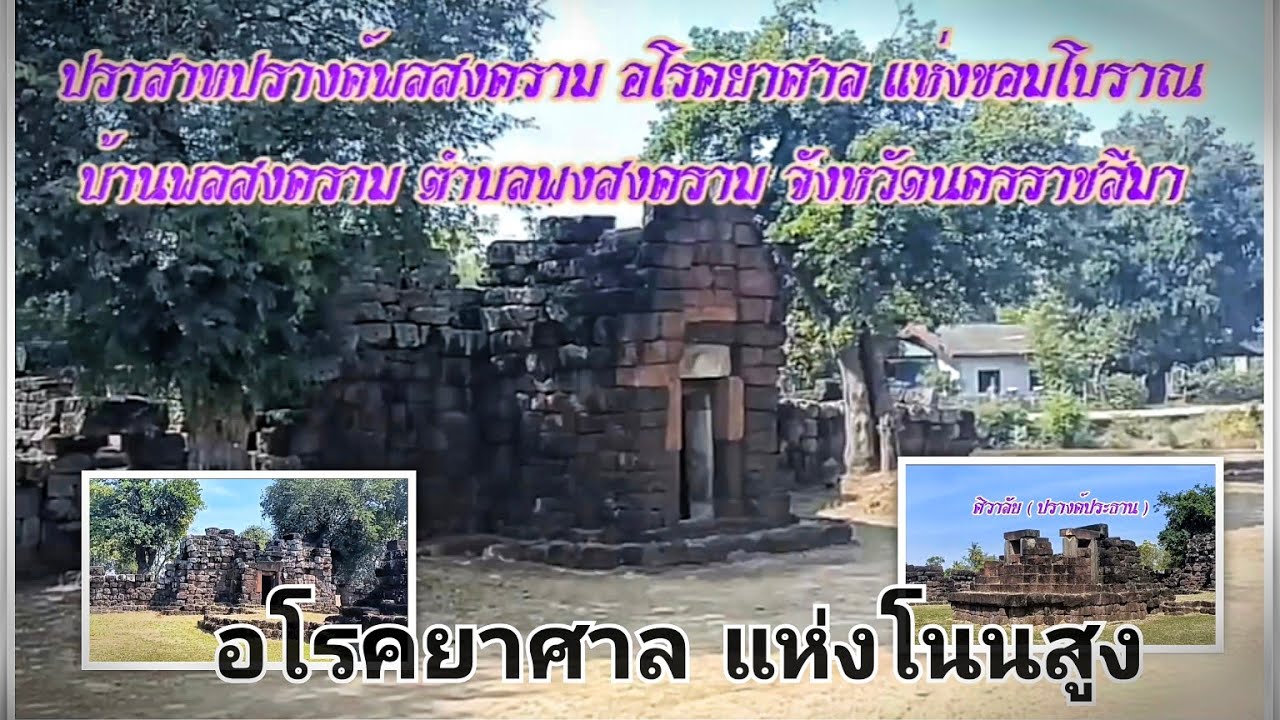
 Click to Access the Navigation Map GPS
Prasat Phon Songkhram Map
Recommend
 Historical Sites and Monuments(20)
 Landmarks and Memorials(5)
 Art, Craft Centres, Tradition(7)
 Museums(6)
 Art Gallery(1)
 Educational Places
 Educational Gardens, Farm(4)
 Places of Worship
 Temple(29)
 Mosque(1)
 Other Sacred Sites(6)
 Research and Development
 Royal Project(3)
 Suburban Living
 Village, Community(6)
 Local Market(4)
 Floating Market(1)
 Nature and Wildlife
 National Parks and Marine Reserves(3)
 Mountain (Doi)(5)
 Dam, Reservoir, Lake(8)
 Waterfalls(9)
 Hot Springs(1)
 Caves(2)
 Flower Field(1)
 River, Canal(8)
 Bays and Beaches(2)
 Other natural attractions(3)
 Entertainment and Agricultural
 Zoos and Aquariums(2)
 Animal camps and shows(1)
 Farms, Parks and Ecotourism(21)
 Waterpark(4)
 Outdoor and Adventure Activities(6)
 Shopping
 Shopping and Night Market(2)
 Travel Articles, Recipes
 Travel Review, Food Review(6)


