
lovethailand home >Northeastern Travel Attractions >Nakhon Ratchasima Travel Attractions >Muang Nakhon Ratchasima >Nai Muang > Wat Phayap
TL;DR: Wat Phayap is located at Chumphon Road, Nai Mueang Subdistrict, Mueang Nakhon Ratchasima District, Nakhon Ratchasima Province, open Daily, hours 08.00 – 16.30.

Wat Phayap
Open Days: Daily
Opening Hours: 08.00 – 16.30
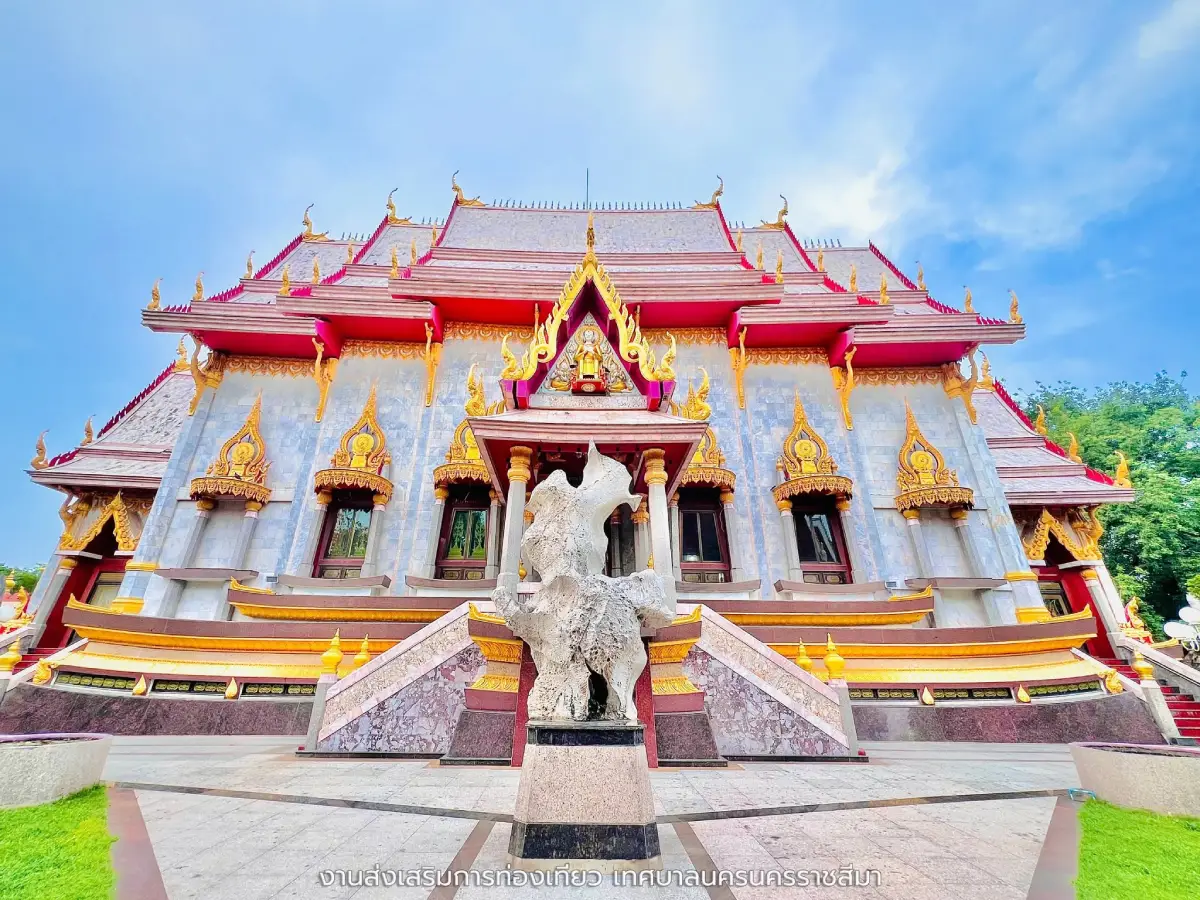
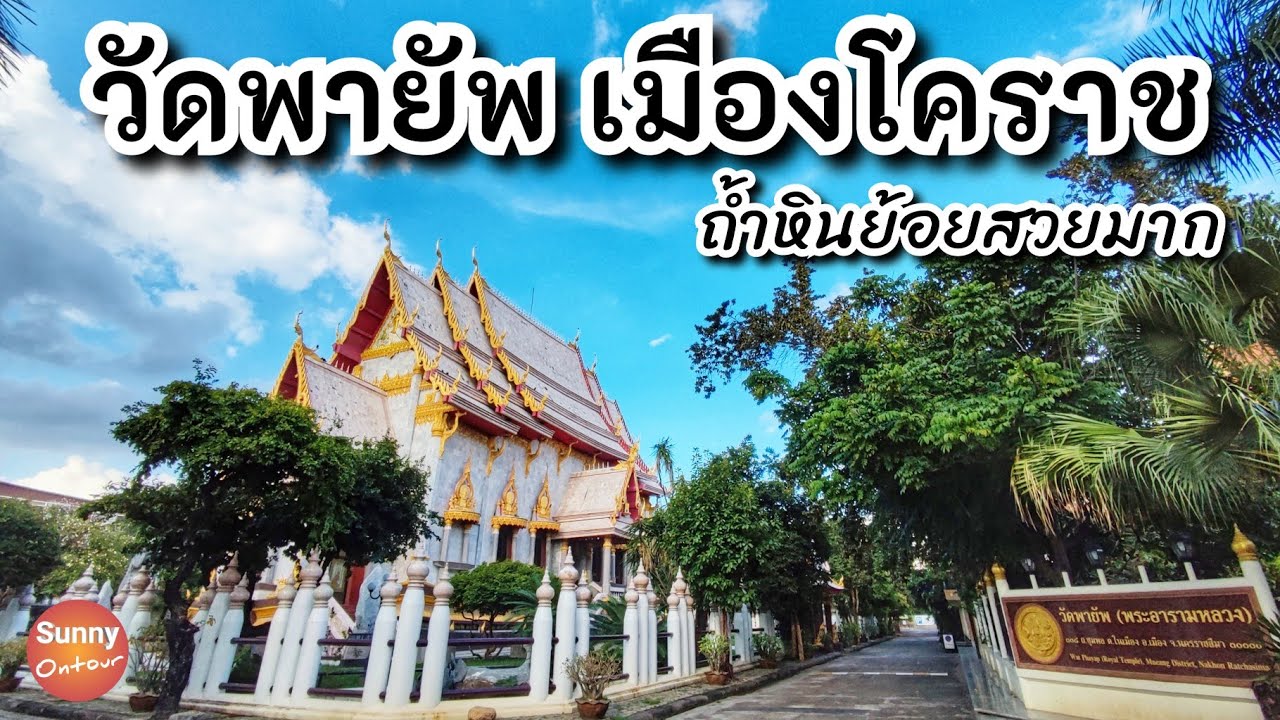
Wat Phayap in Nakhon Ratchasima is a third-class royal Buddhist temple and one of Korat’s most distinctive historic temples. Located at 308 Chumphon Road in Nai Mueang Subdistrict, the temple stands inside the old city area, northwest of the city pillar. Its name, “Phayap,” refers to the northwest direction, directly reflecting its position in the historical layout of old Korat. For travelers, Wat Phayap is not only a place to pay respect to Buddha images; it is also a temple where history, Buddhist architecture, natural heritage, and local creativity come together in a rare and memorable way.
The most remarkable attraction inside Wat Phayap is the simulated stalactite and stalagmite cave located on the lower floor of Kuti Vayuphak, the abbot’s office building. Although the cave itself was constructed inside the temple, the stalactites and stalagmites used in the space are real. They were collected and preserved after being found among stones brought out from quarrying areas in Saraburi Province. This makes the cave more than a decorative installation. It is a deliberate act of preservation, transforming natural stone formations that might otherwise have been dispersed or lost into a meaningful spiritual and educational space.
Wat Phayap is believed to date back to the reign of King Narai the Great, around the period when Nakhon Ratchasima was developed as a fortified city. It is one of the old temples associated with the city wall area, along with other important old temples in Korat such as Wat Phra Narai Maharat, Wat Burapha, Wat Sa Kaeo, Wat Bueng, and Wat Isan. This historical context makes Wat Phayap an important part of the old urban and religious fabric of Korat. Visitors who want to understand Nakhon Ratchasima beyond its modern shopping centers and city traffic should include this temple in their itinerary.
The temple is easy to reach because it stands close to Thao Suranari Monument, Chumphon Gate, Korat City Pillar Shrine, Maha Weerawong National Museum, and Wat Phra Narai Maharat. A visit to Wat Phayap can therefore be combined with a walking or short-ride route through the old city. For foreign travelers, this is useful because several major cultural landmarks are located close together. Wat Phayap adds a unique dimension to that route through its cave, marble ordination hall, historical links, and old Buddha images.
The origin of the cave is closely connected with Phra Ratchawimonmoli, a former abbot of Wat Phayap. When he traveled to Saraburi, he saw stalactites and stalagmites being sold by villagers from the Khao Wong area of Na Phra Lan Subdistrict, Phra Phutthabat District. These stones had come from mountains where quarrying and limestone extraction were taking place. Inside those mountains were many beautifully colored stalactites and stalagmites. Seeing their beauty and recognizing that they were being separated from their original natural setting, the abbot decided to collect and preserve them for future generations.
The idea was not simply to decorate the temple with unusual stones. Stalactites and stalagmites form slowly through mineral deposition over long periods of time. When caves or mountains are destroyed, these formations can lose their context and become ordinary decorative objects. By constructing a cave-like chamber in the temple, Phra Ratchawimonmoli created a place where the stones could still be appreciated with a sense of wonder, respect, and meaning. The result is a religious space that also carries a conservation message.
Kuti Vayuphak was built as a two-and-a-half-storey Thai-style building. The upper floor functions as the abbot’s office, while the lower floor was designed as the simulated stalactite and stalagmite cave. The name “Vayuphak” refers to a mythical bird associated with the northwest direction, matching the name of the temple itself. This connection between the temple name, direction, architecture, and symbolic meaning shows that the building was designed with careful thought rather than as a random structure.
The cave construction took place between 1990 and 1993. The stones were sorted by group, type, and color, then cleaned, drilled, reinforced, glued, fixed with metal supports, and installed across pillars, ceilings, and walls. Monks, novices, and workers helped attach and suspend the stones, weld supports, apply cement, and fill gaps with smaller stones until the whole space gained the atmosphere of a natural cave. The process was labor-intensive and technically demanding because every stone had different size, weight, and shape.
The cave measures approximately 12 meters wide, 16 meters long, and 3 meters high. Although the space is not large, the density and variety of the stones create a strong visual effect. Some stones are pale, some have warm natural tones, and some pieces appear clear and glass-like. The most beautiful transparent stones were selected and placed in glass display cases so visitors can observe their details more closely. This makes the cave suitable not only for worship but also for learning about natural stone formations.
The total value of the stalactites, stalagmites, and construction materials was estimated at about 4,730,000 baht at the time of construction. On 22 January 1993, Somdet Phra Nyanasamvara, the Supreme Patriarch of Thailand from Wat Bowonniwet Vihara, visited the cave. This event gave the cave additional historical significance within the temple’s own story and confirmed its importance as one of Korat’s unusual religious attractions.
Inside the cave, several sacred Buddha images are enshrined. Some are ancient sandstone Buddha images with lacquer and gold leaf, associated with artistic periods such as Dvaravati, Lopburi, and Ayutthaya. These Buddha images are more than 300 years old and were formerly enshrined in the old ordination hall of Wat Phayap. Their placement inside the cave gives the space a deeper spiritual atmosphere. Visitors do not enter the cave only to see geological beauty; they also enter a sacred chamber for worship, merit-making, meditation, and reflection.
The combination of ancient Buddha images and real stalactites creates a distinctive atmosphere. The stone formations surround the sacred images like a natural sanctuary, while the Buddha images give the cave a clear religious center. This is why the cave should be approached respectfully. Visitors should keep their voices low, avoid touching the stones, refrain from leaning on walls, and never touch or climb near the Buddha images. Wat Phayap is an active temple, not only a tourist display.
For students and visitors interested in natural heritage, the cave at Wat Phayap is a valuable educational space. Even though it is a constructed cave, the stones themselves are authentic natural formations. The site can help explain how stalactites and stalagmites differ in shape, color, and texture. It also raises an important conservation idea: natural objects removed from their original environment can still be preserved and interpreted meaningfully when treated with care and respect.
Another major feature of Wat Phayap is its marble ordination hall. The building has a boat-like form, often compared to a junk or ceremonial vessel. In Buddhist symbolism, a boat can represent the Dhamma as the vehicle that carries beings across the sea of suffering. The marble structure gives the hall a cool, calm, and dignified character. Its design reflects applied Thai architecture and carries historical associations with the late Ayutthaya style and King Narai the Great.
The main Buddha image inside the ordination hall is in the First Sermon posture, seated with legs pendent. It is approximately 3.69 meters high and was inspired by the Buddhist art of the Ajanta Caves in India. The First Sermon posture refers to the Buddha’s first teaching after enlightenment, when he set the Wheel of Dhamma in motion. Placing this image inside a boat-shaped marble ordination hall creates a strong symbolic relationship between teaching, spiritual journey, and liberation from suffering.
Within the temple grounds, visitors can also find a statue of King Narai the Great housed in a Thai-style pavilion. This is important because Wat Phayap is closely associated with the historical development of Nakhon Ratchasima during the period linked with King Narai. The statue reminds visitors that the temple belongs not only to Buddhist religious history but also to the civic history of Korat. For travelers interested in old city planning and royal-era history, this connection is one of the temple’s most valuable aspects.
Another meaningful feature is the Sri Maha Bodhi tree grown from a sapling connected with Bodh Gaya in India, the place associated with the Buddha’s enlightenment. The Bodhi tree is one of the most universal Buddhist symbols. Its presence at Wat Phayap links the local temple landscape with the wider sacred geography of Buddhism. Foreign visitors familiar with Bodh Gaya or Buddhist pilgrimage traditions may find this connection especially meaningful.
Wat Phayap also preserves boundary elements around the ordination hall, including sacred marker stones that define the consecrated area used for monastic ceremonies. These are not only decorative objects. In Thai Buddhism, such markers indicate the formal ritual space of the ubosot, where important Sangha acts are performed. Observing these details helps visitors understand that Thai temple architecture is governed not only by beauty but also by religious function and monastic discipline.
The main zones inside the temple include Kuti Vayuphak and the cave, the marble ordination hall, the main Buddha image, the ancient Buddha images inside the cave, the statue of King Narai the Great, the Bodhi tree, the Dhamma Wheel hall, the bell tower, temple halls, and merit-making areas. Each zone has a different function. Together, they show how Wat Phayap operates as a royal temple, a place of worship, a historical site, and an unusual conservation-based attraction.
A complete visit should begin with paying respect inside the marble ordination hall. After that, visitors can observe the statue of King Narai, the Bodhi tree, and the temple grounds before entering the stalactite and stalagmite cave. This sequence helps the story unfold naturally: first the Buddhist heart of the temple, then its historical layer, and finally its unique cave-conservation feature. Moving slowly through the temple makes the visit more meaningful than simply taking photographs and leaving.
Temple etiquette is important. Visitors should dress modestly, remove shoes before entering sacred areas, speak quietly, and avoid touching sacred objects. Inside the cave, do not touch the stalactites or stalagmites. Do not lean on the walls, do not climb near the Buddha images, and do not use flash or strong lights in ways that disturb other worshippers. The cave may feel like a tourist attraction, but it remains part of a sacred temple space.
For photography, the cave offers interesting textures, shadows, and natural stone colors, but care is required. Visitors should avoid blocking pathways, placing tripods in narrow spaces, or taking disrespectful poses with Buddha images. Outside the cave, the marble ordination hall and Thai-style structures provide elegant photo angles, especially in the morning when the light is softer. Respectful photography allows travelers to preserve memories without reducing the dignity of the temple.
For foreign travelers, Wat Phayap is an excellent temple for understanding several aspects of Thai culture in one place. It introduces the idea of a royal temple, the relationship between temples and old city planning, the historical memory of King Narai, the symbolism of a boat-shaped ordination hall, the conservation of natural stone formations, and the worship of ancient Buddha images. This makes Wat Phayap deeper than a typical sightseeing stop. It is a compact but rich cultural lesson in the center of Korat.
The best time to visit is in the morning or early afternoon. The temple is generally open from 08.00 to 16.30, giving visitors enough time to explore without rushing. A recommended city route is to begin at Wat Phayap, then continue to Thao Suranari Monument, Chumphon Gate, Korat City Pillar Shrine, and Maha Weerawong National Museum. Later in the day, travelers can continue to Wat Sala Loi, Wat Pa Salawan, or Terminal 21 Korat depending on their interests.
There is no admission fee at Wat Phayap. Visitors can enter to pay respect and see the main areas during opening hours. Donations may be made voluntarily at designated points. This distinction is useful for foreign travelers: many Thai temples remain religious spaces for the community rather than ticket-based attractions. A donation is an act of merit-making, not a required entrance charge.
Getting There is very convenient from the center of Nakhon Ratchasima. From Thao Suranari Monument, travelers can follow Chumphon Road or nearby old-city roads to the temple. The journey is short by car, tuk-tuk, local transport, taxi, or ride-hailing service. Those using navigation apps should search for Wat Phayap or วัดพายัพ พระอารามหลวง and confirm that the destination is on Chumphon Road in Nai Mueang Subdistrict.
Travelers who enjoy walking can combine Wat Phayap with nearby old-city landmarks. Thao Suranari Monument and Chumphon Gate are within a short distance, but the weather in Korat can be hot. Elderly visitors and families with children may prefer short local rides between sites. Comfortable shoes, drinking water, a hat, and light clothing that still respects temple etiquette will make the trip easier.
A short visit to Wat Phayap takes about 45 minutes. Visitors who want to explore the cave carefully, observe the marble ordination hall, study the ancient Buddha images, and take respectful photographs should allow 1 to 1.5 hours. The temple rewards slow observation. Many details, such as the cave surfaces, marker stones, Bodhi tree, and symbolic architecture, are easy to miss during a rushed visit.
Wat Phayap is active during major Buddhist observance days such as Makha Bucha, Visakha Bucha, Asalha Bucha, Buddhist Lent, the end of Buddhist Lent, and Songkran. Local Buddhists may come to make merit, listen to sermons, join candlelight processions, or take part in temple activities. On such days, visitors should be especially mindful of local worshippers and avoid treating ceremonies as performances.
As a royal temple, Wat Phayap has a higher ecclesiastical status than an ordinary local temple. It was elevated to the rank of third-class royal temple, ordinary type, in 2008. Today, Phra Sri Wachiranowat serves as the abbot. The temple continues to function as a place of worship, merit-making, Buddhist activity, and cultural visitation in the heart of Korat.
Inside the cave, visitors should remember that the stalactites and stalagmites are natural materials deserving protection. Oils from hands, pressure, or accidental scratches can damage their surfaces. Children should be supervised carefully. The preservation of the cave depends on visitors behaving responsibly. Even though the cave is simulated, the stones are real, and their value lies in both natural formation and cultural preservation.
From a travel perspective, Wat Phayap adds depth to a Korat city trip. Nakhon Ratchasima is often associated with Thao Suranari Monument, Chumphon Gate, shopping malls, and its role as the gateway to Isan. Wat Phayap shows another side of the city: an old royal temple where late Ayutthaya history, royal memory, Buddhist practice, natural stone conservation, and local faith are concentrated in one accessible site.
For families, the temple can be an educational stop. Children can learn how to behave in a Thai temple, what an ordination hall is, why ancient Buddha images are respected, and how stalactites and stalagmites form in nature. A visit to Wat Phayap can therefore become more than a religious stop. It can become a lesson in history, art, natural science, and respectful cultural travel.
In summary, Wat Phayap in Nakhon Ratchasima is one of Korat’s most distinctive royal temples. Its major highlights include the simulated stalactite and stalagmite cave inside Kuti Vayuphak, ancient Buddha images over 300 years old, the marble boat-shaped ordination hall, the First Sermon Buddha image, the statue of King Narai the Great, the Bodhi tree from Bodh Gaya, and the conservation vision of Phra Ratchawimonmoli. The temple is easy to reach, has no admission fee, and is suitable for both Thai and foreign visitors who want to understand Korat through Buddhism, history, art, and natural heritage.
| Name | Wat Phayap, Nakhon Ratchasima |
| Location | Chumphon Road, Nai Mueang Subdistrict, Mueang Nakhon Ratchasima District, Nakhon Ratchasima Province |
| Address | 308 Chumphon Road, Nai Mueang, Mueang Nakhon Ratchasima, Nakhon Ratchasima 30000, Thailand |
| Coordinates | 14.97853, 102.09824 |
| Highlights | Simulated stalactite and stalagmite cave, Kuti Vayuphak, marble boat-shaped ordination hall, ancient Buddha images over 300 years old, King Narai the Great statue, and Bodhi tree from Bodh Gaya |
| History | An old temple inside Korat’s historic city wall area, believed to date back to the reign of King Narai the Great. It was elevated to a third-class royal temple, ordinary type, in 2008 |
| Name Origin | The temple is located northwest of the old city pillar; “Phayap” means northwest in Thai |
| Distinctive Features | A royal temple in central Korat with a cave-like chamber built from real stalactites and stalagmites, ancient Buddha images, and a marble ordination hall shaped like a ceremonial boat |
| Travel Information | From Thao Suranari Monument, follow Chumphon Road or nearby old-city roads to the temple. Accessible by private car, tuk-tuk, local transport, taxi, or ride-hailing service |
| Current Status | Active royal Buddhist temple and faith-based cultural attraction in central Nakhon Ratchasima |
| Open Days | Daily |
| Opening Hours | 08.00 – 16.30 |
| Fees | No admission fee; voluntary donations may be made according to personal faith |
| Facilities | Ordination hall, simulated cave, temple halls, worship areas, merit-making areas, parking space, and rest areas within the temple grounds |
| Main Areas / Zones | Stalactite and stalagmite cave inside Kuti Vayuphak Marble boat-shaped ordination hall Main Buddha image in the First Sermon posture Ancient Buddha images inside the cave King Narai the Great statue Bodhi tree from Bodh Gaya Dhamma Wheel hall and bell tower Merit-making and temple hall areas |
| Abbot / Caretaker | Phra Sri Wachiranowat |
| Main Contact Number | 062-126-6146, 044-253-712 |
| Official Website / Official Page | Wat Phayap PAYAP Temple |
| Nearby Tourist Attractions | 1. Thao Suranari Monument, about 0.4 km 2. Chumphon Gate, about 0.5 km 3. Korat City Pillar Shrine, about 0.7 km 4. Wat Phra Narai Maharat, about 0.8 km 5. Maha Weerawong National Museum, about 1.2 km 6. Terminal 21 Korat, about 1.3 km |
| Nearby Restaurants | 1. Jojo Phet Yang Phimai, about 0.4 km, Tel. 044-267-347, 081-976-2014 2. Oshinei Korat, about 2.5 km, Tel. 097-946-4445 3. Krua Khru Pom, about 2.6 km, Tel. 044-285-304 4. De'Park Korat, about 2.8 km 5. Restaurants inside Terminal 21 Korat, about 1.3 km |
| Nearby Accommodations | 1. Centre Point Hotel Terminal21 Korat, about 1.3 km, Tel. 044-498-880, 094-914-2595 2. Fortune Hotel Korat, about 1.4 km, Tel. 044-079-900 3. Romyen Garden Place, about 1.5 km, Tel. 044-285-816-7, 098-105-7978 4. Mayflower Grand Hotel Korat, about 1.0 km, Tel. 044-243-825, 091-047-1446 5. Thai Inter Korat Hotel, about 1.2 km, Tel. 044-247-700 6. Korat Hotel, about 0.8 km, Tel. 044-341-345 |
Frequently Asked Questions (FAQ)
Q: Where is Wat Phayap located?
A: Wat Phayap is located at 308 Chumphon Road, Nai Mueang Subdistrict, Mueang Nakhon Ratchasima District, Nakhon Ratchasima Province, close to Thao Suranari Monument and Chumphon Gate.
Q: What are the opening days and hours of Wat Phayap?
A: Wat Phayap is open daily from 08.00 to 16.30. Morning is a good time for worship, cave viewing, and a quiet walk around the temple.
Q: Is there an admission fee at Wat Phayap?
A: There is no admission fee. Visitors may make voluntary donations, offer gold leaf, or make merit at designated areas inside the temple.
Q: What is Wat Phayap famous for?
A: Wat Phayap is famous for its simulated stalactite and stalagmite cave, ancient Buddha images over 300 years old, marble boat-shaped ordination hall, King Narai the Great statue, and Bodhi tree from Bodh Gaya.
Q: Is the cave at Wat Phayap a natural cave?
A: The cave is a simulated cave built inside Kuti Vayuphak, but the stalactites and stalagmites used in the cave are real natural formations collected and preserved for future generations.
Q: How is Wat Phayap connected with King Narai the Great?
A: Wat Phayap is an old temple inside the historic city wall area of Korat and is believed to date back to the period associated with King Narai the Great and the development of Nakhon Ratchasima.
Q: How can travelers get to Wat Phayap?
A: Travelers can reach the temple easily from Thao Suranari Monument via Chumphon Road. Private cars, tuk-tuks, local transport, taxis, and ride-hailing services are convenient options.
Q: What should foreign visitors know before visiting Wat Phayap?
A: Visitors should dress modestly, remove shoes before entering sacred areas, keep quiet, avoid touching stalactites or ancient Buddha images, and take time to understand the temple’s historical and conservation significance.
 Category: ●Places of Worship
 Group: ●Temple
Last Update : 3 MonthAgo
 Last Update : 3 MonthAgo
 Click to Access the Navigation Map GPS
Wat Phayap Map
Recommend

 Art, Culture and Heritage
 Historical Sites and Monuments(20)
 Landmarks and Memorials(5)
 Art, Craft Centres, Tradition(7)
 Museums(6)
 Art Gallery(1)
 Educational Places
 Educational Gardens, Farm(4)
Temple(29)
 Mosque(1)
 Other Sacred Sites(6)
 Research and Development
 Royal Project(3)
 Suburban Living
 Village, Community(6)
 Local Market(4)
 Floating Market(1)
 Nature and Wildlife
 National Parks and Marine Reserves(3)
 Mountain (Doi)(5)
 Dam, Reservoir, Lake(8)
 Waterfalls(9)
 Hot Springs(1)
 Caves(2)
 Flower Field(1)
 River, Canal(8)
 Bays and Beaches(2)
 Other natural attractions(3)
 Entertainment and Agricultural
 Zoos and Aquariums(2)
 Animal camps and shows(1)
 Farms, Parks and Ecotourism(21)
 Waterpark(4)
 Outdoor and Adventure Activities(6)
 Shopping
 Shopping and Night Market(2)
 Travel Articles, Recipes
 Travel Review, Food Review(6)


