
lovethailand home >Northeastern Travel Attractions >Nakhon Ratchasima Travel Attractions >Wang Nam Khieo >Wang Nam Khieo > Sakaerat Environmental Research Station
TL;DR: Sakaerat Environmental Research Station is located at Ban Wang Nam Khiao, Moo 9, Udom Sap Subdistrict, Wang Nam Khiao District, Nakhon Ratchasima Province, Thailand, open Monday – Friday, hours 08:30 – 16:30.

Sakaerat Environmental Research Station
Open Days: Monday – Friday
Opening Hours: 08:30 – 16:30
Sakaerat Environmental Research Station in Nakhon Ratchasima Province is one of Thailand’s most important ecological research and nature-learning sites. Located at 1 Moo 9, Udom Sap Subdistrict, Wang Nam Khiao District, the station sits along Highway 304 on the Nakhon Ratchasima – Kabin Buri route, about 57 kilometers from Nakhon Ratchasima city. Covering approximately 78 square kilometers, or around 48,750 rai, the station protects a large forest landscape of dry evergreen forest and dry dipterocarp forest. It is an important field station for environmental research, forest ecology, biodiversity studies, youth science camps and organized eco-education activities.
Sakaerat is internationally significant because it forms the core area of the Sakaerat Biosphere Reserve, recognized by UNESCO under the Man and Biosphere Programme. This status means that Sakaerat is not only a protected forest or a scenic nature site. It is also a living outdoor laboratory where researchers study the relationship between forests, plants, animals, soil, water, climate and people. For foreign visitors interested in ecology, conservation and tropical forests, Sakaerat offers a rare opportunity to see how scientific research and nature education are carried out in a real forest landscape.
The station was established in 1967 and has long served as a center for environmental and ecological research in northeastern Thailand. Its strongest feature is the presence of different forest types within one area. The dry evergreen forest is more humid, shaded and dense, while the dry dipterocarp forest is more open, seasonal and strongly adapted to dry conditions. These contrasting ecosystems make the station a valuable place for learning how forests in the Korat Plateau respond to climate, fire, rainfall and seasonal change.
Wildlife at Sakaerat reflects the richness of the forest. Species associated with the area include wild boar, red junglefowl, Siamese fireback, forest birds, reptiles, insects and many smaller organisms that support the ecosystem. The Siamese fireback is especially memorable because of its striking appearance and its connection with dry dipterocarp forest. The station is also known among researchers for biodiversity and wildlife studies, making it meaningful not only for casual nature lovers but also for scientists and students.
The atmosphere inside Sakaerat differs from ordinary tourist attractions. Visitors will find research buildings, offices, meeting rooms, laboratories, dormitories, nature trails and forest study areas. The feeling is a combination of quiet forest and scientific field station. This makes the place especially suitable for travelers who prefer meaningful nature experiences rather than entertainment-based tourism. The station invites visitors to slow down, observe carefully and understand nature through details.
One of the most impressive features is the observation tower above the tree canopy. From the top, visitors can see the green forest stretching across the landscape and, on clear days, distant views toward Khao Phaeng Ma. The tower offers a perspective that cannot be experienced from the forest floor. It helps visitors understand the scale of the forest, the structure of the canopy and the importance of protected areas at the landscape level.
Nature trails are among the main activities at Sakaerat. Several routes are available, with walking times ranging from about 1.5 to 3 hours. Along the trails, visitors can learn about tree species, forest layers, animal traces, bird calls, leaf litter, seasonal change and the difference between dry evergreen and dry dipterocarp forest. A guided walk can make the experience much richer because forest signs are often subtle and require trained observation.
Sakaerat is particularly suitable for organized groups. Schools, universities, government agencies, private organizations and conservation groups can arrange science camps, eco-study trips, birdwatching, forest walks, ecology lessons and environmental seminars. Because this is a research station and biosphere reserve, group visits should be coordinated in advance so that activities, accommodation, meals, guides and safety rules can be properly arranged.
Accommodation is available for organized activities and study groups. Tourism information records that the station has three accommodation houses, each able to host around 20 people. Staying overnight allows participants to experience the forest throughout the day and night. Morning bird calls, evening forest sounds, night insects, changing temperature and dawn light all become part of the learning experience. An overnight stay therefore gives a deeper understanding than a short daytime visit.
Different times of day reveal different qualities of Sakaerat. Morning is ideal for birdwatching and fresh forest air. Daytime is suitable for guided trails and ecological study. Late afternoon shows the forest changing toward evening. Groups staying overnight may learn about nocturnal insects, night sounds and stargazing. Sakaerat is a place where time matters, because the forest changes continuously from morning to night.
The climate is generally pleasant because Wang Nam Khiao has a cooler atmosphere than many lowland areas of Nakhon Ratchasima. The rainy season makes the forest especially green and active, with more fungi, insects and ground plants. The cool season is excellent for camps, birdwatching and forest walks. The hot season reveals the dry character of dipterocarp forest and helps visitors understand how plants and animals adapt to seasonal dryness.
A visit to Sakaerat requires respect for both nature and science. Visitors should stay on designated trails, avoid collecting plants, avoid disturbing animals, keep noise low, never enter restricted plots without permission and avoid touching research equipment. Some parts of the area are used for long-term ecological studies, so even small disturbances can affect research. Responsible behavior protects both the forest and the scientific value of the station.
For plant lovers, Sakaerat is an excellent field classroom. Visitors can compare forest structure, canopy density, undergrowth, vines, shrubs and drought-adapted plants. The difference between forest types becomes visible through light, humidity, soil, leaf litter and dominant tree species. This helps visitors understand that forests are not all the same; each forest type has its own structure, rhythm and ecological role.
For wildlife observers, Sakaerat rewards patience and quietness. Animal tracks, calls, feeding marks, feathers, droppings and movement in the canopy all tell stories about the forest. Large animals may not always be seen directly, but their traces are part of the experience. A knowledgeable guide can help visitors read these signs more accurately and reduce disturbance to wildlife.
For families, Sakaerat is suitable for children who are interested in nature and science. Children can see real trees, real forest trails, real birds and real ecological relationships. Parents should choose activities that match the child’s age and physical ability, such as short walks, the entrance area, the observation tower or youth-oriented camp activities. Early exposure to real nature can build long-term environmental awareness.
For students and teachers, the station connects classroom knowledge with field experience. Biology, ecology, geography, environmental science, earth science and natural resource management can all be studied here. Field observation, data collection, staff interpretation and direct experience of forest ecosystems make learning more concrete and memorable.
For general travelers, Sakaerat is best suited to those who appreciate quiet, meaningful and educational nature travel. It is not a noisy entertainment site or a quick photo stop. Its value comes from slow walking, listening to the forest, watching birds, observing plants and understanding how life in a forest is connected. Visitors who give time and attention to the place will receive much more than a simple scenic experience.
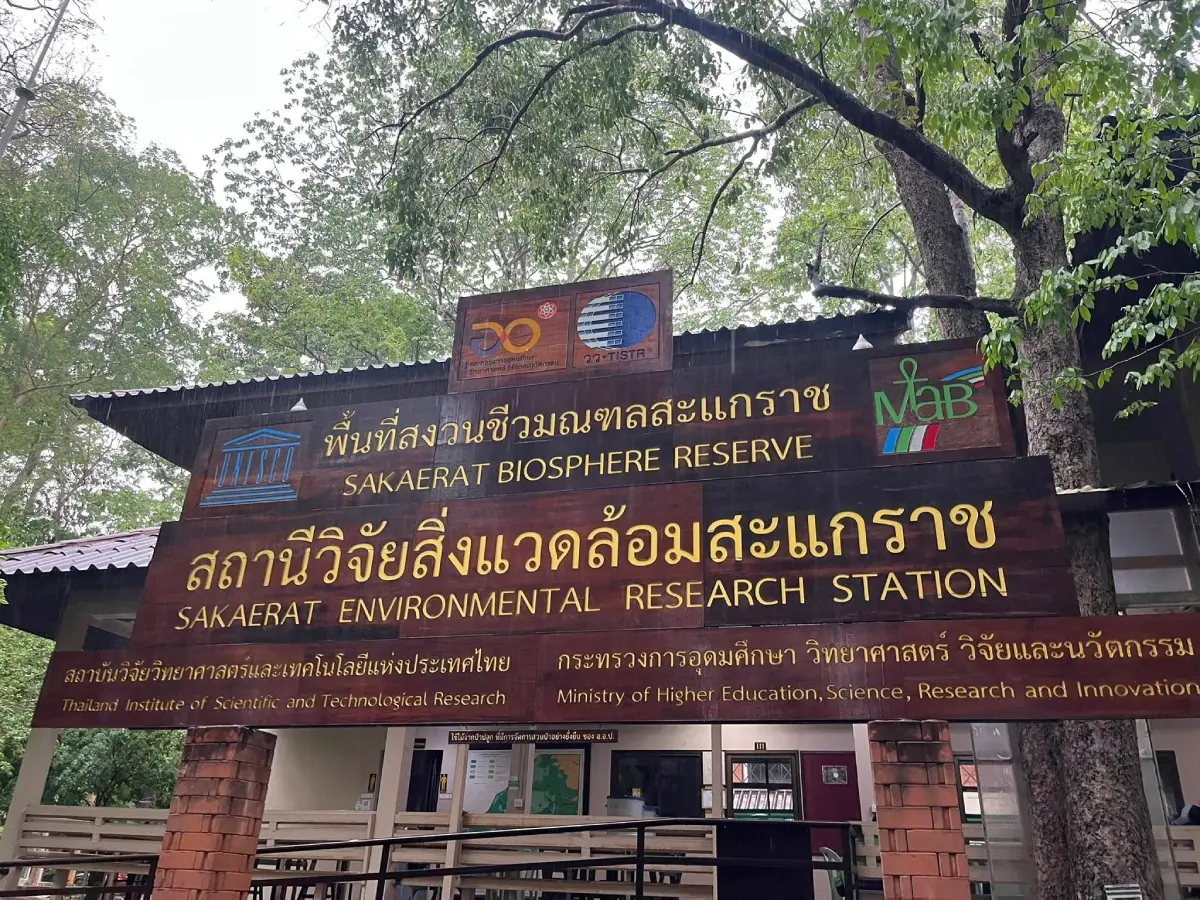
Photography at Sakaerat should focus on nature and atmosphere. Interesting subjects include the station sign, bird sculptures near the entrance, forest trails, the observation tower, research buildings surrounded by trees, leaves, canopy light and wide forest views from above. Wildlife photography should be done from a respectful distance, without flash at close range and without feeding or attracting animals.
Getting There is easiest by private car. From Nakhon Ratchasima city, take Highway 304 toward Pak Thong Chai and Wang Nam Khiao. The station is about 57 kilometers from the city and is located along the main road in Udom Sap Subdistrict. From Bangkok, travelers can approach via Saraburi, Pak Chong and Sikhio, or connect through Prachin Buri and Kabin Buri depending on the travel route. Highway 304 is an important road linking Korat with the eastern region, so careful driving is important, especially on slopes, curves and sections with heavy vehicles.
Group visitors should contact the station in advance to arrange schedules, activities, accommodation, meals, guides and site rules. Sakaerat is a research station and biosphere reserve, not a place where all areas are freely accessible. Advance coordination helps ensure that the visit is organized, safe and compatible with ongoing research and conservation work.
Sakaerat can also be combined with a wider Wang Nam Khiao route. Nearby places include organic agriculture projects, Khun Chon Waterfall, Sai Thong Waterfall, Gap Organic Wang Nam Khiao, Montana Farm and restaurants along Highway 304. This makes it possible to create a trip that combines forest ecology, community agriculture, local food and the relaxed atmosphere of Wang Nam Khiao.
Overall, Sakaerat Environmental Research Station is one of the most valuable eco-education destinations in Nakhon Ratchasima. It combines dry evergreen forest, dry dipterocarp forest, wildlife, nature trails, a canopy observation tower, group accommodation, scientific research and UNESCO biosphere-reserve status in one place. A visit here offers more than relaxation. It helps visitors understand how one forest can serve as a conservation area, a research site, a living classroom and a source of environmental awareness for future generations.
| Name | Sakaerat Environmental Research Station / Sakaerat Biosphere Reserve |
| Location | Ban Wang Nam Khiao, Moo 9, Udom Sap Subdistrict, Wang Nam Khiao District, Nakhon Ratchasima Province, Thailand |
| Address | 1 Moo 9, Udom Sap Subdistrict, Wang Nam Khiao District, Nakhon Ratchasima 30370, Thailand |
| Approximate Coordinates | 14.5000, 100.8667 |
| Highlights | UNESCO-recognized biosphere reserve, dry evergreen forest, dry dipterocarp forest, canopy observation tower, 1.5–3-hour nature trails, wildlife, forest birds and organized eco-education programs |
| History | Established in 1967 as an environmental and tropical forest ecology research station; recognized by UNESCO under the Man and Biosphere Programme in 1976 |
| Name Origin | The name Sakaerat refers to the forest and research-station landscape in Udom Sap, Wang Nam Khiao, which forms the core area of Sakaerat Biosphere Reserve |
| Distinctive Features | Approximately 78 square kilometers of forest landscape, dry evergreen and dry dipterocarp ecosystems, wildlife, canopy tower, nature trails, group accommodation and long-term biodiversity research |
| Travel Information | Private car is the most convenient option. From Nakhon Ratchasima city, take Highway 304 toward Pak Thong Chai and Wang Nam Khiao. The station is about 57 km from the city along the Nakhon Ratchasima – Kabin Buri route |
| Current Status | Operational as a research station and nature-learning site. Group visits, science camps and overnight stays should be arranged with the station in advance |
| Open Days | Monday – Friday |
| Opening Hours | 08:30 – 16:30 |
| Facilities | Station office, meeting rooms, laboratories, nature trails, canopy observation tower, dormitories, group houses, cafeteria, parking area and science-camp activity areas |
| Main Areas / Zones | Office And Service Zone, Accommodation Zone, Meeting Room Zone, Laboratory Zone, Nature Trail Zone, Canopy Observation Tower Zone, Dry Evergreen Forest Zone, Dry Dipterocarp Forest Zone, Field Research Plot Zone, Science Camp Zone |
| Caretaker / Community Coordinator | Sakaerat Environmental Research Station, Thailand Institute Of Scientific And Technological Research |
| Main Contact Number | 09-8219-5570, 06-1102-1707 |
| sakaerat@tistr.or.th | |
| Official Website / Official Page | Sakaerat Environmental Research Station And Sakaerat Environmental Research Station Facebook Page |
| Nearby Tourist Attractions | 1. Sakaerat Canopy Observation Tower, about 0.5 km 2. Sakaerat Nature Trails, about 0.5 km 3. Royal-Initiated Organic Agriculture Promotion Project, about 14 km 4. Khun Chon Waterfall, about 15 km 5. Sai Thong Waterfall, about 15 km 6. Gap Organic Wang Nam Khiao, about 15 km 7. Montana Farm Wang Nam Khiao, about 17 km, Tel. 044-228-376, 098-345-1900 |
| Nearby Restaurants | 1. Som Tam Sai Chong, about 3.3 km 2. Café Amazon PTT Ban Wang Nam Khiao Udom Sap, about 4 km 3. Krua Lung Sing Udom Sap, about 7.5 km 4. Khun Toi Wang Nam Khiao, about 16 km, Tel. 087-483-2188, 081-755-9459 5. Montana Farm Wang Nam Khiao, about 17 km, Tel. 044-228-376, 098-345-1900 6. Jungle View Wang Nam Khiao, about 22 km, Tel. 081-376-5929 |
| Nearby Accommodations | 1. Sakaerat Environmental Research Station Accommodation, about 0 km, Tel. 09-8219-5570, 06-1102-1707 2. Smith Resort Wang Nam Khiao, about 14.3 km, Tel. 089-280-8945 3. De Bua Valley Wang Nam Khiao, about 15 km, Tel. 081-718-1191 4. Ban Rai San Rak Resort, about 15 km 5. Sawan Sang Nang Kaew Resort, about 16.3 km 6. Montana Farm Cotswolds, about 17 km, Tel. 098-345-1900 |
Frequently Asked Questions (FAQ)
Q: Where is Sakaerat Environmental Research Station located?
A: It is located at 1 Moo 9, Udom Sap Subdistrict, Wang Nam Khiao District, Nakhon Ratchasima Province, along Highway 304 on the Nakhon Ratchasima – Kabin Buri route.
Q: What are the opening days and hours of Sakaerat Environmental Research Station?
A: The station is open Monday to Friday from 08:30 to 16:30. Group visits, science camps and overnight stays should be arranged with the station in advance.
Q: What makes Sakaerat Environmental Research Station special?
A: It is part of the Sakaerat Biosphere Reserve, with dry evergreen forest, dry dipterocarp forest, nature trails, a canopy observation tower and long-term ecological research.
Q: Are there nature trails at Sakaerat?
A: Yes. Several nature trails are available, with walking times ranging from about 1.5 to 3 hours. They are suitable for eco-education, birdwatching and forest ecosystem study.
Q: Is accommodation available inside the station?
A: Accommodation is available for organized groups and science-camp activities. Tourism information records three group houses, each able to host around 20 people. Visitors should contact the station directly for current booking conditions.
Q: Who is Sakaerat suitable for?
A: It is suitable for students, researchers, teachers, families, study groups and travelers interested in forests, wildlife, ecology, conservation and environmental science.
Q: How can travelers get to Sakaerat Environmental Research Station?
A: Private car is the most convenient option. From Nakhon Ratchasima city, take Highway 304 toward Pak Thong Chai and Wang Nam Khiao for about 57 km.
Q: What should visitors be careful about at Sakaerat?
A: Visitors should stay on designated trails, avoid collecting plants, avoid touching animals, keep noise low, avoid restricted research areas and follow station staff instructions.
Website : sakaerat.tistr.or.th
 Website :
 Tel : 044009556
 Tel : 044009556
Mobile : 0982195570
 Mobile : 0982195570
 Category: ●Nature and Wildlife
 Group: ●Other natural attractions
Last Update : 3 MonthAgo
 Last Update : 3 MonthAgo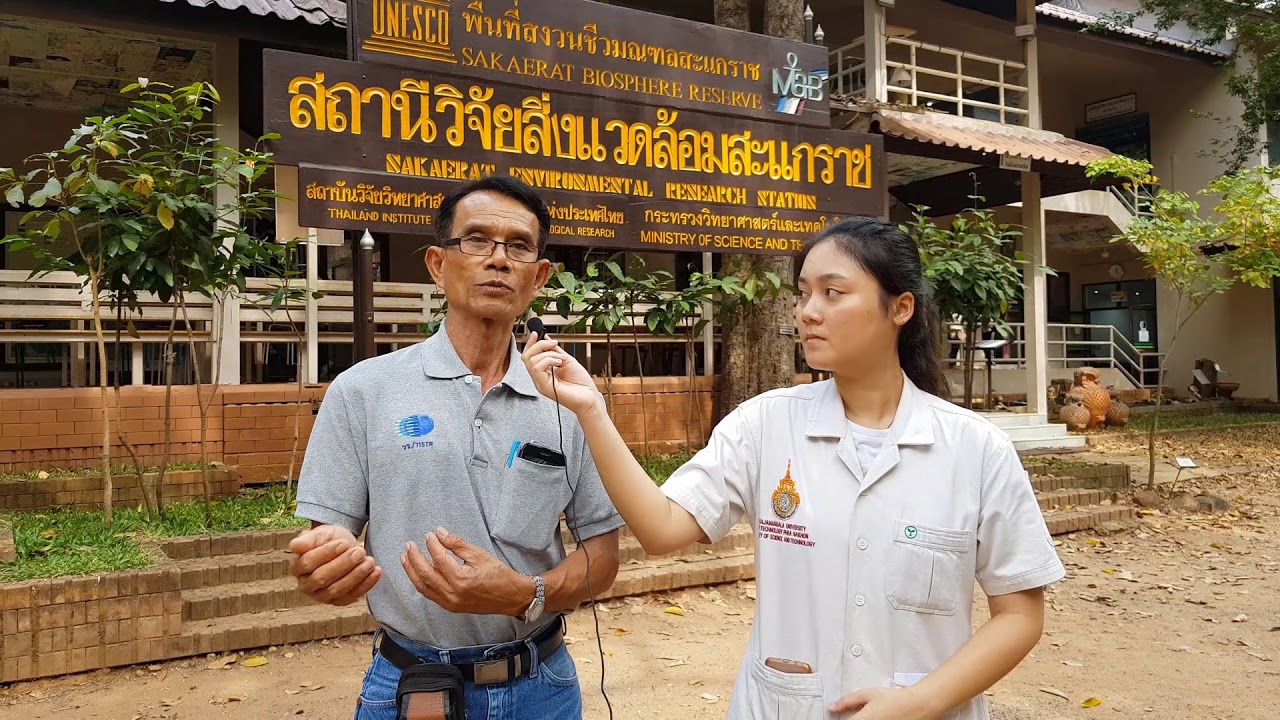
 Click to Access the Navigation Map GPS
Sakaerat Environmental Research Station Map
Recommend

 Art, Culture and Heritage
 Historical Sites and Monuments(20)
 Landmarks and Memorials(5)
 Art, Craft Centres, Tradition(7)
 Museums(6)
 Art Gallery(1)
 Educational Places
 Educational Gardens, Farm(4)
 Places of Worship
 Temple(29)
 Mosque(1)
 Other Sacred Sites(6)
 Research and Development
 Royal Project(3)
 Suburban Living
 Village, Community(6)
 Local Market(4)
 Floating Market(1)
 National Parks and Marine Reserves(3)
 Mountain (Doi)(5)
 Dam, Reservoir, Lake(8)
 Waterfalls(9)
 Hot Springs(1)
 Caves(2)
 Flower Field(1)
 River, Canal(8)
 Bays and Beaches(2)
Other natural attractions(3)
Bays and Beaches(2)
Other natural attractions(3)
 Entertainment and Agricultural
 Zoos and Aquariums(2)
 Animal camps and shows(1)
 Farms, Parks and Ecotourism(21)
 Waterpark(4)
 Outdoor and Adventure Activities(6)
 Shopping
 Shopping and Night Market(2)
 Travel Articles, Recipes
 Travel Review, Food Review(6)


