
lovethailand home >Northeastern Travel Attractions >Nakhon Ratchasima Travel Attractions >Pak Thong Chai >Tum > Suan Pu Ya Na Yu Project (Ban Suanhom)
TL;DR: Suan Pu Ya Na Yu Project (Ban Suanhom) is located at Ban Suan Hom, Moo 14, Toom Subdistrict, Pak Thong Chai District, Nakhon Ratchasima Province, open Please Contact in Advance Before Visiting, hours Please Contact in Advance Before Visiting.
Suan Pu Ya Na Yu Project (Ban Suanhom)
Open Days: Please Contact in Advance Before Visiting
Opening Hours: Please Contact in Advance Before Visiting
Suan Pu Ya Na Yu Project, Ban Suan Hom in Nakhon Ratchasima Province is a community-based agricultural learning site located at Ban Suan Hom, Moo 14, Toom Subdistrict, Pak Thong Chai District. The site lies along the route to Lam Phra Phloeng Dam, about 8 km from the Lam Phra Phloeng intersection. It is a traditional mixed farm covering about 21 rai and belongs to Mr. Wao Loetphrommarat. The farm is known as a well-developed household learning area where visitors and study groups come throughout the year to learn about agriculture, integrated farming, and the practical wisdom of rural life.
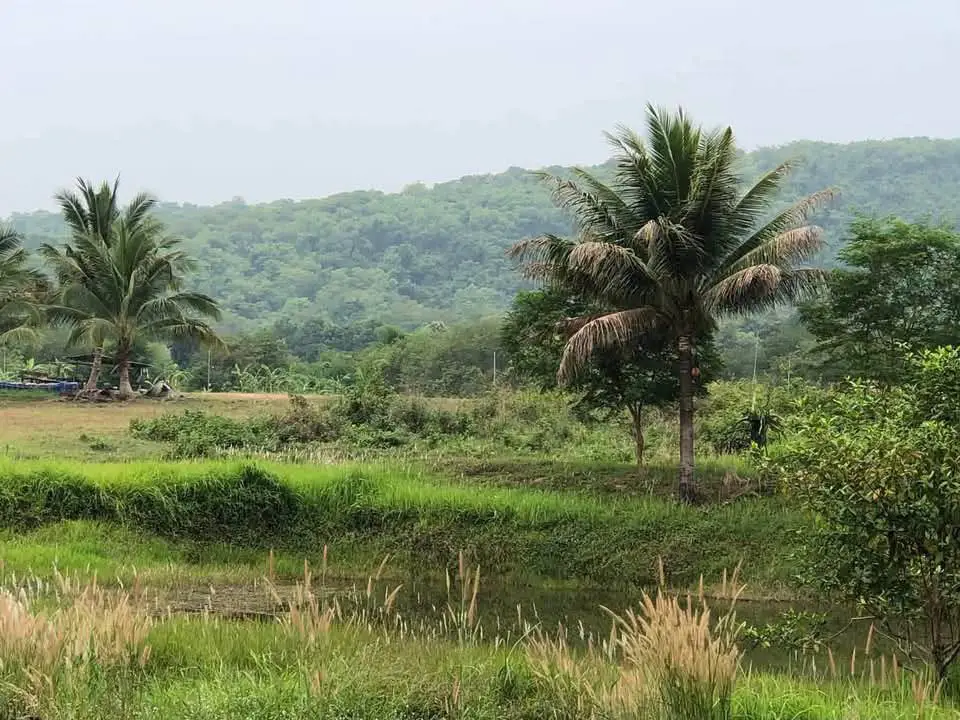
For international travelers, Suan Pu Ya Na Yu is not a conventional tourist attraction or a commercial farm designed mainly for photography. It is a real agricultural household and learning space. The value of the place lies in its honest connection with land, plants, family, and community. Visitors can see how a mixed farm is organized in a traditional way, with crops planted in different levels: tall trees, medium-height plants, low-growing crops, food plants, useful household plants, and shaded spaces that create a balanced farming environment. The farm shows how rural Thai families can use land not only for production, but also for food security, learning, and long-term self-reliance.
The name Suan Pu Ya Na Yu gives the feeling of a family garden connected with grandparents and ancestral knowledge. It suggests a place that is not only productive, but also livable. In this context, the word “livable” means more than physical beauty. It refers to a way of organizing land so that people can live with trees, soil, water, shade, food, and work in a balanced way. The garden is therefore meaningful for visitors who want to understand Thai integrated farming, sufficiency-based agriculture, family farming, and the connection between rural memory and practical land use.
The 21-rai area is important because it provides enough space to demonstrate a complete mixed-farming system without becoming too large to understand. Visitors can observe that a productive farm does not have to be a single-crop field. Instead, land can be organized into several layers and functions. Tall trees provide shade, reduce heat, and support the microclimate of the farm. Medium-height crops create additional production and diversity. Low-growing plants, herbs, vegetables, and groundcover species make use of open spaces and help protect the soil. When these layers work together, the farm becomes more resilient than a monoculture plot.
The layered planting system is one of the strongest learning points of the farm. It reflects an ecological way of thinking. Tall, medium, and low plants are not arranged only for appearance. They create relationships of shade, moisture, root systems, soil cover, and seasonal production. Some plants support family food, some create income, some improve the environment, and some help make the area cooler and more comfortable. This type of farming helps visitors understand that local agricultural wisdom often comes from long observation of nature rather than from formal theory alone.
As an old-style mixed farm, Suan Pu Ya Na Yu has a charm that differs from modern agricultural tourism venues. It does not focus on polished resort-style design. Instead, it shows the reality of a working garden that supports a household and serves as a learning space. Visitors can see the connection between garden, field, house, walking paths, plant groups, and rural living areas. This reflects the older Thai household farming system, where families produced many kinds of food and useful materials within their own land before modern market systems became dominant.
The farm is valuable because it represents knowledge gained from experience. The owner must understand soil, water, sunlight, wind, seasonal change, and the behavior of different plants. Growing many species together requires careful observation. Some plants can live well together, some need more light, some help preserve moisture, some provide seasonal income, and some are useful for household consumption. These decisions are not random. They are the result of repeated practice and practical intelligence accumulated through years of living with the land.
Visitors who are interested in integrated farming can learn that a good garden is not created instantly. It develops through planting, observing, solving problems, adjusting, and allowing trees to grow over time. Soil must recover, shade must develop, water systems must become stable, and family members must understand the rhythm of the place. For this reason, the farm should be viewed as a long-term process rather than a finished product. Its real lesson lies in patience, continuity, and adaptation.
Ban Suan Hom, Moo 14, Toom Subdistrict, is part of the rural landscape of Pak Thong Chai District. The route toward Lam Phra Phloeng Dam passes through agricultural areas, village houses, fields, and local landscapes. This makes the farm suitable as a study stop before or after visiting natural attractions around the dam. The journey itself helps visitors see another side of Nakhon Ratchasima: a countryside shaped by farming, water, local roads, and community life.
The fact that the household received recognition for outstanding development shows that the farm is more than private property. It functions as a learning model for others. People interested in agriculture have visited the place throughout the year to study its system. This makes the farm an outdoor classroom where visitors can learn from real land management rather than from diagrams or lectures alone. The experience is especially useful because it shows both the strengths and the practical nature of a family-based agricultural model.
Suan Pu Ya Na Yu is suitable for many types of visitors: farmers seeking new ideas, students learning about rural development, community groups studying self-reliance, families wanting children to understand food production, and cultural travelers interested in everyday Thai rural life. Farmers can observe how land can be diversified. Students can analyze the relationship between plants, soil, water, and household livelihood. General travelers can understand that rural wisdom is not abstract; it is visible in every tree, path, shaded area, and cultivated plot.
From the perspective of sufficiency economy, the farm offers a clear example of moderation, reasonableness, and resilience at household level. Planting many types of crops helps reduce risk. If one crop produces less or has a low market price, other crops can still provide food or income. Using land and resources carefully also reduces dependence on outside inputs. Most importantly, knowledge gained from experience gives the household stronger resilience in the face of climate change, market uncertainty, and changing rural conditions.
The multi-layered planting system also helps explain environmental care. A farm with trees, groundcover plants, and diverse vegetation can reduce soil erosion, retain moisture, increase organic matter, and create more life in the soil. Plant diversity also supports insects, birds, and small organisms that contribute to ecological balance. This shows visitors that sustainable agriculture is not only about producing food, but also about protecting the health of land for the future.
The farm also connects older rural knowledge with the interests of younger generations. In the past, mixed household gardens were common in Thai villages. Today, as lifestyles have changed, such gardens have become valuable learning sites. Young people who are interested in returning to rural life, starting organic farming, or developing self-reliant land can learn from places like Suan Pu Ya Na Yu. The main lesson is that one should begin by understanding the land, water, plants, and family needs, then gradually create a system that fits one’s own context.
For general travelers, the farm should be approached as a learning destination rather than an entertainment site. Visitors should not expect the facilities of a large commercial attraction. Instead, they should come prepared to observe a real farm, a real village environment, and the practical wisdom of a farmer. A meaningful visit should take at least 1 to 1.5 hours. Study groups should contact the caretaker or local authorities in advance so that the visit can be arranged respectfully and appropriately.
For families, Suan Pu Ya Na Yu is a useful place for children to learn where food comes from. Many children know vegetables and fruits mainly as products in markets. A visit to a layered mixed farm allows them to see that food depends on soil, water, sunlight, time, and human care. They can learn that farmers need knowledge, patience, and skill. This kind of learning helps children respect food, farmers, and the natural systems that support daily life.
For schools and universities, the farm can support learning in many subjects: agriculture, environment, social studies, sufficiency economy, local wisdom, and community development. Students can examine why planting several crop layers makes better use of land. They can study how household farming supports food security. They can also discuss how a private garden can become a community learning site. This makes the farm useful not only for agricultural students, but also for anyone interested in sustainable rural development.
Visitors should follow proper etiquette when entering a community-based agricultural site. They should contact the caretaker in advance, avoid entering private areas without permission, avoid picking fruits or plants, avoid stepping on planting beds, avoid littering, and follow the guidance of the owner or local contact person. A working farm contains living crops, tools, soil paths, and private household areas. Respectful behavior helps preserve good relationships between visitors and the community.
Getting There is most convenient by private car. Set the destination to Ban Suan Hom, Moo 14, Toom Subdistrict, Pak Thong Chai District, Nakhon Ratchasima Province. The farm is located on the route toward Lam Phra Phloeng Dam, about 8 km from the Lam Phra Phloeng intersection. From Nakhon Ratchasima city, travel toward Pak Thong Chai District, continue to Toom Subdistrict, and follow the route toward Lam Phra Phloeng Dam. Because the site is a community learning area rather than a large commercial attraction, visitors should coordinate before traveling.
A one-day trip in Pak Thong Chai can include Suan Pu Ya Na Yu in the morning as an agricultural learning stop, followed by Lam Phra Phloeng Dam for scenery and relaxation. During the seasonal opening period, Jim Thompson Farm can also be included in the route. Cultural travelers may combine the visit with Wat Phrommarat, community learning sites in Toom Subdistrict, or local attractions in Pak Thong Chai. This creates a trip that includes agriculture, nature, culture, and community life.
Suan Pu Ya Na Yu is also suitable for slow travel. Its value lies in observation rather than speed. Visitors should look carefully at plant layers, soil conditions, crop combinations, shaded areas, and the way the garden fits into the rural landscape. The experience may not be dramatic, but it reveals the quiet beauty of careful land management. The strongest impression of the place comes from simplicity, patience, and the feeling that the garden has grown through years of care.
For international visitors, the farm offers a concrete introduction to rural Thai integrated farming. Many travelers have seen rice fields or fruit orchards in Thailand, but this site shows a broader household farming system. It explains how land, crops, family needs, food security, local knowledge, and community learning can be connected. A visit here is therefore a cultural experience as well as an agricultural one.
The wider context of Ban Suan Hom and Toom Subdistrict also adds meaning to the visit. The area includes farming communities and natural-resource relationships that shape rural life in Pak Thong Chai. Learning from Suan Pu Ya Na Yu can lead to a broader understanding of how local people manage land, water, plants, and community identity. The farm is a small but meaningful example of how rural Khorat continues to preserve practical knowledge through everyday work.
As a development model, Suan Pu Ya Na Yu shows how a private household garden can become a public learning resource. Much local knowledge exists in the experience of individuals and families. If such knowledge is not shared, it may disappear over time. By welcoming visitors and study groups, the garden keeps local wisdom alive. It allows knowledge to be spoken, observed, questioned, and carried to other communities.
Visitors who want to apply lessons from the farm should focus on its principles rather than copying every detail. Each farm has different soil, water, labor, budget, and family context. The main lessons are diversity, self-reliance, layered planting, efficient land use, gradual development, and long-term care. When understood in this way, Suan Pu Ya Na Yu becomes more than a place to visit. It becomes a source of ideas for building a more balanced relationship with land.
In summary, Suan Pu Ya Na Yu Project, Ban Suan Hom, is a valuable agricultural learning destination in Pak Thong Chai District, Nakhon Ratchasima. Its key strengths are its traditional mixed-farming character, its 21-rai household farming area, its layered planting system of tall, medium, and low crops, and its role as an agricultural study site visited throughout the year. It is suitable for farmers, students, families, community groups, cultural travelers, and foreign visitors who want to understand rural Thai farming through a real community setting. Visitors should coordinate in advance and travel by private car for the most convenient experience.
| Name | Suan Pu Ya Na Yu Project, Ban Suan Hom |
| Location | Ban Suan Hom, Moo 14, Toom Subdistrict, Pak Thong Chai District, Nakhon Ratchasima Province |
| Address | Ban Suan Hom, Moo 14, Toom Subdistrict, Pak Thong Chai District, Nakhon Ratchasima 30150, Thailand |
| Highlights | A traditional 21-rai mixed farm with layered planting of tall, medium, and low crops, serving as a community agricultural learning site |
| History | A household farm of Mr. Wao Loetphrommarat, recognized for outstanding development and visited by people interested in agricultural study throughout the year |
| Name Origin | The name reflects the idea of a family garden linked with ancestral memory, a livable rural home, and an agricultural space for self-reliance and learning |
| Distinctive Features | A real community-based mixed farm using diverse crops, layered planting, family farming practice, and local wisdom in land management |
| Travel Information | From Pak Thong Chai District, follow the route toward Lam Phra Phloeng Dam. The site is about 8 km from the Lam Phra Phloeng intersection. A private car and advance coordination are recommended. |
| Current Status | A household garden and agricultural study site in Ban Suan Hom community |
| Open Days | Please Contact in Advance Before Visiting |
| Opening Hours | Please Contact in Advance Before Visiting |
| Facilities | Agricultural garden area, outdoor learning space, garden paths, household garden area, and community-based study visit space |
| Main Areas / Zones | 1. Traditional Mixed Farm Zone 2. Tall Crop And Shade Tree Zone 3. Medium Crop And Fruit Tree Zone 4. Low Crop, Herb, Vegetable, And Groundcover Zone 5. 21-Rai Integrated Land-Use Learning Zone 6. Household Garden And Family Farming Learning Zone 7. Agricultural Study Route And Local Wisdom Zone |
| Caretaker | Mr. Wao Loetphrommarat / Ban Suan Hom, Moo 14, Toom Subdistrict, Pak Thong Chai District, Nakhon Ratchasima |
| Local Administrative Office | Toom Subdistrict Administrative Organization, Pak Thong Chai District, Tel. 044-000-450 |
| Nearby Tourist Attractions | 1. Lam Phra Phloeng Dam, about 10 km 2. Jim Thompson Farm, about 13 km 3. Wat Phrommarat And Wat Phrommarat Museum, about 13 km 4. Pak Thong Chai Folk Arts And Culture Center, about 18 km, Tel. 044-441-080 5. Wat Na Phra That Or Wat Ta Khu, about 20 km 6. Nakhon Ratchasima Zoo, about 34 km, Tel. 044-934-532, 044-934-647, 083-372-0404 7. Petrified Wood Museum, Ancient Elephants And Dinosaurs, about 35 km, Tel. 044-370-739 |
| Nearby Restaurants | 1. Local restaurants and shops on the Lam Phra Phloeng Dam route, about 8 km 2. Phat Mee Pai Yuan Pak Thong Chai Korat, about 18 km 3. Kam Thong Restaurant, about 19 km 4. Ta Kiat Pork Noodle, about 19 km 5. Kha Mu Pa Ouan Pak Thong Chai, about 19 km 6. Mae Muan Kai Mun Pak Thong Chai, about 20 km |
| Nearby Accommodations | 1. Porkapoo Resort, about 9 km, Tel. 086-888-5015 2. Camping / Accommodation Near Lam Phra Phloeng Dam, about 10 km, Tel. 087-872-3273 3. Pak Thong Chai Inn, about 20 km, Tel. 092-441-4989 4. Sap Thong Chai Resort, about 21 km, Tel. 099-496-2649 5. Chao@Hotel, about 35 km, Tel. 085-015-1199 |
Frequently Asked Questions (FAQ)
Q: Where is Suan Pu Ya Na Yu Project, Ban Suan Hom located?
A: It is located at Ban Suan Hom, Moo 14, Toom Subdistrict, Pak Thong Chai District, Nakhon Ratchasima Province, on the route toward Lam Phra Phloeng Dam, about 8 km from the Lam Phra Phloeng intersection.
Q: What is the main highlight of Suan Pu Ya Na Yu?
A: The main highlight is its 21-rai traditional mixed farm with layered planting of tall, medium, and low crops, making it a valuable agricultural learning site.
Q: Who is the caretaker of Suan Pu Ya Na Yu?
A: The farm belongs to Mr. Wao Loetphrommarat of Ban Suan Hom, Moo 14, Toom Subdistrict, Pak Thong Chai District.
Q: What are the opening days and hours?
A: Visitors should contact in advance before visiting because the site is a household garden and community-based agricultural study area.
Q: What can visitors learn inside the farm?
A: Visitors can learn about traditional mixed farming, layered planting, land-use planning, household farming, self-reliance, and local agricultural wisdom.
Q: How long should visitors spend at the farm?
A: Visitors should allow at least 1 to 1.5 hours to observe the planting system, land organization, and integrated farming ideas without rushing.
Q: How can travelers get to Suan Pu Ya Na Yu?
A: From Pak Thong Chai District, follow the route toward Lam Phra Phloeng Dam. The farm is about 8 km from the Lam Phra Phloeng intersection. A private car and advance coordination are recommended.
Q: What nearby places can be visited after Suan Pu Ya Na Yu?
A: Nearby places include Lam Phra Phloeng Dam, Jim Thompson Farm, Wat Phrommarat, Pak Thong Chai Folk Arts And Culture Center, Wat Na Phra That, Nakhon Ratchasima Zoo, and the Petrified Wood Museum.
 Category: ●Educational Places
 Group: ●Educational Gardens, Farm
Last Update : 3 MonthAgo
 Last Update : 3 MonthAgo
 Click to Access the Navigation Map GPS
Suan Pu Ya Na Yu Project (Ban Suanhom) Map
Recommend

 Art, Culture and Heritage
 Historical Sites and Monuments(20)
 Landmarks and Memorials(5)
 Art, Craft Centres, Tradition(7)
 Museums(6)
 Art Gallery(1)
Educational Gardens, Farm(4)
Art Gallery(1)
Educational Gardens, Farm(4)
 Places of Worship
 Temple(29)
 Mosque(1)
 Other Sacred Sites(6)
 Research and Development
 Royal Project(3)
 Suburban Living
 Village, Community(6)
 Local Market(4)
 Floating Market(1)
 Nature and Wildlife
 National Parks and Marine Reserves(3)
 Mountain (Doi)(5)
 Dam, Reservoir, Lake(8)
 Waterfalls(9)
 Hot Springs(1)
 Caves(2)
 Flower Field(1)
 River, Canal(8)
 Bays and Beaches(2)
 Other natural attractions(3)
 Entertainment and Agricultural
 Zoos and Aquariums(2)
 Animal camps and shows(1)
 Farms, Parks and Ecotourism(21)
 Waterpark(4)
 Outdoor and Adventure Activities(6)
 Shopping
 Shopping and Night Market(2)
 Travel Articles, Recipes
 Travel Review, Food Review(6)


