
lovethailand home >Northeastern Travel Attractions >Nakhon Ratchasima Travel Attractions >Non Sung >Than Prasat > Ban Prasat Archaeological Site
TL;DR: Ban Prasat Archaeological Site is located at Ban Prasat Tai, Than Prasat Subdistrict, Non Sung District, Nakhon Ratchasima Province, open Wednesday – Sunday; closed on Monday, Tuesday, and public holidays, hours 08.30 – 16.30.

Ban Prasat Archaeological Site
Open Days: Wednesday – Sunday; closed on Monday, Tuesday, and public holidays
Opening Hours: 08.30 – 16.30
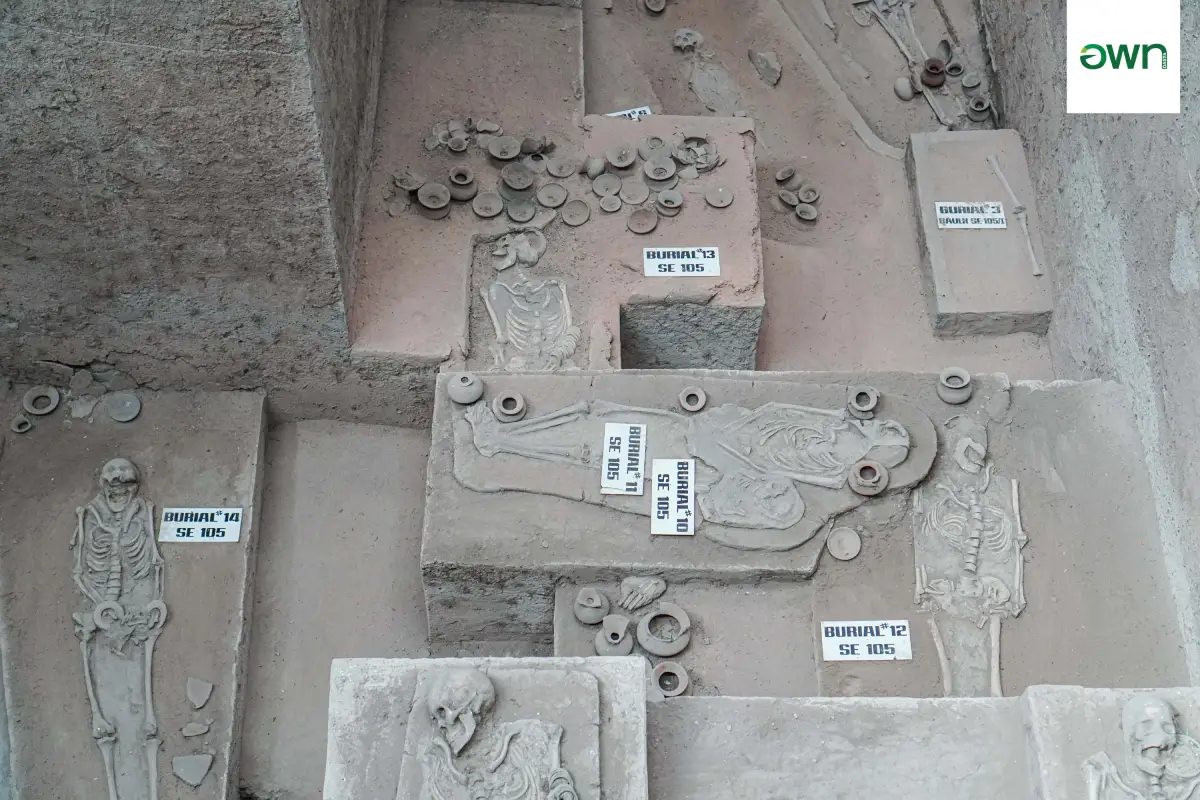
Ban Prasat Archaeological Site, located in Ban Prasat Tai, Than Prasat Subdistrict, Non Sung District, Nakhon Ratchasima Province, is one of Thailand’s most accessible places for exploring prehistoric life in its original archaeological context. Visitors can walk through the present-day village and enter three protected excavation shelters containing human skeletons, pottery, ornaments, burial objects, and traces of structures from different periods. The discoveries reveal that people established an agricultural community in the Upper Mun River Basin approximately 3,000 years ago and continued to use the area through the Bronze Age, Iron Age, Dvaravati cultural period, and the era of ancient Khmer influence.
The importance of Ban Prasat lies not only in the age of its discoveries but also in the way they are presented. Instead of removing every object from the ground and displaying it separately in glass cases, the site preserves major excavation pits in place. Visitors can therefore observe the depth of the soil layers, the position and orientation of individual burials, and the relationship between each skeleton and the vessels or ornaments placed beside it. Ban Prasat is widely described as Thailand’s second archaeological site, after Ban Chiang, to have been developed as an open-air excavation museum.
This approach transforms the visit from a conventional museum experience into a direct encounter with archaeological evidence. A pottery vessel in a cabinet can demonstrate craftsmanship, but a vessel positioned beside a skeleton within its original burial layer provides considerably more information. Its location may help explain funerary customs, concepts of identity, family relationships, social status, and ideas about the afterlife. The preserved excavation pits allow visitors to understand why archaeological context is as important as the object itself.
Ban Prasat developed on an ancient settlement mound surrounded by low agricultural land. Than Prasat Stream flows along the northern side of the community, while traces of an old moat and embankment indicate that water management and settlement planning were important to its inhabitants. The nearby water source supported rice cultivation, animal husbandry, fishing, food gathering, and communication with other communities in the Mun River Basin. This landscape was therefore a practical location for a permanent farming settlement.
The wider Non Sung area contains several major prehistoric sites and is central to the study of early agricultural societies in northeastern Thailand. Communities were generally established on slightly elevated mounds surrounded by seasonally wet lowlands. These locations provided access to water and fertile fields while offering some protection during periods of flooding. Ban Prasat should consequently be understood as part of a broader network of ancient settlements rather than as an isolated village.
The modern community includes Ban Prasat Nuea and Ban Prasat Tai, while the main archaeological learning route is associated with Ban Prasat Tai. The name Than Prasat is also used for the stream and the surrounding subdistrict, reflecting the close connection between the settlement, its waterways, and local memories of ancient structures. For travelers, the entire village forms a cultural landscape in which archaeology, farming, craft production, religious belief, and community life continue to exist side by side.
Systematic archaeological investigation became particularly important in 1983 after ancient objects from the area were illegally removed and offered for sale. The Fine Arts Department sent specialists to inspect, survey, and excavate the site. Their work demonstrated that Ban Prasat was a large archaeological settlement containing multiple habitation and burial layers. The evidence included human skeletons, pottery, stone and metal tools, bronze ornaments, shell bracelets, colored stone beads, and architectural remains from the historic period.
Archaeologists reconstruct the past by examining relationships between different categories of evidence. The depth of a burial, the type of pottery placed beside it, the direction in which the body was laid, and the position of ornaments all contribute to the interpretation. Lower soil deposits usually represent earlier activity, while upper layers record later occupation. By comparing these layers, researchers can follow changes that occurred over centuries rather than treating Ban Prasat as a settlement belonging to only one period.
The earliest major settlement phase dates to approximately 3,000 years ago. The inhabitants cultivated rice, raised animals, produced pottery, and lived in a stable farming community. Their economy was not based solely on hunting and gathering. Permanent settlement required coordinated labor, knowledge of seasonal water conditions, storage facilities, food preparation, and systems for sharing land and other resources. The archaeological remains therefore represent an organized community with established social practices.
Bronze was known during the early phases, although it was not yet as widely used as iron would be in later centuries. Bronze bracelets, rings, and headdress ornaments found in burials suggest either local metallurgical knowledge or participation in exchange networks through which metal and finished objects circulated. Because many bronze objects were placed with the dead, they may have communicated social identity, age, status, occupation, or family affiliation in addition to serving as personal decoration.
Early Ban Prasat pottery is particularly distinctive. Many vessels were coated with a red slip, polished, or decorated with cord-marked patterns. A characteristic form has a narrow neck and a widely flaring, trumpet-like mouth. Other vessels are tall and bottle-shaped, while some have shorter rounded bodies. These variations may reflect different functions, chronological phases, or ceremonial meanings. The trumpet-mouthed red-slipped vessel became an important reference form for comparing prehistoric communities across the Upper Mun River Basin.
Pottery production required knowledge of clay sources, tempering materials, shaping methods, surface treatment, drying, and firing. A well-proportioned vessel with a smooth surface reflects the work of a skilled craftsperson and a community capable of transmitting technical knowledge between generations. Repeated pottery styles also enable archaeologists to compare Ban Prasat with neighboring sites and to identify patterns of interaction, migration, imitation, or shared cultural practice.
By approximately 2,200 years ago, technological and material changes had become more visible. Iron tools and objects appeared alongside bronze and ornaments made from colored stones such as carnelian and agate. These stones were not available everywhere and often traveled through long-distance exchange systems. Their presence at Ban Prasat shows that the community was connected to wider regional networks through which materials, finished goods, knowledge, and possibly people moved across mainland Southeast Asia.
During the period around 1,500 years ago, black Phimai-style pottery became increasingly important. These vessels generally have black or dark gray surfaces, often polished, with relatively thin or carefully prepared bodies. Producing a black surface requires deliberate control of oxygen during firing, indicating increasingly sophisticated ceramic technology. The name “Phimai Black” also connects Ban Prasat to a wider archaeological tradition centered on settlements in the Phimai and Upper Mun River regions.
As the community entered the historic period, Dvaravati and ancient Khmer cultural influences became evident. These influences did not necessarily involve the complete disappearance or replacement of the earlier population. They may instead reflect the adoption and local interpretation of new religious ideas, artistic conventions, political relationships, and trade connections. A locally produced Dvaravati-style Buddha head, architectural stucco, and traces of a religious structure demonstrate how regional traditions were incorporated into the existing landscape.
Excavation Pit 1 is the most important area for understanding chronological changes in burial practices. Skeletons were discovered at several depths, with the lowest layer approximately 5.5 meters below the modern ground surface. From the viewing platform, visitors can see that the burials were not made at the same time. They occupy separate layers representing communities or generations that used the area over many centuries.
The oldest burials, dating to approximately 3,000 years ago, were placed with the head toward the southeast. Burials from around 2,500 years ago were oriented toward the east, while those dating to approximately 2,000 years ago were directed toward the south. A change in burial orientation may represent a shift in religious belief, concepts of sacred direction, group identity, or the organization of cemetery space. Archaeologists must compare the orientations with other evidence before deciding which explanation is most convincing.
Although the direction of the bodies changed, the practice of placing objects with the dead remained important. Shell bracelets, beads, bronze rings, bronze bracelets, headdress ornaments, and pottery vessels were deposited beside individual skeletons. These items may have been personal possessions, offerings of food or drink, symbols of status, gifts from relatives, or equipment believed to be necessary after death. Their placement provides insight into the social relationships surrounding each burial.
Shell bracelets are especially informative because Ban Prasat is far from the sea. Marine or large freshwater shell materials had to be transported through exchange networks or acquired from specialist producers. Colored stone beads and metal ornaments similarly reveal connections extending beyond the settlement. Small objects that may appear decorative at first glance can therefore provide significant evidence for trade, mobility, craft specialization, and regional interaction before the existence of written local histories.
Red-slipped pottery accompanied many of the earlier burials. Some vessels were positioned near the head, torso, or feet, and the exact arrangement may have held particular meaning. Once an object is removed without documentation, much of this information is lost. Preserving parts of the cemetery in situ allows researchers and visitors to study the relationship between objects and bodies, which is one of the principal reasons Ban Prasat is such an effective archaeological learning site.
Excavation Pit 2 presents a different chapter of the settlement’s history. In the upper deposits, archaeologists discovered traces of a religious structure known as Ku Than Prasat, dated approximately to the 13th–16th Buddhist centuries. This indicates that an area previously associated with prehistoric settlement and burial later acquired a religious function. The overlapping uses of the same location illustrate how sacred landscapes can be reinterpreted over long periods.
Important objects from Pit 2 include a locally produced Dvaravati-style Buddha head, fragments of architectural stucco, and a terracotta female torso with its hands positioned over the abdomen. The figure resembles a pregnant woman and has sometimes been associated with fertility, childbirth, or protective ritual. Such interpretations must remain tied to archaeological context, because appearance alone cannot establish the precise identity or purpose of an ancient image.
The locally adapted Dvaravati style is evidence of cultural creativity rather than simple copying. Craftspeople absorbed broader religious and artistic concepts but expressed them through local materials, techniques, and visual preferences. Ban Prasat therefore helps demonstrate that cultural change in northeastern Thailand involved adaptation, negotiation, and combination. New beliefs could be incorporated into an existing community without completely eliminating older traditions.
Excavation Pit 3 contains the site’s most debated evidence. Several female skeletons were found in a layer approximately 5.5 meters deep, and none retained a skull in its original position. Pottery deposited with the bodies had also been deliberately broken before burial. This treatment differs sharply from the more regular extended burials visible elsewhere and raises questions about special ritual, punishment, conflict, or secondary treatment of the dead.
One archaeological interpretation proposes that the women may have been executed and that their heads were removed and displayed elsewhere. A group of skull fragments was reportedly found approximately 500 meters from the burial area. This remains an interpretation based on the available evidence rather than a complete historical account. Confirming such an event requires careful study of skeletal trauma, burial sequence, age, sex, spatial relationships, and the condition of the associated objects.
The contrasting evidence in the three pits makes Ban Prasat particularly valuable. Pit 1 records changes in burial orientation and grave goods over several periods. Pit 2 connects prehistoric occupation with Dvaravati and Khmer-influenced religious activity. Pit 3 presents an unusual burial pattern that continues to generate questions. Seeing all three enables visitors to understand that archaeology develops through comparison and critical interpretation rather than through isolated spectacular discoveries.
Near the entrance to the village, the Ban Prasat Museum occupies a two-storey adapted Thai-style building. The upper floor presents community history and objects associated with everyday life, while the lower floor contains a reconstructed excavation scene and displays of pottery, ornaments, and funerary objects. Beginning the visit at the museum helps travelers understand basic chronology and terminology before walking to the original excavation pits.
The archaeological shelters are distributed through the village and can be reached on foot. Walking between them allows travelers to observe modern houses, agricultural areas, local crafts, and the relationship between the settlement and Than Prasat Stream. The route is not merely a passage between museum buildings; it demonstrates that the archaeological remains exist within a living community rather than in an isolated institutional compound.
Visitors without previous archaeological knowledge can begin by comparing four features: burial depth, body orientation, pottery style, and the location of grave goods. Questions such as why bodies faced different directions, why red pottery was replaced by black pottery, or why the Pit 3 burials lacked skulls encourage observation and critical thinking. This makes Ban Prasat especially suitable for students, families, and educational groups.
Preserving an open excavation is technically difficult. Skeletons and soil layers that were stable underground become exposed to humidity, rainwater, temperature changes, insects, fungi, and vibration. Protective shelters, drainage, retaining structures, and periodic inspection are therefore essential. Fine Arts Office 10, Nakhon Ratchasima, continues to maintain the site, including stabilizing excavation walls, removing vegetation, cleaning the surrounding area, and supporting educational visits.
Travelers can assist conservation by remaining behind barriers, avoiding contact with bones and soil surfaces, and following instructions from staff or community guides. Objects should never be dropped into an excavation pit, and railings should not be climbed or used as supports for photography. The site is both a research resource and an ancient cemetery, so quiet and respectful behavior is appropriate.
Children should be told that the skeletons belonged to real people who lived within a community, not to decorative figures or entertainment displays. Presenting the site in this way encourages respect for human remains and helps younger visitors understand the ethical responsibilities of museums and archaeologists. Photography should also avoid mocking poses or images that reduce the dignity of the dead.
The relationship between the modern community and the ancient burials is reflected in an annual merit-making ceremony held on 21 April. Residents dedicate merit to the individuals whose remains were discovered in the excavation pits. The ceremony does not prove direct biological descent from every ancient individual, but it expresses the community’s ethical commitment to caring for human remains and cultural heritage found within its land.
Ban Prasat is also recognized for community-based tourism and local craft traditions. Visitors may learn about weaving and basketry using reeds and cattails collected from areas near the stream, as well as the production of mudmee silk. These activities show how environmental knowledge, household labor, and craft skills continue to contribute to local livelihoods alongside rice farming.
The community learning route can include the village guardian shrine beneath a very large tamarind tree and the wooden bridge known as Saphan Takon Rak, which crosses Than Prasat Stream. These places reveal that the heritage of Ban Prasat extends beyond the excavated cemetery. It also includes beliefs, waterways, shared public spaces, food, handicrafts, and relationships between neighboring households.
Phat Mi Korat, the province’s distinctive stir-fried noodles, is one of the local dishes travelers should try. Community programs may also include demonstrations of seasonal sweets, weaving, basketry, or village cooking. These activities are normally organized by residents rather than operated according to a fixed daily timetable, so groups should arrange them in advance.
A community homestay offers a more immersive experience than a short archaeological visit. Staying in the village provides opportunities to learn about farming, local food, craft production, and everyday social life. Availability, participating homes, meal arrangements, and activity programs can change according to the season and the responsibilities of host families, making advance booking essential.
The most comfortable time to visit is early in the morning after the site opens. Temperatures are lower, and travelers have enough time to see the museum and all three excavation pits without rushing. During the hot season, visitors should carry drinking water, wear breathable clothing, and use sun protection. During the rainy season, an umbrella and footwear with good grip are advisable because the walking route between shelters may become wet.
Allow at least 1.5–2 hours for the museum and the three principal excavation areas. A half-day is more appropriate for travelers who also wish to explore craft groups, have a community meal, walk to the guardian shrine, or visit the stream and bridge. Archaeology enthusiasts can devote a full day to Ban Prasat and continue to Phimai Historical Park and Phimai National Museum.
Families should begin inside the museum, where reconstructed displays and introductory information make the original pits easier to understand. Adults can encourage children to compare pottery and burial patterns without presenting the human remains as frightening. Schools and large educational groups should contact the managing office in advance to arrange a guide and ensure that the visit does not place unnecessary pressure on the conservation areas.
Older visitors and people with limited mobility should consider the distance between the excavation shelters. The route passes through a working village, and surface conditions may vary. Supportive footwear, assistance from a companion, and regular rest stops can improve the experience. Vehicles should remain in designated areas and must not block village roads or approach the protected pits without authorization.
Responsible photography is permitted when no temporary restriction is posted. Visitors should remain behind barriers, avoid flash where prohibited, and never climb protective structures. When sharing images online, adding accurate information about the site helps photographs become educational resources rather than sources of exaggerated or misleading stories.
Travelers interested in souvenirs should support community craft groups by purchasing locally made basketry, textiles, or other clearly identified village products. Ancient pottery fragments, beads, bones, and objects claimed to have been excavated from the area must never be purchased or removed. Illegal collecting destroys archaeological context and may violate Thai cultural heritage law.
Ban Prasat appeals to history enthusiasts, students, families, photographers, researchers, and travelers interested in rural culture. Its strength does not depend on monumental architecture. Instead, it reveals the lives of ordinary people through evidence of farming, cooking, craft production, personal adornment, exchange, family relationships, and funerary practice.
Combining Ban Prasat with Phimai provides a particularly useful historical sequence. Ban Prasat focuses on households, agricultural settlement, cemeteries, and everyday technologies, while Phimai presents urban planning, monumental religion, sculpture, and regional political connections. Together, the two destinations offer a broader understanding of cultural development in the Upper Mun River Basin.
The site remains active as a public learning destination. Fine Arts Office 10 continues to clean and conserve the area and has conducted educational tours for student groups in recent years. Current public visiting hours are Wednesday to Sunday from 08.30 to 16.30, with closure on Monday, Tuesday, and public holidays. General admission is free. Organized groups should contact the managing office before traveling to confirm guide availability and access arrangements.
Getting There from central Nakhon Ratchasima is straightforward by private car. Follow Highway 2, or Mittraphap Road, north toward Khon Kaen. At approximately kilometer marker 44, turn left at the sign for Ban Prasat Tai and continue for about 1–1.5 kilometers. The total driving distance from the city is approximately 45–46 kilometers. Mittraphap Road carries heavy trucks and interprovincial buses, so drivers should reduce speed carefully before turning.
From Bangkok, follow Highway 1 toward Saraburi and connect with Highway 2 through Nakhon Ratchasima. Continue north toward Khon Kaen until reaching kilometer marker 44. Navigation systems should be checked carefully because several places in Thailand use the name Ban Prasat. The correct destination is Ban Prasat Archaeological Site in Than Prasat Subdistrict, Non Sung District, Nakhon Ratchasima.
Travelers using public transport can take an interprovincial bus traveling toward Khon Kaen, Udon Thani, Nong Khai, or Kalasin and request to get off at kilometer marker 44 near the entrance to Ban Prasat. From the highway, continue approximately 1 kilometer by motorcycle taxi or local transport. Confirm return transport and the final departure time in advance, as local services may become limited later in the day.
A practical day trip begins with Ban Prasat in the morning, followed by lunch in the village or Phimai. Continue to Phimai Historical Park, Phimai National Museum, the old city gate, and Sai Ngam. This route connects a 3,000-year-old farming and burial community with Dvaravati art, ancient Khmer religion, and the historic city of Phimai within a single journey.
Ban Prasat gives physical meaning to the passage of time. Looking down into the soil layers, seeing a vessel beside the person for whom it was placed, and observing ornaments once worn by an individual turns archaeology into a human story. The site reminds visitors that history was created not only by rulers and monumental buildings but also by farmers, potters, metalworkers, parents, children, and families whose lives shaped the region long before written records were produced.
| Name | Ban Prasat Archaeological Site |
| Thai Name | แหล่งโบราณคดีบ้านปราสาท |
| Location | Ban Prasat Tai, Than Prasat Subdistrict, Non Sung District, Nakhon Ratchasima Province |
| Address | Ban Prasat Tai Community, Than Prasat, Non Sung, Nakhon Ratchasima 30420, Thailand |
| Coordinates | Approximately 15.2618, 102.4131 |
| Highlights | Three protected in-situ excavation pits containing human skeletons, pottery, ornaments, burial objects, and evidence from several cultural periods |
| Historical Period | Settlement began approximately 3,000 years ago and continued through the Bronze Age, Iron Age, Dvaravati cultural period, and ancient Khmer influence |
| Investigation History | The Fine Arts Department began systematic investigation in 1983 following the illegal removal and sale of antiquities from the community |
| Major Evidence | Human skeletons, red-slipped trumpet-mouthed pottery, black Phimai pottery, shell bracelets, colored stone beads, bronze rings and bracelets, iron objects, a local Dvaravati-style Buddha head, terracotta sculpture, and architectural stucco |
| Distinctive Features | Archaeological remains are displayed in relation to their original soil layers, allowing visitors to compare burial customs, pottery, technology, and beliefs across several periods |
| Main Areas / Zones | 1. Ban Prasat Museum and introductory learning area 2. Excavation Pit 1 with burials from several chronological layers 3. Excavation Pit 2 with Ku Than Prasat remains and local Dvaravati art 4. Excavation Pit 3 with unusual female burials lacking skulls in their original positions 5. Community learning route, craft groups, village guardian shrine, Than Prasat Stream, and Saphan Takon Rak |
| Caretaker | Fine Arts Office 10, Nakhon Ratchasima, in cooperation with local administrative organizations and the Ban Prasat Tai community |
| Current Status | Open to the public, with continuing conservation, cleaning, excavation-pit maintenance, and educational tours |
| Open Days | Wednesday – Sunday; closed on Monday, Tuesday, and public holidays |
| Opening Hours | 08.30 – 16.30 |
| Admission Fee | Free admission |
| Facilities | Museum building, protected excavation shelters, viewing walkways, information signs, community activity areas, and guided visits for pre-arranged groups |
| Annual Tradition | Residents hold a merit-making ceremony for the individuals discovered in the excavation pits on 21 April each year |
| Travel Information | Follow Highway 2 from Nakhon Ratchasima toward Khon Kaen. At kilometer marker 44, turn left and continue for approximately 1–1.5 km. Interprovincial buses toward Khon Kaen, Udon Thani, Nong Khai, or Kalasin can stop at kilometer marker 44, followed by a motorcycle taxi or local vehicle into the village. |
| Main Contact Number | Fine Arts Office 10, Nakhon Ratchasima: +66 44 471 518, +66 44 481 024 |
| Nearby Tourist Attractions | 1. Phimai Historical Park, approximately 18 km, Tel. +66 44 471 568 2. Phimai National Museum, approximately 18 km, Tel. +66 44 471 167 3. Pratu Chai, Phimai Old City Gate, approximately 18 km; Phimai Municipality Tel. +66 44 002 323 4. Sai Ngam Banyan Grove, approximately 19 km; Phimai Municipality Tel. +66 44 002 323 5. Ban Non Wat Archaeological Site, approximately 29 km |
| Nearby Restaurants | 1. Fiore Caffe Phimai, approximately 17 km, Tel. +66 81 709 3872 2. Ida Eatery & Drinks, approximately 18 km, Tel. +66 92 665 5694 3. Kha Moo Phimai, approximately 18 km, Tel. +66 85 175 5777 4. Rabiang Mai Restaurant, approximately 18 km, Tel. +66 81 760 9642 5. Khun Samruam Phimai Noodle Restaurant at Sai Ngam, approximately 19 km, Tel. +66 82 156 7543 |
| Nearby Accommodations | 1. Ban Prasat Tai Community Homestay, within the community; advance booking required 2. Phimai Residence, approximately 18 km, Tel. +66 81 931 3740 3. Phimai Paradise Hotel, approximately 18 km, Tel. +66 90 241 5041 4. Amatara Hotel Phimai, approximately 19 km, Tel. +66 44 928 255–6 5. Rabbit Hotel Phimai, approximately 20 km, Tel. +66 81 202 2250 6. Baan Lita Phimai, approximately 20 km, Tel. +66 88 595 2542 |
Frequently Asked Questions (FAQ)
Q: On which days and at what time is Ban Prasat Archaeological Site open?
A: The site is open Wednesday to Sunday from 08.30 to 16.30. It is closed on Monday, Tuesday, and public holidays.
Q: Is there an admission fee for Ban Prasat Archaeological Site?
A: General admission is free. Community activities, meals, workshops, and homestay accommodation are separate services that should be booked in advance.
Q: How old is Ban Prasat Archaeological Site?
A: The earliest major settlement evidence dates to approximately 3,000 years ago, with continued activity through the Bronze Age, Iron Age, Dvaravati cultural period, and ancient Khmer influence.
Q: What can visitors see at Ban Prasat?
A: Visitors can explore the Ban Prasat Museum and three preserved excavation pits containing human skeletons, pottery, ornaments, grave goods, architectural remains, and local Dvaravati-style art.
Q: Can visitors photograph the skeletons and excavation pits?
A: Photography is generally possible when no temporary restriction is posted. Visitors must remain behind barriers, avoid touching archaeological remains, and follow staff instructions.
Q: How can travelers reach Ban Prasat by public transport?
A: Take a bus traveling toward Khon Kaen, Udon Thani, Nong Khai, or Kalasin and request to get off at kilometer marker 44 on Mittraphap Road. Continue approximately 1 kilometer by motorcycle taxi or local transport.
Q: How much time should visitors allow for the site?
A: Allow at least 1.5–2 hours for the museum and all three excavation pits. A half-day is recommended when including community crafts, a local meal, or other village attractions.
Q: Which attractions can be combined with Ban Prasat?
A: A practical itinerary can include Phimai Historical Park, Phimai National Museum, Pratu Chai, Sai Ngam, and Ban Non Wat Archaeological Site.
 Category: ●Art, Culture and Heritage
 Group: ●Historical Sites and Monuments
Last Update : 3 MonthAgo
 Last Update : 3 MonthAgo
 Click to Access the Navigation Map GPS
Ban Prasat Archaeological Site Map
Recommend
 Historical Sites and Monuments(20)
 Landmarks and Memorials(5)
 Art, Craft Centres, Tradition(7)
 Museums(6)
 Art Gallery(1)
 Educational Places
 Educational Gardens, Farm(4)
 Places of Worship
 Temple(29)
 Mosque(1)
 Other Sacred Sites(6)
 Research and Development
 Royal Project(3)
 Suburban Living
 Village, Community(6)
 Local Market(4)
 Floating Market(1)
 Nature and Wildlife
 National Parks and Marine Reserves(3)
 Mountain (Doi)(5)
 Dam, Reservoir, Lake(8)
 Waterfalls(9)
 Hot Springs(1)
 Caves(2)
 Flower Field(1)
 River, Canal(8)
 Bays and Beaches(2)
 Other natural attractions(3)
 Entertainment and Agricultural
 Zoos and Aquariums(2)
 Animal camps and shows(1)
 Farms, Parks and Ecotourism(21)
 Waterpark(4)
 Outdoor and Adventure Activities(6)
 Shopping
 Shopping and Night Market(2)
 Travel Articles, Recipes
 Travel Review, Food Review(6)


