
lovethailand home >Northeastern Travel Attractions >Nakhon Ratchasima Travel Attractions >Si Khui >Khlong Phai > Mahaviharn Merit Park
TL;DR: Mahaviharn Merit Park is located at Mittraphap Road, Mittraphap Subdistrict, Sikhio District, Nakhon Ratchasima Province 30140, open Daily, hours 06.00 – 18.00.
Mahaviharn Merit Park
Open Days: Daily
Opening Hours: 06.00 – 18.00
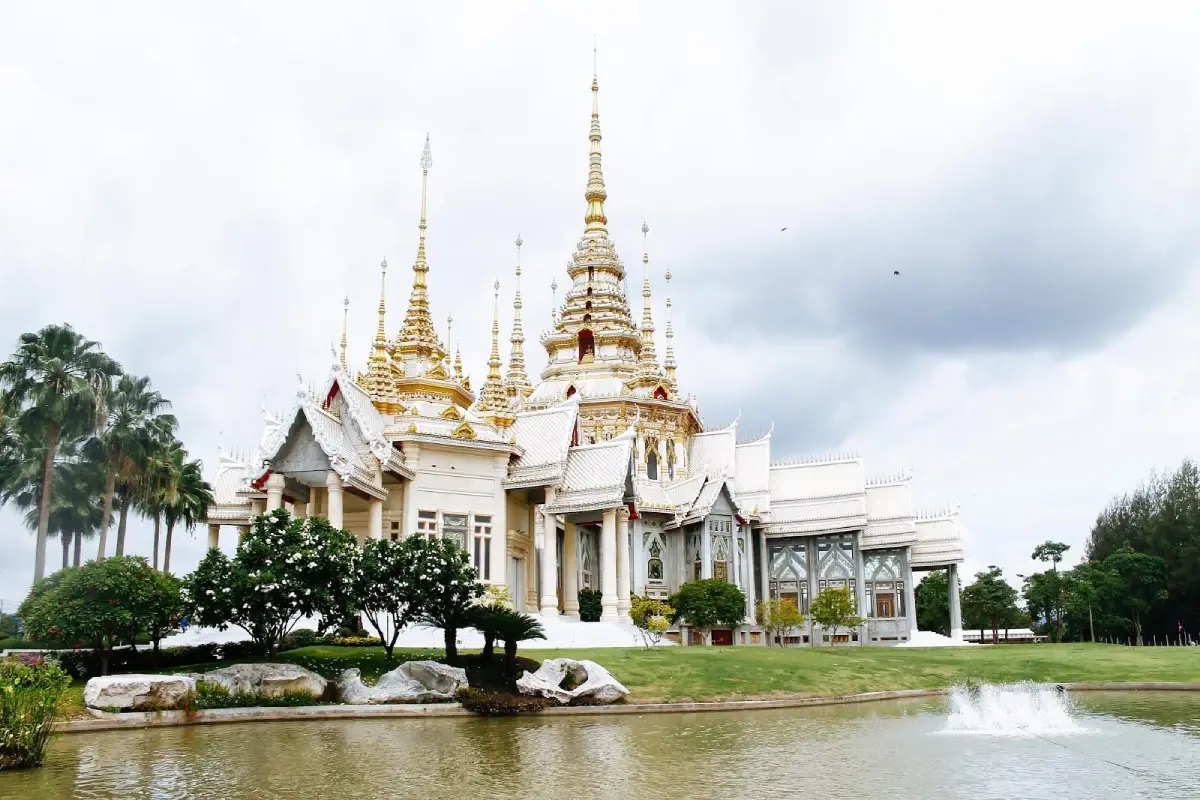
Mahaviharn Merit Park of Somdet Phra Phutthachan (To Phrommarangsi) stands beside Mittraphap Road in Mittraphap Subdistrict, Sikhio District, Nakhon Ratchasima Province. It is one of the most prominent Buddhist centers of faith along the route between Bangkok and northeastern Thailand. At its heart is a monumental statue of Somdet Phra Phutthachan (To Phrommarangsi), measuring 8 meters and 1 inch across the lap, 13 meters in height, and approximately 61 metric tons in weight. The statue is surrounded by a grand viharn, landscaped gardens, ponds, merit-making areas, a charitable dining hall, and several supporting buildings. Travelers can stop here to pay their respects, rest both body and mind, learn about Somdet To, and reflect on the charitable ideals of Sorapong Chatree, who initiated the development of the site.
The destination is known by several names, including Mahaviharn Merit Park of Somdet Phra Phutthachan (To Phrommarangsi), Luang Pho To Sorapong Foundation, Wat Luang Pho To, Wat Sorapong, and Wat Non Kum. These names developed through popular usage and the site’s proximity to Wat Non Kum. In organizational terms, however, the main area is operated by the Somdet Phra Phutthachan (To Phrommarangsi) Metta Barami Foundation. It is not a monastery administered under the formal Thai Sangha structure and therefore has no abbot responsible for the foundation grounds. The present administration is overseen by the foundation committee under the leadership of Duangduean Jithaisong, who continues the construction, restoration, and charitable work after the passing of Sorapong Chatree.
Its roadside location on Mittraphap Road makes Mahaviharn Merit Park an easily accessible spiritual stop. Travelers heading from Bangkok toward Nakhon Ratchasima, Pak Chong, Sikhio, or other provinces in northeastern Thailand can see the viharn’s spires and architectural features from the main highway. The site is approximately 42 kilometers from central Nakhon Ratchasima and only a short distance beyond the entrance to Sikhio town. Its position on this major transport route allows it to serve simultaneously as a pilgrimage destination, a rest stop, a religious attraction, and a center for year-round charitable activities.
The origins of Mahaviharn Merit Park are closely connected to the faith of Sorapong Chatree, whose birth name was Kreepong Tiemsawet. A National Artist in the field of performing arts, he was widely known for his extensive work in Thai film and television drama. His devotion to Somdet Phra Phutthachan (To Phrommarangsi) inspired him to create a monumental likeness that could become a spiritual focus for Buddhists. Construction of the statue began on April 28, 1998, and was completed on April 1, 2000, at a cost of more than 9 million baht. The project succeeded through the founder’s financial commitment and determination, together with donations from members of the public.
The statue of Somdet Phra Phutthachan To measures 8 meters and 1 inch across the lap, rises 13 meters high, and weighs approximately 61 metric tons. Its enormous scale makes Luang Pu To the immediate focal point upon entering the grand viharn. Creating a statue of this size required engineering capable of bearing its weight, precise casting and assembly, careful preparation of the supporting base, and close control of the proportions of the face, body, robes, and seated posture so that the image retained the recognized identity of Somdet To. The finished work is therefore at once a sacred object, a major sculpture, and visible evidence of the faith behind its creation.
Somdet Phra Phutthachan (To Phrommarangsi) was one of the most important senior monks of the Rattanakosin period and remains deeply revered by Thai Buddhists. His name is associated with compassion, wisdom, simplicity, and sermons that communicated Buddhist teachings in an accessible manner. Many devotees know him through the Chinabanchorn prayer, stories about his conduct, and sacred amulets in the Somdet tradition. The monumental image at Sikhio therefore represents more than a large construction project. It creates a place where visitors can reflect on the virtues and way of life that people continue to associate with Somdet To.
Paying respect to the likeness of a revered monk differs from worshipping a Buddha image because devotees focus on remembering the monk’s virtues, conduct, and teachings. Visitors commonly offer flowers, incense, and candles, apply gold leaf, or make donations at points arranged by the foundation. Prayer should be grounded in the understanding that good conduct, moral discipline, mindfulness, and helping others are central to creating genuine auspiciousness. The act of worship becomes more meaningful when it is connected to improving one’s own behavior rather than seeking blessings without making an effort to do good.
After the monumental statue was completed, Sorapong Chatree and the foundation continued to develop the surrounding grounds. Their work included the grand viharn, auxiliary buildings, ponds, rock gardens, landscaped areas, pathways, rest spaces, the charitable dining hall, and visitor-service points. The viharn was designed in a kutagara-inspired form, with an elevated roof structure rising above the sacred image. This design gives the center of the park a dignified presence while emphasizing the interior as the most important place of worship.
The architecture combines traditional Thai forms with contemporary materials and structural methods. Outside, the building is distinguished by tiered roofs, soaring finials, gilded ornament, and details that reflect the refinement of Thai craftsmanship. Inside, the structure was designed to support the exceptional scale and weight of the Luang Pu To statue. The hall is therefore tall and spacious, giving worshippers an unobstructed view of the full image while accommodating large numbers of visitors. Interior lighting highlights the golden surface and robe details, while openings around the structure improve ventilation and reduce the enclosed feeling of the vast hall.
Construction of the grand viharn has been a long-term project carried out in several phases. Although the statue was completed in 2000, decorative work, supporting buildings, and landscape development continued afterward. Sorapong Chatree died on March 10, 2022. Following his death, his wife, Duangduean Jithaisong, became president of the foundation and continued his original mission through interior decoration of the viharn, restoration of completed structures, and further development of the grounds as a spiritual center for Buddhists.
Duangduean Jithaisong’s role is essential to the continuity of the destination. Managing a project of this scale involves construction, donated funds, personnel, religious activities, visitor services, and coordination with multiple organizations. The foundation continues to hold important ceremonies regularly, including Visakha Bucha observances, memorial services marking the death anniversary of Somdet Phra Phutthachan To, and merit-making ceremonies in memory of Sorapong Chatree. These activities demonstrate that Mahaviharn Merit Park remains an active, living institution whose work did not end with the death of its founder.
In March 2026, the foundation held a merit-making ceremony marking the fourth anniversary of Sorapong Chatree’s death and returned a life-sized statue of him to the place where he had worked and welcomed visitors. The statue was prepared for display in a museum pavilion near House 69, an area closely linked to memories of the founder. The museum is intended not only to present his fame in the entertainment industry but also to explain his transition from a nationally recognized actor into a major supporter of Buddhism and public charity.
In June 2026, the foundation also organized a memorial merit-making ceremony for the death anniversary of Somdet Phra Phutthachan (To Phrommarangsi), attended by Buddhist devotees, foundation committee members, and supporters. Such events commonly include monastic ceremonies, offerings of meals to monks, Buddhist chanting, merit-making, and donations that support the foundation’s continuing work. Travelers planning to visit during important observances should allow extra time because attendance may be high and parking arrangements or internal walking routes may differ from those on ordinary days.
The park can be explored as a series of distinct zones. The first is the entrance and parking area, which can accommodate private cars, vans, and coaches carrying pilgrimage groups. From the parking area, routes lead through visitor services, shops, and landscaped gardens before reaching the main viharn. The approach has been arranged to provide views of the roof spires and ponds, creating a gradual transition into the sacred area. Visitors should follow entrance and exit signs carefully, particularly on holidays when traffic is heavy.
The most important zone is the grand viharn and the Luang Pu To statue. This is the principal place for paying respects, sitting in brief meditation, offering flowers, and making merit. The area around the base of the statue has designated routes that allow visitors to approach respectfully. Families should ensure that children do not run or make excessive noise. Photographers should give priority to worshippers and avoid flash photography or large equipment that could interfere with ceremonies.
Another important area is the Phra Phuttha Chinnarat Viharn, which adds variety to the merit-making route. It houses a replica of Phra Phuttha Chinnarat, the celebrated Buddha image whose original is in Phitsanulok Province. Visitors can therefore pay respect to both a Buddha image and the likeness of a revered monk within the same destination. This arrangement shows that the park is not devoted solely to Luang Pu To but also provides an environment for learning about and practicing Buddhism in several forms.
The landscaped gardens and ponds soften the imposing character of the large religious buildings. This zone includes lawns, trees, ornamental shrubs, flowering plants, rock gardens, walking paths, and resting places beside the water. Reflections of the grand viharn on the pond are among the most popular photographic views, especially in the morning and late afternoon. The landscaping also creates space between the buildings, improves airflow, and opens sightlines toward the viharn’s roof from several directions.
The trees and green areas serve more than a decorative purpose because they create a setting suited to calm reflection. Visitors can rest after a long journey, walk slowly through the gardens, or spend quiet time alone before returning to Mittraphap Road. Everyone should help keep the area clean, avoid picking flowers or climbing trees, and refrain from feeding fish with unsuitable food that could pollute the water. Caring for the landscape is itself a shared form of merit-making because the entire site requires continuous funding and labor to maintain.
The charitable dining hall clearly reflects the foundation’s principle of compassionate generosity. The destination has a long record of providing food and drinks free of charge to merit-makers and travelers. Availability depends on the day, time, number of sponsors, and scheduled foundation activities. Guests should take only what they can finish, keep the area clean, and return dishes according to the established system. Supporters may contribute ingredients or operating expenses through the foundation’s official channels.
The dining-hall tradition distinguishes this destination from an ordinary tourist attraction because sharing food reduces differences in social status. Everyone can receive appropriate service without being a member or a major donor. The practice also reflects Sorapong Chatree’s intention that travelers and pilgrims should have a place to rest both physically and spiritually. The dining hall is not, however, a conventional restaurant with a guaranteed daily menu and fixed service schedule. Visitors with specific dietary requirements should also plan to use nearby restaurants.
There are drink stalls, souvenir shops, sacred-object shops, and privately operated restaurants inside and near the entrance. Luang Pu Coffee connects the story of Sorapong Chatree with his film career through photographs and memorabilia used in the decor. Visitors can stop for a drink and learn about the founder in a relaxed atmosphere. Additional restaurants are located across the road and along Mittraphap Road, all within a short drive.
House 69 and the Sorapong Chatree Museum Pavilion form a memorial zone that the foundation is continuing to develop and curate. A statue of the founder was returned to the site in 2026 for display near the place where he once sat to welcome members of the public. Visitors should follow signs and designated routes because some sections may still be undergoing exhibition installation or decorative work. Opening this area helps younger generations understand Sorapong Chatree through his charitable contribution as well as his achievements in the performing arts.
The administration and public-relations building coordinates activities, receives inquiries, and provides information to visitors. Anyone wishing to make a large donation, offer goods, arrange a group tour, or request use of the premises should contact staff directly and obtain official documentation through channels designated by the foundation. Money should not be transferred to accounts or contacts that have not been published by the official page. Careful use of verified donation channels helps prevent impersonation and ensures that contributions reach the intended projects.
Although the public commonly calls the destination a temple, dress and conduct should follow the same standards expected at a religious site. Visitors should wear modest clothing that covers the shoulders and knees, avoid tight garments or clothing with inappropriate messages, remove shoes where signs require it, silence mobile phones, and avoid standing above worshippers merely to take photographs. Respect is determined not by the site’s legal classification but by its religious use and the feelings of people who come to practice their faith.
Incense and candles should be lit only at designated points to prevent smoke accumulation and fire hazards. Inside the grand viharn, visitors may be asked to offer flowers or bow without lighting incense, depending on the site’s procedures. Those bringing their own offerings should avoid plastic materials and items that create excessive waste. Making merit by helping maintain cleanliness, reducing rubbish, and using resources responsibly is more consistent with the spirit of the park than presenting large quantities of offerings that later become a burden for staff.
Many visitors recite the Chinabanchorn prayer before the statue of Somdet Phra Phutthachan To. The chant is widely known in Thai society and is strongly associated with his name. It should be recited quietly without personal loudspeakers and without disturbing people who are meditating. Those unable to recite the full prayer can instead focus their minds on the Buddha, the Dhamma, the Sangha, and the virtues of respected teachers. Practice with understanding is more meaningful than rushing through words without reflecting on their significance.
The foundation’s religious activities include major Buddhist holy days, merit-making ceremonies, chanting sessions, and memorial events for important figures. On Visakha Bucha Day, the foundation brings devotees together for Buddhist merit-making. In June, it holds a ceremony marking the death anniversary of Somdet Phra Phutthachan To, while March 10 is observed by the family, foundation committee, and admirers of Sorapong Chatree through merit-making in his memory. Schedules for individual events are published through the foundation’s official page.
Those wishing to attend a ceremony should arrive early, dress respectfully, and follow seating arrangements made by staff. Some events are attended by senior monks, government representatives, artists, and large numbers of members of the public, so access to certain areas may be restricted. Early arrival reduces parking difficulties and allows time to prepare offerings. Visitors who cannot enter the main ceremonial area can still make merit at other points and explore the gardens along routes kept open to the public.
The destination is suitable for families because it has extensive grounds, parking, gardens, and several resting areas. Children can learn about important Buddhist figures, religious art, and charitable sharing through the dining hall. Before entering the grand viharn, parents should explain that running, shouting, and touching sacred objects are inappropriate. Young children require close supervision near ponds, stairs, and crowded areas. Bringing drinking water and hats makes a visit more comfortable in hot weather.
Older visitors can explore the grounds with relative ease because vehicles can reach the parking area and most spaces consist of broad paved areas or wide walkways. Distances between buildings may nevertheless be considerable, and some points have stairs. It is advisable to park near the main zone, use a walking stick or wheelchair when necessary, and rest between sections. Companions should check ramps and building entrances before leading an older person toward stairs. On holidays, quieter periods are preferable for anyone who needs more room to move comfortably.
Facilities include parking, toilets, the charitable dining hall, restaurants, coffee shops, souvenir stores, flower and sacred-object stalls, garden rest areas, and a public-relations office. Some services operate according to staff availability and individual schedules, so important tasks should be completed before late afternoon. Although the grounds remain open until 18.00, certain shops and buildings may close according to their own operating arrangements. Visitors arriving near closing time should pay their respects in the main zone before exploring secondary areas.
There is no admission fee. Visitors may enter, worship, and walk through the grounds without purchasing a ticket. Donations are voluntary and are not a condition of entry. Official donation points should be clearly marked with the foundation’s name. Anyone requiring a receipt or accounting document should contact the office. Large sums should not be handed to individuals soliciting money outside officially designated donation areas.
The best times to visit are 06.00–09.00 and 15.30–18.00. Mornings are cooler, less crowded, and softly lit, making them well suited to worship. In the late afternoon, golden light reaches the roof spires and reflects across the ponds, giving the architecture greater depth. Midday sunlight and temperatures can be intense, particularly from March to May. Travelers should carry an umbrella or hat and take regular breaks in shaded areas.
During the rainy season, the gardens become especially green and the ponds create attractive scenery, although some paths may be wet and slippery. Shoes with good traction are recommended, and extra care is needed on stairs. The cool season from November to February is ideal for walking across the extensive grounds. Early mornings can be cool and windy because of the site’s position beside Mittraphap Road, so families traveling with older people or small children may wish to bring light jackets. New Year and other long holiday periods attract particularly large numbers of visitors.
Key photographic viewpoints include the pond where the viharn is reflected in the water, the front courtyard with its layered roof spires, the interior hall with a full view of the Luang Pu To statue, and garden corners where trees frame the architecture. Before taking photographs indoors, visitors should check posted instructions and avoid blocking walkways. Drones should not be flown without the foundation’s permission. Permission should also be requested before photographing people who are worshipping or practicing meditation.
Travelers interested in architectural photography should visit in the morning or shortly before sunset. Side lighting reveals details of the roofs, columns, and golden ornament more clearly than midday light. A low viewpoint from the pond emphasizes the height of the roof structure. Indoors, a wide-angle lens can capture the scale of the hall without approaching the statue beyond permitted boundaries. Tripods placed in the middle of walkways may disturb worshippers, so they should be used only during quiet periods or with staff approval.
Mahaviharn Merit Park stands on Mittraphap Road along the main route between Sikhio and Nakhon Ratchasima. From Bangkok, travelers take Phahonyothin Road toward Saraburi and continue on Mittraphap Road through Muak Lek, Pak Chong, and the Lam Takhong Dam area. On entering Sikhio District, move into the frontage road by following signs for Wat Luang Pho To or the Luang Pho To Sorapong Foundation. Drivers should enter the correct lane well in advance because missing the entrance may require traveling several kilometers to reach a legal U-turn.
Getting There from central Nakhon Ratchasima, follow Mittraphap Road toward Sikhio and Bangkok for approximately 42 kilometers. Near Mittraphap Subdistrict, look for the viharn’s roof spires, signs for Wat Luang Pho To, and the entrance from the frontage road. Mittraphap Road carries fast-moving trucks and buses, so drivers should signal early, reduce speed, and avoid sudden lane changes. Travelers approaching from the opposite direction must use an authorized U-turn and should never cross traffic lanes illegally.
Public-bus travelers can use services that pass along Mittraphap Road through Sikhio and tell the driver or conductor that they wish to get off near Wat Luang Pho To or the Luang Pho To Sorapong Foundation. The exact drop-off point depends on the route and the operating rules of each service. A local taxi or motorcycle taxi may be needed from the stop. Walking for a long distance along the shoulder of Mittraphap Road is unsafe because vehicles travel at high speed and some sections have no protected pavement.
Rail travelers can disembark at Sikhio Railway Station and continue by local transport to Mahaviharn Merit Park. The station is not next to the destination, so arranging a vehicle in advance or asking accommodation staff to help is advisable. Groups can hire a van from the station or from transport points in the district center. A private car remains the most convenient option because it allows visitors to continue on the same day to Sap Pradu Reservoir, Sema Ancient City, Wat Dhammachakra Sema Ram, or Khao Yai Thiang viewpoint.
Most visitors should allow 1–2 hours inside the park. Those who intend only to worship Luang Pu To and walk through the main viharn may need around 45–60 minutes. More time is required to explore the gardens, visit the Phra Phuttha Chinnarat Viharn, eat, learn about Sorapong Chatree, and relax beside the pond. A morning visit followed by Sema Ancient City or Wat Dhammachakra Sema Ram works well as a half-day itinerary. Adding Khao Yai Thiang and the Lam Takhong Reservoir area is better planned as a full-day trip.
Sap Pradu Reservoir is a recreational destination near Sikhio that can be visited after Mahaviharn Merit Park. Its waterside atmosphere is suitable for sightseeing, dining, and relaxing in the evening. Restaurants and sitting areas are available around the reservoir. Visiting the water after worshipping Luang Pu To creates a pleasant contrast between religious architecture and natural scenery. Travelers should help keep the area clean and take care near the water’s edge.
Wat Dhammachakra Sema Ram and Sema Ancient City are approximately 8–9 kilometers away and form an important historical route in Sung Noen District. Wat Dhammachakra Sema Ram houses a large Dvaravati-period sandstone reclining Buddha, while Sema Ancient City preserves moats, earthen ramparts, and foundations of ancient religious structures. Traveling from the Rattanakosin-period monk’s likeness at Sikhio to Dvaravati art allows visitors to see several stages in the development of Buddhism in Nakhon Ratchasima.
Nuea Fa Farm and Ban Khanom Khun Phatthara are two additional stops that can be included in a nearby itinerary. Nuea Fa Farm is suitable for travelers interested in agriculture and rural surroundings. Ban Khanom Khun Phatthara is a well-known place in Sikhio for buying sweets and local gifts, making it a convenient stop before returning to Bangkok or continuing toward Nakhon Ratchasima. Opening hours should be checked on the travel date, particularly on weekdays and during festival periods.
Dining options around the site range from simple refreshments to full meals. Nut Suki Sikhio, directly across the road, is known for sukiyaki and its distinctive dipping sauce. Rak Bua Cafe stands in front of the viharn and serves Thai, northeastern Thai, seafood, and drinks. Wagyu Korat is suitable for visitors seeking steak or dishes prepared with locally produced wagyu beef. Lam Takhong Cafe and Café Amazon provide convenient stops for coffee and other beverages. Travelers should call on the day of their visit because weekly closing days and kitchen hours may vary.
The nearest accommodation is distributed around Sikhio town and along Mittraphap Road. Greenplace Sikhio and The River Apartment are around 1–2 kilometers away and suit travelers seeking straightforward rooms near markets, shops, and the main road. Camp Out Cafe combines accommodation, a cafe, and leisure space in a natural setting. Fa Plai Rung Resort and Rai Fan Pen Ching Resort are suitable for families or guests seeking more extensive grounds. Reservations and location confirmation are recommended before travel.
Overnight visitors can worship Luang Pu To in the evening, stay in Sikhio, and travel up Khao Yai Thiang the next morning. Khao Yai Thiang viewpoint and the upper reservoir of the Lam Takhong pumped-storage power facility offer expansive views and are popular for sunrise watching and cycling. The mountain road is steep and winding, so drivers should check their brakes and keep their speed low. This itinerary combines religious, historical, and natural attractions within the Sikhio area.
A visit to Mahaviharn Merit Park should not be reduced to taking photographs with the monumental statue. Its deeper value lies in understanding how one person’s faith developed into a public space serving large numbers of people. Sorapong Chatree used his reputation, personal resources, and network to mobilize support for the statue, grand viharn, charitable dining hall, and rest areas. After his death, his family and the foundation committee continued carrying the responsibility so that the project would not come to a halt.
The destination also illustrates the relationship between Buddhism and public charity. Building a religious monument alone would be insufficient without caring for the people who visit it. Food, drinking water, toilets, and places to rest turn the principle of compassionate generosity into a practical reality. Guests can give something back by using resources responsibly, maintaining cleanliness, assisting older visitors, and donating according to their means. These small actions transform an ordinary journey into Buddhist practice within daily life.
Mahaviharn Merit Park is also a record of contemporary Thai social memory. People who knew Sorapong Chatree through his films may first arrive because of their attachment to the actor and then discover his Buddhist and charitable work. Younger generations may encounter him through the statue, museum, and stories presented within the grounds. His memory therefore extends beyond performances on screen into a destination that continues to serve the public after its founder’s death.
Continued development of the grand viharn after 2022 shows that the site’s legacy is still being built rather than preserved as a completely finished structure. Visitors at different times may see changes in decoration, landscaping, or exhibition areas. Large religious projects often take many years because they depend on donations, specialized craftsmanship, and structural inspections. Understanding these conditions helps visitors appreciate the continuity and patience behind the architecture.
Conservation requires attention to the statue, grand viharn, gardens, ponds, electrical systems, walkways, and service buildings. The metal statue needs regular inspection of its surface and structure. Large buildings require maintenance of roofs, rainwater systems, cracks, and ventilation. The gardens demand continuous pruning, water management, and waste removal. Donations therefore support much more than new construction. Maintaining what already exists is essential to keeping the destination safe and dignified.
Travelers should check traffic conditions on Mittraphap Road before departure, particularly during Songkran, New Year, and long holiday weekends. Congestion may build on the mountain section between Muak Lek and Pak Chong, while U-turn points near Sikhio can also cause delays. Refueling, using restrooms, and preparing food for children or older passengers in advance can reduce stress. Although the park has visitor facilities, demand on holidays can be substantially higher than on ordinary days.
Mahaviharn Merit Park of Somdet Phra Phutthachan (To Phrommarangsi) is therefore much more than a place containing a monumental statue. It is a center of faith, a memorial to the life of Sorapong Chatree, a charitable public space, a rest stop for travelers, and a place to learn about Buddhism, art, and generosity. Visitors can find calm through worship, enjoy the gardens and architecture, and draw inspiration from the people who created and continue to care for this destination.
| Name | Mahaviharn Merit Park of Somdet Phra Phutthachan (To Phrommarangsi) |
| Common Names | Wat Luang Pho To, Wat Sorapong, Wat Non Kum, and the Luang Pho To Sorapong Foundation |
| Place Type | A foundation-operated Buddhist center of faith and public charity, not a monastery administered by an abbot |
| Location | Mittraphap Road, Mittraphap Subdistrict, Sikhio District, Nakhon Ratchasima Province 30140 |
| Reference Coordinates | Plus Code: VPCM+Q6P, Sikhio District, Nakhon Ratchasima Province |
| Distance from Central Nakhon Ratchasima | Approximately 42 km |
| Highlights | The monumental statue of Somdet Phra Phutthachan (To Phrommarangsi), a kutagara-style grand viharn, gardens, ponds, a charitable dining hall, and memorial areas dedicated to Sorapong Chatree |
| Statue Construction History | Construction began on April 28, 1998, and was completed on April 1, 2000, at a cost of more than 9 million baht |
| Size of the Luang Pu To Statue | 8 meters and 1 inch across the lap, 13 meters high, and approximately 61 metric tons in weight |
| Founder | Sorapong Chatree, born Kreepong Tiemsawet, a National Artist in the field of performing arts |
| Current Administrator | Somdet Phra Phutthachan (To Phrommarangsi) Metta Barami Foundation |
| Current Foundation President | Duangduean Jithaisong |
| Main Areas and Zones | 1. Grand viharn and the statue of Somdet Phra Phutthachan To 2. Phra Phuttha Chinnarat Viharn 3. Landscaped gardens, rock gardens, and ponds 4. Charitable dining hall and food-service area 5. Coffee shops, restaurants, souvenir shops, and sacred-object shops 6. House 69 and the Sorapong Chatree Museum Pavilion area 7. Administration and public-relations building 8. Parking and rest areas for pilgrimage groups |
| Open Days | Daily |
| Opening Hours | 06.00 – 18.00 |
| Admission Fee | Free admission; voluntary donations are welcome |
| Current Status | Open to visitors and holding Buddhist activities as usual, with continuing decoration of the grand viharn and development of the museum area |
| Important Activities | Visakha Bucha observances, memorial ceremonies for Somdet Phra Phutthachan To, merit-making ceremonies in memory of Sorapong Chatree, and chanting activities announced by the foundation |
| Facilities | Parking, toilets, charitable dining hall, restaurants, coffee shops, souvenir stores, offering stalls, landscaped rest areas, ponds, and a public-relations office |
| Main Contact Numbers | 044-411671, 081-6401281 |
| Travel Information | Use Mittraphap Road between Bangkok and Nakhon Ratchasima, enter the frontage road in Mittraphap Subdistrict, Sikhio District, and follow signs for Wat Luang Pho To or the Luang Pho To Sorapong Foundation |
| Recommended Visit Duration | Approximately 1–2 hours, or half a day when dining and visiting nearby attractions |
| Nearby Tourist Attractions | 1. Nuea Fa Farm, approximately 5 km 2. Sap Pradu Reservoir, approximately 7 km 3. Wat Dhammachakra Sema Ram and its sandstone reclining Buddha, approximately 8 km 4. Sema Ancient City, approximately 9 km 5. Ban Khanom Khun Phatthara, Sikhio, approximately 9 km |
| Nearby Restaurants | 1. Luang Pu Coffee, approximately 0.1 km 2. Nut Suki Sikhio, approximately 0.3 km, Tel. 092-884-9993, 081-389-4300 3. Rak Bua Cafe, approximately 0.4 km, Tel. 095-927-7000 4. Wagyu Korat, approximately 0.4 km, Tel. 084-246-9523 5. Café Amazon, Korat–Sikhio Branch, approximately 1 km, Tel. 081-755-3932 6. Lam Takhong Cafe, approximately 2 km, Tel. 065-878-5992 |
| Nearby Accommodations | 1. Greenplace Sikhio, approximately 1.4 km, Tel. 086-256-9988 2. The River Apartment, approximately 1.8 km, Tel. 088-581-6607 3. Camp Out Cafe, approximately 4 km, Tel. 065-626-9280, 084-103-1098 4. Fa Plai Rung Resort, approximately 5 km 5. Rai Fan Pen Ching Resort, approximately 8 km, Tel. 044-412448, 089-580-9172 |
Frequently Asked Questions (FAQ)
Q: What are the opening hours of Mahaviharn Merit Park?
A: The park is open daily from 06.00 to 18.00. Arriving at least 1 hour before closing is recommended so that you have enough time to worship and explore the grounds.
Q: Is there an admission fee?
A: Admission is free. Visitors may make voluntary donations through the foundation’s official donation points.
Q: Are Wat Luang Pho To and Mahaviharn Merit Park the same place?
A: Wat Luang Pho To, Wat Sorapong, and Mahaviharn Merit Park are commonly used names for the same general destination. However, the grand viharn and park are operated by the Somdet Phra Phutthachan (To Phrommarangsi) Metta Barami Foundation rather than by a monastery administered by an abbot.
Q: Who currently manages the destination?
A: The site is managed by the Somdet Phra Phutthachan (To Phrommarangsi) Metta Barami Foundation, with Duangduean Jithaisong serving as foundation president.
Q: How large is the Luang Pu To statue?
A: The statue measures 8 meters and 1 inch across the lap, stands 13 meters high, and weighs approximately 61 metric tons. Construction began on April 28, 1998, and was completed on April 1, 2000.
Q: Is there a charitable dining hall or are restaurants available?
A: The site has a charitable dining area that operates according to activities and sponsorship, together with coffee shops, restaurants, souvenir stores, and several dining options near the entrance and across the road.
Q: How long should visitors spend at the park?
A: Allow approximately 1–2 hours for worship, the grand viharn, the gardens, and a rest beside the pond. A half day is more suitable when including a meal or nearby attractions.
Q: Can the destination be reached by public transport?
A: Travelers can use buses passing through Sikhio or take a train to Sikhio Railway Station and continue by local transport. A private car is the most convenient option because the destination is beside Mittraphap Road and nearby attractions are spread across the surrounding area.
Tel : 044411671
 Tel : 044411671
Mobile : 0816401281
 Mobile : 0816401281
 Category: ●Art, Culture and Heritage
 Group: ●Historical Sites and Monuments
Last Update : 3 MonthAgo
 Last Update : 3 MonthAgo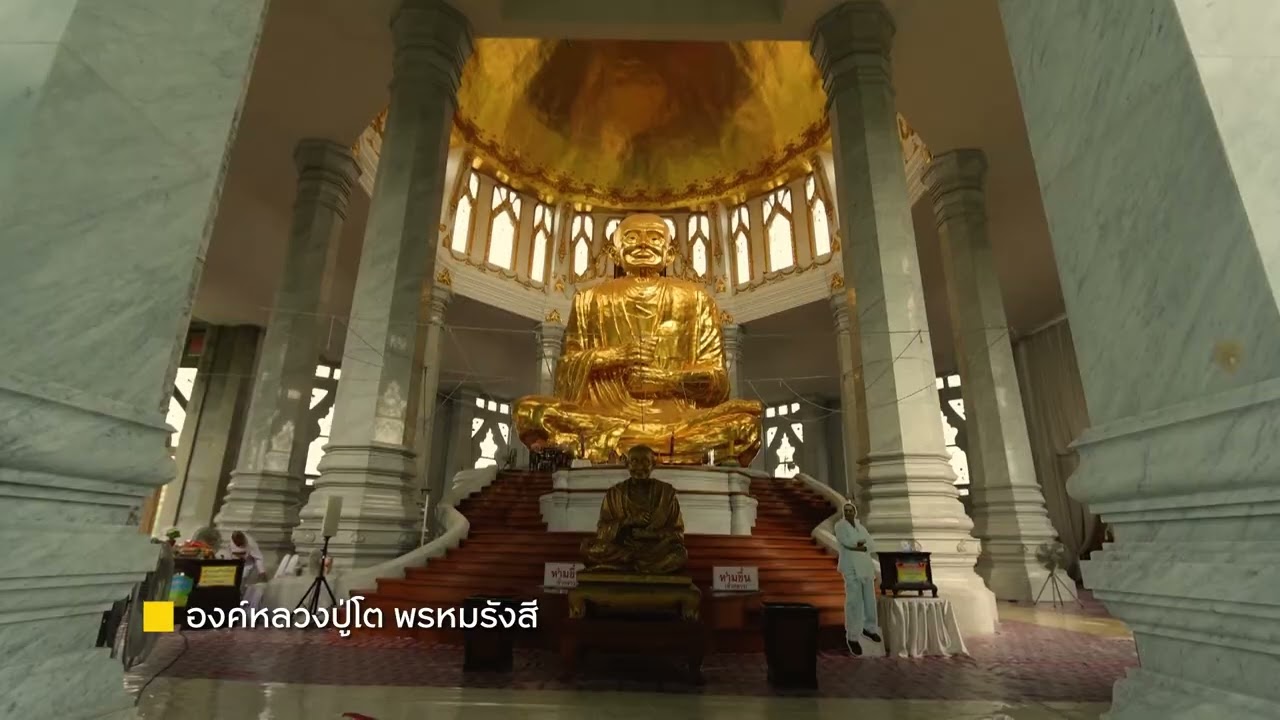
 Click to Access the Navigation Map GPS
Mahaviharn Merit Park Map
Recommend
 Historical Sites and Monuments(20)
 Landmarks and Memorials(5)
 Art, Craft Centres, Tradition(7)
 Museums(6)
 Art Gallery(1)
 Educational Places
 Educational Gardens, Farm(4)
 Places of Worship
 Temple(29)
 Mosque(1)
 Other Sacred Sites(6)
 Research and Development
 Royal Project(3)
 Suburban Living
 Village, Community(6)
 Local Market(4)
 Floating Market(1)
 Nature and Wildlife
 National Parks and Marine Reserves(3)
 Mountain (Doi)(5)
 Dam, Reservoir, Lake(8)
 Waterfalls(9)
 Hot Springs(1)
 Caves(2)
 Flower Field(1)
 River, Canal(8)
 Bays and Beaches(2)
 Other natural attractions(3)
 Entertainment and Agricultural
 Zoos and Aquariums(2)
 Animal camps and shows(1)
 Farms, Parks and Ecotourism(21)
 Waterpark(4)
 Outdoor and Adventure Activities(6)
 Shopping
 Shopping and Night Market(2)
 Travel Articles, Recipes
 Travel Review, Food Review(6)


